Tag Archives: survey

U.S. Peace Corps volunteer Killed in Lesotho

CNN: An American aid worker died from a gunshot wound suffered in the southern African nation of Lesotho, the Peace Corps said in a statement. Peace Corps volunteer Thomas Maresco, 24, died in the country's capital, Maseru, on Friday. “The deceased was attending a farewell function at the Maseru Sun Cabanas Hotel … he and a female friend decided to return to the center on foot even though their vehicles were waiting outside the Hotel,” Inspector Lekhotla Mojete, of the Lesotho police, told CNN in a phone interview from Maseru. “The area the hotel is in is very safe — with not much crime, but we think they were observed leaving the hotel on foot and when they were returning, (an) assailant was waiting outside the Hotel,” Mojete said. “The stranger started making demands of them, which they didn't fully understand and (the assailant) then shot the deceased.” He said the woman accompanying Maresco rushed back into the hotel to get help, but police were unable to find the gunman when the arrived on scene. “We believe this was a robbery,” Mojete said. A description of the attacker was provided to law enforcement officials by the woman. No arrests have been made yet and an autopsy was scheduled. “Tom was an exceptional volunteer, leader, teacher and coach — he was an integral part of his host community where he shared his passion for teaching, music and sports,” said Aaron S. Williams, the Peace Corps' global director. Maresco's work also involved HIV awareness in the communities he served, according to the Peace Corps. “We are deeply saddened by this tragic event, and I ask that you keep Tom's family, and our volunteers and staff in Lesotho in your thoughts and prayers.” The statement said that Maresco is from Port St. Lucie, Florida. He taught secondary education in the highlands district of Thaba-Tseka since November 2009. Maresco was scheduled to serve until January 2012. Peace Corps has 91 volunteers in Lesotho. More than 2,100 Americans have served as Peace Corps volunteers in the nation since 1967. Thomas Maresco Facebook story told a slightly different story: “Thomas Carmine Maresco's cousin Bobby has asked that we all pass this statement around: CNN HAS UPDATED TOM'S STORY WITH INACCURATE INFORMATION! CNN IS REPORTING THAT TOM AND ONE OTHER FEMALE FRIEND LEFT THE HOTEL WHERE THEY WERE CELEBRATING TO RETURN TO THEIR OWN HOTEL ON FOOT. THIS IS NOT TRUE, THERE WERE EYEWITNESSES THAT REPORT THAT TOM LEFT WITH ALL THE OTHER PCV'S IN HIS CAMP. AS BOBBY HAS SAID, TOM HAD BEEN OVER THERE ALMOST A YEAR AND WAS VERY STREET SMART, LET'S GET THE CORRECT STORY OUT THERE AND NOT LET THE LESOTHO POLICE PROTECT THEMSELVES RATHER THAN BEING GRATEFUL FOR THE WORK THAT THE PEACE CORPS HAVE DONE FOR THEIR COUNTRY!!!” I want to personally thank Thomas Maresco for all he has done and what he would have done in the future. I hope to get a great chance like this and join the Peace Corps and get stationed in Africa. Thank You Thomas Maresco. http://www.cnn.com/2010/WORLD/africa/09/05/lesotho.peace.corps.death/index.html?… http://www.peacecorps.gov/index.cfm?shell=resources.media.press.view&news_id… added by: angelaguayo
Activist Iranian Mother Of Two To Be Stoned To Death

CNN's Mohammed Jamjoom looks at the case of an Iranian mother who is to be stoned to death after an adultery conviction. http://www.youtube.com/watch?v=KyZS-G-dm6E added by: lvp

Arrest at Alaska State Fair-Freedom of Speech

I just wanted to show others the disgust I got when I watched this. A man voicing his opinion. It was also a man who was taken down by security guards who were armed. There is other videos showing the guns that the guards had-guards who are not suppose to be armed with more than pepper spray. A cop steps in and doesn't say a thing about the guards carrying illegal firearms at the State Fair. added by: RRRPirate

The World’s Greatest Threat?

Tony Blair recently remarked that radical Islam is the world's greatest threat. Although I agree that radical Islam is threatening, I don't think it's just Islam that's the problem. I think it's all extremists that we should be concerned with…(continues)… http://talkingskull.com/article/worlds-greatest-threat added by: Billy_Tarter

Japanese schools serving whale meat

WHALE meat is on the menu at about a sixth of Japan's state-run primary and junior high schools, a survey released today showed. Of 29,600 public primary and junior high schools nationwide providing lunches for students, 5355 schools served whale meat at least once during the fiscal year to March 2010, the survey by Kyodo news revealed. In Japan, cooked whale meat was a regular item on school lunch menus in the 1960s and 1970s as the annual supply of the meat reached a peak of 220,000 tonnes. It subsequently fell out of favour, with the supply dwindling to around 1000 tonnes in the 1990s as an international ban on commercial whaling was introduced. But whale meat has recently made a reappearance on the school lunch table as the country gradually increased its catch of the ocean giants, Kyodo said. The Institute of Cetacean Research, which carries out whaling in the name of research, sells whale meat to local municipalities for school lunch use at one-third of the market price, it said. Japan hunts whales under a loophole to an international moratorium that allows the killing of the sea mammals for scientific research but it does not hide the fact that the meat is later sold in shops and restaurants. added by: eden49

Massive 7.2 quake hits New Zealand

A 7.2 magnitude earthquake struck southern New Zealand at 4:35 a.m. Saturday local time, according to the U.S. Geological Survey on Friday. The quake, which struck at 9:35 a.m. Pacific time, was centered 19 miles northwest of Christchurch, and 186 miles southwest of Wellington. Earlier, the USGS had reported a preliminary magnitude of 7.4 http://www.boncherry.com/blog/2010/09/03/massive-72-quake-hits-new-zealand/ added by: NewsFrontiers

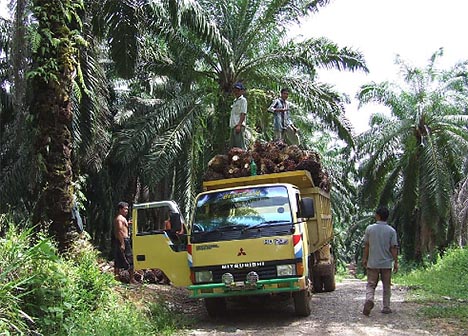
Commercial Palm Oil Production in Southeast Asia Violating Indigenous Peoples’ Rights: New Survey

photo: Forest Peoples Programme Take this one as reinforcement of what plenty of environmental NGOs have been saying for some time: The commercial palm oil industry in Indonesia and Malaysia is trampling the rights of indigenous people and destroying rainforests as it rapidly expands. A new report from the Forest Peoples Programme details the damage…. Read the full story on TreeHugger

Original post:
Commercial Palm Oil Production in Southeast Asia Violating Indigenous Peoples’ Rights: New Survey

New Study Shakes Up Scientists’ View of California’s San Andreas Earthquake Risk

Study shakes up scientists' view of San Andreas earthquake risk Researchers find major quakes on the southern section, on average, every 88 years — three times as often as previously thought. It's the strongest evidence yet that we're overdue for a massive quake. San Andreas fault study Photo: Sarah Robinson, 23, a graduate student at Arizona State University, runs along a trench at the Bidart Fan sector of the San Andreas fault in June 2009. She is on a team of geologists trying to construct a history of earthquakes on the San Andreas fault by reading lines of sediment in the earth. (Ricardo DeAratanha / Los Angeles Times / June 1, 2009) ___ By Rong-Gong Lin II, Los Angeles Times August 21, 2010 Southern California is long overdue for a major earthquake along the San Andreas fault, according to a landmark study of historic seismic activity released Friday. The study, produced after several years of field studies in the Carrizo Plain area about 100 miles northwest of Los Angeles, found that earthquakes along the San Andreas fault have occurred far more often than previously believed. For years, scientists have said major earthquakes occurred every 250 to 450 years along this part of the San Andreas. The new study found big temblors on the fault every 88 years, on average. The last massive earthquake on that part of the fault was in 1857, leading scientists to warn that another such temblor is likely in Southern California. “The next earthquake could be sooner than later,” said Lisa Grant Ludwig, a UC Irvine earthquake expert and co-author of the study, which was published online in the journal Geology. “It was thought that we weren't at risk of having another large one any time soon. Well, now, it might be ready to rupture.” Other seismic experts described the revelation as a major change in the way they think about earthquake risks along the southern San Andreas fault. Thomas Jordan, director of the Southern California Earthquake Center, said the fault is “locked and loaded. It's been a long time since an earthquake has occurred on that fault — over 150 years.” To reach the new conclusion, scientists dug trenches deep into the Carrizo Plain. They used carbon dating and sophisticated imaging technology known as lidar to find signs of earth movements. They were able to detect earthquakes dating back to the 15th century, creating a far more complete record than had previously been known. The research found that earlier examinations of the San Andreas had badly undercounted the number of major earthquakes. Those were based on observations made in the 1970s when scientists used measuring tape to look for evidence of past earthquakes. “Now we have better techniques,” Grant Ludwig said. “We can see there's actually more earthquakes.” Scientists now estimate that earthquakes occurred on that section of the fault in 1417, 1462, 1565, 1614 and 1713. The finding adds weight to the view of many seismologists that the San Andreas has been in a quiet period and that a major rupture is possible. A 2009 study, which Grant Ludwig also participated in, suggested that the San Andreas was overdue for a rupture. But Friday's report offers a much more grim estimate of how frequently quakes have occurred on that segment of the fault. The San Andreas fault is considered one of the most dangerous in Southern California, partly because it is so long that its southern section is capable of producing a temblor as large as magnitude 8.1. By contrast, earthquake experts consider 1994's destructive 6.7-magnitude Northridge quake, which occurred on a different fault, to be a medium-sized quake. The San Andreas is a sleeping giant. It's hard to imagine the power of a huge quake on the southern section because the last one occurred more than a century ago when the area was sparsely populated. Just 4,000 people lived in Los Angeles at the time. The 1857 temblor, with an estimated magnitude of 7.9, is known as the Fort Tejon quake, but that's a bit of a misnomer because it is thought to have started farther north, way up in Parkfield in Monterey County. The quake then barreled south on the San Andreas for about 200 miles, through Fort Tejon near the northern edge of what is now Los Angeles County, then east toward the Cajon Pass in San Bernardino County, near what is now the 15 Freeway. The quake was so powerful that the soil liquefied, causing trees as far away as Stockton to sink. Trees were also uprooted west of Fort Tejon. The shaking lasted 1 to 3 minutes. The study was conducted by scientists at UC Irvine and Arizona State University. As preliminary data went out for peer review, other earthquake scientists immediately took note. The U.S. Geological Survey was so concerned that it dispatched its own team of investigators to the Carrizo Plain to look over the initial findings and review the evidence in the trenches. “These investigators really were challenged by their scientific peers,” said Ken Hudnut, a geophysicist at the U.S. Geological Survey. “And they made it through. They ran the gantlet and came through with a really solid paper.” Hudnut said the “Big One” wouldn't compare to most quakes Californians have endured. Such a large quake on the San Andreas, generally above a magnitude 7, would send enormous V-shape energy waves spreading out from the fault. If the earthquake energy hit the Los Angeles Basin, the soft sediment underneath it could actually amplify the waves, making the shaking worse. Hudnut said the study offers both “bad news and good news,” noting that it also concluded future earthquakes along that section of the San Andreas could be smaller than the 1857 quake. “It's not the kind of news that ought to make people crawl into the fetal position. Rather, it's the kind of information that ought to once remind people about basic earthquake preparedness,” Hudnut said. Grant Ludwig said her research should motivate people to prepare. “If you're waiting for someone to tell you when we're close to the next San Andreas earthquake, just look at the data,” she said. “If we look at the only data we have, it's not very comforting. I'm preparing for that possibility.” added by: EthicalVegan

Gallup Poll Finds Continuing Mistrust of Newspapers, Television News

Lymari Morales at Gallup reports that confidence in the news media remains low. Remember when they suggest high negatives for politicians, they are hardly popular, either. They’re “on par with Americans’ lackluster confidence in banks and slightly better than their dismal rating of Health Management Organizations and big business .” The report began: Americans continue to express near-record-low confidence in newspapers and television news — with no more than 25% of Americans saying they have a “great deal” or “quite a lot” of confidence in either. These views have hardly budged since falling more than 10 percentage points from 2003-2007…. The decline in trust since 2003 is also evident in a 2009 Gallup poll that asked about confidence and trust in the “mass media” more broadly . While perceptions of media bias present a viable hypothesis, Americans have not over the same period grown any more likely to say the news media are too conservative or too liberal . One of the ironies of Gallup’s annual Confidence in Institutions survey is that young Americans express the most trust in newspapers — while they’re the least likely to read them. That certainly paints a picture of blind trust:   Confidence is hard to find, even among Democrats and liberals, who have historically been the most trusting of the news media. While 18- to 29-year-olds express more trust in newspapers than most older Americans, Gallup polling has found they read national newspapers the least . Younger Americans also expressed more confidence than older Americans in several other institutions tested, including Congress, the medical system, and the criminal justice system, suggesting younger Americans are more confident in institutions in general. Perhaps the most interesting part of this survey comes in the chart. If you look at 1993 and compare it to 2010, newspapers haven’t fallen too far, from 31 percent with “a great deal” or “quite a lot” of confidence then to 25 percent now. But television news has fallen much harder: from 46 percent in 1993 to 22 percent now.

Read this article:
Gallup Poll Finds Continuing Mistrust of Newspapers, Television News

HuffPo Columnist Celebrates ‘Slow, Whining Death’ of Christianity

It’s not often you see an obituary as snarky and bitter as the one written by British columnist Johann Hari announcing what he called the “slow, whining death of British Christianity” in the UK edition of GQ and online at The Huffington Post. Citing an unlinked ICM study, which is not available on the organization’s website, Hari called on reader to “put your hands together and give thanks, for I come bearing Good News. My country,Britain, is now on the most irreligious country on earth.” Hari called Christianity, “superstition,” “weak,” “cruel,” and based on “intimidation.” He predicted that, “As their dusty Churches crumble because nobody wants to go there” and predicted that “the few remaining Christians in Britain will only become more angry and uncomprehending.” While he mentioned Judaism and Islam twice, Hari focused his ridicule on Christianity and the Church of England. He used the survey to call for an end to government support for Anglicanism. Hari reported that 63 percent of British respondents called themselves non-believers, and “only six percent of British people regularly attend religious services.” While religious believers might find such number disheartening, Hari celebrated. “Now, let us stand and sing our new national hymn: Jerusalem was dismantled here / in England’s green and pleasant land.” He concluded by stating he had “a Holy Lamb of God to carve into kebabs – it’s our new national dish. Amen, and hallelujah.” Hari’s snide obituary may be early, however. A  BBC Religion poll  conducted in March 2010 found 64 percent of Brits identify as Christians – 25 percent identified with no religion, and 22 percent said they were Muslim.  Another poll  conducted in 2009 found that 63 percent of respondents agreed with the statement, “Our laws should respect and be influenced by UKreligious values.” Additionally, the annual  British Social Attitudes Report , published in January 2010, found that only 18 percent of Brits said they don’t believe in God, while 18.6 percent were unsure. More than 62 percent expressed some faith in God. Like this article? Sign up for “Culture Links,” CMI’s weekly e-mail newsletter, by   clicking   here.