Tag Archives: texas

Single Tranny Files: Transgender Woman Ticketed For Using Ladies Room In Texas Hospital [Video]

No wonder Dallas isn’t one of the top ten cities for transgender people . Dallas Police Ticket Transgender Woman For Using Ladies Room A Dallas transgender woman was issued a ticket for using the women’s restroom at an area hospital. Parkland police cited Paula Witherspoon, whose legal name is Paul Witherspoon, for disorderly conduct on April 25. “It was definitely humiliating, degrading,” she said. “I felt like I was being discriminated against.” A Parkland Hospital representative said the hospital received a complaint from a concerned female patient about a man in the women’s restroom. “This is 2012, and I’ve been transitioning since 2006, and I’ve never had a problem until I went to Parkland Hospital,” Witherspoon said. Witherspoon said she doesn’t even remember seeing anyone else in the restroom until she walked out. “There was a lady there that said, ‘That’s a man.’ I just ignored her and kept going,” Witherspoon said. Minutes later, a Parkland officer came over and cited her, she said. Witherspoon said she offered to show the officer a transition letter from her doctor that states, “She is expected to use facilities consistent with her external presentation, which is female.” But Parkland police told her they have to go by what is on her license, Witherspoon said. Under Texas law, Witherspoon must have acted “intentionally or knowingly for a lewd or unlawful purpose” to be cited with disorderly conduct. “I went to the bathroom, took care of my business, washed my hands and left,” Witherspoon said. “I didn’t even see anyone.” Parkland Hospital released the following statement: “Because of the complexity of the issue, the incident is currently under review. Parkland strives to treat patients, visitors and staff with dignity and respect, as well as provide a safe environment at all times.” Anti-discrimination laws in 16 states and the District of Columbia provide protections for transgender and gender non-conforming people, but Texas is not one of them, according to the New York Civil Liberties Union, which is calling for lawmakers in New York to pass legislation that will offer such protections. What do you think? We can imagine being startled to see a trans person in the ladies room but it seems kinda out of line to give her a ticket when she had a note from the doctor! Eff the police yo. Source More On Bossip! Yeah, We Said It: 10 Reasons Evelyn’s “Slap Happy Lackey” Nia Is The Epitome Of A Bum Beyotch All Natural, No Additives Pt. 1: The Most Beautiful Women That Haven’t Gotten Any Plastic Surgery On Anything! Baller Cribs: Take A Peek Inside Cam Newton’s $1.6M Condo In Charlotte [Photos] Poor Thang: Serena “Bangin Bawdy” Williams Says She’s Given Up On Dating…”It Just Hasn’t Worked Out Well For Me”

See original here:
Single Tranny Files: Transgender Woman Ticketed For Using Ladies Room In Texas Hospital [Video]

Jessica Simpson Gives Birth to Baby Girl!

Jessica Simpson finally gave birth to her baby girl today. Maxwell Drew Johnson, weighing 9 lbs., 13 oz. (!) was born this morning in L.A. It’s the first child for the star and her fiance, former NFL player Eric Johnson. Little Maxwell is named for Eric’s middle name, and will go by Maxi. Her middle name is a tribute to her grandma, Tina Simpson, whose maiden name is Drew. After six months of dating, Simpson, 31, and Johnson, 32, got engaged in November 2010, then allegedly pushed off their wedding when she got pregnant. The Texas native, now 31, was famously and previously married to Nick Lachey from 2002 until their separation in 2005, but the couple had no children. She first shared her own happy pregnancy news with the world on Halloween, and the deluge of TMI Jessica Simpson quotes has continued unabated since. As her due date approached, the uninhibited singer has spoken candidly about all things pregnancy, from cravings to sex to mommy brain and even swamp ass. “I feel like I have a bowling ball sitting on my hoohah,” she said. “Apparently I have a lot of amniotic fluid, so when my water breaks, it will be like a fire hydrant!” With Maxi weighing in at such a healthy size, this was probably true.

Young Rangers Fan Loses Foul Ball to Adults, Cries; Yankees Announcer Trashes Clueless Couple

There is currently no law that says you have to hand over a foul to a nearby toddler who was also reaching for it and cries as a result … but come on, guys. At the Rangers-Yankees game Wednesday night, a couple was so stoked to have caught one, they not only didn’t give the thing up, they openly celebrated and preened for the cameras with the ball as the youngster bawled nearby: Crying Rangers Fan Loses Foul Ball to Adults This earned them a tongue-lashing from Yankee broadcaster Michael Kay, and landed the three-year-old and his parents on Good Morning America (above). Luckily for our little buddy, the Rangers are giving him a ball signed by the ENTIRE TEAM. Class move by Texas and not a bad consolation prize for the kid. Sean Leonard and Shannon Moore, on the other hand, have been castigated by the media – and wants an apology from Kay, who led the charge. “Oh my God they can’t give it to the kid? They’re actually like rubbing it in the kid’s face. Very cold,” he said of the pair, which disputed this account. They told a Dallas television station that they had no idea the young boy next to them was crying or even upset over missing out on the baseball. Leonard and Moore say they were simply caught up in the moment during the game and would’ve given the toddler the ball if they’d seen him. They want an apology from the Yankees’ play-by-play man for his remarks about them. Think they deserve it? Or should they sell their ball and buy a clue?

Excerpt from:
Young Rangers Fan Loses Foul Ball to Adults, Cries; Yankees Announcer Trashes Clueless Couple

REVIEW: Richard Linklater’s Bernie Paints an Opaque Portrait of a Happy-Go-Lucky Killer

Can a person really be charming enough to get away with murder? Especially if the victim is a super-beeyotch to begin with? That’s the question asked, and almost answered, by Richard Linklater’s Bernie , in which Jack Black plays a Carthage, Texas, assistant funeral-home director who’s so beloved in his community that his fellow citizens are almost willing to look the other way when he breaks the sixth commandment. Bernie , written by Linklater and Skip Hollandsworth, was drawn from a Texas Monthly article about the real-life Bernie Tiede, now serving a prison sentence for the 1996 murder of 81-year-old widow Marjorie Nugent. Tiede shot Nugent in the back four times with a rifle and then proceeded to stuff her body into a freezer in her own home. Nugent was missing for the better part of the year before her body was discovered; Tiede defended himself by claiming that she’d abused him emotionally, driving him to the breaking point. It was a stroke of genius, at least a miniature one, to cast Black in this role – he’s made to play the affable teddy bear who could snap at any moment. Linklater structures the movie so that almost before we even see Bernie, we know just what kind of a guy the townspeople think he is. In the opening sequence we see him giving a glossy-ghoulish presentation on how to prepare corpses for viewing: “Don’t overcosmetize!” he warns, and Linklater follows up with a series of on-camera testimonials from the locals, giving witness to the fact that before he snapped, Bernie took just as much care with the living as he did with the dead. (One of these townspeople is played, with sharp, wicked glee, by Matthew McConaughey’s mother, Kay .) Bernie keeps track of which people’s kids had gone off to which colleges; he sings boisterously with the church choir; and in the line of duty he pays special attention to the bereaved, particularly fragile widows, though he doesn’t seem to be particularly interested in their money. At least, not until he buries the husband of the cantankerous Marjorie Nugent (Shirley MacLaine), who habitually terrorizes the town with her rudeness and self-involvement. She also happens to be loaded, and somehow she takes a shine to Bernie, even though she appears to hate everyone else. Before long, the two are traveling first-class to New York and Paris, seemingly thrilled with each other’s company – until Marjorie begins wrapping Bernie around her little finger, demanding countless numbers of errands and household chores. Her harping takes the spring out of Bernie’s step, plus it interrupt his important community activities, like directing and starring in a production of The Music Man . Local sheriff Danny Buck Davidson, played by a breezily laid-back Matthew McConnaughey, makes it clear he never bought any of Bernie’s shtick, and as far as he’s concerned, it doesn’t matter how much everyone hated Marjorie Nugent – murder is murder, no two ways about it. But Linklater and Black keep us squarely on the other side, with the townspeople, who seem to believe Bernie has committed a selfless community service. MacLaine nudges us in that direction, too: Her performance isn’t big – it’s small and pinched and calculating, though it’s also rather unformed. Marjorie Nugent is a caricature, which is probably all she needs to be, particularly when all eyes are supposed to be trained on Bernie. As Black plays him, he’s a roly-poly PSA for the joys of small-town life, as happy to raise his eyes to heaven during a church service as he is to march, skip and bunny-hop his way through a community-theater production. (Bernie’s possible homosexuality is strongly hinted at, though the movie addresses the issue with a noncommittal shrug.) Linklater allows Bernie’s story to unfold in a way that’s a little arch but mostly toothless. At times he comes close to talking down to his small-town subjects, but somehow he always pulls back just in time: Linklater, a Texan himself, is earnest enough not to want to score jokes off people, and he seems to genuinely understand the allure of small-town life. The movie is mild fun, though its persistent self-consciousness keeps tugging us away from some of the pleasures it might offer; Linklater is perhaps a little too taken with the quaint, quirky elements of this story, and its folksiness becomes too much of a cartoon. As Bernie, Black is both likable and unreadable, as we can imagine the real Bernie might be. This isn’t a deep performance – everything slides off Bernie’s surface, so we never really know what he’s thinking. That makes sense for a guy who kills a woman and then goes about his business for months while the body of the deceased lies in the deep freeze. It’s a supreme example of comic cold-bloodedness, and yet somehow the whole enterprise should be funnier, darker and more pointed. Bernie, like its lead character, has a degree of diffuse, aw-shucks charm, but it’s also maddeningly opaque. Why does Bernie behave the way he does? We never really know, but even worse, we don’t have much reason to care. Follow Stephanie Zacharek on Twitter . Follow Movieline on Twitter .

Link:
REVIEW: Richard Linklater’s Bernie Paints an Opaque Portrait of a Happy-Go-Lucky Killer

Are We Actually Going To Let Industry Heads Advocate Texting in Theaters?

There’s nothing more enraging to me as a moviegoer than that dreaded moment when, in the middle of a movie, the unmistakable, un-ignorable glow of a cell phone screen cuts through the glorious darkness in my field of vision and takes me out of the viewing experience. Texting , sexting, checking emails, Tweeting — I don’t care what your excuse is, it’s not okay to ruin everyone else’s experience by using your phone (or talking or shaking the entire row of seats with your nervous-boredom knee jiggle or letting your stank feet air out in the aisles or snoring, you selfish prick.) So why would theater owners or studio heads, whose job it is to deliver an enjoyable movie-going experience to their paying customers, ever even entertain the notion of allowing or encouraging texting in a movie theater? That’s just what some members on a panel discussion entitled “An Industry Think Tank: Meeting the Expectations of Today’s Savvy Moviegoer” at CinemaCon reportedly proposed today in a conversation about issues facing the industry. Deadline’s David Lieberman reports : Regal Entertainment CEO Amy Miles says that her chain currently discourages cell phone use “but if we had a movie that appealed to a younger demographic, we could test some of these concepts.” For example, she says that the chain talked about being more flexible about cell phone use at some screens that showed 21 Jump Street . “You’re trying to figure out if there’s something you can offer in the theater that I would not find appealing but my 18 year old son” might. You know what else these hypothetical teenagers want when they go to a movie? To see R-rated boobs and sneak into other movies without paying, so let’s just let them do all of that, too. IMAX’s Greg Foster seemed to like the idea of relaxing the absolute ban on phone use in theaters. His 17 year old son “constantly has his phone with him,” he says. “We want them to pay $12 to $14 to come into an auditorium and watch a movie. But they’ve become accustomed to controlling their own existence.” Banning cell phone use may make them “feel a little handcuffed.” To which I say: Handcuff those kids! Teach them some self-control, for goodness sake. And what does it mean when the IMAX guy is totally okay with his kid being on the phone in a movie? In an IMAX theater there’s literally no room in your field of vision to look at anything else, but interrupting your experience to look down and text is cool? Which brings me to the first issue here: Kids. Not the kids themselves per se, but the fact that pretty much the entire hypothetical justification for allowing cell phone use in theaters stems from an attempt to solve the issue of dwindling attendance by blaming the teenagers. You think every kid out there is so ADD-addled and attached to their iPhones that they won’t or can’t focus on a movie for two hours? (I mean, maybe.) Does that mean we should let them or anyone of any age do whatever they want in a theater? HELL NO. Here’s the thing: You can’t just let The Text-Crazy Kids blaze up Facebook in a theater in order to boost box office without messing it up for everyone else — and that includes the rest of us old people and that segment of the teenage populace that, you know, doesn’t need to compulsively check their phones at the movies and maybe, just maybe, hates it as much as the rest of us when other people do it. To officially allow texting in a theater is to effectively encourage texting in a theater. And while folks like Miles might experiment with outside the box teen baiting strategies –and good luck to her in that — how can you even effectively host a text-friendly screening? By offering specialty showtimes, a la Baby Brigade or 21 and Up screenings, maybe? Who knows? Such an approach might just work, and I’m sure the theater owners would rejoice in the box office boom and bathe in the shower of gold coins and allowance money that followed. But here’s my request, if it comes to that: Keep those screenings segregated and instill a text-friendly screening surcharge; if moviegoers MUST TEXT during a movie, make them pay extra for the privilege. The real problem with this line of thinking, though, is its potential effect on film culture at large: Once texting is allowed, why not talking, or any of the plethora of bad theater behavior that could snowball from there? The thing is, texting in a movie isn’t just an issue of allowing overstimulated kids needing to be plugged into their apps and social networks and conversations at all times; it’s a far more problematic issue of engagement at the movies. And not just for the texters, who might be half-paying attention to a movie while chatting up their friends, but for those around them who deserve to be able to watch a film without interruption or distraction. By encouraging texters to engage half-way with a film and allowing their bad behavior to ruin fellow moviegoers’ ability to escape into the magic of the movies, we’d be killing the sanctity of film culture. Audiences will learn not to pay full attention to a film — and if you can’t focus on a film, how are you to appreciate it? Why come back to the movies every week if you care less and less about movies themselves? The exhibition and studio pros at CinemaCon seem to care less about the greater impact on film culture in their desperation to increase ticket sales. Thank goodness for Tim League . His Alamo Drafthouse cinemas, headquartered in Austin, Texas, take pains to protect the filmgoing experience — recall the infamous anti-texting video that went viral last year — and at CinemaCon it seems he was the lone reported voice of reason on the issue: “Over my dead body will I introduce texting into the movie theater,” [League] says. “I love the idea of playing around with a new concept. But that is the scourge of our industry… It’s our job to understand that this is a sacred space and we have to teach manners.” He says it should be “magical” to come to the cinema. Note that in response to League’s laudable declaration, Regal CEO Miles reportedly retorted that “one person’s opinion of magical isn’t the other’s.” In Miles’ world, “magical” probably means “profitable.” In other news, remind me to never patronize a Regal theater again. Going to the movies should be a magical experience, even for those casual ticket-buyers who just want to escape for two hours and who go to the cineplex maybe five times a year. My two favorite theaters in the world, League’s Drafthouse and L.A.’s New Beverly Cinema, notably enforce a no-talking, no-cell phone policy because the people who run them and their patrons, for the most part, agree that movie-watching is a special experience. They love the movies, and I’m not sure I can say that Miles and Foster proved at CinemaCon that they do, too. Movies are meant to transport, and by their nature that’s an intimate relationship between art and receiver. You should never have to compromise your movie-going experience because of some fidgety asshat in the row in front of you. So: Am I alone in this, or do other people have to fight the urge to wrestle texters’ cell phones out of their hands during a movie and hurl them at the wall whenever that dreaded light illuminates the dark? And at what point should we become alarmed if industry execs keep batting these ideas around to boost ticket sales? Sound off. Photo: A sign reminds people of strict rules regarding cell phones in the theaters on opening day of the 28th Telluride Film Festival August 28, 2001 in Telluride, CO. A ringing phone during a screening will result in immediate ejection from the theater and no refund. (Photo by David McNew/Getty Images) Follow Jen Yamato on Twitter . Follow Movieline on Twitter .

Read more:
Are We Actually Going To Let Industry Heads Advocate Texting in Theaters?

Andrew Young Testifies Against John Edwards

Former aide Andrew Young, the star witness in the trial of former presidential candidate John Edwards, began his testimony against his former boss Monday. Edwards is accused of using hundreds of thousands of dollars from 101-year-old Rachel “Bunny” Mellon and Fred Baron to conceal his affair with Rielle Hunter . Young, testifying as the first witness Monday, said Mellon was an enthusiastic supporter who apologized for not being able to give more than $1 million. “She said she was close personal friends with Senators John and Bobby Kennedy and felt like Edwards was the best combination of them,” Young testified. Prosecutors say Edwards broke federal law by accepting about $725,000 from Mellon and more than $200,000 from Fred Baron, a now-deceased Texas lawyer. The money was used to pay for Rielle Hunter’s living and medical expenses, travel and accommodations to quash the scandal while he sought the presidency. Edwards is accused of concealing the money from the public and the Federal Election Commission, which polices political contributions, in the 2008 campaign. Federal prosecutors say he filed false and misleading campaign disclosure reports to do this, though Edwards denies any (legal) wrongdoing in the case. The defense argues the money he received from Mellon and Baron was for personal reasons – to protect Edwards’ wife, Elizabeth, who was dying of cancer. Basically, he says he did it to hide his cheating from his family, and that the donors would have given the money regardless of these rare circumstances. Of course, by concealing it from his family, he also hid it from the public, and made a serious run at the White House in the process. Needless to say, the John Edwards trial represents a murky legal gray area. Young, who is married, initially claimed he was the father of Hunter’s child. He went on to become the author of The Politician: An Insider’s Account of John Edwards’s Pursuit of the Presidency and the Scandal That Brought Him Down . In the book, he accuses Edwards of using money from his rich benefactors to maintain his relationship with Hunter, breaking the law in the process. Edwards admitted to his affair with Hunter in 2008, after his presidential ambitions foundered. In 2010, he admitted he was the father of Hunter’s daughter.

Read the original:
Andrew Young Testifies Against John Edwards

‘Funny, You Don’t Look Jewish’: 7 Mel Gibson Revelations from the Get the Gringo Premiere

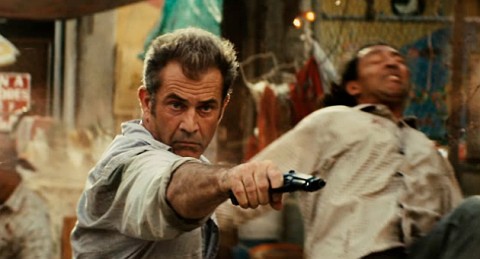
Wednesday night in Austin, Texas the embattled (but cheery) Mel Gibson popped down to the Alamo Drafthouse to premiere his latest film/star vehicle, the darkly comic Mexico-set action pic Get the Gringo . Though his most recent and public feud with Maccabee screenwriter Joe Eszterhas took a notoriously ugly turn of late, Gibson was jovial and in a joking mood – even when moderator Harry Knowles dared to make reference to Gibson’s documented anti-Semitic remarks. The film, co-written by Gibson, director Adrian Grunberg, and producer Stacy Perskie over the course of a year and a half (from an idea by Gibson), follows an American career criminal known as Driver (Gibson) as he flees American authorities and makes a break for the U.S. –Mexico border with millions in stolen cash. Thrown into a Mexican prison modeled on a real life “pueblito” – an effective working city operating within the confines of a fortress run by gangsters and corrupt officials – Driver uses his unique set of skills and a newfound friendship with a street-smart 10-year-old (Kevin Hernandez) to survive and plot his way out. Gringo is an effective and at times strangely winning B-movie vehicle for Gibson, whose precise and hardened Driver doles out wisecracks and ruthlessness in equal measure, orchestrating the downfall of a network of interconnected baddies while redeeming himself through his friendship with his young sidekick and the kid’s comely mother. Squibs of blood fly fast and furious as shoot-outs, torture scenes, and an energetic opening car chase scene keep the action pulse quickening throughout; it’s the kind of movie in which Gibson dives sidelong through the air in slow motion in a gunfight and nails a bad guy through the eye with his superhuman shooting skills without getting so much as grazed by a bullet. In other words: It’s better than your average direct-to-DVD title and a fleeting return to the smart-ass Mel Gibson, movie star, that audiences fell for in films like Lethal Weapon . But are audiences ready yet to forgive the once-adored actor for his personal troubles and transgressions ? Gibson’s well-publicized meltdowns are likely partially to blame for Gringo ’s unusual release strategy; instead of a traditional theatrical release, the film will release via Direct TV on May 1. Which brings us to The Awkward Moment at the Gringo premiere when Gibson’s personal troubles came front and center. It was late in the post-premiere Q&A (which was streamed online and shown via satellite in participating theaters) when Knowles turned to director/co-writer Grunberg to address the elephant in the room. “I see that you’ve got a Star of David on,” began Knowles. “How was it — did y’all have any trouble working together or anything?” “I hate his guts,” Grunberg joked, before nodding off any suggestion of ill relations with Gibson. “I’ve known him for six, seven years.” Moments later, co-writer Perskie chimed in with an admission of his own: “I’m Jewish.” “Funny,” quipped Gibson, “you don’t look Jewish!” The attendees around me at the Los Angeles screening audibly gasped at Gibson’s joke, a less than successful attempt at levity. But just like that, the moment when the entire night could’ve bombed just simply passed. Knowles, his basic duty done, moved on to easier topics. What music did the Gringo gang listen to during filming? (“The music of the spheres,” was Gibson’s non-serious answer.) What about that Viking movie? (Oh, that .) So it seems that Gibson’s not quite tiptoeing around his past remarks. It’s business as usual, perhaps – why make a big deal of it? Whether or not that line of flippant joking in the general direction (if not near vicinity) of his most controversial comments to date should affect how film audiences see him is a matter of opinion. For now, mull it over and chew on six more revelations Gibson shared Wednesday night.

Go here to read the rest:
‘Funny, You Don’t Look Jewish’: 7 Mel Gibson Revelations from the Get the Gringo Premiere

The Muppets 2 Will Be a Comedy Caper, Says Nick Stoller

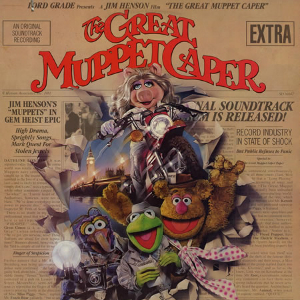
Nick Stoller took a moment while promoting his Five-Year Engagement to fuel speculation about the forthcoming (and Jason Segel -less) Muppets sequel, which he says Disney rather unrealistically wanted to release next summer. “It is a comedy caper,” he spilled to Collider . This sounds familiar — next stop Manhattan, Treasure Island and then, perhaps… space? “I think it’s similar to the first one in that the first one certainly had dramatic connections to the first Muppet movie, but it was a whole new thing, hopefully,” Stoller told Collider. “This is the same thing. We love The Great Muppet Caper and we love Muppets Take Manhattan and whatnot. So this has some elements of that, but it’s different because it’s in the tone of what James and I like to do.” Grain of salt: Stoller and co-writer/ Muppets director James Bobin are only 13 pages into their Muppets sequel, so, you know. If they don’t even know yet if there’s room for a Segel cameo, it’s hard to say now how the final product will turn out. That said, the Muppets sure knew how to throw a fun caper and the idea of the rebooted Muppets franchise following in the footsteps of the classic Muppets films falls in step with the spirit of reinvention and homage that made 2011’s a hit . [ Collider ]

View original post here:
The Muppets 2 Will Be a Comedy Caper, Says Nick Stoller

VIDEO: Texas Cops Let Sick 7-Year-Old Play Batman For a Day

This is probably the best unauthorized viral marketing that The Dark Knight Rises could ever hope for: Authorities in Arlington, Texas, yesterday fulfilled a 7-year-old leukemia patient’s wish to be Batman for a day. Yes, there’s video, and yes, it’s awesome. No, it wasn’t shot in IMAX , and the press on the scene do wander in and out of frame. Production values schmoduction values But as charitable public services -meet-large-scale cultural tributes go, it’s pretty adorable. Little Batman and Robin! Also: The Joker is kinda good, no? Anyway, at least stay around for the unmasking. Sniff . [via Gawker ]

More here:
VIDEO: Texas Cops Let Sick 7-Year-Old Play Batman For a Day

John Edwards Trial Begins; Jury Selection Underway

The scandal that derailed John Edwards’ career, shattered his image as a devoted family man and led to his indictment is now set to play out in federal court. The former Democratic presidential candidate is fighting allegations that he violated federal campaign finance laws during his 2008 bid for the White House. Prosecutors contend he secretly obtained hundreds of thousands of dollars from two wealthy supporters to hide his affair and love child with Rielle Hunter . John Edwards Trial Begins Hunter, was a campaign videographer who gave birth to their daughter, Frances Quinn, at a time when Edwards’ wife, Elizabeth, was battling breast cancer. Elizabeth Edwards passed away in late 2010. The alleged donors were Fred Baron, a wealthy Texas lawyer who is no longer alive, and Rachel “Bunny” Mellon, a wealthy 101-year-old benefactor. They supposedly provided more than $900,000 in living expenses for Rielle Hunter, who is not expected to testify at the trial of the ex-U.S. Senator. Prosecutors argue the money should have been reported as campaign funds because it was meant to help Edwards preserve and protect his image. As Edwards’ family watched from the courtroom in Greensboro, N.C., 100 men and women were given a brief review of the jury selection process. The case seems as much made for celebrity gossip tabloids as it is for legal scholars studying the reach of federal regulations governing elections. Whether or not Edwards can win it is an entirely open question.

See original here:
John Edwards Trial Begins; Jury Selection Underway