The ever-expanding Crowdsource Era has a new milestone: Charlie Kaufman needs $200,000 to help make a 40-minute stop-motion animated film called Anomalisa , and he’s inviting exiled Community creator Dan Harmon — and you — along to help. The project, which has already raised $80,000 on Kickstarter , brings Kaufman, Harmon, and the animators at Starburns Industries ( Moral Orel , the stop-motion Community Christmas episode) together to tell the story of a motivational speaker who is “crippled by the mundanity of life” until “suddenly one day, a girl’s voice pierces through the veil of nothingness. She fills him with such a rush of ‘aliveness,’ he’s willing to abandon everything and everyone, including his own family, and escape with her to a better life.” Duke Johnson will direct, and apparently you will pay for it — though you can’t really argue with the incentives: A 20-page screenplay about you, written by Dan Harmon? Hand-crafted puppets and/or sets? Executive producer credit? Skype chats with the filmmakers? Pretty amazing, and not cheap: The really good stuff will run you $1,000 and up, with some of the top prizes already spoken for. Maybe there is an aftermarket eBay kind of thing to auction off Kickstarter rewards? Someone should get on that. Anyway, good luck to all! [ Kickstarter via Gawker ]
Michael Winterbottom, one of the most fascinating and idiosyncratic filmmakers of our age, makes so many movies that some of them creep into festivals very quietly and, just as quietly, creep out, never to be seen again. That wasn’t the case with The Trip , for my money one of the most intriguing pictures of 2011, a woolly exploration of middle-aged angst that featured Steve Coogan and Rob Brydon (as themselves) bickering and trading Sean Connery impersonations as they made their way through the English countryside. But two years before that, in 2008, Winterbottom brought a picture called Genova to the Toronto International Film Festival. The picture, a mildly engaging drama in which Colin Firth plays a father who moves his family to Italy after the death of their mother, never got a U.S. release, fading like the worn face of a stone saint on a medieval church. Fortunately, Winterbottom’s latest, Trishna , a retelling of Thomas Hardy’s Tess of the d’Urbervilles set in contemporary India, hasn’t met the same fate. And though it’s a bit of an oddity, it’s an affecting curio suitable for both Hardy enthusiasts and Winterbottom fans alike. Freida Pinto is Trishna, the Tess character, who comes from an impoverished family living in a small village. Jay (Riz Ahmed), is her Angel/Alec (Hardy purists should be warned that the two characters have been condensed into one, perhaps a bit clumsily), a man who sweeps her away from her life of poverty, only to end up resenting and degrading her. Even if Winterbottom has taken what some might consider unforgivable liberties with the story, Trishna works: Winterbottom has a feel for the story’s landscape, including the hardscrabble beauty of the countryside, all yellow dust and scrubby trees. It’s both a place Trishna needs to escape from and it’s home — there’s no safety or freedom there, but it’s the only place she’s truly herself. Pinto gives a lovely performance here. No other role she’s been given — as the hero’s dream woman in Slumdog Millionaire, or as a Palestinian orphan girl in Julian Schnabel’s deeply disappointing Miral — has asked as much of her, and she greets the challenge boldly. In the barest terms of the plot, Trishna is a victim, a tragic heroine, but Pinto always lets you see the character’s immovable self-assurance shimmering beneath the surface — that’s the very thing that threatens her lover and tormentor, and brings about her downfall. In Winterbottom’s scenario, Jay’s sudden turn against Trishna isn’t believable or readable in movie terms — his love for her appears to be operated by a switch that turns off abruptly without cause or reason — but it makes sense in the grander scheme of the impossibility of love. The dialogue here is mostly improvised — this is a casual, hip-pocket approach to a revered classic — but Winterbottom keeps the story moving deftly. We might appreciate Winterbottom more if he worked less, but he’s unlike any other filmmaker on the landscape, trying something new just about every year. Some of it sticks and some of it doesn’t. But almost always, he gives us something worth looking at. Editor’s note: Portions of this review appeared earlier in Stephanie Zacharek’s Toronto International Film Festival coverage.
Don’t try to conceal how wildly ecstatic you are over the forthcoming Birdemic 2: The Resurrection , “filmmaker” James Nguyen’s sequel to his micro-budget 2010 “classic” Birdemic: Shock and Terror . Weep, already. Don’t hold back — especially now that there is a teaser trailer. Nguyen’s no-mage to The Birds has acquired a slightly more contemporary spirit, invoking the post-credits scene from The Avengers despite apparently setting to rest Nguyen’s insistence that his sequel would be in 3-D . Like I said, weep, already . Anyway, these 30 seconds may be light on screeching avian terror, but they do quietly portend the barely watchable joys to come. [ Bleeding Cool via Filmdrunk ]
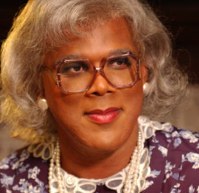
“Why did I put all my money into this? Is this going to work? God, do you hear me? Where are the people? I’m so scared. How will I pay these people? Why did I do this? I can’t pay my rent, they are going to repossess my car. The year was 1992, July 8th-12th. All these questions were crowding my mind. I was a 22-year old wannabe… but what I wanted to be I didn’t know.” Relax, Tyler Perry — you’ve spoken to Movieline ! You’ve made it! All downhill from here. [ TylerPerry.com ]
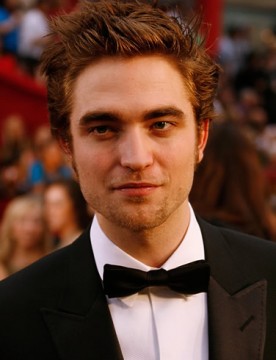
There could be a new cold-blooded young buck waiting in the wings to play 007 if and when Daniel Craig is over his stint in the role. Heartthrob Robert Pattinson is eyeing the future post- Twilight and has dabbled recently with roles in Bel Ami (which didn’t do so spectacularly at the box office) and Cosmopolis which opens in the U.S. next month, but failed to whip up a frenzy in Canada where it opened last month. Still, the dashing actor packs some fan-base mojo and James Bond could be a place down the line and the actor has taken a peek. He told British paper The Sun that he’d like to play the character that the likes of Pierce Brosnan, Timothy Dalton, Roger Moore and Sean Connery have traversed before, though he said he’d have to wait until he’s in his 40s. “Yeah, I’d definitely like to go for Bond, but in more like 20 years,” said 26 year-old Pattinson. “There’d be nothing worse than, like, ‘let’s get a fresh-faced Bond.’ That would be the worst idea in the world. It would be ridiculous to reinvent it as some young posh kid.” He paid tribute to the current reigning Bond, noting, “After Daniel Craig, you have to have some baggage. I’d have to be tortured in the first few scenes. I’d have to do the first film with one arm or something.” Apparently, the actor is even looking to do a series of Bonds… But with two decades to go, Pattinson will have time to get into 007 shape, which he admitted is not quite up to par (though his loyal fans may disagree). “I’ve got to make up for 10 years of living like a degenerate. I’ve suddenly become conscious of being unhealthy,” he said. “You’ve spent every bit of free time since the age of 15 in a pub. And suddenly you’re like, ‘Oh God, I don’t want to be this grey ghost sitting there with a pot belly.’ I’ve got to get it together.” [Source: The Sun ]
The first reviews of The Dark Knight Rises won’t hit for at least another week, but Warner Bros. keeps putting out tantalizing looks at the Chris Nolan-directed trilogy-ender. If you’re one of the legions of Bat-curious fans out there hungry for new peeks at the superhero finale, you’ll find a host of new images and behind-the-scenes footage in a newly released 13-minute featurette for The Dark Knight Rises . Go ahead, treat yo’ self. Nolan, producers Chuck Roven and Emma Thomas, and stars Christian Bale , Anne Hathaway , and Tom Hardy among others pop up in the featurette to add their observations from the set (many nuggets of which made their way into the 50-page production notes recently unveiled online). In the clip, Nolan calls TDKR a story of “the elemental conflict between good and evil,” before the piece goes on to explore the moral battle lines drawn in the flick and where each of its characters stand. Among the more interesting tidbits: Nolan’s description of his superhero pic as his way of harkening back to the silent film era and the epic scale filmmaking of olde: massive sets, armies of extras, spectacle cinema at its burliest. Watch as Nolan gives direction thousands of feet in the air to four stunt men dangling from a piece of airborne fuselage, or builds a fake football field on top of Pittsburgh’s Heinz Field for that impressive destruction sequence, or orchestrates a full-on Wall Street brawl, and you see the kind of experience he’s talking about. The Dark Knight Rises rises on July 20.
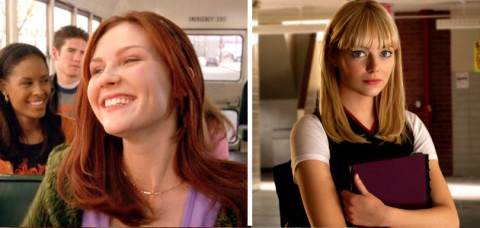
It seems like only yesterday comic book fans were all excited about the very first Spider-Man movie — Sam Raimi’s 2002 take on the webslinging superhero, starring Tobey Maguire and Kirsten Dunst. With Andrew Garfield and Emma Stone stepping in to lead Marc Webb’s high school-set The Amazing Spider-Man , a lot of people are wondering if the reboot is any different at all. Time will tell if fans decide Amazing is better or worse, or maybe just the same as Raimi’s Spider-Man — but looking back on interviews from 2002’s Spider-Man junket, it turned out some of the exact same questions were asked of both sets of directors and stars. If you’re not sure whether The Amazing Spider-Man is a fresh take on the Marvel superhero tale you’ve seen before, see if the filmmakers’ answers to the same questions convince you. (Boy, Kirsten Dunst sounded so young back then!) Directors Sam Raimi and Marc Webb were both asked: How did you approach the humorous/wisecracking side of Spider-Man ? Sam Raimi: It’s just like if you go to tell a joke that you heard or if you read 40 years of Spider-Man comic books and now it’s your turn to tell the Spider-Man origin story, if you said, “Well, there was this radioactive spider that bit this kid,” if that’s how you chose to tell it, you’d be telling it a very different way than I would tell it. I would have to start with who the kid was, what his problems are and what things meant to him. So, I understood what the transformation meant to him. I think everybody just tells it differently and I didn’t have a good plan for how I was going to tell it. I just told it the way I saw it. Marc Webb: That’s something from the comics that I’ve always been really a fan of. Humor is a tricky thing because it’s very subjective. The first domino is Peter Parker getting left behind by his parents. I thought to myself, “What does that do to someone? How does that change your view of the world?” To me, it creates a little bit of a level of distrust. There is a sarcasm that comes from that and the quipiness, like in the car thief scene where that attitude comes out. That generates from this chip on his shoulder. It’s a little bit mean and he’s a little bit snarky, but that’s an attitude that we can all understand and relate to. Both Tobey Maguire and Andrew Garfield were asked: What was your physical training to bulk up? Tobey Maguire: I worked very hard. I trained for a little while before I even screen tested, or before I got the role because I knew the screen test was coming up, so I just went on a little bit of a training routine and a diet myself. Then I was cast and worked out for five months, six days a week, anywhere from an hour and a half to four hours a day, a combination of gymnastics, martial arts, yoga, weight lifting, high end cardio like cycling and running, and I had a very specific diet, worked with a nutritionist. I did do some protein shakes, but no weight gain power. I had to eat a lot of food. I’m a vegetarian so I did have to concentrate on eating enough protein and I would get that through soy and nuts and beans and shakes. A lot of the protein powders are made from animal products, so that was kind of tricky for me too. Andrew Garfield: The training is horrible, like the physical training changed my body because I’m a lazy guy. I’m vain, but I’m not vain enough to care about the gym. And Armando Alarcon was my trainer and he’s a fantastic trainer and a terrible person. [Laughs] I have very confused feelings about Armando. Wherever he is, he knows that. He’s hiding from me because he will be murdered one day. No, but we had a great time. I was thankful for him. He kept me on an even keel all the way through, and that combined with the whole stunt team was a pretty awesome experience. Both Kirsten Dunst and Emma Stone were asked: How did it feel to change your hair color? Kristen Dunst: You know, my hair wasn’t completely red. It was only red in the front. So it kinda just looked like punk rockish or something. It was cool, I liked it. It’s just like the red streak. People were like, ‘Why do you have a red streak in your hair?’ I said, ‘Well, I’m doing the movie Spider-Man and my hair is too short to dye all my hair so I have wear a wig.’ Nothing major. Emma Stone: I’ll tell you. I dyed my hair brown when I was 15 and I was first auditioning in LA. I sounded pretty much like I do now and my personality was pretty much the same, which was a little bit weird for parts for 15-year-olds. So a lot of the time it was during pilot season and I was going out for a lot of Disney Channel and stuff, and I don’t know if I exactly fit into the mold. So I dyed my hair brown and a week later I got my first role, which actually worked out so it was kind of cool. And then a couple of years went by and I was cast in Superbad. I was at the camera test for that movie and Martha MacIsaac, who played Becca in the movie, had brown hair. Judd Apatow I just remember walked in and said, “Make it red” to the hair person. So they took me to the hair salon the next day and they dyed my hair red. My mom is a redhead naturally, so I guess I have the skin tone for a redhead. So they made my hair red and I’m telling you, for five years I tried to get it back to blonde but for every role people would be like, “Oh, we want it red. We want it strawberry blonde. We need a shade of red, just something red.” So I stayed red. I love having red hair so I’m sure it’ll happen again someday. Both Tobey Maguire and Andrew Garfield were asked: Did you have any difficulties with the costume? Tobey Maguire: In the beginning I did a cast of my entire body, which was not fun because I had to stand there for a couple hours and then the stuff stuck to the hair on my body and they ripped it off. It was extremely painful. The suit was fine and by the time I got to wearing it on the set, I was fine, especially if you’re moving around and doing the action. You don’t even think about it and it would give me a freedom that I didn’t otherwise feel. I mean, if I was moving around the way Spider-Man moves without that suit on, I think I’d probably feel a little silly. If I started crawling across this table with my clothes on, I’d probably be a little embarrassed about it. Andrew Garfield: You know, I had many issues with that costume. But every actor who plays a superhero is like, ‘The costume sucked.” Like, we should just get together to talk about it because it’s so inappropriate to talk about in public. It’s like, how dare we complain? We’re the ones that get to wear it! It’s the dream. But, it was so terrible. Let me just put it this way: the fantasy of wearing those costumes is really awesome. Just enjoy that. Both Tobey Maguire and Andrew Garfield were asked: How did you identify with Peter Parker? Tobey Maguire: Quite a bit seeing as though I was playing him. I identified with the character very strongly in some ways reflecting back in my life and in some ways things that are currently going on for me. I think that he basically is dealing with becoming an adult with extreme circumstances that he has superhuman powers and that complicates things or makes him come to decisions quicker. I think he’s very relatable to everybody in that way, that it’s just like becoming an adult basically. With great power comes great responsibility and I think it’s a great power when you realize at some point that you have free will and you’ve got to make choices in how to live your life and what existence is to you and what kind of purpose do you have to your life and I think those are the things that Peter Parker struggles with, so I relate to that. Andrew Garfield: I think it’s important to me that he started with a heroic impulse, without the physical power to do anything with it. That was always how I felt growing up. You know, I felt like an underdog, and I was a skinny kid. Now, I’m not. Obviously, I’m a huge bruiser. [Joking] I got over that problem. Now I just realize that being skinny is okay. I always thought I should have been bigger for some reason because society tells you that. Everyone played rugby and I played rugby and I was good at it, but I got concussed all the time because I was a weakling. So that was something I always identified with for Peter. He always felt stronger on the inside than he did on the outside. And there’s nothing better than seeing a skinny guy beat the crap out of big guys. That was important for me. Both Kirsten Dunst and Emma Stone were asked: What attracted you to the role of Mary Jane/Gwen Stacy? Kirsten Dunst: I think it was that I could make a superhero for the girls to look up to and she had a good journey of her own. I felt the romance is one of the core emotional drives of Spider-Man during the film. I really felt it was an important part and not just the girlie-girl flying around. Emma Stone: At first I had met [Producer] Laura Ziskin really earn on, maybe two weeks after it was announced for Mary Jane. I’d always wanted to play Mary Jane. I thought Mary Jane was so great. And then a couple of months went by and they called me again and said, “We’d like you to audition, but the part’s Gwen Stacy.” So I looked into the story of Gwen and I just feel in love with Gwen’s story because it is so incredibly epic and tragic and incredible in the way that it affect Peter going forward with Mary Jane, who is another character that I love. Both Sam Raimi and Marc Webb were asked why they cast Tobey Maguire/Andrew Garfield. Sam Raimi: I was very luck to work with Tobey Maguire. I really think he’s a great Peter Parker because the strength of Stan Lee and Steve Ditko’s creation has always been that Spider-Man is one of us. I needed somebody that was identifiable to the audience, somebody whose ability to act was invisible, no artifice. Tobey’s smart. He has a high regard for the audience and the camera, and a great respect for the camera. I think he believes, without him saying so, that if he simply believes a thought or is in the moment, that the camera records it and the audience receives it. Marc Webb: I had known his work from Boy A and Red Riding . If you look at Boy A , yes, there’s a childlike quality in the way he moves and behaves in that film is pretty extraordinary versus in Red Riding , he had this incredible intensity and focus. Very different kind of character. And then when he was auditioning and we were watching him, he had a rare combination. He can do the emotional gravitas that’s required. Peter Parker has a lot of tragedy in his life but he’s also got whimsy. He’s also funny and alive and light and sarcastic. Those are the kind of attributes that I really wanted to explore in the film. So you have that and then he has an incredible physical stamina. When you’re doing a movie that requires this level of physical intensity, we tried to especially at the beginning part of the movie, do a lot of the stunts a more practical way. That requires a very, very significant amount of effort on the part of the actor and for someone to have that kind of maturity and focus is really, really tricky. All abiding in somebody who can convincingly behave like a teenager. Both Kirsten Dunst and Emma Stone were asked: Do you see yourself as a role model? Kirsten Dunst: I do in a way. I see how much movies affect people or this or that. I do feel like I have some responsibility. Yeah, I do. I’m going to be myself and I’m not going to change for anybody. It’s worked so far and luckily I’m okay. I haven’t gone off track. Emma Stone: I will say – and I’ve thought about this for a long time – I don’t in any way, shape or form think that I am any type of a role model or anything like that. But for whatever reason when you’re put in a public place, you have to figure out what that purpose is in your life, why that may have happened or what you can possibly do with something like that. There’s something that came with getting a Revlon contract, actually. They approached me for the Revlon contract and I thought, “Why in the world would I be approached for a beauty campaign?” because I’d always been the funny girl. And that’s not to put myself down, that was always the way that my brain worked. And then I thought about Diane Keaton for L’Oreal and Ellen Degeneres for Cover Girl and how sometimes real beauty gets to be celebrated, like what’s inside is what counts. You can still feel beautiful or put makeup on because it makes you feel good and not for anybody else. And that was something that I was like, “Well, if I have an opportunity to possibly reach people or reach young girls in a way that makes them feel like what they are is enough and what the balance of their personality that set them apart and that made them original, if they feel good about that in any way, if that affects one person, then that’s a game-changer.” That’s something that I’m proud to be helpful in any way of looking real or being a real person. Yeah, I do feel a slight not responsibility but privilege to be able to speak to younger girls and hopefully make them feel like it’s okay to be themselves. Are the two Spideys so different? Did each set of filmmakers and stars come from similar places with their versions of the mythology? Which did you like better? Follow Fred Topel on Twitter . Follow Movieline on Twitter .
We don’t see the writer in Robert Longfellow (Martin Donovan) for some significant time in Collaborator , Donovan’s pensive, carefully woven writing and directing debut. Robert is a stalled playwright, and when we meet him, he’s fleeing New York after poison-tipped reviews have slain his latest, long-awaited effort. Headed home to Los Angeles swaddled in self-pity, he must attend to his mother (Katherine Helmond), some Hollywood hack work, a simmering movie star (Olivia Williams) and a frustrated wife (former Hole bassist Melissa Auf der Maur) stashed in a frosty East Coast locale. But Robert looks mostly inward, giving everyone else the vague but warm-eyed attention Donovan has brought to his work as a Hal Hartley muse and in a host of supporting roles. He’s at his fuzziest with Gus (a hulking David Morse in a handlebar mustache), formerly the shady older kid from across the street, currently the ex-con still living with his mother opposite the Longfellow homestead. Gus has a habit of sneaking up on Robert while he’s home visiting his mom, and in his gracious, facetious way Robert agrees to have a beer with him before he leaves. Of much greater concern is a long-anticipated assignation with Williams (assured in a small, tricky role), whom Robert turns to for comfort, damn those clichéd torpedoes. A lot of Collaborator ’s moving parts shouldn’t work, from the celebrity there for the taking to the painful contrast of smug self-consciousness and barreling authenticity set up between Robert and Gus. But Donovan manages to find a convincing balance between broad strokes and a small canvas, so that when Gus turns a guilt-induced beer between the two men into forced captivity, rather than gory melodrama what takes shape is a character piece that makes a literary job of deconstructing the hostage thriller. Morse has a casual, unwieldy menace as the beer- and pill-addled Gus. A life in trouble with the law has made something of a bipolar ironist of him; he’s cheerfully pragmatic one minute, dark and doleful the next. When Robert realizes that being waylaid en route to Williams has turned into what the SWAT team gathering outside his door might call a situation , rather than triggering panic and fear, it instigates a slower, more considered transformation in his demeanor. The direction is as calm and deliberate as the captive is, and the tension that develops has a natural rhythm to it. Robert the writer has taken over, and we watch his experience of the ordeal slide from shock to a narrative remove. The writing is relaxed in the right places and heightened to a largely effective degree when it counts. Whether Gus’s lot in life is the result of a failure of imagination comes up for discussion, and Robert suggests a storytelling exercise to help explain his craft but also his approach to and place in the world. A left turn near the end re-draws their dynamic as that of opposing political ideologies, and there it is Morse’s brute sincerity that keeps the scenes from tipping into cant. By that point we can see Robert culling and appropriating in real time, a process that culminates with a window onto the storyteller’s succubus heart. And a worn dramatic arc is renewed with the spark of life. Follow Michelle Orange on Twitter . Follow Movieline on Twitter .
The unofficial and slightly bizarre-sounding Raging Bull II sequel may be currently filming , but that will be moot if original Raging Bull studio MGM gets its way in a lawsuit filed this week. Claiming breach of contract over a 1976 agreement signed by boxer Jake LaMotta, MGM claims they had first offer-rights to any sequels to the Martin Scorsese classic — and since the makers of Raging Bull II are billing the pic as a sequel (the numeric title is hard to argue around), the studio is crying foul. If MGM has its way, not only will the film never see release, its makers could face compensatory damages of an amount intended to deter future imitators. Could this be the end of Raging Bull II and similar faux-sequels? Developing… [ Deadline ]
For the first three hours and 20 minutes, I was totally with Savages . During the middle two hours and 25 minutes, I was reasonably intrigued to see how it would all turn out. But through the final six hours and 48 minutes, I kept sneaking glances at my watch, just wishing that Oliver Stone would hurry up and cap off this wiggly-waggly tale of two marijuana-entrepreneur buddies, their shared girlfriend, and a host of Mexican drug baddies led by Salma Hayek wearing a black bobbed wig that’s half Cleopatra, half Bettie Page. Savages isn’t really 12 hours and 33 minutes long – it’s actually only 8 hours and 22 minutes long – but there’s just no shaking the feeling that it would be so much better if Stone had made it trimmer and more taut and limited himself to the use of only 12 different types of film stock. It’s also not clear, exactly, why the movie exists in the first place: That creaky-wheel groan you hear throughout is the sound of Stone anxiously trying to have fun again, after several years of making desperately serious documentaries (the 2009 South of the Border ), useless sequels (the 2010 Wall Street: Money Never Sleeps ) and observant but ultimately toothless semi-biopics (the 2008 W. ). Savages is, in places, brutal in an old-school way, as if Stone were exercising muscles that have long been out of use. But if the movie is sometimes desperately alive, it’s also cluelessly shallow. Perhaps Stone wanted to make a violent entertainment that speaks to our current age, a time when ruthlessness and greed have reached irreversible proportions, a picture in which characters grow and change but perhaps do so too late. But Stone’s moralism, coupled with discreet but bloody beatings, shootouts and all manner of tawdry goings on, rings hollow. The picture is neither entertaining nor preachy – it is simply very loudly meh. Taylor Kitsch and Aaron Johnson star, respectively, as Chon and Ben, best pals who grow pot for a living in California and also willingly share the same girlfriend, a modern-day rich-hippie-girl free spirit known as O, short for Ophelia ( Blake Lively ). Chon is a war vet who does business by the tooth-and-claw method. Ben is a gentle sort who likes the pot business because it’s “green,” and he spends whatever money he makes doing good deeds in other parts of the world. (To suggest this, Stone treats us to images of Ben, with his ropy hair and razor-averse facial whiskers, teaching the alphabet or something to little naked tropical children.) Though Ben and Chon have been friends since high school, they appear to have little in common temperamentally. It’s O who connects them. Chon is a “baddist,” O explains in voice-over, while Ben is a “Buddhist.” “For me, together they are one complete man,” she goes on to explain. “The one thing they have in common is me. I’m the home they’ve never had.” Trouble brews when Ben and Chon run afoul of some potential business associates, simply because the two refuse to bow to anyone’s bullying. By the time Benicio Del Toro shows up, looking puffy and dissolute and ill-tempered, you know some very bad things are gonna go down. John Travolta also shuffles in, intermittently, as a fast-talking, wheeler-dealer DEA guy with a shaved-stubble hairdo. And Hayek, as drug queenpin extraordinaire Elena, provides heavy doses of eye candy, lounging languidly in her extravagant south-of-the-border headquarters as she devises nasty punishments for anyone who might dare cross her. Savages , based on the novel by Don Winslow, holds the essence of a compact, brutal little thriller. But somewhere along the way – perhaps the problem begins with the screenplay, written by Stone, Winslow and Shane Salerno – the story becomes unwieldy and overstuffed, taking not-very-surprising turns it doesn’t need to take. (The dialogue also includes some classic Stone-style howlers, as when del Toro asks to see Ben’s hands and then pronounces them “soft – like a woman’s!”) The key actors, particularly Kitsch and Johnson, try to give their characters a degree of roundness that doesn’t appear to have been written into those characters in the first place. And for people involved, at any level, in the drug trade, they come off as shockingly naïve. There’s a point at which Johnson’s Ben suddenly realizes he and Chon have become mixed up with some very bad people, and you want to ask where on Earth he’s been for the past 20 years. In fact, even though Savages is a supremely macho tale of drug-dealing and extreme business practices, it’s actually the women who make it worth watching. Hayek makes the kind of villainess who’d be right at home in a late-’40s noir or a ’50s exploitation extravaganza – she purrs through her role like a take-no-prisoners kitten with very sharp teeth. And Lively continues her run as a young actress with an undeniable spark of something. She keys into O’s vulnerability and her rich-girl guilelessness: When O is mistreated (to put it mildly) by Hayek and her gang, she seems certain that her rich mommy can make it all better. We see how ridiculous that belief is, but it makes sense that O would cling to it, and Lively channels that wispy callowness as opposed to just playing a list of character traits. She’s touching, but in the lightest possible way, a sunbeam in the midst of Stone’s heavy-handed universe. O is the most civilized character in Savages , and Lively gives the most open, unstudied performance here. She’s an actress who’s sophisticated in ways she probably doesn’t even realize. Follow Stephanie Zacharek on Twitter . Follow Movieline on Twitter .