Every single time someone comes through with a crazy, ridiculous dunk we sports writers automatically and inaccurately call it the craziest dunk ever. It’s a total knee-jerk reaction, and one that dilutes the very small pool of truly amazing dunks out there. … That being said, during Sunday afternoon’s Miami Heat versus Chicago Bulls showdown, LeBron James gave us the craziest dunk ever. No joke… Broadcasting platform : YouTube Source : Opposing Views Discovery Date : 29/01/2012 21:49 Number of articles : 2
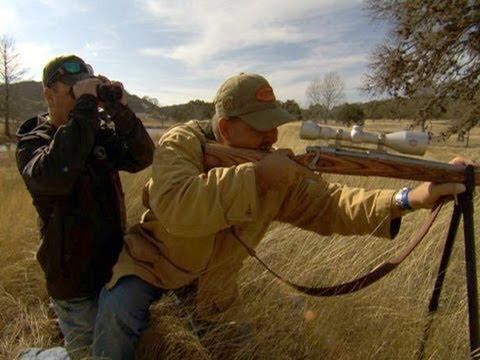
Can hunting save an endangered species? Yes. In Africa hunting has been critical to the conservation of a number of species, despite the sometimes opposition of the United States which can prohibit US citizens from hunting even in foreign countries. I was surprised to discover, however, that “some exotic animal species that are endangered in Africa Broadcasting platform : YouTube Source : Marginal Revolution Discovery Date : 30/01/2012 00:36 Number of articles : 2
Asked at last night’s Florida Republican debate if Mitt Romney and Newt Gingrich should return money made from Fannie Mae and Freddie Mac, Ron Paul responded: “That subject really doesn’t interest me a whole lot.” The Texas congressman might not be #1 in the polls, but he showed last night that when given a proper forum, he’s as substantive as anyone – and funny too. Asked where he stands on Newt Gingrich’s proposal to put a permanent base on the moon by 2020, Paul said, “Well, I don’t think we should go to the moon.” “I think we maybe should send some politicians up there.” Florida GOP Debate Highlights: Ron Paul Edition! Paul, who at 76 would be the oldest person ever elected President of the United States also drew cheers in his response to a question about his medical records. Noting that his records are “about one page, if even that long,” Paul challenged his cohorts to “a 25-mile bike ride, any time, any day in the heat of Texas.” But, you know, there are laws against age discrimination, so if you push this too much, you better be careful,” he quipped, and he wasn’t done by a long shot. Asked by CNN moderator Wolf Blitzer what he would say if Raul Castro called him in the Oval Office, Paul said, “Well, I’d ask what he called about, you know?” Which isn’t to say Paul’s wit was his only asset. He routinely scored points with his strong responses, especially regarding monetary policy and civil liberties. Florida’s primary is Tuesday, January 31.
Wolves, like most animals, know a lot of things that humans don’t. When bad white men move onto their turf to do bad white-man stuff – like drilling for oil – they instinctively know something’s amiss in the balance of nature, and damned if they’re going to just sit back in their dens and fuhgeddaboutit. In The Grey, wolves unleash their fury at mankind in a bloody yet tasteful flurry of stamping paws and gnashing teeth; mankind fights back as best he can, which in this particular case, is not very well. What’s not surprising about the picture, considering it was directed by the guy behind movies like Smokin’ Aces and The A-Team, Joe Carnahan, is how absurdly macho some of the dialogue is. (My favorite line, uttered by a character after he’s witnessed one too many wolf-inflicted deaths: “This is fuck city, population 5 and dwindling.”) What is surprising is how poetic the movie is, partly thanks to its high-lonesome sound design and the desolate beauty of its visuals, but mostly because of its star, Liam Neeson. He knows what the wolves know, only he’s not telling. Neeson plays Ottway, a sharpshooter stationed at an Alaskan oil refinery, where hard men work even harder shifts, toiling for five weeks straight before being freed for two weeks of vacation. It’s Ottway’s job to pick off the bears and other assorted critters who might prey on the men as they work. He’s good with a gun for sure, but he also takes the killing part of his job seriously: In the movie’s early moments, he approaches a wolf he’s just shot — it lies in the snow, bloodied but hardly drained of its dignity — and places his hand on the animal’s flank as it draws its last breath. Ottway may be good at his job, but he doesn’t derive any pleasure from it. And we learn early on that something is deeply amiss in his personal life as well: We see him scratching out a desperate letter to a loved one — with a fountain pen, no less — even though he knows it can’t possibly bring her back. We also see him draw back from the brink of taking his own life: Ottway is one unhappy guy, but what happens shortly thereafter galvanizes him. He and a bunch of the oil workers board a plane bound for civilization. The craft goes down somewhere in sub-Arctic territory. A handful survive the crash — they’re played largely by a cache of actors you’ve vaguely heard of, people like Dallas Roberts, James Badge Dale and Frank Grillo; Dermot Mulroney, mildly disguised by thick glasses and unruly hair, is the one immediately familiar face. But it’s only after the group has managed to pull themselves from the wreckage and patch themselves up that they face the real threat: A group of wolves who stalk them with an almost mystical zeal, not for food but seemingly for sport. Or revenge. Ottway, being the guy who knows all about wolves, urges the men — whose numbers, predictably, dwindle as the story tramps through the snow to its half-rousing, half-bittersweet ending — to fight back, using home-made weapons like improvised bang sticks fashioned from sharpened sticks and bullet casings. (If you’re like me, you probably have no idea what a bang stick is; but if you watch The Grey, you will.) Carnahan has fashioned a movie that’s largely an endurance test. Some pretty awful things happen to some characters we come to care about, and the picture carries you along on a wave of vaguely sickening feelings: You keep watching, wondering what bad thing is going to happen next. But The Grey also offers plenty of moments of grace and beauty, moments that are less pure hokum than pure movie. Just before that plane goes down, as the sleepy travelers doze, we sense that the cabin has suddenly become very cold: The men’s breath hangs in the air, taking wispy forms that just might be — wolf ghosts? Later, after the men have trekked across a broad swath of blank, snowy terrain toward a stand of trees, they peer into the darkness of the forest only to see multiple sets of glowing pin-dot eyes staring back at them. The Grey is all about man vs. nature, and how. There’s also some man vs. man and a lot of man vs. himself mixed in there too. You can bet that the most obnoxious crash survivor — the one every other character not-so-secretly despises, and the one you really wish had died early on, played with cranky effectiveness by Grillo — will redeem himself spectacularly by the end. There are many instances, perhaps too many, of men speaking sentimentally of their families, or of their lack of family. But the picture — which was written by Carnahan and Ian Mackenzie Jeffers, from a short story by Jeffers — keeps working, almost in spite of itself, partly because of its despairing, gorgeous visuals. The picture was shot on location in damn-cold British Columbia. (The cinematographer is Masanobu Takayanagi, whose credits include the recent underground stealth hit Warrior. ) And the very quietness of the movie is a big selling point. There’s gore here, but it’s the artful sort, consisting of things like tableaus of half-glimpsed bloody carcasses nestled in sparkly-white snow. And Carnahan is smart enough to know what not to show. When those largely unseen wolves start hooting and moaning, the sound goes right through you: It’s a howl of existential pain from nature’s peanut gallery. No wonder Ottway feels that pain so keenly. And yet Neeson keeps him from becoming a caricature. Even though the role demands a significant amount of action and physical derring-do, most of Ottway’s struggle is happening inside, and Neeson reveals his character’s suffering gradually, in small bursts of light and shadow. I can’t imagine what it’s like for an actor who has only recently lost his wife to play a man who feels kinship, anger and exquisite loneliness in the company of wolves. Whatever Neeson’s private thoughts and feelings are, you can’t escape the suspicion that he’s channeling them here, placing them before us in muted, unspoken form. It doesn’t hurt that Neeson looks more handsome and noble than ever, particularly with that defiantly regal nose: The Romans, supposedly, never took up residence in Ireland. So how, then, did Neeson’s profile find its way onto their coins? You can take or leave most of the dialogue The Grey requires Neeson to utter, perfunctory stuff along the lines of “They weren’t eating him –- they were killing him” and “We’re a threat –- we don’t belong here.” But it’s hard to ignore the shifts of dusky feeling that play across his face. It’s as if those vaporous wolf ghosts have taken up residence there, in a place where macho posturing is only a small part of what the movies are about. Follow Stephanie Zacharek on Twitter . Follow Movieline on Twitter .
Some adaptations of great literature become so beloved and important in their own right that it can be hard to separate where the book ends and the movie begins. To Kill a Mockingbird is one of those cases. Released in 1962, two years after Harper Lee’s novel was published, the movie propelled the nationwide discussion on racial inequality and introduced characters that went against the norm yet were easy to relate and aspire to. Scout and Atticus Finch are finding their footing in a challenging environment, not an alien concept for generations of junior high and high school kids who are assigned to read the book. These days, those students might also be shown director Robert Mulligan’s classic film — featuring Gregory Peck in an indelible, Oscar-winning turn as Atticus Finch, a Southern attorney who defends an African-American man unjustly accused of rape — as a complement to Lee’s book. The movie has left an impression on generations of Americans, but two women with a close relationship to it — Peck’s onscreen daughter, Mary Badham, and his actual daughter, the filmmaker Cecilia Peck — found that it steered them into adulthood in a more direct way. (The Atticus role is so inseparable from Peck and his legacy that Badham, herself an Oscar nominee for her performance as Scout Finch, still refers to the actor as Atticus half a century later.) Indeed, an adult revisiting To Kill a Mockingbird will discover a new perspective on the story and its lessons, going beyond the adventures of Scout, Jem and Dill. For Badham and Peck, taking a look back also reveals how Atticus, and the man who played him so perfectly on film, shaped them as adults and as parents. Mockingbird is celebrating its 50th anniversary with a new collector’s edition DVD, due Jan. 31. Movieline caught up with Mary Badham and Cecilia Peck to talk about their memories of Gregory Peck, their affinity for Scout and the influence the film had on them and the nation. What was your relationship with each other at the time, and in the years since? Peck: It’s a family. I was 3, but Mary was like part of the family and has been ever since. Right, Mary? Badham: Yes, she’s the little sister I never had. And, yeah, Atticus was my other daddy. I lost my parents very early in my life. My mom died three weeks after I graduated from high school, and my dad died two years after I got married. So it was nothing for me to pick up the phone, and he [Peck] would be calling to check and make sure I was doing OK. If he was going to be somewhere doing his one-man show, he’d find out if I could come to him, and sometimes he’d come visit me. It was great, and whenever I’m out in California I go visit the family. Atticus and [Peck’s wife, Veronique] were great role models for me as parents, and I just can’t say enough things about what a great role model Atticus was especially. That’s so important for children when they’re growing up, to have a strong male role model. Did you realize at the time of the film’s release how important and beloved the story of To Kill a Mockingbird was? Badham: I had no idea, being all of 9 or 10 years old at the time, anything about the importance of the film at all. Now that I’m an adult, I am so pleased and honored to be a part of something that was so important to so many thousands and millions of people, and that has done so much good in this world. Peck: I had always known that my father was in a great film, and one of the favorite films of all time, and he won the Oscar for it. But for me, when my father was doing that one-man show that Mary mentioned that I filmed for a documentary called A Conversation With Gregory Peck in ’99 and 2000 — and Mary was often there — I heard how many people in the audiences had gone to law school because of Atticus or named their child Gregory or Atticus or named their daughters Scout. It wasn’t until then that I realized how lasting the influence of the film was on our whole nation, or fully became aware of how many generations of people it affected, and still does. Badham: The book is taught in all the high schools. It’s mandatory reading. A lot of my time is spent on the road visiting high schools, colleges, universities, libraries, talking about the importance of the book and the film and doing historical studies of then and when I was growing up, and to now and how it’s pertinent today. Peck: [My son] Harper’s reading it this year, in seventh grade. Badham: There you go! Peck: They’re just starting it. Badham: It’s so great that they teach it. I’ve been to England and Russia with this, and it’s just amazing. It has touched people all over the world. Has Harper seen the film? Peck: Yes, he’s seen the film. He’s seen it ever since he was little, and we all got together and watched it this spring when Mary was in Los Angeles at Grauman’s Chinese Theater as part of the TCM Classic Film Festival. So he was there — which we all were, onstage — and we were all talking about it. I think he does have a sense of what the film means. His school is doing a program on Martin Luther King right now, so reading the book and seeing the film is connected to their studies of the Civil Rights Movement. I think the film, which did come out before the civil rights legislation in our country, and before Martin Luther King’s “I Have a Dream” speech, was one of the ways that allowed people to start the dialogue about racism, which was so important at the time. It was ahead of its time, don’t you think, Mary? It was one of the first films that dealt with that subject. Badham: Exactly. And it gave the nation a way to talk about a subject that desperately needed to be discussed, and people were past ready to talk about it, but they didn’t know how to begin. But this gave them a stepping stone to work through it. That’s the way I understand it. To have a film such as The Help coming out this year, and up for nominations as well — it’s got some nominations for Academy Awards — I really feel it’s interesting that here, 50 years later, we have another film that’s still discussing this. It speaks to so much that’s going on today. To me, the root of all evil is ignorance, and this book speaks directly to the importance of getting an education because ignorance breeds things like bigotry and racism, and all that hatred. We’re still dealing with that, right here in the United States, if we’re talking about Muslims or Mexicans or immigrants, you know, it’s a major deal right now. So we’re still grappling with these issues. It’s just that people have changed their clothes, that’s all. This is not a 1930s black-and-white issue, this is here and now, today. (L-R) Mary Badham, Cecilia Peck and Veronique Peck at a screening of To Kill a Mockingbird in 2011 Do you think the 50th anniversary will shed more light on the film and introduce it to a new generation? Badham: I hope so. Peck: I know the collector’s edition that Universal has put together is such a beautiful gift and keepsake. I don’t know if you’ve seen it yet, Mary … Badham: Not yet. Peck: It’s got great script notes, some of the pages of the script with [Peck’s] notes of shooting, notes in the margin, and there are two documentaries … what else is in there? Harper [Lee] wrote something. My mother wrote something. It’s absolutely beautiful, and just full of treasures. The book, as Mary talked about, is read every year, and the movie is seen every year, but they have a really beautiful new edition coming out. What are each of your relationships with the character Scout Finch, and how would you say it’s changed over the years? Badham: Well, for me, I really feel like Scout was me as a child. I was very much a tomboy. I’ve always been rather outspoken [laughs], headstrong, and I’m pretty much that way to this day. I think that’s why they picked me for the role, and picked each of the actors for their role, because they were, in real life, so much like the character that they would be portraying. Gregory Peck was totally Atticus. I mean, there couldn’t have been anybody else picked for that role. Peck: For me, I think of all the little girls in the world who must have wished that they had Atticus as their dad, being Scout, and I did. And I think my father was so much an Atticus and became even more of an Atticus after playing this role. He parented us exactly like Atticus parented his children, except for the constant presence of his true love, my mother, Veronique. I think I wanted to be Scout, and tried to be like Scout, and look like Scout, too — right Mary? We did look alike … Badham: [Laughing] Yeah! Peck: … and maybe I took on a little bit of that dynamic with him of being a little bit of an outspoken, rebellious daughter, and then getting to have him as a real-life dad. Badham: He was such a proud but gentle daddy. He was the perfect balance, but the best thing about him was he had his sense of humor. Wouldn’t you agree, Cecilia? He loved to laugh and make other people laugh. Peck: Yes, people don’t really know that about him, but he was so witty and so charming, and so much fun to be with. I tried to show that side of him in A Conversation With Gregory Peck, which I did think gave people an insight into how funny he was. Badham: Yeah. Right. I thought you did a brilliant job with that. Peck: He was half Irish, and he had a real Irish wit. Did your view of the Atticus character change as you reached adulthood and became parents yourselves? Badham: I think it made us more mindful of what it is to be a parent. It’s one thing to have children. It’s something else to be a true parent, and the character of Atticus helped lead the way. And we had it in living, breathing reality with him because he embodied that whole sensibility of needing the respect of his children and demanding of himself to be the best role model for us that he could be. Wouldn’t you agree, Cecilia? Peck: Yes. I can’t even separate my dad and Atticus as far as parenting. My dad was extremely strict with us, but also fair and decent, but very strict. I rebelled against it, and we clashed a lot in my teenage years and I felt misunderstood, but now I’m exactly like he was. Badham: [Laughs] Peck: [Laughing] You have to set boundaries when you’re a parent, and you don’t always understand it as a teenager, but it’s so important for the parent to draw the line. How else does your child know where the boundaries are? Badham: And that’s where they find their safety. I’ve heard the saying that to say “no” is the most loving thing that you can say to your children. To Kill a Mockingbird doesn’t shy away from difficult subjects. How did your parents guide you during the making of the film, and what impression did that have on you? Peck: I think it’s a film that exists on so many different levels that you’re able to understand what you’re able to at the time of seeing it. I know that when I was little I was drawn toward the father-daughter story and the Boo Radley story, but I didn’t understand everything about the trial. So it is a movie about parenting as well, about Atticus being a single parent, as well as the issue of racism and the issue of abuse, or rape. I don’t think that my dad addressed that, or my mom, before we were ready to understand it. That’s something I came to later, and now I’m actually doing a documentary on the subject of rape, so it’s definitely something that’s been part of my awareness, and I think as a parent it’s one of the most important subjects to address. I think you get from the book and the film what you’re ready for at the time. Badham: I would agree with that. I don’t think there was any discussion on that subject. It was sort of a larger question of good against evil. And what I found with this book and this film is I have a lot of parents come to me and they say, “I just don’t know if my child is ready for that.” And I say, well, you as the parent are the only one who can judge that, and a lot of times you don’t need to worry about that. Children are going to take away from it what they want to. Most of the time, children concentrate on what the kids are doing in the film, and the trial stuff just goes by the way. So, you know, and then adults focus on the trial because that’s more the adult thing. I think that’s the way our parents approached it. If we didn’t ask, they didn’t talk about it because there was no need to. We weren’t concerned about it. Even as you were making a movie that dealt with issues so straightforwardly? Peck: Scout doesn’t know, sitting on that balcony, exactly what Tom is accused of, right? Badham: Right. I mean, Atticus said it so simply, you know, it was the carnal knowledge of a woman. OK, well, fine. A child back then was so innocent. They had no clue about any of that. What they knew was that this person accusing Tom Robinson was a very bad person. He was a very ignorant, mean person. And what the children were more concerned about was that Atticus was going to try and help Tom, who was innocent, and make everything all right. And then they’re just totally devastated when he doesn’t win. But Atticus knew he was going to lose — and that’s part of the lesson of life. You don’t always win, but you have to try. The 50th anniversary edition of To Kill a Mockingbird arrives Tuesday, Jan. 31, on DVD and Blu-ray. [Photos: Getty Images]
www.youtube.com/watch?v=ioQQ0nQ43HY The incomparable Miss Etta James died today. You know her best for her song, “At Last”. I want to remind you of something wonderful she did on January 20th, 2009. During Barack Obama’s Inaugural Ball, singer Beyonce performed a dreadful rendition of “At Last” while Barack danced with Michelle Antoinette (who was wearing that ( more ) Broadcasting platform : YouTube Source : HillBuzz Discovery Date : 20/01/2012 17:47 Number of articles : 2
It’s interviews like this that make 1%er Michael Moore the most popular US director in Iran. In an interview recorded by CSPAN Michael Moore told an audience that the United States was founded on genocide and built on the backs … Continue reading → Broadcasting platform : YouTube Source : Gateway Pundit Discovery Date : 20/01/2012 21:10 Number of articles : 2
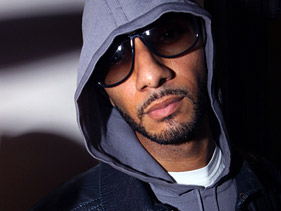
Action is among largest criminal copyright cases ever brought by the United States, Department of Justice confirms in statement to MTV News. By Rob Markman Swizz Beatz Photo: Johnny Nunez/ WireImage Megaupload’s problems continue to mount. On Wednesday, news broke that the popular file-sharing site had come under fire after Universal Music Group took issue with a promotional video featuring Universal Music Group artists like Kanye West , will.i.am and Diddy. Now, the site run by Swizz Beatz has been shut down. On Thursday (January 19), the federal government took the action against Megaupload.com, and also arrested several members of the company, hitting them with multiple racketeering and copyright infringement charges, according to a statement issued to MTV News by the U.S. Department of Justice. A federal indictment alleges that the site, which allows users to transfer large files, has generated more than $175 million in criminal proceed and costs copyright-holders more than $500 million in lost revenue from pirated movies, albums and other materials. Swizz Beatz, Megaupload’s CEO, was not charged in the indictment which was handed down on January 5, and as of now, it is unclear how the producer/rapper’s involvement with the company will play into the case. The Associated Press reported that Megaupload founder Kim Dotcom (also known as Kim Schmitz) was arrested Thursday in New Zealand along with three others. The Department of Justice said that this is among the largest criminal copyright cases ever brought by the United States. The news broke a day after major websites like Wikipedia and Google protested against the U.S. House of Representatives’ Stop Online Piracy Act, or SOPA , and the Senate’s similar Protect IP act. Representatives for Swizz Beatz had not responded to MTV News’ request for comment at press time. Related Artists Swizz Beatz
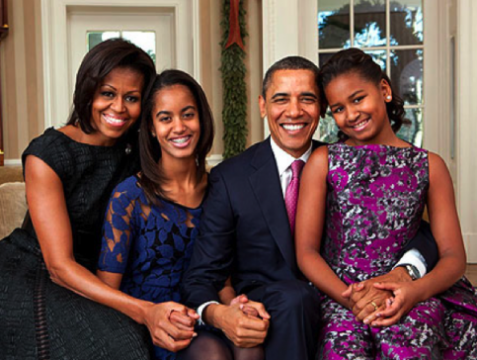
The First Lady of the United States, Michelle Obama, turns 48 today. The first-ever African-American First Lady, Michelle doesn’t describe herself in such terms. Instead, she doesn’t hesitate to say that first and foremost, she is Malia and Sasha’s mom, and that before that, she was a wife, lawyer and public servant. Here’s an official White House portrait of Michelle and family: Promoting Service and working with young people has remained a staple of her career and her interest in the White House, exemplified by her Let’s Move campaign to bring together communities in a nationwide effort to tackle childhood obesity. Michelle also co-founded Joining Forces, a nationwide initiative that mobilizes all sectors of society to give our service members and their families the opportunities and support they deserve, and to raise awareness of military families’ unique needs. Regardless of your political views, here’s wishing the First Lady a very happy birthday on this day. Click to enlarge some of our favorite Michelle Obama photos below!
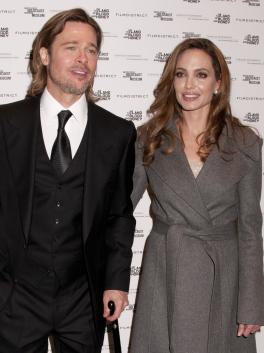
Angelina Jolie has spent plenty of time in Washington, D.C., as a United Nations Goodwill Ambassador, but yesterday, she visited the White House with Brad Pitt. There, they enjoyed a private meeting with President Barack Obama! The leader of the free world and Hollywood’s most famous couple dissected the New Hampshire primary . Kidding. They discussed a cause dear to Angelina’s heart … The plight of women caught up in war zones – such as the one depicted in her film The Land of Blood and Honey – and how the U.S. can get involved combating mass violence against civilians in troubled areas was Brangelina’s reason for visiting. Pitt, who has consulted with Obama regarding his plans for the redevelopment of New Orleans’ hurricane-ravaged Lower Ninth Ward, talked about that as well. You have to respect the couple’s commitment to these causes. No word on whether Secret Service confiscated Brad Pitt’s cane before he met with Obama. [Photos: WENN.com]