As many times as this kid was shot , he’s lucky to be alive. An 18-year-old man who was shot in the head, leg, arm and chest told friends he felt as if he’d been “punched in the head” and his “arm … blown off” after he was hit by gunfire in an Aurora, Colo., movie theater Friday morning. Louis Duran, 18, was released from the hospital and is recovering at home, said his high school friend Jahlil Hall. Hall visited Duran this morning and said his friend knew he was “lucky to be alive.” Duran skipped the usual Thursday basketball game he plays with Hall and friends, and instead attended the midnight screening of “The Dark Night Rises” with two high school friends, Hall said. He was sitting toward the front of the theater when he was hit by a spray of bullets unleashed by alleged gunman James Holmes. “He said it felt like getting punched in the head and it was really hot,” Hall said. “Then he felt like his arm had been blown off. He ran over to the stairs and some random guy helped him out of the theater.” One friend was grazed by a bullet, while another is in the intensive care unit at University Medical of Aurora, Hall said. Once outside, Duran took off his shirt and wrapped it around his head in order to apply pressure to his wounds, Hall said. “He was on the phone with his mom and just in complete shock,” he said. Duran was transported to the Medical Center of Aurora, where he was treated and released. “There are a ton of pellets still in him,” Hall said. “He’s lucky to be alive, definitely.” We wish him a speedy recovery. Our thoughts and prayers go out to all the friends and families of the victims at this time. Source Photo courtesy Jahlil Hall
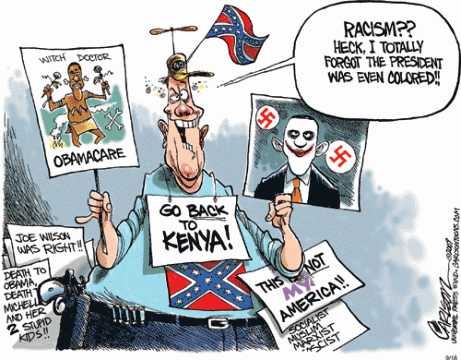
It’s no secret that President Obama is not a hero in the Republican circle, but the matter of his race is where America should draw the line. Yes, Obama is the country’s first Black president, and political pundits, conservative cartoonist, and all around racists, love to jump and attack his skin color… Continue
No blood donation for Frank Ocean ? The American Red Cross says power outages created by recent storms in the East and Midwest cut blood donations, which were already low this summer. In June there was a nationwide shortfall, with donations down more than 10% across the country. “We are asking people to please call 1-800-RED-CROSS or visit us at redcrossblood.org to find a way to donate if they can,” said Stephanie Millian, Red Cross director of biomedical communications. “We need people’s help.” One group that would like to help, but legally can’t, may be moving one step closer to eligibility. Since the 1980s, when the AIDS epidemic decimated their community, gay men — or MSMs (men who have sex with men) as they are called by federal agencies — have not been allowed to donate blood. In June, a group of 64 U.S. legislators led by Rep. Mike Quigley, D-Illinois, and Sen. John Kerry, D-Massachusetts, sent a letter to the Department of Health and Human Services encouraging it to move forward with a study that may lead to the end of the decades-old ban. “We remain concerned that a blanket deferral of MSM for any length of time both perpetuates the unwarranted discrimination against the bisexual and gay community and prevents healthy men from donating blood without a definitive finding of added benefit to the safety of the blood supply,” the letter said. “This is a matter of life and death and we are turning away over 50,000 healthy men who want to donate blood,” Quigley told CNN. “A straight person who has unsafe sex with multiple partners can give blood, and that creates a greater risk than a gay person in a monogamous relationship.” The policy started at a time when people didn’t know how the deadly virus that causes AIDS spread. At the time, there wasn’t a good test to detect whether HIV was present in donated blood, and HIV was getting into the nation’s blood supply. They knew this because hemophiliacs who were getting blood transfusions started showing symptoms of AIDS. What scientists also knew was that a disproportionate number of gay men were affected by the virus. To eliminate risk, the Food and Drug Administration added a screening question to the federal guidelines. Blood banks were instructed to ask male donors if they had had sex with a man, even once, since 1977. The FDA regards 1977 as the beginning of the AIDS epidemic in the United States. If the potential donor responded “yes,” he would automatically be removed from the donor pool for life. No similar questions were asked to screen out donors who engaged in other potentially risky sexual behavior. Donors weren’t asked about the number of partners they had, nor were they asked if their sexual partners had engaged in unprotected sex with other HIV positive partners. “While the Red Cross is obligated by law to follow the FDA guidelines, we continue to work with the AABB (formerly known as the American Association of Blood Banks) to push through policies that would be much more fair and consistent among donors who engage in similar risk activities,” Millian said. Scientists can now screen for most instances of HIV within days of infection, and the nation’s blood banks have called a lifetime ban “medically and scientifically unwarranted.” Men who have sex with men still are disproportionately affected by the virus and account for nearly half the approximately 1.2 million people living with HIV in the United States, according to the Centers for Disease Control and Prevention. But it is a person’s behavior, not their sexual orientation, that puts them at risk say health experts. While he is a gay man, Adam Denney thinks he would be the perfect candidate to donate blood. He doesn’t use IV drugs. He practices safer sex. He even educates people on how to prevent new HIV infections as a regular volunteer educator with AIDS Volunteers Inc. in Lexington, Kentucky. He thinks his exclusion is unfair. “Yes, gay men are still a high-risk community, but so are minority women, and there are no standards prohibiting them from donating. There would be rightful outrage against that kind of blanket population ban,” Denney said. “I am banned based on one reason only, my sexual orientation. It’s totally discriminatory.” When Denney went to donate at a blood drive on the Eastern Kentucky University Campus a few years ago, he said he knew what likely would happen when the nurses asked the sexual history question. “I did know what I was getting into, but I was shocked by how it felt to be rejected,” he said. “It was almost like they thought I wasn’t important enough to give blood, like because I was gay I didn’t count. It was a horrible feeling.” Nathan Schaefer with GMHC, an AIDS service organization, said Denney normally would be the type of donor blood banks are hungry for. Studies show those who give blood when they are young become regular lifetime donors, something most blood banks are struggling to find these days. GMHC has been fighting to change the ban for years. In 2010 GMHC joined a coalition of other nonprofits to encourage Congress to send a letter to HHS to end the ban, which some members of congress did. In June of that year, HHS brought together an independent panel of experts. The Advisory Committee on Blood Safety and Availability reviewed the policy and decided to keep it and concluded the ban was “suboptimal,” because it allows high-risk individuals to donate while keeping low-risk donors out. However, the expert committee also concluded “available scientific data are inadequate to support change to a specific alternate policy.” The panel suggested the policy not be changed and recommended further evaluation. HHS then promised to conduct feasibility studies to determine if there was a subset of the gay male population that would pose little or no threat to the blood supply. “We finally got them to stop defending the policy at the very least, which was pretty significant,” Schaefer said. The HHS is still determining the criteria for which part of the population to study. GMHC suggested the population to consider should include gay men who have had only one sex partner in the past six months. Spain and Italy, two countries with more progressive donor policies, hold everyone to that standard regardless of sexual orientation. Schaefer takes the point one step further. “A straight person could donate today after having unprotected sex with hundreds of partners, and in the United States they won’t ask about that behavior,” he said. He added that four out of five gay men are HIV negative, which he estimated means 2 million additional people could be blood donors. A 2010 study by the Williams Institute at the University of California-Los Angeles estimated that if gay men who had not had sexual contact for the past 12 months were allowed to donate blood, more than 53,000 additional men would likely make more than 89,000 blood donations. That number may seem small, but blood banks say it could help enormously, especially now, when blood supply shortages are common. After Denney was denied the chance to donate, he asked some of his friends to help him demonstrate outside the blood drive. They produced signs to raise awareness about the ban and distributed educational material. They also escorted people to the drive, because they wanted people to continue to donate. “A lot of people in the Bible Belt assume you have AIDS if you are a gay man,” he said. “We wanted them to understand that is not the case. We are banned based on an outdated policy. When people questioned us, I told them about how I always heard that people who donate blood are heroes. Gay men want to be heroes, too.” What do you think? Should this ban be lifted? Source
Please vote for me every hour here: www.artistsignal.com You can log in with Facebook and it takes 2 seconds, THANK YOU I hope you enjoy my cover of Justin Bieber’s “As Long As You Love Me”! I love his new album “Believe” and this is one of my favorite songs off of it. Let me know what you think! TWITTER twitter.com FACEBOOK www.facebook.com MERCH / WRISTBANDS! ArthurGarrosMusic.com TUMBLR http BLOGTV www.blogtv.com BUSINESS INQUIRIES inquiries@arthurgarrosmusic.com http://www.youtube.com/v/eu_lwDT5Au8?version=3&f=videos&app=youtube_gdata Read more from the original source: Justin Bieber – As Long As You Love Me ft. Big Sean (Cover by Arthur Garros)
As Long As You Love Me Justin Bieber ft Big Sean official music video lyrics PLEASE TWEET THIS TO JUSTIN BIEBER: clicktotweet.com TWITTER: twitter.com SHIRTS: www.districtlines.com 2ND CHANNEL: www.youtube.com COLLAB CHANNEL: www.youtube.com TUMBLR: www.connorfranta.tumblr.com FACEBOOK www.facebook.com INSTAGRAM: @ConnorFranta Mail Me Stuff Here: Connor Franta PO Box 0540 St. John’s University Collegeville, MN 56321 ALLI’S TWITTER: www.twitter.com JORDAN’S TWITTER: www.twitter.com Support Justin Bieber & Buy this song here: itunes.apple.com ___________________________________________________________ Thanks for sharing, supporting, and some other word with an s! Justin Bieber As Long As You Love Me ft big sean official music video lyrics Justin Bieber As Long As You Love Me ft big sean official music video lyrics Justin Bieber As Long As You Love Me ft big sean official music video lyrics Justin Bieber As Long As You Love Me ft big sean official music video lyrics Justin Bieber As Long As You Love Me ft big sean official music video lyrics http://www.youtube.com/v/1MHyGZZG2jo?version=3&f=videos&app=youtube_gdata Go here to read the rest: As Long As You Love Me – Justin Bieber ft. Big Sean (Music Video)
Resiliency Tested In Black Men To overcome Hardships Black men, especially those living in low-income, urban areas, face many societal stressors, including racial discrimination, incarceration and poverty. In addition, these men have poorer health outcomes. Now, a University of Missouri faculty member has studied these men’s efforts to negotiate social environments that are not designed to help them attain good health and success. “Too often, researchers focus on Black men’s weaknesses rather than their strengths,” said Michelle Teti, assistant professor of health sciences in the MU School of Health Professions. “By understanding what’s working, we can reinforce those positive behaviors and help men make healthier choices.” The study explored resilience–how individuals demonstrate positive mental health regardless of stress and adversity–among low-income Black men living in urban areas. Through interviews, the researchers learned about societal stressors in the men’s lives, including racism, incarceration, unemployment and surviving rough neighborhoods. Despite these hardships, many research participants had found ways to overcome their adversities through five primary forms of resilience: perseverance, commitment to learn from hardships, reflecting and refocusing to address difficulties, creating supportive environments and obtaining support from religion and spirituality. “Resilience is not a psychological trait that you either are born with or not; resilience can be taught and nurtured,” said Teti’s co-author and principal investigator of the study, Lisa Bowleg, an associate professor in the School of Public Health at Drexel University in Philadelphia. “Accordingly, our findings suggest we can use resilience strategies used by men in our study to teach other low-income Black men how to better protect themselves and their sexual partners from risk despite some harsh social-structural realities.” Teti and Bowleg say community members and government officials should do more to prepare Black men for success rather than failure and, in particular, to teach them protective behaviors against HIV. “It is admirable that these men are resilient in the face of such severe challenges; however, the men’s efforts only can be translated into success if they are supported by social environments and policies that change the odds against them,” Teti said. “Low-income, Black, urban men desperately need jobs; they need quality educations; they need policies designed to keep them out of prisons. They need opportunities to make living wages for themselves and their families; they need safer neighborhoods,” Bowleg said. “The most disconcerting aspects of our research on resilience were the narratives of men who were doggedly trying to be resilient in the face of seemingly insurmountable social-structural obstacles.” Discuss… Source
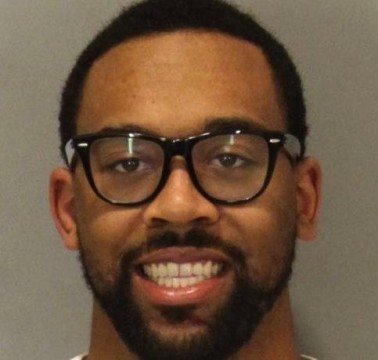
Marcus Jordan has shot an airball with the law. The 21-year old son of former NBA legend Michael Jordan was arrested early Sunday morning outside the Embassy Suites in Omaha, Nebraska after police spotted him arguing with two women. According to various reports, it took a multitude of cops to subdue Jordan, actually placing him in handcuffs after he refused to cooperate. He was the arrested for resisting arrest, disorderly conduct and obstructing. Marcus plays basketball at the University of Central Florida and it’s unclear how this brush with the law will affect his standing there. But this much is certain: this is not an example of how to be like Mike.
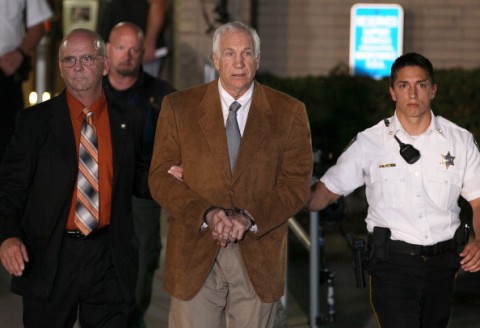
GUILTY! “Peen State” Coach Jerry Sandusky will likely rot to death in a jail cell, if he isn’t torn to pieces by his fellow inmates first. Jerry Sandusky Guilty Of 45 Out Of 48 Sexual Abuse Charges After more than 20 hours of deliberation, the jury of seven women and five men returned the verdict Friday night. Sandusky was convicted of 45 of 48 counts charging him with abusing 10 boys over 15 years. Jury deliberations began Thursday. When sentenced, Sandusky could face spending the rest of his life in prison. He was taken into custody in handcuffs after the verdict was read and his bail was revoked. The case enveloped the Penn State campus in a national scandal and led to the ouster of iconic head football Coach Joe Paterno as well as university President Graham Spanier for failing to deal forcefully with reports that Sandusky had abused boys, sometimes in the showers at the school’s football facility. Paterno died in January of lung cancer. Two other university officials are charged with failing to report the suspected abuse and with perjury related to their testimony before a grand jury investigating the scandal. The officials — athletic director Tim Curley, who is on leave, and retired Vice President Gary Schultz — await trial. The prosecution took slightly more than four days to present 21 witnesses to support its claim that Sandusky was a predatory pedophile who found his victims through a charity, the Second Mile, that he founded for at-risk children. Eight of the accusers testified, most in graphic and sometimes tearful detail about their relationships with Sandusky. Most said they enjoyed gifts and special attention from Sandusky. Some said they saw him as the father they never had. But what began as a mentoring relationship escalated into the physical abuse, the accusers testified. Some said they were assaulted in the basement of the Sandusky home. Others described soapy showers that included forced sex acts. The identities of two of the boys have never been ascertained; in those cases, two adults testified that they had witnessed abuse involving the unidentified boys. Mike McQueary — a graduate assistant and former Penn State football player, who became a coach in his own right at the university — emerged as a key prosecution witness. McQueary told of the winter night in 2001 when he entered the university’s football facility and saw Sandusky with a naked boy, 10 or 12 years old, in the locker room showers. He described hearing the sounds of a sex act. McQueary said he slammed his locker door to let Sandusky know someone else was in the room. Later, he called his father, who told him to go to Paterno, who in turn went to his superiors. It wasn’t until later investigations that the state brought the child abuse charges against Sandusky. The charges came in two waves last year. The defense had fought hard to keep the trial in Bellefonte in the hope that Sandusky’s humanitarian and athletic reputation would help the case. More than half of the jurors said during the selection process that they had some connection to the university, as an employee, alumnus or just an avid football fan. Sandusky’s attorneys presented his case in about three days, calling friends, neighbors and former sports colleagues to the stand. Led by Sandusky’s 69-year-old wife, Dottie, the character witnesses all insisted that they never saw Sandusky engage in any improper action with a young boy and that he was a good man. The defense also questioned the quality of the investigations and why some of the witness accounts changed with the retelling of events over the years. The implications were that police had used their questioning to make the case look better, and that the accusers worked together to make their descriptions more graphic to help their expected future civil cases. Lastly, the defense argued that Sandusky suffered from histrionic personality disorder, a condition that includes overly dramatic gestures that can be seen as seductive. The defense argued that the condition explained why Sandusky gave the boys gifts and in one case sent a love note to a child. The prosecution countered that the gifts were intended to groom prospective victims. The verdict does not mark the end of litigation. In addition to the criminal charges pending against the two college administrators, a slew of civil suits are expected by accusers. Did anyone have any doubts he would be convicted? SMH. Nasty piece of isht. Here’s a real question for discussion, is life behind bars even enough of a punishment for a man who has destroyed so many innocent lives??? Source Photo Credit: Mark Wilson/Getty Images
Dr. Alessandro Olivi tells MTV News the diagnosis shouldn’t change Crow’s lifestyle: ‘She can still sing!’ By Kara Warner Photo: Bryan Steffy/Getty Images Despite the severity of the news that Sheryl Crow has been diagnosed with a brain tumor , the good news is that the type of tumor, a meningioma, is non-cancerous. MTV News caught up with Dr. Alessandro Olivi, a professor of neurosurgery and director of the Meningioma Center at Johns Hopkins University, who spoke very positively about Crow’s prognosis. “If they elected to observe it [and not perform surgery], that means the tumor is an incidental finding and considered, like it is in the majority of these cases, biologically favorable,” Olivi said. “It’s benign and doesn’t need to come out, because it’s not causing any problems and can be monitored safely.” Olivi, who also serves as the vice chairmen of the department of neurosurgery at Johns Hopkins, went on to say that doctors don’t yet know what specifically causes the tumors, just that they tend to occur in women and that estrogen might play a role. “We don’t know what causes them. We know that there is preponderance in women over men. Some people have said it’s related to estrogen. There might be some receptor, but not to the point where I would say to change hormone treatment,” he said. “For example, with menopause, you produce less estrogen and people are on hormone replacement. I don’t consider that a reason not to do it. In other words, the correlation [between estrogen and meningioma] is loose. We don’t know in reality what the cause is. The good thing is that in the vast majority, they are self-limiting, and the biological behavior is not one of an aggressive cancer.” Speaking to how the tumor will affect Crow’s day-to-day lifestyle moving forward, Olivi said she’ll likely only need routine checkups. “She just needs to do what she is told as far as monitoring and imaging, which will probably be once every six months if everything is OK and can be moved up to once a year,” he said. “But no change in lifestyle; she can still sing!” Related Artists Sheryl Crow
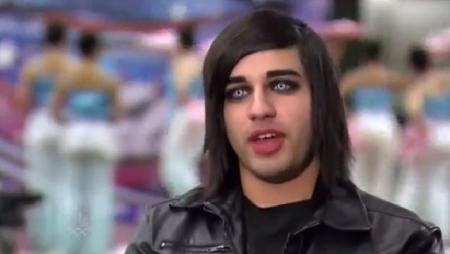
After watching a man blast himself out of a cannon and then witnessing an overweight pole dancer on America’s Got Talent , one thing became painfully evident last night: A high level of strange was featured throughout day two in Austin. Read through our previous AGT recap for all the acts from opening night here and then get caught up with the latest below… Andrew De Leon America’s Got Talent Audition Mind-Blowing Aurora light Painting – First a sand artist, now light artists? The leader claimed to live in a commune which probably was the first question mark popping up in my head, his hair was the second. The performance was interesting, but it reminded me of the Disney Channel promotions where the actors would wave the mouse ear shape with their magic wand. The obvious point was that this really seems like a really artistic telestrator. Eric & Olivia – The non-daters from the University of Texas had a cute vibe together but it really was Olivia’s voice that was the winner. She had great jazz-soul diction. Once in a while it got a bit too froggy, but I think with the right arrangements the duo would be great. I’m shocked that Howie said no because there’s a lot of potential in this act. Eric Diddleman – Eric claimed to be a “professional mind reader” but I think the better part was him wrapping duct tape around his eyes. His guesses were great considering that Sharon was the only one to draw something hard (Howard and Howie basically drew themselves). I’d love to see this trick a second time with a few more bells and whistles. Summer Lacey – We only saw a few seconds of her but she chose to use chains instead of silks as she did some creative acrobatics. According to Sharon, Summer was also a lot higher than we must have seen as she dropped for one trick. She should join several of the acts this season as a more Punk/Accessible version of Cirque. Andrew De Leon (Above) – The closet-opera singer wasn’t bad. The biggest problem is that now he doesn’t have that surprise factor in future performances. Let’s hope that he has a stronger repertoire of songs and a bit more confidence in the future. I hope he wears prescription contacts because those contacts could scar his eyes if he’s not careful. Mind-Boggling Doppelganger Circus Sideshow – Take one part geeky/goth couple, one chainsaw and apple, and a small jaw and you get a silly performance. The girlfriend got a dislocated jaw because she didn’t listen to him when he said, “Do you have a preference for apple size?” Jada – While we only saw this group of women for a few seconds, it must have been for the mercy of the audience’s ears. It’s called synchronization; Jada didn’t have that. Also, four girls singing “Only Girl in the World” makes no sense. Which one was the only girl? Richard Grossman – The opera singer from New York, who sub-sings as practice was ahead of his song and choked. It was kind of embarrassing. That’s someone’s delusional uncle who called Howard rude. The fact that Andrew followed him with a great opera performance made him seem even sourer.