Tag Archives: warrior

Fake Thugs: Chief Keef Gets 60 Days In Jail Despite Crying Like A Lil’ Baby Beyotch In The Courtroom

#KeepSosa Ashy ratchet rapper Chief Keef cried like a baby after getting sentenced to jail! Chief Keef Sentenced To 60 Days In Jail The rising teen rap star was sentenced to 60 days in jail Thursday for violating his probation from a previous gun charge — when he pointed a gun at Chicago cops. Via DNA Chicago reports: “I beg you please,” Chief Keef told Juvenile Court Judge Carl Anthony Walker. “Give me one more chance to show you. .. I am a very good hearted person. I have not picked up any more cases… That’s not my life anymore.” The 17-year-old rapper, whose real name is Keith Cozart, then he broke down in sobs. But the judge hit him with a two-month sentence, nonetheless. Keef then hugged and kissed his mother and grandmother before heading off to serve his time. Prosecutors brought the probation violation case against the Interscope Records star after he appeared in a Pitchfork.com video holding a rifle at a New York gun range. Earlier this week, Walker said Chief Keef exhibited a “clear disregard for the court’s authority” in appearing with the gun. Before being sentenced, prosecutors read lyrics from Chief Keef’s “Love Sosa” rap on his “Finally Rich” album, which debuted last month to strong sales. Prosecutors pointed to lyrics that mentioned gangs and guns, a sign that the teen was unrepentant. Chief Keef, in addressing the judge, called the lyrics “bull stuff.” The sentence means Chief Keef will have to delay touring to support his new record. You going to jail today! Keef likes to think he’s a tough guy rapper but ain’t nothing tougher than prison. Have fun and watch out for the Booty Warrior ! #KeepSosa #KeepSosa #KeepSosa

Visit link:
Fake Thugs: Chief Keef Gets 60 Days In Jail Despite Crying Like A Lil’ Baby Beyotch In The Courtroom

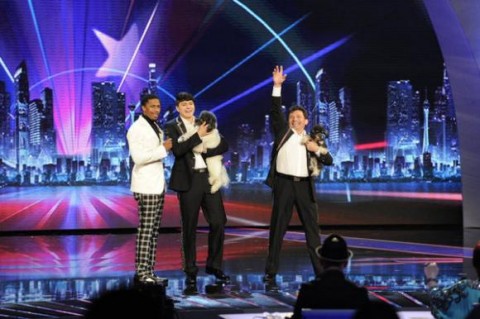
America’s Got Talent Results: Who’s Out?

Heading into an extended break for the Summer Olympics, America’s Got Talent advanced four acts to the next round last night. Did you agree with the selections? Eliminations Part One – Ulysses, David “The Bullet” Smith, Olate Dogs Ulysses is a nice person but he was clearly out of his league. If he was up against weird instrument player Michael Nejad and sleep-inducing Nikki Jensen back in week one, he wouldn’t have been the bottom of the barrel. David “The bullet” Smith is exactly like Professor Splash last year: all he can do is go farther. I understand that lots of people die trying to blast themselves out of cannons, but that doesn’t make successful human cannonballs automatic Vegas acts. Olate Dogs was the clear frontrunner of the night, especially the “we can do better than Britain” comment that Sharon provided. Funny that Sharon is an American citizen. Eliminated: Ulysses, David “The Bullet” Smith Advanced: Olate Dogs Eliminations Two – William Close, Unity in Motion, Sebastien “El Charro de Oro” William Close was a great act, but his performances are a bit PBS for NBC if that makes sense. There’s a degree of maturity or sophistication that I worry NBC-loving America doesn’t have. Unity in Motion was clean and precise but they are also trained as hard as the dogs in the Olate act. Sebastien “El Charro De Oro” had a simplistic arrangement of his band and video behind him, but he didn’t need explosives or seizure inducing videos. I find it odd how Sebastien gets to stand with his band, but William Close is alone the whole time. Eliminated: Unity in Motion, Sebastien “El Charro de Oro” Advanced: William Close Eliminations Three – Joe Castillo, Horse, Eric & Olivia After seeing Light Wire Theater make it through, I parallel Joe Castillo’s act to the Silhouettes and Light Wire is Team iLuminate. I hope both current acts don’t suffer the same fate and lose to Tim Hockenberry. Howard hit Horse’s demographic on the head (or in the balls): Jackass viewers, Tosh.0 fans, or even G4 people. Most of those people are probably watching Wipeout or American Ninja Warrior and not this show. Eric & Olivia need to secure a gig at a fancy coffee shop and work their way up. The exposure will help them greatly, but they need time. Eliminated: Horse, Eric & Olivia Advanced: Joe Castillo Eliminations Four – Lindsay Norton, All That!, Eric Diddleman This was one of the few times where Nick actually announced some percentage numbers. That’s the one thing that’s amazing about Britain’s Got Talent: they reveal all the voting percentages after the season ends. According to Nick, there was a less than one percent difference between all three acts. Lindsey Norton was just as good as Unity in Motion and with them already eliminated, it made me wonder if the two negated their votes. Interesting that America favored the solo dancer over the group though. Eric Diddleman is in a category of his own and after Spencer Horseman scraped his elbow and Hawley Magic couldn’t leave the 80s, Diddleman is the only hope for a “magic” act. I wouldn’t mind seeing All That! if they took notes from Thunder From Down Under. They need to be sexier and the group claims to be happy with “all” their fans. Why not pander to the women and gay male vote? Eliminated (in Sixth): Lindsay Norton All That!’s Votes: Sharon Eric Diddleman’s Votes: Howie, Howard Immediately after elimination, Sharon announced that All That! would be one of her picks for the Wild Card round. The YouTube acts will be up after the Olympics so we’ll basically be on a month break and All That! could work on getting six-pack abs.

Read the original here:
America’s Got Talent Results: Who’s Out?

Eric Stanze: The Mr. Skin (Sk)interview [PICS]

“King of Underground Cinema” Eric Stanze is a huge SKINspiration to all of us here at Skin Central. A lifelong cinema devotee, Eric knew from a very young age that he wanted to become a filmmaker. And with an independent spirit that would make his childhood idol, Dawn of the Dead (1978) legend and creator of the modern zombie film George Romero , proud, that’s exactly what he did. Eric founded his own production company, Wicked Pixel Pictures , when he was in his early twenties, and has gone on to direct six films and produce many more under the Wicked Pixel imprint. Though he’s best known among horror fans for transgressive films that push the limits of cinematic violence and sexuality, Eric’s films span a wide variety of horror and exploitation genres from atmospheric ghost stores ( Deadwood Park , 2007) to rape-and-revenge films ( I Spit on Your Corpse, I Piss on Your Grave , 2001) to brutal serial-killer flicks ( Scrapbook , 2000). His newest film is Ratline (2011), starring his frequent leading lady Emily Haack as a fugitive who stumbles into the dangerous world of Nazi occultism while on the run from a botched drug-money heist. Ratline has been praised by critics for its unique vision and intense thrills; Popmatters.com calls it “One of the most original horror experiences of the past decade” . We caught up with Eric at Wicked Pixel HQ in St. Louis, where he talked with Skin Central about his cinematic inspirations, the state of indie filmmaking in the Internet age, and what’s coming next: Skin Central: You directed your first movie, Savage Harvest , when you were only 21. When did you decide you wanted to be a filmmaker? Eric Stanze: I don’t really remember a time when I didn’t want to be a filmmaker. I was probably 10 years old when I started down the filmmaking path, becoming obsessed with movies, and shooting 8mm films in the back yard. I was 20 when I started treating it as a career instead of a hobby. Savage Harvest wasn’t my first feature, but it’s the first I took seriously, and the first to have a shred of competency in its making. Before Savage Harvest , I wrote, directed, shot, and edited a 90 minute feature when I was 18. It secured its own distribution deal eventually, and was released around the world. It sounds like a very impressive achievement for an 18 year old …until you see the movie, of course. It is truly terrible. SC:Was there any one movie in particular that got you into genre films? ES: George Romero’ s Dawn of the Dead , Night of the Living Dead , and Creepshow all had a huge impact on me when I was a kid, as did Don Siegel’ s Invasion of the Body Snatchers , Irvin S. Yeaworth Jr.’ s The Blob, Sam Raimi’ s The Evil Dead , S.F. Brownrigg’ s Don’t Look in the Basement, James Cameron ‘s The Terminator, and Sean S. Cunningham ‘s Friday the 13th – plus many more. I don’t know if I can narrow it down to one film, but I would say that Romero likely had the most influence on me when I was young and impressionable. As I got older, I continued to explore the horror genre, but other kinds of films started to influence me as well, from Citizen Kane to Full Metal Jacket. SC: I read an article you did for FEARnet in which you say “It is my opinion that filmmaking enjoyed its zenith as an art form in the period of 1968 through 1982.” What’s your Top 5 from this period? ES: To elaborate, I think this golden age of cinema began with 2001: A Space Odyssey a nd Night of the Living Dead in 1968, and it came to a close with The Thing and Blade Runner i n 1982. I may have a different opinion next week, but right now, off the top of my head I’d say my top five are, in order of release, The French Connection (1971), The Godfather: Part II (1974), Network (1976), The Deer Hunter (1978), and Apocalypse Now (1979). SC: What is the one movie you really, really wish you could have seen in the theater when it was first released? ES: Probably Romero’s Dawn of the Dead (right). I’ve seen it on the big screen [since], but I discovered it on video. I’ve never seen Black Sunday or The Road Warrior or Quest for Fire or Paths of Glory on the big screen. Those would have been cool too. SC: OK,’70s cinema lightning round. Lucio Fulci or H.G. Lewis ? ES: H.G. Lewis films are fun, but I’m gonna have to go with Fulci. SC: Roger Corman or David F. Friedman ? ES: I’m a fan of Friedman, but I have to pick Corman. SC: Thriller: A Cruel Picture or I Spit on Your Grave ? ES: These are tough questions, dammit! It’s close, but I think I Spit on Your Grave . SC: Who’s your favorite “scream queen” of all time (besides your frequent collaborator Emily Haack , of course)? ES : I’m a big fan of Adrienne King ( Friday the 13th ), Barbara Crampton ( Re-Animator ), and Laura Gemser ( Emanuelle and the Last Cannibals ). Adrienne was attached to the movie I was going to direct after Deadwood Park (2007), but the funding fell apart and the project evaporated. She’s intelligent, creative, and exceptionally nice, so I’m hoping our professional paths cross on another project in the near future. I would also be thrilled to work with Barbara Crampton. Last November she wished me a happy birthday. That makes me cool, right? [Yes. Yes it does. -SC] SC: Wicked Pixel Cinema started at the tail end of the VHS era and the beginning of the Internet era. How have things changed for you as an independent production company since the Internet became ubiquitous? ES: As far as the internet is concerned, this is still a period of exploration and discovery for the film industry. Nobody’s really figured it out yet. VHS had a long, comfortable run, which we were able to ride near the end, starting with our first release, Savage Harvest , in 1995. We did pretty well with DVD too, releasing our bigger titles through Image Entertainment during the peak of the DVD boom. Today there’s Amazon Instant Video and new internet marketing avenues to explore. It’s been pretty cool, watching everything evolve over the past two decades. Compared to when I first started doing this, distribution and funding options are an alien landscape today – and I believe things are getting better, in most ways, rather than worse. There is much less power in the hands of distributors and retailers. What we needed a distributor for just a few years ago, most indie film producers can do themselves – and often do more competently. Plus, the days of an indie film’s success or failure hinging on the elusive Blockbuster or Best Buy deal are long gone, and that’s wonderful. In short, today there is a more direct route, and fewer roadblocks, between indie filmmakers and the film fans. SC: What do you have coming up in 2012? ES :Good question! I have multiple projects cooking; all, some, or none of them may take root and actually get made. While I still intend to collaborate with a few of my past partners-in-crime, my focus is on working with new people who can bring fresh options, talent, resources, and perspectives to the table. My last two movies, Deadwood Park (2007) and Ratline (2011) were completely different movies in tone, narrative, and visual style, but they were kinda built in the same factory, so to speak. I’m looking for a new factory – or exciting ways to gut and rebuild this one. I’ve never settled into a rut, and now is not the time to start. Keep up with Eric Stanze as he writes his next chapter on his Facebook and Twitter pages, and be sure to check out his newest movie Ratline (2011) at the Wicked Pixel store and right here at MrSkin.com!

Go here to see the original:
Eric Stanze: The Mr. Skin (Sk)interview [PICS]

First John Carter Reviews: A Flawed But Worthwhile Epic?

Negative speculation and prognostication has been brewing for months for Disney’s sci-fi actioner John Carter thanks to dismal tracking and rumors of bloated budgets, but Disney’s finally released their review embargo for the March 9 would-be blockbuster. So what’s the early buzz from the first critiques of Andrew Stanton ‘s take on the Edgar Rice Burroughs saga, about a Civil War veteran named John Carter ( Taylor Kitsch ) who lands in the middle of a civil war on Mars? Given the naysaying hype, the first batch of reviews are surprisingly… positive. Well, mixed positive, for the most part — critics agree on many of the film’s strengths, from the well-crafted CG world of Barsoom (that’s Mars, to us humans) to the spirited action sequences Pixar veteran Stanton has pulled off. (Look for Movieline’s John Carter review to post next week.) ” Some of the stuff that Stanton pulls off in John Carter is mind-blowing ,” enthuses Badass Digest’s Devin Faraci . ” There are a few sequences that feel simply classic, like we’ll be referring to them for years to come. There’s one scene, where John Carter stands alone (well, with Woola) against a rampaging army of nine foot tall, four armed Tharks, that is an all-timer. ” Speaking of those Tharks — the four-armed green Martian warriors that first enslave John Carter and force him to fight for them — Stanton’s CG background directing Finding Nemo and Wall-E seems to have helped him create believable, dimensional characters with a combination of CG animation and performance capture. HitFix’s Drew McWeeney was particularly impressed by the CG-heavy characters. ” The Tharks, led here by Tars Tarkas (Willem Dafoe), are compelling creations ,” he writes . ” By a few scenes into their time onscreen, I stopped thinking about the technical trick involved in bringing them to life and simply accepted them as real .” Meanwhile, actress Lynn Collins drew high marks for her portrayal of Martian princess Dejah Thoris, a science-minded warrior princess who serves as Carter’s romantic foil while holding her own with her smarts and her sword. ” Lynn Collins’s feisty Dejah Thoris is the best kick-ass sci-fi princess since Leia, and she looks stunning too with her Martian tattoos ,” says SFX Magazine . In addition to potentially launching young teenage boys into puberty with her sensual, revealing costumes (the skimpiness of which Dejah at least acknowledges with a wink), she’s one of the better-written and unusually strong female characters to come along in genre filmmaking in a while. Or, as Faraci declares : ” Dejah Thoris is the best female character in science fiction/fantasy cinema since Ripley. ” But the critics also agree where John Carter ‘s flaws are concerned — for instance, the sprawling, often-unwieldy scope of its story and the clumsy way in which Stanton and Co. filter it down to a dense (maybe too-dense) feature-length runtime. Part of the problem lies in compacting Burroughs’ Princess of Mars novel down to one feature-length script while juggling the many moving parts — John Carter’s Civil War past, the mechanics of his Mars-aided powers, the political machinations between the two warring city-states of Zodanga and Helium, the omnipotent Tharks who walk among them pulling the strings, the warrior culture of the Tharks, and an Earth-bound framing device involving Carter’s nephew, Edgar Rice Burroughs, phew! — while additionally attempting to set the stage for sequels to come. ” Amidst the CGI environments and constant plot machinations, the story veers between interesting, boring and borderline incomprehensible ,” said Fan the Fire Magazine . ” There are moments when the film soars, only to stall and sputter on a well-meaning but extraneous –- or overlong -– character moment ,” complains SFX Magazine , adding that ” lengthy exposition scenes and Martian politics are hampered by cod pomposity and the dreaded ‘silly-made-up-sci-fi-words’ disease. ” Ultimately, if audiences react as CinemaBlend’s Sean O’Connell did, Disney’s biggest problem on March 9 will reflect its early tracking woes from weeks ago: Viewer indifference. ” The bulk of Carter [is] a tough slog, despite some decent performances and the admirable introduction of a tough-as-nails action heroine in Collins ,” O’Connell writes. ” Arid, barren Barsoom is a dull environment for a sci-fi blockbuster, and the consequences of the conflicts happening on screen are small. John Carter just never pulled me in .” Read more on John Carter here.

Here is the original post:
First John Carter Reviews: A Flawed But Worthwhile Epic?

Pixar Hits a Girl Power Bullseye with New Brave Trailer

Fingers are crossed that Pixar bounces back from the uncharacteristic critical disappointment that was Cars 2 with their next effort, Brave — a foray into Disney princess territory about a headstrong young Scottish lass (voiced by Kelly Macdonald) who defies tradition in her parents’ kingdom. A new trailer for the animated adventure promises no small measure of spunky girl power as our heroine Merida upends an archery contest where doofus candidates are vying for her hand in marriage. It’s not a traditional trailer so much as it is a scene from the film, but it conveys a sense of what to expect, tonally. (Watch the first full trailer here .) From what’s been released so far it seems Brave ‘s story will be its strength; the round, cartoony CG-animated character design doesn’t appeal much to me, but Merida’s spirit is infectious in this twist on the familiar medieval archery scenario. (That’s Billy Connolly voicing her father and Emma Thompson as her mom, in case you were curious.) Brave hits theaters June 22; leave your impressions below!

More here:
Pixar Hits a Girl Power Bullseye with New Brave Trailer

REVIEW: The Forgiveness of Blood Will Make You Care About Albanian Blood Feuds — Really

Maybe you’re the kind of person who wakes up in the morning and says, “What can I learn today about the psychological effects of blood feuds in contemporary Albania?” But I doubt it. Who even thinks about these things, or cares about them? The strange miracle of Joshua Marston’s modest, well-constructed drama The Forgiveness of Blood — which really is about blood feuds in contemporary Albania — is that once you’ve watched it, you might find that you actually do care. It’s the kind of movie that makes the world feel like a smaller place, suggesting that the similarities connecting us across continents and cultures are more resonant than the things that divide us. The Forgiveness of Blood is set in northern Albania — it was also filmed there, using local, nonprofessional actors. Eighteen-year-old Nik (Tristan Halilaj) is a senior in high school, with his eye on the prettiest classmate and ambitions to open his own Internet café. But one day his father, Mark (Refet Abazi), becomes involved in a land dispute: Mark makes a living for himself and his family by delivering bread to local homes and businesses — his mode of transport is a horse-drawn cart — and he habitually takes a shortcut across land that used to belong to his grandfather. The current owners take umbrage, and an altercation breaks out in which one of them is stabbed to death; implicated in the murder, Mark immediately goes into hiding. But according to codes of law that have been in place for centuries, the aggrieved family is entitled to take the life of a male from the aggressor’s family. Nik is forced into a kind of house arrest, along with his younger brother and two sisters. But because the female members of the household aren’t in danger, Nik’s younger sister, Rudina (Sindi Laçej), must leave school and temporarily take over her father’s business, just to keep the family afloat. This is a vivid, tough little story that enfolds lots of dramatic subthreads: Nik and Rudina live, as most of us do, in a world of cell phones and satellite TV, yet they find themselves bound by antiquated rules of conduct. Nik is just learning his way around the adult world — he preens in front of the mirror, Tony Manero-style, hoping to look good for the girl he’s set his sights on — only to be imprisoned at home, as if grounded by an especially strict parent. It’s a particularly painful kind of cultural emasculation, and he lashes out. And Rudina, a bright girl who seems to enjoy school (it’s hinted that she may have a future outside this rather restrictive community), suddenly has to play the role of the male breadwinner. She’d rather go shoe-shopping with her friends, of course, but the point is that her very sex both protects her and makes her life harder: Her life is of lesser value under the arcane rules governing the blood feud, which means that when the males in her family are compromised, she has to step up to the plate and act like a man. She seems to have the worst of both worlds. Marston’s gift as a filmmaker — he also co-wrote the script with Albanian screenwriter Andamion Murataj — is that he makes us care about these characters without forcing us to eat the knobby, dirt-encrusted root vegetables of cross-cultural awareness. You know what I’m talking about: The world of independent filmmaking is full of movies designed to congratulate well-informed, literate liberals on how well-informed and literate they are — we watch as peasants and otherwise “compromised” people, who live in countries outside North America (or even the poorer communities within it), suffer through their daily lives. Then we’re allowed to pat ourselves on the back for allowing our eyes to be opened to their plight. Marston doesn’t play that game here, and he didn’t play it in his first feature, Maria Full of Grace , either: That picture told the story of a young Colombian woman who becomes a drug mule to raise money for her family. The picture could have been a pile-up of the most tense horrors imaginable, but Marston has the rare gift of knowing when to ease up on the clutch: He focuses on individuals, on their faces and their feelings, sometimes at the expense of your garden-variety dramatic buildup. His movies have their own kind of narrative intensity, but they’re not thrillers masquerading as human-interest stories. With Marston, the interest is all human. That’s especially true in The Forgiveness of Blood . In the movie’s early moments, when I saw that horse-drawn bread cart rambling across a scrubby-yet-beautiful semi-rural landscape, I groaned. Was this going to be one of those good-for-you movies that’s pure punishment to watch? The picture does have its unnerving moments, points at which you find yourself inside the head of a particular character and you’re not sure you want to be there. But Marston doesn’t overreach dramatically. Mostly, he simply trusts the faces of his actors: Halilaj’s Nik has a gawky-charming teen-scarecrow look — he’s all long limbs and awkward pauses, particularly when he’s in the presence of that pretty classmate. And even though Rudina isn’t really the movie’s main character, as Laçej plays her, she’s its quiet, somber soul. Rudina observes the proceedings around her with resigned exasperation: Just when her life should be moving forward, it’s being pulled backward through hundreds of years of tradition. That tension is gentle but potent, and it’s what keeps The Forgiveness of Blood coursing along. By the end, you’ll care more about Albanian blood feuds than you ever thought you could. Follow S.T. VanAirsdale on Twitter . Follow Movieline on Twitter .

Read the original here:
REVIEW: The Forgiveness of Blood Will Make You Care About Albanian Blood Feuds — Really

CG Monsters, Villains Star in Slightly More Coherent Wrath of the Titans Trailer

Forget John Carter ‘s controversial budget woes and terrible tracking for a minute; Wrath of the Titans has been threatening to be the first big biff of 2012 since it was announced, thanks largely to its poorly received predecessor, Clash of the Titans . The sequel’s initial Marilyn Manson-themed trailer didn’t help, either, but Warner Bros. have thankfully tightened things (and stopped lingering on Sam Worthington’s Kenny Powers ‘do) for a new trailer that actually promises some fantastic CG creature work. Bring on the lava monster thingy! Wrath of the Titans picks up ten years after the events of Clash , with Perseus (Worthington) tapped once again by Zeus to save the world, this time from the nefarious Titans and Olympian plotters we glimpsed in Immortals . (Thanks for that primer, Tarsem!) This time around Rosamund Pike is along for the ride as the warrior queen Andromeda, as well as folks like Toby Kebbell and Bill Nighy. This trailer tightens things up a bit, explaining the set up (Liam Neeson’s Zeus is under attack!) and packing a ton of CG creature looks into the span of a minute and a half. Honestly, that’s shaping up to be the draw of this Jonathan Liebesman-helmed sequel. All I want to see is some believable lava smoke monster giant action. The movies never get those guys quite right. Wrath of the Titans will debut March 30. [via ComingSoon ]

Read the rest here:
CG Monsters, Villains Star in Slightly More Coherent Wrath of the Titans Trailer

Oscar Index: Giddyup, War Horse!

Well, this should go pretty fast: The holiday week has offered a dearth of new narratives to trace and pulses to take, with only one film demonstrating any significant mobility in the studies coming out Movieline’s Institute for the Advanced Study of Kudos Forensics. Let’s get to it! The Leading 10: 1. The Artist 2. War Horse 3. The Descendants 4. The Help 5. Hugo 6. Midnight in Paris 7. Moneyball 8. The Tree of Life 9. Extremely Loud and Incredibly Close 10. Bridesmaids Outsiders: The Girl With the Dragon Tattoo ; Tinker, Tailor, Soldier, Spy ; The Ides of March ; Drive First things first: The Academy sent out its 2012 nomination ballots this week, a few thousand bits of live ammunition to keep voters alert as they catch up on any an all screenings over the holiday hiatus. And while pretty much every last hint of buzz halted on the late-coming Extremely Loud & Incredibly Close — except, I suppose, this writer’s survey that singled out EL&IC as the “‘Awards Season Screener’ of choice from family members visiting over the holiday weekend” — we witnessed a fairly serious resurgence for War Horse . It all started when DreamWorks and Disney opened up virtually every public screening of the film to card-carrying AMPAS and guild members — an unconventional mid-season move that nevertheless opened up 2,700 screens to voters mere days before they received their nomination ballots. They have weeks to send them back, of course, but the studios’ faith in the film was reflected in its terrific two-day holiday haul; only Mission: Impossible – Ghost Protocol performed better commercially. And with many key critics (including our own Stephanie Zacharek ) offering their praises as well, there’s not really any choice but to move the Horse back among the front-runners. Let me just defer to Sasha Stone, who wrote most persuasively on the matter earlier this week: War Horse has everything your Best Picture winner needs: waterworks, prestigious director (that he mimics John Ford here is a win/win), war (bad Germans even) and men. Lots and lots and lots of men. There is a young girl who tends to Joey for a time, and because he’s a religious figure he works his magic on her inability to do much of anything, what with a disease ravaging her body and all — but the miracle horse! Oh, the miracle horse! And a mother who tends to the boy who tends to Joey — “Someday we’ll be together,” the boy says at the beginning. Looks like there aren’t too many women folk around for the poor kid to fall in love with — but he has the miracle horse, by god. But for the most part War Horse tells the story of young men going into battle and the horses who sacrificed themselves for war. It’s about the inherent goodness of people and thus the Oscar race will underline that and bold it. Yup. And that’s just a socio-historical perspective related to the Academy. Factor in the timing and the early box-office windfall of it all — not to mention the slumping likes of The Descendants and Hugo in particular — and there’s your War Horse second wind. But is it too early? We shall see — especially awaiting the DGA and PGA award nominations in the weeks ahead. In any case, also worth noting in light of the EL&IC stillbirth and the putative Bridesmaids insurgency is Steve Pond’s intriguing analysis from the Critics Choice Awards front, where he and the accountant overseeing the Broadcast Film Critics Association nominations — often cited as one of the more reliable Oscar precursors — yielded this bit of insight: A large majority of the Broadcast Film Critics’ more than 250 critics cast ballots, which asked them to rank their favorite movies, one through five. On those ballots, 33 different films received first-place votes. Under the Oscar system, the race is immediately narrowed to those 33 films; every other movie is out of the running, no matter how many second- or third-place votes it received. According to [accountant Debby] Britton, 10 of the 33 films fell below the 1 percent threshold. Those 10 then had their ballots redistributed, with the vote going to the film ranked second on the ballot, assuming that film was among the 22 movies still in the running. (If it wasn’t, she would move down the ballot until she found a movie that was.) When those ballots were redistributed, CMM then looked at what was left. At this point, under the Oscar system, any movie with more than 5 percent of the vote would became a nominee; any movie with less than that would not. And when Britton did the final math, she came up with eight nominees. On the other hand, EL&IC actually made the list of Critics Choice Awards Best Picture nominees, so… Yeah. In short, eight nominations sounds about right, but it could swing plus or minus one nominee either way. Developing, etc. The Leading 5: 1. Michel Hazanavicius, The Artist 2. Steven Spielberg, War Horse 3. Alexander Payne, The Descendants 4. Martin Scorsese, Hugo 5. Woody Allen, Midnight in Paris Outsiders : Bennett Miller, Moneyball ; Stephen Daldry, Extremely Loud and Incredibly Close ; David Fincher, The Girl With the Dragon Tattoo ; Tate Taylor, The Help ; Nicolas Winding Refn, Drive More of the same as above. Really nothing to add. The Leading 5: 1. Meryl Streep, The Iron Lady 2. Viola Davis, The Help 3. Michelle Williams, My Week With Marilyn 4. Tilda Swinton, We Need to Talk About Kevin 5. Glenn Close, Albert Nobbs Outsiders : Rooney Mara, The Girl With the Dragon Tattoo ; Charlize Theron, Young Adult ; Elizabeth Olsen, Martha Marcy May Marlene ; Felicity Jones, Like Crazy ; Kirsten Dunst, Melancholia There’s a little movement around the also-rans — Swinton receiving the boost of a slightly more aggressive campaign on behalf of Kevin , Mara reaping the most of Dragon Tattoo ‘s solid holiday showing — but no one came close to matching the full-court press for Streep. Did anyone not show up for her at the Kennedy Center Honors ? I mean, thank you for your Williams love, Oklahoma Film Critics Circle , but my God. The Leading 5: 1. Jean Dujardin, The Artist 2. Brad Pitt, Moneyball 3. George Clooney, The Descendants 4. Michael Fassbender, Shame 5. Leonardo DiCaprio, J. Edgar Outsiders : Gary Oldman, Tinker, Tailor, Soldier, Spy ; Demi

Margaret, Melancholia and More: Alison’s Top 10 Movies of 2011

I found 2011 to be a great, overstuffed year in film, though the sweeping trend of nostalgia that peaked during this awards season left me a little cold. Hugo , War Horse , The Artist , The Adventures of Tintin , The Help , even the self-aware looking back of Midnight in Paris — when it’s been such a turbulent 12 months beyond the movies, the comfort of evoking the past, especially the cinephilic past, is understandable, particularly with attendance down once again. But the features I really loved tended to be more prickly, vital affairs, about tragedy and life messily, stubbornly going on in its aftermath — ones that reminded us that film can not only be a great escape, but can also engage and reflect the outside world. 10. Shame Steve McQueen’s sophomore effort took flack from some who found it moralizing in its portrayal of sex addiction, but it’s not a film about a condition, it’s a film about damage. Michael Fassbender plays a man who’s left a traumatic childhood behind and has shored himself up in the city that never sleeps with an immaculate condo and a high-powered job that almost hide his underlying desperation and his inability to connect or open up to anyone on anything other than a physical level. It’s one of the loneliest portraits of urban living I’ve ever seen. 9. Warrior The neglected blockbuster of our Occupy Wall Street era, Warrior drapes Rocky trappings over characters and settings more immediate than you’d ever expect at a multiplex. Its two brothers, in what should have been star-making turns from Tom Hardy and Joel Edgerton, head to the cage after taking beatings elsewhere — one’s left the Marines on less than ideal terms after the death of colleague, the other’s upside down on his mortgage and unable to support his family on a teacher’s salary. Add to that the fact that the tournament in which they both compete was started by a former Wall Street type putting up the money to see “who the toughest man on the planet is,” and you have a rousing, violent fight film with a seriously bittersweet edge. 8. The Arbor Andrea Dunbar grew up in run-down Bradford council estates, drank heavily, had three kids by different fathers, wrote a trio of acclaimed plays about the life she knew and died at age 29. Clio Barnard’s documentary about the playwright brilliantly stages its interviews as their own performance, lip-synched by actors in the settings in which Dunbar and her children grew up and lived, and offering a piercing glimpse of how tragedy is taken up — her second work Rita, Sue and Bob Too was made into a film directed by Alan Clarke — and passed down, to her heroin-addicted eldest Lorraine. 7. Certified Copy It’s never clear which part of Juliette Binoche’s antiques dealer and William Shimell’s writer’s relationship is the pretense — are they strangers who play at being married, or a married couple playing at meeting as strangers? The thesis of Shimell’s book may or may not line up with that of Abbas Kiarostami’s film — the relationship between art and reproduction, original and copy — but the figuring out, and the slippery nature of the connection the pair on screen, is delicious. 6. The Tree of Life It’s a film about a family that stretches from the beginning of the universe to a possible vision of the afterlife — if it may not be wholly lovable, its ambition alone should earn respect. But it’s the evocative immersion on childhood that lingered with me after Terrence Malick’s more grandiose imagery had faded, the tactile sense of that Texas street, the house, the endless possibility, uncertainty and wonder of being young and new to the world, the flashes of memory — the offering of a drink to a prisoner, the caress of a baby’s foot, the goading of a younger sibling to touch a light socket — that break up the more iconic moments with startling specificity. 5. Margaret Messy, vivid and wonderful, Kenneth Lonergan’s difficult production has become a critics’ cause, in part because of how tough it’s been to actually see. It’s worth the trouble, and in some ways better because of the long wait in reaching the few theaters it did — it now looks less like a movie about post-9/11 New York and more one about the city in all of its anonymous, chaotic glory, about a teenage girl’s first horrific brush with mortality and about the strange places that life leads us. 4. Take Shelter Few films have attempted to capture our age of anxiety like Jeff Nichols’s drama, about catastrophic dreams that may be caused by mental illness, but seem just as much to spring from the sense of uncertainty with which we’ve all been infected. Anchored by a stunning performance from Michael Shannon, Take Shelter presents a look at quiet breakdown spurred on by a desire to protect one’s loved ones, and pairs it with frightening scenes of monstrous storms and shadowy attackers that rival any of this year’s horror movies. 3. Into the Abyss Trust Werner Herzog to find stories so strange and moving in a terrible small-town triple murder over an automobile. The Texas of this film is recognizable, but it’s also near-mythic — a place of universally broken families, sudden violence, prison reunions and hard-earned redemption. Taken alone, the interviews with Melyssa Burkett or Jared Tolbert would be enough to make the film. As part of a kaleidoscope of suffering and hope, they’re highlights in something dark, funny and expressly moving about the persistence of human nature in the face of loss. 2. A Separation A marriage falls apart over the decision of whether or not to leave Iran in Asghar Farhadi’s magnificent drama, and encompasses in its disintegration a snapshot of the fractured nation that’s so nuanced, empathetic and complex it quickens the heart. Certainly the smartest film of the year, both as a self-contained work and in the respect it offers the audience, A Separation is unadorned by a score or flashy camera tricks — it doesn’t need them. 1. Melancholia The opposite of love isn’t hate, it’s indifference, and in Lars von Trier’s film it’s the awesome force of Kirsten Dunst’s depression-fueled disinterest that exudes a gravitational drag on everyone around here even before the arrival of the destructive planet of the title. Before the breathtaking apocalyptic imagery appears — the object looming closer in the sky, the static sparking from fingertips — Melancholia is already a devastating look at an illness that leaves you unable to connect to what life has to offer, even on an extravagant wedding day that seems to compress half a lifetime into a night. But it’s that the film turns to offer a sympathetic eye to Charlotte Gainsbourg’s anxious sibling in the second half that makes it great, and that gives it a soul. As she struggles to hold everything together in the face of approaching disaster, even Dunst’s depressive is moved to offer her a conciliatory gesture as the world ends. Follow Alison Willmore on Twitter . Follow Movieline on Twitter .

Visit link:
Margaret, Melancholia and More: Alison’s Top 10 Movies of 2011

Margaret, Melancholia and More: Alison’s Top 10 Movies of 2011

I found 2011 to be a great, overstuffed year in film, though the sweeping trend of nostalgia that peaked during this awards season left me a little cold. Hugo , War Horse , The Artist , The Adventures of Tintin , The Help , even the self-aware looking back of Midnight in Paris — when it’s been such a turbulent 12 months beyond the movies, the comfort of evoking the past, especially the cinephilic past, is understandable, particularly with attendance down once again. But the features I really loved tended to be more prickly, vital affairs, about tragedy and life messily, stubbornly going on in its aftermath — ones that reminded us that film can not only be a great escape, but can also engage and reflect the outside world. 10. Shame Steve McQueen’s sophomore effort took flack from some who found it moralizing in its portrayal of sex addiction, but it’s not a film about a condition, it’s a film about damage. Michael Fassbender plays a man who’s left a traumatic childhood behind and has shored himself up in the city that never sleeps with an immaculate condo and a high-powered job that almost hide his underlying desperation and his inability to connect or open up to anyone on anything other than a physical level. It’s one of the loneliest portraits of urban living I’ve ever seen. 9. Warrior The neglected blockbuster of our Occupy Wall Street era, Warrior drapes Rocky trappings over characters and settings more immediate than you’d ever expect at a multiplex. Its two brothers, in what should have been star-making turns from Tom Hardy and Joel Edgerton, head to the cage after taking beatings elsewhere — one’s left the Marines on less than ideal terms after the death of colleague, the other’s upside down on his mortgage and unable to support his family on a teacher’s salary. Add to that the fact that the tournament in which they both compete was started by a former Wall Street type putting up the money to see “who the toughest man on the planet is,” and you have a rousing, violent fight film with a seriously bittersweet edge. 8. The Arbor Andrea Dunbar grew up in run-down Bradford council estates, drank heavily, had three kids by different fathers, wrote a trio of acclaimed plays about the life she knew and died at age 29. Clio Barnard’s documentary about the playwright brilliantly stages its interviews as their own performance, lip-synched by actors in the settings in which Dunbar and her children grew up and lived, and offering a piercing glimpse of how tragedy is taken up — her second work Rita, Sue and Bob Too was made into a film directed by Alan Clarke — and passed down, to her heroin-addicted eldest Lorraine. 7. Certified Copy It’s never clear which part of Juliette Binoche’s antiques dealer and William Shimell’s writer’s relationship is the pretense — are they strangers who play at being married, or a married couple playing at meeting as strangers? The thesis of Shimell’s book may or may not line up with that of Abbas Kiarostami’s film — the relationship between art and reproduction, original and copy — but the figuring out, and the slippery nature of the connection the pair on screen, is delicious. 6. The Tree of Life It’s a film about a family that stretches from the beginning of the universe to a possible vision of the afterlife — if it may not be wholly lovable, its ambition alone should earn respect. But it’s the evocative immersion on childhood that lingered with me after Terrence Malick’s more grandiose imagery had faded, the tactile sense of that Texas street, the house, the endless possibility, uncertainty and wonder of being young and new to the world, the flashes of memory — the offering of a drink to a prisoner, the caress of a baby’s foot, the goading of a younger sibling to touch a light socket — that break up the more iconic moments with startling specificity. 5. Margaret Messy, vivid and wonderful, Kenneth Lonergan’s difficult production has become a critics’ cause, in part because of how tough it’s been to actually see. It’s worth the trouble, and in some ways better because of the long wait in reaching the few theaters it did — it now looks less like a movie about post-9/11 New York and more one about the city in all of its anonymous, chaotic glory, about a teenage girl’s first horrific brush with mortality and about the strange places that life leads us. 4. Take Shelter Few films have attempted to capture our age of anxiety like Jeff Nichols’s drama, about catastrophic dreams that may be caused by mental illness, but seem just as much to spring from the sense of uncertainty with which we’ve all been infected. Anchored by a stunning performance from Michael Shannon, Take Shelter presents a look at quiet breakdown spurred on by a desire to protect one’s loved ones, and pairs it with frightening scenes of monstrous storms and shadowy attackers that rival any of this year’s horror movies. 3. Into the Abyss Trust Werner Herzog to find stories so strange and moving in a terrible small-town triple murder over an automobile. The Texas of this film is recognizable, but it’s also near-mythic — a place of universally broken families, sudden violence, prison reunions and hard-earned redemption. Taken alone, the interviews with Melyssa Burkett or Jared Tolbert would be enough to make the film. As part of a kaleidoscope of suffering and hope, they’re highlights in something dark, funny and expressly moving about the persistence of human nature in the face of loss. 2. A Separation A marriage falls apart over the decision of whether or not to leave Iran in Asghar Farhadi’s magnificent drama, and encompasses in its disintegration a snapshot of the fractured nation that’s so nuanced, empathetic and complex it quickens the heart. Certainly the smartest film of the year, both as a self-contained work and in the respect it offers the audience, A Separation is unadorned by a score or flashy camera tricks — it doesn’t need them. 1. Melancholia The opposite of love isn’t hate, it’s indifference, and in Lars von Trier’s film it’s the awesome force of Kirsten Dunst’s depression-fueled disinterest that exudes a gravitational drag on everyone around here even before the arrival of the destructive planet of the title. Before the breathtaking apocalyptic imagery appears — the object looming closer in the sky, the static sparking from fingertips — Melancholia is already a devastating look at an illness that leaves you unable to connect to what life has to offer, even on an extravagant wedding day that seems to compress half a lifetime into a night. But it’s that the film turns to offer a sympathetic eye to Charlotte Gainsbourg’s anxious sibling in the second half that makes it great, and that gives it a soul. As she struggles to hold everything together in the face of approaching disaster, even Dunst’s depressive is moved to offer her a conciliatory gesture as the world ends. Follow Alison Willmore on Twitter . Follow Movieline on Twitter .

Original post:
Margaret, Melancholia and More: Alison’s Top 10 Movies of 2011