The lifelong Spidey fan admits that ‘no actor could ever live up to’ the role of Peter Parker. By Kevin P. Sullivan, with reporting by Josh Horowitz Andrew Garfield Photo: MTV News The adage “with great power, comes great responsibility” always kept Spider-Man in check, but you may not have known that the same applies for the actor playing the web-slinger in “The Amazing Spider-Man.” Before a recent preview event in New York City , Andrew Garfield shared his excitement and anxieties about playing the iconic superhero with MTV News’ Josh Horowitz. Though he later told the crowd of fans that he took the role because he’s “not an idiot,” Garfield admitted to a constant state of nervousness. “It’s always the same. It’s always at a 10 inside,” he said. “It’s just a question of whether you acknowledge it, or try to ignore it, or try to suppress it, or pretend that it’s not there, or act like you don’t care.” The pressure doesn’t simply come from fans or the history of the character, but also the people who have worked to bring Spidey to life. “It’s a huge responsibility for me to be in that suit and to take on the mantle from a fantastic actor previously and from fantastic artists and writers and ultimately Stan Lee,” Garfield said. “That’s where it came from.” At the same time, everything that Spider-Man means to Garfield and all the other fans has made playing the character both easier and more difficult. “I feel lucky and also unlucky that I’m a fan first. I’m a Spider-Man fan, that’s who I am at my core,” Garfield explained. “I feel lucky in the sense that I feel I know him. I know Peter Parker because I grew up with him, but I feel unlucky in the sense that I know how disappointed I am that I’m playing him.” That disappointment doesn’t stem from self-deprecation, the actor clarified. But there is a sense of inevitable failure built into taking a role like Spider-Man. “No actor could ever live up to the character for me,” he said. “And that’s weird for me to say that because I’m the actor playing him in this particular incarnation. I can’t wait for another actor to take it over, so that I can judge.” Can Andrew Garfield tackle the role of Spider-Man? Let us know what you think in the comments section! Related Videos MTV Rough Cut: Andrew Garfield Related Photos The Amazing Spider-Man
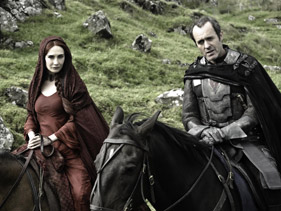
Stephen Dillane, Carice van Houten and other actors make their ‘Thrones’ debut in a series of new stills from season two. By Josh Wigler Carice van Houten and Stephen Dillane in “Game of Thrones” Photo: Helen Sloan/ HBO Winter is fast approaching Westeros, and if you can see through the downpour of snow, you’ll notice a few new, not-so-friendly faces in the mix. Yes, several of your favorite characters will be back in action when “Game of Thrones” season two premieres April 1, but Jon, Tyrion, Dany and the rest will have their work cut out for them when new friends and foes join the battle for the Iron Throne. To get you acquainted with some of these newcomers, HBO has released a slew of photos from the upcoming second season of the epic fantasy series, based on the “Song of Ice and Fire” novels from visionary writer George R.R. Martin. From men who would be kings to their trusted and true servants, here are five new “Thrones” characters about to enter the game: Stephen Dillane as Stannis Baratheon “The Iron Throne is mine by rights.” Get ready to hear that refrain early and often in season two as Stannis Baratheon enters the scene. Currently lording over the remote island of Dragonstone, Stannis believes himself the one true ruler of Westeros following the death of his brother Robert and the revelation that his nephew Joffrey is the product of Cersei and Jaime Lannister’s incest. Stannis will stop at nothing to claim what he feels he’s rightfully owed, including resorting to the use of forbidden magic. Speaking of which … Carice van Houten as Melisandre The red priestess from the foreign lands of Asshai comes to serve Stannis in his time of need, believing him to be Azhor Azhai Reborn, an old hero of ancient prophecy destined for great and powerful things. Her beliefs are questioned by many, but her power can be denied by none. Melisandre’s magic is a deadly spectacle that must be seen to be believed, and season two will convince some skeptics just how serious her sorcery is — often at a lethal price. Liam Cunningham as Davos Seaworth The Onion Knight is another of Stannis’ most trusted advisers. Davos is a smuggler-turned-knight after proving his loyalty to the bold Baratheon warrior; the fingers of his left hand were long ago shortened by a joint on Stannis’ command, a final punishment for his smuggling past. The severed remains are held in a pouch around Davos’ neck he describes as his “luck,” though his luck may well be running out. Davos does not take kindly to Melisandre’s newfound influence over Stannis — but like many others, he’ll soon realize that the red priestess has more than enough bite to back up her bark. Patrick Malahide as Balon Greyjoy Stannis Baratheon is not the only one competing for the crown of Westeros: There’s also Balon Greyjoy, lord of the Iron Islands, to consider. The seafaring warrior is no stranger to fighting for the Iron Throne, having been put down in a rebellion many years earlier. But Balon sees new possibilities in another attempt to claim rule over Westeros — possibilities that may be helped or hindered by the return of his estranged son Theon, best friend and closest confidant to King in the North Robb Stark. Gwendoline Christie as Brienne of Tarth Serving a different king entirely is Brienne of Tarth, a fierce warrior woman often ridiculed by men for her masculine features and seemingly futile attempt to become a knight. But she’s respected by the man who matters most to her: Renly Baratheon, brother of Stannis and another of the men vying for supremacy in Westeros. As part of Renly’s elite guard, Brienne will stop at nothing to protect her king and further his agenda. But fate might have other plans in store for her … What do you think of the new “Thrones” characters? Tell us in the comments!
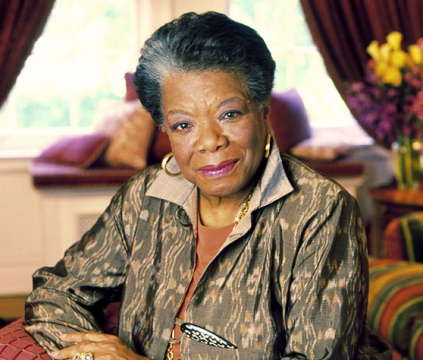
Can’t really argue with their logic… Author and activist Maya Angelou hopes for a time when Black History Month will no longer be needed to explain the contributions of African-Americans. “We want to reach a time when there won’t be Black History Month, when black history will be so integrated into American history that we study it along with every other history,” she said in an interview from her home in Winston-Salem, N.C., on Wednesday. “That’s the hope, and we have to continue to work until that is true, until that becomes a fact.” In the meantime, she said, she will continue to put the history out there. Angelou is hosting an hour-long syndicated radio special on the civil rights era that will air throughout this month on about 200 public radio stations across the country. Her special features Grammy award-winning singer Mary J. Blige, Democratic Rep. John Lewis of Georgia, former U.N. Ambassador Andrew Young, economist and Bennett College President Julianne Malveaux, and professor Nikky Finney, winner of the 2011 National Book Award for poetry. Angelou, 83, said she hopes the program sends a message that “the work of making our country more than it is today” is unfinished. Black history IS indeed American history, so should we now protest Black History Month?? Speak your piece in the comments section Source More On Bossip! Ladies, Can We Watch?: RihRih Asks Ochocinco’s Permission To Get In Evelyn Lozada’s Panties Lady Lovin’: The 10 Most “Lesbihonest” Cities in America (Part 2) Wait, There’s More! A History Of Slore-y “Journalists” That Showed Off Their Cakes At Super Bowl Media Day For The Ladies: The Best Super Bowl Bangin’ Baller BAWWWWDIES!!! [Photos]
You’re going to love this evening’s Saturday Night Video… Here’s a fun game: Try and spot every one of your beloved cartoon favorites in this killer MetLife Super Bowl commercial that will air tomorrow. If you get stumped, the link below takes you to cartoonist Mark Anderson’s blog who has actually done the work for you and listed them all! Visit Andertoons for the complete list . Broadcasting platform : YouTube Source : The Reformed Broker Discovery Date : 03/02/2012 20:08 Number of articles : 2
Story focuses on a woman outcast from the English aristocrat and her ‘incredible’ romance with a Bedouin. By Jocelyn Vena, with reporting by Josh Horowitz Madonna Photo: MTV News Madonna has examined love a lot over the course of her career. She’s written numerous songs on the subject. So, it comes as no surprise that when it comes to her work as a film director, the pop superstar enjoys breaking down complex, historical romances. Her new film, “W.E.,” which opens Friday, is all about one very famous, scandalous romance. It focuses on the tabloid romance between American divorc
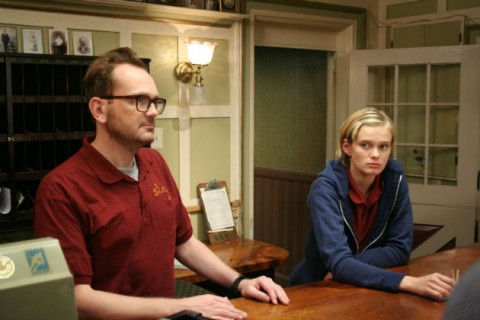
Every performer must pay their dues, but with this week’s old school-flavored ghost pic The Innkeepers character actor Pat Healy cashes in over a decade of memorable supporting turns and guest spots for the spotlight at an auspicious moment in his career. Having popped up in a number of great films over the years ( Magnolia ! Ghost World ! Rescue Dawn !) Healy stars with Sara Paxton in the Ti West film as a sardonic desk clerk at the Yankee Pedlar Inn, where spooky happenings are afoot; meanwhile, Healy also earned writing credits on the award-winning In Treatment and recently took Sundance by storm with Craig Zobel’s controversial Compliance . And to think: It all began with the one-two punch of My Best Friend’s Wedding and Home Alone 3 … I want to start out by asking you something of great importance: Why is there no Wikipedia page for Pat Healy the actor? I don’t know! There’s one for Pat Healy – The MMA fighter? Yes, do you know of him? Pat “Bam Bam” Healy! There’s a competitive hurler with your name as well. I didn’t know that – that sounds like a vomiter. There’s a local newsman, there’s a New York Times… Are you acutely aware of these other Pat Healys in the world? I had become, since There’s Something About Mary in 1998, with Matt Dillon’s character. I was like, ‘I thought I was the only one!’ And for a long time, this might still be true because a lot of those guys are Patricks, I was the first Google one. Bam Bam might be surpassing me now, MMA is very popular. Did you somehow cross the Farrelly Brothers, years ago? No, the guy who works for them who was like a line producer guy and I think is a writer or director now too, in some way, because I remember he was making a movie at one point and I started getting calls from people like, ‘Hey, comin’ in to see you next week!’ And I was like, ‘I don’t know what the hell you’re talking about…’ But yeah, no one started one. I guess I am maybe not the greatest self-promoter, I’m getting more comfortable with it now. I’m not a reluctant star or anything like that, but maybe I was naïve early on about how all this stuff works, with publicists and all that kind of stuff. And you’re not anymore? I feel like now I’m doing the things I want to do because my career as a screenwriter is affording me to not have to just be a guest star on every dumb crime procedural show on TV. I can do the things I want to do which are the more interesting things, like working with Ti [West] or working with Craig Zobel again. Those are more significant roles in better films. I might make more money in the short term having a few scenes in Pearl Harbor and the residuals are good, but nobody’s offering me other jobs off of that, whereas this community of people, we all know each other or know of each other and know each other’s work. How did you get together with Ti for this film? Innkeepers came about because Ti and I were at the LA Film Festival in 2007, met briefly – he was there with Trigger Man , I was there with Great World of Sound , Craig’s movie. He saw it, and I was a huge fan of House of the Devil ; I’d just seen it and I got a call from Amy Seimetz, our mutual friend, and she said ‘He wants to use you in a movie.’ I was ready to say yes without ever reading it, but then I read it and it was great, it was a great part and everything. So it works out that way. It’s just better for me now, I can afford to do these films and I enjoy the work – and people end up seeing what I can actually do, as opposed to saying ‘He was in that.’ If it leads to more jobs in the long term, it’s a better living for me. What was your plan in the beginning when you started acting? When I was a kid, when I was a real little kid, my family were always into movies and one of my older brothers, Jim – he’s two years older than me – he and I were just into movies and seeing everything we could see, watching everything on television, getting all the books and all that kind of stuff. Interestingly enough, we both have the jobs we wanted as little kids: I’m making films and he’s in film restoration. He ran the George Eastman Archive for a long time in Rochester, New York and now runs the Cinematheque at UW Madison. He loves watching them and showing them and talking about them and I love making them. So I came into this loving movies, and acting was something I knew how to do from an early age, just being a ham and being a performer, doing theater; that was sort of my way in. Doing some professional theater opened the door in Chicago, where I’m from, to commercials, and movies came through town, TV shows… Speaking of which, can we talk about Home Alone 3 ? [Laughs] Home Alone 3 is my first real movie! I was hired on My Best Friend’s Wedding , that Julia Roberts movie, and I was actually hired to be in the opening scene of that movie as this waiter and I was in make-up and costume and everything, and they just rewrote the scene as we did it and never shot me. But I got my SAG card and I think maybe six months later I got [ Home Alone 3 ], which if you haven’t seen it… all the little kids have seen that one on video a million times and it’s a perennial residual earner because kids like it and it’s on at the holidays. I played the FBI agent who was behind the guy who had all the lines, but I think they kind of forgot about me for a while because I was on hold, which they never do now because they watch the budget so tightly, but I made a lot of money off of it because I was on hold for about five weeks even though I only shot five days on it. And residuals are based on the time you worked on it, so the residuals have stayed really good. You mentioned the creative community that brought you in touch with Ti, and in recent years maybe more than ever I’ve noticed all these ties between indie filmmakers in this community. Yeah, it’s really different now. I think the movement in a way sort of started in this current incarnation through David Gordon Green , who I met through my brother in 2000 after George Washington had premiered in Berlin; he fostered a real sort of community spirit. Certainly all those people he went to school with, like Danny McBride , Jody Hill, Paul Schneider and now Jeff Nichols – all these people are doing great things, and encouraged people like Joe Swanberg. And all the satellite people from Joe, who is somebody who’s just going out there and making this stuff on his own, doing a lot… Joe and Ti and Sophia Takal and Larry Levine, Andrew Bujalski, Bob Byington, there’s a whole Austin contingent – we all know each other, too, and even people like Michael Shannon , who is my friend, who I started in theater with in Chicago with, is working with Jeff a lot. Craig [Zobel] also went to school at North Carolina School of the Arts. In my mind, as someone who was around a little bit before that, it seemed to spur a new DIY movement and a sense of community because David is an extremely loyal person and all of those people have gotten opportunities, including myself, because of him. I think that his films as well as his spirit and his generosity have inspired this new generation. People bring up mumblecore and I think a lot of people can point to George Washington as the first movie in that genre, if you can include it – it’s certainly bigger and more ambitious. But there’s a real sense of community, especially at the festivals when you’re there and seeing each other. That’s frankly where a lot of the work comes from, too. People meet and decide to work on something together, or somebody sees someone in something… It’s intriguing to watch those connections interweave from the outside, watching this community grow with each project. Yeah – and somebody like Robert Longstreet, who David Green saw in a small movie called Ding-a-ling-Less many years ago, and David put Robert in a movie and he met all these people, and then last year Robert was in like 10 movies at Sundance! So it is great, and it’s also not just real young people, either. It’s people of all ages, like some of the actors in Compliance like Ann Dowd, a woman in her fifties who’s done a lot of theater work and she’s just staggeringly brilliant in the movie. I know a lot of people are going to see that and want to work with her. You saw that thing sort of happen with Melissa Leo a few years ago, and those are all people who are working but they go to these independent movies because they get to show what they can do, really, and really spread their wings. Then all of a sudden Hollywood comes calling once they either do a television series or do a good part in an independent movie. In this, in Innkeepers , and in Compliance and Great World of Sound , I get to show what I can do and people can see it and it comes back to me. So I love what’s going on now. It’s cool and I think it’s coming out of both social and economic factors, but it’s fostering a lot of great activity and a lot of production. With Innkeepers , it seems like the entire process of making this was very condensed. Why did you initially respond to the material? I loved House of the Devil and was just ready to do whatever. [ The Innkeepers ] was a horror movie but it had a really good central relationship in it, and there were some different colors to get to play – certainly a lightness in the character, I like that dry sense of humor and sensibility. You’re exceptionally good at that, actually. I think it’s my natural rhythm and I think maybe Ti saw that as much personally as he did in any work that I’ve done, with the exception of Great World of Sound which is heavier and more serious. But that comes naturally to me. I certainly liked the heartbreak of that character, the unrequited love aspect. Even the tragedy in his failings is utterly amusing. And the fact that it is very tragic and heartbreaking to play, and to sit in the audience and it’s very funny… because it’s that comedy of uncomfortability, like Albert Brooks or Ricky Gervais – that really reality-based ‘I’m so uncomfortable I have to laugh…’ I like that about it a lot, and I like that the scares and the tension came from the building of the relationships so that you actually care about these people. There are so many movies where in the third act it’s like where everything’s flying this way and that and you’re like, ‘Okay, that happened.’ Filming Innkeepers you all actually lived in the hotel, on top of which you and Sara Paxton only met right before shooting, yet you managed to strike a really great chemistry together. It was taking a big risk – it was like a 17-day shoot, living, working, and eating in the hotel, a weird place, and we met the day before. I knew very little about her, I think I saw Last House on the Left and that’s a much different part so I wasn’t really sure what to expect. She’s just a really buoyant, funny, fun, lovely person so my guard went down pretty quickly. Luckily the two of us really liked each other, and the movie’s pretty much shot in sequence so we just developed that relationship. But I think a lot of credit can go to Ti for creating that environment; it was cool to be in that weird environment in the hotel itself, and to be in the camp-like atmosphere of all living together, screwing around and joking and all that stuff. Ti recently wrote an open letter imploring people to pay to see and support small indie films, which made a lot of sense. Yeah, some people were surprised that that is the reality of things. Somebody I know had recently pirated an indie movie… Did you shame them? I did, and they gave me crap because it wasn’t playing anywhere near them and they really wanted to see it. I just thought, well, it didn’t make any money — maybe you couldn’t have seen it when it came out, but you can see it on Netflix or rent it or whatever. It’s not like I get a dollar if you watch it; I don’t get anything, really, though I might in the long run if it makes a lot of money on DVD. But like [Ti] said, the reason they keep making dumb movies is because we keep paying to see them, and then we don’t pay for the other ones. I feel like people know you even if they don’t realize they know you because of some of those bigger movies you were in, like Magnolia , Rescue Dawn , Ghost World . How do you look back on those films now? Even though I wasn’t in a position to choose what I wanted to do, I was fortunate enough to be working with people like Paul Thomas Anderson in Magnolia . That was something that was really exciting to me, I’d loved Boogie Nights and all that stuff. At that time – and I didn’t know what I had because I was 26 years old or something, and the sad thing is when I think about it he’s only a year older than me – but I think that I just naturally ended up in those things. I was a fan of Dan Clowes’s comics and Terry Zwigoff, who made Crumb , so I think I ended up in Ghost World because unconsciously my drive to be in those things made me work hard to get them. Or working with Herzog on Rescue Dawn … Did you just put a little something extra into those auditions? I guess I just really cared about those things, and there are so many that I don’t, and I get some of those too. But something like a Western with Andrew Dominik and Brad Pitt and all those people in Jesse James , I really want to do that. But I’m not conscious of it so there must be something that gets me into those rather than the other ones. There are actors’ careers that are built on parts I didn’t get. Now I think I’m a little older, and I’m writing and certainly making a living at that, and I can be a little pickier to a certain degree – though I can always use more money. But now I’m being cast in things I would choose to do, you know? Now that you’re screenwriting and directing, do you feel like you’ve picked up advice or lessons from the various auteurs you’ve worked with? All of them. Without a doubt. The main thing that I would say about all these people – Anderson, or Herzog, or Zwigoff, or Zobel, or Ti West – is a sense of leadership, a real devotion by their cast and crew, because of the kind of people they are. They’re not only masters who know what they’re doing, but they’re really great at revving you up. You like them and they really like and respect you and you feel support and freedom to do your best. That’s such a great quality in a director; you are the captain of a ship. You have to do your homework like you do as an actor, be prepared and show up and know what you’re going to do, but that’s the commonality among the people that I’ve worked with that do great things – they really know how to be leaders and to rally the troops. Were you not surprised, then, when Werner Herzog saved Joaquin Phoenix from that car crash? Nothing Werner does shocks me! He’s a really remarkable guy, and I think some of his life is cinema. He crafts these moments and certainly makes sure people know about them. But I just saw his most recent documentary, Into the Abyss , which is great, and he introduced it. Even the way he came out and framed the movie for the audience, sort of directing how people see the movie, really enhanced my enjoyment of that movie so much, so he’s even a master in that way. As is Paul Anderson too; he controls every aspect of it through the publicity and marketing and everything. So by this token, would you say Ti West has something in common with, say, Michael Bay? I mean, he might tell you that. [Smiles] But as with these guys, or with Kubrick or Polanski or Hitchcock – Ti’s really exacting, he writes and meticulously casts it, he shoots it and knows exactly how he wants it to look, and then he spends so much time in the editing, which he does himself. He’s meticulous and exacting in post with Jeff Grace, the composer, and Graham Reznick, the sound designer – and then going to the theater and making sure the specs are right, going through the poster design and all that stuff. That’s him. I think if you really want to see your vision through to the end… Terry Malick does that too, you’re sending note to the theater telling them how loud it should be played and all that stuff. It’s tiring, thankless work – but it matters to them, you know? Given all of this, what sort of writer/director do you want to be – what kind of projects do you see yourself creating? The things that I’ve written are dramatic but they all have an inherently bent sensibility to them, an offbeat humor that’s not broad but is sort of unusual. It’s sort of the way that I see things, I think. If I were to compare myself to someone, contemporary people like Alexander Payne comes to mind, or Hal Ashby or Michael Ritchie – those sort of satirical looks at everyday life. But I’m a kid of the ‘80s and ‘90s too, and I love the big action movies too. So those strange conventions find their way into some of the things I write, too. I just hope that whatever it is, and I know that whatever it is, I will be an auteur. I can’t do anything – I can’t do a performance on a crappy TV show, or write a script, or write a Tweet, that isn’t inherently me. I couldn’t if I tried, and if I did it’s like cardboard, it stinks, it’s bland. I’ve tried. It’s trusting what’s there, and whatever I end up making, good or bad, it’ll be a true expression of who I am. It’s taken me a long time to get to that place, but I feel like I’m in that place. For more with the makers of The Innkeepers check out the Movieline Interviews with Ti West and Sara Paxton . The Innkeepers is in select theaters this Friday. Follow Jen Yamato on Twitter . Follow Movieline on Twitter .
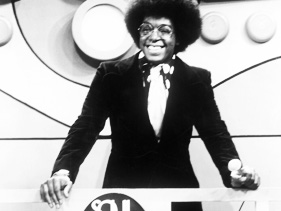
Iconic producer of music program was 75 years old. By Rob Markman Don Cornelius on “Soul Train” in 1973 Photo: Michael Ochs Archives/ Getty Images “Love, peace and soul.” Don Cornelius would sign off with those words after every episode of his famed dance/music program “Soul Train,” and now the television show host and producer is dead. On Wednesday morning (February 1), Cornelius was found dead in his Los Angeles home on Mulholland Drive after police responded to a shooting call, the LAPD confirmed to MTV News. According to TMZ , Cornelius was found with a gunshot wound to the head. Sources told the website that Cornelius’ death appears to be a suicide, however the LAPD could not confirm this information as the investigation is still ongoing. Police discovered Cornelius’ body at around 4 a.m. PT on Wednesday and he was later taken to an area hospital where he was pronounced dead. He was 75 years old. Love, Peace and “Soul”: Don Cornelius Remembered in Photos A former radio disc jockey, Cornelius created, wrote and produced “Soul Train,” a popular dance/music show which spotlighted soul, R&B, and later, rap music. “Soul Train” was patterned after Dick Clark’s “American Bandstand,” but it helped to shine a light on black artists who many times didn’t get the recognition they deserved. James Brown, Aretha Franklin and Michael Jackson all appeared on the show as well as more contemporary artists like Chris Brown, Alicia Keys and Ludacris. “Soul Train” was most famous for its dancers who would show off the newest moves while partying to the latest hits. The “Soul Train” line, where dancers would line up on the left and right of the dance floor, allowing for one performer at a time to shimmy down the aisle, became a staple in American pop culture. Cornelius would go on to host the show for 22 years, between 1971 and 1993. He eventually handed over the reins to new hosts. The show ultimately went off the air in 2006. Share your condolences with Don Cornelius’ friends and family, as well as you favorite “Soul Train” memories on our Facebook page. Related Videos ‘Soul Train’ Host Don Cornelius Passes Away At 75 Related Photos Don Cornelius: A Life In Photos
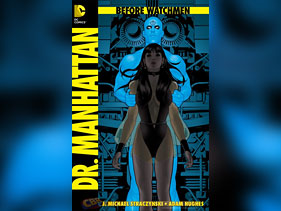
With the announcement of ‘Watchmen’ prequel comics, the MTV Movies Team considers the future of ‘Watchmen’ as a film franchise. By Josh Wigler The Dr. Manhattan cover of “Before Watchmen” Photo: DC Comics Who watches the “Watchmen,” you ask? Right now the answer appears to be everyone. DC Entertainment announced Wednesday (February 1) that a new “Watchmen” prequel series is officially in development. Titled “Before Watchmen,” the project spans seven different miniseries starring popular characters from Rorschach to Doctor Manhattan. The continuation of “Watchmen” had been rumored for quite some time, but today’s announcement turns rumors into facts — and the reaction to those facts is divided, to say the least. Some fans believe that more “Watchmen” is a great idea , especially considering the involvement of top-tier comic book talents including Darwyn Cooke and Brian Azzarello. For others, even excellent creative teams won’t wash away the panic some are feeling at the prospect of revisiting the most successful, self-contained graphic novel of all time. Indeed, “Watchmen” writer Alan Moore has already spoken out against the existence of “Before Watchmen,” telling the New York Times that it’s “completely shameless.” Artist Dave Gibbons’ stance, meanwhile, is considerably warmer: “I appreciate DC’s reasons for this initiative and the wish of the artists and writers involved to pay tribute to our work. May these new additions have the success they desire.” From fans to creators and all the onlookers in between, arguments about whether or not “Before Watchmen” should even exist are sure to rage on in the coming days, weeks and months. But the MTV Movies Team is focused on a different question: Will “Before Watchmen” lead to more “Watchmen” movies? Up front, it should be noted that the film adaptation of Moore and Gibbons’ graphic novel wasn’t a smash success at the box office, only yielding $185 million worldwide against a $130 million budget. But the film’s high-profile release drew renewed attention to the “Watchmen” brand , propelling its ranking as the top-selling graphic novel for 11 straight months. “Watchmen” also pulled in strong initial DVD sales and rental figures. An unconventional success, perhaps, but success all the same. Even with all those factors considered, would the “Watchmen” movie’s creative team be on-board for sequels? Actors Patrick Wilson and Malin Akerman , who played Nite Owl and Silk Spectre respectively, spoke with MTV News about the topic in 2009, and both expressed skepticism. “I just don’t know where you would go,” Wilson said. “You would need one good idea.” “I don’t really know how [a sequel] would ever be possible,” Akerman added . “Because ‘Watchmen’ is ‘Watchmen,’ and we covered pretty much the whole novel.” Clearly, there is now more ground to cover than Akerman once realized, so future “Watchmen” movies based on original comics material are certainly possible. But if “Watchmen” does have a future on the big screen, director Zack Snyder will not be involved — if comments he made three years ago still hold weight, that is. “I know that I wouldn’t have anything to do with it,” Snyder said in February 2009. “It would be like me going to [‘No Country for Old Men’ author] Cormac McCarthy and going, ‘I have an idea for a [sequel]: You write a book, and I’ll write a movie, and you can release it. You’ll win a Pulitzer; I’ll win an Oscar. It’ll be awesome.’ “The attitude toward comic books, they show their hand a little bit,” he added. “They would never say that about a real novelist, but they would about a comic book.” So will we see more “Watchmen” on film? At this point, it’s simply too early to say. But where one would have thought the prospect impossible just three years ago, the possibilities are virtually endless today. Do you want to see new “Watchmen” movies? Tell us what you think of “Before Watchmen” in the comments section! Check out everything we’ve got on “Watchmen.” For breaking news and previews of the latest comic book movies — updated around the clock — visit SplashPage.MTV.com .