Is it possible to love a piece of dead fish more than you love people? That’s the question asked, implicitly if not directly, by David Gelb’s documentary Jiro Dreams of Sushi , a portrait of 85-year-old sushi master Jiro Ono that is itself as meticulous and carefully formed as a piece of nigirizushi . The movie’s title comes from an interview with Jiro, who speaks of waking up in the middle of the night with new ideas for perfecting and enhancing his craft. Then we see him standing stiffly behind the bar at his Tokyo restaurant, waiting with an air of placid annoyance for a customer to consume one of his precise and studied creations: With his hands, he has made a dream you can eat. And he wants you to know it. Gelb’s documentary is tactile in the same way. In fact, it’s so strictly visual – as opposed to sensual – that unlike most well-made movies about food, it may not send you walking out hungry. A food-critic friend and I were discussing this phenomenon: It could be, as my friend posited, that sushi, though among the most beautiful of all consumables, is just “not very food porny.” And it’s true: I left Jiro Dreams of Sushi wanting not to eat, but to make jewelry, preferably with the most colorful, carefully polished beads or stones available. Jiro, as he himself tells us in the film, has been mastering the art of making sushi nearly his whole life. For years he has run Sukiyashi Jiro, a 10-seat sushi restaurant in Tokyo, and though the place is just a modest – if elegant – dinerlike strip, it was the first restaurant of its kind to be awarded three Michelin stars. His eldest son, Yoshikazu, works in the restaurant with him, and though it’s strongly hinted that his skills are nearly as well-honed as those of his father, Jiro shows no signs of being ready to pass the torch along. A younger son runs another sushi restaurant on the other side of town, an enterprise Jiro talks about with gibing pride. He himself, as it turns out, struck out on his own before he was even a teenager, supporting himself any way he could. When his younger son decided to start the restaurant, Jiro told him he had better succeed, because he had no home to go back to. He derides the idea of parents who reassure their children they can always come home. “When parents say stupid things like that,” he says, “the kids turn out to be failures.” That gives us a few clues to his parenting style. And yet Jiro’s grudging love for, and pride in, his children shines through, even though it’s something he’d rather not advertise. (At one point he concedes, “I wasn’t much of a father,” and no mention is made of the children’s mother, though we see her in a photograph or two.) That’s one of the strengths of Gelb’s understated technique – he never tells when he can show, letting Jiro do most of the talking, though we also hear from Tokyo restaurant critic Yamamoto (who informs us plainly that in the dozens of times he has eaten at Sukiyabashi Jiro, he has never had a disappointing meal) and the fish dealer who proudly supplies Jiro with those all-important raw ingredients (although Jiro, who used to do all the marketgoing himself before suffering a heart attack, now leaves the daily shopping to Yoshikazu). Mostly, though, we see Jiro at work, sometimes supervising his devoted but slightly cowed restaurant workers, but more often just making the stuff: The precision of his hand movements is something to behold, as he forms a small dollop of rice into a suitable bed for a piece of glistening salmon or mackerel. As he cuts through a slab of tuna, the pieces fall away in thick, red ribbons – this is what velvet would look like if you could slice it. Jiro’s quest for perfection is all-consuming and, the film suggests, won’t be quelled until he draws his last breath, or until his limbs stop working, whichever comes first. At its simplest level, Jiro Dreams of Sushi is a portrait of a master. In its deeper layers, it explores what drives us to make things: Beautiful, jewel-like things, or things that delight our palate – or, in this case, both. Follow Stephanie Zacharek on Twitter . Follow Movieline on Twitter .
With relations between the sexes having recently hit a dispiriting cultural low (news avoiders may consult Time Magazine’s helpful round-up ” Are Women People ?” for cringe-inducing details), now is as good a time as any to ask and perhaps answer the burning question, “Why don’t women narrate movie trailers?” Conveniently, the BBC is here to offer some insights. It all sounds like a bunch of chauvinist shit-shoveling to me, but your mileage may vary. All I know is that newly, criminally deposed NYC news anchor Sue Simmons could turn this trend around in about a week flat with the right agent. Let’s go, Sue! [ Movies.com via Fark ] Men Rule Movie Trailers
I have no idea how this concept eluded me for two years, but there it is: The 3rd annual 20/20 Awards were announced recently, honoring the best films of 1991 after two decades worth of distance and hindsight. Great idea — even though the event turned out just about as anticlimactically as this year’s real thing. That’s what happens when Oscar apparently gets it right. To wit, the Silence of the Lambs once again swept the major categories of Best Picture, Director, Actor, Actress and Screenplay (Adapted), claiming five “Felixes” on the night and leading the way among an unprecedented eight “Odd Couples” to win both Oscars and Felixes. (HA! Cute.) Alas, ’91 Supporting Actor Jack Palance and Supporting Actress Mercedes Ruehl were overthrown by John Goodman ( Barton Fink ) and Geena Davis ( Thelma & Louise ). Find the full list of winners below. Congrats to all! (* denotes an Oscar winner) BEST PICTURE THE SILENCE OF THE LAMBS* BEST DIRECTOR Jonathan Demme – THE SILENCE OF THE LAMBS* BEST ACTOR Anthony Hopkins – THE SILENCE OF THE LAMBS* BEST ACTRESS Jodie Foster – THE SILENCE OF THE LAMBS* BEST SUPPORTING ACTOR John Goodman – BARTON FINK BEST SUPPORTING ACTRESS Geena Davis – THELMA & LOUISE BEST ORIGINAL SCREENPLAY Callie Khouri – THELMA & LOUISE* BEST ADAPTED SCREENPLAY Ted Tally – THE SILENCE OF THE LAMBS* BEST FOREIGN FILM DELICATESSEN BEST DOCUMENTARY HEARTS OF DARKNESS: A FILMMAKER’S APOCALYPSE BEST SCORE Wilson Pickett – THE COMMITMENTS BEST SONG Until The End Of The World – UNTIL THE END OF THE WORLD BEST EDITING Conrad Buff, Mark Goldblatt, Richard A. Harris – TERMINATOR 2: JUDGEMENT DAY BEST CINEMATOGRAPHY Lun Yang – RAISE THE RED LANTERN BEST ART DIRECTION Dennis Gassner – BARTON FINK BEST COSTUME Valérj]ie Pozzo di Borgo – DELICATESSEN BEST MAKEUP THE ADDAMS FAMILY BEST VISUAL FX TERMINATOR 2: JUDGEMENT DAY* BEST SOUND DESIGN TERMINATOR 2: JUDGEMENT DAY*
Unemployment is bad, but things like What’s Your Number are apparently worse: “In the overall (all countries) adjusted model, adolescents with higher exposure to alcohol use in movies were significantly more likely to have engaged in binge drinking, even after controlling for age, gender, family affluence, school performance, television screen time, sensation seeking and rebelliousness, and frequency of drinking of peers, parents, and siblings.” The most troubling part of this study might be its definition of binge drinking as five or more drinks in one sitting, which I otherwise tend to refer to as “lunch.” [ Pediatrics (PDF) via Deadline ]
Three Twi-actors are starring in new pilots — ‘Twilight’ Tuesday takes a look at who could be next. By Kara Warner Ashley Greene Photo: Didier Messens/ WireImage The news surrounding Hollywood’s annual TV pilot season has heated up in recent weeks with the casting announcements of not one, but three “Twilight” stars. It’s hard for us to think about life beyond the fifth and final Twi-film, “The Twilight Saga: Breaking Dawn – Part 2,” but it’s clear that the actors are thinking about life after the films that made them household names. This week’s “Twilight” Tuesday is dedicated to Ashley Greene, Rachelle Lefevre and Billy Burke, along with any other “Twilight” stars who make an appearance on the small screen in the coming months or years. Coincidentally enough, Greene has signed on to play another Alice, this time in the ABC drama “Americana.” The show revolves around a well-known family fashion house run by Robert Soulter (Anthony LaPaglia) that is suddenly shaken up by the arrival of a hot new designer in town (Greene). Other players in the mix include Emilie de Ravin (“Lost”) as Soulter’s fashionista daughter, Natalie Mendoza and Ken Olin. Lefevre, who originated the role of Victoria in “Twilight” and has a supporting role on “A Gifted Man,” has landed the lead in the CBS drama “Applebaum,” which is based on Ayelet Waldman’s Mommy Track Mysteries book series about a public defender-turned stay-at-home mom who eventually tires of being at home all the time and decides to return to work and become a private investigator. “Harry Potter and the Sorcerer’s Stone” director Chris Columbus will helm the pilot. Finally, Burke, a.k.a. Bella’s dad Charlie Swan, will appear in NBC’s action drama “Revolution.” Burke is set to play a charismatic Marine who is among a group of people trying to find their loved ones as well as a way to survive when all sources of energy in the world have, for some reason, disappeared from existence. The pilot will be executive-produced by J.J. Abrams and directed by “Iron Man” helmer Jon Favreau. So with all these Twilighters taking to TV, who’s next? I, for one, would love to see some tongue-in-cheek guest appearances by the cast on shows like “True Blood” or “Vampire Diaries.” Nikki Reed told me she’s dying to do a stint on HBO’s vampy soap, and I think if it were done right, it could be both awesome and hilarious. Jackson Rathbone just left his other passion project, the band 100 Monkeys, so surely he could fit in a couple of days as a mysterious stranger/being in Mystic Falls, right? What “Twilight” stars would you like to see on television? Let us know in the comments below, or tweet me @karawarner! Check out everything we’ve got on “The Twilight Saga: Breaking Dawn – Part 2.” For young Hollywood news, fashion and “Twilight” updates around the clock, visit HollywoodCrush.MTV.com . Related Videos MTV Rough Cut: Kristen Stewart MTV Rough Cut: Robert Pattinson
Two teen-oriented comedies this season share much in common, from a gleeful embracing of the spirit of youthful recklessness to the idea that geeks will indeed inherit the earth. One is among the better comedies we’re likely to see this year; the other is by far, on its face, the sleaziest . Both were penned by the same actor-turned-screenwriter, Michael Bacall , who also captured the slings and arrows of slacker youth heroism in 2010’s Scott Pilgrim vs. the World . So why are Project X and 21 Jump Street so diametrically opposed when it comes to depicting the youth of today? Last weekend’s R-rated party bacchanal Project X was crafted with just the right pedigree for it to become, potentially, the party film of its generation. Produced by Hangover director Todd Phillips (and co-scripted by Matt Drake), cast largely with unknowns, and shot in a first-person verite style, the premise was simple: Three geeky suburban losers throw the biggest party ever to become cool and get the ladies. Critics had plenty to complain about solely on moral grounds – rarely do films so glorify bad behavior without serious, remorse-inducing consequence when it comes to the teenagers onscreen, let alone the ones watching in the multiplex. Reveling in that unapologetic party spirit was much of the point, though; in taking risks and throwing caution (and his parents’ property value) to the wind, protagonist Thomas was handsomely rewarded for his ballsiness as a sign of maturity of sorts. Forget the gross, near-total objectification of women (even the obvious girl next door love interest partakes in a showy swimming pool dip) and the juvenile use of derogatory words like “bitch” or “faggot” — at the film’s end Thomas and Co. may face charges for wrecking his cushy Pasadena neighborhood, but they’ve gained the respect of his fellow party-goer peers. That’s all that really matters, right? Wrong, says Badass Digest’s Meredith Borders . It feels too insufficient a justification for the makers of Project X to hide behind the “teen boy perspective” defense given just how much the film celebrates this skewed point of view. In a post appropriately entitled “Michael Bacall, How Could You?”, Borders details the film’s offensiveness: “ Project X isn’t an outsiders’ perspective of one misguided group. It’s a celebration of that perspective. I simply don’t believe that a screenwriter can write a film that uses the word ‘bitch’ that frequently – said by protagonists whom we are surely meant to support – without being culpable for that sentiment at least in part. Bacall, Drake, [director Nima] Nourizadeh and of course producer Todd Phillips are all responsible for the message in Project X , and the message is execrable.” Meanwhile, Choire Sicha writes at The Awl of Project X ’s selective, seemingly just off-target approach to capturing what the kids today are all about: “Especially for a film directed by an Iranian Brit, who’s supposed to have done ‘hip’ commercials and videos, it’s crazy retrograde. I expect the word ‘faggot’ to get tossed around a lot in a film that’s about three straight guys trying to get laid, but in 2012 we never get a shot of, say, the gay dudes from the high school throwing down at the party? (Despite lingering girl-on-girl softcore tributes even!) Kids today, they like to say ‘faggot’ and they like having homos at their party. And then it all takes place in Los Angeles county, but there’s barely a Mexican to be seen? Come on. Also I expect straight guys to talk about ‘pussy’ a lot, but I also expect the girls to beat them down for it. Instead there’s a bunch of Mean Girls chicks strutting around and ripping off their tops in the pool. As if!” Sicha’s observations, interestingly enough, play into the common defense of Project X – that despite the handheld found footage-aided conceit (a gimmick that suggests some element of “realism” even when we know it’s staged), this is pure 15-year-old boy fantasy. Maybe the three nerdy heroes of Project X don’t live in a real-world scenario to begin with — the kind of post-racial melting pot of diversity and interests united by Twitter and YouTube that kids enjoy these days, at least in places like Los Angeles. Perhaps the world of Project X approximates that of any conventional teen sex comedy where the jocks are macho and the tomboy best friends are model-hot and nerds get pushed into lockers, only it’s told from the nerds’ point of view. “Of course they’re obsessed with sex and think of girls as sex objects,” the apologists cry. “Of course their drug-hazed memories of raucous house parties filled with drunk underage girls look like American Apparel ads! They are teenage boys !” Bacall said as much when prodded for comment by The Hollywood Reporter in the face of Project X criticism: “The criticisms about the movie being amoral because kids are dancing and drinking and having a good time, I think that’s absurd… because kids have been dancing and drinking and altering their states of consciousness for a very long time, and this is nothing new. The thing these guys do turns out to be massively irresponsible and possibly tragic, as we fade to black, but I think the value in it for them is in kind of finding out where their limits are. Granted, there are more productive ways to do that, but this is the path that these guys decided [to take], and given that’s the concept of the movie, we wanted to just make that path as deep as possible.” So it’s possible that Project X is an elaborately conceived manipulation of the collective teen sex comedy movie worlds we grew up watching and that the found footage aspect is a deliberate wrench thrown into the mix to pervert your expectations. Maybe it’s a collective cultural dream for us all to share in which the nerds finally win! (Or: It’s a shared wet dream that Thomas, Costa and JB are simultaneously having after watching Porkys during a sleepover in Thomas’s parents’ basement while the cool kids party elsewhere in the greater Los Angeles County.) Maybe these loser bottom-rung-of-the-social-ladder geeks are so out of the loop that they have no idea how to treat ladies with respect or invite all kinds to their house parties; naturally, if this was simply their fantasy, the conditions of the world would be limited to what they think the outside world is like in their minds. Or maybe I’m overthinking this. Because after watching Project X , I saw Bacall’s next movie, 21 Jump Street , a movie that goes about embracing and identifying the nature of modern teenagerdom in a much clearer — and more positive — way. You might not think so to look at it , but 21 Jump Street — an update of the Johnny Depp cop show about a babyfaced cop sent to pose undercover in high school, here starring Channing Tatum and Jonah Hill — is surprisingly sophisticated. Directed by Cloudy with a Chance of Meatballs duo Phil Lord and Chris Miller, it constantly beats its critics to the punch in explaining its own vulnerable spots, including the very idea of recycling a decades-old idea in 2012. Where it surprises the most, aside from letting Tatum play to his comic strengths, is in addressing just how much has changed in youth culture, and the entertainment industry’s depiction of youth culture, since the 1980s. Tatum’s ex-jock Jenko used to be the big man on campus in high school, where he tormented Hill’s awkward, Eminem-idolizing geek Schmidt. Now they’ve grown into rookie cops and besties, embracing their opposite strengths; they complement one another as a pair, even if the sting and the glory of high school, respectively, still guide their egos. But settling into their new assignment takes some adjustment; in the intervening years since they were teenagers, kids have evolved. Jenko, now ostracized for his meathead tendencies by the popular kids — a diverse gang of forward-thinking, environment-friendly, gay-inclusive honor students — blames the culture of Glee for ruining the old, familiar ways of teenagerdom. It’s a smart approach to turning time-worn clichés on their head, especially since, for the Glee generation, things are different. Maybe not so different everywhere — just take a look at the documentary Bully to see that much — but in today’s hyper-integrated culture the old conventions just don’t ring true anymore. Perhaps that’s a perspective that comes from being on the other side of 18 and looking back, comparing what was then to what is now. By that logic, if one subscribes to the Bacall defense, we can’t possibly expect the youngsters of Project X to know any better, I suppose. Nor are the fans targeted by Project X encouraged to give its critics much thought. A clever campaign for the film saw Warner Bros. strategically partnering with Vice Magazine on a series of college screenings paired with hip-hop shows, culminating in a live-streamed performance last week by Odd Future’s Tyler the Creator and Kid Cudi on a soundstage decorated, appropriately enough, like a middle-class suburban scene. The Vice deal was about as perfect as movie synergy comes, given the publication’s knack for making a business out of the often-skeezy side of party culture. At one point at the end of the night, Kid Cudi (whose anthemic 2009 single “Pursuit of Happiness” serves as the film’s unofficial theme song) brought the extended cast of Project X — including, by all appearances, at least a few underage actors — onstage to do shots in front of the undulating crowd of hundreds. No one seemed even a bit concerned, despite the fact that the moment had been captured by countless camera phones and even, probably, witnessed on the web in the live-stream. The party was just too good — too epic, the characters of Project X might say — to be bothered by something as mundane as moral consequence. Follow Jen Yamato on Twitter . Follow Movieline on Twitter .
Hint: Not a lot. “Rourke was leaving the gym in L.A. yesterday when he joked about using the movie as a torture device … ‘I’m gonna tie you to a chair and make you watch Moneyball all fucking night.'” [ TMZ ]
If it’s good enough for Werner Herzog , Tony Scott and the reigning Sundance Grand Jury Prize winner , then by God, it’s good enough for you: “Executive Director Gregory Kallenberg announced today the inaugural Louisiana Film Prize, with a grand prize of $50,000. The Louisiana Film Prize contest and festival invites filmmakers from all over the world to create and present a short film under one condition – it must be shot in the Shreveport-Bossier area.” Good luck! Write if you get work! [ LAfilmprize.com ]
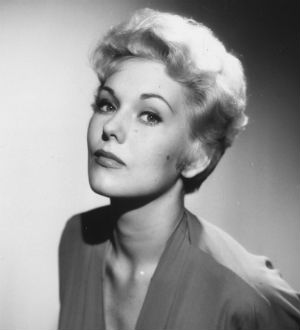
Back in January, actress Kim Novak issued a statement decrying the use of Bernard Hermann’s theme from Alfred Hitchcock’s Vertigo in eventual Oscar-winner The Artist , igniting a flurry of debate by calling it an act of rape . (“I want to report a rape,” she declared. “My body of work has been violated by The Artist .”) And whether or not you agreed then that it was an appropriate way to describe an act of artistic citation — the Academy Award-winning team behind The Artist would call it homage — Novak is back with another stunner that may reignite the conversation. “I didn’t use that word lightly,” she told The Hollywood Reporter today. “I had been raped as a child.” Speaking with THR about her upcoming honors at the TCM Classic Film Festival, the Artist controversy came up and Novak explained that she felt similarly when she learned of the film’s use of the Vertigo theme as she did when she was the victim of actual rape years ago. “It was very painful,” said Novak. “When I said it was like a rape, that was how it felt to me. I had experienced in my youth being raped, and so I identified with a real act that had been done to me. I didn’t use that word lightly. I had been raped as a child. It was a rape I never told about, so when I experienced this one, I felt the need to express it.” “I never reported my real rape, so I felt the need to report this one,” said Novak, who left Hollywood in the 1970s for Big Sur, an isolated section of California coastline, before eventually relocating to Oregon. “I felt that someone needed to speak up because the music has been taken advantage of too much. I hope that in the future, maybe somehow it will do some good.” Pretty awful, and kudos to Novak for speaking out, but where do we even go from here? You can’t discount Novak’s personal experience or how she felt about The Artist ‘s musical choices except to say that the one act isn’t really quite like the other. Clearly she knows the implications of using the word “rape” and did not use it offhandedly or without thought. But does this revelation shake up the argument that “rape” is at least a bit harsh a term for one film borrowing from another? Read more from Novak here and chew on this for a bit, Movieliners. • Kim Novak Clarifies ‘Rape’ Comments on ‘The Artist’s’ Use of ‘Vertigo’ Music [THR] Follow Jen Yamato on Twitter . Follow Movieline on Twitter .
What a weekend for Dr. Seuss’s The Lorax : The environmentally tinged adaptation became the latest of the beloved author’s film spinoffs to capture the top box-office perch. Meanwhile, the raunchy Project X settled in quietly behind it, earning roughly a dollar per topless scene en route to second place. Your Weekend Receipts are here. 1. Dr. Seuss’s The Lorax Gross: $70,700,000 (new) Screens: 3,729 (PSA $18,960) Weeks: 1 What can I say? A generation is indoctrinated to the left! Lou Dobbs will be outraged ! Malia Obama for president in 2036! 2. Project X Gross: $20,775,000 (new) Screens: 3,055 (PSA $6,800) Weeks: 1 Not so bad an opening for the critically reviled bit of mayhem from the mind of Todd Phillips — but good enough for a sequel? Project Y , coming to DVD and Blu-ray by the holidays? Hell, the way these things are shot, maybe by Memorial Day. 3. Act of Valor Gross: $13,700,000 ($45,239,000) Screens: 3,053 (PSA: $4,487) Weeks: 2 (Change: -44%) The Navy SEALs-against-the-world propaganda exercise held up reasonably well in its second week, setting up next weekend’s crucial Lorax vs. Valor ideology face-off for fourth place — or maybe even third place, considering the smallish release for Eddie Murphy’s A Thousand Words . Place your bets. Or I can just wake you when it’s April, your call. 4. Safe House Gross: $7,200,000 ($108,200,000) Screens: 2,533 (PSA $2,820) Weeks: 4 (Change: -34.1%) I can only imagine the back-and-forth between Denzel Washington’s WME team and Ryan Reynolds’s CAA crew this morning as they struggle to take primary credit for their stars’ stunning collaborative success. If I didn’t know any better, I’d just attribute the whole phenomenon to Harvey Weinstein, because what triumphs hasn’t he wrought in the last seven days? 5. Tyler Perry’s Good Deeds Gross: $7,000,000 ($25,745,000) Screens: 2,132 (PSA $3,283) Weeks: 2 (Change: -55.1%) Tyler Perry is nothing if not consistent, on track for another mid-$30 million performer sans the Madea muumuu. He’d argue that a wider release would sweeten the box office, and for this one in particular I’d agree — though I’d rather simply see him split the franchise difference and attempt Why Did I Get Married 3-D . They’ve got The Rock in the series now! Seriously, blockbuster city. [Figures via Box Office Mojo ] Follow S.T. VanAirsdale on Twitter . Follow Movieline on Twitter .