Negative speculation and prognostication has been brewing for months for Disney’s sci-fi actioner John Carter thanks to dismal tracking and rumors of bloated budgets, but Disney’s finally released their review embargo for the March 9 would-be blockbuster. So what’s the early buzz from the first critiques of Andrew Stanton ‘s take on the Edgar Rice Burroughs saga, about a Civil War veteran named John Carter ( Taylor Kitsch ) who lands in the middle of a civil war on Mars? Given the naysaying hype, the first batch of reviews are surprisingly… positive. Well, mixed positive, for the most part — critics agree on many of the film’s strengths, from the well-crafted CG world of Barsoom (that’s Mars, to us humans) to the spirited action sequences Pixar veteran Stanton has pulled off. (Look for Movieline’s John Carter review to post next week.) ” Some of the stuff that Stanton pulls off in John Carter is mind-blowing ,” enthuses Badass Digest’s Devin Faraci . ” There are a few sequences that feel simply classic, like we’ll be referring to them for years to come. There’s one scene, where John Carter stands alone (well, with Woola) against a rampaging army of nine foot tall, four armed Tharks, that is an all-timer. ” Speaking of those Tharks — the four-armed green Martian warriors that first enslave John Carter and force him to fight for them — Stanton’s CG background directing Finding Nemo and Wall-E seems to have helped him create believable, dimensional characters with a combination of CG animation and performance capture. HitFix’s Drew McWeeney was particularly impressed by the CG-heavy characters. ” The Tharks, led here by Tars Tarkas (Willem Dafoe), are compelling creations ,” he writes . ” By a few scenes into their time onscreen, I stopped thinking about the technical trick involved in bringing them to life and simply accepted them as real .” Meanwhile, actress Lynn Collins drew high marks for her portrayal of Martian princess Dejah Thoris, a science-minded warrior princess who serves as Carter’s romantic foil while holding her own with her smarts and her sword. ” Lynn Collins’s feisty Dejah Thoris is the best kick-ass sci-fi princess since Leia, and she looks stunning too with her Martian tattoos ,” says SFX Magazine . In addition to potentially launching young teenage boys into puberty with her sensual, revealing costumes (the skimpiness of which Dejah at least acknowledges with a wink), she’s one of the better-written and unusually strong female characters to come along in genre filmmaking in a while. Or, as Faraci declares : ” Dejah Thoris is the best female character in science fiction/fantasy cinema since Ripley. ” But the critics also agree where John Carter ‘s flaws are concerned — for instance, the sprawling, often-unwieldy scope of its story and the clumsy way in which Stanton and Co. filter it down to a dense (maybe too-dense) feature-length runtime. Part of the problem lies in compacting Burroughs’ Princess of Mars novel down to one feature-length script while juggling the many moving parts — John Carter’s Civil War past, the mechanics of his Mars-aided powers, the political machinations between the two warring city-states of Zodanga and Helium, the omnipotent Tharks who walk among them pulling the strings, the warrior culture of the Tharks, and an Earth-bound framing device involving Carter’s nephew, Edgar Rice Burroughs, phew! — while additionally attempting to set the stage for sequels to come. ” Amidst the CGI environments and constant plot machinations, the story veers between interesting, boring and borderline incomprehensible ,” said Fan the Fire Magazine . ” There are moments when the film soars, only to stall and sputter on a well-meaning but extraneous –- or overlong -– character moment ,” complains SFX Magazine , adding that ” lengthy exposition scenes and Martian politics are hampered by cod pomposity and the dreaded ‘silly-made-up-sci-fi-words’ disease. ” Ultimately, if audiences react as CinemaBlend’s Sean O’Connell did, Disney’s biggest problem on March 9 will reflect its early tracking woes from weeks ago: Viewer indifference. ” The bulk of Carter [is] a tough slog, despite some decent performances and the admirable introduction of a tough-as-nails action heroine in Collins ,” O’Connell writes. ” Arid, barren Barsoom is a dull environment for a sci-fi blockbuster, and the consequences of the conflicts happening on screen are small. John Carter just never pulled me in .” Read more on John Carter here.
‘It’s a different show every night, a different audience every night,’ he tells MTV News of his eight-shows-a-week schedule. By Jocelyn Vena Nick Jonas Photo: MTV News In January, Nick Jonas kicked off his run as Finch, the lead role in Broadway’s hit revival of “How to Succeed in Business Without Really Trying.” With six weeks under his belt (and another few to go before he wraps it up in June), he says that he’s still getting to know the ins and outs of the show, but he’s enjoying every minute of the part, even its eight-shows-a-week schedule. “It’s interesting. The thing that I think I’ve realized, having played Finch every night, eight shows a week, is that the title of the show is ‘How to Succeed in Business Without Really Trying,’ however the thing about Finch that’s really exciting and appealing to the audience, and me as actor, is that he does try really hard,” he explained to MTV News. “Although he does rise to the top really quickly, he never lies, he never cuts anyone down, he never does anything that makes him a bad person,” he continues. “However, he’s just really driven. I think when it says ‘Without Really Trying,’ it’s more just saying how easy it really is when you get into the setup he falls into. It’s fun to dig in and see how quickly and easily you can rise to the top.” And, the experience of the show has been enriched even more by the folks watching. “It’s a different show every night, a different audience every night and although we’re saying the same thing, it’s so different with each show and the audience plays just a much a part into the way the show runs as with the actors do. We have to pay attention and keep the pace of the show up,” he said. “It’s been fun to have a different show every night and to see the fans, not only Jonas fans, but also fans of ‘How to Succeed’ and theater fans in general.” Have you seen “How to Succeed”? If so, what did you think of Nick Jonas’ performance? Leave your comment below! Related Videos MTV News Extended Play: Nick Jonas Related Artists Jonas Brothers Nick Jonas & The Administration
I’m pretty sure I ruined the night of a pair teenage boys huddled in the back row of a recent screening of Project X , a party disaster movie targeted at kids who find the Hangover franchise too sophisticated. All I did was sit down beside them, but I may as well have poked my head up into their treehouse. Girls ruin everything, especially the unmitigated enjoyment of a new Todd Phillips movie. A few seconds after the lights when down, as a shrill junior impresario named Costa (Oliver Cooper) started shouting 2 Live Crew lyrics about wanting pussy, the one beside me began twisting in an agony I came to enjoy much more than the movie we were watching. Costa is not a complicated man. 2 Live Crew could actually do much of his speaking for him. This is hilariously ironic because Costa is a schlubby white kid who wears sweater vests and hangs out with two equally mollusk-like pals, JB (Jonathan Daniel Brown) and Thomas (Thomas Mann). The script, by Michael Bacall and Matt Drake, has enough “bitches” and “faggots” and midgets tossed into ovens to scandalize everybody, which seemed to be their best hope. When Project X begins Thomas’s parents are about to go away for the weekend to celebrate their anniversary, which also happens to be Thomas’s 17th birthday. Costa is pushing for a party, the big social event that will turn them into “big time players” at school. Oh, there’s also Dax (Dax Flame), the kid who is documenting everything that happens. A note prefacing the movie (“Warner Bros. would like to thank everyone who contributed footage…”) makes it clear that this will be another found footage exercise. After first drawing attention to the conceit, first-time director Nima Nourizadeh (Phillips is the producer and Project X is heavily branded with his name) lets it fade into the background. Especially once the party gets started, the ratio of intrepid, conceit-driven camerawork to slick video montages of booty-shorts bacchanalia is far enough out of whack that you wonder why they bothered with the construct in the first place. Phillips got his start in documentary, notably Frat House , the 1998 exposé of fraternity life. Young Dax Flame, whom we glimpse once in a mirror shot, became a YouTube star by documenting his high school life in Texas. But Project X is not interested in showing us what it’s “really” like when a high school party goes nuclear. Like The Blair Witch Project and the recent Chronicle , it wants to apply the terms of found footage realism to an established genre. Although it behaves as if its closest antecedent is a John Hughes teen movie, Project X plays more like a blend of music video, College Rules-style porn, and apocalypse-gazing. It’s all hyper-sensory flash and amateur titillation, ain’t it cool party-dogging and an ecstatic taxonomy of all the different ways you can drink a beer. Thomas, long, pale and apprehensive, does have a certain Alan Ruck vibe. And his father is quite protective of his fancy car. But further comparisons to Ferris Bueller’s Day Off will only make you want to cry. Over a thousand people show up at Thomas’s very swanky Pasadena house, and at every step his better judgment is overruled by the promise of popularity. A gorgeous neighborhood friend (Kirby Bliss Blanton) seems receptive, but Thomas is steered — by Costa, who only gets more pointlessly awful as the night goes on — to think more like a social climber, and go for the girl with the most cachet. Of course that girl, like all of the others, will remove her clothes more or less on command. Project X threatens to become slightly interesting just as the party enters a death spin and Thomas takes his first hit of ecstasy. Anyone who has thrown a bender while mom and dad were away and gotten in over his head knows the consequences really do feel like the end of the world. But the pitch of this amazingly fatuous, tediously low-toned, aggressively sensational movie is too erratic for the “I’m famous, bitch!” nihilism of the finale to touch on anything real. It’s just an adjustment of the volume in a movie that manages to look and feel as well as sound like endless noise. Follow Michelle Orange on Twitter . Follow Movieline on Twitter .
Ridley Scott may or may not be spilling details on how Prometheus factors into the Alien franchise, but a new clip from the film sheds a few shards of light on the connection, and cleverly so: Watch Guy Pearce as Peter Weyland (CEO of Weyland Corporation, to become the future Weyland-Yutani Corp.) give a riveting TED Talk, circa 2023, promising a bright new future to the tech set. In the clip (directed by Luke Scott) Weyland touches on the Greek mythology of the fire-stealer Prometheus and the sacrifices humanity must suffer in the name of progress, hooking into Alien lore with mentions of a looming developments in lifelike “cybernetic individuals.” “We are the gods now,” he boasts, stirring the crowd. “I will settle for nothing short of greatness, or I will die trying.” Something tells me the latter might just happen (at least to Charlize Theron, Michael Fassbender, or Noomi Rapace) once the spaceship explosions and still-ambiguous scares start raining down on the intrepid crew of the Prometheus. On the TED Blog , Weyland’s TED Talk is described thusly: Peter Weyland has been a magnet for controversy since he announced his intent to build the first convincingly humanoid robotic system by the end of the decade. Whether challenging the ethical boundaries of medicine with nanotechnology or going toe to toe with the Vatican itself on the issue of gene-therapy sterilization, Sir Peter prides himself on his motto, “If we can, we must.” After a three year media blackout, Weyland has finally emerged to reveal where he’s heading next. Wherever that may be, we will most certainly want to follow. “Sir Peter’s” bio, meanwhile, reveals his pedigree: Sir Peter Weyland was born in Mumbai, India at the turn of the Millennium. The progeny of two brilliant parents; His mother, an Oxford Educated Professor of Comparative Mythology, his father, a self-taught software Engineer, it was clear from an early age that Sir Peter’s capabilities would only be eclipsed by his ambition to realize them. By the age of fourteen, he had already registered a dozen patents in a wide range of fields from biotech to robotics, but it would be his dynamic break-throughs in generating synthetic atmosphere above the polar ice cap that gained him worldwide recognition and spawned an empire. In less than a decade, Weyland Corporation became a worldwide leader in emerging technologies and launched the first privatized industrial mission to leave the planet Earth. “There are other worlds than this one,” Sir Peter boldly declared, “And if there is no air to breathe, we will simply have to make it.” All of the above would seem to support rumors filtered out of Hungarian press this week citing Scott as explaining Weyland’s role as connective tissue between Prometheus and the Alien films; the reports suggests that ruthless, progress-hungry capitalist Weyland is the person responsible for sending the Prometheus crew out to investigate the origin of mankind in the first place. Prometheus hits theaters on June 8. [ TED Blog ]
Fully-certified flop Wanderlust might have sold a few more tickets if it had actually done anything remotely interesting with Jennifer Aniston and the rest of its talented female cast . It’s obviously not new that Hollywood doesn’t quite know what to do with comedic actresses (see also Faris, Anna ). But it is a little sad in the wake of Bridesmaids ’ commercial success – and its Oscars cameo over the weekend – that the rest of the film industry still. Doesn’t. Get It. I did enjoy parts of Wanderlust , when I could peer around all the lazy, tiresome clichés about How Women Act – but it would have been so easy to avoid them! So as a service to writers and female audiences everywhere, here are five suggestions for how to write comedy roles for women that are better than what Aniston had to make do with in Wanderlust . (Spoilers and feminism ahead.) 1. Stop using us as Eve. Bridesmaids was really good at creating drama out of its characters’ own bad decisions – they screwed up, they suffered the consequences, they (sometimes) figured out how to fix things. Wanderlust just blames Aniston’s poor Linda for everything. First she convinces her husband to buy a West Village apartment they can’t really afford – a plan that fails so spectacularly that the couple has to flee New York for, shudder, suburban Atlanta. Then she convinces her husband to stay in the hippie commune with free love, rampaging nudist men, and no doors on the toilet. Ensuing marital problems? Mostly her fault! “I drank the Kool-Aid,” she tells Paul Rudd’s George during their tearful climactic reunion. His better instincts to avoid the commune, its peyote and the bared abs of Justin Theroux are all vindicated, of course. 2. Write age-appropriate characters for protagonists older than 31. Don’t get me wrong, Aniston looks fabulous. I want her wardrobe and her legs. But she’s already played an unemployed 30-something unsure of what she wants to do with her life – six years ago, in Nicole Holofcener’s much sharper Friends with Money . By now both Aniston and the 42-year-old Rudd seem a little too old to play young Manhattanites still figuring out what they want to be when they grow up. And it would be funnier if Linda really embraced the hippie commune life after leaving a steady or rewarding job, not just because she doesn’t have anything better to do with her time. Maybe it’s just the looming prospect of my own 30th birthday and all the significance that’s supposed to have, but watching the 43-year-old Aniston still trying to “pick a major,” as her husband says during an argument, was just depressing. Like watching Private Practice . 3. Give us some friends! Come on, this is pre- Bridesmaids – the entire Sex and the City franchise succeeded by understanding that women like talking to, crying to, and criticizing other women. But Wanderlust weirdly goes out of its way to avoid giving Linda any family, friends or visible non-marriage relationships she can turn to in a crisis. After George loses his corporate bonus-slave job, we’re told that the couple’s fate is dire – so dire that staying with his loud, racist brother is apparently their only viable option (at least until the commune appears on their GPS). At no point is any reference made to any sort of connections Linda might be able to turn to. Wanderlust couldn’t get Catherine Keener to film one scene as an icy careerist sister silently disappointed in her unemployed younger sibling? Or at least make a reference to Linda’s wealthy parents, who lost everything with Bernie Madoff? (You don’t get to be 43 and still picking a major without having spent your adulthood on some serious family financial support.) 4. Character development means more than taking off our shirts. Despite the rumors , we do not see Aniston’s breasts in Wanderlust . We’ll just have to make do with her implied breasts. And in the final overall film, yes, there are probably many more manly bits than lady parts visible on screen. That still doesn’t change the fact that Linda’s major triumph as a character is flashing a TV camera crew, in a “protest” move that was dated by the time she was born. 5. Hot women tend to appreciate hot men, or at least cute men, or at least men who have a passing acquaintance with shampoo. Real-life relationships notwithstanding, Aniston really gets the short end of the free-love stick in Wanderlust . George wants to take advantage of the commune’s partner-swapping rules and sleep with blonde, freshly-laundered Malin Akerman, who’s popped by from a Self magazine cover shoot. Linda reluctantly agrees and succumbs to the shirtless charms of Theroux. He may be dashing in real life, but unfortunately for Linda and female audiences everywhere, he spends most of the movie looking like a squirrel crawled atop his head and died. And really, doesn’t equality start with eye-candy? Maria Aspan is a writer living in New York whose work has appeared in The New York Times, Reuters and American Banker. She Tweets and Tumbls .
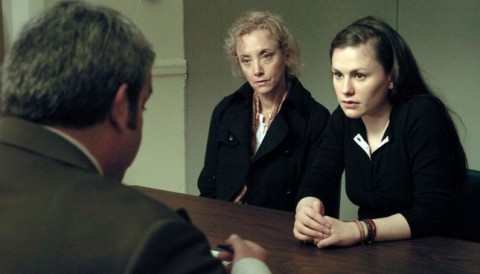
It only took about 20 years from conception to writing to development to shooting to the most notoriously protracted post-production saga in recent memory, but Kenneth Lonergan’s embattled epic Margaret finally had the festival premiere it deserved Saturday night in Manhattan. In its own way, even that event was chronologically vexed. The special screening — part of the Film Society of Lincoln Center’s annual Film Comment Selects series — came a few months after distributor Fox Searchlight gave the tale of an Upper West Side teenager transformed by her role in a fatal bus accident the most cursory release possible: One week in Los Angeles and New York, then out of theaters entirely before a critical groundswell rallied on its behalf in the heart of awards season. The campaign yielded the occasional fruit — Best Actress consideration for leading lady Anna Paquin here , Best Supporting Actress consideration for Jeannie Berlin there — but more than anything, it spotlighted Margaret ‘s breathtaking range of fascinations and flaws , a spectrum stretched over the film’s contractually mandated 150-minute running time (pared down from a rumored maximum of four hours) and a six-year behind-the-scenes drama that was once said to involve as many lawyers as it had editors. On Saturday, though, Lonergan — accompanied onstage afterward by lead editor Anne McCabe and every available cast member including Jean Reno, J. Smith-Cameron (pictured above with Lonergan) and Lonergan’s best friend (and eventual post-production patron) Mathew Broderick — had no intention of dwelling on Margaret ‘s tortured route to the screen. Not that Film Comment editor Gavin Smith didn’t give the writer-director his best shot, asking Lonergan to recount Margaret ‘s evolution from a 167-page script to the film we saw Saturday night. “I know that’s a long story,” Smith said, “but I think there’s a chance for you to correct some misinformation about the project.” “Well, I don’t really want to correct any misinformation about the project,” Lonergan replied, his voice pitched barely above a mumble. “Maybe you could narrow it down a little bit, because from writing the script to casting it to shooting it to editing it, there are so many steps involved. Is there any particular element?” “Well,” Smith said, “at a certain point in the process — and maybe this is a question for Anne, your editor — you arrived at a cut that was considerably longer than the cut that other parties involved with the project wanted it to be.” “No, uh…” Lonergan began. “Actually, the fact is we had a lot of cuts of the film. We did a lot of screenings. This is the cut that we ended up with and that we got released. I’m very pleased with this cut. It’s part of any normal process to go through a series of cuts, and you try to make it shorter or you try to make it longer or you try to emphasize this or that element of the process. And a lot’s been written about it — none of it accurate — and I don’t want to deflect the question too much, but I’m frankly more interested in talking about the actual content of the film and the script and all that. I think that it’s just more in the nature of movies. It’s like writing a script: You have a lot of different versions and you settle on [one]. Rembrandt said [when asked], ‘How do you know a painting’s finished?’ ‘It’s when you can’t think of the last brushstroke,’ he said. In this case, the version that got released is the version that got completed in… I think 2008? And I think it’s wonderful. I’m very proud of it. I think Anne is, too, as far as I know.” “Definitely,” McCabe said from the far end of the stage. “I don’t think she’s ashamed of it. So I think I…” Lonergan paused. “I’m much happier talking about the film itself, or the script or the actors or the process of shooting or anything, anything, anything but that, for God’s sake. The rest of it is so boring, and it’s all wrong anyway. I don’t even know what happened. But I’m very glad it’s here now, and I’m very, very proud of it.” Anyway, Margaret ‘s drawn-out post-production has nothing on a gestation period that commenced decades ago — in 11th or 12th grade, to hear Lonergan tell it, when a classmate of his confided having witnessed an accident much like the one that sets off the film’s cataclysm of guilt, shame, shattered innocence and debilitating self-absorption. “It always stayed with me, and I always wanted to write about it,” Lonergan said. “It always cropped up in various things that I was writing over the years, and I finally had the idea for the whole film sometime around 1990… in the early ’90s. But I had other things lined up first to write, and I probably ended up writing it around 2000. It was just the idea of something that big happening to someone that young. The idea of having to deal with something that adult struck me as being a very compelling and interesting idea that stayed with me for… Well, I don’t want to tell you exactly how old I am, but then I was in high school and now I’m 49.” Other youthful, semi-autobiographical callouts crept out of that foundation as well. One of Margaret ‘s more contextually confounding scenes involves a classroom debate over the implications of a passage in King Lear ; playing one of the main character’s teachers, Broderick drew on his and Lonergan’s NYC high-school days in squaring off with not Paquin, but rather with her young castmate Jake O’Connor. The fierce sparring culminates in (spoiler alert?) the consumption of orange juice and a sandwich — just one of Margaret ‘s many tongue-in-cheek digressions borrowed from memory. Asked by O’Connor himself about the scene, Broderick demurred. “I don’t really have any thoughts,” he said. “I just say the thoughts that Kenny wrote. I think its pretty clear, that scene. It’s funny to me that people take your side. It’s also interesting because that really happened. Kenny and I both sat there while pretty much precisely that argument happened.” “That’s true,” Lonergan said. “That actually happened. That’s as best as I can remember the actual conversation. I’m pretty sure it’s pretty close.” “Even the sandwich?” Smith-Cameron asked. “There was a teacher we had — whom this was very loosely based on — who was hypoglycemic,” Broderick explained. “And he had a bad temper, sort of, and every now and then he’d be mad at somebody, and he’d take a sip of juice and have a bite of a sandwich.” “It was not in the script,” Lonergan said. “Matthew remembered that, and he brought orange juice and a sandwich for the scene. I had not remembered that. Yeah, we went to high school together. That scene on the rock where they’re smoking pot? Those two little girls are also Matthew and I.” The audience cracked up. “We didn’t intend to change the world,” Broderick said, “We just wanted to smoke pot.” The overall high spirits in the theater belied the reason many of its standing-room only crowd members attended: to hear Lonergan’s definitive take on how and why Margaret became the ” film maudit ” cited in the Film Comment Selects program guide . His reluctance to contribute to its mythology feels like his most telling directorial stroke; in a film as sporadically brilliant as it is rife with showy, uneven performances and blunt-force moral grandstanding, the only thing left for Lonergan to control is the texture of its history. We may never know how he and his collaborators settled on the Margaret we’ve gotten to know in recent months, which is exactly how Lonergan must have it for any chance to preserve its soul. Nevertheless, a telling insight into that soul came at the end of Saturday’s discussion as Lonergan elaborated on his depiction of New York City itself — long, panoramic views of Midtown Manhattan and the Upper West Side, headlights in its veins, the heavens thrumming with the skyscraper buzz of private lives and random aircraft watching over it all. The best, the worst, the unknown happens unceasingly all around us. Margaret deals with one young woman’s enlightenment — and resistance — to that physical reality, perhaps reflecting Lonergan’s own confrontation with creative compromise. “At the time I think it was always in the back of my mind about 9/11,” Lonergan said. “It was shot much closer to 9/11; in 2002, 2003, 2004, even 2005, you may remember, it was very hard to see an airplane go by and just look at it without getting a little nervous or without it having an extra reverberation. That’s faded now, I’d say. So that’s why we shot a lot of footage of airplanes. But the reason we shot so much footage of the city itself was because I just wanted her to be one [person]. That’s what she’s up against. It’s not evil, but just everybody else having their own lives. That is the inertia — the tremendous inertia — that she is unable to move in the direction that she feels is right.” Whether or not Margaret itself ever fully succeeded in moving in that direction for its filmmaker and its principals may never be known. But judging by the reaction of Lonergan’s audience on Saturday night — and the expansion of his audience as Margaret finds champions in film culture and beyond — the institutional inertia from whence Margaret came may yet succumb to a wave of curiosity and passion not unlike that of its creator. The kind that, paradoxically, we never see coming until the lights go down. Follow S.T. VanAirsdale on Twitter . Follow Movieline on Twitter . [Top photo of Kenneth Lonergan and J. Smith-Cameron: WireImage]
Congrats aren’t just in order for the winners of tonight’s Film Independent Spirit Awards ; major props go to Adam Sandler for an outstanding showing in today’s Razzie nominations announcement, which found the Jack & Jill / Just Go With It star breaking the previous record for most personal Razzie nominations earned in a year. (Sandler won 11 nominations, while Jack & Jill itself earned 12.) Eddie Murphy , guess you’re off the hook for the Year of Norbit . See the full list of fairly obvious nominees vying for Golden Raspberry (dis)honors after the the jump and leave your predictions below. WORST PICTURE Bucky Larson: Born to Be a Star Jack & Jill New Year’s Eve Transformers: Dark of the Moon Twilight: Breaking Dawn Part 1 WORST ACTOR Russell Brand, Arthur Nicolas Cage, Drive Angry 3-D / Season of the Witch / Trespass Taylor Lautner, Abduction / The Twilight Saga: Breaking Dawn Pt. 1 Adam Sandler, Jack & Jill / Just Go With It Nick Swardson, Bucky Larson: Born to Be a Star WORST ACTRESS Martin Lawrence, Big Mommas: Like Father Like Son Sarah Palin, Undefeated Sarah Jessica Parker, I Don’t Know How She Does It / New Year’s Eve Adam Sandler, Jack & Jill Kristen Stewart, The Twilight Saga: Breaking Dawn Pt. 1 WORST SUPPORTING ACTOR Patrick Dempsey, Transformers: Dark of the Moon James Franco, Your Highness Ken Jeong, Big Mommas 3 , Hangover Part 2 , Transformers: Dark of the Moon , Zookeeper Al Pacino, Jack & Jill Nick Swardson, Jack & Jill / Just Go With It WORST SUPPORTING ACTRESS Katie Holmes, Jack & Jill Brandon T. Jackson, Big Mommas 3 Nicole Kidman, Just Go With It David Spade, Jack & Jill Rosie Huntington-Whiteley, Transformers: Dark of the Moon WORST ENSEMBLE Bucky Larson: Born to Be a Star Jack & Jill New Year’s Eve Transformers: Dark of the Moon Breaking DawnThe Twilight Saga: Breaking Dawn Pt. 1 WORST DIRECTOR Michael Bay, Transformers: Dark of the Moon Tom Brady, Bucky Larson: Born to Be a Star Bill Condon, The Twilight Saga: Breaking Dawn Pt. 1 Dennis Dugan, Jack & Jill / Just Go With It Garry Marshall, New Year’s Eve WORST PREQUEL, REMAKE, RIP-OFF or SEQUEL Arthur Bucky Larson: Born to Be a Star The Hangover 2 Jack & Jill The Twilight Saga: Breaking Dawn Pt. 1 WORST SCREEN COUPLE Nicolas Cage and anyone Shia LaBeouf and Rosie Huntington-Whiteley, Transformers: Dark of the Moon Adam Sandler and Jennifer Aniston/Brooklyn Decker, Just Go With It Adam Sandler and Holmes, Pacino, or himself in Jack & Jill Kristen Stewart and RPattz or Taylor Lautner, The Twilight Saga: Breaking Dawn Pt. 1 WORST SCREENPLAY Bucky Larson: Born to Be a Star Jack & Jill New Year’s Eve Transformers: Dark of the Moon The Twilight Saga: Breaking Dawn Pt. 1 The Razzies will be announced on April 1. More info here .
Forty-eight hours to Oscar. Gut-check time — or maybe make that “gut-instinct check” time, a moment to break away from the meticulous zeitgeist-combing science of Movieline’s Institute For the Advanced Study of Kudos Forensics and make a few choices for myself. Not that they’ll be so different, but if you can’t go with a hunch where 5,765 fickle, insular industry minds are concerned, then what can you go with? We can’t all be be Otis the Oscar Cat , you know. Anyway, let’s make this quick: BEST PICTURE A certain voluble sliver of the Oscar punditocracy likes to whine about The Artist ‘s awards-season supremacy — as if it signaled some searing compromise of the Academy’s historic tradition of recognizing only the finest, most artistically challenging and rigidly contemporary work. These people sound like some bitter old man bitching about how the Super Bowl halftime show never features anyone good anymore, or some mouth-breathing fanboy complaining about the vanquished integrity of Star Wars . You guys, they were never good to begin with . In their own way — as meritocratic tastemakers — neither were the Academy Awards. This year’s foregone Artist win has less to do with regressive, reductive cultural tastes than it does with Harvey Weinstein being a good marketer, no different than 15 years ago. If these whinging bozos won’t learn, then can’t they at least shut up? Will win : The Artist Should win : Melancholia . Wait, what? Oh. Fuck it. That’s the best picture of 2011. Period. BEST DIRECTOR Have you seen Midnight in Paris recently? Man, that one does not hold up. The Descendants never did in the first place. Hugo is fine, but I think the groundswell of voters who got Terrence Malick into the competition in the first place could be formidable enough to actually sweep him right past Martin Scorsese into very close competition with Michel Hazanavicius. In fact, you know what? I’ll call it for Malick, why the hell not. Will win : Terrence Malick, The Tree of Life Should win : Lars von Trier, Melancholia . Yes, I heard you the first time. Make your own predictions. BEST ACTOR Here’s where I’m a lot more confident in the upset factor: Demi
And why? Because they’re based on hype. But that’s OK, Ben Zauzmer — Harvard freshman, analytical whiz kid and proprietor of the new “matrix algebra”-based awards prognostication site Ben’s Oscar Forecast! Movieline’s Institute for the Advanced Study of Kudos Forensics has the science down and is soliciting interns for next year’s awards-season death march. Inquire within. According to his site, Zauzmer’s predictions derive quantities for each film’s Oscar nomination (or non-nomination) showing, representation at other awards shows, and Metacritic and Rotten Tomatoes data for the “major categories.” Next: With all of these numbers in the chart for each nominee in the category over the past decade, using a formula from linear algebra, Ben derived the best approximation of the relative factors of each award and critic score. These factors were applied to this year’s nominees – one formula for each category – and the percentage was calculated as a movie’s score out of the total scores. Pretty cool, except… uh: Best Picture Winner: The Artist (18%) Best Director Winner: Michel Hazanavicius – The Artist (28%) Best Actor Winner: Jean Dujardin – The Artist (28%) Best Actress Winner: Meryl Streep – The Iron Lady (24%) Viola Davis – The Help (24%) [ED: Davis and Streep are separated by 0.7%, surprise] Best Supporting Actor Winner: Christopher Plummer – Beginners (29%) Best Supporting Actress Winner: Octavia Spencer – The Help (27%) Best Writing – Original Screenplay Winner: Woody Allen – Midnight in Paris (27%) Best Writing – Adapted Screenplay Winner: Alexander Payne, Nat Faxon, Jim Rash – The Descendants (24%) Best Animated Feature Winner: Rango (32%) Best Foreign Language Film Winner: A Separation – Iran (27%) …so on and so forth. Where have we seen these before? There’s no doubt something here, though — perhaps what’s missing is to factor in the average Academy voter’s age ? Oh, and the average weekly advertising outlay by The Weinstein Company. OH , and Uggie’s own age multiplied by the crucial tail wags-per-minute (TwPM) metric. Anyway, yeah. Needs work! But math is hard, etc. [ Ben’s Oscar Forecast ]
Maybe you’re the kind of person who wakes up in the morning and says, “What can I learn today about the psychological effects of blood feuds in contemporary Albania?” But I doubt it. Who even thinks about these things, or cares about them? The strange miracle of Joshua Marston’s modest, well-constructed drama The Forgiveness of Blood — which really is about blood feuds in contemporary Albania — is that once you’ve watched it, you might find that you actually do care. It’s the kind of movie that makes the world feel like a smaller place, suggesting that the similarities connecting us across continents and cultures are more resonant than the things that divide us. The Forgiveness of Blood is set in northern Albania — it was also filmed there, using local, nonprofessional actors. Eighteen-year-old Nik (Tristan Halilaj) is a senior in high school, with his eye on the prettiest classmate and ambitions to open his own Internet café. But one day his father, Mark (Refet Abazi), becomes involved in a land dispute: Mark makes a living for himself and his family by delivering bread to local homes and businesses — his mode of transport is a horse-drawn cart — and he habitually takes a shortcut across land that used to belong to his grandfather. The current owners take umbrage, and an altercation breaks out in which one of them is stabbed to death; implicated in the murder, Mark immediately goes into hiding. But according to codes of law that have been in place for centuries, the aggrieved family is entitled to take the life of a male from the aggressor’s family. Nik is forced into a kind of house arrest, along with his younger brother and two sisters. But because the female members of the household aren’t in danger, Nik’s younger sister, Rudina (Sindi Laçej), must leave school and temporarily take over her father’s business, just to keep the family afloat. This is a vivid, tough little story that enfolds lots of dramatic subthreads: Nik and Rudina live, as most of us do, in a world of cell phones and satellite TV, yet they find themselves bound by antiquated rules of conduct. Nik is just learning his way around the adult world — he preens in front of the mirror, Tony Manero-style, hoping to look good for the girl he’s set his sights on — only to be imprisoned at home, as if grounded by an especially strict parent. It’s a particularly painful kind of cultural emasculation, and he lashes out. And Rudina, a bright girl who seems to enjoy school (it’s hinted that she may have a future outside this rather restrictive community), suddenly has to play the role of the male breadwinner. She’d rather go shoe-shopping with her friends, of course, but the point is that her very sex both protects her and makes her life harder: Her life is of lesser value under the arcane rules governing the blood feud, which means that when the males in her family are compromised, she has to step up to the plate and act like a man. She seems to have the worst of both worlds. Marston’s gift as a filmmaker — he also co-wrote the script with Albanian screenwriter Andamion Murataj — is that he makes us care about these characters without forcing us to eat the knobby, dirt-encrusted root vegetables of cross-cultural awareness. You know what I’m talking about: The world of independent filmmaking is full of movies designed to congratulate well-informed, literate liberals on how well-informed and literate they are — we watch as peasants and otherwise “compromised” people, who live in countries outside North America (or even the poorer communities within it), suffer through their daily lives. Then we’re allowed to pat ourselves on the back for allowing our eyes to be opened to their plight. Marston doesn’t play that game here, and he didn’t play it in his first feature, Maria Full of Grace , either: That picture told the story of a young Colombian woman who becomes a drug mule to raise money for her family. The picture could have been a pile-up of the most tense horrors imaginable, but Marston has the rare gift of knowing when to ease up on the clutch: He focuses on individuals, on their faces and their feelings, sometimes at the expense of your garden-variety dramatic buildup. His movies have their own kind of narrative intensity, but they’re not thrillers masquerading as human-interest stories. With Marston, the interest is all human. That’s especially true in The Forgiveness of Blood . In the movie’s early moments, when I saw that horse-drawn bread cart rambling across a scrubby-yet-beautiful semi-rural landscape, I groaned. Was this going to be one of those good-for-you movies that’s pure punishment to watch? The picture does have its unnerving moments, points at which you find yourself inside the head of a particular character and you’re not sure you want to be there. But Marston doesn’t overreach dramatically. Mostly, he simply trusts the faces of his actors: Halilaj’s Nik has a gawky-charming teen-scarecrow look — he’s all long limbs and awkward pauses, particularly when he’s in the presence of that pretty classmate. And even though Rudina isn’t really the movie’s main character, as Laçej plays her, she’s its quiet, somber soul. Rudina observes the proceedings around her with resigned exasperation: Just when her life should be moving forward, it’s being pulled backward through hundreds of years of tradition. That tension is gentle but potent, and it’s what keeps The Forgiveness of Blood coursing along. By the end, you’ll care more about Albanian blood feuds than you ever thought you could. Follow S.T. VanAirsdale on Twitter . Follow Movieline on Twitter .