This just in from Nikki Finke: Paramount’s cheap wannabe found footage hit The Devil Inside — which drew reports of audible grumbles and boos as the credits rolled at sneak screenings in Los Angeles and New York last night — has already made back double its acquisition costs . ” The Devil Inside acquired for $1M opened with $2M midnights from 1,400 theaters. It goes wide into 2,300 theaters today,” Finke writes at Deadline, adding that “the genre film plays very young and very ethnic so it will probably be frontloaded.” Nice. Very young and very ethnic. If the pic turns into a Paranormal Activity -esque hit, you know who to blame. [ Deadline , @STYDnews , Moviefone ]
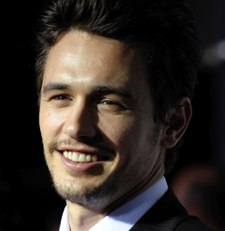
Happy Friday! As if heading into the weekend wasn’t already wonderful enough, here comes a casting move that oughta keep you tickled for days: According to The Hollywood Reporter, James Franco is in talks to star in Brian Koppelman and David Levien’s The Game , adapted from Neil Strauss’s dating how-to bestseller, in the role of famed, instantly unforgettable pick-up master Mystery. Hollywood can pretty much drop the mic as Friday closes out, because no other casting move this week can possibly top this. If you weren’t familiar with Mystery (born Erik von Markovik), the expert pick-up artiste whom Strauss learned from to write The Game , well, where do I begin? Co-writer of such helpful tomes as The Mystery Method: How to Get Beautiful Women Into Bed and The Pickup Artist: The New and Improved Art of Seduction , Mystery even dallied in reality television in his 2007 VH1 reality series The Pick-Up Artist , in which he taught clueless schlubs how to cast out their lines and reel in the ladies. Also? He looks like this: What? It’s called peacocking! How else can a man stand out from the crowd enough to catch a woman’s eye? Anyway, MGM’s The Game is produced by Chris and Paul Weitz. And I for one cannot wait to see Franco decked out a la Mystery, soul patch and all. James Franco in Talks to Star as Pick-Up Artist in ‘The Game’ [THR]
Happy Friday! As if heading into the weekend wasn’t already wonderful enough, here comes a casting move that oughta keep you tickled for days: According to The Hollywood Reporter, James Franco is in talks to star in Brian Koppelman and David Levien’s The Game , adapted from Neil Strauss’s dating how-to bestseller, in the role of famed, instantly unforgettable pick-up master Mystery. Hollywood can pretty much drop the mic as Friday closes out, because no other casting move this week can possibly top this. If you weren’t familiar with Mystery (born Erik von Markovik), the expert pick-up artiste whom Strauss learned from to write The Game , well, where do I begin? Co-writer of such helpful tomes as The Mystery Method: How to Get Beautiful Women Into Bed and The Pickup Artist: The New and Improved Art of Seduction , Mystery even dallied in reality television in his 2007 VH1 reality series The Pick-Up Artist , in which he taught clueless schlubs how to cast out their lines and reel in the ladies. Also? He looks like this: What? It’s called peacocking! How else can a man stand out from the crowd enough to catch a woman’s eye? Anyway, MGM’s The Game is produced by Chris and Paul Weitz. And I for one cannot wait to see Franco decked out a la Mystery, soul patch and all. James Franco in Talks to Star as Pick-Up Artist in ‘The Game’ [THR]
As someone who sparked to Paul Feig ‘s Bridesmaids back when it first played SXSW last year in no small part because it gave Kristen Wiig the showcase she deserved, it’s hard to imagine a Bridesmaids sequel going forward without the SNL star. But with Wiig reportedly reluctant to reprise her role for another go-round with the Universal hit that seems a very good possibility, according to The Hollywood Reporter . And so I ask, fellow Bridesmaids fans: Who wants a Bridesmaids 2 without Wiig? The better question is, who wants a Bridesmaids 2 ? The first film struck a chord because it was fresh, a welcome respite from the usual rom-coms farted out by mainstream Hollywood. That came from Wiig and co-writer Annie Mumolo, who lent Bridesmaids an authentic sweetness borne from personal experience and their real life friendship and, with director Feig, tapped a bevy of ultra talented (and under-utilized) supporting funny ladies — elements rare in studio productions, let alone sequels or adaptations aiming to recreate some formula of success. Which is what a Bridesmaids sequel would be, of course: an attempt to keep the streak going. The $288 million hit was a gamble that paid off for Universal, and this is a studio whose chief has not, shall we say, played coy about his overriding agenda of making money. But, per THR’s report, Wiig doesn’t seem anxious to don the awful pink dress again, no matter how much money Universal head Ron Meyer is said to dangle in front of her. And this is perhaps the best argument against even attempting another Bridesmaids movie. If one of the driving creative forces behind Bridesmaids has moved on to other projects and isn’t compelled to make a sequel, why should anyone else demand more? Maybe you want to see where cast breakout and likely sequel star Melissa McCarthy goes in another Bridesmaids story. Maybe you just want another “Hold On” moment to share with your girlfriends or watch grown women poop in the street. Maybe that would all work, again, if Universal, who are “talking with filmmakers now about concepts” for a sequel, are able to recapture lightning in a bottle. And goodness knows this happens all the time with action franchises (Bourne and Bond, I’m looking at you). But wouldn’t you rather see another Bridesmaids -esque film instead of another actual Bridesmaids — a different, original story that tells the experience of real modern women without skimping on sweetness or raunch? Weigh in below! • Universal Considering ‘Bridesmaids’ Sequel Without Kristen Wiig [ THR ]
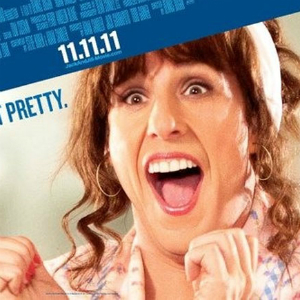
Say what you will about Armond White , at least the iconoclast film critic is a conversation-starter. Over at CityArts White has posted his annual “Better-Than” list , in which he pairs seemingly disparate films of the year to show you why the movies you love/think are great are, in fact, vastly overrated. Example: ” Jack and Jill > The Descendants ,” White insists, in a clear trouncing of “humility” over “sanctity.” “Adam Sandler’s affectionate, very broad ethnic satire defies Alexander Payne’s smug denial of America’s ethnic history,” he writes. Don’t stop there, Armond! As the 2011-2012 transition births yet more critic Top Ten lists (hey, check out Movieline’s here and here and here and here !), it’s lists like these that give us fresh perspective on the underrated, or even perfectly adequately-rated films of the year. And at least where White dumps on certain lauded Oscar contenders he also proposes films with themes he sees as tighter, better, more valuable by comparison. The Adventures of Tintin > The Artist Spielberg restores the essence of cinema (from the Greek “kinesis,” meaning movement), defying Hazanavicius’ too-cute silent movie hoax. Joy vs. Inanity. I suppose even The Artist ‘s supporters can acknowledge that it can seem, perhaps, “too-cute” — and boy, Tintin was nothing but movement. Sure? Rise of the Planet of the Apes > The Girl with the Dragon Tattoo Rupert Wyatt reboots the original series as a fresh, wild vision of modern frustration, defying Fincher’s apathetic wallow in pathology and brutality. Emotion vs. Style. White raises a good question: What happened to all those critics who Oscar-raved about Apes when it came out last summer? Paul > Uncle Boonmee Who Can Recall His Past Lives Greg Mottola, Simon Pegg and Nick Frost grasp the depth of American pop culture while Apichatpong Weerasethakul peddles Asian obscurantism. Joyous vs. Spurious. “Asian obscurantism” Uncle Boonmee may be, but… Armond, you crazy for this one. Colombiana > The Help Olivier Megaton and Zoe Saldana find new racial, sexual and genre archetypes to discover the meaning of love, defying the stereotyping of black women’s civil rights struggle. Progress vs. Relapse. Are some of these pairings seemingly arbitrary? Sure. Is Colombiana more progressive than The Help ? By golly, yes . Jack and Jill > The Descendants Adam Sandler’s affectionate, very broad ethnic satire defies Alexander Payne’s smug denial of America’s ethnic history. Humility vs. Sanctimony I spoke too soon. This shit cray. Still, thank you Armond for even juxtaposing two movies like Paul and Uncle Boonmee in my brain. True contrarian or no, what a feast for thought. Some of these arguments are just insane enough that they make sense. Read White’s full 2011 Better-Than List here and tell us what you think — and which better-thans you’re in agreement with — in the comments below. Follow Jen Yamato on Twitter . Follow Movieline on Twitter .
So, apparently Kevin Durant > Vince Carter . Now, that might not exactly seem like a revelation given Carter’s, ahem, reputation, but the cold-blooded former Longhorn made it clearer than ever on Thursday evening. While the Baylor Bears were busy running through, around, other, under, and across Washington, Durant decided to steal what had just set up as a big moment for the artist formerly known as… Broadcasting platform : YouTube Source : Burnt Orange Nation Discovery Date : 30/12/2011 05:03 Number of articles : 2
The key to a list of moviegoing disappointments is the element of expectation: I am prepared to say I watched more suicidally bad films in 2011 than in any other year in my life; to be merely disappointed suggests a certain relativity. For example, I found The Ides of March to be a tremendous let down, I think partly because my hopes were inflated. George Clooney’s high political tragedy is perfectly cast, and that early, loaded exchange of glances between rival campaign managers Phillip Seymour Hoffman and Paul Giamatti goes off like a starter pistol. But The Ides of March is like that — it keeps threatening to start something interesting, right up to the point that it just… ends. I had the same issue with Good Night and Good Luck , another major disappointment and another film that played as if it were perpetually about to begin . The pleasures of Ryan Gosling’s performance as the fledgling spinmeister feel stingy — why tell us that he’s known to rock the microphone when we paid for the show? And Clooney’s Teflon governor is an empty, well-cut overcoat — perhaps the most glaring evidence of both the character and the director’s failure is that his one big scene with his golden boy star is the least exciting one in the movie. Given the improbable, stadium-rolling wave of appreciation that greeted The Artist , I expected much more than the mannered silent that Michel Hazanavicius and co. delivered. A mediocre movie with a couple of bright moments, The Artist also had too little to say about its chosen themes. Given the challenge of holding our attention across a silent film landscape, the music felt either too sparse or too sentimentally obvious, and the droopy patches felt twice as long as they needed to. The story of a silent film star left behind by the transition to sound was unconvincing when it needed to be clear and dolorous when it might have been lyrical. Similarly cranky friends have fixated on the issue of George Valentin’s (Jean Dujardin) refusal to speak on film—was it the accent? A principled stance? The fact that they were at all unsure points out a massive gap in the center of The Artist , one its title sews up too neatly. Any close follower of Werner Herzog’s career should know better than to bring expectations brewed from his last film into the next. Along with an auteurist consistency of preoccupations, Herzog shares with Woody Allen a prodigious output of wildly variable quality. The titles of this year’s Herzogian harvest — the sublime Cave of Forgotten Dreams and the slapdash Into the Abyss — seem interchangeable, but the latter felt to me like Achilles Herzog, a hot check of a documentary passed off as the real thing. Researched and assembled under extreme time constraints, Into the Abyss is an inquiry into the death penalty that gets by on artful narrative juxtapositions and moments of profound, almost invasive intimacy with its interview subjects. The reach for effect often feels more craven than considered, and the crime at the heart of the film is eventually clouded over for convenience. When a topic and a director — and a title! — of this magnitude collide, the viewer wants the Earth to shimmy; instead we had to settle for the Richter equivalent of a quick freehand sketch. I’ve watched Tinker, Tailor, Soldier, Spy twice now and I still couldn’t give you a basic plot summary. Having felt like a failure after the first viewing, after the second I’m prepared to push the better part of the blame onto director Tomas Alfredson and his Let the Right One In editor Dino Jonsäter. It’s a film that seems designed for le Carré obsessives, which means the rest of us may have to sit through all 57 hours of the 1979 BBC production just to get the facts straight. It’s a shame, because the performances and the production design knocked me out, but of all the ways to sex up a retro-procedural, I’d put mincing it into incomprehensibility second to casting Young Jeezy as George Smiley. With The Iron Lady Meryl Streep re-stamps her all-access passport to human history, and proves once again that the only thing she can’t seem to defy are superlative clichés. There are no words left to describe the kind of work Streep does — even those who dismiss her as a mere impressionist have to admit that her Margaret Thatcher is uncanny in its near-total self-effacement. But the film built around that performance is in some sense designed to disappoint: The biopic is an inefficient delivery system for dramatic tension or even, paradoxically, the human arc of a lifetime. It’s the movie equivalent of a greatest hits package, and while I’m not crazy about the appropriation of the still-living Thatcher’s dementia as a dramatic device, for me the more broadly director Phyllida Lloyd played her hand — ruining every successful visual cue by repeating it three times, leaping from one familiar milestone to the next — the farther we move away from the potential of Streep’s performance and the uneven richness of Thatcher’s story, into the straight flush of political iconography. Follow Michelle Orange on Twitter . Follow Movieline on Twitter .
The key to a list of moviegoing disappointments is the element of expectation: I am prepared to say I watched more suicidally bad films in 2011 than in any other year in my life; to be merely disappointed suggests a certain relativity. For example, I found The Ides of March to be a tremendous let down, I think partly because my hopes were inflated. George Clooney’s high political tragedy is perfectly cast, and that early, loaded exchange of glances between rival campaign managers Phillip Seymour Hoffman and Paul Giamatti goes off like a starter pistol. But The Ides of March is like that — it keeps threatening to start something interesting, right up to the point that it just… ends. I had the same issue with Good Night and Good Luck , another major disappointment and another film that played as if it were perpetually about to begin . The pleasures of Ryan Gosling’s performance as the fledgling spinmeister feel stingy — why tell us that he’s known to rock the microphone when we paid for the show? And Clooney’s Teflon governor is an empty, well-cut overcoat — perhaps the most glaring evidence of both the character and the director’s failure is that his one big scene with his golden boy star is the least exciting one in the movie. Given the improbable, stadium-rolling wave of appreciation that greeted The Artist , I expected much more than the mannered silent that Michel Hazanavicius and co. delivered. A mediocre movie with a couple of bright moments, The Artist also had too little to say about its chosen themes. Given the challenge of holding our attention across a silent film landscape, the music felt either too sparse or too sentimentally obvious, and the droopy patches felt twice as long as they needed to. The story of a silent film star left behind by the transition to sound was unconvincing when it needed to be clear and dolorous when it might have been lyrical. Similarly cranky friends have fixated on the issue of George Valentin’s (Jean Dujardin) refusal to speak on film—was it the accent? A principled stance? The fact that they were at all unsure points out a massive gap in the center of The Artist , one its title sews up too neatly. Any close follower of Werner Herzog’s career should know better than to bring expectations brewed from his last film into the next. Along with an auteurist consistency of preoccupations, Herzog shares with Woody Allen a prodigious output of wildly variable quality. The titles of this year’s Herzogian harvest — the sublime Cave of Forgotten Dreams and the slapdash Into the Abyss — seem interchangeable, but the latter felt to me like Achilles Herzog, a hot check of a documentary passed off as the real thing. Researched and assembled under extreme time constraints, Into the Abyss is an inquiry into the death penalty that gets by on artful narrative juxtapositions and moments of profound, almost invasive intimacy with its interview subjects. The reach for effect often feels more craven than considered, and the crime at the heart of the film is eventually clouded over for convenience. When a topic and a director — and a title! — of this magnitude collide, the viewer wants the Earth to shimmy; instead we had to settle for the Richter equivalent of a quick freehand sketch. I’ve watched Tinker, Tailor, Soldier, Spy twice now and I still couldn’t give you a basic plot summary. Having felt like a failure after the first viewing, after the second I’m prepared to push the better part of the blame onto director Tomas Alfredson and his Let the Right One In editor Dino Jonsäter. It’s a film that seems designed for le Carré obsessives, which means the rest of us may have to sit through all 57 hours of the 1979 BBC production just to get the facts straight. It’s a shame, because the performances and the production design knocked me out, but of all the ways to sex up a retro-procedural, I’d put mincing it into incomprehensibility second to casting Young Jeezy as George Smiley. With The Iron Lady Meryl Streep re-stamps her all-access passport to human history, and proves once again that the only thing she can’t seem to defy are superlative clichés. There are no words left to describe the kind of work Streep does — even those who dismiss her as a mere impressionist have to admit that her Margaret Thatcher is uncanny in its near-total self-effacement. But the film built around that performance is in some sense designed to disappoint: The biopic is an inefficient delivery system for dramatic tension or even, paradoxically, the human arc of a lifetime. It’s the movie equivalent of a greatest hits package, and while I’m not crazy about the appropriation of the still-living Thatcher’s dementia as a dramatic device, for me the more broadly director Phyllida Lloyd played her hand — ruining every successful visual cue by repeating it three times, leaping from one familiar milestone to the next — the farther we move away from the potential of Streep’s performance and the uneven richness of Thatcher’s story, into the straight flush of political iconography. Follow Michelle Orange on Twitter . Follow Movieline on Twitter .
The autopsy results for Heavy D are in. The iconic rapper reportedly passed away in November from a pulmonary embolism – a blockage in one of his arteries, initiated by a blood clot in his leg – which may have been exacerbated by a long flight to the Michael Jackson memorial concert. Heavy D – Now That We Found Love The L.A. County Coroner’s Office has listed Heavy D’s death as “natural” and added that the artist suffered from heart disease. Relating his passing to the long flight he took to Europe a few days prior is speculation, but such extended inactivity is a common cause of death for those with deep leg vein thrombosis.
‘Twas the weekend of Christmas, and all through the house, many studio executives had good reason to grouse… Ugh, sorry about that — it’s the egg nog. In fairness, the holiday frame actually signaled a nice rebound from previous weekends (which, when considering the utter horror show this month’s been, isn’t saying so much, but still). Who got what they wanted for Christmas, and who did Santa all but skip? Your Weekend Receipts are here. [All figures are four-day weekend estimates, with the exception of War Horse and The Darkest Hour , which opened Sunday.] 1. Mission: Impossible – Ghost Protocol Gross: $46,210,000 ($78,645,000) Screens: 3,448 (PSA $13,402) Weeks: 2 (Change: +261.4%) Oh, so this is how Scientologists celebrate Christmas : With a franchise windfall that ran away with the box-office crown. Xenu? Er, I mean, who knew? 2. Sherlock Holmes: A Game of Shadows Gross: $31,810,000 ($90,564,000) Screens: 3,703 (PSA $8,590) Weeks: 2 (Change: -19.7%) Enh. I’m more interested to see how this performs internationally, which will likely dictate how, when or even if your third Sherlock Holmes sausage is made. Just roll it in with Iron Man 3 and let Robert Downey Jr. move on with his life, already. 3. Alvin and the Chipmunks: Chipwrecked Gross: $20,000,000 ($56,940,000) Screens: 3,734 Weeks: 2 (Change: -14%) Raise your hand if you thought that the second weekend of Chipwrecked would outgross the first weekend of the PG-rated We Bought a Zoo by a nearly two-to-one margin. On Christmas, even! Maybe Fox should have bumped that awesome Marley and Me sequel to theaters instead. 4. The Girl With the Dragon Tattoo Gross: $19,400,000 ($27,776,000) Screens: 2,914 (PSA $6,658) Weeks: 1 Clearly the parents who suffered through Chipwrecked needed this bracing Fincherian pick-me-up. Nice timing, Sony! 5. The Adventures of Tintin Gross: $16,100,000 ($24,107,000) Screens: 3,087 (PSA: $5,215) Weeks: 1 In the battle of the movie terriers, Tintin ‘s Snowy was no match for The Artist ‘s Uggie — at least when it came to per screen average, $8,400 to $5,200. Honestly I have no other insights or observations to bring to this. 6. We Bought a Zoo Gross: $15,600,000 Screens: 3,117 (PSA: $5,005) Weeks: 1 Speaking of animal performers, what happened to Crystal the Monkey? First The Hangover Part II made more than half a billion dollars; then Zookeeper slid in with less than a third of that. Now she’s doing holiday tricks for America’s pocket change. Someone mount an intervention, pronto. 7. War Horse Gross: $15,025,000 Screens: 2,376 (PSA: $6,324) Weeks: 1 A miraculous horse! OK, not quite — but still: That’s not a bad two-day showing at all for a two-and-a-half-hour non-sequel with no stars and stiff competition (and not-so-stiff competition; The Darkest Hour was dead on arrival with $5,500,000) up and down the multiplex corridor. I’m very curious to see how this holds in the weeks ahead, if only so we might have the much-needed War Goose spinoff a few Christmases from now. Fingers crossed… [Figures via Box Office Mojo ] Follow S.T. VanAirsdale on Twitter . Follow Movieline on Twitter .