San Antonio Spurs star Tony Parker is suing the Manhattan nightclub where a fight between Chris Brown and Drake broke out and led to mass chaos. Why? Because the NBA star suffered a scratched retina when glass bottles and shards started flying during the melee, according to news reports. The baller, who is expected to be fine in time for the Olympics but must wear a patch on the eye for several weeks, seeks $20 million in damages. New York officials shut down W.i.P. nightclub in the aftermath. Parker claims that the club nearly cost him his career by properly secure and oversee the premises in the lead-up to the violent brawl between Chris Brown, Drake, Meek Mill and entourages/security guys/friends of all three music stars. Parker’s lawsuit is not the first, nor the last to result from the night gone awry, in which numerous injuries were reported, some of them serious. Drake alluded to the dustup during a concert in Long Island last weekend, while Meek Mill denies that there was any bad blood between any of them. Drake’s Young Money boss, Lil Wayne, is reportedly trying to help smooth things over as soon as possible. Yes … Lil Wayne is the mediator.
Chris should pay attention. Poppa Brown looks like he’s seen a crazy broad or two in his day. Chris Brown’s Dad Would Rather Him Not Interact With Rihanna Chris Brown’s father has urged the singer to dial back his friendship with ex-girlfriend Rihanna, insisting it would be best for his career if he keeps his distance. The former couple recently put aside their tumultuous past to work together on two new tracks, but the pair’s collaborations infuriated fans of Rihanna, who were upset by the news she had reteamed with the ex who left her black and blue after a pre-Grammy Awards fight in 2009. Brown’s dad, Clinton Brown, has voiced his concerns about a possible reunion, revealing he has advised his son to stay away from Rihanna to prevent further problems. He tells Star magazine, “I do not condone everything that goes on with Chris, but I love my son with all my being. I am always concerned about him. … He can make his own decisions. But, as a concerned parent, I would rather they not have any involvement.” But Brown’s dad assures fans upset by the former couple’s ongoing relationship that there’s nothing romantic going on: “He said, ‘We are friends, and that’s the extent of it.’ But when you’re that emotionally involved with someone and have a history, it could cause problems. Sometimes you need to cut the strings and move beyond the past.” We’re all for a lil’ fatherly advice, but why is Chris’ dad doing interviews with magazines?? Image via Instagram Source
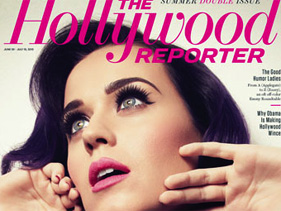
‘There were times when what was going on in my personal life was so overwhelming,’ Perry says in a new interview. By Gil Kaufman Katy Perry on the cover of Hollywood Reporter Photo: Katy Perry has been mum on the details of her divorce from Russell Brand. But in a new cover story in the Hollywood Reporter Perry gives a peek into the difficulty she faced in the split, as well as her plans to launch her own record label. ‘There were times when what was going on in my personal life was so overwhelming that I had to bend over to let those tears fall straight out of my eyes and not my false lashes just as I’m about to go up on that ramp and sing ‘Teenage Dream,'” she said. Speaking in advance of the release of her 3D concert documentary, “Katy Perry: Part of Me,” the 27-year-old pop singer said it’s impossible for anyone else to know what went on inside her brief marriage to the British comedian. “Nobody knows what really happened except the two people who are in it.” Part of her vision for the movie was to document her relationship with Brand as it crumbled just as her career was launching into the stratosphere with a record-breaking string of hit singles from Teenage Dream . That kind of honesty was in keeping with her heart-on-sleeve method of writing songs and she said, “Honesty has always worked for me … so if it ain’t broke, why f—ing fix it?” After putting up $2 million of her own money to make “Part of Me” a reality, Perry and her team are expecting the movie to have an opening to rival Justin Bieber’s “Never Say Never” $30 million first weekend. First, though, she had to convince her nervous business manager that it was worth dropping the cash to film her November 2011 concert at Los Angeles’ Staples Center in 3D. “I was like, ‘Please trust me,'” she said she told him. “That’s kind of been the mantra I’ve said to everyone my whole life: ‘Trust me, I have a vision.'” That same vision came into play in the recently released video for “Wide Awake,” which Perry wrote for the film and which ends with a shot of her triumphantly ascending to the stage during her smash California Dreams Tour. Regardless of how the movie does, the relentlessly drive Perry has other business ventures in mind, including launching her own record imprint. Her as-yet-unnamed label will help give struggling artists a hand up in the same way that some music industry folks took a chance on Perry early on. “When it does come to fruition, I’m going to try and avoid the things that take away any fighting chance for an artist to have financial success,” she said. “As people are coming to me with opportunities, I’m thinking, ‘How would I want to be treated?'” Check out everything we’ve got on “Katy Perry: Part of Me.” Related Artists Katy Perry
Not to discredit Genvieve Morton’s title of South Africa’s hottest woman according to FHM South Africa…..but the truth is she’s the only South African who isn’t HIV positive. As a fan of South African woman, because they are some melting pot of fucking hot, for some reason I don’t quite understand, but assume it has to do with rich white European people exploiting poor black natives, making them work their farms and mine their blood diamonds, I mean doesn’t all hot pussy stem from extreme racism in exotic places??? It is nice to see Candice Swanepoel knocked off her ego train by this bustier, hotter according to FHM, Genvieve Morton bitch, cuz I am sure she’s at that point of fucking annoying in her career where she just thinks she is bigger than South Africa…. Especially since Genvieve Morton posts nipple pics on twitter…. but then again so does Swanepoel…I guess it’s part of their culture….nipples, diamonds and HIV….
MTV News talks to Billy Corgan about his ‘I’ll piss on Radiohead’ comment and the Pumpkins’ freewheeling new disc. By James Montgomery Billy Corgan Photo: First things first: Billy Corgan would like it to be known that he does not actually want to piss on Radiohead , despite the interview he gave last week in which he declared, rather matter-of-factly, “I’ll piss on Radiohead.” Turns out, most things involving Corgan, the Smashing Pumpkins or anything else Corgan’s done over the past 25 years (professional wrestling, Scorpions’ concept albums, Zwan) cannot adequately be described as “matter of fact.” So here, in the same all-in manner in which he approaches most aspects of his life, is his full explanation of that Radiohead quote and the ensuing fallout it caused. “Look, if anybody wants any insight into my real character, I’m willing to play the fool, to point out where things are foolish. For example, addressing the Radiohead quote, where the quote was ‘I’ll piss on Radiohead.’ The context of the quote was saying ‘I’m willing to poke fun at something because there’s so much pomposity around it that it’s treated as reverent and holy,’ ” Corgan told MTV News. “So what ends up happening? The quote ends up getting picked up, which shows [people think] ‘How dare anybody criticize the band that’s un-criticizable?’ And that’s really funny; why is a band un-criticizable? I’m an artist who it is apparently OK to criticize, and I’ve made a career out of playing with that criticism and subverting it. “One of my main complaints about the music business is that it ignores a lot of music that people really, really like. Heavy metal being particularly one of them. You can say in a crowded room that ‘Oh I love Radiohead,’ and everyone goes, ‘Oh yeah, me too.’ But if you say ‘I love Iron Maiden,’ people go ‘What?’ ” he continued. “That’s not cool, and yet, heavy metal bands seem to sell a lot of records and draw a lot of fans. Why are those fans ignored? It’s the same high school game … it’s still the same sh–. It’s still some guy in a corner with a beard telling me I’m not cool enough, yet I pioneered the very form of music that he’s still talking about 20 f—ing years later.” Get it? Good. Corgan wasn’t taking a shot at Radiohead but rather the industry that has turned them into sacred cows. And if he sounds bitter, well, that’s because he is. After all, unlike most of his alt-rock contemporaries, he’s rarely the subject of voluminous praise, and the past decade of his work has, to varying degrees, largely been ignored by the mainstream. Though all of that may change with the Pumpkins’ brand-new Oceania album, which, thanks to its voluminous scope, ringing solos and proudly anachronistic aesthetics — hour-plus running time, lack of discernible singles and the like — has critics talking about a full-blown Pumpkins’ revival. And yes, Mr. Corgan finds all of that very amusing indeed. “Part of the steam and energy behind the new Smashing Pumpkins record is very few people actually thought I’d make a great record again, I’m not oblivious to that,” he said. “And it gives very little credit to the fact that I haven’t been trying to make great records. I’ve been trying to make records in a different definition; the cultural zeitgeist version of a great record, I haven’t been trying that for a long time. I just don’t think there’s an upside in it. Where is the upside in making a great record if the critical class isn’t going to review it properly, isn’t going to give it historical context, and is going to give some guy in his basement who has one good song the Hosanna review, like he’s Jesus Christ walking on water. Once you see that system, you just lose interest.” And that truly seems to be the point of Oceania. Corgan isn’t interested in making top 10 lists, earning raves or placing singles on modern rock radio. Instead, he just felt the need to make an artistic statement: This is who he is, 25 years into his career, without any regrets. Whether you listen or not is largely up to you; either way, he’s content to be misunderstood. In fact, “content” may be an understatement. “I [used to be] hell-bent before on destroying the bridges that I had just crossed. I don’t feel the need to do that anymore. I don’t feel the need to honor anything in particular, I don’t feel the need to be a certain type of musician, I don’t feel the need to exist in a particular culture,” he said. “Because as far as I’m concerned, alternative culture on the edges has dismissed me repeatedly for, what, being an artist? That’s a really strange thing. And mainstream culture has ignored me repeatedly for not selling enough records, and yet I’ve managed to sell a lot of records. So, ultimately, what I’d say to anybody is, true independence means you’re not going to have the normal people stand up and vote for you. You have to go on your own.” Related Artists The Smashing Pumpkins
The Invisible War director Kirby Dick at the Provincetown International Film Festival over the weekend. Any Day Now won the Audience Award for Best Narrative Feature over the weekend, while Kirby Dick’s The Invisible War won for Best Documentary at the Provincetown International Film Festival over the weekend. Starring alan Cumming and directed by Travis Fine Day revolves around a handicapped teen who is taken in by a gay couple. Invisible War meanwhile is a heart-wrenching look at rampant sexual assault in the U.S. military and the institution’s blatant disregard in addressing the little-known crisis. Festival attendees speculated that the feature will receive an Oscar nomination come awards season. David France’s How to Survive a Plague won the festival’s John Schlesinger Award given to a first time filmmaker. As previously announced, the 2012 Filmmaker on the Edge Award was given to Producer/Director Roger Corman. Actor Parker Posey received the Excellence In Acting Award. The Faith Hubley Career Achievement Award was given to director Kirby Dick. 2012 Provincetown International Film Festival winners: Any Day Now (directed by Travis Fine) – HBO Audience Award Best Narrative Feature. The Invisible War (directed by Kirby Dick) – HBO Audience Award Best Documentary Feature. DIK (directed by Christopher Stollery) – HBO Audience Award Best Short Film. How To Survive a Plague (directed by David France) – The John Schlesinger Award (given to a first time documentary or narrative feature filmmaker) Shoot the Moon (directed by Alexander Gaeta) – Jury Award / Student Short Film Who Lasts Longer (directed by Gregorio Muro) – Jury Award / Animated Short Film Tsuyako (directed by Mitsuyo Miyazaki) Jury Award / Live Action Short Film – Short Film Jury Honorable Mentions go to Installation , Teacher of the Year and Entry Denied
All I know about this Samantha Gradoville model is that she’s American….a locally grown tall as fuck, perky titty bitch, who is willing to get naked for fashion, or at least for her career as a model in the fashion world because it pays fucking well and offers a lot of fucking perks from fans and perverts sucking up to her all day, to money, to traveling the world 5 star status, on private jets all to be the face for a brand….pretty fucking genius….cuz all she has to do is show up and have pics taken of her and to make that dream come true…all she has to do is show a little nipple in Harper’s Bazaar UK….hoping it will propel her to the next step…and any girl willing to show her tits to get ahread…from a Girls Gone Wild flash to strippers to this…is a girl who’s professionalism I can appreciate….. That said, I’ve Posted Her Topless in Numero About a Year and a Half Ago Now here are her bikini perky nipple pics….
All I know about this Samantha Gradoville model is that she’s American….a locally grown tall as fuck, perky titty bitch, who is willing to get naked for fashion, or at least for her career as a model in the fashion world because it pays fucking well and offers a lot of fucking perks from fans and perverts sucking up to her all day, to money, to traveling the world 5 star status, on private jets all to be the face for a brand….pretty fucking genius….cuz all she has to do is show up and have pics taken of her and to make that dream come true…all she has to do is show a little nipple in Harper’s Bazaar UK….hoping it will propel her to the next step…and any girl willing to show her tits to get ahread…from a Girls Gone Wild flash to strippers to this…is a girl who’s professionalism I can appreciate….. That said, I’ve Posted Her Topless in Numero About a Year and a Half Ago Now here are her bikini perky nipple pics….
Bieber’s manager, Scooter Braun, opens up to MTV News about the singer before ‘Bieber Live’ airs Tuesday at 7:30 p.m. ET/PT on MTV. By Jocelyn Vena Justin Bieber Photo: In the lead-up to the release of Justin Bieber ‘s album Believe , there has been a lot of talk about how much the 18-year-old has grown up since he dropped his first EP, My World, back in 2009. Sure, he is actually older, but the conversation has also been focused on how his music sounds more mature. He no longer seems to be crafting sugary-sweet tracks like “Baby.” The pop star will celebrate his mature new album during “Bieber Live,” airing Tuesday at 7:30 p.m. ET/PT on MTV. Bieber will join Sway and 100 lucky fans for an interview and a pair of performances. Adding to his growth is the fact that in the two and a half years since that debut release, Bieber has quite literally done it all. He’s toured the world (several times over), topped the charts, won a lot of awards, fallen in love, become a boss to his own artist , owned the box office, befriended some of the biggest MCs in the game, vowed to “Never Say Never” and, yes, became legal. As tiring as it may sound to be Justin Bieber, his manager, Scooter Braun, notes that when the singer sat down to make the album, he didn’t want to rush it or be lazy about it. He wanted it to be perfect. His experiences are not only helping shape him as an artist but also helping him mature as one. “You know, I think a lot of times with big superstars, they don’t always deliver on that big album. They don’t meet the expectation … sometimes it’s because they’re superstars,” Braun explained to MTV News. “Maybe they think they know it all and they don’t want to listen to anyone else’s input, and sometimes that works and sometimes that doesn’t. “Justin was really humble about this,” he continued. “He probably wrote 200 songs and we just kept working and working and narrowing it down. And there were so many records that didn’t even make it that we’ll save for something else. I think when it was all said and done, there wasn’t one person who listened to that album all the whole way through and thought that we didn’t have something special and really great and something that didn’t just reach the teenagers, but everyone — without losing the teenagers.” The album certainly has been teased for quite some time. The buzz began to really pick up around the time of the release of his holiday album in 2011, when he dropped the name Justin Timberlake as his template for career evolution, setting the bar quite high. “I’m proudest of Justin with this album ’cause I think he delivered,” Braun said. “For a superstar to deliver means a lot.” Others who worked with Bieber on the release told MTV News during the recording process that it was important for him to make music that would help expand his brand beyond the tween and teen market. A big part of Bieber’s musical evolution, however, is about making sure no one gets alienated. “The only conversation we’ve had about Justin’s album that we’re about to do is it’s really important that it’s the proper transition because we’ve seen him [with] ‘Baby,’ now we’re watching him grow up,” his vocal producer, Kuk Harrell , told MTV News back in November. “And we can’t just throw him into the adult game right away. It has to be the proper transition. There’s a record in between.” That mission to help Bieber make the right choices as an adult artist was certainly priority number one when Bieber hit the studio with Mike Posner to work on the album’s lead single, “Boyfriend.” “I think our goal was to make something that me and my friends could listen to in the car,” Posner explained in March. “I think we’ve all known Justin since he was 13, and that’s not the kid I was in the studio with anymore. He’s an 18-year-old. He skateboards with Lil Wayne and hangs out with Lil Twist. Those are his homies. And he listens to hip-hop and he’s a really cool kid. He’s not like a corny guy. “So I wanted to make something that reflected who he is now and who he is going to continue to be,” Posner continued. “I think people have been waiting [for] when he’s going to turn that corner, and the time is now.” Listening to his album, it’s clear that Bieber is trying out new sounds, from dance to R&B and everything in between. But he also just plain sounds different. His voice is deeper than it was when he first started making music. That register change is something he commented on in a recent interview with MTV News. “It’s really deep,” he joked. “The thing is, I’d always put out random songs and give it to my fans, and when my voice was changing I was doing that. So they didn’t randomly just hear [it and go], ‘He’s got a deep voice now.’ It was gradual. They didn’t realize it that much. It just kind of happened. The tone is still the same. It’s just deeper and sexier.” In the end, while it may seem like he’s taking a cut from another pop star named Justin , Bieber is actually focused on following yet another megastar’s template for success. “He’s growing and so is his music,” Braun said. “And I don’t think he’s transitioning and losing any fans. I think he’s just growing. We always study Michael Jackson and the thing I loved about his career is he never lost that 2-year-old that bounced to his music. But at the same time, you’d go to a club and there were adults bouncing also. And I think that’s what we want to do with Justin.” Don’t miss “Bieber Live” on Tuesday at 7:30 p.m. ET/PT on MTV, followed by “MTV First: Katy Perry” at 7:53 p.m., when Katy will debut her “Wide Awake” music video. Related Photos The Evolution Of: Justin Bieber Related Artists Justin Bieber
[ A version of this interview originally ran as part of Movieline’s coverage of Sundance 2012 .] It says something about how far Ice-T has come since his gangsta rap days that his directorial debut, the hip-hop documentary Something from Nothing: The Art of Rap , premiered in January at Sundance to a house packed with hip-hop heads and white older moviegoers who likely know Ice better from Law & Order: SVU than “New Jack Hustler.” And it says something about the film itself, which explores the historical landscape of hip-hop in intimate detail with over 40 of Ice-T’s fellow rappers, that even the L&O -watching grandmas in the audience were bopping their heads the whole way through. Taking a fresh approach to the music documentary, The Art of Rap (co-directed by Andy Baybutt) sees Ice-T as a tour guide of sorts, navigating the viewer through home and studio visits with fellow MCs on both coasts as he has wide-ranging discussions about the roots of rap, what hip-hop means, and the skills and talent required of a truly great MC. (Among the hip-hop titans appearing in the film: Chuck D, Grandmaster Caz, Afrika Bambaataa, KRS-One, Melle Mel, B-Real, Mos Def, Ice Cube, Snoop Dogg, Dr. Dre, MC Lyte, Q-Tip, Redman, Immortal Technique, Nas, Common, and Kanye West.) As he travels from New York City to Los Angeles — with a detour to Detroit to see Eminem, described as one of the greatest rappers of all time — Ice asks his subjects to spit “something no one’s ever heard before,” resulting in a tapestry of astounding, off the dome freestyles and rare rhymes from some of the best rappers alive. With the intention of keeping the film feeling fresh and present, Ice-T forgoes include archival or concert footage as he revisits hip-hop’s colorful past, a choice that turns The Art of Rap into something of a communal, if dense, oral history of the genre. But with legends like these on hand speaking comfortably to one of their own — spilling their vulnerabilities as artists, exposed beyond the typically hard façade of the genre — it’s all utterly fascinating. (The film has received critical kudos, currently enjoying a very fresh 100 percent rating over at Rotten Tomatoes with 8 reviews in.) Movieline spoke with Ice-T as the rapper-turned-actor-turned-filmmaker explained what motivated him to grab his Rolodex and a tiny crew in the first place, why rap needed an Ice-T film more than another album, why the genre doesn’t get the respect it deserves, and how the film’s success or failure will determine his future directorial aspirations. Something from Nothing: The Art of Rap opens in limited release today. How do you think things went at your premiere? I wasn’t breathing the whole night before, I was so nervous. I put a lot of time and work into it, but you never know. Sundance was our goal when we made the movie — I only wanted to make it to Sundance. This was it for me. And if I could make it here, I was in the right company of good movies. Why Sundance? It was interesting to see it play well here for a crowd of predominantly white, older viewers, and last year Beats, Rhymes, and Life also did quite well. Well, I didn’t know what films would be here when we submitted the film and got accepted. When you think about it, I’m an indie artist; I started out making hardcore records, so I wanted to make something that was raw. I said, I know Sundance is artsy but if I can get accepted there, then I’m on the right track. White people, black people, it really doesn’t matter. It’s just a matter of is it good? So when the movie came on and people started cheering and laughing and bobbing their heads, it was like oh my god — we got it! It’s kind of like not a normal documentary, it’s like a performance experience, an intimate concerts with a lot of the artists that people love. I was just happy. You’ve said that once you decided a documentary on rap should be made it was easy to just call your friends to be in the film, but in terms of the actual filmmaking what was your approach? Did you study documentary form to develop the style you eventually used? Not really. I mean, I’ve been watching movies and I’ve been in the film business for 20 years so I know what’s good. I wanted to shoot it, but I wanted to blur the lines of the filmmaking and behind the scenes. If the mic was exposed, that was good. A lot of the stuff, you see me talking to people; I wanted you to get the idea of what it was like to make it, not just watch it. People are into reality right now so this was like real reality; you’re with me, you’re on the set, I’m going to walk up to this guy and ask him a few questions. So as I edited, I just wanted the camera to feel like it might be anywhere at any moment. There are times people are talking and you’re showing the wall, or his hands, or his shoes. And then we shot with a Super 8 to kind of break up the cleanness of high definition. And we shot the big cinematic shots because I felt that if you just shoot the talking heads the movie becomes claustrophobic, so it’s just like, listen, listen, listen, breathe. Listen, listen, listen, breathe. Those sweeping overhead cinematic shots, of the cityscapes over New York City and Los Angeles and the places you visit in between, also do well to connect visually to a sense of place and geography… even though that also makes it conspicuous when you don’t visit, say, the Bay Area or the South. That’s what Mos Def said in the movie — the music is dictated by the geography, and that’s why New York sounds different than Detroit, different than L.A. And you know, I couldn’t go to the South; the biggest problem I ran into with the movie was once we started, just the lack of time and the amount of film we shot. When I got the nod for Sundance I had a three-hour film and they said the longest they’d run them here is two. We had interviewed 54 [musicians]; even to make a three-hour cut we had 47, and I had 25 people waiting to be filmed when we had to wrap shooting! So like Chuck D said [at the film’s Q&A] at being asked why this person wasn’t in it and why that person wasn’t, you know what? The movie’s not about that, it’s not about ‘Come see your favorite rapper.’ I feel every form of rap, every style, was represented. Are you currently considering extending this two-hour film somehow into something else, perhaps a series? I won’t speak on that, only because we don’t want to lower the integrity of this as a film. We want it to be a film, and once it does its dance as a film, whether it’s a theatrical release which looks like it’s about to happen… I’ll put it like this: We’ve got two hours on each artist. Wow. That’s pretty incredible considering that many of the rappers we only see for a minute or two at most. [Laughs] I have two hours! So you look at KRS-One; KRS-One talked about so much stuff, but my job is, let’s show the part where KRS talks about being vulnerable, like the moment where he got dissed. I want you to see the different dynamics of these artists. See, when you take young artists, right, young artists have their guards up. They never want to show any weakness, they’re scared. They’re worried about their persona. When you talk to people once they’ve been down the lane, they’ll tell you the story. They’ll say, “Wow, man — I’m Public Enemy and Mel was dissing us!” Now they’re comfortable with themselves. Even the stories, WC was talking about how I would use kids as teleprompters. Early in my career I wouldn’t have said that, but now I’m like, let’s laugh about it! I think that’s part of this film’s charm, too. There’s a segment where you’re talking with Ice Cube and 50 Cent is referenced; Cube jokes that you don’t want to get rich and die trying. Was that a jab at Fiddy, or just an offhand remark? No, that’s not a diss — it’s more like saying, this is my play on what you said. I don’t want to get rich and die trying. 50 Cent said “Get rich or die trying,” but you can get rich and die trying. So once you made it now, let’s not fuck it off. That would be part two of Fifty. The next one is Get Rich AND Die Tryin … I just think that the way that rappers speak about each other in the movie is very endearing, how they speak about how they were inspired by this one, and also I think really showing Grandmaster Caz as one of the unsung heroes. Grandmaster Caz wrote “Rapper’s Delight!” It’s important shit. That’s a nice quality to the movie; it engenders appreciation not only between the artists that you interview, but having MCs spit live, directly into the camera without music really highlights rap as a performance and an art form. And you’ve got to remember this: Nobody knew they were going to rap. That’s part of being a rapper. Nobody knew they were going to rap. It’s like at the [Sundance premiere Q&A, where Ice-T was asked to spit his favorite rhyme] the guy said, “Ice, can you quote a rhyme?” Yeah, I’m a rapper — I’d better know how to fucking quote a rhyme! I pulled Rakim outta my ass, and that’s it. But during the interviews I said, “You want to spit something — you got anything in the head, want to say something no one’s ever heard?” And bam! They just, bam! I didn’t tell anyone, “You’re going to rap.” I didn’t tell Kanye he was coming over to rap. But you knew they could, because that’s what they do . Exactly! That’s what they do. You can’t interview a basketball player on a basketball court, with a basketball within his reach, and he won’t take a shot. It’s just what they do. He’s going to want to dribble the ball — he’s at home! So when you get a rapper in a comfortable situation with one of their friends and say, “Spit something,” they might go, “Aww, come on Ice!” Then they might go, “Hold on…” bam! And another thing I did in the movie, if you really watch — some of the rappers in their rhymes kind of fuck up. They kind of slur words, because they’re connecting two rhymes together. That’s the art. You know, what you hear on records is something different. But when you hear it live, that’s all good. I mean, hopefully none of the rappers are so vain that they’re like, “Ice, you saw me fucking up.” But that’s just what they did. That’s real shit. Which of your interviews was the most challenging to pull off, or to break through to? None. None of them. Every interview was just as easy to do, the only hard part was getting Ice-T, them, and a camera crew from London in the same place at the same time. How did you find your crew? When I came up with the idea, my manager said “I’ve got somebody who might be interested in doing it.” We hooked up with a guy named Paul Toogood, he does a TV show called Songbook where they interview singers and they break down a song. It’s right up his alley. He said, not only do I want to do it, I’ll get the money to do it. I had to find somebody who was as passionate about it as me, and thank god – these guys are incredible cinematographers… the thing about this film is there were only five people that made it. There’s Paul, the cinematographer, myself, my guys that helped me wrangle the artists, Coco, Little Ice, and the sound crew. It’s apparent how small your crew is in the film when you have trouble fending off onlookers and fans while interviewing Q-Tip in New York… We just grabbed Q-Tip on the corner and we started shooting, I’ve got one of the homies out there blocking, I’ve got a camera guy and a boom, and we just go. So it’s very guerrilla, but I think that’s part of what makes the movie good. That comfortable distance of time and age that you mentioned that allows you to be more open with your experiences – do you feel like the impetus for making this film came from a desire to revisit where you’ve been in your career, to reconnect with your roots after transitioning into acting and television and beyond? I think it’s trying to do something for hip-hop, but do something that I am the only one who’s really capable of doing it. It’s kind of like, Ice-T could make another record, but we all know that. Now Ice is in another lane, he’s moved up, he’s got different credentials. So now it’s my job; I’ve got to make a movie. I’ve got to give hip-hop something they didn’t even know they wanted. Right now you make records and people don’t listen to them. You write a book and some people read. But people go to movies! And I wanted to direct; I have a lot of films that are in my sights, but I always learned in business that if you’re going to start a new business, go for the lowest hanging fruit. Start with something you know the best, first. And this is what I know the best. So I said, let me do something that’s important, that’s my way of giving back to hip-hop, and if it’s successful I’ll move on with my filmmaking career. If it’s not, I’ll re-assess my mistakes, maybe try again, or I’ll stop. But what is your barometer for success with this film? When will you be happy or satisfied with the results? It’s really just the response of the people. I never go by the critics, because critics’ jobs are to criticize. So a critic will look at you and how well you’re dressed but they’re looking for something they don’t like. Film journalists, I respect. But anyone who uses the word ‘critic’ in their description, I don’t fuck with them. But I can tell from the fans. Now, the internet and all the ways people can get back at you… you’ll know if you did something good or not. My first barometer is the hip-hop community. If they love it, and they’re like, “Man, you did something great. Thank you, Ice…” That’s the first thing. Secondly will be the people and how they respond to it. So far, I went home last night and went through 30 reviews and didn’t get one bad, not one. I’m speechless! In the movie, we ask the question “Why don’t you think hip-hop is respected?” Well, to have this film respected kind of says it is respected. It’s maybe not vocal, but it is, because people loved the movie. So it is respected. Follow Jen Yamato on Twitter . Follow Movieline on Twitter .