Tag Archives: council

Thaci faces probe over alleged organ trafficking

Hashim Thaci, Kosovo’s newly re-elected prime minister, is coming under fresh scrutiny over his guerrilla past as European foreign ministers examine allegations about organ trafficking in the 1998-99 war. Dick Marty, a Council of Europe rapporteur, presented a report on Thursday to members of the 47-country organisation that alleges that Mr Thaci, a leader in the Kosovo Liberation Army against Serbia, also formed a powerful “mafia” network among former guerrilla fighters for narcotics and organ trafficking. The council, which promotes human rights, democracy and the rule of law around the continent published the report on its website and tabled it for discussion next month. (more at this link – http://www.ft.com/cms/s/0/f4ec439c-093f-11e0-ada6-00144feabdc0.html#axzz18KdRyuM… – this is all over the news in Europe) added by: Vierotchka

New Republic Finds ‘Insidious’ and ‘Pathetic Sexism’ on Morning Joe, Parker Spitzer

Over at The New Republic, they hate MSNBC's Morning Joe — because it's insulting to feminists. Eliza Gray's Monday lament was promoted as “The Pathetic Sexism of Morning Joe.”

Gov.-elect John Kasich wants to overhaul collective bargaining law

COLUMBUS, Ohio — Public employees who go on strike over labor disputes should automatically lose their jobs, says Gov.-elect John Kasich. “If they want to strike they should be fired,” Kasich said last week. “I really don't favor the right to strike by any public employee. They've got good jobs, they've got high pay, they get good benefits, a great retirement. What are they striking for?” 12Share 47 Comments Kasich has made it clear that dismantling Ohio's collective bargaining law will be a top priority of his administration. In particular, Kasich is going after binding arbitration rules often used to settle police and fire department salary and benefits disputes that he says are costly and bankrupting cities. That in turn drives up the state's share of funding for local government budgets. “You are forcing increased taxes on taxpayers with them having no say,” Kasich said. The Middletown City Council recently passed a resolution asking the Ohio General Assembly to revise the state's collective bargaining law. City Councilman Josh Laubach, who authored the resolution, said the city had to dip into reserves to pay police and fire costs this year and is expecting a $2.5 million increase in safety personnel in 2011 despite adding no new positions, according to the Middletown Journal. But state labor groups have said the incoming governor is wrong, and they are ready to fight him on any attempts to repeal or alter the nearly three-decade-old collective bargaining law. Terry Gallagher, executive director of the Ohio Patrolmen's Benevolent Association, a group representing about 7,500 policemen, including patrolmen in Parma, Berea, Fairview Park and Westlake, called Kasich's comments “foolish.” “Arbitration is a fair way of doing things — you have a neutral person come in and listen to both sides and make a decision,” Gallagher said. “Kasich doesn't want us to strike and he doesn't want us to collectively bargain, so what is law enforcement left with? Collective begging is what it would amount to.” The 1983 collective bargaining law, which gives public employees a right to unionize, was implemented by a Democratic-controlled legislature and signed by Democratic Gov. Richard F. Celeste. The law, and a 1989 Ohio Supreme Court ruling that addresses it, requires cities to automatically enter into binding arbitration when in a dispute with its safety forces and abide by whatever decision that mediator hands down. added by: figgdimension

U.S. Needs to Boost Spending for Energy R&D, Panel Tells Obama

Photo: Wikipedia , CC Huge Issue With Small Resources The President’s Council of Advisers on Science and Technology has released a report that is critical of the U.S. for not investing enough into energy R&D, recommending that spending more than triple from $5 billion to $16 billion (not that much when you compare it to the cost of other big expenditures). The U.S. lags many other country in energy R&D investments (see the chart below), and considering how much it spends on fossil fuels, any investments that reduce that consumption w… Read the full story on TreeHugger

Continue reading here:
U.S. Needs to Boost Spending for Energy R&D, Panel Tells Obama

UN General Assembly Votes To Allow Gays To Be Executed Without Cause | The New Civil Rights Movement

Gay, lesbian, bisexual, and transgender people were once again subject to the whims of homophobia and religious and cultural extremism this week, thanks to a United Nations vote that removed “sexual orientation” from a resolution that protects people from arbitrary executions. In other words, the UN General Assembly this week voted to allow LGBT people to be executed without cause. According to the International Gay and Lesbians Human Rights Commission, the UN General Assembly’s Third Committee on Social, Cultural and Humanitarian issues removed “sexual orientation” from a resolution addressing extrajudicial, summary or arbitrary executions this past week in a vote that was overwhelming represented by a majority of African, Middle East and Carribean nations. For a UN committee that addresses human rights questions that affect people all over the world, by removing protections for LGBT persons from a category of arbitrary executions, belies the objective and purpose of a committee whose focus this year is “on the examination of human rights questions,” according to its website. A number of LGBT human rights advocates were surprised by the decidedly lop-sided vote, including Mark Bromley, the chair of the Council on Global Equality, a Washington, D.C. based organization that brings together human rights organizations, LGBT groups, philanthropists and corporate leaders to ”encourage a clearer and stronger American voice on human rights concerns impacting LGBT communities around the world.” “I was very surprised by the vote,” said Bromley, who had been in contact with the United States Mission to the United Nations delegation all day Tuesday, who were trying to beat back efforts to strip sexual orientation from the resolution. But because the U.S. supports capital punishment, they usually abstain from voting on this resolution, thus they are in a weakened position with one arm tied behind their backs, according to Bromley. “But that said, the State Department did everything possible to beat back the efforts to repeal protections for LGBT persons,” he added. For further analysis into this story, read Tanya Domi’s latest piece at The New Civil Rights Movement, “UN Vote Allowing Gays To Be Executed Result Of Political, Religious Fundamentalism.” The U.K. gay rights and human rights campaigner Peter Tatchell said, “This is a shameful day in United Nations history. It gives a de facto green light to the on-going murder of LGBT people by homophobic regimes, death squads and vigilantes. They will take comfort from the fact that the UN does not endorse the protection of LGBT people against hate-motivated murder. “The UN vote is in direct defiance of the Universal Declaration of Human Rights, which guarantees equal treatment, non-discrimination and the right to life. What is the point of the UN if it refuses to uphold its own humanitarian values and declarations? “This vote is partly the result of a disturbing homophobic alliance between mostly African and Arab states, often inspired by religious fundamentalism. LGBT people in these countries frequently suffer severe persecution.” In an issued statement explaining the U.S. vote, a representative of the U.S. UN delegation said, At the outset, let me say that the United States strongly agrees with and appreciates the cosponsors’ efforts to retain language specifically condemning ESAs [extrajudicial, summary, or arbitrary executions] targeting vulnerable groups, particularly members of the LGBT community, and we were dismayed that this reference could not survive an unfriendly amendment. Bromley expressed great disappointment in losing all the Southern African countries on the vote, including Angola, Botswana, Mozambique, Nambia and South Africa, the latter, whose domestic laws and record on LGBT civil rights have held great regard throughout the world. Nonetheless, according to Bromley, from the days of former President Thabo Mbeki through present day leader Jacob Zuma, South Africa has been recalcitrant in its opposition to extending human rights to LGBT persons within international legal structures. Another region that unanimously supported the removal of sexual orientation from the resolution were the Carribean nations. Most noteworthy was the support from the Bahamas, Cuba, Haiti and Jamaica. Bromley indicated that the U.S. and human rights groups in the hemisphere have opportunities to forcefully advance LGBT rights through the Organization of American States (OAS) and Inter-American Commission on Human Rights. Brazil and Uruguay are international leaders on LGBT rights and can play a constructive role in bringing Carribean nations into the OAS fold on these issues, according to Bromley. Middle East countries that principally observe the Muslim religion and its practices, as well as countries whose politics are dominated by Christian fundamentalists, generally oppose LGBT and women’s rights at the UN. Even the United States has yet to ratify the Convention on the Elimination of Discrimination Against Women (CEDAW). Indeed, CEDAW has the most “reservations” filed by the most member states of any international human rights convention on record. A reservation is a statement made by a State which it purports to exclude or alter the legal effect of certain provisions of a treaty in their application. According to the Office of the UN High Commissioner of Human Rights, A reservation may enable a State to participate in a multilateral treaty in which it would otherwise be unable or unwilling to do so. States can make reservations to a treaty when they sign, ratify, accept, approve or accede to it. When a State makes a reservation upon signing, it must confirm the reservation upon ratification, acceptance or approval…a reservation cannot be contrary to the object and purpose of the treaty. As an LGBT activist or an observer of UN and international politics, it is important for interested persons to understand that religion and culture play a major role in persuading internal bodies to not extend certain human rights to LGBT persons and women on religious and cultural grounds. These dynamics have created an international debate between advocates of “cultural relativism“–those who assert primacy of cultural values over human rights and those who are “ universalists,” who believe rights trump cultural concerns. The United States Mission to the United Nations has an explanation of the U.S.’s vote. Editor’s note: Thanks to Andr

100K House From Postgreen Wins LEED Project of the Year

Image credit Sam Oberter I thought we were being edgy when we gave Interface Studio Architects the Best Residential Architect Award as part of Best of Green this year, but I could not help but love the 100K house . Evidently neither could the US Green Building Council ; they have awarded it the 2010 project of the year…. Read the full story on TreeHugger

Follow this link:
100K House From Postgreen Wins LEED Project of the Year

New York City Gets Serious About Local, Sustainable Food

Image: Teesha Dunn via flickr When New York City Council Speaker Christine Quinn announced the 59-point-plan, “FoodWorks,” yesterday, she unveiled the city’s latest move to reduce its environmental footprint, and boost the local economy and health of its citizens. The plan is designed to address all aspects of food in the city, from agricultural production through post-consumption…. Read the full story on TreeHugger

Visit link:
New York City Gets Serious About Local, Sustainable Food

ABC’s Bianna Golodryga Goes Undercover to ‘Expose’ Secret Muslim Bias in America, Doesn’t Find Much

ABC on Friday did its best to find secret discrimination against Muslims, sending Good Morning America’s Bianna Golodryga undercover in a hijab (Islamic head covering). Yet, despite the misleading graphic, ” Life Under the Veil: TV Experiment Exposes Bias ,” the morning show didn’t find much bigotry. Late in the segment, Golodryga admitted, “Overt discrimination is the exception.” When an ABC producer tried the experiment in New York, the correspondent acknowledged, “Everywhere, people went out of their way to be friendly.” [MP3 audio here .] Yet, Golodryga kept trying. Going to the red state of Texas, she explained, “But it was different in my hometown of Houston. At the airport, I could feel all the eyes on me.” Wearing a burka, she narrated, “In a nearby mall, I wanted to see what would happen if I wear wore a more striking version of Islamic dress, which covers everything but the eyes and is less common here in the states. The stares increased.” If something is uncommon, wouldn’t it be likely that stares increase? After a man walked by and offered a muffled comment, Golodryga deciphered, “It sounds like he said, ‘Islamic queen.’ I couldn’t tell if he meant it in a friendly way or not.” To build the case for rampant anti-Muslim sentiment in America, Golodryga asserted, “According to the FBI, hate crime incidences against Muslims soared from 28 in 2000, to 481 in 2001. And still remain well above pre-9/11 levels.” However, as Michael Doyle of the Sacramento Bee reported on August 28, 2010, hate crimes against Muslims are rare and occur less often than violence against Jews and gays: Jews, lesbians, gay men and Caucasians, among others, are all more frequently the target of hate crimes, FBI records show. Reported anti-Muslim crimes have declined over recent years, though they still exceed what occurred prior to the 9-11 terrorist attacks. In 2008, 105 hate crime incidents against Muslims were reported nationwide. There were 10 times as many incidents that were recorded as anti-Jewish during the same year, the most recent for which figures are available. (For more, see a NewsBusters post.) But, Good Morning America has yet to do a segment featuring someone wearing a yarmulke or Kippah to see if they suffer anti-Semitic bias. Golodryga concluded by marveling of her undercover experience on the subway: “People didn’t even pay attention to me as I walked around like a normal American. My religion didn’t matter.” One might wonder, then, what was the point of this segment on bigotry and “bias”? A transcript of the segment, which aired at 8:18am EDT, follows: ABC GRAPHIC: Life Under the Veil: TV Experiment Exposes Bias GEORGE STEPHANOPOULOS: In the final part of our special series, “Islam in America,” we look at what it’s like to be Muslim in America today. Bianna Golodryga went undercover to find out how people respond to women wearing the traditional Muslim head scarf. And she joins us now. And this was definitely a first for you. BIANNA GOLODRYGA: Yeah. It was quite an eye-opening experience, George. Good morning. The Council of American-Islamic Relations has noted a spike in hostility toward Muslims, including bomb threats at mosques, physical threats on Muslims. Even an advertising campaign telling Muslims to change their religion. So, I wanted to find out what it felt like to be a Muslim in America. And I talked to American women who are doing just that. I donned the hijab myself. AYESHA BUTT: I think the hijab, is one thing that makes it a little different. Makes a Muslim woman different from a non-Muslim woman. GOLODRYGA: A hijab is a head scarf that women wear in public, a symbol of their faith visible to all. Do you notice people looking at you? RUGIATU CONTEN: I’m randomly checked. At a specific airport, I just stand aside because I know I’m going to get randomly checked. And then when I go in the room, I see five other Muslim women, I say As-Salamu Alaykum and do the, you regular, you know, procedures. BUTT: Definitely, things changed a lot after 9/11. Before 9/11, you weren’t called a terrorist. It was after 9/11 that people stop to let you know that you were a terrorist. Or they called you, like, Osama’s wife or something like that. And then, recently, things I would say have been very similarly hostile. GOLODRYGA: According to the FBI, hate crime incidences against Muslims soared from 28 in 2000, to 481 in 2001. And still remain well above pre-9/11 levels. The most recent Equal Employment Opportunity Commission figures showed complaints of workplace discrimination against Muslims are up 20 percent. So, what would happen if your daughter came home and said she wanted to wear a hijab? RUBINA AHMAD: As a mother, as long as she stayed in big cities and cosmopolitan- where people are more tolerant, people are more knowledgeable of different cultures, religions, I would be fine. But, I would be concerned about her safety. GOLODRYGA: I decided to see what it would be like to wear a hijab in lower Manhattan, not too far from the proposed community center and mosque. Our hidden cameras followed me into a swanky restaurant. And a department store. And on to the subway, where New Yorkers took the hijab in stride. [Video footage of Golodryga walking around.] But it was different in my hometown of Houston. At the airport, I could feel all the eyes on me. And our cameraman overheard one man tell his companion that he hoped I wasn’t on his flight. In a nearby mall, I wanted to see what would happen if I wear wore a more striking version of Islamic dress, which covers everything but the eyes and is less common here in the states. The stares increased. And so did the comments. [Muffled comment from passerby.] It sounds like he said, “Islamic queen.” I couldn’t tell if he meant it in a friendly way or not. Finally, we went to Orleans County in western New York, where five teens were arrested after allegedly harassing Muslims outside this mosque. Our producer went to a gas station, supermarket and hardware store. Everywhere, people went out of their way to be friendly. WOMAN #1: You’re welcome. You have a great day. WOMAN #2: Did you find everything okay? GOLODRYGA: Our three-day experiment reflects what these women report. Overt discrimination is the exception. BUTT: There are a few that will be hostile. You know, whether you’re in the grocery store or driving on the highway, someone’s going to cut you off and say something about being a terrorist. There are those rare, few people out there. But I don’t think the majority is like that. GOLODRYGA: Today, many young Muslim-American women embrace the hijab, rejecting the notion that traditional dress is somehow repressive. AHMAD: It’s part of their Muslim identity. They are true American-Muslims. And they exercise their right as an American-Muslim and they decide to wear it. CONTEN: Now, I’m wearing the hijab. And I realize that people see me for who I am, more than what my hair looks like or what I’m wearing or how pretty I am. Definitely, that’s the plus-side. And also, the sisterhood, like Aysha to talk about. BUTT: Nobody forced me to do it. I we were the cool people. Like- GOLODRYGA: So, it’s cool to wear a hijab? BUTT: Oh, it’s awesome! Like, you know, You had the matching hoodies. You had the matching hijab. Like, you can see my little toy here. [Points to her hijab.] You can play around with it. GOLODRYGA: Accessorize it up. BUTT: Like, you can have a lot of fun with it. CONTEN: Hijabs, they are very wild. But people just don’t see it. At our parties- BUTT: Yeah, it’s kind of special. CONTEN: Yeah. GOLODRYGA: Some believe this generation is paving the way forward for all Americans. AHMAD: They are really helping, not only Muslim girls. But they’re also helping Americans to learn about Islam. And making other people see them the way they are. You know, as part of maturity of a nation. They have educated the masses of the nation. GOLODRYGA: Quite an impressive group of women. Many Americans see the hijab as something that restricts women, hiding their individuality. What these women told me is that when they wear the hijab, they feel liberated. It frees them from some of the pressures they feel. And, actually one of the girls, Ayesha, that you saw talking about stylizing her hijab, she said she conducted an experiment when I told them about what we did. And she went out without the hijab, in American, western clothes. And she wore that for a week. And she felt more liberated as a woman wearing the hijab. Because people talk to her as a woman and they didn’t- in a sexual sort of- STEPHANOPOULOS: Oh, that’s interesting. Just fascinating stuff. And I guess it confirms something that I’ve believed. Americans tend to show greater respect for anyone who seems to be taking their faith seriously. GOLODRYGA: Yeah. Especially here in New York. You saw that on the subway, right? People didn’t even pay attention to me as I walked around like a normal American. My religion didn’t matter. STEPHANOPOULOS: Not at all.

Read this article:
ABC’s Bianna Golodryga Goes Undercover to ‘Expose’ Secret Muslim Bias in America, Doesn’t Find Much


Wyclef Jean Officially Abandons Haitian Presidential Bid

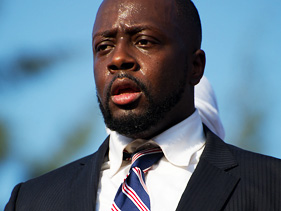
Singer will focus on the February release of his next album. By Gil Kaufman Wyclef Jean Photo: Frederic Dupoux/ Getty Images Wyclef Jean announced on Tuesday (September 21) that he is planning to abandon his bid for the presidency of Haiti and focus on his musical career. The announcement came after Jean had vowed to fight on and appeal a ruling by Haiti’s Provincial Electoral Council that denied him a spot in the island nation’s upcoming presidential election. “After weeks of quiet but painstaking reflection with my wife and daughter, I have chosen to end my bid for the presidency of Haiti,” Jean said in a statement. “This was not an easy conclusion to reach; but it is one that was thoughtfully made, taking into account many, many competing factors and weighing the course that will best advance the healing of the country and help it find the quickest path to recovery.” Jean was left off the list of viable candidates for the Haitian presidency that the Council released on August 20 because he did not meet the residency requirements. At the time, the former Fugees star promised he would launch a vigorous appeal in his effort to take over the top job in his native homeland, which has struggled to recover from January’s devastating earthquake. ‘Clef was one of 15 of 34 presidential candidates whose bids were rejected. He initially said he accepted the disqualification in an effort to respect the rule of law in the country, and to ensure that there would be no violence in the wake of the announcement. But his representatives also filed a legal appeal against the Council’s ruling, citing what they described as “irregularities” in its operations. Jean said he will return his focus to his music career and prepare for the February 2011 release of a solo album, the title of which is now If I Were President, the Haitian Experience . The singer has already lamented his failed bid in the song “Prizon for the CEP,” in which he attacked the Council and the country’s sitting president. “Some battles are best fought off the field, and that is where we take this now,” Jean said in the statement, noting that his appeal was an attempt to shed light on the democratic process and “the functioning of a government that is often ranked as one of the most corrupt on the planet, resulting in a country that is by most measures the poorest in the Western world.” Wyclef stressed that the appeal was not just about his own candidacy — which was questioned by his former Fugees bandmate Pras and actor Sean Penn , who has been living on the island since February while running his own relief organization — but about pointing out the shortcomings of the electoral process to all Haitians. “Though my run for the presidency was cut short,” he said, “in this way, I feel it was not in vain; it’s something we can use to improve conditions for my Haitian brothers and sisters.” Related Artists Wyclef Jean

Read the original here:
Wyclef Jean Officially Abandons Haitian Presidential Bid

Ground Zero Imam’s Group Trained NY Times Mosque Reporter

A New York Times reporter, who co-authored two fawning articles on the Ground Zero mosque in 2009 and 2010, previously attended a media training program run by the mosque’s organizer, Imam Feisal Abdul Rauf, according to the group’s website. The journalist, Sharaf Mowjood, participated in an April, 2009 media training program led by Rauf’s American Society for Muslim Advancement (ASMA), reported the Investigative Project on Terrorism on Sept. 20. Rauf founded ASMA in 1997, and currently serves as the group’s CEO. Mowjood’s first article on the controversial Ground Zero mosque – a glowing, 1,200-word piece titled ” Muslim Prayers and Renewal Near Ground Zero ” – was co-authored with Ralph Blumenthal in December, 2009. All eight of the sources cited in the piece said they approved of the Ground Zero project or lauded its leader Imam Feisal Abdul Rauf. Mowjood was also a contributing reporter to a flattering front-page profile on Rauf that ran in the Times on Aug. 22. ASMA, which ran the “Muslim Leaders of Tomorrow” media training session that Mowjood attended, pointed to the reporter’s work as evidence that its training program was effective. “Media trainings showed immediate results,” claimed a 2009 report on the ASMA website, noting that “Sharaf Mawjood [sic], a journalism student at Columbia University and trained at the [Muslim Leaders of Tomorrow] conference, wrote a compelling story about the Muslim community’s plan to establish a center near Ground Zero. The story was published on the front page of the New York Times with Sharaf as co-author.” According to the ASMA website, the conference “focused specifically on the media. It offered participants a diverse range of intensive media trainings, imparting the [Muslim Leaders of Tomorrow] in attendance with concrete tools to become effective media spokespeople.” The website said that the conference was held in partnership with the Cordoba Initiative, the organization behind the Ground Zero mosque – which is another group led by Rauf. The Times’ Metro editor Joe Sexton denied that Mowjood was trained by ASMA, telling the IPT that the reporter “attended a lecture sponsored by ASMA in 2008. He was not a presenter or participant. He signed the sign-in sheet.” But the IPT noted that a photo from the event, which shows Mowjood seated at a conference table littered with papers while watching another participant speak, “indicates the session was more than a lecture.” In addition to his ties with ASMA, Times’ reporter Mowjood also held a government lobbying position at the Council on American Islamic Relations (CAIR) up until at least March of 2008. CAIR, which calls itself a “grassroots civil rights and advocacy group,” has come under fire in the past for its alleged ties to international terrorist organizations. Excerpts from Mowjood’s work could possibly pass as press releases for groups like CAIR or ASMA. His Times articles were extremely favorable toward Rauf and the Ground Zero mosque. “Those who have worked with [the imam] say if anyone could pull off what many regard to be a delicate project, it would be Imam Feisal [Rauf], whom they described as having built a career preaching tolerance and interfaith understanding,” read Mowjood’s enthusiastically pro-Rauf article written in December, 2009. Mowjood’s story made no mention of legitimate criticisms of the planned mosque. Instead, opponents of the prayer center were sources of potential anti-Muslim violence. “[T]here is anxiety among those involved or familiar with the project that it could very well become a target for anti-Muslim attacks,” wrote Mowjood and his co-author Ralph Blumenthal. “Joan Brown Campbell …who is a supporter of Imam Feisal, acknowledged the possibility of a backlash from those opposed to a Muslim presence at ground zero.” Mowjood was also a contributing reporter to an Aug. 22 Times article on Rauf, in which the imam is described as the leader of “a truly American brand of Islam [that] could modernize and moderate the faith worldwide.” The 1,900-word article quotes no critics of the mosque, featuring mainly friends of Rauf who say things like “[he] is an excellent schmoozer” and “[to] stereotype him as an extremist is just nuts.” Mowjood’s background as a CAIR lobbyist, as well as his attendance at an ASMA media training event, may conflict with the Times’ ethical standards. The paper’s code of ethics says that reporters “should be vigilant in avoiding any activity that might pose an actual or apparent conflict of interest and thus threaten the newspaper’s ethical standing.”

Original post:
Ground Zero Imam’s Group Trained NY Times Mosque Reporter