Salma Hayek , it’s not a coincidence that you keep getting cast as a stripper (See also: From Dusk ‘Til Dawn , Dogma ). That’s the Director’s Guild of America- no, scratch that, the entire world – begging you to do a topless striptease. Yes, we know you’ve exposed those magnificent mams plenty of times, and even went full frontal in Ask The Dust (2006), but we can’t help but notice that none of your stripper scenes involve any actual stripping. Like in your new movie, Americano , where you work the pole like an old pro but at the end are still wearing pasties underneath your sheer body stocking. What’s up with that? Just once, Salma. Pretty please? Americano opens in NYC this Friday, June 15, but you can see Salma Hayek sans pasties right now here at MrSkin.com!
The film: Shallow Grave (1994) Why It’s an Inessential Essential: Today, Danny Boyle is commonly known as “the director of Slumdog Millionaire .” (Or: Olympian designer !) After that, he’s usually “the director of Trainspotting ,” or 127 Hours or even Millions . So it’s nice to see that the Criterion Collection’s first DVD/Blu-Ray release of a Boyle film is Shallow Grave , an early film by Boyle but an especially worthy one. Scripted by regular collaborator John Hodge ( Trainspotting , A Life Less Ordinary ), Shallow Grave is a nasty little neo-noir about three apathetic yuppies that cover up a crime involving a dead body and a bag full of cash. Juliet (Kerry Fox), Alex ( Ewan McGregor in his second film role), and David ( Doctor Who ‘s Christopher Eccleston) are a trio of casually petty young things that are equally bored, cruel and self-absorbed. They tentatively sublet the fourth bedroom in their Edinburgh flat to a stranger, who promptly dies and leaves a suitcase full of money beside his corpse. A decision is hastily made: they’ll keep the money and dispose of the body. The consequences of that decision naturally haunt and subsequently push the film’s group of sociopathic friends over the edge. How the DVD/Blu Ray Makes the Case for the Film: During his audio commentary soundtrack, Boyle behaves exactly how you’d think he would based on his films. He’s a reactive filmmaker, one that prioritizes sensationalism over moralism. That totally suits a film like Shallow Grave , a movie that Boyle, according to film critic Philip Kemp’s liner notes, originally conceived of as being similar to Blood Simple . During the director’s commentary (there’s also a separate commentary track that features Hodge in conversation with producer Andrew Macdonald), Boyle professes to have great reverence for British social realists like Ken Loach and Mike Leigh. But he also talks about how the film’s bright, lurid color palette, which he characterizes as “swathes of color,” were his way of getting away from “British realism,” which he said had “become very standard” at the time. Shallow Grave is about the perils of being young, British, materialistic and without a moral compass. But like Trainspotting , Boyle’s follow-up feature and breakthrough film, Shallow Grave , is a young filmmaker’s way of trying to, “just smash it up a bit, if we could.” Left to his own devices, Boyle tellingly only mentions the film’s political subtext infrequently and mostly in passing. He’s much more interested in talking about trick shots, effect-driven photography and the sense of visual “perspective” he achieved by making his antiheroes’ apartment, the film’s central location, built with an elevated foundation. Boyle did this for the same reason he had his cast lug around a crash test dummy when they simulated carrying a body down a flight of stairs. Boyle knew even then that to properly push buttons, he had to achieve a hyper-real effect. And he did: Boyle jokes that the dummy made his three lead actors mad at him, but that that an air of tension on-set is, “always a good thing.” Other trivia: Boyle is a great talker and goes on a number of funny tangents during his audio commentary, like when he warns anyone unfamiliar with The Wicker Man , which is playing in the background in one scene in Shallow Grave , not to watch the remake. His anecdote about gauging the success of Shallow Grave on the attendance of a single matinee screening in Hamilton, Scotland is especially funny. Boyle says that his contacts at Polygram Filmed Entertainment, the film’s distribution company, informed him that four people showed up to Hamilton’s first screening, but that that was a very good sign. “If there’s one person there,” Boyle recalled, “it’s going to be ok. If there’s nobody there, they don’t know. It’s bizarre, it’s all statistics, of course.” Previously: Inessential Essentials: Revisiting Joe Eszterhas’s Telling Lies in America Simon Abrams is a NY-based freelance film critic whose work has been featured in outlets like The Village Voice , Time Out New York , Vulture and Esquire . Additionally, some people like his writing, which he collects at Extended Cut .
“Flaming Nipples” may sound like the name of an all-girl punk band or a drink you would order on a singles’ cruise, but that’s what we’ve taken to calling the deleted scenes from David Lynch ‘s surreal neo-noir Blue Velvet (1986) here at Skin Central. The scenes were taken from a work print presumed to be lost but recently unearthed at a Seattle movie theater, and while there are over 50 minutes of footage included on the Blu-ray disc (and now conveniently uploaded to YouTube ), this video comes conveniently front-loaded with the breast part- a scene where a topless stripper smokes and two more sway in quintessentially Lynch fashion while another lights her nipples on fire in the background. You know, the usual. How exactly did they get that effect? As the director says in his book Lynch on Lynch : “They take these paper matches and split ‘em apart and then lick them and put them on their nipples, so the match-head is sitting right there and you really can’t see the little bit of cardboard. It’s sitting right there, very close. It may come out a quarter inch, but it burns for a while and then you put them out. It just burns long enough for the cut. And so it moved pretty nicely, you know.” Looks like we’ve got a new trick for the Mr. Skin company Christmas party next year. And once you’ve checked out the re-discovered rackage in the first three minutes of this video, check out our Blue Velvet page here at MrSkin.com for lots more from star Isabella Rosselini …including her poon velvet.
First official look at highly anticipated flick starring Leonardo DiCaprio, Jamie Foxx and Christoph Waltz will air tonight. By Kevin P. Sullivan Jamie Foxx and Leonardo DiCaprio in “Django Unchained” Photo: The Weinstein Co. Quentin Tarantino ‘s next film, ” Django Unchained ,” has been considered one of the most anticipated films of the year since the director revealed the controversial log line. From the beginning, it sounded like quintessential Tarantino, and one star-studded round of casting later, it’s now a can’t-miss movie of 2012. The first trailer for “Django” is set to premiere at 7:30 p.m. ET tonight (June 6) on “Entertainment Tonight,” and if that doesn’t mean something to you, it really, really should. For those unfamiliar with the story, Django, played by Academy Award winner Jamie Foxx , is a newly freed slave who finds a mentor in German dentist/bounty hunter Dr. King Schultz (Academy Award winner Christoph Waltz ) and must save his still-enslaved wife from an evil plantation owner (soon-to-be Academy Award winner Leonardo DiCaprio ). Though he’s flirted with the genre’s conventions before, “Django Unchained” will be Tarantino’s first full-on Western — but, this being a Tarantino movie, there’s a twist: The story largely takes place in the pre-Civil War South, creating a new genre all together, what Tarantino calls a “Southern.” Much of the look of the film, like “Inglourious Basterds” before it, borrows from the Westerns coming out of Italy during the 1960s and 1970s, the so-called “spaghetti Westerns.” “Entertainment Tonight” aired a preview to the trailer Tuesday night, and the footage did not disappoint. The preview showed Foxx as Django as he’s being freed from slavery by Schultz and a scene from later in the film, while the pair collects their first bounty. The same scene played for journalists at last month’s Cannes Film Festival, and it contains a line sure to become one of the most remembered from the film, so keep an eye out. (Just remember: “The ‘D’ is silent.”) The shootouts in “Django” — and oh, will there be shootouts! — are sure to have a highly stylized look to them and will likely be a centerpiece of the trailer. Based on the preview and reactions from Cannes, DiCaprio will be the one to watch, and he is on display in the short clip. After being unable to star as Hans Landa in “Basterds,” DiCaprio fought for the role of the evil Calvin Candie. The role is probably the most villainous of DiCaprio’s career, and he seems to be enjoying it quite a bit. Candie is a loud character that will provide DiCaprio with a ton of great lines like “Gentlemen, you had my curiosity, but now you have my attention.” But make no mistake about it. Candie is a bad man, so this will definitely be a different side of DiCaprio. Expect lots of gunplay and even more DiCaprio in this first preview since these will be the centerpieces of what may be one of the more bizarre releases of the year, but knowing Tarantino, it will also be one of the most exciting. Check out everything we’ve got on “Django Unchained.” For breaking news, celebrity columns, humor and more — updated around the clock — visit MTVMoviesBlog.com .
After riding train after train and whatnot , Denzel Washington is back navigating giant hunks of careening metal in Robert Zemeckis ‘s Flight , which marks the director’s return to live-action filmmaking after a decade spent trying (in vain, IMO) to conquer the uncanny valley. So how well do director and star succeed in piquing your interest in a movie about an airline pilot (Washington) who saves a plane full of passengers only to have his heroism — and drinking habits — come under scrutiny in the aftermath? Below, watch the first trailer for Flight , which boasts a stellar cast surrounding Washington that includes Bruce Greenwood, Don Cheadle, Kelly Reilly, John Goodman, and Melissa Leo. It’s not all that revealing, which is a good thing in this age of spoiler-happy marketing, though there’s potential for some big unknown twist to rock us to our core in the last act. So what’s there to look forward to? Washington as a normal dude trying to figure it out, I suppose — or as a hero hiding some dark secret, which would be more interesting — and, of course, the sight of Denzel rolling a freaking airplane on top of some houses , or whatever. That should be enough for me. And yet… I’m just lukewarm on Flight . Is there any reason to see it besides the fact that it’s Denzel being Denzel and Zemeckis maybe-recapturing the knack for storytelling on display in his best live-action hits? Head to Apple for the trailer premiere. Then again, I am about to get on a flight tomorrow morning, so forgive me if I’m not too juiced for a movie about the one airplane that falls apart in the sky for no good reason. Flight synopsis: In this action-packed mystery thriller, Academy Award winner Denzel Washington stars as Whip Whitaker, a seasoned airline pilot who miraculously crash-lands his plane after a mid-air catastrophe, saving nearly every soul on board. After the crash, Whip is hailed as a hero, but as more is learned, more questions than answers arise as to who or what was really at fault, and what really happened on that plane? Flight is in theaters November 2. [via Apple ]
After riding train after train and whatnot , Denzel Washington is back navigating giant hunks of careening metal in Robert Zemeckis ‘s Flight , which marks the director’s return to live-action filmmaking after a decade spent trying (in vain, IMO) to conquer the uncanny valley. So how well do director and star succeed in piquing your interest in a movie about an airline pilot (Washington) who saves a plane full of passengers only to have his heroism — and drinking habits — come under scrutiny in the aftermath? Below, watch the first trailer for Flight , which boasts a stellar cast surrounding Washington that includes Bruce Greenwood, Don Cheadle, Kelly Reilly, John Goodman, and Melissa Leo. It’s not all that revealing, which is a good thing in this age of spoiler-happy marketing, though there’s potential for some big unknown twist to rock us to our core in the last act. So what’s there to look forward to? Washington as a normal dude trying to figure it out, I suppose — or as a hero hiding some dark secret, which would be more interesting — and, of course, the sight of Denzel rolling a freaking airplane on top of some houses , or whatever. That should be enough for me. And yet… I’m just lukewarm on Flight . Is there any reason to see it besides the fact that it’s Denzel being Denzel and Zemeckis maybe-recapturing the knack for storytelling on display in his best live-action hits? Head to Apple for the trailer premiere. Then again, I am about to get on a flight tomorrow morning, so forgive me if I’m not too juiced for a movie about the one airplane that falls apart in the sky for no good reason. Flight synopsis: In this action-packed mystery thriller, Academy Award winner Denzel Washington stars as Whip Whitaker, a seasoned airline pilot who miraculously crash-lands his plane after a mid-air catastrophe, saving nearly every soul on board. After the crash, Whip is hailed as a hero, but as more is learned, more questions than answers arise as to who or what was really at fault, and what really happened on that plane? Flight is in theaters November 2. [via Apple ]
After riding train after train and whatnot , Denzel Washington is back navigating giant hunks of careening metal in Robert Zemeckis ‘s Flight , which marks the director’s return to live-action filmmaking after a decade spent trying (in vain, IMO) to conquer the uncanny valley. So how well do director and star succeed in piquing your interest in a movie about an airline pilot (Washington) who saves a plane full of passengers only to have his heroism — and drinking habits — come under scrutiny in the aftermath? Below, watch the first trailer for Flight , which boasts a stellar cast surrounding Washington that includes Bruce Greenwood, Don Cheadle, Kelly Reilly, John Goodman, and Melissa Leo. It’s not all that revealing, which is a good thing in this age of spoiler-happy marketing, though there’s potential for some big unknown twist to rock us to our core in the last act. So what’s there to look forward to? Washington as a normal dude trying to figure it out, I suppose — or as a hero hiding some dark secret, which would be more interesting — and, of course, the sight of Denzel rolling a freaking airplane on top of some houses , or whatever. That should be enough for me. And yet… I’m just lukewarm on Flight . Is there any reason to see it besides the fact that it’s Denzel being Denzel and Zemeckis maybe-recapturing the knack for storytelling on display in his best live-action hits? Head to Apple for the trailer premiere. Then again, I am about to get on a flight tomorrow morning, so forgive me if I’m not too juiced for a movie about the one airplane that falls apart in the sky for no good reason. Flight synopsis: In this action-packed mystery thriller, Academy Award winner Denzel Washington stars as Whip Whitaker, a seasoned airline pilot who miraculously crash-lands his plane after a mid-air catastrophe, saving nearly every soul on board. After the crash, Whip is hailed as a hero, but as more is learned, more questions than answers arise as to who or what was really at fault, and what really happened on that plane? Flight is in theaters November 2. [via Apple ]
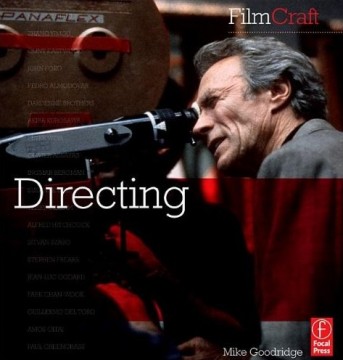
Oscar-nominated director Guillermo del Toro has been in the craft of filmmaking since he was 16, filling roles as diverse as P.A., assistant director and makeup effects. He made his first film Cronos at 28 and received his Academy Award-nomination in 2007 for Pan’s Labyrinth , making him one of the most prominent filmmakers to emerge from his native Mexico. In a candid interview, he explains how he learned filmmaking in author Mike Goodridge’s new book, FilmCraft: Directing . Goodridge, who until recently served as editor of Screen International and is now CEO of the international sales and financing company Protagonist Pictures wrote the book which features in-depth interviews with 16 of the world’s celebrated and respected film directors including Del Toro, Clint Eastwood ( Million Dollar Baby ) Paul Greengrass ( The Bourne Supremacy ), Peter Weir ( The Truman Show ), Terry Gilliam ( Brazil ) and Park Chan-wook ( Oldboy ). These and other filmmakers share their insights and experiences on development, storytelling/writing, working with actors and cinematographers, as well as other areas necessary to completing a successful film. In this excerpt from the book, which will be available via Amazon beginning June 15th, Guillermo del Toro gives his take on the mistakes and triumphs of his first movie as well as the first movie of other filmmaking greats, a life lesson courtesy of John Lennon, Tom Cruise’s take on filmmaking, what made him cry during his first movie, making ‘everything’ theatrical and why having “enough money” will get you, err… screwed. Director Guillermo Del Toro excerpt from FilmCraft: Directing : I came from the provinces, from Guadalajara, which is the second largest city in Mexico and nobody makes movies there. When I was a teenager, I started building relationships in Mexico City and I started as a blue-collar member of the crew. I was either a boom guy or a PA or an assistant director. I was makeup effects. I did my floor time in both TV and movies. My first professional work on a movie was at the age of 16 and I made Cronos when I was 28, so I had twelve solid years of doing just about everything in between. If somebody needed something, I would do it. I even did illegal stunt driving. But what happened is that I learned a little bit of everything and, once you put your time into exploring everything, you get to know what every piece of grip equipment is called and how many you need, and how to do post — I edited my own movies and did the post sound effects on all of them. So to some extent, directing came naturally to me from my first movie. My first movie Cronos is not in any way a perfect movie, but it’s a movie full of conviction. When you make your first movie, whatever mistakes you make are very glaring, but if you have conviction, and I would even say cinematic faith, this also shines through. I recently watched Cronos again and I thought, “I like this kid,” he has possibilities. After your first movie, with a little bit of craft, diligence, and more importantly, experience, you learn to make virtues out of some of your defects. What I mean is that any first movie has good moments, even if it is not entirely perfect. It can be a filmmaker as famous as you like, such as Stanley Kubrick, whose first film F ear and Desire (1953) is about 70 minutes long and stars Paul Mazursky. It is very stilted, very awkwardly paced, full of stuff that doesn’t work, the actors speak in a patois, and it has a very non-naturalistic rhythm. But what is incredibly fascinating is that the very stilted quality, that artificial rhythm, eventually became his trademark in later films. He bypasses it in more naturalistic films like The Killing (1956) and Paths of Glory (1957), but comes back to that type of hyperrealism or strange filtered reality in his later movies, and he is in complete control of it there. Kubrick used the tools he acquired in making other films to transform what you thought was a defect in Fear and Desire into a virtue. In my case, when I make movies in Spanish, starting with Cronos , I purposefully avoid characterizing certain things in the conventional Hollywood sense, and that comes out as a blatant defect. Specifically, I had shot a much longer film, including a whole section between the husband and wife where she noticed that he is getting younger and they start falling in love again. At night, he would come and sleep underneath her bed. But I couldn’t make it work. The way I staged it was simply too stilted and strange, and I didn’t feel comfortable leaving it as part of the movie. Even to this day, I think there is a mix of different tones in that movie. I change from the dramatic to the comedic too often. I try to do it generically, mixing horror with melodrama, and there are moments in Cronos that are really jarring for me. I sometimes allowed Ron Perlman to be too broad and it simply didn’t work. I think I did it better in my later movies. I don’t know whether that mix of genres is my trademark. One of the things that was very influential for me when I was kid was the book by Tolkien in which he discussed fairy stories in literature. I remember him saying in that book that you should make the story recognizable enough to be rooted in reality, but outlandish enough to be a flight of fancy. So I try to mix an almost prosaic approach, or at least a rigid historical context, with fantastic elements. I treat the fantasy characters very naturalistically or else I root the story in a precise context like The Devil’s Backbone or Pan’s Labyrinth , or in Cronos , post-NAFTA Mexico. As Tolkien says, when you give the audience a taste of what they can recognize, they immediately accept the rest of the concoction; it’s almost like wrapping a pill in bacon for a dog to swallow it. You need, for example, the bacon of domesticity in Cronos . I wanted to shoot that family as a very middle-class family in Mexico. I wanted a kitchen that looked like a kitchen you’d recognize, a really ordinary bedroom and very mild, neat clothing design. Out of that middle-class reality, I wanted a single anomaly — the mechanical clockwork scarab device. If the audience believes that this abnormality is as real as it can be, they will respond to the story. Many directors think that the more you keep the creature in the shadows and don’t show it, the better it is, but I don’t believe that. I don’t have monsters in my movies, I have characters, so I shoot the monsters as characters. For example, in Hellboy , I shot Abe Sapien, the fish-man, like any other actor. I didn’t fuss about it, I shot the monster with the same conviction that I would shoot Cary Grant or Brad Pitt; in other words, if I shot it in a different way than I would the regular actors, I would be making a mistake. What I do in every movie very consciously is to ensure that this anomaly is shot two notches above actual reality, so it’s weird enough to accommodate the monster, but not too stylistic that it’s unrecognizable. For example, everything you see in Pan’s Labyrinth — the house, the furniture — is fabricated to be slightly more theatrical than it needed to be. The uniforms for the captain and his guards are exactly what were worn at the time, but we tweaked the cut and the collar to make them more theatrical. Everything around the creatures, therefore, exists like a terrarium for them to live in so that when it comes to shoot them, I can shoot them in a normal way. I was very nervous on Cronos , but the adrenaline carried me through. Directing is almost like keeping four balls in the air on a monocycle with a train approaching behind you. There were days, for example, like the scene with the husband sleeping under the bed, where I knew I’d fucked up. The makeup was wrong and we didn’t have time to go back and change it, we didn’t even have time to test it. The light was wrong. Everything was wrong, and I arrived home to my wife that night and cried. I said that I had destroyed the scene I had dreamt of for years. I didn’t have the luxury of reshoots. Of course, you can only break down in front of your wife, or your partner, or your parents. In front of the staff on the film, you need to keep total control. You don’t want anyone thinking the general is afraid—you have to be leading the charge. There are two very lonely positions on a movie set: the actor and the director. The cinematographer has a close liaison with the director, the gaffer, the grip, etc. The director is alone on one end of the lens and the actor is alone on the other. That’s why the great, most satisfying partnerships on set are when a director and actor come to love and support each other. Being from Mexico is an enormous part of who I am as a filmmaker. The panache, the sense of melodrama, and the madness I have in my movies that allows me to mix historical events with fictional creatures, all comes from an almost surreal Mexican sensibility. I’m really prone to melodrama. This comes from watching Mexican melodrama obsessively, to the point where I was watching The Devil’s Backbone with a Spanish architect and the architect said to me that it was more Mexico than Spain; the characters were acting like Latin characters. If my father hadn’t been kidnapped in 1998 then frankly I would be making Mexican movies interspersed with the European and American. Since 1998, I cannot go back to Mexico because I would be too visible a target, especially when there is a printed schedule of where I am going to be every day for the entire run of a shoot. I think of the audience every second during writing; I think of them as me. I question how I would understand something, or what would make me feel a certain way. When I’m shooting a scene that moves the characters, I weep, I feel the emotion on set, so when I am writing it, if it doesn’t work, I don’t print it out until I have that feeling. Creating tension is a different skill to creating fear. For fear, you try to create atmosphere. You ensure the scene is alive visually before anything is added, then you craft the silence very carefully because silence often equals fear. Rarely can you elicit fear with music unless the music is used very discreetly, underlining the scene in a way that is almost invisible. When the Pale Man appears in Pan’s Labyrinth there is music, but Javier [Navarrete, the film’s composer] is almost just underlining his movements. It becomes like a sound effect. Silence is one of the things that you learn to craft the most because there is never real silence in a movie; you always have distant wind, cars, dogs barking, or crickets in the distance. I think really well-crafted silence creates tension, and by the same token an empty frame, an empty corridor for example — if it’s empty in the right, creepy way — is a tool. You know if a scene’s not working on set, and as you get older and craftier, you can learn to re-direct it in post. You can patch it up in your coverage and recover it—you can even end up with a great scene because beauty rarely comes out of perfection. For something to work, I think it has to come out of emotional turmoil. You can’t encapsulate the perfect melody; a huge component of it is instinctive. Then, of course, there are the actors. Many times you storyboard and rehearse with the actor, and then you come to the scene and it’s not working. But then you try something different and something suddenly happens that makes it work. It’s very raw. It’s funny, we enthrone this idea of the perfect filmmaker, this myth of the all controlling, all-seeing, all-encompassing person, but even for Kubrick or von Stroheim there is a part of the process that is entirely instinctive. I once asked Tom Cruise about it and he confirmed that Kubrick often found things in a panic on Eyes Wide Shut (1999). I love imperfection. I have been friends with James Cameron since 1992 and because he is so incredibly precise, people sometimes don’t think he is human, but the beauty of being a close friend is that I’ve seen him burn the midnight oil and toil and sweat. These imperfections in the façade are what make the work more admirable. Art depends on that human touch that doesn’t make perfection; in fact the filmmakers and films I am most attracted to require a level of human imperfection. On the big effects films, you try to prepare thoroughly but there are always surprises. John Lennon said, “Life is what happens when you are making other plans” and I think film is what happens when you are making other plans. You come onto the set and either the actor or the material doesn’t come out as you expect and the film comes out better for it. If you have either experience or inspiration, one of the two will get you through. One you accumulate through the years, the other you cherish. As a young filmmaker you’re full of inspiration and if you are unlucky you are only trading it in for experience. You need to remain on dangerous ground to continue to be inspired. I am always tackling things I shouldn’t tackle and meddling with stuff I shouldn’t meddle with. You never have enough money. If you ever feel one day you have enough money, that’s the day you’re fucked. FilmCraft: Directing is available via Amazon beginning June 15th. Follow Movieline on Twitter .
Also in Wednesday morning’s news round up, Warner Bros. is taking a cue from Marvel’s Avengers with its own superhero lineup, a J.D. Salinger adaptation is in the make for the big screen, a Frozen thriller pick up for North America and the rising fortunes of non-U.S. actors as big budget films target international markets. ARC Picks The Frozen for North America Psychological thriller The Frozen has been picked up by ARC Entertainment. The directorial debut of Andrew Hyatt and starring Brit Morgan, the film centers on two people who take an ill-advised winter camping trip. “After a snowmobile accident, the couple is left stranded in the woods where they are forced to survive the elements while waiting for help to arrive. In a twist of fate, Mike disappears and Emma is left on her own not only to battle the weather, but also to elude a mysterious man (Segan) who has been tracking her through the forest.” Around the ‘net… Dark Knight Rises Ticket Sales Set for Monday The Batman movie still has 45 days before it hits screens, but for those wanting to make extra sure they’re in a theater opening night for the final Christopher Nolan epic can get reserve their tickets via the internet at noon June 11th, EW reports . Hot Writer Pushing Justice League at Warner Bros. The Avengers is a punch out for Disney and Marvel, but Warner Bros is stealthily getting its own superhero brass, with Will Beall set to write Justice League based on the WB-held series of DC Comics, Variety reports . My Salinger Year Set for Adaptation River Road Entertainment has optioned screen rights to Joanna Smith Rakoff’s My Salinger Year and Emma Forrest will adapt the novel. The story centers on the author’s own experience when she took a clerical job at an agency that represented The Catcher in the Rye author J.D. Salinger and their unexpected relationship, Deadline reports . Journey 2 Director Ponders Disaster Movie San Andreas 3D Brad Peyton is in talks to direct New Line’s San Andreas 3D . The plot is secret, but San Andreas is the name of California’s biggest fault lines, so let your imagination go wild… The budget is said to be in the $100 million range (now it can go really wild), THR reports . A Brave New World for non-U.S. Film Stars Noomi Rapace, Idris Elba, Gael García Bernal. Those are some of stars who could capitalize as big-budget filmmaking increasingly targets new markets, The Guardian reports .
The Perks of Being a Wallflower stars Three Musketeers cutie Logan Lerman as introverted-but-adorbs high school freshman Charlie (Lerman), who enters teen society searching for like-minded “misfits” and finds Emma Watson and Ezra Miller (last seen making a very different impression on his classmates in We Need to Talk About Kevin ). Is Charlie going to go all Angela Chase, narrating the brave new world of busting weird dance moves at Homecoming and standing up to bullies and shouting ironically at cheerleaders? If you’ve read Stephen Chbosky’s source novel of the same name, you already know what to expect — and it’s not quite as My So-Called Life -y as the trailer suggests. (Chbosky also writes and directs the film, with John Malkovich among producers who are onboard.) While we get a glimpse here of Paul Rudd as Charlie’s teacher, there’s not much of a peek at the rest of the cast, including Nicholas Braun, Johnny Simmons, Kate Walsh, Dylan McDermott, and Melanie Lynskey. Still… Verdict: In for the triple threat of young talent that is Lerman, Watson, and Miller alone. Bring the angst, kids. The Perks of Being a Wallflower hits theaters on September 14.