Tag Archives: environment

David Weigel Explains Away Journolist E-mails by Claiming to be a Jerk

Former Washington Post writer David Weigel has attempted to explain away his Journolist e-mails attacking conservatives by claiming he was a trash-talking thoughtless jerk. If you think that self-damnation was bad, at least it was much better than admitting something even closer to the truth which would be that he deviously allowed people to think of him as a conservative. In fact, he is still lamely making that conservative claim in his Big Journalism article but first the jerk confession: …I treated the list like a dive bar, swaggering in and popping off about what was “really” happening out there, and snarking at conservatives. Why did I want these people to like me so much? Why did I assume that I needed to crack wise and rant about people who, usually for no more than five minutes were getting on my nerves? Because I was stupid and arrogant, and needlessly mean… Unfortunately, Weigel proved that he still remains a jerk by continuing to claim that he was somehow conservative: I interned at the libertarian Center for Individual Rights in the summer of 2001. I supported the Iraq War and crashed an anti-war protest on my campus. I voted in Republican primaries in 2002 and 2004. (Since I was in Illinois, I voted in 2004 for Jack Ryan to get the GOP’s nomination for Senate, to oppose Barack Obama. I’m better off than one of those guys.) Weigel still tries to convince us of his one-time conservative credentials despite the fact that in the three presidential elections since 2000 he voted for Nader, Kerry, and Obama. Gee! What a “conservative!” Despite his pretend conservatism, Weigel just can’t seem to understand why people think he has misrepresented himself: Still, this was hubris. It was the hubris of someone who rose — objectively speaking — a bit too fast, and someone who misunderstood a few things about his trade. It was also the hubris of someone who thought the best way to be annoyed about something was to do it publicly. This is the reason I’m surprised at commentary accusing me of misrepresenting myself. Except that liberal Journolist was supposed to be private and Weigel wrote there in the expectation that it would remain so. Dave’s misrepresentation mode continues. 

Read more here:
David Weigel Explains Away Journolist E-mails by Claiming to be a Jerk

Once Again, ‘Many Peaceful’ = ‘Some Violent’ When It Comes to Leftist Protesters in the NY Times

Violent protesters set fire to police cars and shattered store-front windows at the Group of 20 economic summit in Toronto this weekend. How did the New York Times, so skittish about the hypothetical threat of non-existent Tea Party violence from the right, react to actual violence committed by political protesters by the left-wing and anarchist groups? With more snort-worthy apologias for left-wing protesters being overwhelmingly “peaceful” in numerical terms Reporter Randal Archibold made a similar claim in his April 24 story from Phoenix at a protest against Arizona’s anti-immigration law, claiming that “hundreds of demonstrators massed, mostly peacefully, at the capitol plaza.” Local news in Phoenix reported three people were arrested during the immigration rally, including two seen throwing water bottles at police, and videos showed more lawlessness on display. The same defensive tone is present in Monday’s Business section story from Toronto, with the ludicrous headline ” Police in Toronto Criticized for Treatment of Protesters, Many Peaceful ,” by Ian Austen. Austen’s story is illustrated with a photo from the European Pressphoto Agency showing two policemen arresting a woman, but not photos shown elsewhere of burning cars, like the Associated Press photo by Frank Gunn above. Austen managed to fault the police both for initial passivity and subsequent overreaction: An escalation of aggressive police tactics toward even apparently peaceful protests at the Group of 20 summit meeting led to calls for a review of security activities . After allowing a small group of people to burn police cars and smash windows unimpeded on Saturday afternoon, many of the 20,000 police officers deployed in Toronto changed tactics that evening and during the last day of the gathering. There was a notable increase in both the numbers of police officers who surrounded demonstrations as well as more use of tear gas and rubber or plastic bullets. At the same time, there was a visible drop in the number of demonstrators in the city streets. As a result, the violence by some demonstrators that marred the opening of the Group of 20 meeting did not reappear on Sunday, and more than 600 people were arrested Saturday and Sunday. The Times seemed to miss the obvious connection: More police and more arrests = less crime. It’s one the Times has missed before, most notoriously in this headline from September 28, 1997: ” Crime Keeps On Falling; but Prisons Keep On Filling .” Unlike Archibold’s Arizona coverage, Austen didn’t ignore the violence on display in Toronto, though he did offer the same ludicrous apologia to this group of left-wing protesters that Archibold did to the ones in Arizona, writing that ” the overwhelming majority…were peaceful .” The violence was not exceptional compared with problems at previous international meetings, like the World Trade Organization’s gathering in Seattle in 1999 . Toronto’s shopping district sustained the greatest damage but quickly became something of a tourist attraction. But it was nevertheless extraordinary for Toronto, a city with little history of violent protests. David Miller, the city’s mayor, was among the many who swiftly condemned it. “Does today send signals about Toronto that I wish weren’t sent?” he said on Saturday evening. “Absolutely.” …. William Blair, the city’s police chief, did not respond directly to the widespread criticism over the lack of police response during the period of violence. But at a news conference, he suggested that officers were deliberately held back. The protesters, the overwhelming majority of whom were peaceful , promoted a variety of causes. Many were challenging the legitimacy of the Group of 20 and proposing that governments work through the United Nations. Others championed specific issues, particularly in relation to human rights and the environment.

Link:
Once Again, ‘Many Peaceful’ = ‘Some Violent’ When It Comes to Leftist Protesters in the NY Times

CNN’s Acosta and Costello Parrot Obama Talking Points on Offshore Drilling Moratorium

CNN’s Carol Costello and Jim Acosta revealed their disdain for a federal judge’s decision to overturn the Obama administration’s 6-month moratorium on offshore drilling when the expert they interviewed on the June 25 “American Morning” made a convincing case against the moratorium. Tom Bower, an author who has written extensively on the oil industry, tried to explain the devastating economic impact the moratorium would inflict on an already beleaguered industry, but Costello and Acosta were blinded by ideology: “But isn’t safety more important than money?” queried Costello. “Because, I mean, these oil companies make massive amounts of money each day.” Bower, author of “Oil, Money, Politics and Power in the 21st Century,” drew the ire of Costello and Acosta for calling the Gulf oil spill an “aberration” and noting the oil industry’s “phenomenal” overall safety record.      “But that’s what they say, it is just an aberration, but the BP disaster happened,” argued Costello. “Nobody thought that could happen either. So, it’s just not logical, is it, that argument?” “What do you mean they’re doing a very good job on the whole down there?” demanded Acosta. “I don’t know what that means. In what sense? You know, I mean, this entire body of water is at risk right now. It has been poisoned. And I’m just curious, what do you mean by doing a good job?” Taking aim at Republicans and moderate Democrats like Sen. Mary Landrieu (La.) who continue to support offshore drilling, Acosta asked Bower: “I’m just curious, you know, is there a little bit of a having your cake and eat it too, when it comes to some of these Gulf Coast politicians saying we want the jobs and the protection from any environmental impact at the same time?” Loaded questions designed to advance the White House’s narrative reflect Acosta’s underlying liberal tendencies. Costello also parroted the Obama administration’s narrative: Well, let’s talk about this moratorium because, and I’m just going to play devil’s advocate here. Let’s say — I mean, what’s wrong with these oil companies to stop drilling in the deepwater, these 33 wells, for four more months? Because that’s all we’re talking about when you take the moratorium in its entirety. What’s wrong with that? Bower’s response, unlike Costello’s sputtering rant, was succinct and nonpartisan: Well, the cost. We see each oil platform, each rig costs at least half a million dollars a day, and often more, and they just can’t afford that sort of equipment lying idle and the contractors will find other places around the world who want the rigs, and they’ll just take them there, so there’s just no choice. After dismissing the expert, Acosta, turning to Costello to offer his informed opinion, lamented that “it just doesn’t feel right, you know, to say that as a whole, the industry’s just doing a great job down there.” The transcript of the segment can be found below: CNN American Morning 6/25/10 6:41 a.m. CAROL COSTELLO, co-host: The Obama administration loses another effort to put a moratorium on drilling in the Gulf. But does lifting that ban serve our nation’s best interests? You know, Bonnie is talking about this storm coming in. JIM ACOSTA, co-host: Yeah.                      COSTELLO: Wouldn’t it be a good idea if they continue to stop drilling on those 33 rigs — you know that are affected by this? ACOSTA: It’s another potential complication for this whole thing. COSTELLO: Yes. We’re going to get really into that with author Tom Bower, who has written a lot on BP and the oil industry. It’s 41 minutes past the hour. ACOSTA: Welcome back to the “Most News in the Morning.” You know, a showdown looms this morning over offshore drilling. A federal judge denied the administration’s request to postpone an order that would end a six-month moratorium. COSTELLO: That means if anyone wants to start up the deep water drills, they certainly can, but the White House says it will introduce a new ban in a few days. We wanted to know what a moratorium really means for safety though. Is it really necessary? Joining us from London this morning: Tom Bower, who is the author of “Oil, Money, Politics and Power in the 21st Century.” Good morning, sir. TOM BOWER, author of “Oil, Money, Politics and Power in the 21st Century”: Good morning. COSTELLO: Well, let’s talk about this moratorium because, and I’m just going to play devil’s advocate here. Let’s say — I mean, what’s wrong with these oil companies to stop drilling in the deepwater, these 33 wells, for four more months? Because that’s all we’re talking about when you take the moratorium in its entirety. What’s wrong with that? BOWER: Well, the cost. We see each oil platform, each rig costs at least half a million dollars a day, and often more, and they just can’t afford that sort of equipment lying idle and the contractors will find other places around the world who want the rigs, and they’ll just take them there, so there’s just no choice. COSTELLO: But isn’t safety more important than money? Because, I mean, these oil companies make massive amounts of money each day. BOWER: Well of course, safety is critical. As we’ve now seen, the catastrophe follows if these are not safe. But on the whole, all the oil corporations are working safely. This is just an aberration. COSTELLO: But that’s what they say, it is just an aberration, but the BP disaster happened. Nobody thought that could happen either. So, it’s just not logical, is it, that argument? BOWER: We don’t stop driving on the road because of a car crash. People carry on driving and people walk up staircases and fall down them, but we still walk up stairs. So in the end — ACOSTA: Totally different when you’re talking about an entire body of water as important as the Gulf of Mexico. I mean, the question that I have is we’ve heard the governor of Louisiana, and I’m sure you watch him closely as well, Bobby Jindal, you know, talk about why this moratorium should be lifted for the sake of jobs and so forth. But at the same time, the governor is saying we need to built berms, we need to do all these other things to protect our coastline, and I’m just curious, you know, is there a little bit of a having your cake and eat it, too, when it comes to some of these Gulf Coast politicians saying we want the jobs and the protection from any environmental impact at the same time? BOWER: Look, I’m not an apologist for the oil industry, but I must tell you that on the whole, their record is very good. And America needs the oil, it needs the gas, and the product in the Gulf has been superb, and they’re doing very good job down there on the whole. So, you know, just like we don’t stop fly when a plane crashes, you just got to improve the regulation — ACOSTA: What do you mean they’re doing a very good job on the whole down there? I don’t know what that means. In what sense? You know, I mean, this entire body of water is at risk right now. It has been poisoned. And I’m just curious, what do you mean by doing a good job? Because the other day, there were CEOs from the entire oil industry testifying on Capitol Hill saying that if they were to also engage in deepwater oil drilling, they essentially have the same plan of action in place if there is a major catastrophe, which is, well, we just have to, you know, see if we can plug the hole. BOWER: Look, again, I can only say I’m not an apologist for the industry, but they are extracting amazing amounts of oil from the most difficult conditions. You got to ask why they’re in the Gulf and not getting it from Mexico, Venezuela or Russia. That’s one of the great issues. ACOSTA: Are you saying that we basically put ourselves in this position? I mean, is that your point? BOWER: I think the countries have gotten the oil to put America in that position. But on the whole, they have done a very good job in the Gulf and the executives who testified on the Hill like (INAUDIBLE) have not had these sort of catastrophes that BP is just having. So, I got to repeat on the whole, they’ve done an amazing job to find oil and gas there, and they are bringing it out safely. The point is that the administration discovered that the regulators, the MMS have done a very poor job so the government has got some of the blame here. They’ve let the oil corporations get away with murder for too long. They’ve now learned a lesson. They’ll clearly have much better regulations down in the Gulf and elsewhere as well, because, believe me, they’re going to have to start digging for oil and drilling for oil off other coastlines around the U.S. again in the near future because America needs the oil. COSTELLO: Funny you mentioned that because BP is doing that, you know, off the shores of Alaska and it’s doing this maneuver where they’re drilling it’s three miles offshore, they drilling down very deeply, and then they’re going to make a horizontal line, something that’s never been done before. So, BP, itself, is being allowed to go ahead with this process when we know that BP doesn’t have it together when it comes to extreme disasters and how to fix things. BOWER: You’re absolutely right. The horizontal drilling is really quite well established now. There’s nothing new on that. That is a very effective way of getting huge amounts of oil out which previously would have got lost. But I think BP has learned a lesson. I don’t think they’re going to make that sort of error again. They’re going to be more careful than ever. They can’t afford another catastrophe nor can any other oil corporation. I mean, you just got to set the seed that of course oil is a very risky business as I show in the book. What they’ve done down in the Gulf is quite phenomenal. This is a catastrophe which never should have happened. Everyone is learning lessons. They’re going to do their best to prevent it from happening again, but the government has got as much responsibility now as the oil corporations to make sure that the regulations are there and enforced. COSTELLO: Tom Bower, many thanks to you this morning. We appreciate it. BOWER: Pleasure. ACOSTA: I’m not sure I agree that they’re doing a bang-up job down there, but that’s just my take on it. COSTELLO: You mean BP or the oil industry as a whole? Because I think he was separating them out. ACOSTA: I think he was trying to separate it, but it just doesn’t feel right, you know, to say that as a whole, the industry’s just doing a great job down there. COSTELLO: It’s sort of like you have to trust them that catastrophes similar to what’s happening with BP doesn’t happen again. And the oil companies are saying, “well, we have a great safety record.” But BP said that, too. ACOSTA: Yes. We can’t go on like this. We’ll move on. –Alex Fitzsimmons is a News Analysis intern at the Media Research Center. Click here to follow you on Twitter.

Read more:
CNN’s Acosta and Costello Parrot Obama Talking Points on Offshore Drilling Moratorium


Al Gore Accused

The alleged incident took place at the Hotel Lucia Oct. 24, after the masseuse, 54, was called by the hotel to administer a late night massage to a “VIP” client, who was later identified as Al Gore, 62, the former U.S. Vice President, senator from Tennessee and Nobel Prize-winning advocate for the environment. An Oregon masseuse filed a complaint last year accusing Al Gore of s-exual abuse following a nearly three-hour massage session at an upscale Portland hotel in 2006, reports the Portland O

Read the original here:
Al Gore Accused

Urgent Priorities and Common Sense in the Gulf

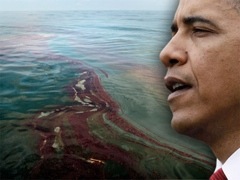
The ramifications of the oil spill in the Gulf of Mexico have not even begun to surface. We will be dealing with the ecological damage for years as the prime nesting grounds for shrimp, oysters and countless other varieties of sea life are destroyed by the leak at the bottom of the ocean that nobody seems to be able to deal with. The economic damage is another entirely different animal that is going to rock the Gulf Coast and head inland with reverberations that will be seriously felt around the whole country. The Obama administration is completely lost on how to deal with the spill and the president seems helpless except to appoint commissions and place blame anywhere except 1600 Pennsylvania Avenue. I know that an oil leak at this depth has never had to be dealt with before and is a seriously difficult thing to fix, but somewhere on this earth, somebody knows how to fix it and it’s high time to find him or her. The other part of the equation, the cleanup, is a horse of a different color and there are literally hundreds of ways to go about that, practical and simple methods that seem to either go over or under Obama’s head. I’ve seen demonstrations on television using things as mundane as the hay I feed my animals to clean up the oil. There are fabrics that have been developed that soak up the oil and reject the water and there is any number of machines people have come forward with, but none of them are appearing on the horrible scene on the Gulf Coast beaches. Why is Obama afraid to let common citizens test the methods they’ve come up with, what could it possibly hurt. Let’s just use a little cowboy logic in this situation. Bring all these people with ideas to the Gulf Coast, give them all a stretch of water to work with and see which ones work the best. That’s so simple and what can it hurt? Let the people try out their ideas. If they don’t work they can simply be disregarded without any harm to anybody. If they work the can be deployed en mass. I know the walls of the White House are covered with ivy league diplomas and Nobel Prizes, but there isn’t enough common sense in that bunch to change a spark plug. It’s time for the politicians to stop using this crisis for an excuse to raise our taxes and advance their confounded socialist agenda. It’s time for them to get out of the way and let the people with the practical ideas have a go at cleaning up this mess. And by the way President Obama, the moratorium on drilling in the Gulf is nothing less than pure dumb. You’re taking the last vestige of economic hope away from people who have no way left to make a living because no matter how much money British Petroleum ponies up, it’s going to run out way before those shrimp and oyster beds come back and long before the tourists start streaming back to the Gulf Coast. Stopping the drilling is nothing less than cheap political pandering and another sign of the total lack of experience in your administration. Just more proof of your lack of understanding and just how baffled you are by your job. You’re lost, Mr. President. Why don’t you admit it and look for some help among the great, unwashed masses. I think you’d find that we’re pretty dern good people who have been solving problems for generations. Maybe you can’t ‘plug the damn hole” but you can get out of the way and let some people with the common sense your administration lacks come in and do something right for a change. And believe me, it would really be a change.

Read this article:
Urgent Priorities and Common Sense in the Gulf

CNN’s Carol Costello Hypes Up Greenpeace, Sierra Club, and Liberal Environmental Agenda

On the June 24 “American Morning,” CNN’s Carol Costello trumpeted a “revitalized” environmental movement that is hoping the Gulf oil spill will “change the way we feel about oil” and is aggressively lobbying Congress to pass radical climate change legislation. Previewing the “Gut Check” segment, Costello gleefully teased, “Coming up next, environmentalists are revitalized and it’s over the Gulf oil spill. Could this disaster be what we need in this country to change the way we feel about oil?” In lockstep with the Left’s environmental agenda, the fill-in anchor pondered whether the Gulf oil spill would crystallize support for a climate bill or would “it be back to business as usual?” Costello articulated the same phrase environmental groups frequently employ to manufacture a false sense of urgency around their liberal initiatives. Interviewing David Rauschkolb, founder of Hands Across the Sand, a liberal group opposed to offshore drilling, Costello praised the forerunner to Rauschkolb’s new group – Earth Day – for “strengthening the Clean Air Act and helping President Nixon create the Environmental Protection Agency.” Costello did not reach out to conservative critics who argue that draconian environmental regulations stymie economic growth and breed unemployment. Costello also claimed that the Sierra Club, a juggernaut in the environmental movement, capitalized on conservative criticism to generate public support for liberal causes. “When Rush Limbaugh blamed environmentalists for forcing onshore drilling offshore, the Sierra Club used Limbaugh’s comments to raise $120,000 and 110,000 signatures for climate legislation,” contended Costello, who failed to address the substance of the conservative talk show host’s argument. Further hyping the fringe environmental movement and its toxic agenda, Costello noted Clean Energy Works’s robust lobbying campaign for “clean energy legislation” and GreenPeace’s contest to design a new BP logo, without labeling either of these liberal organizations appropriately. Back in the studio, co-host John Roberts sensibly stated that America “can’t stop drilling because we’re not going to stop driving cars.” Channeling her inner liberal, Costello would not let her colleague’s simple logic deprive her of her wide-eyed optimism: “That’s true but will it drive something like climate change legislation? We just don’t know yet. That’s what environmentalists are hoping.” A full transcript of the segment can be found below: CNN American Morning 6/24/10 8:37 a.m. CAROL COSTELLO, co-host: Coming up next, environmentalists are revitalized and it’s over the Gulf oil spill. Could this disaster be what we need in this country to change the way we feel about oil? We’ll try to answer that question in a “Gut Check” coming up next. It’s 37 minutes past the hour. JOHN ROBERTS, co-host: 41 minutes after the hour. A growing number of environmentalists are hoping that the oil crisis in the Gulf will change how Americans treat the environment. We’ve seen that kind of quick reaction after disasters in the past. COSTELLO: I know, you know, Earth Day was born out of an oil disaster. So we wondered: will people really care? Will it change the way we feel about oil or will it be back to business as usual? A “Gut Check” for you this morning.              It’s called Hands Across the Sand. Back in February it drew 10,000 Floridians in protest of offshore drilling. This weekend, Hands says it goes international: 599 American cities will take part, as will 20 countries. DAVID RAUSCHKOLB, Hands Across the Sand: I believe this is a huge opportunity for us and it’s time we take control of our energy future. COSTELLO: David Rauschkolb hopes Hands will be the catalyst Earth Day was back in 1970. It was born after an oil spill in California and is credited for strengthening the Clean Air Act and helping President Nixon create the Environmental Protection Agency. The Clean Energy Works Campaign has hopes too – its launched an ad campaign pushing for clean energy legislation. GreenPeace is actively using the spill as a catalyst too, its members so intent to do something a contest to design a new BP logo has attracted half a million visitors to its Web site. The Sierra Club site is hot too. When Rush Limbaugh blamed environmentalists for forcing onshore drilling offshore… RUSH LIMBAUGH, conservative radio host: When do we ask the Sierra Club to pick up the tab for this leak? COSTELLO:…the Sierra Club used Limbaugh’s comments to raise $120,000 and 110,000 signatures for climate legislation. MICHAEL BRUNE, Sierra Club: This is our chance to actually move beyond oil and the outstanding question – the question that remains – is whether or not President Obama will seize this opportunity and get us off oil once and for all. COSTELLO: While all the passion sounds good for who critics would call “tree huggers,” is it real? Psychologist Jeff Gardere says while oiled birds, dirtied beaches, and black tides will raise awareness, it may not last. After all, there are government regulators already in place who are supposed to prevent disasters like this and didn’t. So why bother? Environmentalists get that but say this disaster will cut through the cynicism.                  BRUNE: We’ve set the ocean on fire, we’ve put thousands of fishermen and women out of work. The coastal tourism economy is collapsing and all of this is happening in slow motion. COSTELLO: It may be happening in slow motion, but Americans have a complicated relationship with oil, and nowhere is that better demonstrated than in Louisiana – they’re angry at BP but they sure don’t want the oil industry to go away. ROBERTS: You’re right, there’s so many people down there – one side of the family is in the fishing industry or the  tourism industry and the other side of the family is in the oil industry. They know that they have to co-exist. I mean, anything that raises awareness of the environment is a good thing, but you know, you’ve got to have – you can’t stop drilling because we’re not going to stop driving cars. COSTELLO: That’s true but will it drive something like climate change legislation? We just don’t know yet. That’s what environmentalists are hoping. –Alex Fitzsimmons is a News Analysis intern at the Media Research Center. Click here to follow him on Twitter.

Excerpt from:
CNN’s Carol Costello Hypes Up Greenpeace, Sierra Club, and Liberal Environmental Agenda

Supreme Court Case a Defeat for Monsanto’s Ambitions

It should be no surprise that Monsanto's PR machine is working hard to spin the truth in this morning's decision in the first-ever Supreme Court case on genetically engineered crops (Monsanto v. Geertson Seed Farms). Despite what the biotech seed giant is claiming, today's ruling isn't close to the victory they were hoping for. The 7-1 decision issued today by the Supreme Court was on the appeal of the Center for Food Safety's (CFS) successful suit, which resulted in a ban on GMO alfalfa. And, while the High Court ruled in favor of Monsanto by reversing an injunction that was part of the lower court's decision, more importantly, it also ruled that the ban on GMO alfalfa remains intact, and that the planting and sale of GMO alfalfa remains illegal. This point, which seems to be lost in some news reports, is actually a huge victory for the Center for Food Safety and – most importantly – for the farmers and consumers who we represent. The Supreme Court ruled that an injunction against planting was unnecessary since, under lower courts' rulings, Roundup Ready Alfalfa became a regulated item and illegal to plant. In other words, the injunction was “overkill' because our victory in lower federal court determined that USDA violated the National Environmental Policy Act and other environmental laws when it approved Roundup Ready alfalfa. The court felt that voiding the USDA's decision to make the crop legally available for sale was enough. A different ruling could have had far-reaching ramifications that might have extended beyond our borders, affecting the health and status of world markets for U.S. alfalfa, and impacting the fastest growing sector of the US agriculture market – organic. But the court clearly saw that, and opted instead to rule very narrowly. And yet, Monsanto is out there in a public statement saying that they've won a great victory. They claim that they're ready to sell Roundup Ready Alfalfa seeds now, and that they hope that their farmers should be able to plant by fall 2010. It's a canny statement, but neither of those potential situations is by any means possible at this point. The bottom line: the ban on planting Roundup Ready Alfalfa still stands. The Center is victorious in this case in several other ways: most importantly, the High Court did not rule on several arguments presented by Monsanto about the application of federal environmental law. As a result, the Court did not make any ruling that could have been hurtful to National Environmental Policy Act or any other environmental laws. In addition, the Court opinion supported the Center's argument that gene flow is a serious environmental and economic threat. This means that genetic contamination from GMOs can still be considered harm under the law, both from an environmental and economic perspective. This Court opinion is in many ways a victory for the environment, the Center for Food Safety, for farmers and for consumers and a defeat for Monsanto's hopes of a green light. To represent this opinion in any other way is just spin. added by: treewolf39

MSNBC Looks to Lefty Ed Schultz for Reaction on Obama’s ‘Brilliant’ Firing of McChrystal

Only 70 minutes after President Obama explained his decision to fire General Stanley McChrystal, Wednesday, MSNBC turned to leftist host Ed Schultz for analysis. Schultz gushed that the decision proved Obama is “brilliant on the basics.” He enthused, ” Well, as commander in chief, I think it’s probably President Obama’s finest hour ,” because it displayed toughness. Host Tamron Hall knocked McChrystal, referencing his role in the investigation of Army Ranger Pat Tillman. She derided, ” So, we know that McChrystal has a lot of, if you will, Xs on his report card. ” Hall and Schultz continued to frame the discussion from how it impacted the left. She worried, “For those on the left and progressives who are not happy with this war this Afghanistan who were disappointed when the President decided to commit more troops, what does that say that he’s emphasizing that this is not about policy, that he’s committed to the direction he’s chosen with this unpopular war?” Later in the hour, Hall brought on Ryan Grimm of the liberal Huffington Post to discuss McChrystal. MSNBC apparently spans the spectrum of the left and the far left. A transcript of the June 23 segment, which aired at 2:22pm EDT, follows: TAMRON HALL: We’re getting more reaction to the breaking news that top U.S. Commander in Afghanistan General Stanley McChrystal has been relieved of his command. He’s said to be replaced by General David Petraeus. Let’s bring in MSNBC’s Ed Schultz, the host of the Ed Show to react to it. Ed, I know you’re listening to a lot of callers on your radio show. You’ve got thoughts on this. What do you make of the President’s decision and what are the callers saying? ED SCHULTZ: Well, as commander in chief, I think it’s probably President Obama’s finest hour, because he’s answering a lot of critics with about how you wasn’t tough enough or couldn’t make a decision. Didn’t have any experience. This man went back to the basics. The President showed us that he’s brilliant on the basics. It’s about team. It’s about the civilian control, it’s about the democracy and how we work. And we’re not going to have anybody in a position of leadership and authority to go off and do what President- do what General McChrystal did. So I think the President was very clear and I personally got a sense in watching the President today that, you know, it just wasn’t the Rolling Stone article. It’s like there was other stuff there. That there’s a lot of stuff- HALL: Well, we know what happened last fall in London with the remarks made there. Also, the Pat Tillman investigation and what it has revealed, as well. So, we know that McChrystal has a lot of, if you will, Xs on his report card. SCHULTZ: True. And- But even beyond those as we know publicly there’s somewhat of a pattern there, I just got a sense that there was a little bit more and the President had somewhat of an angst about him. You know, I’ve had enough of this. He actually went back and paralleled a quote of President Truman about, you know, it’s not one person, not one war, something like that. But the President went to the basics: Trust, loyalty, the conduct code, deep rooted with the privates. All the way through, the discipline. You lose the discipline, you lose the break down of completing the mission and you compromise the mission. And now of course the story is General Petraeus, who I think, ironically, is probably going to get more bipartisan support than anything else in Washington. HALL: [Laughs] And you very well may be right on that as he’s been praised by Republicans many times over and some Democrats. But, let me ask you this: People talked about and have talked about the President’s response to the oil disaster. The critics say he’s shown weakness. His numbers show that most Americans are not confidence in the way he’s handled this. Where does this position him now? I know there are two very different issue, but it is about leadership with both. SCHULTZ: Well, I think the President personally did show leadership in the gulf from day one. He’s dealing with a multinational. There were contracts in it place that had to be adhered to when there is an oil spill and certain mechanisms had to kick in. No one predicted early on what this was going to evolve to. HALL: right. SCHULTZ: The administration was lied to by BP. First they said there wasn’t that much coming out and it grew as the days went on. And I thought the proper reaction was there by the President. So, I think he’s being wrongly criticized for it. The President goes out and gets $20 billion from a company that’s butchering our environment and the Republicans are criticizing him for it. I find it absolutely amazing. It just goes to show how divided we are in this country. HALL: And let me bring up something the President said regarding the transition from McChrystal to Petraeus. He said, “This has nothing to do with policy, nothing to do with personal insult.” For those on the left and progressives who are not happy with this war this Afghanistan who were disappointed when the President decided to commit more troops, what does that say that he’s emphasizing that this is not about policy, that he’s committed to the direction he’s chosen with this unpopular war? SCHULTZ: The President wants a successful mission. He’s going to get the right people in the right place to finish the job. And I’m sure that he probably turned to General Petraeus and said this is what the mission is, can you get it done. Petraeus went along with it, obviously. It’s about team, it’s about working together. The President was very clear that he encourages debate, but he does not want division. And you certainly don’t go out and air dirty laundry. Now, your question about the left. There are a lot of Americans out there who believe that this mission is a fool’s errand in Afghanistan. We’ve got a lot of issues at home, we’re gutting our infrastructure. But the President, to me, seemed very committed today to knowing that this is the strategy that we have to follow in his best judgment to make sure that we fight the terrorists on their turf. And so I thought the President was very clear on where he’s going on this.

Continued here:
MSNBC Looks to Lefty Ed Schultz for Reaction on Obama’s ‘Brilliant’ Firing of McChrystal

Obama’s Leadership Deficit

Editor’s Note : The following originally appeared at Andrew Breitbart’s Big Hollywood . Appearing on CNN with Anderson Cooper, film director Spike Lee implored President Obama to infuse his handling of the Gulf oil spill with more emotion. Demonstrating the astute analysis we have come to expect from the director, Lee implored Obama to “one time, go off.” Perhaps he is of the same mind as Bill Maher, that the authentic black man is one who is always armed and resorts to violence and loud-talking when things do not go his way. (Note to self: On the way home from the liquor store, I must pick up my Glock from the gun shop.) Both Lee and Maher seem to share the opinion of a great many progressives that emotion is the same as leadership and that problems are most easily solved by decree. It is no mistake that following criticism by Lee and others, White House press secretary Robert Gibbs was declaring to the media that he had “seen rage from him [President Obama].” Apparently, when Obama gets angry, he clinches his jaw. Soon after the Gibbs press conference, the President showed up in Louisiana, walked the beach in shirt sleeves and then, with clenched jaw, he spoke of growing up in a culture where the water was sacred. The administration meant this to be a demonstration of leadership. However, in some quarters, this is also known as street theatre. Still seeking to enhance his “street cred,” the president then appeared on morning television, lowered his pants down below his buttocks, flashed his gold teeth, and announced that he was looking for some tail to kick. In the meantime, the oil continues to gush from the well and the resulting slick is now the size of a small state. As it turns out, sending the attorney general to Louisiana and ordering BP to “plug the damn hole” and then “going off” on national television didn’t solve the problem. If the poll numbers are to be believed, it would also appear that Americans are not impressed with how much booty a president can kick, especially if it is not accompanied by decisive action, which actually addresses the problem. Over the course of the last two months, the president has had several opportunities to take bold and determined action–to be a leader. He has dithered instead. A few of the missed opportunities: Fire-booms that were supposed to be a part of any oil-spill response were missing in action. When they were finally located there were too few to do much good. In the event of a major spill, federal responders had pre-approval to begin burning oil. They waited more than a week before doing a test-burn and then stopped. Experts have suggested that had the burning begun right away, 90% of the oil could have been burned away before it spread. Thirteen countries have offered the United States the advantage of their technical skills. To date, the Obama administration has declined to take advantage of all of this experience and expertise. The U.S. Army Corps of Engineers delayed the building of protective sand-berms until they could study the issue. The administration finally approved six berms, but only agreed to pay for one of them. Government officials say they want to first see if they work. Of course, by that time building more berms won’t do any good. Two months into the crisis, Admiral Thad Allen, the U.S. official in charge of the Gulf of Mexico crisis, (or is he?), is still talking about asking Congress for a waiver of the Jones Act, which would allow foreign vessels involved in the crisis to operate in American waters. However, that may not do much good. Louisiana boat owners who have volunteered to aid in clean-up efforts are complaining that bureaucratic red-tape is keeping them out of the water. On a positive note, the president did create another government commission. Leadership of the statesman variety–as opposed to the shirtsleeves and furrowed-brow-look-of-concern variety–would have the president with a large pair of scissors cutting through the red tape. A leader scours the private sector for the most knowledgeable folks he can find and asks for their help. He gets on the phone with our allies and says, “Yes! Please send me your experts!” He says to the governors of the Gulf States, “Tell me what you need.” Leadership is putting aside political agendas and mobilizing the power of the executive office in order to solve an immediate crisis. Leadership doesn’t always need big speeches or street corner bravado. Leadership can be quiet; it can be cool and determined. But if it isn’t focused and it isn’t active, it ain’t worth the price of admission to a “Spike Lee Joint.”

Link:
Obama’s Leadership Deficit

MSNBC’s Brewer Annoyed at Barton’s ‘Shakedown’ Reference, But Colleague Ed Schultz Used It With Pride

In a satellite interview with Rep. Charlie Melancon (D-La.) held shortly before 1 p.m. EDT today, MSNBC’s Contessa Brewer criticized Rep. Joe Barton (R-Texas) for denouncing the president pushing BP to agree to a $20-billion escrow account for oil spill damages as a “shakedown”: So, there’s Joe Barton calling the $20 billion in escrow a shakedown, and as you point out, there are people in your district who have lost their livelihoods! They wonder how they can feed their families! But yesterday, Brewer’s MSNBC colleague Ed Schultz used similar language to voice his giddy approval of President Obama’s maneuvering : President Obama! You are the dude! The president takes the heads of BP behind closed doors, shakes them down for $20 billion, and gets an apology.  President Obama went behind closed doors today with Tony Hayward and the other suits from BP and informed them it’s time to pay.  If you go by today’s results, you’d have to say the President of the United States hit it out of the park. In his own way the President of the United States took on a multinational [corporation] shook ’em down for $20 billion for the American people. President Obama got more out of BP than the Congress ever has. The day before that, just two hours before President Obama’s Oval Office address, Schultz told viewers he hoped the president would sound “like a dictator” and would rhetorically speaking, press his “boot on the neck of BP tonight.”

See the original post here:
MSNBC’s Brewer Annoyed at Barton’s ‘Shakedown’ Reference, But Colleague Ed Schultz Used It With Pride