Tag Archives: film

REVIEW: Bad Mummy! The Iron Lady Oversimplifies — and Sucks Up To — Margaret Thatcher

Phyllida Lloyd and Meryl Streep work a puny bit of flim-flammery in The Iron Lady : They turn Margaret Thatcher into a folk hero, a woman who, poor lamb, had to make sacrifices in her personal life in exchange for political power. This is a watery, artfully evasive picture, anchored by a stupendous feat of mimicry. Some people call that acting. In The Iron Lady , Streep plays Margaret Thatcher, and boy, does she play her: It’s not just the crafty prosthetics, the careful swooping of the powdery-no-color hair, the meticulously chosen jacket-and-skirt ensembles that conjure the chilly specter of the seemingly indestructible former Prime Minister of Great Britain. Everything Streep does — her strutting-pigeon walk, the way she purses her lips just so after making a particularly harsh pronouncement in the presence of her cabinet — suggests many hours’ worth of vocal exercises and scholarly dissection of video footage. Streep has obviously studied the hell out of Margaret Thatcher, but that isn’t the same as getting to the rotten core of her. The performance is neither sympathetic nor damning — it’s simply meticulous and unblinking, and it reads more as a failure of nerve than as an act of bravery. Yet Streep’s performance doesn’t exist inside a bubble, and it’s of a piece with the picture’s conception of Thatcher as a not-bad lady who actually had some good points, if you squint really hard. The Iron Lady focuses more on Thatcher’s personal and interior life, only brushing against her politics. It’s as if Lloyd and screenwriter Abi Morgan don’t want any of those old nasties — Thatcher’s crackdown on the miners’ strike of the mid-1980s, resulting in thousands of lost jobs; the institution of the poll tax; the insidious gutting of the National Health Service, at the hands of the woman who famously proclaimed “There is no society” — to intrude on their portrait of Thatcher as just a plain old grocer’s daughter with deep-rooted class insecurities and the kind of ambition that makes the male species cringe. Thatcher did, of course, make her male colleagues cringe, but The Iron Lady suggests that they cringed only because she was a threatening female, and not because they found her views politically and morally specious. It’s a bit of doublespeak that comes in handy when you’re making a picture about all that a woman must give up when she when she craves power and authority in a man’s world. Lloyd, Morgan and Streep are obsessed with those sacrifices, even though they can’t prove how authentic they might be in Thatcher’s actual brain: The picture opens, and continually returns to, Thatcher’s later, post-Prime-Minister years, as she’s toddling around at home in her housecoat and chit-chatting with her husband, Denis (played by the nearly always wonderful Jim Broadbent, who continues his track record here). She informs Denis that milk has gone up to 49p a pint — imagine! And nixes his just-for-fun idea of donning a silk turban with a suit for normal daywear. But it turns out that Denis no longer exists: He has died, and while Margaret accepts it logically, she can’t accept it emotionally. When her doctor, during a routine examination, asks her if she’s had any hallucinations recently, Streep’s Margaret flinches ever so slightly before responding, “No.” So you see, Margaret Thatcher, powerful as she was, was capable of being loved and, get this, actually loving . To a point: The story also flashes back to Thatcher’s younger days (as a teenager and young woman, she’s played by Alexandra Roach), driving away in her car to her new MP job as her two children, twins, run after the car, crying, “Mummy, don’t go!” Still, she puts the pedal to the metal — bad mummy! But that’s what you need to do if you want to run a country. The mid-period stuff in The Iron Lady focuses on Thatcher’s rise to power — by this time, she’s played by Streep, not yet obscured by age makeup, and addressing her fellow MPs in a series of prim, silly hats. When Thatcher loses the hats — as coached by her colleagues and mentors Gordon Reece (Roger Allam) and Airey Neave (Nicholas Farrell), the latter of whom would shortly thereafter be killed by an IRA bomb — she wins the general election. From there, she proceeds to choke off the power of the trade unions, stoke unemployment and institute tax policies designed to goad the poor into pulling themselves up by their bootstraps. But you don’t really see much of that in The Iron Lady , other than some cursory handwaving at the vague notion of lost jobs and montages made up of old riot footage. What you do see is Thatcher as channeled by Streep, being a tough old bird of a human being, a woman who, upon her engagement to Denis, announced, “I can’t die washing up a teacup!” Margaret Thatcher — at that point Margaret Roberts — was destined for greater things, and she got them. But Lloyd and Morgan — as well as Streep — are more fixated on the personal price Thatcher had to pay than they are on the damage she ultimately wrought. The picture reeks of sexist special pleading. The overarching tone is “Just look at what this woman had to overcome!” Lloyd might say in her defense that she wanted to make a personal portrait of Thatcher, not a political one. Clint Eastwood might say the same thing of his recent J. Edgar, which focuses more on J. Edgar Hoover’s closeted personal life and unhappiness than on the lives he destroyed in the name of patriotism. But when you’re dealing with figures whose decisions and policies have been so destructive, is it even possible to separate the personal from the political? And if it’s possible, is it advisable? The Iron Lady is a handsome-looking picture (the DP is Elliot Davis) with a handsome-looking star. Streep’s Thatcher, with those trilling, fruity vowels, that glint of superiority in her eye, is impeccable. But to what end? Streep gives us no real clues into Thatcher’s inner life — not that we necessarily want them. This is an oversimplified portrait disguised as a complex one. Nowhere in the movie is it mentioned, to suggest just one example, that Thatcher referred to those striking miners — people who were simply trying to make a living and provide for their families — as “the enemy within.” Some of us wonder, still, how Margaret Thatcher can continue to live with herself. Watching Meryl Streep walk around so ably in Thatcher’s skin isn’t enlightening; it’s more like a living nightmare.
From Brangelina to Bombs: STV’s 10 Favorite Stories of 2011

I honestly have no idea where 2011 went. I vaguely remember what follows here. There might have been more. You tell me. The Animated Oscar Index Currently in the middle of its second annual cycle, the Oscar Index is, to me, the story of the film industry’s awards race. But despite the tens of thousands of words expended every year, nothing quite sums it up like animated videos of celebrity heads floating inexorably toward golden glory. Drinking adds much to the experience, I’ve found. I Hate Brangelina: An Appreciation They’re mega-glamorous, mega-rich and mega-talented. Brad Pitt and Angelina Jolie would make me sick if they didn’t make me so goddamned happy. The $11 Question The Worst Movie EVER! dazzled everyone by enticing one solitary ticketbuyer to its debut in Los Angeles. The rest is history. Well, kind of. Anyway, this is the story of whatever the hell happened. Consider Uggie The last time someone wore a fur coat in a do-it-yourself Oscar campaign, Melissa Leo won Best Supporting Actress. Imagine what we can do for someone who deserves a statuette! Lumet Life Lessons The late Sidney Lumet was often called a humanist filmmaker, but what does that actually mean? Hint: It’s not because he directed The Wiz . Parsing out some touchstones of his philosophy amounted to one of the more satisfying exercises of the year. Collect Them All! If nothing else, Jacki Weaver’s Awards-Season Trading Card made four weeks of ridiculous design labor worth it. The “Should I See The Smurfs ?” Flow-Chart Review Behold the future of film criticism! Also: I am so sorry. Fair is Fair For the second time in three films, Marshall Curry is once again among the documentarians on the Oscar-consideration bubble. Get used to it — and here’s why. Big “Will He?” Style Despite all the trade gossip and fanboy chatter, Will Smith remains no closer to making any of the projects listed on this year’s list of Smith films you’ll likely never see. Brush up here, and place your updated 2012 bets accordingly. The Celibate Screen I stand by my airtight case for less sex at the movies. That is all. Follow S.T. VanAirsdale on Twitter . Follow Movieline on Twitter .

The rest is here:
From Brangelina to Bombs: STV’s 10 Favorite Stories of 2011

The Paperboy Poster With Zac Efron and Nicole Kidman: Journalism School Musical

There’ve been updates about The Paperboy ‘s casting for awhile, but only now do I realize the gravity of what’s occurring. Um, wow: Nicole Kidman and Zac Efron are sharing a screen! And John Cusack! And Matthew McConaughey, for the hell of it! And — what now? — Lee Daniels is directing! They should call this quaint tale Extra Precious: Based on the Cutie ‘Zac’ by Efron . Synopsis and impressive poster after the jump. Downright old-fashioned and sharp. Reminds me of Young Adult ‘s evocative cover in coloring and detail. From a distance, Mr. Efron’s cheeks look a tad more pregnant than they usually do. I know what you’re thinking, and let me assure you: I’m the father. The Paperboy concerns a reporter who returns to his hometown to save a man on death row, though he’s derailed by the romance he strikes up with the inmate’s lady friend. I have the feeling we won’t get a juicy character study worthy of Nicole Kidman’s involvement in this movie, and that sucks because I’m still reeling from Rabbit Hole . Still, I’m in for Zac Efron’s sacred facial architecture. He’s like a cathedral of tawny hotness. Paperboy Poster [GossipCop]

Bad Movies We Love: Diamonds Are Forever

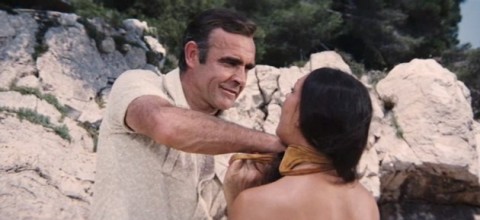
Forty years ago this Friday, United Artists released Diamonds Are Forever — the seventh entry in the James Bond series, and one that dragged founding franchise star Sean Connery out of 007 retirement in the hopes of rinsing the bad taste that his replacement, George Lazenby, left in moviegoers’ mouths in the 1969 film On Her Majesty’s Secret Service . Connery succeeded, but only by making what remains arguably the silliest Bond film to date. Enfolding globetrotting jewel smugglers, reclusive Las Vegas casino barons, effete hit men, bikinied enforcers named after cartoons, lunar-landing conspiracy bait, cosmetically enhanced villain-doppelgangers, and more one-liners than a decade’s worth of White House Correspondents Dinners, Diamonds Are Forever is campier than a dome tent and almost as vacant. I vividly remember watching it on TV as a kid, figuring its geopolitical space-race intrigues and bedhopping exploits were over my 8-year-old head. Today, after recently catching up with it for the first time in nearly 30 years, I realize that it’s basically Tinker Tailor Soldier Why? — that there is no making sense of the plot, the characters, the gays, the straights, the overlapping interests or why any of it is worth so much subterfuge and many people dying in so many gruesome ways. There is only the luxuriant enjoyment of a quintessential Bad Movie We Love. It all starts with the vengeful Bond — whose new bride was killed at the end of OHMSS — tormenting a diverse array of associates who can lead him to his murderous archnemesis Ernst Stavro Blofeld. That much is clear. Note to self: Bikini-top strangulation is a hugely tasteful way to extract information from lithe, defenseless sunbathers. Actual line: “Speak up darling, I can’t hear you!” And Bond catches him just in time, what with all the plastic surgery Blofeld’s arranging for numbers of hapless decoys. You just know this is where Saddam Hussein got the idea for lookalike bodyguards. I hesitate to include the video below, if only because the dude in the mud bath deserves every penny of royalties he earned for what looks like a hugely unpleasant bit part. Or at least his kin does, if they even deign to acknowledge, “Yup — that’s paw, awright, gettin’ all mud-shit on and hosed off and re-drowned. Hold yer nose, paw!” Or how about the guy who gets the scalpel in the heart? Whatever. Let’s just be thankful that modern cosmetic surgery has moved out of the dank, bubbling tar-pit lairs of Diamonds Are Forever . Duchess of Alba Cayetana Fitz-James Stuart knows exactly what I’m talking about. From there Commander Bond is back to Britain, where payback is brushed aside for the moment and the details of his latest mission are laid out. Sort of: There are diamond mines in South Africa! And workers are smuggling jewels out! In their mouths! To dentists! Who in turn wind up exchanging the rocks during desert rendezvous with… these guys: That would be Mr. Kidd and Mr. Wint, played with stone-like conviction by Putter Smith and Bruce “Father of Crispin” Glover, respectively. They identify themselves only by name at first, but creep back into the action wherever diamonds are found. Are they sophisticated high-class criminals proving the British Intelligence theory that someone’s hoarding diamonds to create a depression? Not so much: They’re dry, they’re wry, they’re cold-blooded… but mostly they are just creepy lovers whose homosexuality and psychopathology appear to be conflated in the film’s only truly irredeemable streak of bad taste. It’s not just that Mr. Wint can’t abide Mr. Kidd paying pretty woman a compliment, as happens later in the film (“I must say, Miss Case seems quite attractive — for a lady!”). I mean, holy Christ , check out how they celebrate a double homicide: After that, it’s anybody’s guess. Sort of, anyway: There is the selflessly, thanklessly composed Wikipedia summary for the film, which lays out a succession of convolutions that track Bond from Amsterdam — where he poses as diamond smuggler Peter Franks and encounters Franks’s clothes-allergic peer Tiffany Case (Jill St. John, always my favorite Bond Girl after Eva Green. Well, and Maryam D’Abo, of course ) — to Los Angeles to Las Vegas. But only after Bond kills the real Peter Franks in a three-minute elevator fight and fatal fire-extinguisher blow — but not the way you might think. The diamonds are hidden inside Franks’s body, leading to Kidd and Wint’s attempt to cremate Bond, who is then saved by the wizened Sin City comic Shady Tree, who is in cahoots with the CIA, who meets his own regrettable demise at the hands of our gay assassins. Following? With comebacks like this, does it matter? Originally scripted by Richard Maibaum, Diamonds Are Forever received a near-total rewrite by Tom Mankiewicz — the son of Oscar-winner Joseph L. Mankiewicz — who was brought on to soup up a screenplay that would entice Connery to return as Bond. The results were not only a six-month stay on the project and a nearly 10-year stint with the Bond franchise, but a film with its tongue embedded so deep in its cheek it left a bruise. While steering the 007 franchise to the outer limits of levity, it also resulted in such extraordinary interludes as this one with craps maiden Plenty O’Toole: Let’s hear it for Lana “Sister of Natalie” Wood! She only solidifies her finest screen performance moments later with a topless defenestration into a pool from Bond’s hotel suite (“I’ve got friends in this toowwwwnnnn…”), but still: This is Connery and St John’s film. And it still makes no sense: Something about a reclusive billionaire hotel owner (Bond producer Albert Broccoli was inspired to include Willard Whyte after a dream in which his close friend Howard Hughes had a deadly double) with a top secret lab out in the desert, where Bond and Case achieve basically zero plot mobility but initiate consecutive car chases featuring both a lunar-stage moon buggy… … and and a ’71 Mustang, which… I mean… You really must watch it once and then play it back just to hear those vintage sound FX harmonize. It’s not like director Guy Hamilton purposely left off the score — that is the score: And you know what? For all the fancy driving throughout, I’m ultimately much fonder of the Clark County Sheriff, whose extraordinary perception (“There goes that son of a bitch and saboteur!”) and fearsome law-enforcement prowess deserve a nice long still-frame appreciation: And while there remains an hour more to this movie , you find yourself envisioning a glorious world where this head-cramping gaudiness and camp endure forever — where Bond scales all of the towers in Vegas, and where, inside those towers, he meets all of the cosmetically altered carbon copies of the douche who killed his wife, and that all of those baddies may disguise their voices as Blofeld does, and that you, too, may someday match his acumen after miraculously escaping from a tube buried in the Nevada desert: And, of course, where all the watchdogs in the world have been replaced by comely, backhanded commentaries on the Equal Rights Movement. Ahem . I’m no more certain of what happens in the rest of Diamonds Are Forever than I was decades ago — something about Blofeld stockpiling diamonds to build a killer satellite, which apparently doubles as an excuse for Bond to blow the shit out of a SPECTRE base disguised as an oil well off the coast of Mexico. But there is no mistaking what’s going on in the climactic showdown between Bond and Messrs. Wint and Kidd, which is to say: Beating Airplane! at its own sight-gag-and-sound-effect game nearly 10 years ahead of time. Happy anniversary, Diamonds Are Forever ! Bombe surprise for everyone! Follow S.T. VanAirsdale on Twitter . Follow Movieline on Twitter .

More here:
Bad Movies We Love: Diamonds Are Forever

Where’s Billy Crystal on the New Oscars Poster?

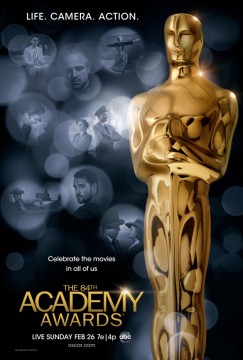
The Academy of Motion Picture Arts and Sciences has released the poster for the 84th Academy Awards, and it’s… nice? I mean, Oscar looks sexy as ever, and all those foggy images of awards-night glories past recall both the champagne-fueled afterparties and the preponderance of white folks who take this hardware home every year. But isn’t something missing? Like, the host? After all that hullabaloo about Brett Ratner and Eddie Murphy that the Academy worked to deflect, and after all the lengths that the Board of Governors went to just to replace Murphy with an ultrasafe, ultrastable emcee, and after years of advertising hosts from Chris Rock to Jon Stewart to Alec Baldwin and Steve Martin to Anne Hathaway and Anne Franco, where is Billy Crystal? If I’m a casual viewer, I’m far likelier to take positive notice of the host than of the centrally positioned reminder that Driving Miss Daisy actually won Best Picture once upon a sad, sad time. Also: Can’t we get some more color in here? Sidney Poitier? Denzel Washington? Mo’Nique? If it has to be Best Picture alums, maybe Poitier and Rod Steiger from In the Heat of the Night ? Even Anthony Mackie and Jeremy Renner from The Hurt Locker . I’m not sure what this says about the young demographic that the aging Academy claims to covet; I doubt they’re watching Giant and/or The Sound of Music . Or maybe they are! Are you “young” and obsessive-compulsively watching Gone With the Wind on a DVD loop in honor of white, uptight, vaunted Academy legacies? Tell us in the comments! [via Awards Daily ]

Read the original:
Where’s Billy Crystal on the New Oscars Poster?

REVIEW: A Luminous Lead Performance and Sensitive Filmmaking Drive Pariah

On the bus home from a night out at a lesbian club, Fort Greene teenager Alike (Adepero Oduye) swaps her tomboyish outfit for earrings and a pink t-shirt, something clearly not of her own choosing, something selected to appease her mother. Alike is 17 and closeted, at least at home. Her mom Audrey (Kim Wayans) is uptight, religious and almost quivers with the effort of seeing her daughter as she wants her to be and not as she actually is. While Alike’s closer to her father Arthur (Charles Parnell), a cop, he’s chosen to step back from the tensions at home and in his marriage. Liking boys and makeup comes naturally to her younger sister Sharonda (Shamika Cotton) — our heroine is alone in her own personal form of camouflage, trying to blend into the background wherever she goes. What sets writer/director Dee Rees’s sensitive feature debut Pariah (expanded from her 2007 short of the same name) apart from the standard coming out story is that Alike is just as much an outsider at the club as at home, adrift and uncomfortable while her more outgoing best friend Laura (Pernell Walker) picks up girls on the dance floor. She hasn’t found the place in which she feels she can be herself. Alike knows that she’s gay, but her understanding and acceptance of that fact doesn’t mean she knows where she fits, in the scene or out of it — she doesn’t easily fall into the divisions of butch and femme, and she doesn’t seems to do any better at school, where she’s a good student in whose writing a teacher has taken a special interest, but other dangles outside the established social groups. Pariah is a coming of age story that’s uncommonly aware of just how heartbreakingly important the trappings of fashion, of music choices, of hobbies are when you’re young — they’re symbols of everything you think you are or aspire to be, even as they’re woefully inadequate shortcuts to establishing your identity. Alike’s journey take place in a larger landscape of shifting identities — just as the lesbian community isn’t a monolithic entity, neither is the black neighborhood in which the majority of the action is set. Her family has worked its way into the middle class, and Audrey’s consciousness of this achievement informs her stiffness around the coworkers she clearly feels she’s a cut above and her overall fussy propriety. It’s this sense of the type of people with whom her family belongs that leads her to insist Alike hang out with the daughter of an acquaintance from church, Bina (Aasha Davis), as if enough time in each other’s proximity would make a friendship inevitable. Alike begrudgingly walks to school with Bina and hangs out with her on the weekends, and finds a connection with the girl she never expected, one that blossoms into a possible romance when Bina gives our heroine her first kiss. Bina’s the opposite of Alike in many ways, bold where the latter is shy, but also uncertain where she’s fully decided, and the halting tenderness with which their relationship builds is tinged with the knowledge that Bina is probably going to break her heart. Pariah wouldn’t work without Oduye’s luminous performance, capturing the emotional nuances of a character not prone to letting her emotions show. She makes Alike’s vulnerabilities clear through her defenses — Alike’s convinced she has the world fooled, but isn’t anywhere near as in control as she’d like to believe. It’s a lovely, subtle portrayal that’s deservedly been getting a lot of attention for Oduye, who originated the role in Rees’s short and who may also be familiar as the grocery store clerk Louis C.K. awkwardly follows home to try to ask out in the first season of Louie . It’s a performance that good enough to smooth over the fact that the film’s gears grind as it arrives at an ending that feels neat, with Alike finally confronting her parents and encountering the results we’ve been primed to expect from the outset. Pariah is a small story of a painful, formative era in its protagonist’s life, and it sometimes feels roughly hewn to fit into an arc it doesn’t necessarily need. It’s the intimate, unforced details — an exchange between Arthur and his friends at a store, the way Laura chooses to shut Alike out after feeling betrayed by her new relationship — that speak volumes more than the film’s obvious butterfly metaphor, and that attest to a filmmaker and actress worth keeping an eye on. Follow Alison Willmore on Twitter . Follow Movieline on Twitter .

View post:
REVIEW: A Luminous Lead Performance and Sensitive Filmmaking Drive Pariah

A Tribute To the People Who Write Excruciatingly Detailed Wikipedia Plot Summaries For Movies That Suck

There is a group of individuals whom Movieline would like to salute: The passionate, faceless people who lovingly record, in surprising detail and with confounding care, the full plot summaries for horrible movies on Wikipedia. Wikipedia movie plot historians, your day has come. I first recognized this phenomenon last month. While researching several pivotal roles in Kirsten Dunst’s career for the actresses’s 9 Milestones in the Evolution of… feature, I noticed (and greatly appreciated) that an Internet user had heroically outlined the entire plot of her long-forgotten and laughable 1998 television movie Fifteen and Pregnant . The plot summary is delivered in four straightforward paragraphs which remarkably do not acknowledge the ridiculousness of this poorly-scripted and self-righteous project. Here is just a taste… “The film opens with fourteen year old Tina having sex with Ray. A few days later Tina is sitting in the car with her mother and Tina’s mother asks her if she knows anyone who is sexually active at her age, or if she has ever been sexually active, and Tina nods her head yes, although her mother doesn’t know what she is admitting.” Granted, the person who was so moved by the melodramatic play-by-play of Fifteen and Pregnant that he/she rushed to his/her computer and tapped out a painfully accurate recap, is by no means a scholar. But skill or grasp of the English language is not the point here: The dedication is. For example, do you know how much you’d have to pay me to watch Troll 2 again and compose an entire 11 paragraph summary without a single critical inflection? (The most derogatory statement about the film in its Wikipedia entry is that it is “widely considered to be of poor quality.”) Do you know how severely you would need to threaten me before I typed out 1,000 words on the detestable Rob Reiner film North ? Do you know how many Target gift cards you would have to hire Woody Harrelson to strew onto a hotel bed Indecent Proposal -style before I agreed to not only view New Year’s Eve but to pen an earnest six-paragraph summary of this particular Garry Marshall’s holiday disaster-piece ? (The answers to these three questions are “a ton,” “very severely,” and “like, $10,000 worth.”) The heroic Wikipedia users who composed the above plot summaries may not have saved any lives. But they did save brain cells — brain cells that could have met a similar fate as the millions of those left to be swept up along with the neglected candy and self-respect on the floor of every Jack and Jill -screening multiplex auditorium in America last month. Because hopefully, some smart moviegoers elected to just read the Wikipedia plot summary of the film so that they could appropriately rag on it at the water cooler without paying for a partial Adam Sandler-performed lobotomy. Or maybe a few intelligent viewers decided against seeing the film after its detailed Wiki page informed them that the “comedy” would feature “cameos” from Bruce Jenner, Regis Philbin and Drew Carey. Or maybe that is all just wishful thinking and Wikipedia plot summary movie-going prevention is just a hope for the future. Either way, I am thankful for the bold Wiki user who dared to recount every minor plot twist in Showgirls so that I never have to re-watch the film to rediscover how much Cristal and Zach paid Nomi for a lap dance at the Cheetah ($500). So please, in honor of these Wikipedia movie plot historians, take a moment and scan through a few detailed recaps of your least favorite movies of all time. Recognize the effort, thank the faceless writers in whichever way you deem fit and maybe consider tapping out a few future plot summaries of your own. For without these loving recaps, human beings might actually have to sit through a screening of Gigli to fully recognize the film’s atrociousness. Follow Julie Miller on Twitter . Follow Movieline on Twitter .

Read more:
A Tribute To the People Who Write Excruciatingly Detailed Wikipedia Plot Summaries For Movies That Suck

‘Hunger Games’ Suspense Kicked Into High Gear In 2011

The film might not hit theaters until next year, but casting announcements and exclusive interviews got fans worked up for March release. By Kara Warner Jennifer Lawrence in “The Hunger Games” Photo: Murray Close For the millions of fans who have been eagerly awaiting a film adaptation of Suzanne Collins’ best-seller “The Hunger Games,” 2011 gave them even more to be eager about as details trickled out about the movie, which is due in March. We at MTV News have been as caught up in the frenzy as everyone else. And along the way, we’ve been able to speak with the major players involved in the “Games,” gleaning the juiciest details from the likes of Jennifer Lawrence, Liam Hemsworth and Josh Hutcherson. Back in January, before casting was solidified, Hemsworth told MTV News he’d read the script and that he could actually see himself in the role of Peeta. After Hemsworth won the role of Gale instead, we chatted up his older brother and fellow actor Chris Hemsworth, who revealed that he helped Liam prep for his big audition by reading the role of Katniss. “I did. Swear to God,” he said. “I read that. Put my girly American accent on.” In May, we had our first “Hunger Games”-centric chat with Jennifer Lawrence . She discussed fans’ initial protests over her blond hair , which quieted after she dyed it, along with the intense hours of archery training she went through to become as convincingly handy with a bow and arrow as Katniss is. “It’s lots of training, but the training is actually really fun,” she said. “I’ve done archery for about six weeks, rock climbing, tree climbing and combat and running and vaulting,” she said. “Also yoga and things like that to stay cat-like.” We also caught up with some of the film’s supporting actors. Lenny Kravitz, who is ready to further prove his acting chops in the role of sympathetic District 12 stylist Cinna, said he’s doing his homework by immersing himself in all Collins’ books. Elizabeth Banks was a bit more cagey in revealing any details about her transformation into pink-haired, type-A Effie Trinket, but she did admit that she and co-star Woody Harrelson have chemistry. Harrelson, who plays alcoholic Hunger Games survivor Haymitch Abernathy, praised Lawrence’s portrayal of Katniss and revealed that his character’s hairstyle was inspired by his own brother. “I was like, ‘OK, let’s get a wig. Let’s do the Brett Harrelson hair,’ ” he said of the long and slightly shaggy style. “It’s kind of cool. I really liked the look. It’s a fun character, and I think it’s going to be a good movie.” Fellow supporting player Stanley Tucci , a.k.a. the blue-haired Caesar Flickerman, echoed Harrelson’s sentiments about Lawrence’s performance. “She was amazing,” he said. “They were all amazing. She’s just so good and so mature at such a young age. It was really fun. Really fun. And [director] Gary Ross, he’s great.” We didn’t have to take Tucci’s word for it, as we also sat down with Ross for an exclusive interview surrounding our debut of the “Games” teaser trailer back in August. The “Seabiscuit” and “Pleasantville” helmer took us through his detailed plans for the film and the challenges of filming. And we finally stole a few moments with Peeta Mellark himself, Josh Hutcherson . who took us through his grueling audition process and the anxious wait for the news of his casting, why he was “so right” for Peeta and his excitement for the fans to see the finished product. “It’s exciting to hear people are that interested in something you’re doing, so it’s a little nerve-racking, but I’m onboard,” he said. “The fans for ‘The Hunger Games,’ they’re die-hard. They’re the best fans in the world, so I’m really excited for them to see the movie.” Check out everything we’ve got on “The Hunger Games.” For young Hollywood news, fashion and “Twilight” updates around the clock, visit HollywoodCrush.MTV.com . Related Videos ‘The Hunger Games’: 2011 In Review

Read more here:
‘Hunger Games’ Suspense Kicked Into High Gear In 2011

The Ides of March, The Artist and Other Moviegoing Let-Downs of 2011

The key to a list of moviegoing disappointments is the element of expectation: I am prepared to say I watched more suicidally bad films in 2011 than in any other year in my life; to be merely disappointed suggests a certain relativity. For example, I found The Ides of March to be a tremendous let down, I think partly because my hopes were inflated. George Clooney’s high political tragedy is perfectly cast, and that early, loaded exchange of glances between rival campaign managers Phillip Seymour Hoffman and Paul Giamatti goes off like a starter pistol. But The Ides of March is like that — it keeps threatening to start something interesting, right up to the point that it just… ends. I had the same issue with Good Night and Good Luck , another major disappointment and another film that played as if it were perpetually about to begin . The pleasures of Ryan Gosling’s performance as the fledgling spinmeister feel stingy — why tell us that he’s known to rock the microphone when we paid for the show? And Clooney’s Teflon governor is an empty, well-cut overcoat — perhaps the most glaring evidence of both the character and the director’s failure is that his one big scene with his golden boy star is the least exciting one in the movie. Given the improbable, stadium-rolling wave of appreciation that greeted The Artist , I expected much more than the mannered silent that Michel Hazanavicius and co. delivered. A mediocre movie with a couple of bright moments, The Artist also had too little to say about its chosen themes. Given the challenge of holding our attention across a silent film landscape, the music felt either too sparse or too sentimentally obvious, and the droopy patches felt twice as long as they needed to. The story of a silent film star left behind by the transition to sound was unconvincing when it needed to be clear and dolorous when it might have been lyrical. Similarly cranky friends have fixated on the issue of George Valentin’s (Jean Dujardin) refusal to speak on film—was it the accent? A principled stance? The fact that they were at all unsure points out a massive gap in the center of The Artist , one its title sews up too neatly. Any close follower of Werner Herzog’s career should know better than to bring expectations brewed from his last film into the next. Along with an auteurist consistency of preoccupations, Herzog shares with Woody Allen a prodigious output of wildly variable quality. The titles of this year’s Herzogian harvest — the sublime Cave of Forgotten Dreams and the slapdash Into the Abyss — seem interchangeable, but the latter felt to me like Achilles Herzog, a hot check of a documentary passed off as the real thing. Researched and assembled under extreme time constraints, Into the Abyss is an inquiry into the death penalty that gets by on artful narrative juxtapositions and moments of profound, almost invasive intimacy with its interview subjects. The reach for effect often feels more craven than considered, and the crime at the heart of the film is eventually clouded over for convenience. When a topic and a director — and a title! — of this magnitude collide, the viewer wants the Earth to shimmy; instead we had to settle for the Richter equivalent of a quick freehand sketch. I’ve watched Tinker, Tailor, Soldier, Spy twice now and I still couldn’t give you a basic plot summary. Having felt like a failure after the first viewing, after the second I’m prepared to push the better part of the blame onto director Tomas Alfredson and his Let the Right One In editor Dino Jonsäter. It’s a film that seems designed for le Carré obsessives, which means the rest of us may have to sit through all 57 hours of the 1979 BBC production just to get the facts straight. It’s a shame, because the performances and the production design knocked me out, but of all the ways to sex up a retro-procedural, I’d put mincing it into incomprehensibility second to casting Young Jeezy as George Smiley. With The Iron Lady Meryl Streep re-stamps her all-access passport to human history, and proves once again that the only thing she can’t seem to defy are superlative clichés. There are no words left to describe the kind of work Streep does — even those who dismiss her as a mere impressionist have to admit that her Margaret Thatcher is uncanny in its near-total self-effacement. But the film built around that performance is in some sense designed to disappoint: The biopic is an inefficient delivery system for dramatic tension or even, paradoxically, the human arc of a lifetime. It’s the movie equivalent of a greatest hits package, and while I’m not crazy about the appropriation of the still-living Thatcher’s dementia as a dramatic device, for me the more broadly director Phyllida Lloyd played her hand — ruining every successful visual cue by repeating it three times, leaping from one familiar milestone to the next — the farther we move away from the potential of Streep’s performance and the uneven richness of Thatcher’s story, into the straight flush of political iconography. Follow Michelle Orange on Twitter . Follow Movieline on Twitter .

More here:
The Ides of March, The Artist and Other Moviegoing Let-Downs of 2011

Paula Patton Takes “Mission: Impossible” To The Top! Hits #1!

Read this article:

Paula Patton and her “Mission: Impossible, Ghost Protocol” cast lead the box office this weekend with their film taking the #1 spot after raking in $26.5 million in sales. Halle Berry & Ludacris weren’t as lucky, however, as their ensemble cast film “New Year’s Eve” only took in $3 million, putting them at the #8 spot. Congrats to Paula on her blockbuster! Spotted at YBF . Robin Thicke Reveals If Black Women Are Better Off Dating White Men Paula Patton & Robin Thicke Finally Hit “Mission Impossible” Red Carpet Together Paula Patton Strips & Shows Off Hot Bod For GQ [PHOTOS]

Paula Patton Takes “Mission: Impossible” To The Top! Hits #1!