
Tag Archives: films

Berlinale Dispatch: What’s Black & White, Nearly Silent, and Dreamy All Over? (Hint: Not What You Think)

Portuguese director Miguel Gomes’s inventive, playful black-and-white Tabu — part drama, part romance, part malaria-induced fever dream — has turned out to be a favorite among critics at the Berlinale this week, alongside Christian Petzold’s Barbara , and it’s not hard to see why. Tabu was one of the few movies here to be heralded by a ripple of excitement — it seemed to be the one competition film everyone was curious to see. In the movie’s first section — despite an intriguing reference to a “sad and melancholic crocodile” — I feared the buzz would amount to nothing. And what if this crocodile never actually appeared? I wasn’t leaving without my crocodile, I decided, and luckily, I wasn’t disappointed. Gomes — who previously directed The Portuguese Nun and Our Beloved Month of August — used to be a film critic, and you know how those people are: They love their movie references, and Gomes uses plenty. (The film’s title itself is a nod to F.W. Murnau’s movie of the same name.) But he manages to avoid coming off as either a show-off or know-it-all, particularly in the movie’s second section. The first chapter deals with a mysterious elderly Portuguese woman named Aurora (Laura Soveral), whose mind appears to be disintegrating and who is convinced her housekeeper (Isabel Cardoso) is working black magic on her. She begs her neighbor, Pilar (Teresa Madruga), for help. It’s only after Aurora dies, and Pilar seeks out the man who used to be her lover, that the movie truly springs to life: The opening section is clearly intended to be an extended prologue, a means of whetting our appetite for what’s to come. In part two, we meet the young Aurora (played by Ana Moreira), a big-game hunter who, like good old Isak Dinesen before her, has a farm in Africa. Aurora is beautiful, headstrong, possibly emotionally unstable. She’s also a crackerjack markswoman who always gets her prey, sacking big game right and left. That includes menfolk: She’s married to a staid, successful businessman who doesn’t give her the attention she needs. It’s no surprise when she falls into the arms of Ventura (Carloto Cotta), a John Gilbert lookalike who plays in a local band — it specializes in hyper-romantic Phil Spector covers — and who also has some romantic complications of his own, in the form of a lover named Mario (Manuel Mesquita). The second half of Tabu is mostly silent. There’s sound, in the form of birds or crickets or rustling leaves, but all the dialogue of the story remains unheard and implied: The actors move their lips, but no words come out, and the effect is surprisingly intimate, like being keyed in to a secret language between lovers. We know what’s happening, and what’s going on in the characters’ heads, thanks to a voiceover narration provided by the old-man version of Ventura (Henrique Espirito Santo), as he reflects on his obsessive and marvelously melodramatic relationship with the young Aurora. Did I mention that by the time she and Ventura get together, she’s already pregnant with her husband’s child? Gomes piles one complication on top of another, but the effect is poetic rather than jumbled. I’ve been hearing people comparing Tabu to The Artist , couching it as a more art-housey version of that picture. There are similarities, but each film exists in its own distinct and imaginatively realized world. Gomes’s is dreamier, more impressionistic — at times, in the first section, the conversations between the characters spin out in oblique, off-kilter loops, as if they’d been invented by a less-flamboyant, less-kooky Almodovar. Gomes’s style here is winsome and affectionate; at times, it’s a little too arch and self-aware. But the picture’s satiny imagery, rendered in black, white and every glorious gradation in between, is so lovely that that hardly matters. The two lovers, Aurora and Ventura, lounge by a reflecting pool, glasses of lemonade on a tray between them, as that aforementioned crocodile — at this point, a mere babe — skims through the water like a silent witness to all that’s passing between them. Now we know why he’s sad and melancholic: He’s the croc who knew too much. But at least he’s been lucky enough to swim through this romantic dream of a movie. Read more of Movieline’s Berlinale 2012 coverage here . Follow Stephanie Zacharek on Twitter . Follow Movieline on Twitter .

Go here to read the rest:
Berlinale Dispatch: What’s Black & White, Nearly Silent, and Dreamy All Over? (Hint: Not What You Think)
Brett Ratner, GLAAD to Team For Inspirational ‘We All Rehearse’ Campaign

“When he stepped down as Oscar producer in November over the use of an anti-gay slur , Brett Ratner committed to work with GLAAD on issues pertaining to LGBT images in Hollywood. Now the media advocacy group announced a new video campaign, which will be produced and directed by Brett Ratner. The upcoming video series will feature Hollywood celebrities, athletes, musicians and politicians ‘coming out of the closet’ as supporters of equality.” I’ll Brett you’re GLAAD that’s settled, amirite ? Sigh. [ Deadline ]

Read more:
Brett Ratner, GLAAD to Team For Inspirational ‘We All Rehearse’ Campaign

REVIEW: The Secret World of Arrietty Gets by on Inscrutable Charm

Wispy but sweet as spun sugar, The Secret World of Arrietty feels like a modest but exquisitely trimmed Japanese gift to fans of The Borrowers , British author Mary Norton’s classic children’s books. Having originated in Japan’s Studio Ghibli, home to animated films like Princess Mononoke and Spirited Away , the American version of Arrietty is its third translation; when Disney signed on it added a second director in seasoned sound designer Gary Rydstrom (the Japanese version is directed by Ghibli animator Hiromasa Yonebayashi). And yet the look and feel are unmistakable, adding anime flavor to a story so beloved in the West that the BBC took a crack at it with a live-action version just last year. In many ways it is a felicitous collaboration: The Japanese are known for their appreciation for all things miniature and scrappy young heroines. The two are combined in 14-year-old Arrietty (Bridgit Mendler), a “borrower” living underneath a rural home with her parents, Pod (Will Arnett) and Hominy (Amy Poehler). Borrowers, you soon figure out if you don’t already know, are basically just people who happen to be the size of a full-grown string bean. They lead a parasitic kind of life, though they operate with more stealth and grace than the crow that swoops in on the recalcitrant family cat to peck up a few fleas in the opening scene. The Borrowers need “human beans” to borrow from — their size makes any other kind of subsistence impossible — and yet they live in terror of their benefactors. Instead of instilling fear in Arrietty, constant warnings from her gruff, super-stoical dad and hysterical mother only make her more curious about the young boy who shows up at the house. Shawn (David Henrie) is sickly, and has been sent to the home of his aunt and her housekeeper Hara (an antic Carol Burnett) to convalesce for the summer. Where Arrietty’s parents focus only on her, Shawn’s mother is too wrapped up in work to care for him. But instead of exploring whether a broken-hearted kid might get lonely enough to start seeing tiny redheaded girls rappelling down his bed stand at night, the script (written by Karey Kirkpatrick, it feels very much adapted from the Japanese version, by Hayao Miyazaki and Keiko Niwa) keeps us closer to the concerns of its title character. Which is to say they make gentle suggestion of a young girl’s romantic awakening and negotiation of the world of big-eyed, giant-handed boys. Or perhaps that is a bit of a stretch. As someone unfamiliar with the series (outside of this memorably poignant   This American Life segment about a young girl’s abiding belief in the existence of Borrowers), much about The Secret Life of Arrietty feels enigmatic, maybe even a little undercooked. Why are the borrowers so spooked about big people? Why is Shawn so unfazed by little ones? What’s the deal with Hara and her grudges? Why is Pod so hardcore about not using dollhouse implements to make life easier? What’s the point of being that small and how did they get that way? That you are compelled to either ignore or try and fill in the answers on your own is a testament to the film’s soothing charms, although occasionally the treacly music cues and trembling moments of wide-eyed apprehension are so twee your tweeth hurt. It’s a matinee treat for the very little ones, after all, though in its final scenes Arrietty veers into cigarette-and-turtleneck territory. Shawn, who is facing heart surgery, outlines his mopey philosophy of life: “We all have to die,” he says to Arrietty, by way of goodbye. “Sometimes you just have to accept the hand of fate.” Just when you are ready to stop caring whether a story takes shape to match the lushly hand-drawn layers of this enchanting world — which is to say after an hour or so of half-hearted allusions to human excess, the precious illusions of childhood, possible borrower genocide, and entrenched bigotry — Shawn’s speech pokes you with another tentative stab at meaning. No doubt those legion of Norton fans in the know will be moved as well as dazzled. With a little more care, the rest of us might have been let in on the secret as well. Follow Michelle Orange on Twitter . Follow Movieline on Twitter .

See the original post:
REVIEW: The Secret World of Arrietty Gets by on Inscrutable Charm

Pregnant or Lesbian? Watch Bérénice Bejo Ask the Tough Questions in 1997 Short Film

Today, of course, we know Bérénice Bejo as The Artist ‘s irrepressible movie sensation Peppy Miller and as a contender for this year’s Best Supporting Actress Oscar. But back in 1997, she was just another young actress paying her dues in France. Which apparently led to… this . David Poland points us today to the short film Enceinte Ou Lesbienne? , featuring Bejo as a daughter who tests her family’s domestic idyll with that tough question perennially on every young lady’s lips: Pregnant or lesbian? It’s your typical early-career case of everyone involved doing the best they can with what they have; Bejo’s fine. But as a coming-out method, I can’t say I’d recommend it? But you tell me. [via The Hot Blog ]

More here:
Pregnant or Lesbian? Watch Bérénice Bejo Ask the Tough Questions in 1997 Short Film

Brad Pitt is Packin’ in First Look at Cogan’s Trade

If you ever wondered about the motivation behind Brad Pitt’s slick, singular look last year on the red carpet at Cannes (and come on, who hasn’t ), then here’s your answer: It was all for his forthcoming crime flick Cogan’s Trade . Click through for the armed, dangerous evidence. I just wish he’d have struck this pose at The Tree of Life premiere. Now that’s a good time. [via Just Jared ]

Read more:
Brad Pitt is Packin’ in First Look at Cogan’s Trade

The Only Illustrated Review of The Vow You Will Ever Need

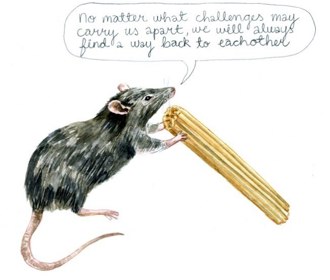
From the brilliant mind that brought you the only illustrated War Horse review you will ever need: “I give The Vow two out of five kisses. On the way home from the theater, I saw a rat who found a churro and it was more romantic than the entire movie.” [ Vanity Fair ]

Follow this link:
The Only Illustrated Review of The Vow You Will Ever Need

Guess How Much Chris Pine Allegedly Made for This Means War?

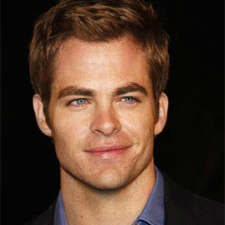
How’s this for a dramatic break-up story? After a nine-year relationship with SDB Partners, Chris Pine opted to part ways via email. Having worked with the actor for pretty much his entire career to date, during which time he rose from guest slots on ER and CSI: Miami to nabbing Star Trek and this week’s slick rom-com This Means War , Pine’s former agents weren’t going to be dumped so easily; they’re suing Pine for millions in back- and future-commissions with a lawsuit that puts his salaries on blast. All of which means that today we get to play “Guess That Salary – Chris Pine Edition!” As you ponder the fiscal worth of Pine’s charm, chops, and star power, consider the trajectory his career has taken since his film debut in 2004’s The Princess Diaries 2: Royal Engagement . I recall feeling compassion for Pine when, in 2006, he found himself stuck opposite Lindsay Lohan in Just My Luck and playing a sightless virgin in Blind Dating ; can’t say his agents were doing a great service for him with those unfortunate turns. But then came Smokin Aces , with Pine near-unrecognizable as the eldest Tremor brother, and within a few years Pine landed the career-making role of Captain James T. Kirk in J.J. Abrams’ Star Trek . Still, Star Trek fame wasn’t enough to help Pine open the long-delayed horror pic Carriers in the fall of 2009, but soon enough he found himself sharing the screen with Denzel Washington (and a runaway train) in Unstoppable , which boosted his profile. Now he’s billed along with fellow up and comer Tom Hardy and Reese Witherspoon in the love triangle spy romance This Means War , a slick $70M Valentine’s week offering from McG which in the very least showcases Pine’s pretty blue eyes, comic timing, and leading man swagger. And according to the SDB lawsuit (obtained by The Hollywood Reporter ), these last few years of rising stardom have brought Pine to quite an enviable place: For This Means War he was reportedly paid $5 million. ( Unstoppable nabbed him a $3 million paycheck, while he’s set to earn a base salary of $4 million, $8 million, and $12 million for the planned Jack Ryan series.) What say you, Movieliners? Is Pine’s star rising in accordance with his salary? Chris Pine Sued By Former Agents; ‘This Means War,’ ‘Star Trek 2’ Salary Revealed [THR]

View post:
Guess How Much Chris Pine Allegedly Made for This Means War?

Berlinale Dispatch: Billy Bob Thornton Directs Himself, Beautifully, in Otherwise Messy Jayne Mansfield’s Car

Billy Bob Thornton ’s Jayne Mansfield’s Car , screening in competition here at the Berlinale , is a sprawl of a movie, wonderful in some small, intimate ways but confounding when you step back to look at the bigger picture. This is a multi-generational family story set in late-1960s Alabama: A curmudgeonly patriarch, played by Robert Duvall, learns that his ex-wife, who’d long ago decamped to England to marry another man, has died; he’s forced to open his home to the second husband (John Hurt) and his two children when they arrive in the United States for the funeral. Duvall’s three sons, all veterans of the second World War, include Robert Patrick, who served but never saw action; Kevin Bacon, who worked as a medic and now, at the height of the Vietnam War protest, has become a pot-smoking peacenik; and Thornton, a former pilot whose mind has been addled by his wartime experience. Duvall also has a daughter, played by the gifted actress Katharine LaNasa (who may be best known for her work on TV shows like Big Love ), a flirtatious blonde who feels she sometimes gets lost in this family of strong and/or confused and/or ineffectual men. In fact, there’s a lot of “and/or” in Jayne Mansfield’s Car . (The title refers to the wrecked vehicle in which the Hollywood bombshell died in 1967, which makes its way to Duvall’s town as a morbid curio.) Thornton and cowriter Tom Epperson try to cram in so many relationship dynamics that the ensuing conflicts begin to lose significance. Duvall resents Hurt; Duvall’s sons all resent their father. Characters have crushes that amount to nothing, to the point where you wonder what these developments are even doing in the story. And while these disparate family members have been brought together by a death, no one, not even her own children, has much to say about the woman who has just died – she’s a screenwriter’s device in a handy casket. It doesn’t help that the three brothers, particularly Bacon’s character, are weirdly anachronistic for World War II vets. In 1969, most of those guys weren’t smoking pot or otherwise acting like petulant teenagers; at around age 50, they would have been, or would have been expected to be, certified grown-up men. This is the first picture Thornton has directed in 11 years – the last was the 2001 comedy Daddy and Them – and he isn’t fully in control of this messy, unfocused material. But he does have some terrific actors in his corner: Hurt and Duvall, in particular, are great fun to watch. But what struck me most about Jayne Mansfield’s Car – and it’s the single biggest reason to see the movie – is Thornton’s performance. This is the part that actors who work as directors usually mess up: They can’t direct themselves. (There are notable exceptions, of course, like Orson Welles or Laurence Olivier, but who wants to try to measure up to them ?) Yet Thornton is so relaxed here, and so believably befuddled, that your heart reaches out to him. There’s something extremely vulnerable-looking about Billy Bob: That too-big head on that too-skinny body (which now, at middle age, also features a slight, real-live-person paunch, as opposed to chiseled movie-star abs). He’s superb in an awkwardly tender seduction scene with Frances O’Connor (who plays his late mother’s English stepdaughter) – he stands before her literally and figuratively stripped down, his emotions distilled into something so intense and beautiful that it’s almost painful to watch. I suppose, after playing a scene like that, an actor-director could easily enough watch the playback and say, “Yep, that works.” But can Thornton himself really see how wonderful it is? Particularly in the midst of a movie that, scene for scene, doesn’t really work? Maybe the performance comes from a place where objective assessment recedes and instinct takes over. However it happened, it’s a small, sturdy miracle. Read more of Movieline’s Berlinale coverage here . Follow Stephanie Zacharek on Twitter . Follow Movieline on Twitter .

See original here:
Berlinale Dispatch: Billy Bob Thornton Directs Himself, Beautifully, in Otherwise Messy Jayne Mansfield’s Car

Coming This March, Pauly Shore in Whiskey Business

Good news, Pauly Shore fans! Hot on the heels of his recent appearance in last fall’s Bucky Larson: Born to Be A Star , the Weasel himself is heading back to the spotlight with a new feature comedy about a Jersey Shore -style guido wrongly accused of murder who’s forced to hide out in the country, where he develops a knack for bootlegging moonshine. It’s called — simply, poetically — Whiskey Business . What’s that? Tell you MORE?? Developed by CMT and airing March 25 on the cable network, Whiskey Business sees Shore pile on the fake tanner and douchebag airs as “Nicky, (Pauly Shore), the son of New Jersey’s most powerful crime boss. Nicky is supposed to follow in his father’s footsteps, but he’d much rather DJ and mix cocktails at a local club.” Who wouldn’t? “When Nicky is framed for murder he didn’t commit, he goes on the run to escape the law and ends up in a small Tennessee town where he sticks out like a sore thumb. Nicky brings some Jersey Shore to the Deep South and is treated with Southern Hospitality and is befriended by a cast of characters, including country cougar Trina (Tanya Tucker). At first Nicky is as suspicious of the townspeople’s moonshine as they are of his fake tan, but he soon bonds with the residents to take down Gilly (John Schneider), the town’s corrupt sheriff.” I know what you’re thinking: How have we survived this long as a people without a movie called Whiskey Business , let alone the historical meeting of the MTV-spawned Pauly and Jersey Shores? (Fun fact: There is one movie listed on IMDb about wacky pet shenanigans called Frisky Business and another involving naughty bondage, but no other Whiskey Business to date.) I don’t know, either, but I do know that these behind-the-scenes photos and stills Shore posted to his Facebook fan page during filming (including the Saddest. Fist bump. Ever. ) only make this even more of a must-DVR occasion. In a press release, Mary Beth Cunin, SVP Programming Strategy at CMT, explained the move to produce an original Shore vehicle. “Pauly Shore is a CMT fan-favorite and we’re thrilled to be in business with him on this movie… Pauly’s movie Son In Law is one of CMT’s top performers, so to find a new vehicle to showcase his talent and popularity is an exciting opportunity.” Ah, Son in Law . Suddenly it all makes even more sense. Looks like Shore’s on his way to being “the West Coast’s Woody Allen” after all! [ Deadline , Facebook ]

Continue reading here:
Coming This March, Pauly Shore in Whiskey Business

Actor Wants to be Band

Whatever you say, Nicolas Cage: “I think that if you go about making movies to win Oscars, you’re really going about it the wrong way. I think that it’s… right now, what I’m excited about is trying to create a [pauses] kind of a cultural understanding through my muse that is part of the zeitgeist that isn’t motivated by vanity or magazine covers or awards. It’s more, not countercultural, but counter-critical. I would like to find a way to embrace what Led Zeppelin did, in filmmaking.” [ Moviefone ]

Here is the original post:
Actor Wants to be Band






