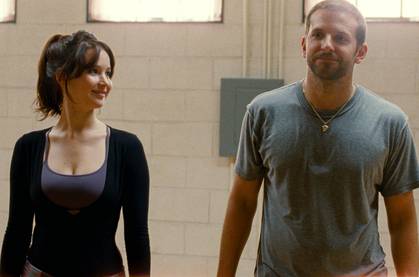
The film won a number of prizes including Best Picture. Also in Monday’s round-up of news, seven films made the Academy’s Shortlist of titles competing in the hair and makeup category; Lili Taylor’s latest is set for a Berlin premiere; newcomers in the Specialty Box Office opened weak over the weekend; and film critic Karina Longworth is leaving L.A. Weekly. Silver Linings Playbook Wins 4 Satellite Awards Including Best Picture David O. Russell’s Silver Linings Playbook took five prizes at the 17th annual Satellite Awards Sunday including Best Picture and best director for Russell and best actor prizes for Bradley Cooper and Jennifer Lawrence, THR reports . 7 Movies On Makeup Short List Seven films remain in competition for the Makeup and Hairstyling category for the 85th Academy Awards. Hitchcock , The Hobbit: An Unexpected Journey , Les Misérables , Lincoln , Looper , Men in Black 3 and Snow White and the Huntsman made the short list. Three nominees will lead into the Oscar ceremony. Lili Taylor’s The Cold Lands Set for Berlin Premiere The film by Tom Gilroy will have its world premiere at the Berlin International Film Festival in February. Also starring John Ventimiglia, the pic revolves around Atticus who flees from authorities after his mother’s sudden death into the rugged mountains and dense forests of upstate New York. The feature is part of the initial films announced in the Berlinale’s Generation Programme. See the full list of announced titles here . Any Day Now Soft as Holdovers Hyde Park On Hudson and Silver Linings Playbook Stay Solid Any Day Now bowed in 16 theaters a brave story starring Alan Cumming about a gay couple fighting to retain custody of special needs child they reared. Any Day Now is a brave film and story that earned audience prizes at festivals throughout the year. Unfortunately it did not connect fully with paying audiences in its debut but hopefully its audience will build through word-of-mouth. It averaged only $2,563 per location. More specialty results at Deadline. Film Critic Karina Longworth Leaves L.A. Weekly Longworth began at L.A. Weekly replacing Scott Foundas who headed to the Film Society of Lincoln Center. He’s returning to Village Voice Media as its critic. She is writing a book about Meryl Streep for Cahiers du Cinema and will freelance, TOH reports .
When you’re not going to win on points, you may as well try to shoot the moon — that seems to be the thought process behind Ghost Rider: Spirit of Vengeance , the sequel to Marvel’s 2007 Ghost Rider . Realizing that their stunt rider who turns into a flaming skeleton-monster character and their star who turns in what are less performances than performance art were unlikely to result in a film that could be thought of as good in any traditional sense, the studios have aimed instead to make something that embraces its own lunacy. To oversee this endeavor, they brought in Mark Neveldine and Brian Taylor, the directing duo behind the Red Bulled-out, always in motion Crank films, who ignore a good portion of what happened in the first Ghost Rider , plant their tongues firmly in cheek and loose Nicolas Cage to do his strangest. It’s not as wild or as fun as it may sound (or that it needs to be to hit the midnight-movie sweet spot for which it aims), but it’s a minor improvement on the unintentional silliness of the initial installment. Ghost Rider: Spirit of Vengeance moves the action to Eastern Europe, where sinister forces are trying to capture 13-year-old Danny (Fergus Riordan) for use in the fulfillment of a doomy prophecy. The kid and his mother Nadya ( The American ‘s Violante Placido) have been in hiding with the first of two sects of tough monks (the first is overseen by Anthony Head, the second by Christopher Lambert), until they’re chased down by a group of mercenaries led by her ex, Carrigan (Johnny Whitworth) who’ve been hired to bring the boy to become the new vessel for Roarke (Ciarán Hinds), the living embodiment of Satan (look, I don’t make this stuff up). An alcoholic French priest (Idris Elba) recruits Johnny Blaze (Cage) to help save the pair using his Ghost Riderly powers with the promise of curing him of the curse, though Blaze fears he won’t be able to control the demon that possesses him enough to not also devour the people he’s trying to save. Cage plays Blaze as a tweaker, a twitchy, shaky mess who pops skull eye whenever he struggles to control his inner monster. It’s a performance that starts off as awkward but gradually builds to new arias of weird; threatening a flunky from whom he’s trying to get information, he notes that the Rider is “scraping at the door! He’s SCRAPING AT THE DOOR! If you don’t TELL me what he needs to KNOW, I’m going to let him oooooooooout!” Cage jerks and flinches and laughs maniacally — in one of the more memorable shots, a camera affixed to the front of his motorcycle holds on him as he accelerates, cackling, through town, gaping black eye sockets warping his face and then getting tamped down. Neveldine/Taylor have apparently gotten Cage to also play the transformed Rider this time around, an addition that comes through in the demon’s odd head tilts and dancey fits. Cage is given a run for his money by Elba (who uses his character’s accent as one might use a swirling cape) and Hinds, who have a ham-off in their respective roles, though Cage emerges triumphant just from the sheer effort he puts into the role. Ghost Rider: Spirit of Vengeance scores some deliberate laughs — the Rider spins inexplicably in mid-air after getting shot by a bunker buster, a character who can make things decay with his touch finds the only thing that doesn’t crumble in his hands before he eats it is a Twinkie, and at long last the question of what happens when the Ghost Rider needs to pee is answers (it’s “like a flamethrower”) — but the smugness of the film grows wearying long before the end. Just because the people on and behind the camera are willing to acknowledge what we’re watching is ridiculous crap doesn’t really change the fact that, well, it is. For filmmakers as talented as Neveldine/Taylor are (and they are, as the exhilarating freedom of their camerawork attests), it’s a letdown, evidence that all the air quotes in the world won’t make your end project any better if there’s nothing sincerely good thrown in there as well. Follow Alison Willmore on Twitter . Follow Movieline on Twitter .
Poor Robert Pattinson: The weight of proving himself, in a movie that doesn’t have the words “Twilight” and “Saga” in the title, is shaping up to be heavier than a vampire’s curse. In last year’s Water for Elephants, he had a charming naivete, a seemingly natural shyness that was wholly inoffensive, if not exactly memorable. And as social schemer Georges Duroy in Bel Ami, playing here at the Berlinale out of competition on the festival’s next-to-last day, he works harder to redeem himself than any actor should have to: He applies a scowl from Column A with an eyebrow furrow from Column B to express displeasure; Smirk No. 4 denotes a moment of extreme hubris. The effect is like watching an athlete trying not to break a sweat – you might want to root for him, but there’s a part of you that just wants him to let it all out already. What is it about the guy? Under the direction of first-time filmmakers Declan Donnellan and Nick Ormerod, who have directed mostly for the London stage, Pattinson isn’t half-bad. He doesn’t overreach, which perhaps saves him from embarrassment. But he expends so much energy in his desire to be subtle that he’s the exact opposite of subtle — yet he doesn’t just go all the way and take the performance over the top. Duroy is a fellow of modest means, rattling around Paris bedding the women of influential men to increase his own wealth and power. (The movie was adapted, by Rachel Bennette, from Guy de Maupaussant’s second novel, and it’s a foamy — if somewhat snoozy — bit of picturesque entertainment.) The problem may be that the women around Pattinson run circles around him. They’re the ones you remember, from Uma Thurman’s politically astute Madeleine Forestier, to Kristin Scott Thomas’s mouselike, aging skinny-minny Virginie Walters, to Christina Ricci’s Belle Époch sexpot Clotilde de Marelle. Pattinson, despite the fact that his character is trying to dominate these women, looks a little afraid of them: Perhaps paradoxically, he has more erotic wattage when he’s playing wan Victorian valentine Edward Cullen, his character in the Twilight movies. Here, in his stiff collars and glossy top-hats, he looks like a very lean bird dressed up for dinner, only he’s the one on the plate. I’m wondering how an actor like Pattinson, a guy who’s had so much teenage longing projected onto him he’s practically a walking piece of fan fiction, can ever unravel the tight knots of his own self-consciousness. Or if he can. Watching him in Bel Ami, I found myself hoping he’d rally, looking for subtle glimmers of awareness that might suggest he knows he’s supposed to make us believe he’s a cad, not just act like one. He’s trying so hard — why can’t he use those lizardlike eyes, that cat-that-ate-the-canary smile, in the service of making us forget who he is? Maybe it’s because he can’t forget who he is. And that’s the stiffest, tightest collar any young actor can wear. * * * This is my last post from Berlinale 2012, and here at the tail end of my 10 days here, I’m looking back on all the pictures I wanted to see and didn’t: Bunches of critics were shut out of the crowd-funded Nazis-in-space spoof Iron Sky when it screened late last week; I also missed the much-lauded Marley, directed by Kevin MacDonald, which I hear is an elaborate and involving portrait of the late singer and musician’s life. But there’s no use lamenting the ones that got away. If I can rally for a 10:30 p.m. screening tonight, I might be able to catch Tsui Hark’s Flying Swords of Dragon Gate. Saying good-bye to Berlin with a bit of 3-D craziness doesn’t sound like a bad idea at all. Read all of Movieline’s coverage of Berlinale 2012 here . Follow Stephanie Zacharek on Twitter . Follow Movieline on Twitter .
Billy Bob Thornton ’s Jayne Mansfield’s Car , screening in competition here at the Berlinale , is a sprawl of a movie, wonderful in some small, intimate ways but confounding when you step back to look at the bigger picture. This is a multi-generational family story set in late-1960s Alabama: A curmudgeonly patriarch, played by Robert Duvall, learns that his ex-wife, who’d long ago decamped to England to marry another man, has died; he’s forced to open his home to the second husband (John Hurt) and his two children when they arrive in the United States for the funeral. Duvall’s three sons, all veterans of the second World War, include Robert Patrick, who served but never saw action; Kevin Bacon, who worked as a medic and now, at the height of the Vietnam War protest, has become a pot-smoking peacenik; and Thornton, a former pilot whose mind has been addled by his wartime experience. Duvall also has a daughter, played by the gifted actress Katharine LaNasa (who may be best known for her work on TV shows like Big Love ), a flirtatious blonde who feels she sometimes gets lost in this family of strong and/or confused and/or ineffectual men. In fact, there’s a lot of “and/or” in Jayne Mansfield’s Car . (The title refers to the wrecked vehicle in which the Hollywood bombshell died in 1967, which makes its way to Duvall’s town as a morbid curio.) Thornton and cowriter Tom Epperson try to cram in so many relationship dynamics that the ensuing conflicts begin to lose significance. Duvall resents Hurt; Duvall’s sons all resent their father. Characters have crushes that amount to nothing, to the point where you wonder what these developments are even doing in the story. And while these disparate family members have been brought together by a death, no one, not even her own children, has much to say about the woman who has just died – she’s a screenwriter’s device in a handy casket. It doesn’t help that the three brothers, particularly Bacon’s character, are weirdly anachronistic for World War II vets. In 1969, most of those guys weren’t smoking pot or otherwise acting like petulant teenagers; at around age 50, they would have been, or would have been expected to be, certified grown-up men. This is the first picture Thornton has directed in 11 years – the last was the 2001 comedy Daddy and Them – and he isn’t fully in control of this messy, unfocused material. But he does have some terrific actors in his corner: Hurt and Duvall, in particular, are great fun to watch. But what struck me most about Jayne Mansfield’s Car – and it’s the single biggest reason to see the movie – is Thornton’s performance. This is the part that actors who work as directors usually mess up: They can’t direct themselves. (There are notable exceptions, of course, like Orson Welles or Laurence Olivier, but who wants to try to measure up to them ?) Yet Thornton is so relaxed here, and so believably befuddled, that your heart reaches out to him. There’s something extremely vulnerable-looking about Billy Bob: That too-big head on that too-skinny body (which now, at middle age, also features a slight, real-live-person paunch, as opposed to chiseled movie-star abs). He’s superb in an awkwardly tender seduction scene with Frances O’Connor (who plays his late mother’s English stepdaughter) – he stands before her literally and figuratively stripped down, his emotions distilled into something so intense and beautiful that it’s almost painful to watch. I suppose, after playing a scene like that, an actor-director could easily enough watch the playback and say, “Yep, that works.” But can Thornton himself really see how wonderful it is? Particularly in the midst of a movie that, scene for scene, doesn’t really work? Maybe the performance comes from a place where objective assessment recedes and instinct takes over. However it happened, it’s a small, sturdy miracle. Read more of Movieline’s Berlinale coverage here . Follow Stephanie Zacharek on Twitter . Follow Movieline on Twitter .
No one, as far as I know, has come to the Berlinale in search of Gillian Anderson, the strawberry-blonde vixen who set millions of hearts aflutter — and not just male ones — with her role in the supernaturally beloved ’90s show The X-Files . But Anderson has surprised those of us who love her by showing up — in small roles, but still — in two films here, James Marsh’s Shadow Dancer and Ursula Meier’s Sister . In Shadow Dancer , a thriller set in early-‘90s Belfast, she’s a British secret-service officer who squares off against a colleague (played by Clive Owen). In Sister , she’s the well-heeled patron of a tony Swiss ski resort — and a mom — who befriends a young thief and rapscallion who barely knows what it means to be a child. Anderson hasn’t really been in hiding. She was one of the best things — perhaps the only good thing — in last year’s Johnny English Reborn , and she recently played Miss Havisham in the British TV adaptation of Great Expectations . She chooses her roles carefully and doesn’t seem particularly attracted to big Hollywood vehicles — though it’s more likely that Hollywood isn’t particularly interested in her, which is certainly its loss. There are plenty of movies to parse and examine here at the Berlinale, but at dinner last night with some colleagues (who happened to be guys), Anderson came up in the conversation, and we just looked at one another: “Gosh! Isn’t she something?” is the gist of what we said. Perhaps we love her more because she shows up so infrequently and so fleetingly, like a ginger comet. Her role in Shadow Dancer is small and tokenlike, but it’s interesting for its metallic coldness, not a quality we usually associate with Anderson. Then again, maybe it’s really just a mirror angle of the clinical skepticism she brought to the role of Dana Scully in The X-Files : She’s good at playing characters who can turn the warmth off when it gets in the way of the goal at hand, and in Shadow Dancer , she plays a character who’s all about goals. In Sister , Anderson isn’t strawberry blonde but truly blonde, and the first glimpse we get of her is a mane of glorious, rich-girl hair. At first I could see only the oblique planes of her face and, not knowing she was in the movie, I thought to myself, “Could it be…?” Her role is small but potent: Her character, skiing at the resort with her own kids, meets the young thief Simon (played, beautifully, by a kid actor named Kacey Mottet Klein), and the two are immediately charmed by each other. He pretends to be a the son of the resort’s owner, when really he’s a mighty mite of a hustler who scrambles to make a living for himself and his sister (Léa Seydoux). Anderson scrutinizes his face as he advertises this fanciful false background — you can see, in this tiny but potent scene, that she’s amused by him and yet somehow, instinctively, she also feels protective. It’s not that she doesn’t believe his tale (she seems to buy it all); it’s that her better judgment tells her that this kid is in need of something, and though she can’t be the one to provide it, she grants him the kindest gift she can: She takes him seriously, reacting to him as if he were the miniature adult he’s trying so desperately to be, meeting him on his own scrappy turf. That’s a lot to pack into a few small scenes, and it’s a bit frustrating that her character’s role in the drama isn’t better worked out — her final encounter with Simon doesn’t feel true to the woman we met earlier. On the whole, the picture is unevenly worked out, but it’s ultimately touching, thanks to the bittersweet grace notes scattered throughout. Anderson is one of those grace notes; her presence is as subtle as a sigh, but it’s the kind that sticks with you long after the credits roll. Read more of Movieline’s Berlinale coverage here . Follow Stephanie Zacharek on Twitter . Follow Movieline on Twitter .
No one, as far as I know, has come to the Berlinale in search of Gillian Anderson, the strawberry-blonde vixen who set millions of hearts aflutter — and not just male ones — with her role in the supernaturally beloved ’90s show The X-Files . But Anderson has surprised those of us who love her by showing up — in small roles, but still — in two films here, James Marsh’s Shadow Dancer and Ursula Meier’s Sister . In Shadow Dancer , a thriller set in early-‘90s Belfast, she’s a British secret-service officer who squares off against a colleague (played by Clive Owen). In Sister , she’s the well-heeled patron of a tony Swiss ski resort — and a mom — who befriends a young thief and rapscallion who barely knows what it means to be a child. Anderson hasn’t really been in hiding. She was one of the best things — perhaps the only good thing — in last year’s Johnny English Reborn , and she recently played Miss Havisham in the British TV adaptation of Great Expectations . She chooses her roles carefully and doesn’t seem particularly attracted to big Hollywood vehicles — though it’s more likely that Hollywood isn’t particularly interested in her, which is certainly its loss. There are plenty of movies to parse and examine here at the Berlinale, but at dinner last night with some colleagues (who happened to be guys), Anderson came up in the conversation, and we just looked at one another: “Gosh! Isn’t she something?” is the gist of what we said. Perhaps we love her more because she shows up so infrequently and so fleetingly, like a ginger comet. Her role in Shadow Dancer is small and tokenlike, but it’s interesting for its metallic coldness, not a quality we usually associate with Anderson. Then again, maybe it’s really just a mirror angle of the clinical skepticism she brought to the role of Dana Scully in The X-Files : She’s good at playing characters who can turn the warmth off when it gets in the way of the goal at hand, and in Shadow Dancer , she plays a character who’s all about goals. In Sister , Anderson isn’t strawberry blonde but truly blonde, and the first glimpse we get of her is a mane of glorious, rich-girl hair. At first I could see only the oblique planes of her face and, not knowing she was in the movie, I thought to myself, “Could it be…?” Her role is small but potent: Her character, skiing at the resort with her own kids, meets the young thief Simon (played, beautifully, by a kid actor named Kacey Mottet Klein), and the two are immediately charmed by each other. He pretends to be a the son of the resort’s owner, when really he’s a mighty mite of a hustler who scrambles to make a living for himself and his sister (Léa Seydoux). Anderson scrutinizes his face as he advertises this fanciful false background — you can see, in this tiny but potent scene, that she’s amused by him and yet somehow, instinctively, she also feels protective. It’s not that she doesn’t believe his tale (she seems to buy it all); it’s that her better judgment tells her that this kid is in need of something, and though she can’t be the one to provide it, she grants him the kindest gift she can: She takes him seriously, reacting to him as if he were the miniature adult he’s trying so desperately to be, meeting him on his own scrappy turf. That’s a lot to pack into a few small scenes, and it’s a bit frustrating that her character’s role in the drama isn’t better worked out — her final encounter with Simon doesn’t feel true to the woman we met earlier. On the whole, the picture is unevenly worked out, but it’s ultimately touching, thanks to the bittersweet grace notes scattered throughout. Anderson is one of those grace notes; her presence is as subtle as a sigh, but it’s the kind that sticks with you long after the credits roll. Read more of Movieline’s Berlinale coverage here . Follow Stephanie Zacharek on Twitter . Follow Movieline on Twitter .
There were many happy faces among critics on Saturday, the third day of the Berlinale. Because despite what I wrote yesterday about the criticism the festival has faced in recent years, particularly in terms of the films chosen for competition, nearly everyone I’ve spoken to thinks this year’s festival is off to a promising start. Of the six competition films that have been screened so far, not one has set any of my random sampling of critic friends howling with derision, or walking around wearing a perpetual scowly-frowny face. When the festival lineup was announced, friends who had to write pregame assessments had a hard time finding even one or two movies that, sight unseen, had the potential to stand out. But on the strength of what we’ve seen so far, it appears that the best of this festival, whatever that might be, will again come from left field, as it did last year with Asghar Farhadi’s A Separation . Not every edition of every festival starts out that way, with a sense of adventure and anticipation. Don’t quote me yet, but we may be onto something special here. We can attribute part of the buoyant mood to the reception of the screening of Paolo and Vittorio Taviani’s Caesar Must Die on Saturday morning. In the late 1970s and early 1980s the Taviani Brothers rode high, on an internationally cresting wave, with pictures like Padre Padrone and The Night of the Shooting Stars . But in recent years, mentioning their name would be likely to elicit a blank stare or a “Taviani Who?” Even though the brothers have been steadily making films in Italy since then, they’ve dropped off the map in the United States, and even at home their profile hasn’t exactly been blazing. But Caesar Must Die may reignite the fortunes of this octogenarian directing team. The picture is stark and alive in its simplicity; rendered mostly in black-and-white, it’s gorgeous to look at — you could practically use it as an illustrated textbook on framing and composition. Caesar Must Die is a sort-of documentary that tells the story of a group of prison inmates — incarcerated at Rome’s maximum security Rebibbia — who mount a production of Shakespeare’s Julius Caesar. Footage from the actual performance frames the picture: In the opening scene, we see a bunch of stubbly, rough-looking guys, wearing simple, stylized costumes that give the whole affair the aura of a children’s holiday pageant, doing some pretty interesting things with Shakespeare’s language. Not all of those things are, in the strict sense, good. But even the “bad” actors among this bunch — and remember, they’re not just nonprofessionals but convicted criminals, for Christ’s sake — contribute to the intense, quiet power of the final work. Most of Caesar Must Die is devoted to watching these men work their way through the material during rehearsal, learning its ins and outs, its dips and dives, and teasing out nuances and details that mean something to them. Sometimes the Tavianis draw the parallels between art and life a little too starkly. We don’t really need to hear the inmates reflecting on how Julius Caesar speaks to them when we can see how, in their proto-method-acting way, they bring every scrap of their experience to rehearsal: They touch each other warily but tenderly; when it’s time for a character to draw a knife, you can tell the actors respect it as both a weapon and a symbol, even though it’s presumably made out of plastic. You can bet these guys know a lot about duplicity and betrayal and power struggles, and they bring all of that to bear as they tangle with this challenging material, and with each other. The most wonderful sequence in this overall very fine picture may be the montage of the actors’ auditions, as they meet with the play’s director – a professional brought in from the outside – and try to impress him with their swagger and capacity for pathos. Many of them have both in spades. Some are awkwardly touching; others come off like they’ve spent too much time channeling Robert De Niro; and some are simply naturals, able to summon that deep-rooted whatever-it-is that makes magic happen in live performance. The picture also features a lovely, haunting Bernard Herrmann-inflected score — in places I could hear shadows of Taxi Driver . When Caesar Must Die eventually shows up in American theaters — and it will — it’s going to be easy as pie for marketing people to sell: An uplifting story about prison dudes finding meaning in art can pretty much sell itself. But even though that line essentially describes what happens in Caesar Must Die , it doesn’t come close to capturing the simultaneously joyous and mournful resonance of the picture. Caesar Must Die is really just about the way art lives on through people, sometimes in unlikely ways. There’s no way to keep it behind bars. Saturday’s press screening of Barbara, from German director Christian Petzold, didn’t draw the same kind of rapturous audience affection that Caesar Must Die did. But then, it’s a very different type of movie. In Barbara , a beautiful but rather blank-faced young doctor – played by the superb German actress Nina Hoss — arrives in a small East German town to take a new job at a tiny hospital. She doesn’t seem too happy to be there, though clearly the doc in charge – Ronald Zehrfeld, who somewhat resembles Brendan Fraser and is equally charming — takes an immediate shine to her. It’s 1980, as the movie’s press notes tell us, though if you go in cold, you probably won’t be able to immediately discern when and where the action is taking place. That’s probably intentional, and the approach works. This isn’t The Lives of Others, where the East-West divide is practically a major character; instead, it’s just a story about people living in constrained (and at times dangerous) circumstances and yearning for something more. Barbara is a drama and a romance, and it’s also laced with dry, delicate humor. There were times when the German members of the audience would laugh at a joke that I couldn’t quite get, and yet Petzold — the director behind the 2007 drama Yella, also featuring Hoss — is such a master of tone and mood that I could feel the vibrations of the movie’s subtle humor, even if I’d be hard-pressed to articulate it. Barbara starts out slow and then moves even slower — but by the end, somehow, it got me in its gentle clutches. Follow Stephanie Zacharek on Twitter . Follow Movieline on Twitter .
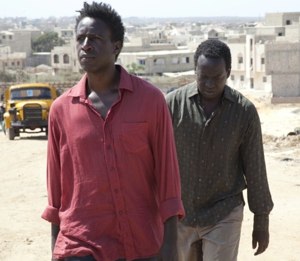
The Berlinale is the baked potato of European film festivals, and I don’t mean that as an insult, or even a backhanded compliment. A few months back, I was asked by David Hudson, of the superb movie-resource website Mubi , to offer a few observations about the Berlinale, which I’ve been attending since 2008. That year and every year since, the Berlinale has paid my way to participate in the Talent Press arm of the Talent Campus: Along with three other mentors, I coach young critics from all over the world (there are eight participants every year) as they cover the festival through assignments they’re given each day. While I’m here, I also see as many movies as I can and write about them. Hudson was putting together a sampling of opinions from festival attendees from all over the world, in preparation for a daylong symposium that was held by the German Film Critics Association in October. One of the issues the symposium hoped to address was the festival’s diminishing reputation: In recent years, the German and international press hasn’t exactly showered the festival with kindness. (Shane Danielsen’s Indiewire report from last year was particularly damning, if highly entertaining, though I disagree with him about the smell of the venues.) The Berlin Film Festival, now in its 62nd year, isn’t nearly as massive and glossy as Cannes, nor is it as quietly refined as Venice. I’ll concede that the programming choices, at least among the films in competition, often lean heavily in the direction of peasants and other types of oppressed peoples. Maybe that’s what made me think of the potato metaphor: If this isn’t always the most exciting festival on the planet, there’s still something solid and serviceable about it, and there are plenty of times when it exceeds expectations. Sometimes it’s just what you didn’t know you wanted. (That’s in addition to the fact that it’s one of only a few festivals with an extensive educational component.) Last year, the Berlinale brought us Asghar Farhadi’s A Separation , a picture that has since, with good reason, become a critics’ darling and is now a contender for an Academy Award. Fewer people Stateside have seen Bela Tarr’s The Turin Horse — though it opens in New York this weekend, at the Film Society of Lincoln Center — but the Berlinale also helped this picture achieve a small but significant groundswell of attention. Does every programming choice, particularly among the films in competition, measure up in significance to those two examples? Hardly. But every year at the Berlinale I discover at least a film or two or three that I’m grateful for, and that wouldn’t have crossed my path otherwise. This year, the programming choices are perhaps particularly un-glitzy, and they’re certainly low in Hollywood star power — not necessarily a bad thing. The festival opener this year was Benoit Jacquot’s historical drama Farewell My Queen (which I arrived too late to see), starring Diane Kruger, Léa Seydoux and Virginie Ledoyen, lovely actresses, all of them, though hardly household names. The festival is also featuring, out of competition, Stephen Daldry’s Extremely Loud and Incredibly Close , which has already fallen with a thud Stateside. (I felt sorry for my English friends as they traipsed off to see it. Once was more than enough for me.) Possibly the most high-profile of the films in competition, at least by Hollywood standards, is Billy Bob Thornton’s Jayne Mansfield’s Car, which screens later this week. (It stars Thornton, Robert Duvall, John Hurt and Kevin Bacon.) Thornton’s ex, Angelina Jolie, is also here with her directorial debut In the Land of Blood and Honey , being shown here as a special presentation. But there’s still plenty to look forward to: I can’t wait to see Tsui Hark’s 3-D Wuxia The Flying Swords of Dragon Gate, screening out of competition later this week. And though I’m not sure I can swing it, schedule-wise, I have a hankering to check out Timo Vuorensola’s Finnish-Australian-German (and crowd-funded) Third Reich/sci-fi thingie Iron Sky — because who can resist a pitch like this one: “In 1945 the Nazis went to the moon. In 2018 they are coming back.” Space-traveling Nazis will have to wait, I’m afraid. So far, the two Berlinale films I’ve seen have been more… potato-like. The less impressive of these two — and yet not dismissible by a long shot — is Alain Gomis’s Aujourd’hui , in which American musician-actor Saul Williams plays a Senegalese man, Satché, who, it appears, has been doomed to death: The film follows his last day on earth, which begins when he awakens and is greeted by his family and close friends, some of whom lament his impending demise and others of whom take him to task for his shortcomings. Satché might have escaped this terrible fate: He left Senegal to be educated in the United States, and then decided to come back, which, as the movie spells out in metaphorical terms, seals his fate as a human sacrifice. Aujourd’hui is a languorous film, or, rather, a film that makes you use a word like “languorous” when what you really might mean is “boring.” But Williams is a charismatic presence: His performance is largely wordless, which means we’re able to absorb the details of his world through his half-curious, half-cautious eyes. He’s an actor I’d like to see more of, leading to yet another reason a festival like the Berlinale is invaluable: Even flawed movies sometimes bring us the pleasure of discovering a new actor. Between the last installment of Cannes and this year’s Berlinale, a microtrend in European cinema appears to be taking shape: In the past 10 months I and some of my fellow critics have seen two movies about creepy adults who abduct children and hold them prisoner in a basement for months if not years. The first of those movies was the Austrian film Michael, by director Markus Schleinzer, which screened at Cannes (and which is opening in New York on Feb. 24). Michael follows the day-to-day life of a pedophile who keeps a 10-year-old boy locked in his basement; it’s an austere, chilly little picture — Schleinzer has worked as a casting director for Michael Haneke, which tells you something — though glimpses of grim optimism do occasionally break through its storm clouds. Frédéric Videau’s A Moi Seule (or Coming Home ), screening in competition here, tells a similar story: An opaque but clearly unhinged French construction worker, Vincent (Reda Kateb), abducts a girl, Gaëlle, at the age of 10, though he doesn’t violate her sexually. Some eight years later, she’s still a captive in his basement, only she torments him to the point where you wonder why he doesn’t just turn her out of the house already. (She sasses him, teenager-style, with sardonic observations heralded by phrases like “Earth to Vincent!”) The teenaged Gaëlle (she’s played by Agathe Bonitzer, a lanky actress with a sullen but penetrating gaze) escapes early in the picture — we get a sense of the texture of her relationship with Vincent via flashbacks. Unlike Michael, this isn’t a picture built on an ultra-manipulative sense of dread. And A Moi Seule raises some interesting questions about the nature of victimization: Gaëlle’s self-possession is a scary kind of life force, suggesting that even people who truly are victims can talk themselves out of that state by sheer force of will. This an unusual, thought-provoking picture, perhaps less daring than it thinks it is — but then, its sense of measured calm is part of what keeps it ticking. If there’s room in your life for only one movie about kids triumphing over loser sickos who turn their basements into prisons, make it this one. Follow Stephanie Zacharek on Twitter . Follow Movieline on Twitter .