Tag Archives: movie

W.E.’s Andrea Riseborough on Madonna, Understanding Wallis Simpson, and the Mania of Venice

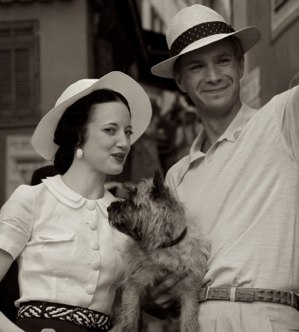
W.E. wasn’t just an undertaking for Madonna, who directed her Wallis Simpson/Edward VIII biopic with all the lavish heft of a gigantic watercolor landscape. It was also a labor of love for Andrea Riseborough, the 30-year-old actress playing Simpson, the American socialite whose romance with Edward led to his abdication of the throne in 1936. The film’s most enjoyable asset, Riseborough was saddled with making the polarizing Simpson a wholly charismatic figure — an Evita without the benefit of torch songs. She succeeds, and with her thoroughly photogenic Edward (James D’Arcy) in tow, she softens W.E. ‘s melodrama with fantastic ease. We caught up with Riseborough to discuss her fascinating director , her feelings about the subject matter, and the zaniness of the Venice Film Festival . You’ve been promoting this movie nonstop for months! Are you sick of corsets and gorgeous costuming at this point? Are the constraints of the couture caving in on you, so to speak? That’s very funny! No, I’m very much enamored with every different period. It’s so funny because people often say — or people talk about period pieces — and I never really faction different periods or divide them from one another. I just think that really everything is of a specific period whether it be 2016 or 1810. It was extraordinary, the architectural feats that some of the couture gowns entailed on W.E. entailed. You have no idea. It was extraordinary. But is it daunting to think of committing so much to the look and feel of a period piece again? It’s something I’m very familiar with. Because whether it is 2016 or 1810, it’s very arduous. Specificity in any project, even if it exists in the abstract [Laughs] or it exists in an alternate reality, there’s always a vision that everybody adheres to. Everybody very much passionately leans toward expressing that vision and the way we share it with the world. It’s something that’s very familiar to me, actually, I suppose is the answer to that. It’s something I enjoy very much. It’s transporting. You are stunning in this movie. You really have the face of a beautiful silent screen star, or a young Bette Davis. Have you seen Dark Victory ? Oh I have, yes! Very much a part of my lexicon as a child. Did you think your throwback looks would aid you in getting cast? Because you would definitely fit in with the stars of Wallis Simpson’s time. Not really, because when I’d been sent the script, I thought it was very unique. I wanted to explore a little more and was interested certainly in the character that was Wallis Simpson, when I went to meet with the director — but when I met her, I actually had what could only be described as sandy blonde hair and a false tan. I was playing a modern character elsewhere. I’d never seen myself in one particular period. I know that my face is pretty plain and can look reasonably attractive but can also look horribly unattractive, and it’s been something that’s been a real benefit to me — being a blank canvas. Muscularly, I can mold it anyway that I want to, if need be. Or I can completely relax it! So, no, I didn’t think that — no. What I saw ahead was like with any role, the journey of a transformation that was something so utterly far away from myself. It was something and is something I’m very fulfilled by. For the record, James D’Arcy also looks just like Anthony Perkins. You can tell him I said so. [Laughs.] Nobody’s ever told him, but I can e-mail him if you like! [Laughs again.] E-mailing him now. Madonna is known for being able to choose forthcoming trends, own them, and bring them to the pop culture fore. Before you met her, did you have any idea what would impress her, based solely on your knowledge of her before W.E.? Did you use that insight to get cast in the film? My desire was not to impress; I wanted to see what fueled her passion for the story. I wanted to know what her vision was for it, and whether she would respond to what I could her offer her as a potential duchess. I think it would’ve been — I would’ve been somebody else, actually. It’s not who I am, I suppose. I was interested to see what our complicit working relationship would be. That was exciting to me. The story of the duchess was something I thought would be potentially interesting to excavate. I wanted to see within what framework that might possibly happen. She, very fortunately, responded to what I had to bring to her. Really, we were artistically complicit from that point on, from the outset really. She’d seen me play Margaret Thatcher and this other character before, so she had a good grasp on the reality that I could inhabit somebody who existed and somebody who was young and innocent — this other character was young and innocent. One interesting thing about W.E. is the sheer continental difference in knowledge about Wallis Simpson. In the U.K., everyone knows. In the U.S., plenty of people know nothing about that era of British history. Oh, don’t do yourself down! I’m trying not to! But there’s definitely a gap in awareness about who Wallis Simpson was. How do you feel addressing that with different markets for the film? I think, really, the story transcends any historical context you might feel you need to put it in. Interestingly, of course, it was a reality. But what we have portrayed is our perception or version of the truth, Madonna’s version and vision of a woman who really existed. The heart of the piece is the thing that’ll tap on the door of the common man, if you will. Because, I hope, that was the thing that originally tapped on the door of the common man — every one of the working class areas that Edward visited, the working men so very much appreciated him, took him into their homes in a way that a prince had not been taken in before. It’s that same honesty and love and truth, I think, that people will feel and respond to. Wallis, she’d seen the writing on the wall. She ended up being as trapped as she imagined she would be, if he should abdicate, which he did as you know. It’s impossible for any one person — I mean, let’s not even reduce it to gender — it’s impossible for any one person to live up to the responsibility of the kingdom. How does one man fulfill a partner who has given up such an awful, awful lot for their relationship? Do you find yourself sorting out the fair criticism of W.E. from what might be considered a biased response to your director? Has the criticism been fair? I really believe that people have their own relationship with it. And I say “with it,” I mean everything that the film is. We were all part of making it. They can choose to absorb it and gain what is valuable from it any which way. I really have no opinion on it, to be truly honest, Louis. I know I’m incredibly honest to be part of something I found beautiful. That’s really all I know. Talk about the Venice Film Festival, where the world got its first taste of W.E. and the first swarm of responses to the film hit. Seemed pretty manic at the time. How do you remember it? It felt incredibly special. It was almost like our first offering at something we’d been so lovingly baking. The explosion that then ensued was quite breathtaking. It was almost funny being so surrounded by love. I’m just speaking as honestly as I felt it! Lastly, I heard you say that you and Madonna connected deeply in researching the “geeky” minutia of Wallis Simpson’s life. How deeply did that fixation go? Oh my gosh, that is such a long answer, Louis. Her fastidious research has no bounds! And that’s where the answer lies. When you approach something that you’re ignited by and are passionate about in such a way, really, until it seems to you’re getting to the point where no stone is unturned, only then can you stop. When you imagine chronicling an entire woman’s life from age 29 to 70, everything that went before 29 — since it must be taken into account — and everything that went after, you can imagine that’s no small feat. I ferociously lapped that up. I enjoyed it so much. But none of that is worth anything if you can’t just trust that it’s been inside of you so you can be present when you’re living out what might’ve been their life. Follow Louis Virtel on Twitter . Follow Movieline on Twitter . [Top Photo: WireImage]
More:
W.E.’s Andrea Riseborough on Madonna, Understanding Wallis Simpson, and the Mania of Venice

Pariah Writer/Director Dee Rees on Coming Out, Awards Season, and Pitching ‘Dallas Meets The Wire’

Writer/director Dee Rees has spent six years with Pariah , a film she wrote as a full-length script in 2005, then recalibrated as a short subject in ’07, and finally re-adapted as a feature film that premiered at this year’s Sundance Film Festival. Pariah concerns a teenager named Alike (Independent Spirit Award nominee Adepero Oduye), an expressive girl who only encounters more identity issues as she tries establishing herself as an out lesbian. Though Rees came out as a lesbian in her 20s, she feels a deep connection to Alike — especially in her resistance to “butch” and “femme” labels. Movieline caught up with Rees to discuss Pariah ‘s wonderful story, the visibility of the LGBT coming out experience in 2011, and Rees’s unexpected connection to Dallas . Since Pariah ’s genesis as a short film years ago, there’s been a lot more visibility about the coming-out experience. Did you find it necessary to tailor the movie to the burgeoning sense of awareness about the topic? When I first wrote the script in ’05, I had a sense of who Alike was and where she was going, so there was no pressure to change it because I wanted to stay true to her and what her experience was. I didn’t want to make Alike’s experience vary from anyone else’s experience or make it topical. I just let it be what it was and just trustd that if we’re honest about the character and honest about the world, that it would be relevant no matter when it came out. It’s funny because some people along the way have said, “Is this an issue anymore? Is being gay cool now?” And it’s like, no. It’s not OK now, and it’s not “cool.” Although people’s experiences of coming out are changing and it’s becoming much more visible, that’s not necessarily everyone’s experience. It was about remaining true to the character and what this story was. I’m glad to see that coming out is relevant and people are aware of it, but I definitely didn’t feel compelled to make it fit anything. You’ve said that you came out in your 20s, but you wrote about the coming-out experience of a teenage girl. How did you find the inspiration for her character? It was just my own coming-out experience sort of transposed onto a 17-year-old. I chose to make her 17 because it’s such a higher-stakes age; figuring stuff out that young, it’s going to be higher because you’re still dependent on your parents and so much is still uncertain about you. You don’t know what you’re going to be. For her to make that discovery at that age, it makes her more interesting. For me, it’s also inspired by being in New York and being among out teenagers, which is something I’d never seen in Nashville, Tennessee. I barely saw out adults. To see out teenagers who were not only out, but out in the streets was inspiring for me. It made me wonder, “Even if I had known at 17, would I have that courage to be the person in the film?” – this woman who was trying to live in two worlds. Do you have particular favorite teenager characters from movies? No, not really! I just like Alike because she’s imperfect. Initially she isn’t courageous. In teen movies, we see characters who get to say exactly what’s on their mind and say what they want and thumb their nose in the face of adult authority. For Alike, I wanted someone who didn’t feel quite comfortable – someone who’s not so self-possessed, not so self-assured, and is figuring things out. Pariah ’s lead actress Adepero Oduye just earned an Independent Spirit Award nomination. Can you describe watching her on set? What did she bring to the character? Watching her on set was an experience of watching her inner life. Adepero is so expressive and yet so subtle. It was great to watch changes going on in her eyes and going on in her body language and behavior – those unspoken things. I felt like I was watching her internalize the characters’ feelings. She was really in that moment. She was really feeling what Alike was feeling. The feeling like she wanted to cry, feeling like she wanted to laugh – the changes were literally visceral. They were changing her, moving through her body. Getting to watch somebody unfold on camera is like watching a flower open. Amazing. In recent years, we’ve seen more in the media about gay men’s coming out experiences than lesbians’. Do you think Pariah highlights the specificity of a woman’s coming-out? I think Pariah highlights that there’s this gray area within the gay or lesbian community. Sometimes there’s a pressure to check a box, to either be hard and be butch or be feminine and wear heels. Alike’s neither of those things, so there’s a gray area. And her coming-out experience is different because she’s coming into a different space. Alike’s not figuring out if she’s gay – she knows she loves women, that’s not her question. It’s more “How [do I] be in the world?” The first half hour isn’t “Am I gay?” It’s, “Laura’s telling me I should be butch. Mom’s telling me I should be femme.” Versus other coming out experiences, like… when she’s wearing the club clothes, that’s not really her. When she changes into this different thing for Mom, she’s not that either. We don’t see her changing from her true self into another self – she’s neither of things she’s taking on or off. We don’t know who she is. She doesn’t really want to be this butch lesbian. She just wants to be Alike. You’ve been talking about this project everywhere for years and years. You’re the Carmen Sandiego of the indie film circuit. Which was the best kids’ game show ever! Indeed! What have you gained from spending so much time introducing the film to festival audiences? Specifically from being on tour with the film, I’ve gained a huge connection with audiences – an affirmation that we told the story truthfully. To your point, we weren’t writing it based on what people were saying or what was going on in the world. We stayed in a cocoon and wrote this thing. When we finished, we didn’t know how people would respond. But people felt we told a story and were honest with the experience, so we gained a feeling of affirmation. And personally, having gone from a point where when I was coming out and I was not quite sure the world that the world would accept me for who I have, or not quite sure that I could be loved or find love, and going to this press tour and seeing audiences embrace the film and saying, “We love you,” Pariah basically gave me the courage to be who I am. I came out behind the shield of this film. This tour has been this amazing wash of affirmation and love. It makes me feel good about audiences. They’re smart and progressive and open. They’re willing to see stories beyond themselves, images that don’t exactly look like them. It restored my faith in cinemagoers. They are hungering for good stories and are willing to step outside their experience to get them. Lastly, what do you have coming up? I imagine your new projects differ from Pariah because this movie is so emotional. One project coming up is called Large Print , a spec script I did, which is about a 50-something insurance adjuster who is recently divorced and lately incontinent, and has to redefine happiness for herself. Though she’s 56, it’s still a coming-of-age story. It’s going to be an emotional film because she’s played life by the rules and nothing’s turned out the way she’s expected. The other film I’m writing is called Bolo , a thriller set in the south. It’s also about, “What is home?” What if where you grew up changes? How do you accept that? Though it has more of a genre element, it goes back to these human things. I’m working on a TV series with HBO and Viola Davis about corruption in education, which will be cool. I’m working on another TV series called Reveal set in Nashville. It’s Dallas meets The Wire , about a city going through an identity crisis. I continue to be drawn to characters, and characters that are flawed especially. I love exploring flawed people trying to make their way. Did you just say “ Dallas meets The Wire ?” Yeah! Do you know how exciting that is? Ha! We’ll see! Dallas was the soap growing up. All my aunts gathered around the TV. We should not have been the target audience for Dallas . Pariah debuts in limited U.S. release December 28. Follow Louis Virtel on Twitter . Follow Movieline on Twitter .

More here:
Pariah Writer/Director Dee Rees on Coming Out, Awards Season, and Pitching ‘Dallas Meets The Wire’

The Ides of March, The Artist and Other Moviegoing Let-Downs of 2011

The key to a list of moviegoing disappointments is the element of expectation: I am prepared to say I watched more suicidally bad films in 2011 than in any other year in my life; to be merely disappointed suggests a certain relativity. For example, I found The Ides of March to be a tremendous let down, I think partly because my hopes were inflated. George Clooney’s high political tragedy is perfectly cast, and that early, loaded exchange of glances between rival campaign managers Phillip Seymour Hoffman and Paul Giamatti goes off like a starter pistol. But The Ides of March is like that — it keeps threatening to start something interesting, right up to the point that it just… ends. I had the same issue with Good Night and Good Luck , another major disappointment and another film that played as if it were perpetually about to begin . The pleasures of Ryan Gosling’s performance as the fledgling spinmeister feel stingy — why tell us that he’s known to rock the microphone when we paid for the show? And Clooney’s Teflon governor is an empty, well-cut overcoat — perhaps the most glaring evidence of both the character and the director’s failure is that his one big scene with his golden boy star is the least exciting one in the movie. Given the improbable, stadium-rolling wave of appreciation that greeted The Artist , I expected much more than the mannered silent that Michel Hazanavicius and co. delivered. A mediocre movie with a couple of bright moments, The Artist also had too little to say about its chosen themes. Given the challenge of holding our attention across a silent film landscape, the music felt either too sparse or too sentimentally obvious, and the droopy patches felt twice as long as they needed to. The story of a silent film star left behind by the transition to sound was unconvincing when it needed to be clear and dolorous when it might have been lyrical. Similarly cranky friends have fixated on the issue of George Valentin’s (Jean Dujardin) refusal to speak on film—was it the accent? A principled stance? The fact that they were at all unsure points out a massive gap in the center of The Artist , one its title sews up too neatly. Any close follower of Werner Herzog’s career should know better than to bring expectations brewed from his last film into the next. Along with an auteurist consistency of preoccupations, Herzog shares with Woody Allen a prodigious output of wildly variable quality. The titles of this year’s Herzogian harvest — the sublime Cave of Forgotten Dreams and the slapdash Into the Abyss — seem interchangeable, but the latter felt to me like Achilles Herzog, a hot check of a documentary passed off as the real thing. Researched and assembled under extreme time constraints, Into the Abyss is an inquiry into the death penalty that gets by on artful narrative juxtapositions and moments of profound, almost invasive intimacy with its interview subjects. The reach for effect often feels more craven than considered, and the crime at the heart of the film is eventually clouded over for convenience. When a topic and a director — and a title! — of this magnitude collide, the viewer wants the Earth to shimmy; instead we had to settle for the Richter equivalent of a quick freehand sketch. I’ve watched Tinker, Tailor, Soldier, Spy twice now and I still couldn’t give you a basic plot summary. Having felt like a failure after the first viewing, after the second I’m prepared to push the better part of the blame onto director Tomas Alfredson and his Let the Right One In editor Dino Jonsäter. It’s a film that seems designed for le Carré obsessives, which means the rest of us may have to sit through all 57 hours of the 1979 BBC production just to get the facts straight. It’s a shame, because the performances and the production design knocked me out, but of all the ways to sex up a retro-procedural, I’d put mincing it into incomprehensibility second to casting Young Jeezy as George Smiley. With The Iron Lady Meryl Streep re-stamps her all-access passport to human history, and proves once again that the only thing she can’t seem to defy are superlative clichés. There are no words left to describe the kind of work Streep does — even those who dismiss her as a mere impressionist have to admit that her Margaret Thatcher is uncanny in its near-total self-effacement. But the film built around that performance is in some sense designed to disappoint: The biopic is an inefficient delivery system for dramatic tension or even, paradoxically, the human arc of a lifetime. It’s the movie equivalent of a greatest hits package, and while I’m not crazy about the appropriation of the still-living Thatcher’s dementia as a dramatic device, for me the more broadly director Phyllida Lloyd played her hand — ruining every successful visual cue by repeating it three times, leaping from one familiar milestone to the next — the farther we move away from the potential of Streep’s performance and the uneven richness of Thatcher’s story, into the straight flush of political iconography. Follow Michelle Orange on Twitter . Follow Movieline on Twitter .

Continued here:
The Ides of March, The Artist and Other Moviegoing Let-Downs of 2011

Justin Bieber Has ‘It,’ Mark Wahlberg Says

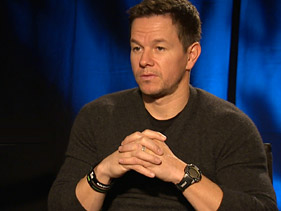
‘I’m pretty intuitive,’ actor tells MTV News about why he wanted to work with the pop star on an upcoming basketball-themed drama. By Jocelyn Vena, with reporting by Josh Horowitz Mark Wahlberg Photo: MTV News Mark Wahlberg surprised movie fans everywhere when he announced plans to hook up with Justin Bieber on the big screen. But when MTV News caught up with the “Contraband” star recently, he explained why he wanted to work with the teen phenom on the basketball-themed drama. “Intuition. I’m pretty intuitive,” he said of why he thinks shooting a film with the pop star is the right choice. “I see the guy and spent time with him, and you see what he does and how he does it, and then you actually have a conversation with him, and it’s there.” Of course, if it doesn’t come easily to the rookie actor, Wahlberg has a backup plan: “It’s there — and if not, I will extract it.” When MTV News caught up with Wahlberg and Bieber earlier this year at the MTV Movie Awards, they opened up a bit more about the in-the-works flick. “Wait till you see me and Bieber in the flick. Think of, like, ‘The Color of Money,’ ” Wahlberg said of his “old guy” role. “So I get this call from Paramount [with a story about] an old guy and a young guy. I’m like, ‘Cool, let’s get Jack [Nicholson]. Let’s get Robert De Niro. Let’s get Robert Duvall.’ And they go, ‘What about Garrett Hedlund?’ I’m like, ‘For what?’ ” he further recalled. “They’re like, ‘For the young guy.’ ” Bieber, who previously appeared on the big screen in his 3-D concert flick “Never Say Never,” said he hopes to be on a film set by sometime next summer. And while he kept his plans hush-hush, he added that his team is “working on the script.” For breaking news, celebrity columns, humor and more — updated around the clock — visit MTVMoviesBlog.com . Related Photos Justin Bieber And Mark Wahlberg Team-Up On The Big Screen Related Artists Justin Bieber

See the rest here:
Justin Bieber Has ‘It,’ Mark Wahlberg Says

Justin Bieber Has ‘It,’ Mark Wahlberg Says

‘I’m pretty intuitive,’ actor tells MTV News about why he wanted to work with the pop star on an upcoming basketball-themed drama. By Jocelyn Vena, with reporting by Josh Horowitz Mark Wahlberg Photo: MTV News Mark Wahlberg surprised movie fans everywhere when he announced plans to hook up with Justin Bieber on the big screen. But when MTV News caught up with the “Contraband” star recently, he explained why he wanted to work with the teen phenom on the basketball-themed drama. “Intuition. I’m pretty intuitive,” he said of why he thinks shooting a film with the pop star is the right choice. “I see the guy and spent time with him, and you see what he does and how he does it, and then you actually have a conversation with him, and it’s there.” Of course, if it doesn’t come easily to the rookie actor, Wahlberg has a backup plan: “It’s there — and if not, I will extract it.” When MTV News caught up with Wahlberg and Bieber earlier this year at the MTV Movie Awards, they opened up a bit more about the in-the-works flick. “Wait till you see me and Bieber in the flick. Think of, like, ‘The Color of Money,’ ” Wahlberg said of his “old guy” role. “So I get this call from Paramount [with a story about] an old guy and a young guy. I’m like, ‘Cool, let’s get Jack [Nicholson]. Let’s get Robert De Niro. Let’s get Robert Duvall.’ And they go, ‘What about Garrett Hedlund?’ I’m like, ‘For what?’ ” he further recalled. “They’re like, ‘For the young guy.’ ” Bieber, who previously appeared on the big screen in his 3-D concert flick “Never Say Never,” said he hopes to be on a film set by sometime next summer. And while he kept his plans hush-hush, he added that his team is “working on the script.” For breaking news, celebrity columns, humor and more — updated around the clock — visit MTVMoviesBlog.com . Related Photos Justin Bieber And Mark Wahlberg Team-Up On The Big Screen Related Artists Justin Bieber

Continue reading here:
Justin Bieber Has ‘It,’ Mark Wahlberg Says

Elizabeth Olsen, Shailene Woodley, and Other 2011 Highlights From The Verge

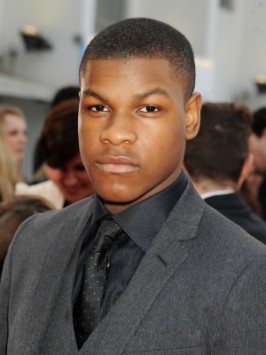
For nearly three years, Movieline’s Verge feature has introduced you to the likes of Jessica Chastain, Jennifer Lawrence, Armie Hammer, Emma Stone, Chris Hemsworth and dozens of other bright young screen talents on their ways to the big time. 2011 was no exception, so wind down the year with a look back at — and a word with — a few major new players you’ll be seeing plenty of in the future. John Boyega AGE: 19 THEN: Fought off alien invaders in South London in the cult favorite Attack the Block NOW: Leading the Spike Lee/Mike Tyson/John Ridley HBO series Da Brick ON COMING TO HOLLYWOOD “McDonald’s is a big highlight for me. [… Y]ou do things differently. Seriously. I mean, I asked for a burger and they give me a tank. It’s like, ‘Wow, you guys eat!’ I really respect that. We don’t have the little thing where you can refill your drinks. We don’t have that! So yeah, it’s been fun. Seeing the history, seeing the Hollywood sign. I’ve been on Sunset. I went to the Griddle Cafe. Oh, man. I had an Oreo pancake. It was heavenly. I don’t want to go back now, just because of that pancake.” Joel Courtney AGE: 15 THEN: Made film debut in J.J. Abrams’s Super 8 NOW: Will appear as the former Twain hero in upcoming Tom Sawyer & Huckleberry Finn ON THE SPIELBERG FACTOR : OK, I have to tell you. The first time Riley [Griffiths] and I were doing a scene, and [Steven Spielberg] came in, I didn’t know if Riley saw him, but I did. I was like, ‘Dude!” He was like, ‘Yeah, I see him!’ It was so funny because during this scene we were trying not to break character because he was there but we really wanted to talk to him and meet him. And it pushed us to do better in the scene, because he was there. That’s one of our better scenes together. It’s the one where we’re watching the TV, watching the newscast, and he was there during that scene. While we were at Bad Robot watching [the film] with J.J., I was like, “Riley, that’s the scene Steven was there for!” He was like, ‘I know, it’s awesome!’” Jeremy Irvine AGE: 21 THEN: Made big-screen debut as Albert Narracott in Steven Spielberg’s War Horse NOW: Will play younger version of Colin Firth’s character in The Railway Man , appear as Pip in Great Expectations , and co-star with Dakota Fanning in Now is Good WORDS OF ADVICE : “You’ve got to get away from the crowd. If you stay with everyone else, then you’re just going to be another one. But there’s no set way. At the end of the day, what it all comes down to is being in the right place at the right time.” Brit Marling AGE: 28 THEN: Co-wrote and starred in the Sundance darling Another Earth NOW: Appearing opposite Richard Gere and Susan Sarandon in Arbitrage and in the all-star Robert Redford-directed thriller The Company You Keep ON EXCEEDING EXPECTATIONS : “When we were making this movie, we were saying at the beginning, ‘Oh yeah, we’ll have a screening at our house. How many people can we fit into the living room? If we bring in chairs and we borrow this person’s couch, we can fit 20 people in here to watch the movie!’ That’s kind of how we went about making it; we just wanted to make something, you know? The desire to just make something is so strong, you’re not even thinking about how it could enter the world. Getting to go to Sundance, and [Fox] Searchlight taking the film into their hands — which are the most capable hands in independent filmmaking — they put so much thought and feeling behind bringing this work into the world that basically, it’s every day a state of shock and awe.” Elizabeth Meriwether AGE: 30 THEN: Wrote the screenplay for the Natalie Portman/Ashton Kutcher comedy No Strings Attached NOW: Created Fox’s hit New Girl , has projects in development with Fox, Paramount and Universal ON THE MASTERPLAN : “This has just been a kind of unbelievable process. I just want to keep writing characters who are interesting and complicated people and interesting roles for women, in TV or film or in theater. I think that’s like my Blues Brothers mission.” Elizabeth Olsen AGE: 22 THEN: Wowed Sundance and stirred awards talk with her breakout role in Martha Marcy May Marlene NOW: Will appear in Peace, Love and Misunderstanding (with Jane Fonda), Red Lights (with Robert De Niro and Sigourney Weaver) and Very Good Girls (with Dakota Fanning) ON THE ART OF READING SCRIPTS : “There’s something that was really interesting that happened as I was reading it that I actually hadn’t experienced with other scripts, because it was also within the first six months of reading scripts and auditioning. Like when you’re reading a book in your head, you create this imaginary character, naturally. And it was my first time reading a script imagining myself instead of another character. Now, every time I read a script I try and make that happen, because it helps a lot to figure out or tell yourself, ‘Oh, I can do this,’ and then you end up reading it in a way that you would do it.” Corey Stoll AGE: 35 THEN: Stole scene after scene as Ernest Hemingway in Woody Allen’s monster hit Midnight in Paris NOW: Will appear in The Bourne Legacy and the Samantha Morton-led ensemble film Decoding Annie Parker ON THE AUDITION OF A LIFETIME : “It was like a two-page sentence with no punctuation. It was a lot to prepare in five or 10 minutes. But then I came in and did it, and he seemed really happy. He gave me one little adjustment, and I did it again. And that was it. It was a great audition — the best audition of my life in terms of the sense of not having to feel like I was auditioning, even. It was just this sense of, ‘Here, just read this. What does this sound like? Is this going to work?’ I was shockingly un-nervous for what the stakes were, because you look at it and think, ‘Wow. There are so many actors who would kill for this role.’ And it’s so well-written, and it’s such a juicy character, and you know that Woody Allen is going to direct it perfectly. It was just up to me to not screw it up. [Laughs]” Juno Temple AGE: 22 THEN: Had first leading role in the ’80s-era dramedy Dirty Girl NOW: Has a half-dozen projects in line for 2012, including the The Dark Knight Rises , Lovelace and Jack and Diane ON HER INSPIRATION : “I was 4 years old. It was L.A. – my parents lived in L.A. – and I was sitting on the couch. They had this great striped couch in the living room. My dad had a laser-disc machine. I remember the dress I was wearing, too: This little short, bright blue corduroy dress with red trim, buttoned up the front. I was wearing that. And my dad put on La Belle et la Bete , by Jean Cocteau. And I legitimately had my mind blown. I was in love with the beast. I wanted to be Belle more than I know how to put into words — still to this day, and I’m 22. I wanted to do that — anything I could do to make that stuff happen. So I started doing plays. I was always in fancy dress. It just became something I was obsessed with. I’ve always had a crazy, vivid imagination.” Shailene Woodley AGE: 20 THEN: Appeared as George Clooney’s daughter in The Descendants NOW: Navigating awards season (likely all the way to Oscar night) and upcoming fourth season of her hit TV show The Secret Life of the American Teenager ON FAME, THE NECESSARY EVIL : “As a kid, I never wanted to be in magazines. I never wanted to be that stupid ‘F’ word, famous. I never wanted to be an ‘S’ word, star. For me it was all about the art of acting. I remember being an 8-year-old and saying, “I’m going to be a third-grade teacher and on the side, I’ll act.” [Laughs] I don’t want to be a third-grade teacher anymore, but I do want to always acting be my hobby and it be fun. The day it becomes tedious or the day it becomes something I feel I have to do for money, or because of the industry, or because of some silly image, is the day I quit. If it’s not fueling something, why would I do it?” Follow S.T. VanAirsdale on Twitter . Follow Movieline on Twitter .

Excerpt from:
Elizabeth Olsen, Shailene Woodley, and Other 2011 Highlights From The Verge

Country Strong, Final Destination and Other Noteworthy Surprises of 2011

Surprises too are often tied to expectation, or lack of it. The first film I saw in 2011 surprised me in part because it was the first film I saw in 2011 — that is, a film shunted onto the whistling heath of the January release schedule. It was Shana Feste’s Country Strong , and it got a raw deal. Casting Gwyneth Paltrow as a country superstar is either a brave decision or an incredibly timid one — regardless, Paltrow stepped into an outsized role and very nearly filled it out. The supporting cast of Leighton Meester, Tim McGraw, and especially Garrett Hedlund give the celebrity melodrama human ballast, and Feste manages to pace a pretty slick story with moments of believable intimacy and alienation. When it comes to horror films and especially on-screen gore (I suppose off-screen gore as well), I am — as Justin Timberlake’s character pronounced it in the reasonably surprising Friends With Benefits — a huge pu-ssay. Seeing Final Destination 5 next to my name on the assignment slate was a definite short straw situation, but I fancy myself a professional, and so cleared my schedule and my appetite and headed to midtown. I had never seen a Final Destination , which accounted for the formula’s novelty for me — the villain here is death itself, manifested in the trickle down economics of excruciating coincidence — but the film, shot in 3-D, is also brilliantly choreographed and possessed of the kind of tension — outrageous but not totally gratuitous — that directors rarely bother with anymore, when splatters and shakey cams do just as well. Not that there aren’t — heaven knows — plenty of guts a-squishin’ in Final Destination 5 . But it was worth a few pounds of flesh to be reminded how pleasurable it is to be both really and truly scared and perfectly safe in a crowded movie theater. So a quick check-in on the Friends alumni: Most promising cast member Jennifer Aniston seems resigned to debasing herself in Adam Sandler shitshows like Just Go With It ; Matthew Perry, always rebounding in my heart, is as ever poised for a comeback; Lisa Kudrow keeps launching hothouse comic series that feel too cringey to last; Courtney Cox has a network show and yet seems to spend her days fastened to a mirror; Matt LeBlanc came up with something interesting in the meta-TV cable series Episodes ; and David Schwimmer pretty much killed it directing his second feature film, the internet predator drama Trust . Clive Owen gives a powerful and difficult performance as a father reckoning with his daughter’s role in her own victimization and Liana Liberato makes a frankly astonishing debut as a young girl drawn into the emotional confusions of abuse. In deploying real emotional toughness against easy accusations of after-school special-dom, it is Schwimmer who emerges as the mature and still-promising talent. I was surprised, anyway. Though it’s not strictly movie-centric, I feel compelled to note one of the most pleasant surprises of my favorite new television series — the venue, after all, to which so many of our movie stars have migrated. Luke Wilson hit an inexplicable rough patch in the late aughts, his endearing, chronically bedazzled comic presence and magma-deep melancholy wasted on minnow-ish indies like Middle Men and I Melt With You director Mark Pellington’s Henry Poole Was Here . And then his disheartening appearance in the ads that cannot be named. But in playing the innocuous waster Levi Callow in Mike White’s HBO series Enlightened , Wilson seems to have not only returned to form but raised his game. White cast the role perfectly, and dispenses the character of Levi in precise and exact-right doses: Initially seen through the warped lens of Laura Dern’s Amy — a recent inductee into the narcissistic cult of well being — he emerges as more than a pathetic fallback and projection screen for his ex. In the exquisite Robin Wright episode, by making Levi’s exasperation his own White brings Amy’s desperation into clearer view. In a later confrontation with Amy’s mother (Diane Ladd) Levi is finally unleashed as a whole, seething person. Wilson makes what might be an ordinary role feel risky, and in his fringy yet essential presence sets up the question of whether Levi is a poignant satellite in Amy’s orbit or she is a moon to his Melancholia. I’m really happy to be watching Luke Wilson again, is mostly what I’m saying — on any screen. Happy and a little bit relieved. Follow Michelle Orange on Twitter . Follow Movieline on Twitter .

Original post:
Country Strong, Final Destination and Other Noteworthy Surprises of 2011

Magazine Publisher: “There’s Nothing Wrong With Calling Rihanna A N***a B***h!”

View post:

Just when people thought we were living in a post-racial climate, “N***agate” happens. There’s no possible way you don’t remember a Rihanna taking to Twitter to beast on a Dutch magazine for calling her a “n***a b***h.” Once the magazine received hella backlash, the editor-in-chief, Eva Hoeke , issued and apology and resigned from her position. Well, the publisher of the magazine, Yves Gijrath , decided to release his own statement. What it comes down to is the publisher is saying they didn’t print anything offensive because the article was meant as a joke. “[T]here is nothing wrong in the magazine,” he said. “[Hoeke] presented [the offensive article] as a joke, but it most certainly was not a joke. It was an interpretation [of a fashion style] … She should have said: ‘we did not realize this interpretation is such a touchy subject. We never meant any harm and offer our sincere and upright apologies.’” *blank stare* For real?! Spotted at Black Voices . RELATED POSTS: EIC Of Dutch Magazine Resigns After Calling Rihanna A “N***a B***h” Rihanna Was Cast In “Battleship” For Her “Urban Swagger” [VIDEO] Rihanna Booed In London For Being Too Raunchy!

Magazine Publisher: “There’s Nothing Wrong With Calling Rihanna A N***a B***h!”

Santa Claus Becomes A Superhero?!

Original post:

Up until the point I realized Santa and my mom had the same handwriting, I wanted to know about his back story. Where did Santa grow up? How did he get the job of being Santa? Does Santa have superpowers? Back then, I was never satisfied with the answers I was given. Author William Joyce felt the same way and is releasing a series of young adult fantasy novels surrounding the origins of Santa Claus, the Easter Bunny, and the Tooth Fairy. Joyce’s novels have been developed into an animated feature length film called ‘Rise of the Guardians.’ The film finds the aforementioned characters banding together to stop The Boogeyman from turning children’s hopes and dreams into nightmares. The project will feature the voices of Alec Baldwin, Isla Fischer, Jude Law, Chris Pine, and Hugh Jackman . A script for the animated feature will be written by David Lindsay-Abaire . Peter Ramsay is slated to direct as well as executive produce alongside William Joyce and Guillermo Del Toro. ‘Rise of the Guardians’ is scheduled for release on November 21, 2012. Will you be checking it out? Head over to LATimes.com for details . RELATED POSTS: “Rio” Keeps “Madea’s Big Happy Family” Out Of The #1 Box Office Spot Where Is The Black Green Lantern? 5 Comic Book Movie Franchises That Need A Reboot [FRIDAY FIVE]

Santa Claus Becomes A Superhero?!

Holiday Weekend Receipts: Impossible Rules, War Horse Strong

‘Twas the weekend of Christmas, and all through the house, many studio executives had good reason to grouse… Ugh, sorry about that — it’s the egg nog. In fairness, the holiday frame actually signaled a nice rebound from previous weekends (which, when considering the utter horror show this month’s been, isn’t saying so much, but still). Who got what they wanted for Christmas, and who did Santa all but skip? Your Weekend Receipts are here. [All figures are four-day weekend estimates, with the exception of War Horse and The Darkest Hour , which opened Sunday.] 1. Mission: Impossible – Ghost Protocol Gross: $46,210,000 ($78,645,000) Screens: 3,448 (PSA $13,402) Weeks: 2 (Change: +261.4%) Oh, so this is how Scientologists celebrate Christmas : With a franchise windfall that ran away with the box-office crown. Xenu? Er, I mean, who knew? 2. Sherlock Holmes: A Game of Shadows Gross: $31,810,000 ($90,564,000) Screens: 3,703 (PSA $8,590) Weeks: 2 (Change: -19.7%) Enh. I’m more interested to see how this performs internationally, which will likely dictate how, when or even if your third Sherlock Holmes sausage is made. Just roll it in with Iron Man 3 and let Robert Downey Jr. move on with his life, already. 3. Alvin and the Chipmunks: Chipwrecked Gross: $20,000,000 ($56,940,000) Screens: 3,734 Weeks: 2 (Change: -14%) Raise your hand if you thought that the second weekend of Chipwrecked would outgross the first weekend of the PG-rated We Bought a Zoo by a nearly two-to-one margin. On Christmas, even! Maybe Fox should have bumped that awesome Marley and Me sequel to theaters instead. 4. The Girl With the Dragon Tattoo Gross: $19,400,000 ($27,776,000) Screens: 2,914 (PSA $6,658) Weeks: 1 Clearly the parents who suffered through Chipwrecked needed this bracing Fincherian pick-me-up. Nice timing, Sony! 5. The Adventures of Tintin Gross: $16,100,000 ($24,107,000) Screens: 3,087 (PSA: $5,215) Weeks: 1 In the battle of the movie terriers, Tintin ‘s Snowy was no match for The Artist ‘s Uggie — at least when it came to per screen average, $8,400 to $5,200. Honestly I have no other insights or observations to bring to this. 6. We Bought a Zoo Gross: $15,600,000 Screens: 3,117 (PSA: $5,005) Weeks: 1 Speaking of animal performers, what happened to Crystal the Monkey? First The Hangover Part II made more than half a billion dollars; then Zookeeper slid in with less than a third of that. Now she’s doing holiday tricks for America’s pocket change. Someone mount an intervention, pronto. 7. War Horse Gross: $15,025,000 Screens: 2,376 (PSA: $6,324) Weeks: 1 A miraculous horse! OK, not quite — but still: That’s not a bad two-day showing at all for a two-and-a-half-hour non-sequel with no stars and stiff competition (and not-so-stiff competition; The Darkest Hour was dead on arrival with $5,500,000) up and down the multiplex corridor. I’m very curious to see how this holds in the weeks ahead, if only so we might have the much-needed War Goose spinoff a few Christmases from now. Fingers crossed… [Figures via Box Office Mojo ] Follow S.T. VanAirsdale on Twitter . Follow Movieline on Twitter .

Go here to see the original:
Holiday Weekend Receipts: Impossible Rules, War Horse Strong