Tag Archives: psych

Ween May Be Gone, But Their ‘Good Run’ Lives On

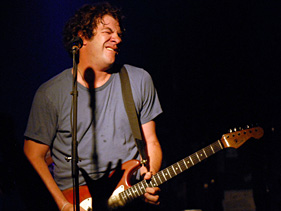
With the band (apparently) calling it quits after 25 years, Bigger Than the Sound offers a eulogy. By James Montgomery Dean Ween Photo: Chris McKay/ WireImage In my review of Ween ‘s 2007 album La Cucaracha (which also happens to be the last time they were mentioned on this website), I referred to them as “musical cockroaches,” the kind of scurrying, scrounging band that — much like the titular (and totally gross) arthropod on the record’s cover — was capable of surviving nuclear holocausts and subsisting on a bar of soap for weeks at a time. “In essence, Ween are indestructible,” I wrote. “They will be here long after you and I are gone.” It turns out, I was wrong about that last point. Because on Tuesday, Aaron Freeman, better known to bong-rippers and Scotchgard-huffers everywhere as Gene Ween, told Rolling Stone that he was retiring the mantle and ending Ween, saying, simply, “It’s been a long time; 25 years. It was a good run.” Of course, this apparently came as a surprise to Freeman’s partner for the past quarter-century, Mickey “Dean Ween” Melchiondo, who reportedly wrote on his private Facebook page that the band’s breakup “is news to me, all I can say for now I guess.” There’s been no official announcement on Ween’s site , and as late as 2010, the duo were talking about entering the studio to begin work on the follow-up to Cucaracha, though, from the sound of things, those sessions probably didn’t go all that well … if they ever happened at all. But if this really is the end of the band, well, most fans probably saw it coming. After an infamous onstage meltdown at a Ween show last year, Freeman entered rehab (and just released a solo album, Marvelous Clouds ), and in recent years, Melchiondo has devoted most of his time to his side-job as a fishing guide (he describes himself as both a “pretty good conversationalist” and “fully insured”). Still, none of that makes the news any less of a bummer, especially for folks like me, who grew up with Ween, got sh–faced at their live shows — a genuine rite of passage for any fan — spent endless smoky nights dissecting their wildly divergent back catalog and, as a result, would go on to process popular music through their own uniquely cracked spectrum. Freeman is right: It was a good run. And that’s why it’s taken me almost a day to write this column. After all, how does one encapsulate their 25-year career, which began in eighth-grade typing class and has encompassed tape-machine schlock, bizarre, brain-addled semi-hits — 1993’s “Push Th’ Little Daisys” — critical acclaim and Pizza Hut commercials (and master classes in old-school country & western, nautical prog, Beatles-y psych, Buffett-y calypso and, uh, Philly Soul, to name just a few of the dozens of genres they’ve skewered)? Because of all that, they most certainly rank up there as one of weirdest acts of all time, earning their rightful place alongside the likes of Zappa, Spike Jones, Screamin’ Jay Hawkins and Captain Beefheart … though, to me, Ween were always something more: They were an entry point to all that oddity, the first of their kind. The moment I heard “Dr. Rock” or “The Stallion, Pt. 1” (from 1991’s The Pod ), I could practically feel my musical consciousness being expanded, and from that moment on, everything was different. In a lot of ways, Ween made me. I followed them through every twist and turn, often as puzzled as I was delighted ( 12 Golden Country Greats and The Mollusk remain two of my favorite albums ever). But through it all, Ween remained an important band for me, an old favorite, a reminder of the good times when I didn’t know better and when it was socially acceptable to wear basketball shorts and sit cross-legged in smoky dorm rooms all day long. And while nothing I write can effectively eulogize them, I do think that, in closing, it’s important to defend them in one regard: No matter what anyone tells you, Ween were never a “joke” band. They were a terrific band, one adept at doing anything — mostly because they wanted to — and brilliant enough to carry it out to the nth degree. The attention to detail on albums like White Pepper or Mollusk was the kind of thing only true musicians (and music aficionados) could muster — if Ween were gonna do a prog record, you’d better believe it was gonna sound like a prog record — and that held true to the very end. On what might very well end up being their final album track (the smooth-jazz-slaying “Your Party,” from La Cucaracha ), not only did they nail the buttocks-clenching uprightness of the genre, but they went out and got none other than David Sanborn to play satin-sheet sax on the thing. That goes beyond mere humor; it’s pure genius. And that’s what Ween were, to me, and to a whole lot of other people too: musical geniuses. They just managed to hide it for 25 years — though those of us who worship at the altar of the Boognish knew otherwise. Ween may not have lasted forever, but the memories they’ve soundtracked certainly will. It’s a Brown day, indeed. Related Artists Ween
More here:
Ween May Be Gone, But Their ‘Good Run’ Lives On

Ween May Be Gone, But Their ‘Good Run’ Lives On

With the band (apparently) calling it quits after 25 years, Bigger Than the Sound offers a eulogy. By James Montgomery Dean Ween Photo: Chris McKay/ WireImage In my review of Ween ‘s 2007 album La Cucaracha (which also happens to be the last time they were mentioned on this website), I referred to them as “musical cockroaches,” the kind of scurrying, scrounging band that — much like the titular (and totally gross) arthropod on the record’s cover — was capable of surviving nuclear holocausts and subsisting on a bar of soap for weeks at a time. “In essence, Ween are indestructible,” I wrote. “They will be here long after you and I are gone.” It turns out, I was wrong about that last point. Because on Tuesday, Aaron Freeman, better known to bong-rippers and Scotchgard-huffers everywhere as Gene Ween, told Rolling Stone that he was retiring the mantle and ending Ween, saying, simply, “It’s been a long time; 25 years. It was a good run.” Of course, this apparently came as a surprise to Freeman’s partner for the past quarter-century, Mickey “Dean Ween” Melchiondo, who reportedly wrote on his private Facebook page that the band’s breakup “is news to me, all I can say for now I guess.” There’s been no official announcement on Ween’s site , and as late as 2010, the duo were talking about entering the studio to begin work on the follow-up to Cucaracha, though, from the sound of things, those sessions probably didn’t go all that well … if they ever happened at all. But if this really is the end of the band, well, most fans probably saw it coming. After an infamous onstage meltdown at a Ween show last year, Freeman entered rehab (and just released a solo album, Marvelous Clouds ), and in recent years, Melchiondo has devoted most of his time to his side-job as a fishing guide (he describes himself as both a “pretty good conversationalist” and “fully insured”). Still, none of that makes the news any less of a bummer, especially for folks like me, who grew up with Ween, got sh–faced at their live shows — a genuine rite of passage for any fan — spent endless smoky nights dissecting their wildly divergent back catalog and, as a result, would go on to process popular music through their own uniquely cracked spectrum. Freeman is right: It was a good run. And that’s why it’s taken me almost a day to write this column. After all, how does one encapsulate their 25-year career, which began in eighth-grade typing class and has encompassed tape-machine schlock, bizarre, brain-addled semi-hits — 1993’s “Push Th’ Little Daisys” — critical acclaim and Pizza Hut commercials (and master classes in old-school country & western, nautical prog, Beatles-y psych, Buffett-y calypso and, uh, Philly Soul, to name just a few of the dozens of genres they’ve skewered)? Because of all that, they most certainly rank up there as one of weirdest acts of all time, earning their rightful place alongside the likes of Zappa, Spike Jones, Screamin’ Jay Hawkins and Captain Beefheart … though, to me, Ween were always something more: They were an entry point to all that oddity, the first of their kind. The moment I heard “Dr. Rock” or “The Stallion, Pt. 1” (from 1991’s The Pod ), I could practically feel my musical consciousness being expanded, and from that moment on, everything was different. In a lot of ways, Ween made me. I followed them through every twist and turn, often as puzzled as I was delighted ( 12 Golden Country Greats and The Mollusk remain two of my favorite albums ever). But through it all, Ween remained an important band for me, an old favorite, a reminder of the good times when I didn’t know better and when it was socially acceptable to wear basketball shorts and sit cross-legged in smoky dorm rooms all day long. And while nothing I write can effectively eulogize them, I do think that, in closing, it’s important to defend them in one regard: No matter what anyone tells you, Ween were never a “joke” band. They were a terrific band, one adept at doing anything — mostly because they wanted to — and brilliant enough to carry it out to the nth degree. The attention to detail on albums like White Pepper or Mollusk was the kind of thing only true musicians (and music aficionados) could muster — if Ween were gonna do a prog record, you’d better believe it was gonna sound like a prog record — and that held true to the very end. On what might very well end up being their final album track (the smooth-jazz-slaying “Your Party,” from La Cucaracha ), not only did they nail the buttocks-clenching uprightness of the genre, but they went out and got none other than David Sanborn to play satin-sheet sax on the thing. That goes beyond mere humor; it’s pure genius. And that’s what Ween were, to me, and to a whole lot of other people too: musical geniuses. They just managed to hide it for 25 years — though those of us who worship at the altar of the Boognish knew otherwise. Ween may not have lasted forever, but the memories they’ve soundtracked certainly will. It’s a Brown day, indeed. Related Artists Ween

Link:
Ween May Be Gone, But Their ‘Good Run’ Lives On

Ween May Be Gone, But Their ‘Good Run’ Lives On

With the band (apparently) calling it quits after 25 years, Bigger Than the Sound offers a eulogy. By James Montgomery Dean Ween Photo: Chris McKay/ WireImage In my review of Ween ‘s 2007 album La Cucaracha (which also happens to be the last time they were mentioned on this website), I referred to them as “musical cockroaches,” the kind of scurrying, scrounging band that — much like the titular (and totally gross) arthropod on the record’s cover — was capable of surviving nuclear holocausts and subsisting on a bar of soap for weeks at a time. “In essence, Ween are indestructible,” I wrote. “They will be here long after you and I are gone.” It turns out, I was wrong about that last point. Because on Tuesday, Aaron Freeman, better known to bong-rippers and Scotchgard-huffers everywhere as Gene Ween, told Rolling Stone that he was retiring the mantle and ending Ween, saying, simply, “It’s been a long time; 25 years. It was a good run.” Of course, this apparently came as a surprise to Freeman’s partner for the past quarter-century, Mickey “Dean Ween” Melchiondo, who reportedly wrote on his private Facebook page that the band’s breakup “is news to me, all I can say for now I guess.” There’s been no official announcement on Ween’s site , and as late as 2010, the duo were talking about entering the studio to begin work on the follow-up to Cucaracha, though, from the sound of things, those sessions probably didn’t go all that well … if they ever happened at all. But if this really is the end of the band, well, most fans probably saw it coming. After an infamous onstage meltdown at a Ween show last year, Freeman entered rehab (and just released a solo album, Marvelous Clouds ), and in recent years, Melchiondo has devoted most of his time to his side-job as a fishing guide (he describes himself as both a “pretty good conversationalist” and “fully insured”). Still, none of that makes the news any less of a bummer, especially for folks like me, who grew up with Ween, got sh–faced at their live shows — a genuine rite of passage for any fan — spent endless smoky nights dissecting their wildly divergent back catalog and, as a result, would go on to process popular music through their own uniquely cracked spectrum. Freeman is right: It was a good run. And that’s why it’s taken me almost a day to write this column. After all, how does one encapsulate their 25-year career, which began in eighth-grade typing class and has encompassed tape-machine schlock, bizarre, brain-addled semi-hits — 1993’s “Push Th’ Little Daisys” — critical acclaim and Pizza Hut commercials (and master classes in old-school country & western, nautical prog, Beatles-y psych, Buffett-y calypso and, uh, Philly Soul, to name just a few of the dozens of genres they’ve skewered)? Because of all that, they most certainly rank up there as one of weirdest acts of all time, earning their rightful place alongside the likes of Zappa, Spike Jones, Screamin’ Jay Hawkins and Captain Beefheart … though, to me, Ween were always something more: They were an entry point to all that oddity, the first of their kind. The moment I heard “Dr. Rock” or “The Stallion, Pt. 1” (from 1991’s The Pod ), I could practically feel my musical consciousness being expanded, and from that moment on, everything was different. In a lot of ways, Ween made me. I followed them through every twist and turn, often as puzzled as I was delighted ( 12 Golden Country Greats and The Mollusk remain two of my favorite albums ever). But through it all, Ween remained an important band for me, an old favorite, a reminder of the good times when I didn’t know better and when it was socially acceptable to wear basketball shorts and sit cross-legged in smoky dorm rooms all day long. And while nothing I write can effectively eulogize them, I do think that, in closing, it’s important to defend them in one regard: No matter what anyone tells you, Ween were never a “joke” band. They were a terrific band, one adept at doing anything — mostly because they wanted to — and brilliant enough to carry it out to the nth degree. The attention to detail on albums like White Pepper or Mollusk was the kind of thing only true musicians (and music aficionados) could muster — if Ween were gonna do a prog record, you’d better believe it was gonna sound like a prog record — and that held true to the very end. On what might very well end up being their final album track (the smooth-jazz-slaying “Your Party,” from La Cucaracha ), not only did they nail the buttocks-clenching uprightness of the genre, but they went out and got none other than David Sanborn to play satin-sheet sax on the thing. That goes beyond mere humor; it’s pure genius. And that’s what Ween were, to me, and to a whole lot of other people too: musical geniuses. They just managed to hide it for 25 years — though those of us who worship at the altar of the Boognish knew otherwise. Ween may not have lasted forever, but the memories they’ve soundtracked certainly will. It’s a Brown day, indeed. Related Artists Ween

Visit link:
Ween May Be Gone, But Their ‘Good Run’ Lives On

Ween May Be Gone, But Their ‘Good Run’ Lives On

With the band (apparently) calling it quits after 25 years, Bigger Than the Sound offers a eulogy. By James Montgomery Dean Ween Photo: Chris McKay/ WireImage In my review of Ween ‘s 2007 album La Cucaracha (which also happens to be the last time they were mentioned on this website), I referred to them as “musical cockroaches,” the kind of scurrying, scrounging band that — much like the titular (and totally gross) arthropod on the record’s cover — was capable of surviving nuclear holocausts and subsisting on a bar of soap for weeks at a time. “In essence, Ween are indestructible,” I wrote. “They will be here long after you and I are gone.” It turns out, I was wrong about that last point. Because on Tuesday, Aaron Freeman, better known to bong-rippers and Scotchgard-huffers everywhere as Gene Ween, told Rolling Stone that he was retiring the mantle and ending Ween, saying, simply, “It’s been a long time; 25 years. It was a good run.” Of course, this apparently came as a surprise to Freeman’s partner for the past quarter-century, Mickey “Dean Ween” Melchiondo, who reportedly wrote on his private Facebook page that the band’s breakup “is news to me, all I can say for now I guess.” There’s been no official announcement on Ween’s site , and as late as 2010, the duo were talking about entering the studio to begin work on the follow-up to Cucaracha, though, from the sound of things, those sessions probably didn’t go all that well … if they ever happened at all. But if this really is the end of the band, well, most fans probably saw it coming. After an infamous onstage meltdown at a Ween show last year, Freeman entered rehab (and just released a solo album, Marvelous Clouds ), and in recent years, Melchiondo has devoted most of his time to his side-job as a fishing guide (he describes himself as both a “pretty good conversationalist” and “fully insured”). Still, none of that makes the news any less of a bummer, especially for folks like me, who grew up with Ween, got sh–faced at their live shows — a genuine rite of passage for any fan — spent endless smoky nights dissecting their wildly divergent back catalog and, as a result, would go on to process popular music through their own uniquely cracked spectrum. Freeman is right: It was a good run. And that’s why it’s taken me almost a day to write this column. After all, how does one encapsulate their 25-year career, which began in eighth-grade typing class and has encompassed tape-machine schlock, bizarre, brain-addled semi-hits — 1993’s “Push Th’ Little Daisys” — critical acclaim and Pizza Hut commercials (and master classes in old-school country & western, nautical prog, Beatles-y psych, Buffett-y calypso and, uh, Philly Soul, to name just a few of the dozens of genres they’ve skewered)? Because of all that, they most certainly rank up there as one of weirdest acts of all time, earning their rightful place alongside the likes of Zappa, Spike Jones, Screamin’ Jay Hawkins and Captain Beefheart … though, to me, Ween were always something more: They were an entry point to all that oddity, the first of their kind. The moment I heard “Dr. Rock” or “The Stallion, Pt. 1” (from 1991’s The Pod ), I could practically feel my musical consciousness being expanded, and from that moment on, everything was different. In a lot of ways, Ween made me. I followed them through every twist and turn, often as puzzled as I was delighted ( 12 Golden Country Greats and The Mollusk remain two of my favorite albums ever). But through it all, Ween remained an important band for me, an old favorite, a reminder of the good times when I didn’t know better and when it was socially acceptable to wear basketball shorts and sit cross-legged in smoky dorm rooms all day long. And while nothing I write can effectively eulogize them, I do think that, in closing, it’s important to defend them in one regard: No matter what anyone tells you, Ween were never a “joke” band. They were a terrific band, one adept at doing anything — mostly because they wanted to — and brilliant enough to carry it out to the nth degree. The attention to detail on albums like White Pepper or Mollusk was the kind of thing only true musicians (and music aficionados) could muster — if Ween were gonna do a prog record, you’d better believe it was gonna sound like a prog record — and that held true to the very end. On what might very well end up being their final album track (the smooth-jazz-slaying “Your Party,” from La Cucaracha ), not only did they nail the buttocks-clenching uprightness of the genre, but they went out and got none other than David Sanborn to play satin-sheet sax on the thing. That goes beyond mere humor; it’s pure genius. And that’s what Ween were, to me, and to a whole lot of other people too: musical geniuses. They just managed to hide it for 25 years — though those of us who worship at the altar of the Boognish knew otherwise. Ween may not have lasted forever, but the memories they’ve soundtracked certainly will. It’s a Brown day, indeed. Related Artists Ween
Here is the original post:
Ween May Be Gone, But Their ‘Good Run’ Lives On

Here is an Actual Press Release Announcing the Actual Development of the Pauly Shore/Andy Dick Sequel In The Army Again

I don’t recall the 1994 Pauly Shore/Andy Dick effort In the Army Now being a “huge box office success and fan favorite,” but I’m happy to take the co-stars’ words for it if it means leaving well-enough alone and not foisting In the Army Again on an unsuspecting population still reeling from a decade of war abroad. Even if it means not seeing them save “Katey Parry [sic] from a USO show gone bad” — our national psyche has endured enough, has it not? That’s all I’ve got for this announcement , which unfortunately coincided with Memorial Day weekend and will not be ignored : Beverly Hills (MMD Newswire) May 23, 2012 — (www.FilmOn.com) – Yesterday, over looking Cannon Drive in the heart of Beverly Hills, Pauly Shore was a guest on Andy Dick Live, a weekly live internet TV show filmed at FilmOn.TV Studios. Among girls in bikinis and Andy Dicks [sic] usual group of crazies, Andy and Pauly discussed their past films including their huge box office success and fan favorite, In The Army Now . “I’ve always said we should do In The Army Again ,” said Andy Dick. “We should rescue Katey Parry [sic] from a USO show gone bad or something.” Pauly Shore loved the idea. “We just need a script and someone to back the project and I’m in.” Billionaire and FilmOn.TV CEO Alki David jumped in, “I’ll back it if both of you star in it.” Right there streaming live, film history was made. Andy Dick says a treatment is already written and they will be writing the script as soon as possible. Good grief. I mean, where’s Judicial Watch to investigate these guys’ military-flick aspirations when you need them? [ MMD via AV Club ]

Visit link:
Here is an Actual Press Release Announcing the Actual Development of the Pauly Shore/Andy Dick Sequel In The Army Again

‘American Idol’ Finale Ratings Plummet

While Phillip Phillips’ win drew a record 132 million votes, ratings were down 30 percent. By Gil Kaufman Phillip Phillips, Jessica Sanchez and Ryan Seacrest on ‘American Idol’ Photo: Getty Images It was the best of times and the worst of times for “American Idol” this week. Yes, a record 132 million votes came in on Tuesday night to help Phillip Phillips 
 take home the top prize. But when the ratings for the finale were tallied up, well, nobody was popping corks or firing up the confetti cannons anymore. Ponder this, ratings for the season 11 finale were half of what they were during the 2003 season when Ruben Studdard and Clay Aiken duked it out in front of 38 million viewers. Half is still 21.5 million, but that number is way down (27 percent) from the 29.3 million who saw Scotty McCreery take home the crown last year. In fact, according to finale Nielsen Co. figures, Wednesday night’s “Idol” viewership is the smallest ever for the show’s finale. Not only was the tune-in number all all-time low, but the show’s 6.4 rating among the coveted adults 18-49 demographic was down 30 percent from last year as well. “Idol” can take some solace in easily beating the finale ratings for such up-and-coming rivals as “The Voice” (11.93 million viewers, 4.4 rating) and “X Factor” (12.59 million viewers, 3.8 rating). The ratings decline this year was expected, since season 10 got a bit of a boost when Jennifer Lopez and Steven Tyler were added into the mix following the departure of former lead judge Simon Cowell. Though it came into the season with the bragging rights as the #1 show on TV, “Idol” shed nearly 25 percent of its audience this year, falling below 20 million viewers for the first time since 2003. According to reports, the steepest drop-off was among viewers 18-49, the most sought-after demographic among networks. The other shoe to drop on Thursday was that for the first time in eight years, “Idol” will not finish the season as the top-rated primetime program. According to The Hollywood Reporter , NBC’s “Sunday Night Football” finished the 2011-2012 season as the dominant primetime program in total viewers and in all key audience demographics. “Football” averaged 20.7 million viewers this season and an 8.0 rating in the 28-49 demo. The Wednesday night “Idol” performance broadcasts averaged 19.7 million viewers and 18.3 million on Thursday for the season, along with a 6.2 rating on Wednesday’s. Get your “Idol” fix on MTV News’ “American Idol” page , where you’ll find all the latest news, interviews and opinions. Related Videos ‘American Idol’ Season 11 Finale Highlights Related Photos ‘American Idol’ Season 11 Finale Show ‘American Idol’ Season 11 Finale Red Carpet

Go here to see the original:
‘American Idol’ Finale Ratings Plummet

‘Dark Knight Rises’ Footage To Debut During MTV Movie Awards!

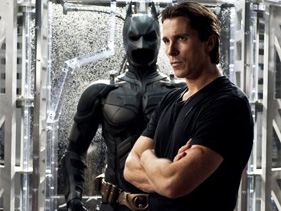
Director Christopher Nolan and stars Christian Bale, Joseph Gordon-Levitt and Gary Oldman will present the footage on Sunday, June 3. By Kara Warner Christian Bale in “The Dark Knight Rises” Photo: Warner Bros. Not to toot our own horn, but since their inception in 1991 the MTV Movie Awards have proven to be one of the hippest parties in town. Not only is the annual event a major draw for the who’s who in Hollywood, via the A-list nominees , presenters and performers, but there are always a few unexpected surprises and special sneak peeks from Hollywood’s most anticipated upcoming releases. We are proud to announce that this year’s live broadcast will feature the debut of exclusive new footage from one of the summer’s most highly anticipated movies, “The Dark Knight Rises.” And if that’s not exciting enough, the film’s writer/director Christopher Nolan and stars Christian Bale, Joseph Gordon-Levitt and Gary Oldman will be on hand to introduce the never-before-seen footage. If you’ve been following the news surrounding Nolan’s third and very likely final Batman film, you know that plot details have been kept under lock and key, so any chance to see anything new from the film ahead of its July 20 release is definitely cause for celebration. MTV also announced Thursday (May 24) that “Magic Mike” stars Channing Tatum and Matthew McConaughey have been added to the impressive lineup of presenters, which also includes: Adam Sandler, Emma Watson, Andy Samberg, Leighton Meester, Emma Watson, Logan Lerman, Ezra Miller, Emma Stone, Andrew Garfield, Kristen Stewart, Chris Hemsworth, Charlize Theron, Michael Fassbender, Mila Kunis and Mark Wahlberg. In addition, chart-topping indie-pop group fun. and rapper Wiz Khalifa are set to perform. MTV fans hold the “Power of the Popcorn” in their hands, with voting available online via MovieAwards.MTV.com through Saturday, June 2. As always, voting for Movie of the Year will remain open throughout the live show Sunday, June 3. Head over to MovieAwards.MTV.com to vote for your favorite flicks now! The 21st annual MTV Movie Awards air live Sunday, June 3, at 9 p.m. ET. Related Videos Get Psyched For ‘Dark Knight Rises’ Related Photos ‘Dark Knight Rises’ Final Trailer’s Key Scenes

Read this article:
‘Dark Knight Rises’ Footage To Debut During MTV Movie Awards!

REVIEW: Moonrise Kingdom — Attractive and Meticulous, Yet Lacking the Indefinable Magic of Moonlight

Whenever I throw away one of those large round plastic lids from an orange-juice jug, in my head I hear my mother saying, as she would have said to my 8-year-old self, “That would make a great table-top for a doll’s house.” As an adult I don’t have a dollhouse, but I still have a hard time throwing away those orange-juice lids; the mentality dies hard. So why — with one luminous exception — can’t I love the movies of Wes Anderson, the most dollhousey of all filmmakers? Why, specifically, can’t I love Moonrise Kingdom , a sweet-natured picture set in 1965 on a mythical New Englandy island, in which two oddball kids run away together and pledge undying love? Moonrise Kingdom, like all of Anderson’s films, has been made with a master miniature-cabinetmaker’s care and specificity: It opens with what we might now call an Anderson special, a dollhouse-cutaway tracking shot that distills, in the space of a few minutes, the texture of one family’s life in their grand, ramshackle home. We see a bunch of little boys clustered around a mini record player (they’re spinning Benjamin Britten’s A Young Person’s Guide to the Orchestra , conducted by Leonard Bernstein), a distracted dad stomping around in madras pants (this would be that glorious deadpan peacock Bill Murray), a young girl who arrives from elsewhere in the house to sit near, yet apart from, her brothers, settling into a window seat with a book. There’s tension in that opening, as well as a sense of comfort: It turns out that the girl, Suzy (Kara Hayward) — a groovy nerdling in the making who loves François Hardy and has a collection of beloved library books she has failed to return — has been corresponding with a boy, whose faux-Boy Scout troop is stationed elsewhere on the island during this late-summer idyll. The boy, Sam (Jared Gilman), is an orphan who’s been bouncing from foster home to foster home, and he doesn’t fit in very well with his scout troop, either: Along with his badges he wears an ornate costume-jewelry brooch — it’s short a few scratchy pearls. For indiscernible yet understandable reasons, at least in the cruel logic of kids, the other boys don’t like him. He leaves a resignation letter for his ultra-conscientious Scout master (played earnestly and quite wonderfully by Edward Norton) and treks off to meet Suzy for the sojourn they’ve planned, an escape from all the grown-ups and kids who just can’t comprehend their weirdo world of wonder. That means, in this old Yankee version of The Blue Lagoon , that Sam and Suzy camp out on a deserted beach (where he makes earrings for her out of fish hooks and dead beetles; it’s a minor complication that her ears haven’t been pierced — yet). Eventually, there’s even a marriage of sorts, performed in the eyes of God and of Anderson regular Jason Schwartzman (as a disreputable but hardly heartless Scout master). It should all be so lovely, and yet… Anderson — who co-wrote the script with Roman Coppola — can’t forget for a minute how lovely it all is, and he reminds us with every detail: The aluminum ashtray into which Norton’s cigarette-smoking Scout Master Ward tips his ash; a record player that’s operated, impractically but wonderfully, by battery; Suzy’s shift dress, knee-sock and saddle-shoe getups, as if she were a ghost doomed to wear the perennial back-to-school outfit. These relics from a vanished childhood that we either lived or wish we’d lived are all designed to impart a shared intimacy, a response of “Oh! I remember that too!”, whether we actually remember it or not. And perhaps that’s why the picture’s exceedingly manicured quality works against it. All of Anderson’s pictures are stylized, and stylization is one of the great tools of moviemaking — its very broadness can capture nuances that naturalism fails to detect. But what’s the tipping point between “mannered” and “stylized”? Is a mannered movie simply a stylized one you don’t really like? Maybe. It could also be that most of the true emotion in Moonrise Kingdom exists in the world outside of the kids, a world Anderson dips into only occasionally: He shows us how the marriage between Suzy’s parents, played by Murray and Frances McDormand, is efficient yet frayed at the seams. (Oddly, and marvelously, the essence of this marital frustration is telegraphed best by a bit of shorthand dialogue from Murray, delivered as he grasps an axe in one hand and a bottle of whiskey in another.) The children, on the other hand, are relatively unformed and uncharismatic — they’re a little weird, a little cute, but they’re just not finished yet. They’re dream kids, too wispy to hold down a whole movie, and it’s not their fault. There are some wonderful things in Moonrise Kingdom : Bruce Willis plays yet another law-enforcement person with deep regrets, the kind of role he can do in his sleep and probably has, yet he infuses the performance with a cartoon melancholy that works — he’s the guy who’s never recovered from having an anvil dropped on his head. Alexandre Desplat provides a score that’s delicate where it needs to be and jaunty everywhere else. There’s a kiss that is, literally, electric. And the whole thing, shot by Anderson regular Robert Yeoman, looks characteristically gorgeous — its color palette is semi-psychedelic and dreamily pearlescent at the same time. So why can’t I love Moonrise Kingdom ? For all the movie’s technical meticulousness, the storytelling still has a wiggly-waggly quality, like a dangly loose tooth. In fact, while I appreciate the brashness of Rushmore , there is only one Wes Anderson movie I truly love, and I know I’m not alone: My informal investigations over the past few years have identified Fantastic Mr. Fox as the Wes Anderson Movie for People Who Hate Wes Anderson Movies. In addition to being a marvel of stop-motion animation, Fantastic Mr. Fox is joyous in trillions of unspoken ways — in the way the texture of the characters’ rangy fur changes in accordance with whatever they’re feeling at the time, in the way it finds such rapscallion pleasure in antiestablishment actions such as digging a tunnel into a rich fatcat’s storehouse. (I’m only just now realizing that Fantastic Mr. Fox was an unwitting precursor to Occupy Wall Street.) Maybe Anderson’s live-action movies don’t work as well because he’s asking real actors to do the work of puppets — human beings can’t help buckling beneath the thunderous burden of his precocious, overrefined ideas. And that’s Moonrise Kingdom in a tiny, mousebed nutshell: It’s oddly ambitious and weightless, a movie made with great care and, probably, love, that still sounds hollow when you thump it. Fantastic Mr. Fox explains why I want to save the orange-juice lids. Moonrise Kingdom explains why I steel myself and throw them away. Follow Stephanie Zacharek on Twitter . Follow Movieline on Twitter .

Excerpt from:
REVIEW: Moonrise Kingdom — Attractive and Meticulous, Yet Lacking the Indefinable Magic of Moonlight

Rihanna vs. Jennifer Lopez: Who Would You Rather…

Many questions can be raised about last night’s American Idol finale. To wit: Should Phillip Phillips have defeated Jessica Sanchez? Should Diana DeGarmo have accepted Ace Young’s proposal ? How incredible is Jennifer Holliday?!? But THG is focused on the truly important issue of the night: With both Rihanna and J. Lo taking to the stage and performing a couple sexy, scantily-clad singles, the topic can no longer be ignored. Which of these beauties would you prefer to bang? Study their finale outfits and vote now.

See more here:
Rihanna vs. Jennifer Lopez: Who Would You Rather…

Ali Lohan: Too Thin?

The Lohan siblings are just not getting it done. Lindsay’s problems have been exhaustively documented. Now her little sis Ali, who signed a contract with Next Model management last year, is looking skinnier than ever , with experts estimating she weighs less than 100 lbs. There are rumors she’s on a “starvation diet.” In recent pictures, the youngster’s breastbones are prominently sticking out, and her shoulder blades are even protruding from her back. Her cheeks have become sunken and there are dark circles underneath her eyes. Seriously, our gallery of Ali Lohan pictures is kind of sad. Friends close to Lohan are starting to get worried about the drastic weight loss, and about Ali’s health, considering her tender age of 18. “She just keeps getting smaller and smaller ,” one friend told Fox411. “At what point will her parents tell her that enough is enough?” Um, have you met Dina and MiLo? “She isn’t doing it because it is a psychological issue. She is doing it because she wants to be a model,” her father, Michael Lohan, said. “If I thought it was an issue, I would definitely say something. Ali and Lindsay live together … Lindsay would say something to her if she thought something was wrong.” There’s your answer. [Photos: Fame/Flynet]

The rest is here:
Ali Lohan: Too Thin?