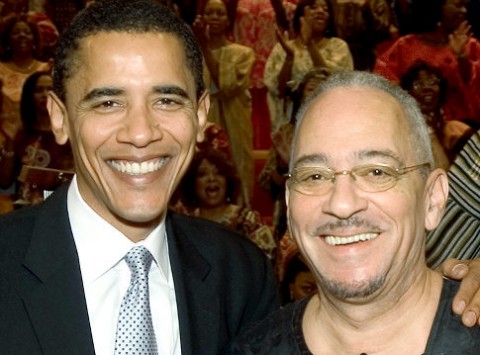
This is so ridiculous how folks love to lie on this man , but the sad part is some stupid fools won’t recognize this b.s. for what it is. There’s a new superPac commercial accusing Obama of being racist but they definitely are stretching with their claims. Watch it below: Some folks would call this creative editing, but we think it’s outright misleading. Here’s a break down most of the discrepancies between the commercial and the actual TRUTH: A web ad released by a new superPAC suggests that President Obama’s administration has quietly accepted and even promoted racism against white people. The ad, by a superPAC called FightBigotry, said that the president has gotten a free pass for “his disturbing, yet crystal-clear pattern of tacitly defending black racism against white folks before and since being elected president.” According to ThinkProgress, the group was founded by Stephen Marks, a Republican media consultant and opposition researcher, who penned a 2008 book called “Confessions of a Political Hitman.” The ad goes on to assert that Attorney General Eric Holder said that the administration’s critics are motivated by race. “Implying that whites are too stupid to have honest disagreements with the president without being racist is, in and of itself, racist against whites,” the narrator says. SuperPACs are not affiliated with campaigns and are forbidden by law from coordinating with them, although they may support a particular candidate. Since a candidate does not have to say that he or she approves a given message from a superPAC, it allows superPACs to be more aggressive while not sullying the reputation of the candidate who might benefit from the negative ad. FightBigotry edits the famous speech on race that the then-Senator Obama gave at the height of the controversy surrounding his former pastor, Jeremiah Wright. In it, Obama discussed how race had shaped him and the role it continued to play in American life. Obama said that his maternal grandmother, who is white, harbored casually racist views even though she loved him. However, the ad is edited so that it appears that President Obama is dismissing his grandmother as “a typical white person,” and that he was unbothered by Wright’s statements, although Obama explicitly condemned the comments in the speech. “Mr. President, you ran as the candidate of change,” the ad’s narrator says in conclusion. “But one thing has not changed—your tacit defense of racism against white folks, despite receiving nearly half the white vote to win the presidency.” Obama won the White House in 2008 with just 43 percent of the white vote, the smallest share ever garnered by a winning presidential candidate in U.S. history. SMH. Like Public Enemy said … Don’t believe the hype! Source
Jessica Chastain can hold her own with British royalty when it comes to fashion. The Tree of Life actresss and the Duchess of Cambridge, Kate Middleton, each adorn a cover of Vanity Fair magazine’s September Style issue, which includes the magazine’s annual International Best Dressed List. The red-headed beauty — whose cover will go to subsribers — made the list for the first time, but joins other actors who are no strangers to the honor. Inglourious Basterds actress Diane Kruger made the list for the second time as did Best-Dressed Couple, The King’s Speech star Colin Firth and his producer wife Livia. Chinese actress Fan Bingbing ( Shaolin), France’s Léa Seydoux ( Mission Impossible: Ghost Protocol ) and model, actress, filmmaker and Schiaparelli muse Farida Khelfa. How to Get Ahead in Advertising actor and Wah-Wah director Richard E. Grant returns to the list for the first time since 2007, and My Week with Marilyn heartthrob Eddie Redmayne makes his debut in the Best-Dressed Men category. Jay-Z is named to the list for the first time, along with fellow musician Alicia Keys, who is back on the list for the first time since her inaugural appearance, in 2009. Actor Richard E. Grant makes a fashion comeback as well, named to the list for the first time since 2007. Colin Firth is on the list for the second year in a row, along with stylish wife Livia, in the Best-Dressed Couples category, and newcomer Eddie Redmayne is one of the Best-Dressed Men. You can see more photos of the Best-Dressed at Vanity Fair.com . Follow Frank DiGiacomo on Twitter. Follow Movieline on Twitter.
Danish comedy duo Casper Christensen and Frank Hvam would like you to know they are not pedophiles. Not that accusations of creative indecency would stop them from toying with the line of good taste, as they do to hilarious effect in the R-rated Danish sex comedy Klown . The Curb Your Enthusiasm -style road trip comedy, which they wrote and co-star in, happens to be the funniest, most outrageous film of the year, and it has already been acquired for American remake by Todd Phillips and Danny McBride. Klown debuted in New York, Los Angeles, and Austin over the weekend, stirring up a decent opening as it looks to expand to 13 additional markets in the coming weeks. Back home in Denmark, it’s already made $12.3 million; nearly 20 percent of the population reportedly watched it upon release in 2010. That’s a fantastic start for a buddy comedy chock full of explicit sexual gags, nudity, child endangerment and wanton irresponsibility galore — a NSFW comedy of discomfort. After floating down the the Guadalupe River outside of Austin, Texas last month for The Alamo Drafthouse’s wonderfully meta Rolling Roadshow screening series, Christensen and Hvam spoke with Movieline about the planned American remake, their scripting process, and their tricks for pushing the envelope. For instance, why you can’t pop a joke too early (“What would top ejaculating in a child’s face? It’s impossible”), and the gag from their Klown series that rivals the worst transgressions of Klown the Movie. Also: What is cinematic infant terrible Lars Von Trier (whose Zentropa outfit co-produced Klown , and whose Nazi-referencing Cannes controversy the duo dismiss as “a stand-up comedian at an open mic”) really like? You two had a successful run with Klown the TV show, but at what point did you crack the right way to make it into a film? Casper Christensen: We did six seasons, and Frank and I wrote all the episodes. It’s a lot of work. It’s a joyride, it’s a lot of fun, but sometimes in life you’ve got to just come up for fresh air. So after six seasons we just took a break from each other — Frank went on a stand-up comedy tour, I did television, and it felt good just to let go of the Klown universe for a while. But we always had ambitions to write a movie. We got together and said, ‘Let’s write this movie.’ I wanted to get back into Klown because the character was so much fun to act, and we knew the characters so well, that we thought it might be a good idea for the first movie that we wrote, to know something. It would be easier for us. So I convinced Frank that it could be a good idea to write Klown . Frank Hvam: It was a good idea. I have no regrets about that movie. CC: But we started out bouncing around ideas for a completely different movie before we did this one. How different was that concept? FH: It’s always based on some buddy stuff, because that’s our relationship — we are friends in real life. We have this comic dynamic that we know, and we use that. CC: We talked about setting it during the second World War. FH: Because we would probably fail totally in a war situation. CC: We talked a lot about war. FH: On which side would we be? [Laughs] CC: How would we be if we were soldiers? Would we still be friends? Who would really be the hero between the two of us? FH: Every time we see a war movie in Denmark it’s about Danish heroes, and we would like to tell a story about Danish assholes. CC: During the second World War. Maybe you can use that in a Klown follow-up. Do you already have an idea in mind for your next movie? CC: Oh, we have a plan! We’re going to start writing in January. It might be a Klown movie, but it might be something completely different. One of things Klown the film does well is give freshness to a concept that isn’t necessarily unique – the road trip set-up, for example. If you were to give comedy writing tips based on your experience writing Klown, where would you start? CC: You’ve got to have a good story, a story that means something to yourself. Fatherhood is interesting for Frank and I — we’re both fathers, spent a lot of time talking about it, and living not the everyday life, we live a different life than most people in Denmark so of course we talk about things like, what kind of father figure are we? That was most important for us — we had a good story, and we had something we wanted to talk about. CC: Once a story is in place, you’ve got to do good comedy on top of it. You’ve just got to refresh your thoughts — I’ve never seen this, this might be fun — and just believe in it. We weren’t trying to please anybody when we made the movie. We’re not going to go, ‘People might like canoeing.’ Frank and I liked the concept of canoeing, that’s why we did it. FH: Write for yourself. That’s a very important thing, otherwise you get confused. CC: Six seasons on television – there were a lot of characters that people liked and loved from the series that aren’t in the movie. We might disappoint people, but then what? We don’t care. It’s about what we think is important. So there are a lot of good characters that aren’t in the movie. Nudity, especially in R-rated comedy these days and especially involving male genitalia, is used often for shock value. How strategic do you have to be in using it at just the right moment, and for maximum effect? CC: When we wrote it we wanted to make sure one of the biggest laughs was going to be at the end of the movie, because it seemed downhill from there. FH: We also had to make sure it didn’t ruin the story. If we have something explosive and we can’t get on the horse again – our story horse – then it wasn’t worth it. CC: That’s why we don’t show the picture right after we take the picture. We put it late in the movie but early enough that you kind of have forgotten we took the picture. That’s when people go, ‘Oh!’ when Frank goes, “I’ve got Casper’s phone right here.” They’re suddenly reminded. FH: We were discussing having Bo in the bed having a pearl necklace instead of Frank’s mother in law. That would have been fun, but it would have destroyed the story because it would have been impossible for Frank and Bo to get on that canoe trip after that. CC: And what would top it? What would top ejaculating in a child’s face? It’s impossible. FH: Then it’s a skit. CC: No, then it’s illegal! Do you think American audiences will be more shocked by how far Klown goes in the pursuit of humor than audiences back home were? FH: It was a shocking movie at home, too. CC: Let’s not kid ourselves – it’s way too much, even in Denmark. Denmark doesn’t just have the coolest audience in the world, then? CC: Oh, no – that’s why you laugh, because it’s too much. FH: It’s ok that people are a little bit shocked. Otherwise we wouldn’t have a movie! CC: Some scenes get more laughs over here, though; the homosexual themes are much more taboo. FH: The home robbery scene is also a little more [taboo] because running away from a child during a robbery here in the U.S. is a death scene — in Denmark it’s bad, but it’s not that bad because the robbers are probably not armed. Thieves are nicer back home? CC: They’re still thieves! Don’t kid yourself. It’s dangerous, but not that many people have guns so it’s not that dangerous. There’s also a point when Frank is teaching Bo to swim and there’s a beautiful shot of the two characters, the lake is in front of them and the sun is going down, they’re both drying themselves off, and Frank goes, “Let me see that penis… it’s not that small.” It’s funny but it’s a beautiful scene, it’s a loving scene – it’s got feelings in it! In Denmark people laughed, they giggled, but over here it’s like [guffaws] they LAUGH. A grown man looking at a boy’s penis! But in Denmark it’s a beautiful thing. Why bring Klown to Zentropa? Was Lars Von Trier’s involvement part of the appeal? FH: He wasn’t that much involved, but we came to Zentropa because of Lars von Trier. We wanted to get some of the best film workers on our project and we wanted to get close to Lars because he’s a super cool guy. He involved himself in a little bit of the editing at the start. He wrote an episode, he acted in an episode, and he is good at forcing us to push the envelope. He really wants things to go wild, and if you’re close to Lars you just want to impress him. He’s cultivated quite the reputation for himself, and not just through films. CC: Once you get to know him he’s a good guy! He’s got a good sense of humor, he’s a little bit crazy – but in a good way. I’ve been to his house having dinner with his children and my children and it’s all normal… but then suddenly Lars picks up a rifle at the dinner party, stuff like that. Sometimes taking his shirt off during dinner. He wants to see what happens now – what if I did this? And that’s interesting to be around. FH: Basically, he’s just a nice guy. Do you think his detractors took his Cannes comments a little too seriously? FH: We were surprised. We couldn’t see that he’d made any mistake at that press conference. He was just a comedian in an open mic situation – CC: And somebody misunderstood his joke. Lars von Trier as stand-up comedian – sounds about right. CC: That’s what he is! He’s trying out material. FH: We have tried that too. People sometimes are not offended in their heart, but they can use a matter to promote their own cause, and then they start a war just to show who they are. Contined on next page…
She does kinda have a point… Tameka Foster’s Friend Defends Her Against Accusations According to RadarOnline Following a tragic lake accident on Friday that left Tameka Raymond’s 11-year-old son brain dead, a close friend of Usher’s ex-wife has opened up exclusively to RadarOnline.com about how she is coping with the devastating situation. “I’ve seen celebs and media outlets alike continue to send their condolences to Usher. Kile was Tameka and Ryan Glover’s child and the sympathy should be given to them first and foremost,” Tameka’s associate told RadarOnline.com in an exclusive interview. “Although Usher has been so kind in chartering a plane so she could be by Kile’s side, he didn’t necessarily play a huge role in Tameka’s other children’s lives after the divorce therefore it seems a little disrespectful that Ryan is being ignored as a father, in place of another just because he’s topping the Billboard charts. “Ryan was equally devoted and involved in Kile’s life — they shared joint custody and Kile was with his other family at the lake, so for those who are claiming Tameka’s at fault for not being there is just absurd — because of the joint custody, her two boys aren’t always directly in her eyesight, but she is a phenomenal mother.” Tameka’s irritated friend goes on to say: “Tameka is heartbroken. Kile was one of the loves of her life — she adored him. The last time I spoke to her she was going on and on about his fifth grade graduation. She used to call him her most helpful child and would gush about how smart he was,” the friend said. “This incident was just so random — there should never have been a jet ski that close to an inner tube with two young kids, it just doesn’t make sense.” Fashion stylist Tameka, 44, had two children with Altanta-based clothier Glover before she married Usher in August 2007, and went on to have two children, Usher V, 4, and Naviyd, 3, with him. Their divorce was finalized in November 2009 and they are currently embroiled in a bitter custody battle. Struggling to let go of her beloved Kile, “My only hope is that Tameka’s spirituality and devotion to God will help her pull through this ineffable moment in her life, and bring some comfort,” her friend told RadarOnline.com. “This is a woman who lost the man of her dreams, her reputation and now her son within the course of four years. My heart goes out to her. Nobody deserves this pain. “Perhaps the comment boards that continued to spew venom at a woman they had never met will put the breaks on their misdirected anger and hate and finally give her some peace. She definitely needs it.” We are continually hoping and praying for Tameka, Ryan, Kile, and the Foster/Glover family. Image via SplashNews
The film: Telling Lies in America (1997) Why It’s An Inessential Essential: Two years after Showgirls got screenwriter Joe Eszterhas ( Basic Instinct , Burn Hollywood Burn: An Alan Smithee Film ) blacklisted, the wily self-promoter returned with Telling Lies in America . Lies , based on a semi-autobiographical story, is somewhat similar to Showgirls in that they have common themes. Both films treat selling out and deception as an integral part of getting ahead in show business. But Lies , directed by Guy Ferland, is obviously not as garishly sarcastic as Showgirls is (few films are…). It’s refreshing in that sense to see Eszterhas show genuine affection for his con men and hucksters in Lies rather than alternately mock and then half-heartedly show affection for his desperate protagonists. Set in heartland America during 1960, Telling Lies in America stars a young Brad Renfro as Karchy, a high school-aged immigrant that dreams of becoming a disc jockey. Karchy hates the catholic school his father Dr. Istvan Jones (the ever-reliable Maximilian Schell) has sent him to and is, as stiff-necked Father Norton (Paul Dooley) delights in reminding him, on the verge of flunking out. Karchy’s dream of becoming a disc jockey is his ticket away from his mundane troubles and possibly even his means of scoring with older woman Diney Majeski ( Ally McBeal star Calista Flockhart). Thankfully, DJ Billy Magic (a winningly sleazy Kevin Bacon) is looking for a young dupe/assistant. Johnny and Karchy, who changes his name to Chucky, are thus able to form a symbiotic relationship. They each lie and take advantage of each other but not necessarily with malicious intent. All praise is due to Eszterhas, whose name is plastered on Lies ‘s opening credits (though “Joe Eszterhas Presents” undoubtedly didn’t mean what Eszterhas wanted it to mean at the time), for giving an ostentatiously moral bildungsroman an appreciable level of sophistication. Everybody cheats everybody else in Lies , even Diney, a female protagonist that Eszterhas allows to be intelligently ambivalent about her relationship with Karchy. Thanks to Eszterhas’s sensitive scenario and Flockhart’s semi-nuanced performance, Diney isn’t a tease but rather just uncertain about what she wants. Magic is similarly complex. He starts out as a loser scrounging for work but never once blows his cool so much that he shouts or pouts his way out of a confrontation. The affection Eszterhas has for his characters is salient and it makes Telling Lies in America proof that he’s not just coasting on the reputation he got from working with Paul Verhoeven. How the Blu-Ray Makes the Case for the Film: The only special feature on Shout! Factory’s Blu-Ray release of Telling Lies in America is a B-feature of Traveller , another 1997 drama about, well, telling lies in America! Bill Paxton and a very young Mark Wahlberg co-star as Bokky and Pat, a pair of grifters that are also members of a community called, “travellers.” Against the advice of his fellow travelers, Bokky takes Pat in and the two form a father-son bond. Bokky and Pat’s relationship is one of several ways that Traveller is more generic than the idiosyncratically thoughtful Telling Lies in America . In Traveller , Bokky makes the same mistakes that got Pat’s biological father killed, including falling in love with one of his own marks (Juliana Margulies!). Pat thus has to save Bokky, his surrogate dad, from his own worst impulses. Traveller therefore suggests that being jaded is a good thing, which decidedly sets it apart from the relatively straight-laced Lies . Still, the two films make a good double feature as they both feature snappy dialogue and similarly polished takes on very seedy characters. Simon Abrams is a NY-based freelance film critic whose work has been featured in outlets like The Village Voice, Time Out New York, Vulture and Esquire. Additionally, some people like his writing, which he collects at Extended Cut .
The film: Telling Lies in America (1997) Why It’s An Inessential Essential: Two years after Showgirls got screenwriter Joe Eszterhas ( Basic Instinct , Burn Hollywood Burn: An Alan Smithee Film ) blacklisted, the wily self-promoter returned with Telling Lies in America . Lies , based on a semi-autobiographical story, is somewhat similar to Showgirls in that they have common themes. Both films treat selling out and deception as an integral part of getting ahead in show business. But Lies , directed by Guy Ferland, is obviously not as garishly sarcastic as Showgirls is (few films are…). It’s refreshing in that sense to see Eszterhas show genuine affection for his con men and hucksters in Lies rather than alternately mock and then half-heartedly show affection for his desperate protagonists. Set in heartland America during 1960, Telling Lies in America stars a young Brad Renfro as Karchy, a high school-aged immigrant that dreams of becoming a disc jockey. Karchy hates the catholic school his father Dr. Istvan Jones (the ever-reliable Maximilian Schell) has sent him to and is, as stiff-necked Father Norton (Paul Dooley) delights in reminding him, on the verge of flunking out. Karchy’s dream of becoming a disc jockey is his ticket away from his mundane troubles and possibly even his means of scoring with older woman Diney Majeski ( Ally McBeal star Calista Flockhart). Thankfully, DJ Billy Magic (a winningly sleazy Kevin Bacon) is looking for a young dupe/assistant. Johnny and Karchy, who changes his name to Chucky, are thus able to form a symbiotic relationship. They each lie and take advantage of each other but not necessarily with malicious intent. All praise is due to Eszterhas, whose name is plastered on Lies ‘s opening credits (though “Joe Eszterhas Presents” undoubtedly didn’t mean what Eszterhas wanted it to mean at the time), for giving an ostentatiously moral bildungsroman an appreciable level of sophistication. Everybody cheats everybody else in Lies , even Diney, a female protagonist that Eszterhas allows to be intelligently ambivalent about her relationship with Karchy. Thanks to Eszterhas’s sensitive scenario and Flockhart’s semi-nuanced performance, Diney isn’t a tease but rather just uncertain about what she wants. Magic is similarly complex. He starts out as a loser scrounging for work but never once blows his cool so much that he shouts or pouts his way out of a confrontation. The affection Eszterhas has for his characters is salient and it makes Telling Lies in America proof that he’s not just coasting on the reputation he got from working with Paul Verhoeven. How the Blu-Ray Makes the Case for the Film: The only special feature on Shout! Factory’s Blu-Ray release of Telling Lies in America is a B-feature of Traveller , another 1997 drama about, well, telling lies in America! Bill Paxton and a very young Mark Wahlberg co-star as Bokky and Pat, a pair of grifters that are also members of a community called, “travellers.” Against the advice of his fellow travelers, Bokky takes Pat in and the two form a father-son bond. Bokky and Pat’s relationship is one of several ways that Traveller is more generic than the idiosyncratically thoughtful Telling Lies in America . In Traveller , Bokky makes the same mistakes that got Pat’s biological father killed, including falling in love with one of his own marks (Juliana Margulies!). Pat thus has to save Bokky, his surrogate dad, from his own worst impulses. Traveller therefore suggests that being jaded is a good thing, which decidedly sets it apart from the relatively straight-laced Lies . Still, the two films make a good double feature as they both feature snappy dialogue and similarly polished takes on very seedy characters. Simon Abrams is a NY-based freelance film critic whose work has been featured in outlets like The Village Voice, Time Out New York, Vulture and Esquire. Additionally, some people like his writing, which he collects at Extended Cut .
Filmmaker Boaz Yakin has taken a circuitous route through the years tackling indie dramas ( Fresh , A Price Above Rubies , Death in Love ) and studio gigs ( Remember the Titans , Uptown Girls ) alike, not to mention his writing stints on films like Prince of Persia and producing duties on the Hostel films. But this week’s Safe , a frenetic throwback actioner starring Jason Statham , marks a return to his roots — both to the streets of New York he grew up loving and to the genre beginnings that gave him his start. Safe follows Luke Wright (Statham), a disgraced NYPD officer-turned-cage fighter who hits rock bottom and then becomes the protector of a 12-year-old Chinese girl (newcomer Catherine Chan) who’s being pursued by an entire city filled with Triads, Russian mob, corrupt city officials, and dirty cops. As Yakin told Movieline, writing and directing Safe gave him liberty to craft a kind of homage to his favorite ‘70s New York action pics while adding his own flair to the well-worn genre, and the result is an authentically gritty, ultraviolent action romp filled with flying bullets, twisty machinations, and – yes – the glory that is the sight of a single tear rolling down Jason Statham’s steely face. Yakin spoke with Movieline about shooting on his beloved New York City streets, the “beautiful decrepitude” of a bygone NYC that he hoped to capture, how filming limitations gave way to the film’s most inventive and impressive sequences, and how he almost learned the hard way why you shouldn’t cut before Jason Statham has turned on the waterworks. Even though you partially shot Philadelphia for New York, you manage to capture so many authentic-feeling New York locations in the film. How much did you split filming, and how much were you able to shoot in the city itself? We shot in Philly but the thing I made sure of was that we shot the lion’s share of our exterior work, the New York subways – that was all done in New York. And then we went to Philadelphia and did some night shots, night exteriors, and basically all of our interior stuff was done in Philadelphia, and some key things that would have been very difficult to do, like some street car chases and things like that. New York is an amazing city to shoot because it looks so great and you get so much of its energy and texture on film, but it’s also really hard to shoot there just physically. People don’t really give a damn that you’re there and move you around, and it’s so grueling to shoot there. In Philly it was a lot easier and people were a lot more accommodating, and you’re able to get away with shooting things there at all hours of the night, making noise and things like that, which they’d never let you get away with in New York. So it worked out for us. Which were your favorite New York locations, the ones that were most gratifying to get that really nailed that texture? I have to say that even though it was so incredibly difficult to shoot there, I’ve never directed an action film but I’ve written a bunch of them [ The Punisher , The Rookie ] and one of the things that really gives New York its flavor is the subway system and the way the subway feels. In the classic New York action film it’s always there — there’s the classic French Connection subway chase, and all that – and for me it was really important to do a memorable subway sequence that could stand up there with some of the best ones that have been done in the past. None of them will ever touch the French Connection one, but I wanted to sort of add my entry. So for me, the location I got to shoot in that just really defines the film is the subway scene. Which stops did you film at? It was between two stops — one of them, we sort of made a stop on Wall St. look like a stop in Brooklyn and then there was the 14th Street L that goes cross-town on the East Side. You mention The French Connection , and the film conjures that meaty throwback, ‘70s and ‘80s action feel reminiscent of that film and many others. That’s what I was going for – seeing the movie as sort of a double throwback movie, both to the films that I was writing when I broke into the business in the late ’80s and more so to movies about the city that I grew up in. I grew up in New York in the 1970s, when it was sort of in a state of decay, a kind of a colorful, crazy lawlessness; you felt like anything could happen at any time. There was a kind of a beautiful decrepitude about it, like it hadn’t gotten Starbucks-ized. It still had this kind of gritty texture and an “anything goes” improvisational feeling and even as a kid there was a part of you that sensed that this was never going to be this way again. This is crazy! Someday I’m going to miss this, you know? And it’s true; I still love New York, but I miss its texture and its crazy kind of falling apart quality, and I wanted to capture that in the film. I wanted to capture the New York movies that I love, like The Seven-Ups , Death Wish , The Warriors , just the kind of movies that soaked up the streets of the city in their DNA, but really also a tribute to the way I felt about New York when I was younger. In terms of filmmakers, were you inspired by a shot here or a technique there or an archetype from the genre staples? I thought a lot about the classic John Woo and Hong Kong cop movies, for example. I think having seen so many of those films over the years, you sort of just absorb them and I just know them really well at this point. I would say that whenever you’re going to do an action scene you study the stuff in Better Tomorrow Part II and so on but there were a lot of other films that I looked at too. And one thing I kind of didn’t want to do that John Woo does, actually, is that he slows things down for the action scenes — like, kind of sexualizes and glamorizes every gunshot, and makes it into this slow-motion ballet of violence which is just fantastic and he’s a master of it post-Peckinpah. But for me, there are maybe two slow-motion shots in the film. I wanted things to feel hectic and in your face and jumping around and very present; I didn’t want to treat the action like, ‘Aha! Here’s the action scene!’ I wanted the action to spring out of what was happening in the moment and for you to feel like you were catching up with it while it was going on. So in that sense I tried to find a different approach to it. Your shooting and editing style really jump out throughout Safe , and there are a number of action sequences that are really impressive to watch. You wonder, ‘How did he pull that off in just one shot or one staged sequence?’ And more to the point, why go to so much trouble to pull off these deceptively complex scenes? I think you want to bring something interesting and add to it when you’re doing a genre film — you want to appreciate the genre and do what you can to add to it. I think that part of it, by the way, is the creativity that comes from having limited time and money. For instance, the scene where the girl gets kidnapped from the car and they get driven into, you see everything through the windows and the rearview mirrors of the car, and it’s like, okay — I’m going to have one day to shoot a scene that if I was really going to cover every guy killing every guy and all that stuff it would take me three or four days. Okay, what’s the emotional grounding of the scene? It’s this girl’s experience. And it’s sort of like putting you into the shoes of the people in the car. So I go, okay — I can do this all with three kind of complicated shots, but that’s three shots — when you look at that sequence it’s something like three or four — for something that you could shoot in fifty shots if you were really covering it. So it’s complex, but it has a point of view and it’s specific. Sometimes being limited enables you to think in a way that’s more creative. You could never replicate it in this film, but Alfonso Cuaron did Children of Men and he did like three or four sequences, there’s this one in a car, and he’s shooting these fabulous long takes… That’s actually something that there was no way I could try to get to that in this film; we just didn’t have the time or the wherewithal. But there were a few places where I wanted to recreate a little bit of that feeling. That totally works, because you do get swept up in the chaotic feeling of being there in scenes like the kidnapping and the memorable unbroken shot in which a fight is witnessed via a rearview mirror. You have a shot of Reggie Lee shooting someone randomly in the middle of a hotel exodus that most directors might cut around, but instead it draws attention to the execution of the scene itself and the power of the chaos in that moment. In a way, the less you cut the more you feel like you’re in a situation. And by the way, how great was Reggie Lee in the film? He’s such a great actor. For me I thought there were a lot of really terrific character actors in the film and it was important to me to create that tapestry of characters, the way they did in those New York films that I loved so much. But Reggie Lee just constantly surprised me. Every time he showed up onscreen there was something authentic and genuine and nuanced. His part doesn’t have a lot of dialogue to convey his mixed feelings about what he’s doing. You’ve just got to feel it all from his performance and his looks. And you give him a scene in the car where he unexpectedly reveals some measure of a fatherly impulse toward Mei, which dimensionalizes him. Which brings me to my next question: Here you have Asian Triads and Russian baddies with a capital B, so to speak — why make the ethnic villains so larger than life? Look, when you make an action movie and a thriller, someone’s got to be the bad guy! And in this film, the main bad cop is a Jewish cop called Captain Wolf, you’ve got a sort of evil gay Italian mayor and his lover… Everyone in this film is bad, there’s nobody good. And I think at this point the Italian mafia has become a little played out. After The Sopranos , they’re just cute; when you see the Italian mafia in movies anymore it’s just like Robert De Niro in Analyze This , you want to send them to a therapist and have a few laughs. It’s a little played out, so I think that dealing with the Russians and the Chinese is a little fresher for me — not that it hasn’t been done. But frankly, the heroine of the film is a little Chinese girl, and she’s in a way almost as big a part as Jason. But to answer your question — I don’t care, you know what I mean? It’s an action movie, and there are tons of bad guys in it of all ethnicities. Equal opportunity villainy. It’s equal opportunity! And it’s like everyone should be able to be bad, and everyone should be able to be good. I can’t think that way and start limiting myself that way. Let’s talk about Jason in this film; the character he plays is at once very much in his action wheelhouse but also much more vulnerable at times than we’ve ever seen Jason Statham in the movies — he loses everything, he’s wracked with guilt, he’s suicidal… You know, it’s interesting. The way the part was written, and especially having Jason, who has developed this reputation and made so many films where he is in many ways not vulnerable, it was important to me to emphasize those aspects of his character. I think that when you put, say, Matt Damon in a Bourne film or something like that, the work that you have in those films is that everyone knows Matt is a really wonderful actor and nuanced and your challenge in a Bourne movie is to make people believe that he’s also a bad-ass, right? With Jason it’s the reverse, where you know he’s a bad-ass, you know he can do all this stuff — how can we bring these other elements and colors to his persona? That was something I really tried to emphasize and bring to the table. There’s a scene when he’s at a very, very low point where you orchestrate a surprising emotional moment for him — his entire world is collapsing and as the camera moves in, he conjures a single tear. Yes, that long take moving in on Jason. Look, I think Jason is a much, much better actor than people give him credit for, and that even he gives himself credit for. I think that there are a lot of people who are more highly regarded as actors who could not have held that close-up and that kind of shot, moving in on him, for the amount of time and the level of intensity that Jason did. When he commits himself to something, he’s very, very good. And there is a funny little story about that one shot; I’m a terrible one for cutting as soon as the scene is over. I think a lot of smart people, when the scene is over you just kind of let it sit a little to see what’s going to happen — like, if there’s anything extra that happens that’s good. I tend to try to keep the set moving, so as soon as it’s over I’m like, ‘Cut! Okay!’ We did a few takes of this shot with Jason and he was good in all of them, but then we were doing that one more take to see what would happen — and this is the one that was in the film — and as it was getting to the end, the dialogue was finished and I was about to call cut, the DP [Stefan Czapsky] and my friend, the producer, Lawrence [Bender] , literally picked me up and moved me away from the monitor so that I wouldn’t say ‘Cut.’ I was surprised – they didn’t tell me they were going to do that – and three seconds after that happened, the tear came down Jason’s face! [Laughs] I was about to say ‘Cut’ and they literally tackled me and pulled me away and I was like, ‘What the fuck?’ Then the tear came down Jason’s face and they were like, ‘You see?’ I’m like, okay – lesson learned. Safe also stars Chris Sarandon, Robert John Burke, James Hong and Anson Mount and is in theaters Friday. Follow Jen Yamato on Twitter . Follow Movieline on Twitter .
Episode one, airing tonight at midnight ET on MTV, also features Akon and 2 Chainz. By MTV News staff The hosts of “MTV’s Hip Hop POV” Photo: MTV MTV’s brand-new late-night talk show “Hip Hop POV” premieres tonight (April 11) at midnight ET, featuring candid interviews with superstars Lil Wayne and Akon, along with an in-studio appearance and performance from Def Jam rapper 2 Chainz. The weekly talk show stars a roundtable of music-industry insiders — Charlamagne Tha God, Bu Thiam, Devi Dev, Amanda Seales and Sowmya Krishnamurthy — who collectively bring their unique perspectives and experiences from the worlds of radio, record labels, journalism and artistry. Radio veteran and Power 105 “Breakfast Club” co-host Charlamagne Tha God is known for his pointed (and often controversial) commentary, while Def Jam A&R Bu Thiam has earned his reputation for having a golden ear, working with artists ranging from Jay-Z and Kanye West to T-Pain. Devi Dev can be heard on the “Sway in the Morning” radio show on Sirius XM, and she has garnered a multi-market radio perspective with stints in Los Angeles and Houston. Amanda Seales has dipped her hand into several ventures in the industry as an on-air personality and DJ, while social-media maven and burgeoning journalist Sowmya Krishnamurthy is known for her critical writing, which has appeared in outlets including Vibe, XXL, The Village Voice, Rolling Stone and MTV’s RapFix blog. Tonight’s debut episode features insider access as “Hip Hop POV” visits rapper Lil Wayne in Miami, as well as Akon on the set of his new music video featuring French Montana. 2 Chainz, who has caught the ear of everyone with his recent appearance on Kanye West’s “Mercy,” will perform two of his biggest songs and sit down with the entire cast for an interview. Upcoming episodes will feature a veritable who’s who of hip-hop, from Meek Mill and Pharrell to up-and-comers like A$AP Rocky. Don’t miss tonight’s premiere episode of “MTV’s Hip Hop POV” at midnight ET on MTV. The conversation-based show highlights some of today’s hottest news and more from a cast of hip-hop tastemakers. Fans can also join in on the Twitter conversation using the hashtag #HipHopPOV. Related Videos Hip Hop POV | Ep. 1 | Sneak Peek Related Artists Lil Wayne
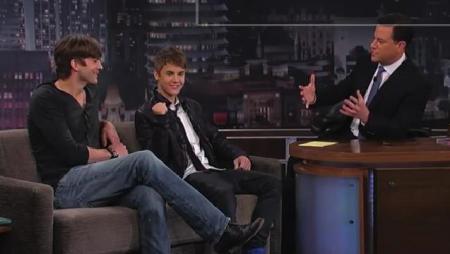
The new season of the new version of Punk’d premieres tonight, with former host Ashton Kutcher behind the camera as a producer and a rotating weekly emcee in front of it, beginning this episode with some guy named Justin Bieber. In promotion of the show, both stars appeared on Jimmy Kimmel Live last night, dishing on topics that included: Justin’s freedom now that he’s 18 years old. Justin somehow forcing Ashton to purchase a new home. Justin wanting to make Taylor Swift cry via a major prank. Kutcher, hilariously clueless about his reputation since splitting from Demi Moore , wondering how people can have sex in space. Watch a quarter of clips from the interview now: Justin Bieber and Ashton Kutcher on Jimmy Kimmel Live (Part 1) Justin Bieber and Ashton Kutcher on Jimmy Kimmel Live (Part 2) Justin Bieber and Ashton Kutcher on Jimmy Kimmel Live (Part 3) Justin Bieber and Ashton Kutcher on Jimmy Kimmel Live (Part 4)
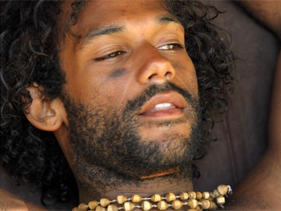
‘It was such an idiotic thing to have happen,’ Rob Cesternino tells MTV News of the men giving up immunity for a trip to tribal council. By Josh Wigler Bill Posley, of the Manono Tribe in “Survivor: One World” Photo: CBS And just like that, the whole Manono tribe has officially joined the “Survivor” Hall of Shame. After winning immunity in a blowout challenge against Salani and recapturing momentum in the process, the men of Manono flushed their good fortune down the toilet by volunteering to go to tribal council in place of the women. Their reason: to vote out one of their own, Leif, who “betrayed” the tribe’s core alliance by telling stand-up comedian Bill, the unwitting nemesis of newly anointed Manono mastermind Colton, that he was next on the chopping block. After a racially tense tribal council, however, it was Colton who had the last laugh, and Bill — not Leif — was sent packing. Manono’s unanimous decision to exchange immunity for an early trip to tribal council goes down as one of the single-most confounding, moronic moves in “Survivor” history. At least, that’s my take. Good thing we have the smartest player to never win the game, two-time contestant Rob Cesternino , to weigh in with his thoughts on this week’s unprecedented episode of “Survivor.” Keep reading for his take on Manono’s controversial move, Colton’s sudden rise to power and more. MTV : OK, Rob. My head has not stopped spinning since the last 10 minutes of that episode. What was your reaction on seeing Manono’s “plan” go into action? Rob Cesternino : It really was such an idiotic thing to have happen on this show. I’ve seen a lot of dumb things happen in the history of this show, but usually the dumbness is confined to one person making a dumb move. Usually, the groupthink doesn’t invade a whole team of people, which is what happened here. It’s pretty remarkable. It’s a remarkable event that eight people went along with an idea that was so insane. MTV : So, just to clarify: This was not some brilliant outside-the-box thinking that I can’t wrap my head around. This could very well be the single stupidest move in “Survivor” history. Cesternino : Well, I don’t think it’s the single dumbest thing that’s ever happened. I still think that belongs to ice-cream scooper Erik [from “Survivor: Fans versus Favorites,” who was voted out after surrendering his idol to a chief competitor], with Brandon Hantz [from “Survivor: South Pacific,” voted out in similar fashion] being second. I’ve been trying to wrap my head around this, though. Is there any sort of strategic advantage to the men’s decision? I really can’t come up with anything. The best I can come up with is that maybe for Colton, he feels that he has the girls in his pocket and he has a bunch of guys he’s working with. “As long as I’m getting rid of somebody who isn’t working with me, better than sending the girls to vote out someone who I have a good relationship with.” But just from the beating that Colton took at tribal council from both Bill and Jeff Probst, it’s not a good thing for his reputation to continue taking a pummeling like that. MTV : Colton has been and continues to be an absurd character. He’s like the homesick camper who cries and cries nonstop the first week, then comes back strong and rules the bunk as a dictator the rest of the summer. How did that happen? What do you think? Are the men following him out of fear? Loyalty? Is it the idol in his pocket? Cesternino : I think there’s some fear there. I think also some of these men are just along for the ride, and that’s not necessarily a bad strategy. Jay, Jonas, Leif, these guys are just sort of more followers. Troyzan and Tarzan feel like more in cahoots with what Colton is doing. Then there are a few who are just outnumbered and are going along with it, not trying to upset the apple cart. Colton does have a very dominating personality. I’m sure there’s some charisma there. Most of the offensive things he’s saying are just to us, the audience. So I’m sure he can be charming. But I’m not sure exactly if it plays out this way every season, but right now, there’s a combustible enough combination out there for Colton to be successful right now. MTV : Everyone on Manono had to agree to make this choice to go to tribal council. If you’re out there, how do you say no? Can you say no? There has to be a way you can say no to that without looking like a jerk, right? It’s such a blatantly boneheaded move — would it really alienate you that much to go against the majority on this one? Cesternino : This is the part that was really insane. “We’re all going to tribal council, but it has to be unanimous!” First of all, they said they’re going to vote Leif off — I don’t know how much that’s a smokescreen to get Bill to vote yes, but that even seems more idiotic. Why do you need a unanimous vote to vote somebody off? Why Bill agreed with it, I’ll never know. But why did Leif agree to this plan? I’ll never know! How much of this was misdirection? Because he only got Bill’s vote at tribal council. If Bill went, “You know, not good. I’m going to vote no on tribal council.” What do they say? “Well, you’re outvoted, and now we’re voting you out.” I don’t know. It didn’t make much sense to me. MTV : I guess part of that might be that Leif seemed to feel genuinely terrible about spilling the beans to Bill, and Bill just seems like a bit of a dummy in the game of “Survivor,” and was once again way too excited to dodge a bullet that was headed directly to his face. If the two people who really needed to object were a) too guilty to say no and b) completely unaware of how much trouble they’re really in, I guess they’d vote yes? Cesternino : I don’t know. Why would Bill want to get rid of that padding? If there’s a person between you going home and someone else going home, that’s an airbag for you. That’s keeping you alive in the game. Why you would want to accelerate getting rid of that person by going to tribal council [voluntarily] — all of this could have played out further into the game. There’s always the chance that politics could change, there could be a switch, a merge. Time is your friend in this game when you’re in that position. MTV : There was some amazingly absurd foreshadowing when you see Leif in the box at the very beginning of the episode, which was just such a ridiculous visual. It portended some doom for this guy. But honestly, I don’t think Leif did anything so egregious to warrant such a turnaround from his tribemates. Clearly he slipped up and that wasn’t smart, but does anything he did warrant the reaction he got last night? Cesternino : No, I thought everything was overblown with Leif. Who cares if Bill knows he’s next to go? It’s not like he has an immunity idol or anything like that. I didn’t think that was such a big deal. I thought Colton’s reaction was over-the-top, but Tarzan’s too. Didn’t it seem like Tarzan was talking to Leif like he was a Chihuahua? “That was bad, Leif! Get in your box, Leif!” [Laughs] I thought that was so over-the-top. And honestly, this was the most we’ve seen of Leif so far, and I really liked Leif. He seems like a nice guy. MTV : Well, there’s more to talk about in this episode, but Manono’s decision is such a lightning rod that it’s hard to focus on anything else. But what do you think: Who, if anyone, is playing the game well right now? Cesternino : I think one of the guys who still looks good is Jonas. Even though he’s going along with bad ideas, he’s not rocking the boat that much. I didn’t like how he negotiated with the women; he came off bad there, negotiating about using their fishing net. He looks easygoing enough to follow along in the aftermath of Colton and continue to advance in the game, though. MTV : And who doesn’t look good? Everybody ? Cesternino : Well, for the women, Alicia continues to get into arguments with people where she doesn’t really have a conflict. She’s continuing to create tension wherever she goes in the game, and that’s not usually a good formula for success. MTV : She was also instrumental in Salani losing immunity. Hypothetically, if things had played out as they should have played out and the women were sent packing to tribal, would Alicia have gone home? Cesternino : Hmm. [ Pauses ] Her name was coming up, but I think Christina would still have been the one to go. Much like Cat versus Nina , the person inside of the alliance, even if they’re deserving of going home, probably stays over the person not in the alliance. Get more of Rob’s thoughts on “Survivor” at his website . What did you think of last night’s episode? Sound off in the comments section or hit me up on Twitter @roundhoward !