
Tag Archives: study

USA Today Shocker – ‘Global Warming Good News: Fewer Big Ocean Storms’

Since Al Gore’s schlockumentary “An Inconvenient Truth” came out in 2006, Americans have been deluged on almost a daily basis about the evils of a slowly warming planet. On Thursday, USAToday.com surprisingly offered an upside to rising temperatures: A new study out Wednesday in the British journal Nature finds that large, powerful North Atlantic ocean storms should actually become less frequent by the end of the century, due to climate change. You mean there are actually positive benefits to fractional temperature increases every few hundred years? Apparently so: Led by Matthias Zahn of the U.K.’s University of Reading, the study used climate models to show that these North Atlantic storms — known as polar lows — may decrease in frequency by as much as 50% by 2100. “Our results provide a rare example of a climate change effect in which a type of extreme weather is likely to decrease, rather than increase.” Zahn writes in the paper, which was co-authored by Hans von Storch of the University of Hamburg in Germany. Britain’s Guardian elaborated Thursday: The results of his study may provide encouragement to oil and gas companies that currently consider drilling in the northern north Atlantic very risky, he says. “As the likelihood of hurricanes destroying oil rigs declines, drilling in the region may become a more attractive option.” Assuming that greenhouse gas emissions rise rapidly in the future, the frequency of Arctic hurricanes could fall from an average of 36 per winter to about 17 by 2100, the model suggests. If emissions rise more slowly the number of hurricanes could fall to 23 per winter. Fewer polar storms could also mean less extreme weather in the UK, says Suzanne Gray at the Mesoscale Group at the University of Reading, who was not part of the research team. “Polar lows occasionally lead to heavy snowfall even over England. Motorways get blocked and people have to sleep in their cars overnight. So perhaps we won’t be seeing so many of them in the future.” Global warming benefits. Somebody pinch me.

More:
USA Today Shocker – ‘Global Warming Good News: Fewer Big Ocean Storms’
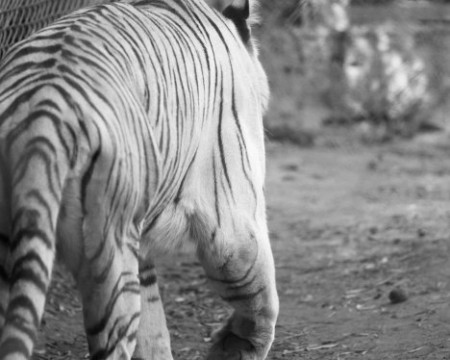
New Study Pinpoints 42 Key Conservation Areas for Saving Tigers

Photo via Jaymi Heimbuch It might seem like an obvious connection: figure out the key areas where tigers breed best and conserve those areas, rather than large swaths of general landscapes. Yet, it still isn’t being done. According to the authors of a new study by the Wildlife Conservation Society, only about one third of the roughly 3,200 tigers left in the wild are breeding females. This means protecting where they live — only about 6% of the available habitat — should be the highest priority. The new study pinpoints 42 key areas where all conservati… Read the full story on TreeHugger

Read this article:
New Study Pinpoints 42 Key Conservation Areas for Saving Tigers

The Week in Pictures: BP’s Deepwater Horizon Accident Report Disperses Blame, Arsenic Found in Children’s Urine, and More (Slideshow)

On Wednesday, BP released it’s report on the events leading up to the explosion on the Deepwater Horizon and subsequent record-breaking oil spill. As was expected, BP attempts to spread blame across all the companies involved. In other green news this week, the two Greenpeace activists arrested over two years ago for stealing whale meat from a shipping depot is over, Junichi Sato and Toru Suzuki were given one-year jail terms, suspended, for theft and trespassing; Another study detailing the negative environmental effects of continued tar sands development in Canada was released this week showing that annual bir… Read the full story on TreeHugger

Read more:
The Week in Pictures: BP’s Deepwater Horizon Accident Report Disperses Blame, Arsenic Found in Children’s Urine, and More (Slideshow)

How Not To Fire a Watermelon Out of a Huge Slingshot

If successfully launching a watermelon out of a person-sized slingshot means sending it soaring away from you at an incredibly high speed, then I guess this is pretty much the exact opposite. “Ouch” doesn't begin to describe it. http://gizmodo.com/5632751/how-not-to-fire-a-watermelon-out-of-a-huge-slingshot added by: pjacobs51

Even Bugs Have Personality

Individual insects and bugs may all look alike to human eyes, but each and every one is unique and possesses its own personality, suggests new research that also helps to explain how personality arises in virtually all organisms. Some individual bugs, like humans, turn out to be shy, while others are very forceful, determined the study, published in the latest Proceedings of the Royal Society B. “Boldness, explorativeness, activity and aggressiveness are the main personality traits usually measured because these connect to each other and appear together,” lead author Eniko Gyuris told Discovery News. What makes a bug bold or shy? Gyuris explains the traits manifest themselves a bit differently in insects. “Boldness — whether they are shier or braver — could be defined, for example, as to how quickly they start after an alarm, or how soon they come out of their refuge,” added Gyuris, a member of the Behavioral Ecology Research Group at the University of Debrecen. “Explorativeness could be measured in another context, namely in which they have the opportunity to discover a new environment with novel objects.” Gyuris and his team conducted personality tests on short-winged and long-winged firebugs, a common insect that's known for its striking red and black coloration. The researchers collected these bugs from wild populations in Debrecen, Hungary, and put them through a barrage of different situations. In one experiment, an individual firebug was placed in a covered vial that was moved to a small, lit circular arena. Four colored plugs made of gum were arranged on the arena's floor to serve as objects for each bug to explore. The scientists then tapped the vial and removed the cover, noting how long it took for the insect to leave its protective container and explore its new surroundings. The researchers also shook the bugs out of their vials and into the arena. The scientists recorded how many objects each firebug explored, how fast the bug moved, how long it took to reach the wall of the arena, and more. All experiments were repeated four times per bug. Each individual firebug behaved in a unique manner that was consistent across all of the experiments. If a particular bug was classified as bold and brave, it acted that way under a variety of circumstances. The same held true for more tentative, less aggressive firebugs. Females tended to show more extreme reactions, with long-winged firebugs acting bolder than short-winged ones. The scientists believe their findings carry over to other bugs and animals, with genes, gender, life experiences, environmental conditions and other factors shaping personality. “I think nearly every individual — insects and other organisms alike — has his or her own personality, with the possible exception of the ones living in very specific and stable habitats for a long time, like a cave, for example, as they may not need to behave in different ways among conspecifics,” Gyuris explained. Raine Kortet, a University of Helsinki researcher, and colleague Ann Hedrick discovered that personalities are all over the chart for field crickets, particularly among males. Some are veritable daredevils, while others are passive and guarded. Kortet and Hedrick concluded that “more aggressive males are also more active in general, and possibly less cautious towards predation risk.” Prior research by Kortet also found that dominant male crickets are more attractive to females, with dominance possibly tied to better immune defense and certain beneficial genes. But boldness isn't always better. “Some traits can be beneficial in one context” but not in another, Gyuris indicated. A brazen male bug that may be hearty and popular with females due to boldness, for example, could display aggressive behavior around an annoyed human and get squished in the process. added by: Almibry

Organic Strawberries Have Better Taste & Nutrition Than Conventional & Better For Soil Too: New Study

photo: Dave Parker via flickr In the tug of war over whether organic farming is really better than conventional chemical-laden farming, a new study in the online peer-reviewed journal PLoS One comes out solidly in support of the benefits of organic. Self-described as the most comprehensive study of its kind, researchers from Washington State University found that commercial organic farms produce was more… Read the full story on TreeHugger

Read more from the original source:
Organic Strawberries Have Better Taste & Nutrition Than Conventional & Better For Soil Too: New Study

Marijuana gateway risk overblown: study

Long-held fears that the use of marijuana will lead to harder drugs are overblown, according to new research from the University of New Hampshire. The research, in the September issue of the Journal of Health and Social Behavior, found that other factors, such as whether or not a person has a job, or is facing severe stress, are far more predictive of future hard drug use than whether they smoked pot as a teenager. “Employment in young adulthood can protect people by closing the marijuana gateway, so over-criminalizing youth marijuana use might create more serious problems if it interferes with later employment opportunities,” said co-author Karen Van Gundy. The strongest factor influencing the use of illicit drugs is an individual's race or ethnicity, according to the study. Non-Hispanic whites are most likely to use harder drugs such as heroin or cocaine, followed by Hispanics and then by African Americans. Read more: http://www.cbc.ca/consumer/story/2010/09/02/con-marijuana-gateway.html#ixzz0yOEO… ://www.cbc.ca/consumer/story/2010/09/02/con-marijuana-gateway.html added by: JackHerer

YOUR DOG is safer to Kiss Than Girlfriend or BOYFRIEND?

Myth: Dogs Have Cleaner Mouths Than Humans Pooches Mouths Are Dirty, but They're Safe to Kiss Go Ahead, Give Them a Kiss If you want to give your pooch a kiss, it may be safer than kissing another human. Becker says many of the bacteria in the mouth of a dog are species specific, so it won't harm its owner. “So a staph or a strep for a human is not transmissible to a dog, if you were to kiss it, and vice versa,” said Becker. Bottom line — you're more likely to get a serious illness from kissing a person than kissing a dog. But since dogs do transmit some germs, Becker has some advice: “Keep the vaccines current. Good external parasite control, good internal parasite control. You're going to be good to go.” And then, he says you can kiss them all you want. “They love us unconditionally, they make us laugh,” said Becker. “If we're going to give them a little kiss to thank them for that, then that's good by me.” http://abcnews.go.com/2020/Health/story?id=1213870 added by: ejasun

iPad Killer? ViewSonic makes ViewPad 7 Official

ViewSonic, best known for computer screens and monitors, made its ViewPad 7 official. Its European counterpart announced the Viewpad 7 which … http://bit.ly/aIiHbY added by: itgrunts

Fourteen more US troops killed in Afghanistan: What are they dying for?

Another 14 US troops have been killed in Afghanistan since Saturday, with the death toll so far this year already rising to the level reached for all of 2010. A pair of roadside bombings took the lives of seven soldiers on Monday, five of them dying in a blast that tore apart a Humvee in which they were riding. Bomb blasts took the lives of four others in southern Afghanistan over the weekend, while three were killed in clashes with armed groups resisting the US-led occupation. These latest deaths bring US fatalities for the month to nearly 50, after the record 65 killed in July. NATO has announced that it is investigating yet another report of civilians killed in a US bombing. The air strike last Thursday hit children who were collecting scrap metal on a mountain in the province of Kunar, which borders Pakistan. A local police commander said that the six children killed by the US bombs were aged six to 12. Another child was seriously wounded. After a much-reported decline in US air strikes, attributed to orders from sacked US senior commander in Afghanistan Gen. Stanley McChrystal that were designed to reduce civilian casualties, such strikes are back up again. According to figures released by the Air Force, US warplanes flew 5,500 “close air support” missions in June and July of 2010, compared to 4,600 in the same months last year. With the Obama administration's Afghanistan surge having brought US troops up to the full strength of nearly 100,000, together with another 40,000 troops from NATO and other allied countries, fighting has intensified and casualties among both US troops and Afghan civilians are up sharply. New revelations of rampant corruption and CIA payoffs to the US-backed Kabul government raise the inescapable question: What are they dying for? Among the bodies shipped back to the US through Dover Air Base in flag-draped coffins this past week was that of a 20-year-old from Elizabeth, New Jersey, Army Specialist Pedro Millet, who was killed by an improvised explosive device in southern Afghanistan. “I feel like someone ripped my heart out. I have no heart. My baby is gone,” the soldier's mother, Denise Meletiche, told reporters outside her home after making the painful journey from the base in Delaware. She said that her son had joined the Army without telling her, explaining only afterwards that he did it to get money to go to college. “I was against the Army,” she said. “I'm against war.” The soldier's stepfather said that Army recruiters had been allowed into Pedro's high school and enticed him into joining the military. “We're losing kids in a war, and what are they doing about it?” he said. “This is ridiculous.” What can justify such human sacrifices? Obama, like Bush before him, has tried to frighten the American people into supporting this brutal war by claiming it is necessary to defeat terrorism. This is just as much a lie coming out of the Democratic president's mouth as it was when uttered by his Republican predecessor. US military and intelligence officials have repeatedly acknowledged that there are less than 100 Al Qaeda members in all of Afghanistan–compared to 100,000 US troops. Moreover, the 91,000 classified documents released by WikiLeaks, most of them battlefield reports, make virtually no mention of American troops pursuing terrorists. On the contrary, they are fighting to suppress resistance to foreign occupation, a resistance that enjoys broad support from the Afghan people. A recent poll taken in Helmand and Kandahar provinces by the International Council on Security and Development, a London-based think tank, bears this out. It found that three quarters of the male population believed it was wrong to collaborate with the US-led occupation forces. Roughly the same share said that the Afghan government officials in the area were connected either to drug traffickers or to the armed groups opposing the occupation. These figures are essentially in sync with those reported by the Pentagon itself in the spring, indicating that less than a quarter of the people in the areas where US forces are battling to suppress Afghan resistance support the government of President Hamid Karzai. Another study released by the United Nations last January provided a vivid illustration of why Karzai and his cronies are so hated. It found that 52 percent of Afghan adults had been forced to pay at least one bribe to a public official in the previous 12 months, and that, collectively, Afghans had paid out $2.49 billion in bribes in 2009, an amount equal to nearly one-quarter of the country's gross domestic product. In a television interview broadcast at the beginning of this month, Obama admitted to the American people that “Nobody thinks that Afghanistan is going to be a model Jeffersonian democracy.” cont. added by: JanforGore






