Rising filmmaker Julia Loktev won the Prix Regards Jeune at Cannes in her first feature, 2006’s Day Night Day Night , and nabbed the AFI Grand Jury Prize with her sophomore follow-up, the thriller The Loneliest Planet (in theaters October 26 via Sundance Selects). After the jump, check out Movieline’s exclusive debut of the poster for The Loneliest Planet , about a couple ( Gael García Bernal and Hani Furstenberg) touring the wilds of the former Soviet Union who find their relationship tested by a random, irrevocable incident. Official synopsis: Alex and Nica are young, in love and engaged to be married. The summer before their wedding, they are backpacking in the Caucasus Mountains in Georgia. The couple hire a local guide to lead them on a camping trek, and the three set off into a stunning wilderness, a landscape that is both overwhelmingly open and frighteningly closed. Walking for hours, they trade anecdotes, play games to pass the time of moving through space. And then, a momentary misstep, a gesture that takes only two or three seconds, a gesture that’s over almost as soon as it begins. But once it is done, it can’t be undone. Once it is done, it threatens to undo everything the couple believed about each other and about themselves. All the while, they are not alone. They are always with the guide, who witnesses their every move. The film plays off the relationship between young travelers and the places they travel to, between guide and guided. But at heart, it is a love story — a tale about betrayal, both accidental and deliberate, about masculinity, failure and the ambiguities of forgiveness. Loktev wrote The Loneliest Planet based on Tom Bissell’s short story “Expensive Trips Nowhere,” and if you’re familiar with that work (don’t spoil yourself if you can avoid it), the film’s poster design is a remarkable piece of layered imagery as metaphor, the young couple’s journey going from literal to emotional and psychological. Loktev, a Russian-born American filmmaker and video artist, has had installations on exhibit globally and won the Sundance Directing Award with her first film, the autobiographical documentary Moment of Impact . The Loneliest Planet hits theaters October 26 via Sundance Selects .
Hollywood.TV is your source for celebrity gossip, news, and videos of your favorite stars! bit.ly – Click to Subscribe! Facebook.com – Become a Fan! Twitter.com – Follow Us! David Duchovny and co-star Graham Phillips sit down with Hollywood.TV to discuss their movie Goats. We first talked to them at Sundance when their film premiered at the Film Festival. During the interview a famous friend called David on his cell. Take a look to find out who. Hollywood.TV is the global leader in capturing celebrity breaking news as it happens. Launched in 2008, we capture all the latest news, exclusive celebrity interviews, star videos and hot celebrity gossip from around the world every minute of everyday. HTV is on the streets 24/7, at all the industry events and invited by the stars to cover their every move in Hollywood, New York and Miami. Hollywood.TV is currently the third most viewed reporter channel on www.youtube.com YouTube with almost 400 million views, and our footage is seen worldwide! Tune in daily for all the latest Hollywood news on www.hollywood.tv and http like us on Facebook!
Jesse Eisenberg landed an Oscar nomination for his portrayal of Mark Zuckerberg in The Social Network and most recently, he is a love-sick architect opposite Alec Baldwin in Woody Allen’s To Rome with Love . Next up, the young star plays a piano prodigy who tries to check his mother (played by Oscar-winner Melissa Leo) into rehab. Things, however, go awry when he is taken hostage by her drug dealer (hate when that happens) and he is suddenly off on a wild adventure. The film was formerly titled Predisposed when it debuted at the Sundance Film Festival earlier this year. Despite the obvious that’s revealed in the trailer – namely the aforementioned mother who is hooked on drugs and a kidnapping by a drug dealer, the film appears to have some laughs. Phil Dorling and Ron Nyswanner co-direct the film and wrote the screenplay. IFC Films will release the film August 17th.
If Blake Lively was your aunt, wouldn’t you try to pull some La Luna (1979) shenanigans with her? We would. Blake tells Starpluse about an unusual encounter with her 4-year-old nephew that happened before her recent appearance on the Late Show with David Letterman : ” He was tattling on his older brother and he comes running in and I said, ‘No, no, no, don’t come in, I’m naked…’ It was from behind and I was covering myself from the front and he walks in and it was a little too late. He just sees me and turns beet red and then, like, folds over laughing .” “And then later he came back again and he wanted me to throw him on the bed… and he’s pulling open the door and I said, ‘I can’t, I’m naked again,’ and he goes, ‘Can I see, can I see?’ He’s four. That’s not OK.” Good luck, kid, because you just got the peeper’s equivalent of crystal meth- one hit, and you’ll spend the rest of your life trying to re-create that first high. See more hot content from Savages (2012) and Gossip Girl star Blake Lively , including the nude cell phone pics that leaked earlier this year, right here at MrSkin.com
There’s no getting around it- Dreama Walker is adorable. It’s the big blue doe eyes. And you probably know her from her work on sitcoms like Don’t Trust the B—- In Apartment 23 . But like all actresses (except for maybe Pamela Anderson ), Dreama wants to be taken seriously . To this end, she starts in the controversial Sundance film Compliance (2012), where she plays a fast-food cashier who’s humiliated and strip searched by her boss after an anonymous caller accuses her of stealing. Pretty heavy stuff, but at least she makes our Dreama-s come true by going topless at the 28-minute mark as she takes off her uniform and again 55 minutes in when she does nude jumping jacks. Compliance hits theaters next month, and the first trailer confirms that it will indeed be some pretty intense sh*t. Do you like these sorts of heady indie flicks, or will you be waiting for the screen caps on Mr. Skin?
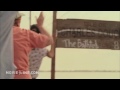
A community of survivors exists on the outskirts of a Louisiana levee, where a six-year-old girl with a boundless imagination and a deep connection to the world around her lives with her father. In Movieline’s exclusive clip, enter the world of Benh Zeitlin’s impressive feature debut/Sundance hit Beasts of the Southern Wild (in limited release this week), as seen through the eyes of the film’s pint-sized heroine, Hushpuppy (played with tremendous fearlessness by discovery of the year, Quvenzhané Wallis). Beasts of the Southern Wild debuted at the Sundance Film Festival in January, where it won the Grand Jury Prize and the Cinematography Award before nabbing four honors at Cannes , including the FIPRESCI Prize and the Caméra d’Or. Zeitlin’s magical-realist fable is a deeply emotional experience, thanks in great part to Wallis’s central turn as the fierce Hushpuppy, whose relationship with her troubled father Wink (local chef/baker Dwight Howard, in his acting debut) anchors the film. Plucked from over 4,000 prospective actresses, Wallis, who was just five years old when she auditioned, commands the screen with an impressive intensity and naturalism. “When she first walked in, she was defiant towards me,” director Zeitlin told Movieline . “Most of the times you figure you can easily puppeteer a kid, but she was not like that at all. She was refusing to do this thing that I asked her to, because she didn’t it was right. I wanted her to throw something at somebody, and she said, ‘No, that’s not right to throw something at somebody you don’t know.’ Filmed on location in Louisiana, Beasts began principal photography on April 20, 2010 — the day of the Deepwater Horizon oil spill, the impact of which mirrored the plight of the residents of the Bathtub within the film. The story celebrates the resilience of a community in the face of disaster, highlighting the spirit of the people who remain. Beasts of the Southern Wild is in limited release today. Follow Movieline on Twitter .
German artist Heinz Schulz-Neudamm created the poster for the 1927 German Expressionist science-fiction film Metropolis by Fritz Lang. A collector bought the futuristic poster for a record $690,000 back in 2005, which is still a record. The poster has been assigned a $250,000 value in a bankruptcy filing by its current owner Kenneth Schacter, according to The Guardian, but it went up for sale with an $850,000 list price in March and some say it could be the first poster to sell for $1 million. Schulz-Neudamm’s painting of the artificial woman, or the Robot, is used by a mad scientist to seduce an race of workers in a totalitarian futuristic urban city. Made in Germany during the Weimar Period, Metropolis is set in the year 2026 in a dystopian society in which a wealthy elite rules from vast tower complexes, oppressing the workers who live in the depths below. The silent film was written by Lang and his wife Thea Von Harbou, and starred Brigitte Helm, Gustav Fröhlich, Alfred Abel and Rudolf Klein-Rogge. In 2008, a print of Lang’s original cut of the film was found in Argentina. The poster is the film’s most familiar promotional image, though at the time others were used as well for its promotion. [Source: The Guardian ]
German artist Heinz Schulz-Neudamm created the poster for the 1927 German Expressionist science-fiction film Metropolis by Fritz Lang. A collector bought the futuristic poster for a record $690,000 back in 2005, which is still a record. The poster has been assigned a $250,000 value in a bankruptcy filing by its current owner Kenneth Schacter, according to The Guardian, but it went up for sale with an $850,000 list price in March and some say it could be the first poster to sell for $1 million. Schulz-Neudamm’s painting of the artificial woman, or the Robot, is used by a mad scientist to seduce an race of workers in a totalitarian futuristic urban city. Made in Germany during the Weimar Period, Metropolis is set in the year 2026 in a dystopian society in which a wealthy elite rules from vast tower complexes, oppressing the workers who live in the depths below. The silent film was written by Lang and his wife Thea Von Harbou, and starred Brigitte Helm, Gustav Fröhlich, Alfred Abel and Rudolf Klein-Rogge. In 2008, a print of Lang’s original cut of the film was found in Argentina. The poster is the film’s most familiar promotional image, though at the time others were used as well for its promotion. [Source: The Guardian ]
From the time it detonated public consciousness at Sundance last January, Benh Zeitlin’s dazzling magic realist feature debut Beasts of the Southern Wild has occasioned its own peculiar brand awe and wonder. After winning the grand jury prize and an award for best cinematography in Park City, the movie continues to conquer the world. Last month at Cannes, it captured the prestigious Camera d’Or for best first feature. Fox Searchlight acquired the movie during Sundance and is preparing the movie’s national rollout with platform opening runs in New York and Los Angeles on June 27th. It has been very heady times for the 29-year-old Zeitlin, the New York-born, New Orleans-based filmmaker who made the (reportedly less than $1 million film) under the auspices of his film collective, Court 13. Zeitlin developed the script at the Sundance Lab with the playwright Lucy Alibar, inspired by her play, Juicy and Delicious . He also collaborated on the evocative, bluegrass score with Dan Romer. Most impressively, Zeitlin does marvelous work with the nonprofessional ensemble, the most electrifying is the movie’s remarkable six-year-old protagonist Hushpuppy (Quvenzhané Wallis), who also narrates the movie. Set in the southern coast of Louisiana in a fictional dispossessed community known colloquially as “the Bathtub,” named for its pervasive, ramshackle clutter and populated by sharecroppers, bootleggers and itinerant musicians, the movie follows the tough-minded, industrious young girl and her father, Wink (Dwight Henry), as they desperately try to hold on to their threadbare existence despite warnings of impending storms and government orders to evacuate. Her mother having “floated away,“ Hushpuppy exists in a state of perpetual motion. The story is more anecdotal than linear, shaped by a succession of incidents and discursive moments related through the girl’s fevered consciousness. During an interview, Zeitlin talked about the movie’s creation, his influences, and his work with the nontraditional actors. More than 3,500 young girls auditioned for the lead role. Quvenzhané Wallis is expressive and dynamic, but you couldn’t have know that beforehand. What was it about her that made you cast her? I met her on the first call back. We had eight different casting teams. When she first walked in, she was defiant towards me. Most of the times you figure you can easily puppeteer a kid, but she was not like that at all. She was refusing to do this thing that I asked her to, because she didn’t it was right. I wanted her to throw something at somebody, and she said, ‘No, that’s not right to throw something at somebody you don’t know.’ She was the youngest person we looked at. She snuck into the audition. She was five-years-old and six was our cutoff. I just thought, she’s going to bring her own morality, her own worldview, to the part. What was your collaboration like? I worked with her like an actor. Movie sets are sometimes very stressful, high-pressure environments. Children don’t respond if it doesn’t feel like a game, if it doesn’t feel fun, it makes them uncomfortable. A lot of work was done to play during the shoots, and once we set up everything about the shot, we‘d come and throw water bottles back and forth, or she‘d mess up my hair. She stayed a kid. The material originated as a play, and you developed the script at the Sundance Lab. How did the script change? We came to the Sundance Lab with a raw first draft. It was something I wrote in two weeks, more a pack of ideas. It was at the lab that we found what the film was about. You had to discipline your choices and find the core. I had great imagery, a cow flies through someone’s roof, but I couldn’t find a connection to the heart of the story. The film became this emotional experience of how do you survive losing the things that made you. What about literary or other film influences. I was reminded of the escaped convict story in William Faulkner’s Wild Palms , or the tenant farmers in Jean Renoir’s The Southerner. I haven’t read or seen those. I tried not to watch a ton of fiction films. I was largely inspired by documentaries and people writing about the South. I’m extrapolating tons of things from the world and creating a pastiche. Interestingly enough, the further away the film plays from Louisiana, it’s seen in the context, as something magical or realistically a portrait of their life. What about your own early experiences in New Orleans? I went there a couple of times when I was a kid, the first time when I was about 13, and I was very haunted by it. There’s conflict, a heightened reality. Everything felt connected. In New Orleans, something there just resonates, both a joyousness and a darkness. When I came back, I felt, as though, this is where I come from in some very abstract way. You come back and you recognize certain aspects, like people who comes from the outside walking into a book that you love. When I was making an earlier, live-action short [ Glory at Sea ], a local guy named Jimmy Lee auditioned for a part and then he came back four hours later, carrying a bunch of stuff, like Greek columns. He said, ‘I heard you were making a boat out of junk, and I figured you could use this.’ That’s what the film is about, manifesting itself in our lives. A guy starts building and it transforms the thing, this crazy mission, and the story was reflecting that. You shot the movie in super-16mm, and the image is definitely more stable and the colors more vibrant. I’m a sentimental bastard. My first [live-action] short, I shot in 16mm and cut it on a flatbed. I realize for most people, the [differences] are totally imperceptible, but there is something magical about a series of still pictures linked, and a little bit of magic that is lost when digital turns it into something else. The grittiness of the [super-16mm] image fits ‘The Bathtub.’ One of the ideas [of the community] was there’s no technology. Hushpuppy had never seen a keyboard, for instance. Also, film is organic, and in order to get good photography in the location, it’s the easiest and cheapest way. To get digital to look right, you have to light it like crazy, and where we were shooting, on the backend of boats, 15 miles off the coast, there was no data managing. You can’t get power, and you can’t control scrims or bounce boards. You can still point and shoot [super-16] on location, and the image really holds together. The movie has been a sensation. You’re about to go into a very brutal marketplace, are you concerned about a backlash at all? I never really worry about what people are going to think. Obviously I care about what people think. I’m very proud of it and I’m very happy with it. Once I feel good about it along with the rest of the crew, that the movie expressed what we’re trying to express, I’m not worried about it. I believe in the film. It’s honest and says what I want it to say. We all know it’s an amazing ride we’re on, and it could explode. Beasts of the Southern Wild opens in limited release this week. Follow Movieline on Twitter .
From the time it detonated public consciousness at Sundance last January, Benh Zeitlin’s dazzling magic realist feature debut Beasts of the Southern Wild has occasioned its own peculiar brand awe and wonder. After winning the grand jury prize and an award for best cinematography in Park City, the movie continues to conquer the world. Last month at Cannes, it captured the prestigious Camera d’Or for best first feature. Fox Searchlight acquired the movie during Sundance and is preparing the movie’s national rollout with platform opening runs in New York and Los Angeles on June 27th. It has been very heady times for the 29-year-old Zeitlin, the New York-born, New Orleans-based filmmaker who made the (reportedly less than $1 million film) under the auspices of his film collective, Court 13. Zeitlin developed the script at the Sundance Lab with the playwright Lucy Alibar, inspired by her play, Juicy and Delicious . He also collaborated on the evocative, bluegrass score with Dan Romer. Most impressively, Zeitlin does marvelous work with the nonprofessional ensemble, the most electrifying is the movie’s remarkable six-year-old protagonist Hushpuppy (Quvenzhané Wallis), who also narrates the movie. Set in the southern coast of Louisiana in a fictional dispossessed community known colloquially as “the Bathtub,” named for its pervasive, ramshackle clutter and populated by sharecroppers, bootleggers and itinerant musicians, the movie follows the tough-minded, industrious young girl and her father, Wink (Dwight Henry), as they desperately try to hold on to their threadbare existence despite warnings of impending storms and government orders to evacuate. Her mother having “floated away,“ Hushpuppy exists in a state of perpetual motion. The story is more anecdotal than linear, shaped by a succession of incidents and discursive moments related through the girl’s fevered consciousness. During an interview, Zeitlin talked about the movie’s creation, his influences, and his work with the nontraditional actors. More than 3,500 young girls auditioned for the lead role. Quvenzhané Wallis is expressive and dynamic, but you couldn’t have know that beforehand. What was it about her that made you cast her? I met her on the first call back. We had eight different casting teams. When she first walked in, she was defiant towards me. Most of the times you figure you can easily puppeteer a kid, but she was not like that at all. She was refusing to do this thing that I asked her to, because she didn’t it was right. I wanted her to throw something at somebody, and she said, ‘No, that’s not right to throw something at somebody you don’t know.’ She was the youngest person we looked at. She snuck into the audition. She was five-years-old and six was our cutoff. I just thought, she’s going to bring her own morality, her own worldview, to the part. What was your collaboration like? I worked with her like an actor. Movie sets are sometimes very stressful, high-pressure environments. Children don’t respond if it doesn’t feel like a game, if it doesn’t feel fun, it makes them uncomfortable. A lot of work was done to play during the shoots, and once we set up everything about the shot, we‘d come and throw water bottles back and forth, or she‘d mess up my hair. She stayed a kid. The material originated as a play, and you developed the script at the Sundance Lab. How did the script change? We came to the Sundance Lab with a raw first draft. It was something I wrote in two weeks, more a pack of ideas. It was at the lab that we found what the film was about. You had to discipline your choices and find the core. I had great imagery, a cow flies through someone’s roof, but I couldn’t find a connection to the heart of the story. The film became this emotional experience of how do you survive losing the things that made you. What about literary or other film influences. I was reminded of the escaped convict story in William Faulkner’s Wild Palms , or the tenant farmers in Jean Renoir’s The Southerner. I haven’t read or seen those. I tried not to watch a ton of fiction films. I was largely inspired by documentaries and people writing about the South. I’m extrapolating tons of things from the world and creating a pastiche. Interestingly enough, the further away the film plays from Louisiana, it’s seen in the context, as something magical or realistically a portrait of their life. What about your own early experiences in New Orleans? I went there a couple of times when I was a kid, the first time when I was about 13, and I was very haunted by it. There’s conflict, a heightened reality. Everything felt connected. In New Orleans, something there just resonates, both a joyousness and a darkness. When I came back, I felt, as though, this is where I come from in some very abstract way. You come back and you recognize certain aspects, like people who comes from the outside walking into a book that you love. When I was making an earlier, live-action short [ Glory at Sea ], a local guy named Jimmy Lee auditioned for a part and then he came back four hours later, carrying a bunch of stuff, like Greek columns. He said, ‘I heard you were making a boat out of junk, and I figured you could use this.’ That’s what the film is about, manifesting itself in our lives. A guy starts building and it transforms the thing, this crazy mission, and the story was reflecting that. You shot the movie in super-16mm, and the image is definitely more stable and the colors more vibrant. I’m a sentimental bastard. My first [live-action] short, I shot in 16mm and cut it on a flatbed. I realize for most people, the [differences] are totally imperceptible, but there is something magical about a series of still pictures linked, and a little bit of magic that is lost when digital turns it into something else. The grittiness of the [super-16mm] image fits ‘The Bathtub.’ One of the ideas [of the community] was there’s no technology. Hushpuppy had never seen a keyboard, for instance. Also, film is organic, and in order to get good photography in the location, it’s the easiest and cheapest way. To get digital to look right, you have to light it like crazy, and where we were shooting, on the backend of boats, 15 miles off the coast, there was no data managing. You can’t get power, and you can’t control scrims or bounce boards. You can still point and shoot [super-16] on location, and the image really holds together. The movie has been a sensation. You’re about to go into a very brutal marketplace, are you concerned about a backlash at all? I never really worry about what people are going to think. Obviously I care about what people think. I’m very proud of it and I’m very happy with it. Once I feel good about it along with the rest of the crew, that the movie expressed what we’re trying to express, I’m not worried about it. I believe in the film. It’s honest and says what I want it to say. We all know it’s an amazing ride we’re on, and it could explode. Beasts of the Southern Wild opens in limited release this week. Follow Movieline on Twitter .