Tag Archives: chinese

For rent in China: White people

Beijing, China (CNN) — In China, white people can be rented. For a day, a weekend, a week, up to even a month or two, Chinese companies are willing to pay high prices for fair-faced foreigners to join them as fake employees or business partners. Some call it “White Guy Window Dressing.” To others, it's known as the “White Guy in a Tie” events, “The Token White Guy Gig,” or, simply, a “Face Job.” And it is, essentially, all about the age-old Chinese concept of face. To have a few foreigners hanging around means a company has prestige, money and the increasingly crucial connections — real or not — to businesses abroad. “Face, we say in China, is more important than life itself,” said Zhang Haihua, author of “Think Like Chinese.” “Because Western countries are so developed, people think they are more well off, so people think that if a company can hire foreigners, it must have a lot of money and have very important connections overseas. So when they really want to impress someone, they may roll out a foreigner.” Or rent one. Last year, Jonathan Zatkin, an American actor who lives in Beijing, posed as the vice president of an Italian jewelry company that had, allegedly, been in a partnership with a Chinese jewelry chain for a decade. When is being foreign a career advantage? Zatkin was paid 2,000 yuan (about $300) to fly, along with a couple of Russian models, to a small city in the central province of Henan where he delivered a speech for the grand opening ceremony of a jewelry store there. “I was up on stage with the mayor of the town, and I made a speech about how wonderful it was to work with the company for 10 years and how we were so proud of all of the work they had done for us in China,” Zatkin said. “They put up a big bandstand and the whole town was there and some other local muckety-mucks.” The requirements for these jobs are simple. 1. Be white. 2. Do not speak any Chinese, or really speak at all, unless asked. 3. Pretend like you just got off of an airplane yesterday. Those who go for such gigs tend to be unemployed actors or models, part-time English teachers or other expats looking to earn a few extra bucks. Often they are jobs at a second- or third-tier city, where the presence of pale-faced foreigners is needed to impress local officials, secure a contract or simply to fulfill a claim of being international. “Occasionally companies want a foreign face to go to meetings and conferences or to go to dinners and lunches and smile at the clients and shake people's hands,” read an ad posted by a company called Rent A Laowai (Chinese for “foreigner”) on the online classified site thebeijinger.com. It continued: “There are job opportunities for girls who are pretty and for men who can look good in a suit.” People like Brad Smith. When Smith — the nom de plume of the Beijing-based American actor — answered CNN's phone call on a recent morning, he was standing outside a meeting room at a Ramada Inn in Hangzhou, a city about 100 miles outside of Shanghai. Today's job: Pretend to be an architect from New York and give design plans for a new museum to local officials. “They have not told me what my name is today. I think it is Lawrence or something,” said Smith — unlike some jobs, no fake business cards were given to hand out. Earlier that morning he went over his script with his Chinese “business partners” at a Kentucky Fried Chicken. “It says, 'Good morning distinguished leaders. It is my privilege to participate in this program',” said Smith, who asked that his real name not be used for fear it could jeopardize future jobs. If Smith is asked a question, he is told to pretend to answer as his “translator” pretends to understand. Occasionally, these jobs can go awry. Smith said 18 months ago Beijing police showed up at his apartment after a financial company he worked at for a couple of months in Xi'an, a city in western China, allegedly swindled millions of yuan out of clients. “That company said I was the guy in charge,” he said. “I didn't even remember the company's name. After that, I decided I was never going to use my passport again with these fake companies. The small gigs are much less dangerous.” Sometimes companies will hire Caucasians simply to sit in the office a few hours a day near the window where clients and customers can see them. White women are also a hot commodity, sometimes to pose as phony foreign girlfriends, or, in the case of Vicky Mohieddeen, to pretend to be an oil tycoon. Mohieddeen, who is Scottish, took a job in 2008 to attend what she describes as some sort of “oil drilling conference” in Shandong province for 300 yuan ($44). Several busloads of foreigners, with nationalities ranging from Pakistani to Nigerian, were trucked to the event, she said. They were greeted by brass bands and feted with a sumptuous dinner. “I was like, 'Yeah, we have a lot of oil in Scotland.' I didn't know what to say. It was a bit nerve-racking. We were guests of honor of the vice mayor. We were put in a nice hotel. It was quite fancy.” For Mohieddeen, who had just arrived in Beijing at the time, the experience, albeit bizarre, was an introduction to a side of China most foreigners will never see. “It is part of what China is all about, you know,” Mohieddeen said. “There is quite an elaborate fantasy world going on here where if everyone buys into it, it does not matter if it is the truth. Those kinds of experiences give me a fuller understanding of the way the culture works.” added by: eden49

Quan Yi Feng profile filmography

Profile for Quan Yi Feng Race : Chinese Height : 1.63m Weight : 48kg Birthday : Mar 1 Hair : Black Eyes : Dark Brown Languages Spoken : Mandarin, Hokkien Talents : Hosting, Acting, Singing Portfolio * TV SERIAL 2005 Oh Mother 哎哟我的妈 2000-2004 Ad-War 完美把戏 2000-2004 Back to Basics 重进森林 2000-2004 Wonderful Life – Fantasy 奇妙人生之幻想 2000-2004 Tastefully Yours 味之道 2000-2004 Happy Family 元氏一家人 2000-2004 OK No Problem! OK没问题 2000-2004 Never Say Bye Bye 病非末日II 1997 D

See the rest here:
Quan Yi Feng profile filmography

Fiona Sit Hoi Kei Profile 薛凯琪

Fiona Sit Hoi-Kei is a female singer and actress from Hong Kong. Chinese name 薛凱琪 (Traditional) Chinese name 薛凯琪 (Simplified) Pinyin xue1 kai3 qi2 (Mandarin) Jyutping sit3 hoi2 kei4 (Cantonese) Ancestry Foshan, Guangdong, China Origin Hong Kong Born 11 August 1981 (1981-08-11) (age 28) Hong Kong Occupation Singer, actress Genre(s) Cantopop Label(s) Warner Music Years active 2004 – present Partner(s) Jaycee Chan Official Website http://www.fiona-sit.com.hk On 23 February 2008, a 27

Read more from the original source:
Fiona Sit Hoi Kei Profile 薛凯琪

Hong Kong billionaire Joseph Lau biography

Biography for Joseph Lau Age: 54 Fortune: self made Source: Real estate Net Worth: 1.7 Country Of Citizenship: Hong Kong Residence: Hong Kong, Hong Kong, Asia Australia Industry: Real Estate Marital Status: divorced, 3 children Joseph Lau Luen Hung (Chinese: 劉鑾雄) (Born 1951 in Hong Kong with family roots in Chaozhou, Guangdong) is a billionaire Hong Kong real estate investor who owns a 61% stake in Chinese Estates Holdings. His fortune is estimated by Forbes at $4.3 billion. In May 2007, La

Link:
Hong Kong billionaire Joseph Lau biography

ABC Touts Entrepreneur Seeking Backing of Government ‘Lawyers and Lobbyists’

The day after President Obama’s oil spill speech — in which the President pivoted from the ongoing mess in the Gulf of Mexico to his call for ending our “addiction” to fossil fuels — ABC’s World News obliged the White House’s agenda with a profile of solar cell manufacturer Natcore , whose president, Chuck Provini, says he can cut the costs of solar cells (which are right now too expensive to be economically viable without government subsidies). But the problem, as ABC correspondent Dan Harris helped frame it, is that this entrepreneur was getting nothing but “blank stares” from the “congressional staffers, lawyers and lobbyists” he met with in Washington, D.C. — as if a venture capitalists and other private investors wouldn’t be tripping over themselves to get in on the ground floor of a process that could actually make solar power viable. And the hero of the story, as ABC told it, is China’s dictatorship, which has made a deal with the company and will now gain the “hundreds of jobs” that U.S. officials have supposedly squandered by not bankrolling Provini: DAN HARRIS: There was, however, one place offering help: China. The government flew him over there and made him a very generous offer. (to Provini) Would you say that the Chinese officials made your life easy in this process? CHUCK PROVINI, via Skype: It’s been a pleasure. They’ve been gracious. They’ve cut through red tape. HARRIS: He is about to cut a deal to open a factory that will create hundreds of jobs – jobs that could have been created here….Critics say the federal government needs a big, bold plan to dramatically ramp up our use of clean energy. Until then, they say, we’re going to see a lot more American companies like Natcore exporting their promising ideas to places like China. Does ABC really think that good business ideas require the support of lobbyists, lawyers and congressional staffers? That the free market cannot innovate and economize with at “big, bold” government “plan?” MRC’s Brad Wilmouth caught the story from the June 16 World News with Diane Sawyer: DIANE SAWYER: And, in his speech last night, President Obama used the moment to call for less dependence on foreign oil and fossil fuels and making sure that China doesn’t get all the new jobs in wind and solar power. But Dan Harris heard a story today of one company, one big idea, but in America, no one to say give it a try. DAN HARRIS: Natcore is a small company based in New Jersey that says it’s come up with an innovative new approach to make solar technology better and cheaper, one that its scientists are very excited about. The president of the company – this guy, Chuck Provini – says he was determined to set up shop here in America. CHUCK PROVINI, NATCORE SOLAR: I live here in New Jersey. I’m a former Marine. I consider myself a good American and a patriot. We wanted to do business in the States. HARRIS: He went to Washington, D.C., and met with congressional staffers, lawyers and lobbyists, but says he couldn’t get the help raising the money that he needed. [to Provini] Were you met with blank stares? PROVINI: They were very polite. We got polite letters, polite conversations, but it was obvious that there was a major disconnect. HARRIS: There was, however, one place offering help: China. The government flew him over there and made him a very generous offer. Would you say that the Chinese officials made your life easy in this process? PROVINI: It’s been a pleasure. They’ve been gracious. They’ve cut through red tape. HARRIS: He is about to cut a deal to open a factory that will create hundreds of jobs – jobs that could have been created here. (to Provini, via Skype) You’re now in China, as we speak, in the middle of the night, and you’re not far away from inking a final deal.                                  PROVINI: Well, I’m really curious as to how you found me at 2:00 in the morning in Jujo City. HARRIS: To be fair, it is hard for the U.S. to compete with China’s dictatorial government, which essentially runs the entire economy. But still, critics say the federal government needs a big, bold plan to dramatically ramp up our use of clean energy. Until then, they say, we’re going to see a lot more American companies like Natcore exporting their promising ideas to places like China. Diane? SAWYER: A real cautionary tale about the need for a fast track here in America. Dan Harris reporting.

Excerpt from:
ABC Touts Entrepreneur Seeking Backing of Government ‘Lawyers and Lobbyists’

dumpling festival 2010

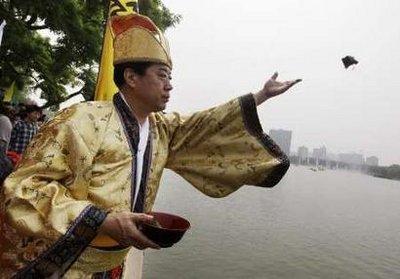
dumpling festival on 16th Jun 2010. A priest in traditional costume throws zongzi, a traditional Chinese rice dumpling, into the river during a religious ritual to honour patriotic Chinese poet Qu Yuan during the Dragon Boat Festival, also known as Duanwu Festival, at Longtan park in Beijing June 16, 2010. The festival commemorates the death of Qu Yuan, who drowned himself in 277 B.C. on the fifth day of the fifth lunar month to protest against the corrupt government of his time. The tradition

See original here:
dumpling festival 2010

pastor Mark Ng picture

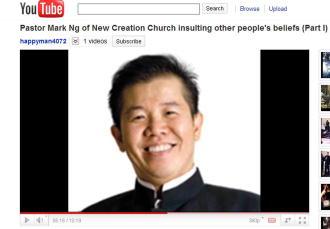
Last night, New Creation Church pastor Mark Ng, 48, issued a statement to The Straits Times for what he described as a #39;serious indiscretion#39;. THE Christian pastor whose mocking remarks about Taoism were posted online last week issued a personal apology yesterday after calls from the Taoist Federation for him to show more contrition. He said: #39;In my zeal to explain the various aspects of Chinese culture and traditions in the context of teachings in the Bible, I failed to observe the b

More:
pastor Mark Ng picture

Aretha Franklin Then and Now: Shocking 2010 Tony Awards PHOTOS

Aretha Franklin appeared last night at the 2010 Tony Awards and her appearance was SHOCKING. The talented musician appears to be morbidly obese. added by: gmc1

Brown Rice Instead of White Rice May Lower Diabetes Risk

By Denise Mann, Health.com June 14, 2010 4:20 p.m. EDT Researchers note that brown rice intake was associated with “a more health-conscious lifestyle” and diet. (Health.com) — The next time you order Chinese food or need a side dish to serve with dinner, you're better off choosing brown rice instead of white. Eating more brown rice and cutting back on white rice may reduce your risk of diabetes, a new study reports. “People at risk of diabetes should pay attention to carbohydrates in their diet and replace refined carbohydrates with whole grains,” says the lead author of the study, Dr. Qi Sun, M.D., a nutrition researcher at the Harvard School of Public Health, in Boston, Massachusetts. If you eat a little more than two servings of white rice (about 12 ounces) per week, switching to brown rice will lower your risk of developing type 2 diabetes by 16 percent, Sun and his colleagues estimate. And if you replace those servings of white rice with whole grains in general, they estimate, your diabetes risk will decline even further, by 36 percent. White rice is produced by removing the husk-like outer layers of brown rice. Those discarded layers contain nutrients (such as magnesium and insoluble fiber) that have been shown to guard against diabetes, which may in part explain the study's findings, Sun says. White rice may also contribute to diabetes risk because it causes blood-sugar levels to rise more rapidly than brown rice does. (This is known as having a higher glycemic index.) Type 2 diabetes occurs when your body loses its sensitivity to insulin, a hormone that helps convert blood sugar (glucose) into energy. The result is that blood sugar, which is toxic at high levels, can creep into the danger zone. Eating lots of foods with a high glycemic index– such as refined carbohydrates– has been linked to diabetes risk in the past. “White rice is digested much faster and converted into sugar in your blood much quicker, so your body puts out a lot more insulin in response to white rice,” says Alissa Rumsey, R.D., a nutritionist at New York-Presbyterian Hospital, in New York City. “Whole grains like brown rice are broken down into glucose a lot slower.” In the study, which is published in the Archives of Internal Medicine, Sun and his colleagues analyzed survey data from nearly 200,000 nurses and health professionals who participated in three long-running studies. Roughly 5 percent of the participants were diagnosed with type 2 diabetes during the studies, which lasted from 14 to 22 years. People who ate five servings or more of white rice per week had a 17 increased risk of developing diabetes compared to those who ate little or no white rice, the researchers found. On the other hand, people who ate at least two servings of brown rice had an 11 lower risk of diabetes compared with those who ate barely any brown rice. Although the researchers controlled for a number of diet and lifestyle factors (such as red meat intake, smoking, and physical activity), it's possible that the findings partly reflect the type of people who tend to prefer white versus brown rice. For instance, the researchers note that brown rice intake was associated with “a more health-conscious lifestyle” and diet. People who ate the most brown rice tended to be more physically active, were slimmer, and ate more whole grains, while they were less likely to smoke or have a family history of diabetes. Indeed, though brown rice is more nutritious than white rice, the study doesn't necessarily prove that white rice will contribute to diabetes, says Dr. Loren Wissner Greene, M.D., a clinical associate professor of medicine at New York University's Langone Medical Center, in New York City. “More brown rice is helpful because it is higher in fiber and that may protect against diabetes, but white rice may not increase the risk,” Greene says. At least half of your daily grain intake should be whole grains, Rumsey says. “Look for brown foods such as whole-wheat bread, whole-wheat wraps, or whole-grain or blended pastas,” she suggests. “There are a lot of whole grains– such as barley, bulgur, oatmeal, and quinoa– that are easy to cook with.” Check ingredients and nutrition labels when food shopping, Rumsey says. The first ingredient should say “whole grain” or “whole wheat,” and the foods should have at least 3 grams of fiber per serving. “Whole grains have so much more fiber, vitamins, minerals, and protein, so you get a lot more nutritional bang for your buck than with refined carbohydrates like white rice or white bread,” she says. http://www.ogiimpex.com/images/content_pic/brown_rice.jpg added by: EthicalVegan

NY Times Leaves Mao’s Atrocities Out of Obituary for Physicist Turned Maoist Joan Hinton

The New York Times’s obituary Saturday for Manhattan Project physicist turned Maoist Joan Hinton by William Grimes left out her Maoist beliefs in both the headline — ” Joan Hinton, 88, Physicist Who Chose China Over Bomb ” — and a text box: “A Manhattan Project member whose desire for peace led her to a Chinese farm.” And the obituary itself completely omitted the deadly nature of Mao Zedong’s totalitarian regime: Joan Hinton, a physicist who worked on the Manhattan Project, which developed the atom bomb, but spent most of her life as a committed Maoist working on dairy farms in China, died on Tuesday in Beijing. She was 88. …. In 1948, alarmed at the emerging cold war, she gave up physics and left the United States for China, then in the throes of a Communist revolution she wholeheartedly admired. “I did not want to spend my life figuring out how to kill people,” she told National Public Radio in 2002. “I wanted to figure out how to let people have a better life, not a worse life.” Grimes concluded without any reference to Mao’s atrocities during the Cultural Revolution: She and her husband remained true believers in the Maoist cause. “It would have been terrific if Mao had lived,” Ms. Hinton told The Weekend Australian in 2008 during a trip to Japan. “Of course I was 100 percent behind everything that happened in the Cultural Revolution — it was a terrific experience.” By contrast, the Washington Post’s obituary Friday from Matt Schudel mentioned Hinton’s Maoism in the online headline: “Joan Hinton, worked on Manhattan Project and became devoted Mao follower, dies at 88.” A middle paragraph also made clear the murderous nature of the regime: “Nonetheless, Ms. Hinton remained an ardent supporter of Mao, the Chinese Communist leader who controlled the country from 1949 until he died in 1976. Even after Mao’s Cultural Revolution reshaped Chinese society by force, leaving tens of millions of people dead in ideological purges, Ms. Hinton’s loyalty was undiminished .”

Continue reading here:
NY Times Leaves Mao’s Atrocities Out of Obituary for Physicist Turned Maoist Joan Hinton