Tag Archives: city

NY Times Departing Public Editor Hoyt: We’re Not the Fox News of the Left

Clark Hoyt filed his last column as the New York Times’s Public Editor: ” A Final  Report From Internal Affairs, ” praising the cooperation of Times reporters and editors during his term and fending off accusations that the paper is a “liberal rag.” Hoyt admitted the editorial page and columnists are liberal and that the paper “shares the prevailing sensibilities of the city and region where it is published,” but denied the Times was “really the Fox News of the left,” citing scandalous scoops that hurt prominent Northeastern Democrats like New York Gov. Eliot Spitzer. Hoyt was the paper’s third public editor in an experiment that had its roots in the Jayson Blair catastrophe . In retrospect, the paper’s first ombudsman, Daniel Okrent, was probably the toughest critic of the paper’s reporting. Okrent famously asked the rhetorical question in a July 2004 column: ” Is the Times a liberal newspaper? Of course it is .” His successor Barney Calame was far too much a corporate yes-man; he initially defended the paper’s exposure a U.S. terrorist surveillance program involving international bank transfers, though he later recanted . Hoyt was somewhere in the middle, and perhaps the least predictable when it came to which controversies he considered worth writing about. Each of my predecessors, Daniel Okrent and Byron Calame, faced some degree of resistance from the newsroom, and I do not think anyone thought it would go down easy for me. On my first day on the job, Arthur Sulzberger Jr., the publisher, sat opposite me in a little room off his office, clapped his hands on his knees and said with a laugh: “Well, you’re here. You must be dumber than you look.” But my reception by the newsroom turned out to be accepting and unfailingly professional, in large part, I believe, because Okrent and Calame persevered, established the position and made it matter. Times journalists have been astonishingly candid, even when facing painful questions any of us would want to duck. Of course, journalists don’t relish being criticized in public any more than anyone else. A writer shaken by a conclusion I was reaching told me, if you say that, I’ll have to kill myself. I said, no, you won’t. Well, the writer said, I’ll have to go in the hospital. I wrote what I intended, with no ill consequences for anyone’s health. …. For all of my three years, I heard versions of Kevin Keller’s accusation: The Times is a “liberal rag,” pursuing a partisan agenda in its news columns. There is no question that the editorial page is liberal and the regular columnists on the Op-Ed page are heavily weighted in that direction. There is also no question that The Times, though a national newspaper, shares the prevailing sensibilities of the city and region where it is published. It does not take creationism or intelligent design as serious alternatives to the theory of evolution. It prints the marriages and commitment ceremonies of same-sex couples. It covers art and cultural events out on the edge. Hoyt next defended his paper’s balance by focusing on the Times breaking political scandals against Democrats in its backyard. While not quite denying the paper’s liberal slant, Hoyt said the Times was definitely not the Fox News of the left. But if The Times were really the Fox News of the left , how could you explain the investigative reporting that brought down Eliot Spitzer, New York’s Democratic governor; derailed the election campaign of his Democratic successor, David Paterson; got Charles Rangel, the Harlem Democrat who was chairman of the House Ways and Means Committee, in ethics trouble; and exposed the falsehoods that Attorney General Richard Blumenthal of Connecticut, another Democrat, was telling about his service record in the Vietnam era? Of course, as the Times is always reminding us, the Republican Party has been decimated in the Northeast in recent years, meaning the region is dominated by Democrats, meaning most political scandals will involve Democrats. Hoyt also announced a new public editor from outside the paper would be named soon.
View post:
NY Times Departing Public Editor Hoyt: We’re Not the Fox News of the Left
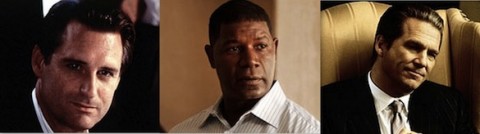
5 Fictional Presidents Who Would Have Outdone Barack Obama Last Night

If one was so inclined to compare Barack Obama’s Tuesday night Oval Office speech on the BP oil spill to a current summer movie, Sex and the City 2 would probably suffice. Goodness what a disaster . As MSNBC host Keith Olbermann said — presumably with the glee of Rex Reed trashing SATC 2 — “I thought it was a great speech if you’ve been on another planet for 57 days.” OK, then! With this oil-and-watershed moment for President Obama now sinking in the rear view mirror, Movieline wonders which fictional president’s could have done a better job last night. Answers ahead!

Read more:
5 Fictional Presidents Who Would Have Outdone Barack Obama Last Night

Is The Grass Really Greener for the Fabulous Beekman Boys?

Don’t miss Josh and Brent’s adventure in rural living on Planet Green . Bestselling author James Frey ponders the simple life as his pals Josh and Brent leave the city for a farm in upstate New York in Planet Green’s new series The Fabulous Beekman Boys . … Read the full story on TreeHugger

See more here:
Is The Grass Really Greener for the Fabulous Beekman Boys?

Review: Tate Modern’s ‘Exposed’

Story and photo by Delaina Haslam, le cool London 'Exposed' is not one to take your grandparents to, which is why I took my parents instead. Actually, they took me, and are perfectly equipped to handle the content of this exhibition in any case. At least as much as anyone is, or so I thought. This is what happened on our visit; and when I returned to catch the reactions of other visitors as they exited. I was hoping for gasps and exclamations of alarm. I got learned, measured and in-depth responses. This is Tate Modern after all. So, no outrage, but I did get some reservations and a walkout. Here's why: 'Exposed' is controversial – at certain points in the extreme. It sets out to explore “pictures made on the sly, without the explicit permission of the people depicted”. It begins with 19th- and 20th-century photographers such as Philip-Lorca diCorcia who captured their subjects unawares, and moves through the themes of celebrity, desire, violence and surveillance. Helmet Newton's flawless-finish quasi-pornography rubs shoulders with Kohei Yoshiyuki's exposure of a phenomenon he discovered in a Japanese park, where people attempt to creep up on couples making out in the bushes, and touch them without being noticed. Documentation of suicides and people jumping from burning apartment blocks give way to wartime surveillance footage and artists' responses to surveillance, such as Denis Beaubois' 'In the event of Amnesia the city will recall'. My mum was saddened in the early rooms, as “most of the people in the pictures are now dead, and they were unaware that they were being photographed”, which brought to mind something Andy Warhol once said: “Dying is the most embarrassing thing that can ever happen to you, because someone's got to take care of all your details.” We don't like people looking at us – or things that represent us – when we do not know that they are. As I progressed through the exhibition, I found myself increasingly alone, that is, not in the company of my parents. While I indulged in morbid interest over newspaper cuttings about the deaths of President Kennedy, Princess Diana and death row prisoners such as Ruth Snyder in 1928, I sensed their interest dwindling. On reflection, they told me that they found the exhibition ill-conceived, trying too hard to explore too many aspects of surveillance, making it hard to take. It needs editing to make it smaller and thus have more impact. I decided to return to the Tate a few days later to collect people's reactions as they came out of 'Exposed'. “The best thing about it was the Nan Goldin stills from the film 'The Ballad of Sexual Dependency,” Erika, a history of art student, told me. “I thought that was really moving.” But she identified an omission: “I really thought they could have included an artist called Dash Snow, who does temporary Polaroids of his life on the streets of America. He died recently; he would’ve been a really good choice.” “It was quite overwhelming to be in a space with so many works of such history,” said Warren, who was visiting from Monash University, Melbourne.” I had to pause for breath a few times…It oscillated between being very in-your-face, with some seminal pictures of the Vietnam war, and work from contemporary art history, like Philip-Lorca diCorcia’s work. Putting them together, made for a weird sensation.” Some visitors did not react so well to the exhibition's breadth. Moshe from Israel told me: “I think there are too many pictures. So many things, it’s impossible. So we left.” His wife, Daniela, agreed: “It’s overwhelming because it’s about so many subjects, not just sex – it's about crime, violence and also about war. Maybe it’s in how they present it – it hasn’t got one line which we can follow to know what the exhibition is about.” Voyeurism and surveillance could have made two separate exhibitions. The uniting theme is 'invasive looking', but what jars is the fact that the aims of the furtive photographer and the surveillance camera are very different; being asked to bracket them makes for an unsettling experience, leaving us feeling cheated by the sheer scale and lurching scope of the subject matter, while, at the same time, we are

Welcome to Hershey, Cuba

Hershey first visited Cuba in January 1916. It is said that he fell in love with the country at first sight. It was a country of eternal spring, where the inhabitants found it hot if the temperature went up over eighty degrees and cold if it dropped to seventy. Hershey was excited by the immense sugar plantations in Cuba. In 1916 the world was embroiled in the first great war and sugar, essential to milk chocolate production, was in short supply. During his first visit to Cuba, Milton Hershey decided to purchase sugar plantations and mills so that he could mill and refine his own sugar for use in his Hershey chocolate factory. True to style, once he had made the decision, Milton Hershey moved rapidly to carry it out. Within a few weeks of his arrival in Cuba, he had explored the country for sixty miles east of Havana, bought a small sugar mill, Central San Juan Bautista, (central is the Cuban term for a sugar mill and its surrounding town) selected the site on which to build a larger mill, and started to build a railroad to service it. When he returned home to Hershey, Pennsylvania in early April, the Cuban enterprise was already well under way. The flagship of Hershey's Cuban holdings would be a new mill and town, Central Hershey, located near Santa Cruz. To provide for his workers at Central Hershey, Mr. Hershey constructed a town or “batey.” In addition to comfortable homes for rent, there was good health care, a free public school, recreational facilities including a baseball diamond, golf course and sport club, and a general store. As in Hershey, Pennsylvania, the railroad permitted employees to choose where they would live. Hershey's presence and manner of doing business in Cuba were in sharp contrast to most foreign businessmen who exploited the country and its people and took their profits home with them. Cuba praised and honored Milton Hershey with many awards including the highest honor that the country could bestow: The Grand Cross of the National Order of the Carlos Manuel de Cespedes. Hershey's Cuban holdings were sold in 1946 to the Cuban Atlantic Sugar Company. At the time of the sale the operations included 60,000 acres of land, 5 raw sugar mills, a peanut oil plant, a henequen plant, 4 electric plants, and 251 miles of railroad track with sufficient locomotives and cars. _____________________________________________________________________________ Fast forward to 2002: Why are you taking pictures?” a local woman asks me in Spanish. “There’s no history here.” Five minutes later, a young man walks up and says: “Cuba is a museum.” Such are the ironies of this small town near Havana, officially known as Camilo Cienfuegos, unofficially referred to by its original name, Hershey. In 1917 Milton Hershey built a mill here to process sugar cane for his chocolate factory in Pennsylvania. Around the mill, he built a town featuring American-style bungalows and sprawling fieldstone mansions. There was a golf course, a cinema and a hotel. Six years later, the Hershey Electric Train journeyed from Havana to Matanzas, stopping in the town of Hershey. Fast forward to the present: I wait, with a growing crowd of Cubans at the train stop outside Guanabo, in the countryside just east of Havana. We’re surrounded by towering royal palms and a distant ridge of hills. Every few minutes a beat-up car putts past, or a horse and buggy, or a clunker bicycle. The Electric Train pulls up only half an hour late. Rust has turned its roof reddish brown. On top is a transformer that looks older than electricity. Four bent poles reach for the sagging cables that miraculously manage to deliver power to the engine. Slowly, we sway through miles of overgrown fields, some seats swaying considerably more than others. I feel like I’m inside the skeleton of a double-jointed contortionist. We stop in one-shack hamlets to pick up peasants dressed in their business best for a trip to the city of Matanzas. Several riders get off with me at the clay-roof Hershey station. The first thing I notice is the mill, now a jumble of twisted frames and patchy sheet metal. Fidel Castro’s government took it over after the 1959 revolution and sold sugar to the Soviet Union. In the 1990s, when the Cuba’s Russian lifeline fell away, there were few markets and fewer spare parts to keep the industry afloat. Efficiency went down and sugar prices dropped. In 2002 Cuba shut down half its sugar mills, including this one. Hershey became a one-industry town without an industry, hollow at the core. Today, the mill is still being dismantled. Ancient Russian trucks rumble around the un-building site, preparing to ship any useable parts to other functioning mills. Behind many homes I see storage sheds made of scrap metal. Cheerful billboards pop up all over town, with messages like, “The Electric Railway will be rejuvenated,” “Sports are the right of the people” and “This revolution was made with the humble, for the humble, and by the humble,” a quote from Camilo Cienfuegos, a comandante who played a major role in the overthrow of Batista. The paint is peeling on the tiny bungalows surrounding the mill, but they still look like they were transplanted directly from the post-war suburbs of America. Each has its own porch and wee lawn outlined in pebbles. I feel like I’m in a Communist Pleasantville, twice-frozen in time, evoking two opposing dreams. I meet one believer, the man who described Cuba as a museum. He’s a mechanic in one of the post-mill industries, fixing ailing trains dragged here at all hours from all over Havana Province. His workshop could pass for a museum, crammed with turn-of-the-century trains from Russia, Romania, the U.S., France and Spain. He poses for a photo beside a massive cast-iron funnel spray-painted green. The letters embossed on its surface read, “New Doty Mfg Co, Janesville, Wis.” “I love my job!” he exclaims. “I love trains! I love Che!” I believe him, even though his boss is standing right there. I keep believing when I see what the other laid-off mill workers are doing. Many have gone back to school, continuing to receive their government salaries. One man repairs umbrellas on the front porch of a house. Others work on an organic farm in the middle of town, where I buy two shining eggplants for one Cuban Peso. My optimism deflates in a dingy snack bar near the train station, when I bite into my long-awaited sandwich. A closer examination reveals a mystery meat like bologna decorated with large chunks of fat. Poor fuel for a revolution. I can’t wait to get back to Guanabo and cook my eggplants. As the vegetables sizzle on the frying pan, my host asks me why I spent the whole afternoon in such an obscure place with no tourist attractions. My answer comes in pieces. It was the surrealism, the wild juxtapositions, the way the town made me believe, if only for a moment, against all odds. _____________________________________________________________________________ In the video, see the old timers of Hershey, Cuba reminisce about the past. Not everywhere does the future signal progress. In some places it means regression. Welcome to Hershey, Cuba and to the story of hundreds of towns across Cuba. [See pictures of the town of Hershey I added on the comments section, as it was before the Revolution] Check it out folks. The film is called “Model Town”… added by: UrbanGypsy

Power of 10, 2010 FIFA World Cup Commercial- ESPN

A brief look at the sacred #10 jersey in soccer.

http://www.youtube.com/v/l8NE7LBbQVs?f=videos&app=youtube_gdata

Go here to see the original:
Power of 10, 2010 FIFA World Cup Commercial- ESPN

2010 FIFA World Cup: United- ESPN FIFA World Cup Commercial- U2 Magnificent

The second commercial as part of ESPN’s World Cup Campaign. Titled United and set to U2’s Magnificent.

http://www.youtube.com/v/n1O-vZt_gps?f=videos&app=youtube_gdata

Read more:
2010 FIFA World Cup: United- ESPN FIFA World Cup Commercial- U2 Magnificent

2010 Fifa Soccer World Cup 2010 ESPN Commercial

When 32 teams come to South Africa for the 2010 FIFA World Cup, the world’s biggest stage creates the biggest drama. SONG IS “CITY OF BLINDING LIGHTS” BY U2 PLEASE SUBSCRIBE!!!

alt : rtsp://v5.cache2.c.youtube.com/CiILENy73wIaGQl0ac-aTOZxnRMYDSANFEgGUgZ2aWRlb3MM/0/0/0/video.3gprtsp://v5.cache2.c.youtube.com/CiILENy73wIaGQl0ac-aTOZxnRMYDSANFEgGUgZ2aWRlb3MM/0/0/0/video.3gp

Read the original post:
2010 Fifa Soccer World Cup 2010 ESPN Commercial

World Cup's start kicks off friendships

World Cup’s start kicks off friendships ». By Sports Editor. 600_madiba.JPG. It was Christmas in June for giddy soccer fans throughout the city Friday. A restless night’s sleep was greeted by the first hint of sunlight, … World Cup 2010 Video … “Chasing the Game”: A primer on the history of the U.S. national soccer team, its run-up to the South Africa World Cup , with profiles on its coach and players. Chasing the Game; America and the Quest for the World Cup …

See the article here:
World Cup's start kicks off friendships

Chicago: Blackhawks Stanley Cup Celebration, City Goes Wild

With a 49-year Stanley Cup drought finally over, the City of Chicago estimated over 2 million ecstatic Blackhawks fans basked in the glory of the hockey championship today, creating a sea of humanity for a championship parade and rally that filled Michigan Avenue for blocks. “It’s been a long time between drinks,” team owner Rocky Wirtz told the assembled mass jamming Michigan, just south of the Chicago River. “From our family, the Wirtz family . . . thank you from the bottom of our heart We’ll see you again.” Chicago Blackhawks' Patrick Kane rides in double-decker buses with the Stanley Cup during a ticker tape parade through the Loop in downtown Chicago. (AP) An elevated train passes over Washington Street as the Chicago Blackhawks ride in double-decker buses with the Stanley Cup. (AP) Mayor Daley introduced Wirtz at the rally, saying: “Thank you Rocky for providing the Stanley Cup championship right here in the city of Chicago.” Said Wirtz: “Thank you, Mr. Mayor. You throw one hell of a parade.” Fans showered the Hawks with love from the start of the parade route at the United Center all the way to the rally site. A convoy of trolleys led the way, followed by double-decker buses filled with players. The buses reached the Michigan and Wacker rally site around 11:30 a.m. City officials had said an estimated 350,000 people were expected to attend. Mid-rally, the city changed that number to “over 2 million.” added by: diode

Free Info to Fix Your Computer