Tag Archives: film

In Movie Memoriam: Whitney Houston and The Bodyguard

Despite having acted in only a handful of movies before her death on Saturday at the age of 48, Whitney Houston left a lasting legacy with the few film projects she did release during her reign as arguably the best-known female pop singer of her generation. 1995’s Waiting to Exhale earned her a NAACP Image Award nomination, and 1996’s The Preacher’s Wife won her the award (and made her the highest-earning African American actress in Hollywood at the time); this year’s Sparkle was set to be Houston’s comeback after a well-documented and public period of substance abuse and personal decline. But no film is as indelibly linked to Houston’s legacy as her debut in 1992’s The Bodyguard , and the record-breaking soundtrack it spawned. After Houston’s debut album Whitney Houston and her sophomore effort Whitney made her a global, award-winning recording star, the singer selected her first foray into film, signing on to director Mick Jackson’s romantic drama-thriller-musical The Bodyguard . Sure, she was nominated for a Razzie for her turn as Rachael Marron, an internationally renowned pop star/actress who falls for her stoic bodyguard (Kevin Costner) — and critics widely panned the film, citing the cold chemistry between Houston and Costner and the fact that the character didn’t seem much of a stretch for Houston. But The Bodyguard ‘s heavy musical element, and the potency of its chart-topping soundtrack, went a long way in enhancing Houston’s screen performance and turning it into something of a phenomenon. Released in the fall of 1992, The Bodyguard went on to gross $410.9 million worldwide owing largely to Houston’s popularity and the soundtrack to which she contributed six songs; buoyed by the Dolly Parton-penned powerhouse ballad cover “I Will Always Love You,” its soundtrack became the bestselling soundtrack album of all time, and with good reason. With “I Will Always Love You” Houston recorded a defining song of the decade, one that meshed her soulful chops, extraordinary voice, and the R&B-inflected mainstream appeal that had already made her a breakout star across genre lines. Where Parton’s original version carried a sweet country lilt, Houston added power and a bombastic sense for drama that not only fit her character’s storyline and explained the film’s bittersweet ending, it also showcased her strengths as a singer and performer. I always loved the way the song’s opening lines wafted in over Rachael and Frank’s farewell scene, beginning as Rachael’s plaintive inner voice then swelling as she sings her feelings so urgently she has to stop the plane just to run out to give him one last smooch. Cut to some time later, as he’s moved on to his next job and she’s onstage performing “I Will Always Love You” — thinking of him, we know, every time she performs it. Who can care that Houston and Costner’s flirtation is stiff for the first half of the movie when you have a love ballad like this, roiling with bittersweet emotion, giving you closure and catharsis? In addition to “I Will Always Love You,” two other Bodyguard singles (“I’m Every Woman” and “Queen of the Night”) peaked at number one on the U.S. Dance charts. But for my money the better songs on the album were “I Have Nothing” (which hit number one on the Adult Contemporary charts) and “Run to You,” both original ballads that went on to nab Oscar nominations for Best Song. More importantly: as with “I Will Always Love You,” it’s in the familiar environs of the music videos for these singles where Houston’s expressiveness as an actress really came alive. The video for “I Will Always Love You” featured a fierce, confident Whitney in a power suit singing to an empty theater while looking far more comfortable emoting to her music than she did opposite her co-star; one could imagine she was Rachael Barron, years removed from her relationship with Frank Farmer, sitting with her memories while rehearsing for her latest tour. Similarly, the music video for “I Have Nothing” also allowed Houston to channel the character through her music. Placing Houston as Rachael in performance in a nightclub set, director Steve Barron ( Teenage Mutant Ninja Turtles , Michael Jackson’s “Billie Jean”) evokes a rich atmosphere while drawing real nuance and emotion out of Houston in close-up, a performance of a performance, and probably the most glamorous and gorgeous of the soundtrack’s videos. “Run to You,” meanwhile, featured Houston as Rachael in dreamy, heavenly white, declaring her love and longing so passionately that Frank, watching it on television late one night in the film, feels a flutter. If you had trouble buying Houston’s character in the film, these supplemental videos gave her the chance to demonstrate a much more vivid inner life — and everyone of a certain generation watched the hell out them back in the day. Houston also contributed popular soundtrack singles to her later films, the Grammy-winning “Waiting to Exhale (Shoop Shoop)” from Waiting to Exhale and the Grammy-nominated “I Believe in You and Me” from The Preacher’s Wife , but neither achieved the confluence of movie and music that drove The Bodyguard to its successes. Following 1997’s musical telefilm Rodgers and Hammerstein’s Cinderella (opposite Brandy), Houston’s next film project was to be a remake of the 1976 R&B melodrama Sparkle , to star Houston and Aaliyah. Back on track and recast almost a decade later with Jordin Sparks playing the lead role, the musical was filmed last fall and will be released this summer, marking Houston’s final screen performance. Share your favorite Houston performances, scenes, or songs below. Follow Jen Yamato on Twitter . Follow Movieline on Twitter .

More here:
In Movie Memoriam: Whitney Houston and The Bodyguard

Artist, Meryl Streep Win Big at BAFTA Awards

Stop me if you’ve heard this one before: The Artist made off with Best Picture, Best Director, Best Actor, and and fistful of other hardware at tonight BAFTA Awards ceremony in London, its final stop before the silent film’s Oscar express pulls into the Kodak Theater terminus on Feb. 26. Meryl Streep also won a key awards-race victory as the institute’s Best Actress, while Octavia Spencer and Christopher Plummer continued their own hot streaks in the supporting categories. Read on for all of 2012’s winners, and drop back by Movieline on Wednesday to find out how the latest developments affect our Oscar Index . BEST FILM THE ARTIST OUTSTANDING BRITISH FILM TINKER TAILOR SOLDIER SPY OUTSTANDING DEBUT BY A BRITISH WRITER, DIRECTOR OR PRODUCER TYRANNOSAUR — Paddy Considine (Director), Diarmid Scrimshaw (Producer) DIRECTOR Michel Hazanavicius, THE ARTIST LEADING ACTOR Jean Dujardin, THE ARTIST LEADING ACTRESS Meryl Streep, THE IRON LADY SUPPORTING ACTOR Christopher Plummer, BEGINNERS SUPPORTING ACTRESS Octavia Spencer, THE HELP FILM NOT IN THE ENGLISH LANGUAGE THE SKIN I LIVE IN DOCUMENTARY SENNA ANIMATED FILM RANGO ORIGINAL SCREENPLAY Michel Hazanavicius, THE ARTIST ADAPTED SCREENPLAY Bridget O’Connor and Peter Straughan, TINKER TAILOR SOLDIER SPY ORIGINAL MUSIC Ludovic Bource, THE ARTIST CINEMATOGRAPHY Guillaume Schiffman, THE ARTIST EDITING Gregers Sall and Chris King, SENNA PRODUCTION DESIGN Dante Ferretti and Francesca Lo Schiavo, HUGO COSTUME DESIGN Mark Bridges, THE ARTIST MAKE UP & HAIR Marese Langan, Mark Coulier and J. Roy Helland, THE IRON LADY SOUND Philip Stockton, Eugene Gearty, Tom Fleischman, John Midgley, HUGO SPECIAL VISUAL EFFECTS Tim Burke, John Richardson, Greg Butler and David Vickery, HARRY POTTER AND THE DEATHLY HALLOWS – PART 2 SHORT ANIMATION A MORNING STROLL SHORT FILM PITCH BLACK HEIST THE ORANGE WEDNESDAYS RISING STAR AWARD (voted for by the public) ADAM DEACON ### [Top photo of (L-R) Artist star Jean Dujardin, producer Thomas Langmann and director Michel Hazanavicius via AFP/Getty Images]

See original here:
Artist, Meryl Streep Win Big at BAFTA Awards

Whitney Houston, Dead At 48: A Big Screen Tribute

Iconic diva appeared in celebrated box-office gems including ‘The Bodyguard’ and ‘Waiting to Exhale.’ By Eric Ditzian Whitney Houston and Kevin Costner in “Bodyguard” Photo: Warner Bros. The death of Whitney Houston, who died on Saturday (February 11) at the age of 48, leaves a gaping hole not only in the world of music, but in movies, too. She may have been best known for belting out R&B power ballads, but Whitney Houston also made an impact in Hollywood — a star in hit movies and a musical presence in countless other films. As we mourn her untimely death and honor her career, let’s take a look back at some of Houston’s cinematic achievements. “The Bodyguard” By far Houston’s most celebrated film, this 1992 romantic drama, in which she starred opposite Kevin Costner, became not only a box-office success (more than $400 million at the worldwide box office), but spawned one of the most popular movie soundtracks of all time. The disc won a Grammy for Album of the Year and its first single, “I Will Always Love You,” became one of the best-selling singles ever. “Waiting to Exhale” Three years after the success of “The Bodyguard,” Houston teamed with Angela Basset and Loretta Devine for a film about four friends and their various relationship dramas. Babyface produced the score and Houston performed two songs on the soundtrack, which went platinum seven times. Her “Exhale (Shoop Shoop)” hit #1 on Billboard ‘s Hot 100 chart. MTV Movie Awards Houston appeared three times at the MTV Movie Awards, once in 1993 following “The Bodyguard,” again in 1996 after “Waiting to Exhale,” and finally in 1999. In ’93, she was nominated for three awards, including Breakthrough Performance, but came away empty-handed. In ’96, she performed “Why Does It Hurt So Bad,” a single off the “Exhale” soundtrack. “The Princess Diaries” The singer never appeared in this Disney teen drama, but she produced the film, which is notable for having been Anne Hathaway’s breakout role. The movie grossed almost $170 million and spawned a sequel. “The Princess Diaries 2: Royal Engagement,” which Houston also produced, grossed more than $130 million. “Sparkle” A remake of the 1976 musical, “Sparkle,” loosely based on Motown’s the Supremes, was slated to be revived with Houston as executive-producer and star. “American Idol” winner Jordin Sparks took on the role of Sparkle, with Houston playing her mother (her first movie role since 1996’s “The Preacher’s Wife,” in which she costarred along with Denzel Washington). “Sparkle” was shot in the fall of 2011 and has been slated for an August 17 release. When MTV News reached out to Sony/ Screen Gems after Houston’s death, we received this statement: “Like all those who knew and loved her, we are shocked and saddened and the world has lost an incomparable talent. Right now our thoughts are with her daughter, her family and her friends.” Join us for a tribute to Whitney Houston with non-stop music videos on MTV Hits and MTV Jams, all day Sunday. Share your condolences and memories of Whitney Houston on our Facebook page. Related Videos Whitney Houston: Life And Music Of An Icon Related Photos Whitney Houston: A Life In Photos Related Artists Whitney Houston

See original here:
Whitney Houston, Dead At 48: A Big Screen Tribute

Berlinale Dispatch: Greetings from the Baked Potato of Film Festivals, 62nd Edition!

The Berlinale is the baked potato of European film festivals, and I don’t mean that as an insult, or even a backhanded compliment. A few months back, I was asked by David Hudson, of the superb movie-resource website Mubi , to offer a few observations about the Berlinale, which I’ve been attending since 2008. That year and every year since, the Berlinale has paid my way to participate in the Talent Press arm of the Talent Campus: Along with three other mentors, I coach young critics from all over the world (there are eight participants every year) as they cover the festival through assignments they’re given each day. While I’m here, I also see as many movies as I can and write about them. Hudson was putting together a sampling of opinions from festival attendees from all over the world, in preparation for a daylong symposium that was held by the German Film Critics Association in October. One of the issues the symposium hoped to address was the festival’s diminishing reputation: In recent years, the German and international press hasn’t exactly showered the festival with kindness. (Shane Danielsen’s  Indiewire report from last year was particularly damning, if highly entertaining, though I disagree with him about the smell of the venues.) The Berlin Film Festival, now in its 62nd year, isn’t nearly as massive and glossy as Cannes, nor is it as quietly refined as Venice. I’ll concede that the programming choices, at least among the films in competition, often lean heavily in the direction of peasants and other types of oppressed peoples. Maybe that’s what made me think of the potato metaphor: If this isn’t always the most exciting festival on the planet, there’s still something solid and serviceable about it, and there are plenty of times when it exceeds expectations. Sometimes it’s just what you didn’t know you wanted. (That’s in addition to the fact that it’s one of only a few festivals with an extensive educational component.) Last year, the Berlinale brought us Asghar Farhadi’s A Separation , a picture that has since, with good reason, become a critics’ darling and is now a contender for an Academy Award. Fewer people Stateside have seen Bela Tarr’s The Turin Horse — though it opens in New York this weekend, at the Film Society of Lincoln Center — but the Berlinale also helped this picture achieve a small but significant groundswell of attention. Does every programming choice, particularly among the films in competition, measure up in significance to those two examples? Hardly. But every year at the Berlinale I discover at least a film or two or three that I’m grateful for, and that wouldn’t have crossed my path otherwise. This year, the programming choices are perhaps particularly un-glitzy, and they’re certainly low in Hollywood star power — not necessarily a bad thing. The festival opener this year was Benoit Jacquot’s historical drama Farewell My Queen (which I arrived too late to see), starring  Diane Kruger, Léa Seydoux and Virginie Ledoyen, lovely actresses, all of them, though hardly household names. The festival is also featuring, out of competition, Stephen Daldry’s Extremely Loud and Incredibly Close , which has already fallen with a thud Stateside. (I felt sorry for my English friends as they traipsed off to see it. Once was more than enough for me.) Possibly the most high-profile of the films in competition, at least by Hollywood standards, is Billy Bob Thornton’s Jayne Mansfield’s Car, which screens later this week. (It stars Thornton, Robert Duvall, John Hurt and Kevin Bacon.) Thornton’s ex, Angelina Jolie, is also here with her directorial debut In the Land of Blood and Honey , being shown here as a special presentation. But there’s still plenty to look forward to: I can’t wait to see Tsui Hark’s 3-D  Wuxia The Flying Swords of Dragon Gate, screening out of competition later this week. And though I’m not sure I can swing it, schedule-wise, I have a hankering to check out Timo Vuorensola’s Finnish-Australian-German (and crowd-funded) Third Reich/sci-fi thingie Iron Sky — because who can resist a pitch like this one: “In 1945 the Nazis went to the moon. In 2018 they are coming back.” Space-traveling Nazis will have to wait, I’m afraid. So far, the two Berlinale films I’ve seen have been more… potato-like. The less impressive of these two — and yet not dismissible by a long shot — is Alain Gomis’s Aujourd’hui , in which American musician-actor Saul Williams plays a Senegalese man, Satché, who, it appears, has been doomed to death: The film follows his last day on earth, which begins when he awakens and is greeted by his family and close friends, some of whom lament his impending demise and others of whom take him to task for his shortcomings. Satché might have escaped this terrible fate: He left Senegal to be educated in the United States, and then decided to come back, which, as the movie spells out in metaphorical terms, seals his fate as a human sacrifice. Aujourd’hui is a languorous film, or, rather, a film that makes you use a word like “languorous”  when what you really might mean is “boring.” But Williams is a charismatic presence: His performance is largely wordless, which means we’re able to absorb the details of his world through his half-curious, half-cautious eyes. He’s an actor I’d like to see more of, leading to yet another reason a festival like the Berlinale is invaluable: Even flawed movies sometimes bring us the pleasure of discovering a new actor. Between the last installment of Cannes and this year’s Berlinale, a microtrend in European cinema appears to be taking shape: In the past 10 months I and some of my fellow critics have seen two movies about creepy adults who abduct children and hold them prisoner in a basement for months if not years. The first of those movies was the Austrian film Michael, by director Markus Schleinzer, which screened at Cannes (and which is opening in New York on Feb. 24). Michael follows the day-to-day life of a pedophile who keeps a 10-year-old boy locked in his basement; it’s an austere, chilly little picture — Schleinzer has worked as a casting director for Michael Haneke, which tells you something — though glimpses of grim optimism do occasionally break through its storm clouds. Frédéric Videau’s A Moi Seule (or Coming Home ), screening in competition here, tells a similar story: An opaque but clearly unhinged French construction worker, Vincent (Reda Kateb), abducts a girl, Gaëlle, at the age of 10, though he doesn’t violate her sexually. Some eight years later, she’s still a captive in his basement, only she torments him to the point where you wonder why he doesn’t just turn her out of the house already. (She sasses him, teenager-style, with sardonic observations heralded by phrases like “Earth to Vincent!”)  The teenaged Gaëlle (she’s played by Agathe Bonitzer, a lanky actress with a sullen but penetrating gaze) escapes early in the picture — we get a sense of the texture of her relationship with Vincent via flashbacks. Unlike Michael, this isn’t a picture built on an ultra-manipulative sense of dread. And A Moi Seule raises some interesting questions about the nature of victimization: Gaëlle’s self-possession is a scary kind of life force, suggesting that even people who truly are victims can talk themselves out of that state by sheer force of will. This an unusual, thought-provoking picture, perhaps less daring than it thinks it is — but then, its sense of measured calm is part of what keeps it ticking. If there’s room in your life for only one movie about kids triumphing over loser sickos who turn their basements into prisons, make it this one. Follow Stephanie Zacharek on Twitter . Follow Movieline on Twitter .

See more here:
Berlinale Dispatch: Greetings from the Baked Potato of Film Festivals, 62nd Edition!

REVIEW: The Vow Barely Gets By With Rachel McAdams (and One Very Handsome Steak)

In The Vow , Rachel McAdams plays Paige, a Chicago sculptor who’s wife to Leo (Channing Tatum), the owner of a recording studio. The two are talking about starting a family, clearly giddily in love, when they get into a car accident that results in Paige taking a slow-motion header through the windshield. She sustains a brain injury that leaves her with amnesia, losing all memory of meeting and having a relationship with Leo. He finds himself having to convince the woman he married of the depth and strength of their connection when to her he might as well be a stranger. While all of the above is true of the film, the second from Michael Sucsy (who also directed the 2009 Drew Barrymore/Jessica Lange Grey Gardens ), it buries the lede, which is that Paige is missing everything that happened in the last few years — not just Leo, but moving to the city from the upscale suburb of Lake Forest in which she grew up, leaving law school to become an artist, breaking off her engagement with smarmy attorney Jeremy (Scott Speedman) and cutting ties with her family after a giant fight, the details of which we don’t learn until late in the film. She’s shocked to find that she gave up straightening her hair, that she lives in a funky loft and wears boho clothing, that she’s become a vegetarian and, if the gasp she gives when told that Barack Obama is president and she voted for him is any indication, that she only relatively recently became a Democrat. Indeed, Paige has forgotten how to be a hipster. Post-trauma, to Leo’s bemusement, she orders blueberry mojitos, wears prim dresses, gets highlights and declares her favorite book to be The Beach House by James Patterson. Leo first encountered Paige after a series of major life changes (we see, in flashback, how they met at the DMV) and had never met her parents, played by Sam Neill and Jessica Lange, before their arrival at the hospital shortly after she comes out of her coma. Stuffily dressed and taut faced, they have a campy suburban gothic air to them, and are delighted to be able to welcome their daughter back into their lives as if they’d never fought in the first place — which they essentially didn’t, since she has no memory of it. The two parties wage cultural warfare over the dazed Paige, one side offering the comforts of the familiar, including her family and posh childhood home, the other the urban life and love she chose instead. These themes of what makes up one’s identity, and whether Paige is still the woman with whom Leo fell in love without the experiences that came to define her, are a lot more solid than the romance aspects of  The Vow . McAdams can turn up the charisma and make (almost) any role grounded and watchable, even multiple ones involving time travel and memory loss. Tatum is like a very handsome steak. Unfortunately, he’s the one saddled with the swoony, Nicholas Sparksesque burdens in the story, from a voiceover about love and fate delivered in an earnest monotone, to spelling out “MOVE IN?” in blueberries when serving Paige breakfast, to accidentally complementing the aesthetic merits of her scrap pile instead of the sculpture in progress she’s working on. He just isn’t expressive enough an actor to carry all of Leo’s pining and heartbreak, as he suffers through Paige’s unintended cruelty as she tries and fails to connect with him and the person she used to be. “I’m so tired of disappointing you,” she tells him after he reacts with exasperated sadness to her inability to remember their past, and it’s an unintended consequence of the casting that she seems reasonable and right in considering moving on, and that one doesn’t feel the need to blubber in response, “But you’re meant to be together !” The Vow,  which is based on the story of real-life couple Kim and Krickitt Carpenter, doesn’t turn out to be as gauzily sentimental as its beginning (or its marketing materials ) suggests; though this probably isn’t intentional, it ends up making the argument that one’s romantic memories don’t tend to translate well when shared, as Leo walks Paige through the things they used to do as a couple, from the restaurant in which they used to eat (named, heh, Cafe Mnemonic) to the lakeside spot where they would skinny dip. But the most loving gesture in the film is its consideration that what may be best for someone’s happiness is letting them go, no matter how painful that may be. The ending is — spoiler alert? — an upbeat one, but it’s one the film drifts into, no last-minute gallop through an airport or desperate clinch in the rain. It’s a more grown-up conclusion than you’d expect, but feels anticlimactic when taken in the context of the story’s wobbles between realism and glossy, larger-than-life love story. Seriously, couldn’t he have restored a house for her or something? Follow Alison Willmore on Twitter . Follow Movieline on Twitter .

The rest is here:
REVIEW: The Vow Barely Gets By With Rachel McAdams (and One Very Handsome Steak)

REVIEW: In Darkness Takes the Holocaust Underground — to Dull, Didactic Effect

Based on a true story out of World War II-era Lvov, Poland (now Lviv, Ukraine), In Darkness seeks to distinguish itself from the painfully distended genre of Holocaust movies with relentless “you are there” realism. It’s not quite Smell-o-vision, but the idea seems to be to try and make the experience of the 12 Polish Jews who hid in a sewer for 14 months as uncomfortable for the audience as it was for them. It seems significant that even a movie like The Reader paused in the midst of its “I was deflowered by a war criminal” melodrama to acknowledge that there is nothing to be learned from the Holocaust. Because its stories of annihilation and survival have taken on the ritual interplay of genre, often they have as much to tell us about current narrative appetites as they do about history. In Darkness , currently nominated for a Best Foreign-Language Feature Oscar, is foremost a Holocaust movie that asks to be measured against all the others; its primarily lessons are directed toward the genre itself. Not all of the victims, for instance, are noble or even particularly nice. Director Agnieszka Holland ( Europa, Europa ) seems so enamored with her own resolution on this account that little more is offered in the way of characterization. But making the victims “human” does not necessarily make them complicated, or well drawn; in fact it leaves them vulnerable to cliché. So here we have the upper-class couple (Maria Schrader and Herbert Knaup) and their two small children, the resourceful hero (Benno Furmann), the rogue (Marcin Bosak), the pretty sister (Agnieszka Groshowska), the wanton redhead (Julia Kijowska), and a few others who never really emerge from the sewer’s shadows. Crammed together into a miserable crevice of the Lvov underground after a pogrom destroys the city’s Jewish ghetto, they all behave badly some point. There are fights over food, space, noise — and though bitter religious recrimination occasionally erupts, it feels more like a requirement of the genre than a reflection of deteroriating inner lives. In Darkness is based on the story told in a 1991 book called In the Sewers of Lvov , by Robert Marshall (adapted here by David F. Shannon). Its central figure is also one we have come to recognize on film: the benevolent gentile. Leopold Socha was a Catholic Pole and prolific thief when the war broke out; he also worked in the sewer system, and offered to help hide the group of Jews in exchange for payment. Robert Wieckiewicz, an enigmatic performer with a tough potato face, plays Socha as a Polish Tony Soprano by way of Graham Greene, with all the charisma, martyr issues and ambivalence about his own better nature that suggests. In Darkness is most successful when it follows Socha through a city where life goes on despite the nightmares unfolding in plain view and underfoot. The opening scenes use an effective contrast to set up the question: What kind of times are these? Socha and his sidekick (Krzysztof Skonieczny) shake down a couple of teenagers in what appears to be a middle-class family home; during their getaway they cross paths with a group of naked women racing through a forest, pursued to their death by nattily uniformed gunmen. From there Holland continues to effectively exploit the tension between Lvov’s ominous sense of suspended reality and the denial human beings are capable of when not directly threatened themselves. Socha and his wife (Kinga Preis) speak about the massacres that take place in their streets like they have just read a report about a country halfway around the world. Though the tensions are not addressed in depth, the fact that German, Yiddish, Russian, Polish, and Ukrainian are spoken more or less interchangeably evokes the clashing ethnic currents that made Poland the Holocaust’s crucible, a better host than most of the region for genocide. Absolutely everyone is on the take, and the sudden perishability of human life has only heightened the instinct for self-preservation. That that instinct is more acutely felt in the character of Socha and his life above ground suggests the overriding misery emanating from the film’s depiction of life in the sewer. With a few exceptions — including cinematographer Jolanta Dylewska’s bravura depiction of a flash flood that threatens to drown the stowaways — Holland cannot make the group’s determination felt because she’s so intent on making us feel the mortification of their suffering. The squeaking and scampering of rats becomes a motif over two and a half hours — it ends almost every scene with one last dash of disgust — and the seemingly high incidence of sewer sex gets lingering attention as well. Rather than beginning with the assumption that there is no possibility of our coming to know that kind of suffering exactly and using imagination and insight to truly take us inside the Lvov Jews’ plight, Holland makes the base conditions of their confinement a narrative as well as aesthetic priority. And frankly it’s boring as shit. Follow Michelle Orange on Twitter . Follow Movieline on Twitter .

Read the original post:
REVIEW: In Darkness Takes the Holocaust Underground — to Dull, Didactic Effect

REVIEW: Damn! My Eyes! Who Hit Safe House with the Ugly Stick?

Safe House is a twisted claw of a movie, a picture so visually ugly that, to borrow a line from Moms Mabley, it hurt my feelings. Let’s forget, for a moment, about the sub-sub-sub- Training Day plot, in which a wily old-coot operative played by Denzel Washington simultaneously annoys and educates spring-chicken CIA agent Ryan Reynolds. The plot mechanics don’t matter much. What does matter is the inexplicable horror of how lousy this film looks. Movies aren’t strictly a visual medium — they’re too complicated for that — but there’s something wrong when the only thing you can think of while watching a picture is, “Damn! My eyes!” Where to lay the blame? It’s hard to say, but let me unwrap these gauze bandages and I’ll try. The director of Safe House is Swedish-born director Daniel Espinosa, who made a 2010 crime caper called Easy Money . Are the horrors of Safe House completely his fault? Probably not. The script, by David Guggenheim, seems serviceable enough, if generic: Washington’s character, a fugitive smoothie named Tobin Frost, is brought in by the CIA for questioning and a little waterboarding. It’s all in a day’s work, right? Frost has info the organization desperately wants. Of course, other people want it, too: The joint where Frost has been locked up is suddenly overrun by Middle Eastern-looking baddies, who try to kill him. Poor Matt Weston, Reynolds’ character, has been entrusted to watch Frost and needs to spirit him away to safety, thus giving Frost many opportunities to chuckle derisively at the antics of this plucky little greenhorn. Meanwhile, somewhere at CIA headquarters, a bunch of people in suits — played by Sam Shepard, Brendan Gleeson and Vera Farmiga, among others — call up info on Frost on big computer screens, loudly reciting Important Facts about this Very Dangerous Man. Through it all, Frost and Weston have to run around. A lot. They also have to shoot people. A lot. And they also get shot at. A lot. All of these things are standard in contemporary action thrillers — by themselves, they’re not enough to make or break a picture. Washington and Reynolds don’t seem to give particularly bad performances — in fact, they run around, shoot people and get shot at with actorly proficiency. The problem is, it’s just so hard to look at them. Like many features these days, Safe House was shot with a handheld camera. But while smart filmmakers have learned to chill out with the camera jiggling, the Safe House cameras are partying like it’s 2009: This isn’t just shaky-cam, it’s super -shaky-cam. The camera moves back and forth, up and down, just because it can. Craving a bunch of wholly unnecessary circular pans? Safe House has ’em! The tonal palette consists mostly of ochre yellows and greeny grays — cataract colors. And the editing is razor-sharp, meticulous and rapid-fire — so razor-sharp, meticulous and rapid-fire that you can’t really see anything. It’s like eating vegetables that have been sliced so thin they barely exist. Safe House is, I guess, pretty violent, from what you can actually see: There’s some ewky business in which flesh is stabbed with a shard of glass. Yet despite the presence of this sort of brutality, the picture has no pulse. It’s so crappy looking it anesthetizes you — the story it’s trying to tell dissolves away to vapor. So who’s holding the bag for this stinkbomb? The cinematographer, Oliver Wood, has shot plenty of other movies that look perfectly fine, including Surrogates and Fantastic Four , as well, as perhaps most tellingly, the Bourne movies. The editing is by Richard Pearson, who cut The Bourne Supremacy , as well as other cogent features like Quantum of Solace and United 93 . Moviegoers are divided, of course, on the way the Bourne movies have been shot and edited: For some, they’re too crazy, too disconnected, too frenetic. I think they generally work, coasting on their sheer peripatetic energy — but it’s possible their time has passed. It’s also possible that Safe House , while borrowing its style from the Bourne movies, is simply missing some key ingredient: What if every shot were held just one or two seconds longer? What if the camera jiggle was controlled even by just a few centimeters at the top, bottom and sides of the frame? What if the colors didn’t look as if they’d been run through the washer and dryer on the extra-hot setting, every day for three months straight? Then, maybe, it would be possible to look at Safe House directly without having to immediately remedy the experience with two Tylenol. Extra-strength. And throw in some Codeine, too. Please. Follow Stephanie Zacharek on Twitter . Follow Movieline on Twitter .

Read more:
REVIEW: Damn! My Eyes! Who Hit Safe House with the Ugly Stick?

‘Star Trek’ Star Chris Pine ‘Grateful’ For Benedict Cumberbatch

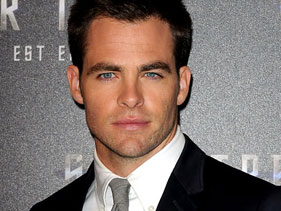
‘Benedict has got this intensity about him,’ actor tells MTV News about new ‘Trek’ villain. By Kara Warner Chris Pine Photo: Dominique Charriau/WireImage Given the overwhelming success of J.J. Abrams’ “Star Trek,” much ado has been made over the sequel, which started production not too long ago. One of the more interesting stories to come out of the flurry of activity surrounding the new film is the casting of rising star Benedict Cumberbatch as the chief villain . The very busy actor could only express his excitement about the project when MTV News caught up with him at the Golden Globes, but co-star Chris Pine had a little bit more to offer about Cumberbatch’s contributions to the film thus far. “Benedict is fantastic. He’s just so good,” Pine told MTV about his scenes with the British actor at the premiere of “This Means War.” “He’s super talented, and we are more than grateful to have him onboard.” When asked about the tone of his scenes with the “Tinker Tailor Soldier Spy” and “War Horse” actor, Pine gushed about his co-star’s acting skills. “Benedict has got this intensity about him, and he’s obviously extremely intelligent and articulate. His vocal quality is something else. He obviously is, unlike many of us, like, an actually trained actor,” Pine added with a laugh. “He actually studied for it.” So what are we going to love about Cumberbatch’s performance? And will it be love/hate, since he’s playing a mysterious villain? “[You’ll love] everything. He’s really talented,” Pine said. “I think it’s all going to be love — a mad amount of love.” Another “Star Trek 2” actor, Alice Eve, was just as excited about Cumberbatch joining the team, having worked with him previously on “Starter for 10.” “I’m very excited to work with him again. He’s so very funny, Ben,” she said. “I don’t know if you remember his character in ‘Starter for 10,’ but he was so funny. Like King of the Geeks, but he did it so well, and I found a lot of that hard to get through because he was so funny. I like him very much.” Check out everything we’ve got on “Star Trek 2.” For breaking news, celebrity columns, humor and more — updated around the clock — visit MTVMoviesBlog.com .

Visit link:
‘Star Trek’ Star Chris Pine ‘Grateful’ For Benedict Cumberbatch

Tom Hardy ‘Not Worried’ About Bane Voice Complaints

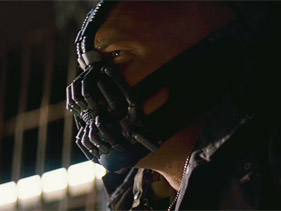
‘I trust Christopher Nolan implicitly,’ Hardy tells MTV News of his ‘Dark Knight Rises’ director. By Kara Warner Tom Hardy as Bane in “Dark Knight Rises” Photo: Warner Bros. Those of you following the seemingly never-ending Internet musings about “The Dark Knight Rises” are likely very well of the fact that the biggest story surrounding the film at this point in time is whether or not audiences will be able to understand the words Tom Hardy as villainous Bane is saying through his frightening mask. Ever since fans got an early glimpse at Hardy in the role via a sneak peek of the film’s six-minute opening sequence in December, there has been growing concern and a lot of pre-emptive freaking out over the fact that we’re not going to be able to understand anything Bane says. When MTV News caught up with Hardy at the U.S. premiere of his upcoming action/romantic comedy “This Means War,” we asked him how concerned he is about audiences understanding his dialogue. “Not at all. I trust [director] Christopher Nolan implicitly. I’m not worried at all about people understanding him mumbling away,” Hardy said. “But I have seen some brilliant stuff online about [my mumbling] ‘Mmmm … Batman doesn’t beat up retards!,’ which I thought was very funny. I enjoyed that,” he said with a smile, referencing the veritable commotion his voice has made online via various analytical blog posts and the parody Twitter account @MuffledBane. So there you have it. Trust in Christopher Nolan, people: The Oscar nominated writer/director has said as much himself. “I think when people see the film, things will come into focus,” Nolan told Entertainment Weekly recently. “Bane is very complex and very interesting,” he said. “And when people see the finished film, people will be very entertained by him.” For his part, Hardy did admit that Bane’s mask is pretty tight, but seems to have enjoyed the villainous aspects of the character, without getting carried away by it. “I didn’t get into a dark place at all,” Hardy told Latino Review of his “brutal” and “heavy-handed” character. “A lot of dark characters are easy to have distance from. It’s something I feel comfortable with, I suppose.” Check out everything we’ve got on “The Dark Knight Rises.” For breaking news and previews of the latest comic book movies — updated around the clock — visit SplashPage.MTV.com . Related Photos On The Set Of ‘The Dark Knight Rises’

Read this article:
Tom Hardy ‘Not Worried’ About Bane Voice Complaints

Tyga Endorses J. Cole In ‘Hottest MC’ Debate

Young Money’s Tyga also puts new rappers Wale, Big Sean and Meek Mill on his ‘Hottest MCs’ list. By Rob Markman, with reporting by Ricky Louis Tyga Photo: MTV News Rap veterans Jay-Z, Kanye West, Lil Wayne and Eminem have all continued to exercise their hip-hop dominance, but over the past year, a new generation of MCs has made significant impact in the game over the past year. So when Young Money’s Tyga was asked to make a pick for the “Hottest MC in the Game,” he gave a nod to the new class. Of course, the “Rack City” rapper nominated himself for the top spot in MTV’s “Hottest MCs in the Game” debate, but he also opened the conversation up and included some other talented newcomers. “It’s a lot of artists that I like now that are around my age and that are new, from Wale to J. Cole to Big Sean, Meek Mill,” Tyga rattled off when MTV News caught up with him at a shoot for his “Rack City” remix video. Tyga finds that he has more in common with this new crop of artist, as they share a generational bond. “A lot of those artists I can really relate to because we’re close in age and a lot of the stuff they’re talking about is modern day and going on right now,” he said. “I salute all those dudes.” Well, Tyga will have to wait until Monday, when the top 10 “Hottest” countdown begins on MTV News and then tune in to “Hottest MCs in the Game VII” half-hour television special on MTV2 on February 19 when the top five “Hottest MCs in the Game” are revealed. Who is your pick for “Hottest MC”? Let us know in the comments! Tune in to MTV2 on Sunday, February 19, at 10 p.m. ET/PT to catch ” MTV2 Presents: Yo! MTV Raps Classic Cuts ,” then watch “Hottest MCs in the Game VII” immediately after at 10:30 p.m. ET/PT before capping the night off with ” Sucker Free Certified ” at 11 p.m. ET/PT. Related Videos Hottest MCs In The Game VII Is Coming Related Artists Tyga J. Cole

See more here:
Tyga Endorses J. Cole In ‘Hottest MC’ Debate