There were many happy faces among critics on Saturday, the third day of the Berlinale. Because despite what I wrote yesterday about the criticism the festival has faced in recent years, particularly in terms of the films chosen for competition, nearly everyone I’ve spoken to thinks this year’s festival is off to a promising start. Of the six competition films that have been screened so far, not one has set any of my random sampling of critic friends howling with derision, or walking around wearing a perpetual scowly-frowny face. When the festival lineup was announced, friends who had to write pregame assessments had a hard time finding even one or two movies that, sight unseen, had the potential to stand out. But on the strength of what we’ve seen so far, it appears that the best of this festival, whatever that might be, will again come from left field, as it did last year with Asghar Farhadi’s A Separation . Not every edition of every festival starts out that way, with a sense of adventure and anticipation. Don’t quote me yet, but we may be onto something special here. We can attribute part of the buoyant mood to the reception of the screening of Paolo and Vittorio Taviani’s Caesar Must Die on Saturday morning. In the late 1970s and early 1980s the Taviani Brothers rode high, on an internationally cresting wave, with pictures like Padre Padrone and The Night of the Shooting Stars . But in recent years, mentioning their name would be likely to elicit a blank stare or a “Taviani Who?” Even though the brothers have been steadily making films in Italy since then, they’ve dropped off the map in the United States, and even at home their profile hasn’t exactly been blazing. But Caesar Must Die may reignite the fortunes of this octogenarian directing team. The picture is stark and alive in its simplicity; rendered mostly in black-and-white, it’s gorgeous to look at — you could practically use it as an illustrated textbook on framing and composition. Caesar Must Die is a sort-of documentary that tells the story of a group of prison inmates — incarcerated at Rome’s maximum security Rebibbia — who mount a production of Shakespeare’s Julius Caesar. Footage from the actual performance frames the picture: In the opening scene, we see a bunch of stubbly, rough-looking guys, wearing simple, stylized costumes that give the whole affair the aura of a children’s holiday pageant, doing some pretty interesting things with Shakespeare’s language. Not all of those things are, in the strict sense, good. But even the “bad” actors among this bunch — and remember, they’re not just nonprofessionals but convicted criminals, for Christ’s sake — contribute to the intense, quiet power of the final work. Most of Caesar Must Die is devoted to watching these men work their way through the material during rehearsal, learning its ins and outs, its dips and dives, and teasing out nuances and details that mean something to them. Sometimes the Tavianis draw the parallels between art and life a little too starkly. We don’t really need to hear the inmates reflecting on how Julius Caesar speaks to them when we can see how, in their proto-method-acting way, they bring every scrap of their experience to rehearsal: They touch each other warily but tenderly; when it’s time for a character to draw a knife, you can tell the actors respect it as both a weapon and a symbol, even though it’s presumably made out of plastic. You can bet these guys know a lot about duplicity and betrayal and power struggles, and they bring all of that to bear as they tangle with this challenging material, and with each other. The most wonderful sequence in this overall very fine picture may be the montage of the actors’ auditions, as they meet with the play’s director – a professional brought in from the outside – and try to impress him with their swagger and capacity for pathos. Many of them have both in spades. Some are awkwardly touching; others come off like they’ve spent too much time channeling Robert De Niro; and some are simply naturals, able to summon that deep-rooted whatever-it-is that makes magic happen in live performance. The picture also features a lovely, haunting Bernard Herrmann-inflected score — in places I could hear shadows of Taxi Driver . When Caesar Must Die eventually shows up in American theaters — and it will — it’s going to be easy as pie for marketing people to sell: An uplifting story about prison dudes finding meaning in art can pretty much sell itself. But even though that line essentially describes what happens in Caesar Must Die , it doesn’t come close to capturing the simultaneously joyous and mournful resonance of the picture. Caesar Must Die is really just about the way art lives on through people, sometimes in unlikely ways. There’s no way to keep it behind bars. Saturday’s press screening of Barbara, from German director Christian Petzold, didn’t draw the same kind of rapturous audience affection that Caesar Must Die did. But then, it’s a very different type of movie. In Barbara , a beautiful but rather blank-faced young doctor – played by the superb German actress Nina Hoss — arrives in a small East German town to take a new job at a tiny hospital. She doesn’t seem too happy to be there, though clearly the doc in charge – Ronald Zehrfeld, who somewhat resembles Brendan Fraser and is equally charming — takes an immediate shine to her. It’s 1980, as the movie’s press notes tell us, though if you go in cold, you probably won’t be able to immediately discern when and where the action is taking place. That’s probably intentional, and the approach works. This isn’t The Lives of Others, where the East-West divide is practically a major character; instead, it’s just a story about people living in constrained (and at times dangerous) circumstances and yearning for something more. Barbara is a drama and a romance, and it’s also laced with dry, delicate humor. There were times when the German members of the audience would laugh at a joke that I couldn’t quite get, and yet Petzold — the director behind the 2007 drama Yella, also featuring Hoss — is such a master of tone and mood that I could feel the vibrations of the movie’s subtle humor, even if I’d be hard-pressed to articulate it. Barbara starts out slow and then moves even slower — but by the end, somehow, it got me in its gentle clutches. Follow Stephanie Zacharek on Twitter . Follow Movieline on Twitter .
The Berlinale is the baked potato of European film festivals, and I don’t mean that as an insult, or even a backhanded compliment. A few months back, I was asked by David Hudson, of the superb movie-resource website Mubi , to offer a few observations about the Berlinale, which I’ve been attending since 2008. That year and every year since, the Berlinale has paid my way to participate in the Talent Press arm of the Talent Campus: Along with three other mentors, I coach young critics from all over the world (there are eight participants every year) as they cover the festival through assignments they’re given each day. While I’m here, I also see as many movies as I can and write about them. Hudson was putting together a sampling of opinions from festival attendees from all over the world, in preparation for a daylong symposium that was held by the German Film Critics Association in October. One of the issues the symposium hoped to address was the festival’s diminishing reputation: In recent years, the German and international press hasn’t exactly showered the festival with kindness. (Shane Danielsen’s Indiewire report from last year was particularly damning, if highly entertaining, though I disagree with him about the smell of the venues.) The Berlin Film Festival, now in its 62nd year, isn’t nearly as massive and glossy as Cannes, nor is it as quietly refined as Venice. I’ll concede that the programming choices, at least among the films in competition, often lean heavily in the direction of peasants and other types of oppressed peoples. Maybe that’s what made me think of the potato metaphor: If this isn’t always the most exciting festival on the planet, there’s still something solid and serviceable about it, and there are plenty of times when it exceeds expectations. Sometimes it’s just what you didn’t know you wanted. (That’s in addition to the fact that it’s one of only a few festivals with an extensive educational component.) Last year, the Berlinale brought us Asghar Farhadi’s A Separation , a picture that has since, with good reason, become a critics’ darling and is now a contender for an Academy Award. Fewer people Stateside have seen Bela Tarr’s The Turin Horse — though it opens in New York this weekend, at the Film Society of Lincoln Center — but the Berlinale also helped this picture achieve a small but significant groundswell of attention. Does every programming choice, particularly among the films in competition, measure up in significance to those two examples? Hardly. But every year at the Berlinale I discover at least a film or two or three that I’m grateful for, and that wouldn’t have crossed my path otherwise. This year, the programming choices are perhaps particularly un-glitzy, and they’re certainly low in Hollywood star power — not necessarily a bad thing. The festival opener this year was Benoit Jacquot’s historical drama Farewell My Queen (which I arrived too late to see), starring Diane Kruger, Léa Seydoux and Virginie Ledoyen, lovely actresses, all of them, though hardly household names. The festival is also featuring, out of competition, Stephen Daldry’s Extremely Loud and Incredibly Close , which has already fallen with a thud Stateside. (I felt sorry for my English friends as they traipsed off to see it. Once was more than enough for me.) Possibly the most high-profile of the films in competition, at least by Hollywood standards, is Billy Bob Thornton’s Jayne Mansfield’s Car, which screens later this week. (It stars Thornton, Robert Duvall, John Hurt and Kevin Bacon.) Thornton’s ex, Angelina Jolie, is also here with her directorial debut In the Land of Blood and Honey , being shown here as a special presentation. But there’s still plenty to look forward to: I can’t wait to see Tsui Hark’s 3-D Wuxia The Flying Swords of Dragon Gate, screening out of competition later this week. And though I’m not sure I can swing it, schedule-wise, I have a hankering to check out Timo Vuorensola’s Finnish-Australian-German (and crowd-funded) Third Reich/sci-fi thingie Iron Sky — because who can resist a pitch like this one: “In 1945 the Nazis went to the moon. In 2018 they are coming back.” Space-traveling Nazis will have to wait, I’m afraid. So far, the two Berlinale films I’ve seen have been more… potato-like. The less impressive of these two — and yet not dismissible by a long shot — is Alain Gomis’s Aujourd’hui , in which American musician-actor Saul Williams plays a Senegalese man, Satché, who, it appears, has been doomed to death: The film follows his last day on earth, which begins when he awakens and is greeted by his family and close friends, some of whom lament his impending demise and others of whom take him to task for his shortcomings. Satché might have escaped this terrible fate: He left Senegal to be educated in the United States, and then decided to come back, which, as the movie spells out in metaphorical terms, seals his fate as a human sacrifice. Aujourd’hui is a languorous film, or, rather, a film that makes you use a word like “languorous” when what you really might mean is “boring.” But Williams is a charismatic presence: His performance is largely wordless, which means we’re able to absorb the details of his world through his half-curious, half-cautious eyes. He’s an actor I’d like to see more of, leading to yet another reason a festival like the Berlinale is invaluable: Even flawed movies sometimes bring us the pleasure of discovering a new actor. Between the last installment of Cannes and this year’s Berlinale, a microtrend in European cinema appears to be taking shape: In the past 10 months I and some of my fellow critics have seen two movies about creepy adults who abduct children and hold them prisoner in a basement for months if not years. The first of those movies was the Austrian film Michael, by director Markus Schleinzer, which screened at Cannes (and which is opening in New York on Feb. 24). Michael follows the day-to-day life of a pedophile who keeps a 10-year-old boy locked in his basement; it’s an austere, chilly little picture — Schleinzer has worked as a casting director for Michael Haneke, which tells you something — though glimpses of grim optimism do occasionally break through its storm clouds. Frédéric Videau’s A Moi Seule (or Coming Home ), screening in competition here, tells a similar story: An opaque but clearly unhinged French construction worker, Vincent (Reda Kateb), abducts a girl, Gaëlle, at the age of 10, though he doesn’t violate her sexually. Some eight years later, she’s still a captive in his basement, only she torments him to the point where you wonder why he doesn’t just turn her out of the house already. (She sasses him, teenager-style, with sardonic observations heralded by phrases like “Earth to Vincent!”) The teenaged Gaëlle (she’s played by Agathe Bonitzer, a lanky actress with a sullen but penetrating gaze) escapes early in the picture — we get a sense of the texture of her relationship with Vincent via flashbacks. Unlike Michael, this isn’t a picture built on an ultra-manipulative sense of dread. And A Moi Seule raises some interesting questions about the nature of victimization: Gaëlle’s self-possession is a scary kind of life force, suggesting that even people who truly are victims can talk themselves out of that state by sheer force of will. This an unusual, thought-provoking picture, perhaps less daring than it thinks it is — but then, its sense of measured calm is part of what keeps it ticking. If there’s room in your life for only one movie about kids triumphing over loser sickos who turn their basements into prisons, make it this one. Follow Stephanie Zacharek on Twitter . Follow Movieline on Twitter .
“There was one particular time I knew I wasn’t going to win, and when they’d train the camera on me as one of the losers, I wanted to be able to rip open my tuxedo shirt and just have stenciled on my chest, ‘Oh, shit.’ But my wife wouldn’t let me do it.” While he’s at it, here’s more vivid imagery from Hoffman recalling his days rooming with fellow Oscar winner Robert Duvall: “One time he came home when a girl and I were taking a shower, and the next thing you know he had taken off all his clothes, got in with us, put his hand out, and said, ‘Hey, I’m Dusty’s roommate, Bob Duvall. Can I have the soap?'” [ Maxim via Moviefone ]
Films about geniuses are so numerous that they almost constitute their own genre. One seems to pop up every few years, always with a few distinct markers. We usually see a brilliant character whose ideas are a little crazy, a couple of “normal” characters against whom the genius’s difference can be easily identified, and a Very Important Project that puts those crazy ideas to the test and ultimately validates the lead character’s oddball behavior. Most informed movie-goers can set their watches by these plot developments, but to me, even the worst ones have a certain appeal. Watching great ideas brought to life is thrilling, and the really good ones, like The Social Network or Good Will Hunting , seem to tap into something universal. One could argue that, rather than a genre unto itself, films about genius can be categorized as a sub-genre of the biopic; there is a lot of cross-over between them (see Pollock or Amadeus or Surviving Picasso ), even though it probably has roots in more conventional mad-scientist genre films, like Frankenstein . However, their most important aspect, more than their supposed biographical integrity, is how prominently ideas figure in the story. Rather than merely a large amount of screen-time for geniuses, like in the many Sherlock Holmes films or like Doc Brown in the Back to the Future series, films about genius humanize difficult concepts. Because another defining characteristic is that, as opposed to superheroes with mental powers that are very obviously beyond human capabilities, like Professor X, whose telekinesis is basically supernatural, the sort of film genius I’m talking about is grounded in plausibility. Their abilities are mythical but not supernaturally so. Film geniuses do what everyone else does, using recognizable materials, only they do it much, much better. Still, after a point somewhere off in the horizon, that which distinguishes the genius from the rest of us isn’t a measure of degree, but of type. These films take great pains to “other” their subjects, or make them seem different even above and beyond their achievement. It isn’t enough that they can think better or create more beautiful things. They have to be kind of weird, too. It’s no wonder that, while we have films about total non-geniuses like Abbie Hoffman, or genius peripherals like Edie Sedgwick, Hollywood has yet to produce an Oscar-winning film about someone like, say, Jonas Salk. Because while Salk was no doubt a genius, he also seems to have been a fairly nice, conventional person in his everyday life and, thus, not great fodder for the Hollywood machine. Nobody wants to watch a movie about someone who goes to work and pays his taxes and gives exact change at the grocery store. This will happen. The rules for portraying difficult ideas on film, which seem to profit from a certain graphical fleshing out for the general moviegoing public, don’t really apply to the construction of a compelling character arc, which thrives in danger and conflict. For example, in one film about genius, A Beautiful Mind , we see the concept of governing dynamics explained very succinctly and transparently by way of a scene about a bunch of guys hitting on a girl in a bar. (Visually, it’s a good scene, though the dialogue sounds like everyone’s reading straight from Bartlett’s Familiar Quotations .) However, when director Ron Howard employs a similarly graphical rendering of the schizophrenic delusions of the genius main character, mathematician John Nash, by revealing that people he had been interacting with throughout the film were actually only in his head, the technique seems totally inappropriate. A helpful graphic as filmic teaching moment for a difficult concept, sure. But a descent into madness, or in this case the retrospective unveiling of a madness into which one has already long descended, require a somewhat more emotionally charged visual than the director indicating, “Shucks, those guys aren’t actually there…” In contrast to such transparently clear filmic infographs, a character whose personality is meant to fill the screen and hold interest should be sort of messed up, harder to figure out, and certainly not party to the kind of M. Night Shyamalan-ian reveal employed in A Beautiful Mind . That said, I still liked the film — in part because of how it portrays the descent into madness as an actual hindrance to the production of important ideas. A lot of other movies merely portray such pesky foibles of personality as inevitable side effects of genius itself, easily overcome with a few cathartic moments and liberally applied theme music. Obviously, some of this just has to do with biographical information where applicable, because the particular genius in question actually experienced schizophrenia’s debilitating effect and, lo and behold, wasn’t helped along in his career by having it. But judging by the middle section of the Venn diagram for most films about geniuses and biopics, where the stories are roughly “based on a true story,” one could easily conclude that social ineptitude or mental instability are prerequisites to having great ideas. Never mind that there are quite a lot of brilliant people who don’t display any kind of odd behavior at all. And so the biggest flaw in the films about genius genre seems to be a sort of lopsidedness in execution concerning the relationship between a genius and his or her ideas, despite the fact that formal guidelines would seem to dictate that these two aspects be treated with equal attention. One film that gets this relationship right is Fear and Loathing in Las Vegas , in which the visuals very closely relate to the ideas of the subject, writer Hunter S. Thompson. * Director Terry Gilliam inhabits the perspective of Thompson in relating the story of his drug-fueled ride through the Nevada desert, and we see the world through the lens of Thompson’s inimitable manner and, thus, understand what his ideas amount to, in spite of the fact that no helpful infographs are provided. There is only one scene in which the Thompson character actually explains anything — where he gives context to his nihilistic fervor as cast against the idealism of the ’60s peace movement — and this is probably the least successful scene in the whole film. Hearing Benicio Del Toro’s Dr. Gonzo scream the lyrics to “One Toke Over the Line” while driving through the desert, his face a grotesque mask in Gilliam’s skewed frame, is pretty much all the audience needs to understand the point. One lesser example of the genre is Pollock , a film about the artist Jackson Pollock, which doesn’t really treat the actual art with enough care. The performance by Ed Harris in the central role is excellent, and the story is actually pretty interesting: We see the most fruitful period of Pollock’s life, his relationship with artist Lee Krasner, his problems with mental illness and alcoholism, and, most interestingly, him at work in his studio. But the problem is that getting an up-close view of how Pollock’s art is made sort of deflates the effect it’s supposed to produce. Much of the fascination people have with Pollock’s art is wrapped up in what those paint splatters don’t represent. One would want a portrayal of Pollock that grows in mystery as it grows in scope, but the “un-abstracting” of how the paintings were made in this film, even by way of a story about a fairly abstract human being, seems to detract from the artist’s original vision, if only because it employs a representational aesthetic. This is an example where learning the backstory of the ideas actually detracts directly from the ideas themselves. The problem isn’t that films about genius tend to highlight people with world-changing ideas who have no power to change their own complicated, messed up lives. Basically all strong characters start at this point, whether a genius or not; that’s the basis of a character arc, a problem that initially seems unsolvable. The real issue is that a lot of filmmakers don’t seem to get that, while a conventional plot might necessarily rely upon a messed up, complicated central character, that character’s viability relies on whether or not his or her ideas are actually interesting independent of that complication. And oftentimes, if there is a conflict of interest between the portrayal of a brilliant character and that character’s world-shattering idea, the idea gets short shrift for the purposes of “character development,” and the whole structure falls. And so, the real mark of quality for these movies has to do with inhabiting difficult ideas through aesthetic forms, like in Fear and Loathing in Las Vegas , as opposed to the popularization of difficult ideas in favor of a less interesting biographical story, like in A Beautiful Mind and Pollock . Good films about genius embed the relevant concepts within the film medium itself, allowing them to animate the filmmaker’s own aesthetic impulses. Less good ones tend to water down the ideas and focus on important biographical stuff like how geniuses have a hard time talking to people at parties. In any case, it must be a very difficult thing to make a film about a person whose achievements are more important that can really be expressed creatively, and many times, which are actually more important than the film — or any film — itself. * I’m not interested in arguing whether Thompson was actually a genius. He was portrayed as such in the movie, and that’s all that matters. [ Back ] Nathan Pensky is an associate editor at PopMatters and a contributor at Forbes , among various other outlets. He can be found on Tumblr and Twitter as well.
Sometime after getting her start on NBC’s short-lived but well-loved cult series Freaks and Geeks , starring in two live-action studio Scooby-Doo movies, appearing for six seasons on ER , and turning in various screen performances (including a role as Ennis del Mar’s waitress fling in Brokeback Mountain ), Linda Cardellini took a break to reassess her career. “I wanted to step back and reevaluate myself as an actress and find out what I was capable of,” she told Movieline, describing her turn as a shell-shocked female soldier readjusting to life at home in this week’s Return , “and this was sort of the perfect role for that.” Return brought the actress in close collaboration with filmmaker Liza Johnson, who wrote and directed the drama about Kelli (Cardellini), a wife and mother who’s recently come home to her suburban Ohio town after a tour of duty in the Middle East with the National Guard. Despite the fact that she suffered no notable trauma overseas, Kelli finds that her familiar world has been utterly changed nonetheless; nothing seems to be in its right place anymore, in her home and in her mind. Despite her best efforts, Kelli’s emotional dislocation begins to sabotage her relationships and threaten her marriage as she grasps to keep control of it all. It’s an unusual perspective on war and its tragic effects, and one that Cardellini eagerly poured herself into. And it’s a performance that’s garnered new acclaim and attention for the actress, who also added roles in Kill the Irishman and Super to her post-break resume. Cardellini rang Movieline last week – expecting her first baby any day, she joked that both of her big projects could debut at once – to discuss Return , her career moves, and more. The director, Liza Johnson, workshopped this film for a while – how did it come to you and why do you think you tapped into it? After I finished ER I went to New York and I was thinking about doing a play, I sort of took a step back and thought I wanted to do something different than what I had been doing for so long. While I was in New York I was sent this script, I read it that night, and the next day I met with Liza. Really, I just sort of fell in love with the role because even though it’s a giant undertaking it’s a fantastic role for an actress, and I just thought it was an unusual way to take a look at a soldier returning, especially from a woman’s perspective. What kind of impression did Liza and her vision for the film make on you? When I met with Liza I thought she really had an interesting voice; she had a lot of ideas about the silences and the small details that have caused the unraveling in this person’s life, rather than the one big traumatic and catastrophic event, which was a really interesting way to play it and hopefully for people to relate to this type of character. She had things written in the script about the way things smelled, and the way things felt on her feet, and it was different than other scripts that I had read. Liza’s idea of how to shoot it and who this person was, we really just fell in sync close to immediately. I was very lucky that she chose me! We had the luxury of time because it’s so hard to put together a truly independent film – we had a little over a year together, talking about the film, obsessing over the film. For me and for Liza, we really enjoyed educating ourselves as much as we could about people returning and their stories, and people’s stories surrounding them. I’m onscreen the entire time – I’ve never had such great trust between myself and a director, and that was a wonderful feeling. We very rarely hear about, let alone see depicted, the experience of a female soldier. How did you learn about that world and that unique point of view, through talking to real life servicemen and women? We tried to find as many people as we could that would talk to us, and people were very generous in speaking to us. People’s experiences were very different. There was one woman who was happily returning to her third or fourth deployment, and I spoke with another girl who, after one deployment, her life had been turned completely upside-down. The differences between those stories, and also the common threads – and I spoke with men as well, to get the generalized version of the story and to understand things that weren’t necessarily gender-specific, things that were common threads for men and women, so that the story could be accessible to many people since it wasn’t based on one person’s actual story. We spoke with psychologists and vets from other wars, people who had family members returning – and what it was like to be shut out from that – and went to places where we thought she’d have grown up. We went to places she’d have visited with her family; we did things she would have done in basic training even though you never saw them in the film. We just tried to fill her life as much as possible, especially because there are so many silences and so many small details and there’s so much restraint in her character, I wanted to be able to seed those silences with all the details I had learned. There are many instances where we realize, after the fact, that she’s felt off despite being back home and in her “normal” routine – and many small details that are not verbalized, but come through in quiet, subtle cues. Yeah. And the script didn’t tell me what to think, or how to think, but also as Kelli I don’t know how to say the things that I’m feeling, which is what I think happens in life. I don’t think that we’re always the most articulate we can be when we’re going through something traumatic or life-changing. Hindsight is 20/20 – you don’t realize for years to come that you’re going through and how they affected you. I imagine that Kelli, in the years to come, will understand more about herself than she does at the moment. Things are very jarring for her from the moment we meet her; she’s just come home from a tour of duty and trying to readjust to her old life, not quite sure why things feel different. How would you describe her headspace? She frequently explains, when people ask her what happened “over there,” that “other people had it a lot worse.” She’s in denial, for sure… I think she’s in denial, I think there’s some guilt, I think there’s some sadness…loss at her perspective of the world right now, I think there’s an innocence lost. I think she’s going through a lot of things that she doesn’t quite know how to put into words, but she certainly didn’t lose a limb like people that she saw, she didn’t lose her life, she didn’t get raped – she’s forced to count her blessings based on some of the things she’s seen but still does not feel her old self, and still feels changed by everything that’s happened, so it’s confusing. We spoke to this psychologist and she said sometimes people don’t have one specific trauma, but the idea of being in a broken and war-torn world where you see things that change your opinion of what mankind can be like is enough to cause trauma in your life. I think that’s an interesting thing; a lot of returning soldier stories have one big catastrophic event where someone gets hurt or there’s an outburst of violence, and I think those things do, of course as we’ve seen, really happen. And I think there’s another version of that, with people returning with stories that aren’t quite as explosive but that can be life-changing for them as well. I think that’s something that people come home with and can be healed from, but also some people are healed from it and some people are not. The idea of “returning” is made exponentially stressful given the possibility of redeployment for many soldiers like Kelli, and that constant feeling of being torn between two worlds seems even worse than having to adjust even once back to normal life. Absolutely. And what do you do with that commitment that you’ve made and the duty that you have – and the duty you have to your family? And what are your alternatives? Not to mention that in focusing on a female soldier’s perspective you get the added element of maternal demands – Kelli’s husband at one point asks her to try to be a mother to her children. The idea of these two potentially conflicting duties, service and motherhood, pulling a woman in two different directions is even more complex. Yeah, and I think it’s maybe just as difficult for men to do the same but we’re used to it. The idea of a woman leaving her children [to serve in the military] is a newer concept for people, so dealing with the fallout of that is something I think she has to deal with as well. Because the expectations of her returning home are different than they would be if she were a man. And the expectations of the man staying home are different as well, and Michael [Shannon]’s character is really interesting in that way too, in that he’s been holding things together waiting for her to come back and be normal and that just can’t happen. It’s really, really sad. Did Michael come to the project after you were attached? No, I think he was first! I don’t know if Liza knew him before or what, but he was attached first and very, very early on – it took at least a year after that, if not two, for the movie to be made. Then I came on and everybody else after that. What was it like playing opposite Michael and, by contrast, John Slattery, who plays an interesting character in that he and Kelli seem to get each other through their similar military experiences even if it doesn’t exactly work out… No, and I think he’s a surprise to her, too. I think she feels that she’s finally found somebody that maybe she can trust, and you get a glimpse of Kelli when she’s a little more carefree. She’s laughing, she’s having a good time, she’s talking, and she actually opens herself up a bit more before you realize how quickly that is an illusion, and how quickly she shuts down. Things are still not as she hopes them to be. I think it’s interesting, too, how he deals with his return – he’s a returning vet from a different war, versus her coming home from a more recent war, and it’s a common thread yet they have very different approaches to dealing with it. But John’s great; it was really fun to be able to play on set. It was very fun to have a different version of Kelli come out in those scenes, and I wanted people to understand what she was like when she could smile easier, and laugh, and relate to people a little bit better. With Michael, I had been on set a long time shooting by myself and when he showed up there was this whole family dynamic that came with him. For all the crazy parts he plays he’s a really wonderful, good person. Such a dynamic and amazing actor, it was a thrill to work with him and we had such a good time. We had this chemistry that just worked in terms of the opposition and the affection we had towards each other. How has your process evolved over the years in terms of the projects and characters that you choose? You know, it’s hard to say. It’s a good question. I’ve always tried to choose things where I could be different than what I have been doing, and I really like to be able to surprise people with what I’m able to do. I sometimes can shy away from the limelight a little, and I took a break after ER . I could have done several things but I just waited until I found a role… I wanted to step back and reevaluate myself as an actress and find out what I was capable of, and this was sort of the perfect role for that. I’m lucky that Liza trusted me with such a giant undertaking. It’s the first time someone’s been able to hand me a role like that, and it felt so good to sink my teeth into that and really understand myself again as an actress. But I love to do comedy too! I like to choose things that excite me and challenge me, and this was definitely one of them. [Laughs] It was very fast and furious shooting, too. And also I wanted to know more about that subject matter, so it was an education as well. You mentioned those few years that you took off to re-assess your career direction and the kind of projects you wanted to take on. When you look back on Freaks and Geeks , it has such an enduring legacy and even Paul Feig, for example, has had huge recent success. Yeah! It’s so great. When you look back on that time, how do you feel about the fact that many people still associate you with Freaks and Geeks and have such a love for the series, even now? It’s amazing. It really speaks to the power of the DVD because while we were on network television we got very much ignored, like the freaks and geeks of the industry. [Laughs] But I love it. I’m so proud of the show, I’m so proud of everybody who went on to do all the different things that they’ve done. It was such an interesting and unique group of people. Our [2011Paleyfest celebration] was like a high school reunion. We drove up and I said, ‘God, what are these people waiting for?’ And we realized they were here for Freaks and Geeks , to be part of the event, and I thought, wow – what a change, from being cancelled and not even getting to a full season! A line around the block a decade later. And I run into people who are still discovering the show. I think we’re all pretty proud of it. You followed Freaks and Geeks with a number of roles in big mainstream films – the Scooby-Doo movies, for instance. Considering this more recent career refocus, are there any earlier roles that you might reconsider doing if you had to do them over again? You know, everything I’ve done has brought me to where I am. Some people wonder where that is, but to me it’s the story of my life and I’ve had a pretty good life, so I’m pretty happy. And this latest role, if I would have stepped in a different direction I wouldn’t be in this film now, and to me it’s one of my greatest accomplishments so far. Return is in select theaters this Friday. Follow Jen Yamato on Twitter . Follow Movieline on Twitter .
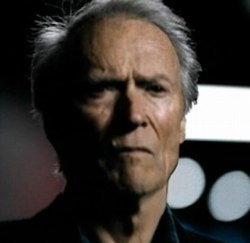
A gaggle of right-wing functionaries is furious with Clint Eastwood and Chrysler, with no less than Karl Rove calling out the actor-director- inspirational halftime huckster for a Super Bowl ad that Rove and others perceived as a thinly veiled reelection endorsement for President Obama. Wait, what ? The shit hit the fan Monday afternoon when Rove took to Fox News to protest the epic TV spot, arguing that… honestly, I have no idea. Big Hollywood’s John Nolte offered the most succinct explanation of conservative outrage — “Because Obama’s decided to eliminate moral hazard and socialize losses for anyone who employs the unions who fund his campaigns, Chrysler obviously wrote a thinly veiled thank you in the form of a reelection ad for their benefactor, and convinced a Republican icon to deliver it” — but things just got straight-up surreal with Rove (via EW ): Watch the latest video at video.foxnews.com “Chicago-style politics”? Excuse me? If anything, this is Detroit politics (or economics, really), and to think Eastwood would just overlook the potential implications therein for the simple sake of a rah-rah Super Bowl message is to underestimate a pretty smart guy who once made it a two-year mission of his life to emphasize the benefits of business over politics . Anyway, Eastwood’s manager offered a beleaguered defense (“People have to understand that what he was doing was saying to America, ‘Get yourselves together – all of you – and make this a second half.’ It’s not a political thing”), but the best part came when Eastwood himself reached out to O’Reilly Factor producer Ron Mitchell to defuse the conspiracy theories, hype, conjecture, invective and the rest of it: “I just want to say that the spin stops with you guys, and there is no spin in that ad. On this I am certain. l am certainly not politically affiliated with Mr. Obama. It was meant to be a message about just about job growth and the spirit of America. I think all politicians will agree with it. I thought the spirit was OK. I am not supporting any politician at this time. Chrysler to their credit didn’t even have cars in the ad. Anything they gave me for it went for charity. If any Obama or any other politician wants to run with the spirit of that ad, go for it.” Love. It. It’s like, “Screw you and your panic; there’s plenty of room up here for anyone who wants to join me on the high road.” Now Obama doesn’t have to say a word, and the conservatives are left to either embrace the “let’s fix this” spirit that they just implicitly ascribed to the president or oppose it as a matter of ideological course — which would just reinforce the ad’s criticism of “the fog, the division, the discord and blame” crippling our discourse. Whoops! I’m still not buying a Chrysler, but hey. This is turning out all right! Follow S.T. VanAirsdale on Twitter . Follow Movieline on Twitter .
As previewed earlier today for select audiences around the globe, here’s Sony’s brand spankin’ new theatrical trailer for The Amazing Spider-Man . ( Find my full detailed Spider-Man preview Q&A recap, including descriptions of the sizzle reel that has not yet been released, here. ) Take a look and weigh in, Spidey fans — is this the version of the Marvel superhero we both need and deserve? Personally, I’m digging Garfield’s more confident Peter Parker AND his Spidey more than Tobey Maguire’s renditions, and I’m impressed with Emma Stone’s ability to inject even the barest of one-second scene snippets with personality and zip. We’ve yet to be given a really good extended look at The Lizard’s CG-heavy effects, but yeah, that looks like a lizard-man alright. Sling your reactions to Garfield’s Parker/Spider-Man, Stone’s Gwen Stacy, and any of the Spidey spectacle on display here in the comments below. The Marc Webb-directed reboot swings into theaters July 3.
“Dimension Films announced today that they have hired Matt Lieberman to pen their family film Short Circuit . Lieberman will work closely with already attached director Tim Hill ( Hop , Alvin and the Chipmunks ) in the reimagining of the 80s classic. Lieberman is a recent alumni of the Disney writers program. Details of the new take are currently being kept under wraps.” Noooo ! Just when this was getting good! Anyway, maybe we can all fill in the blanks? It probably won’t be so different than what they actually make. [Press release]
Sorry, though — you’re screwed: “Pop sensation Katy Perry could be headed to the big-screen—and in 3-D, to boot. Paramount has initiated talks with Perry’s camp, as well as Imagine Entertainment, to create a documentary-style 3D film centered on the powerhouse singer-songwriter.” In seemingly related news, Soul Train creator and host Don Cornelius committed suicide this morning. [ THR ]
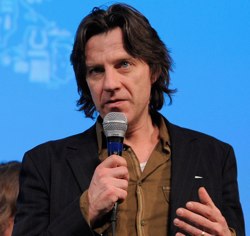
Oscar-winning Man on Wire director James Marsh is clearly unafraid of dropping real talk ; during this month’s Sundance Film Festival he unleashed a tongue-lashing on the Academy for its recent Oscar documentary nominations, which notably did not include Marsh’s own well-received Project Nim . But that’s not the real problem — Marsh laments the entire class of ’12 Academy Awards doc selections, which he claims overlooked the best films of the year and makes the entire branch “look stupid.” Marsh, in Park City with his narrative feature Shadow Dancer , wasn’t terribly precious about Nim ‘s snub in conversation with The Daily Beast ‘s Marlow Stern (via SUNfiltered ). “Putting Nim to one side, if you created a short list of five films that would reflect the best documentary filmmaking of the year, none of those films were nominated.” “I’m a member of the documentary branch so I’m criticizing my own branch here, and it’s really about trying to recognize the best work out there. The system that we have, which I think we’re improving next year, doesn’t seem to do that on a regular basis. Instead, it creates a ‘we look stupid,’ clearly overlooking great ones every year.” Which great docs, then, should have been nominated? Marsh rattled off a laundry list of acclaimed works that many expected to be vying for the Oscar. “I was shocked that film of The Interrupters ’ ambition, quality, and heart didn’t get in…[Its omission from the Top 15 cut ] is a disgrace to our branch, and I don’t mind saying that publicly. And it’s not about taste. I think we can all agree that that is a great piece of documentary filmmaking. Likewise, Senna was a gripping character portrayal of a very interesting man, but also an exciting cinematic experience. Both those films found audiences as well. I was also surprised that Bill Cunningham didn’t make the last, which is a charming and lovely film.” Marsh’s criticism extends to the Oscar documentary selection process, which this year earned a set of revisions . But the branch member also had words for the foreign documentary category, which he says demands attention. “Something is not working here and it’s an annual controversy. I think the system that’s being mooted now is a slight improvement, but [the Best Documentary] category does have a responsibility to getting these films exposure, and we’re also eliminating a lot of foreign documentaries that really should be part of this discussion as well. There was a Danish film called Armadillo two years ago; brilliant film that didn’t get anywhere in that category. We need to try and rectify this.” • Oscar-winning MAN ON WIRE director James Marsh rips Best Doc Oscar noms, talks brilliant new film SHADOW DANCER [SUNfiltered]