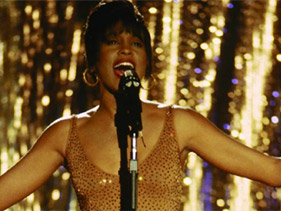
Late singer’s top MTV Moments, from the VMA stage to an all-access interview. By Christina Garibaldi Whitney Houston in MTV News’ “All Access: Whitney Houston” special Photo: MTV Whitney Houston was one of the most iconic stars of all time. She commanded the stage, captivated audiences on the big screen and was celebrated around the world. Now, as her fans continue to mourn her shocking death Saturday and details continue to emerge , MTV News is celebrating the life and legacy of a true icon as we look back at Houston’s top five MTV moments. 1986: Whitney Houston Makes Video Music Awards Debut : She was just 23 years old when she performed and won at the third-ever MTV Video Music Awards in 1986 . Houston took home her first ever Moonman, winning the award for Best Female Video for her hit single “How Will I Know” . She later went on to perform a classic rendition of the song, flowing into a flawless performance of her power ballad “The Greatest Love of All,” which left the crowd in awe and on their feet. 1996: Whitney Houston Performs at the Movie Awards : By 1996, Houston already proved to the world that not only did she have one of the most remarkable voices in music, but that she could make it in Hollywood as well. Houston starred opposite Kevin Costner in box-office smash “The Bodyguard,” which won her the 1993 MTV Movie Award for Best Song from a Movie for “I Will Always Love You.” In 1996 , she returned to the Movie Awards to perform “Why Does it Hurt So Bad,” a single off the soundtrack to her second film, “Waiting to Exhale.” 1998: Whitney Houston and Mariah Carey Face-Off : Rumored rivals Houston and Mariah Carey took the stage at the 1998 Video Music Awards in the same “one-of-a-kind” dress. In a comedic stand-off, the two divas both tore away the hem of their gowns, turning their matching designs into two different stylish looks. Clearly, there was no diva competition between the two, since later that year, Carey and Houston teamed up again, this time in the studio, to record the song “When You Believe,” for the animated feature “The Prince of Egypt.” 1999: All Access: Whitney Houston : In November of 1998, Houston released her first album in eight years, My Love is Your Love. After 14 years in the business, the superstar was making a fresh start, showing off a revitalized sound, and embarking on a 70-day My Love Is Your Love World Tour. During three of those stops, she invited along MTV News’ John Norris, and gave him a rare, up-close look at the diva, in the MTV News special, “All Access: Whitney Houston.” 2000: Whitney Houston Makes Memorable Entrance at the VMAs : Now even though troubles began for Whitney Houston that year, she made an electrifying entrance that year at the 2000 Video Music Awards . After a warm introduction by Britney Spears and Christina Aguilera , Houston was given a standing ovation as she belted her way onto the stage, showing off her vocal power with an a capella snippet of “I Will Always Love You,” making it one of the most memorable entrances for a Video of the Year presenter ever. Stick with MTV News all for all the Grammy red-carpet fashion , Grammy winners and Grammy news until the hangover wears off! Share your condolences with Whitney’s family and friends on our Facebook page. Related Videos Whitney Houston: Life And Music Of An Icon Remembering An Icon: Whitney’s Top MTV Moments Related Artists Whitney Houston
There were many happy faces among critics on Saturday, the third day of the Berlinale. Because despite what I wrote yesterday about the criticism the festival has faced in recent years, particularly in terms of the films chosen for competition, nearly everyone I’ve spoken to thinks this year’s festival is off to a promising start. Of the six competition films that have been screened so far, not one has set any of my random sampling of critic friends howling with derision, or walking around wearing a perpetual scowly-frowny face. When the festival lineup was announced, friends who had to write pregame assessments had a hard time finding even one or two movies that, sight unseen, had the potential to stand out. But on the strength of what we’ve seen so far, it appears that the best of this festival, whatever that might be, will again come from left field, as it did last year with Asghar Farhadi’s A Separation . Not every edition of every festival starts out that way, with a sense of adventure and anticipation. Don’t quote me yet, but we may be onto something special here. We can attribute part of the buoyant mood to the reception of the screening of Paolo and Vittorio Taviani’s Caesar Must Die on Saturday morning. In the late 1970s and early 1980s the Taviani Brothers rode high, on an internationally cresting wave, with pictures like Padre Padrone and The Night of the Shooting Stars . But in recent years, mentioning their name would be likely to elicit a blank stare or a “Taviani Who?” Even though the brothers have been steadily making films in Italy since then, they’ve dropped off the map in the United States, and even at home their profile hasn’t exactly been blazing. But Caesar Must Die may reignite the fortunes of this octogenarian directing team. The picture is stark and alive in its simplicity; rendered mostly in black-and-white, it’s gorgeous to look at — you could practically use it as an illustrated textbook on framing and composition. Caesar Must Die is a sort-of documentary that tells the story of a group of prison inmates — incarcerated at Rome’s maximum security Rebibbia — who mount a production of Shakespeare’s Julius Caesar. Footage from the actual performance frames the picture: In the opening scene, we see a bunch of stubbly, rough-looking guys, wearing simple, stylized costumes that give the whole affair the aura of a children’s holiday pageant, doing some pretty interesting things with Shakespeare’s language. Not all of those things are, in the strict sense, good. But even the “bad” actors among this bunch — and remember, they’re not just nonprofessionals but convicted criminals, for Christ’s sake — contribute to the intense, quiet power of the final work. Most of Caesar Must Die is devoted to watching these men work their way through the material during rehearsal, learning its ins and outs, its dips and dives, and teasing out nuances and details that mean something to them. Sometimes the Tavianis draw the parallels between art and life a little too starkly. We don’t really need to hear the inmates reflecting on how Julius Caesar speaks to them when we can see how, in their proto-method-acting way, they bring every scrap of their experience to rehearsal: They touch each other warily but tenderly; when it’s time for a character to draw a knife, you can tell the actors respect it as both a weapon and a symbol, even though it’s presumably made out of plastic. You can bet these guys know a lot about duplicity and betrayal and power struggles, and they bring all of that to bear as they tangle with this challenging material, and with each other. The most wonderful sequence in this overall very fine picture may be the montage of the actors’ auditions, as they meet with the play’s director – a professional brought in from the outside – and try to impress him with their swagger and capacity for pathos. Many of them have both in spades. Some are awkwardly touching; others come off like they’ve spent too much time channeling Robert De Niro; and some are simply naturals, able to summon that deep-rooted whatever-it-is that makes magic happen in live performance. The picture also features a lovely, haunting Bernard Herrmann-inflected score — in places I could hear shadows of Taxi Driver . When Caesar Must Die eventually shows up in American theaters — and it will — it’s going to be easy as pie for marketing people to sell: An uplifting story about prison dudes finding meaning in art can pretty much sell itself. But even though that line essentially describes what happens in Caesar Must Die , it doesn’t come close to capturing the simultaneously joyous and mournful resonance of the picture. Caesar Must Die is really just about the way art lives on through people, sometimes in unlikely ways. There’s no way to keep it behind bars. Saturday’s press screening of Barbara, from German director Christian Petzold, didn’t draw the same kind of rapturous audience affection that Caesar Must Die did. But then, it’s a very different type of movie. In Barbara , a beautiful but rather blank-faced young doctor – played by the superb German actress Nina Hoss — arrives in a small East German town to take a new job at a tiny hospital. She doesn’t seem too happy to be there, though clearly the doc in charge – Ronald Zehrfeld, who somewhat resembles Brendan Fraser and is equally charming — takes an immediate shine to her. It’s 1980, as the movie’s press notes tell us, though if you go in cold, you probably won’t be able to immediately discern when and where the action is taking place. That’s probably intentional, and the approach works. This isn’t The Lives of Others, where the East-West divide is practically a major character; instead, it’s just a story about people living in constrained (and at times dangerous) circumstances and yearning for something more. Barbara is a drama and a romance, and it’s also laced with dry, delicate humor. There were times when the German members of the audience would laugh at a joke that I couldn’t quite get, and yet Petzold — the director behind the 2007 drama Yella, also featuring Hoss — is such a master of tone and mood that I could feel the vibrations of the movie’s subtle humor, even if I’d be hard-pressed to articulate it. Barbara starts out slow and then moves even slower — but by the end, somehow, it got me in its gentle clutches. Follow Stephanie Zacharek on Twitter . Follow Movieline on Twitter .
There were many happy faces among critics on Saturday, the third day of the Berlinale. Because despite what I wrote yesterday about the criticism the festival has faced in recent years, particularly in terms of the films chosen for competition, nearly everyone I’ve spoken to thinks this year’s festival is off to a promising start. Of the six competition films that have been screened so far, not one has set any of my random sampling of critic friends howling with derision, or walking around wearing a perpetual scowly-frowny face. When the festival lineup was announced, friends who had to write pregame assessments had a hard time finding even one or two movies that, sight unseen, had the potential to stand out. But on the strength of what we’ve seen so far, it appears that the best of this festival, whatever that might be, will again come from left field, as it did last year with Asghar Farhadi’s A Separation . Not every edition of every festival starts out that way, with a sense of adventure and anticipation. Don’t quote me yet, but we may be onto something special here. We can attribute part of the buoyant mood to the reception of the screening of Paolo and Vittorio Taviani’s Caesar Must Die on Saturday morning. In the late 1970s and early 1980s the Taviani Brothers rode high, on an internationally cresting wave, with pictures like Padre Padrone and The Night of the Shooting Stars . But in recent years, mentioning their name would be likely to elicit a blank stare or a “Taviani Who?” Even though the brothers have been steadily making films in Italy since then, they’ve dropped off the map in the United States, and even at home their profile hasn’t exactly been blazing. But Caesar Must Die may reignite the fortunes of this octogenarian directing team. The picture is stark and alive in its simplicity; rendered mostly in black-and-white, it’s gorgeous to look at — you could practically use it as an illustrated textbook on framing and composition. Caesar Must Die is a sort-of documentary that tells the story of a group of prison inmates — incarcerated at Rome’s maximum security Rebibbia — who mount a production of Shakespeare’s Julius Caesar. Footage from the actual performance frames the picture: In the opening scene, we see a bunch of stubbly, rough-looking guys, wearing simple, stylized costumes that give the whole affair the aura of a children’s holiday pageant, doing some pretty interesting things with Shakespeare’s language. Not all of those things are, in the strict sense, good. But even the “bad” actors among this bunch — and remember, they’re not just nonprofessionals but convicted criminals, for Christ’s sake — contribute to the intense, quiet power of the final work. Most of Caesar Must Die is devoted to watching these men work their way through the material during rehearsal, learning its ins and outs, its dips and dives, and teasing out nuances and details that mean something to them. Sometimes the Tavianis draw the parallels between art and life a little too starkly. We don’t really need to hear the inmates reflecting on how Julius Caesar speaks to them when we can see how, in their proto-method-acting way, they bring every scrap of their experience to rehearsal: They touch each other warily but tenderly; when it’s time for a character to draw a knife, you can tell the actors respect it as both a weapon and a symbol, even though it’s presumably made out of plastic. You can bet these guys know a lot about duplicity and betrayal and power struggles, and they bring all of that to bear as they tangle with this challenging material, and with each other. The most wonderful sequence in this overall very fine picture may be the montage of the actors’ auditions, as they meet with the play’s director – a professional brought in from the outside – and try to impress him with their swagger and capacity for pathos. Many of them have both in spades. Some are awkwardly touching; others come off like they’ve spent too much time channeling Robert De Niro; and some are simply naturals, able to summon that deep-rooted whatever-it-is that makes magic happen in live performance. The picture also features a lovely, haunting Bernard Herrmann-inflected score — in places I could hear shadows of Taxi Driver . When Caesar Must Die eventually shows up in American theaters — and it will — it’s going to be easy as pie for marketing people to sell: An uplifting story about prison dudes finding meaning in art can pretty much sell itself. But even though that line essentially describes what happens in Caesar Must Die , it doesn’t come close to capturing the simultaneously joyous and mournful resonance of the picture. Caesar Must Die is really just about the way art lives on through people, sometimes in unlikely ways. There’s no way to keep it behind bars. Saturday’s press screening of Barbara, from German director Christian Petzold, didn’t draw the same kind of rapturous audience affection that Caesar Must Die did. But then, it’s a very different type of movie. In Barbara , a beautiful but rather blank-faced young doctor – played by the superb German actress Nina Hoss — arrives in a small East German town to take a new job at a tiny hospital. She doesn’t seem too happy to be there, though clearly the doc in charge – Ronald Zehrfeld, who somewhat resembles Brendan Fraser and is equally charming — takes an immediate shine to her. It’s 1980, as the movie’s press notes tell us, though if you go in cold, you probably won’t be able to immediately discern when and where the action is taking place. That’s probably intentional, and the approach works. This isn’t The Lives of Others, where the East-West divide is practically a major character; instead, it’s just a story about people living in constrained (and at times dangerous) circumstances and yearning for something more. Barbara is a drama and a romance, and it’s also laced with dry, delicate humor. There were times when the German members of the audience would laugh at a joke that I couldn’t quite get, and yet Petzold — the director behind the 2007 drama Yella, also featuring Hoss — is such a master of tone and mood that I could feel the vibrations of the movie’s subtle humor, even if I’d be hard-pressed to articulate it. Barbara starts out slow and then moves even slower — but by the end, somehow, it got me in its gentle clutches. Follow Stephanie Zacharek on Twitter . Follow Movieline on Twitter .
We break down the stunning sales numbers behind the late diva’s record-setting career. By Gil Kaufman Whitney Houston performs at the 1999 Brit Awards Photo: JMEnternational/ RedFerns There had been other explosive young divas before — Aretha Franklin, Tina Turner — but in the 1980s and early 1990s, Whitney Houston seized the spotlight so fast, so early, so young and so forcefully that she set a bar so high singers are still trying to vault it today. The daughter of gospel great Cissy Houston and cousin of “I Say a Little Prayer” singer Dionne Warwick, Houston was discovered as a teenager and burst into the national consciousness in 1985 with her self-titled debut. The seamless mix of wide-screen ballads and dance-floor-worthy anthems spawned such iconic hits as “You Give Good Love,” “Saving All My Love for You,” “The Greatest Love of All” and “How Will I Know.” A radiant breath of fresh air, Houston rode the music-video wave to stardom, scooping up dozens of awards for her smash first album, including two Grammys and an MTV Video Music Award for Best Female Video for “How Will I Know.” Along with Michael Jackson, Houston helped pave the way for a generation of black artists to exploit the video medium to reach a global audience. She did it by spinning off a string of indelible hits in such an joyful manner that her vocal feats of strength appeared effortless. On the eve of the 54th annual Grammy Awards , Houston was found dead Saturday in Los Angeles at age 48. At press time, the cause of death was still unknown. She had last taken the stage Thursday night at a pre-Grammy event on Thursday night. Just hours before the news broke, friend Kelly Price said stories of Houston’s ongoing struggles were exaggerated. CNN reported Saturday night that Jennifer Hudson would participate in a tribute to Houston at Sunday night’s Grammys. Houston died just hours before the start of the annual pre-Grammy party thrown by legendary music impresario Clive Davis, the mogul who signed Houston to Arista Records after seeing her perform in New York clubs in the early 1980s. Though her hitmaking days were long past, Houston’s influence continues today, from the sound of such avowed acolytes as Mariah Carey, Christina Aguilera and Mary J. Blige to an untold number of singers hoping to stake their claim on such reality singing competitions as “American Idol,” “X Factor” and “The Voice.” Houston’s muscular, gospel-tinged vocal gymnastics and her telegenic spark raised the bar to a level today’s singers — from Rihanna to Adele — are still striving to achieve. By the time her career faltered in the 2000s as she struggled with substance abuse , personal drama and vocal issues, Houston had already blazed an unstoppable trail and was ranked by the Guinness Book of World Records as the most celebrated female vocalist of all time, including 26 Grammy nominations and 6 wins, along with sales of more than 170 million albums, singles and videos. Some of Houston’s career achievements:
Late singer showed dignity and vulnerability in films like ‘The Bodyguard’ and ‘Waiting to Exhale.’ By Ryan J. Downey Whitney Houston in “Bodyguard” Photo: Warner Bros. Whitney Houston will be remembered for her voice, her hit songs, her charismatic presence. As someone who has spent my life sharing equal passion for music and movies, it’s particularly noteworthy to me that the biggest hit I associate Houston with is intrinsically tied to a film. Judging by the number of “Whitney, I will always love you” tweets from celebrities and fans on Saturday, I’d say I’m not alone in thinking of her big voice mostly in “I Will Always Love You,” which is inseparable from “The Bodyguard.” My late mother was a huge fan of Dolly Parton, who originally wrote and recorded the song that would become a huge hit for Houston on the soundtrack to “The Bodyguard,” in which she starred (years before people ran around saying “meta”!) as a pop singer. The stepmother who came into my life when I was a teenager passed away herself a couple of years ago. The first Christmas present I ever bought for her growing up was a copy of one of Whitney’s albums on cassette, so I experienced a variety of emotions and memories about important women in my life as my Twitter feed blew up with reports of the troubled star’s untimely passing. Nobody knew Houston could act (a bit part on an episode of the corny sitcom “Gimme a Break!” was certainly no barometer) when director Mick Jackson cast her to play Rachel Marron, a singer in need of protection from a stalker, in “The Bodyguard.” Big marquee name Kevin Costner played the title role of an ex-Secret Service agent turned private protector. The two characters, against the odds and against the rule, become more than co-workers as the story unfolds. The movie is cornball, sure, but Houston was quite fun. Lawrence Kasdan, who put his stamp all over my childhood as a writer on “The Empire Strikes Back,” “Raiders of the Lost Ark” and “Return of the Jedi,” reportedly conceived the script in the ’70s as a vehicle for the legendary Steve McQueen and Diana Ross. I was actually at the Grammy Special Merit Awards watching Ross accept a Lifetime Achievement Award when I saw the guy in front of me show his girlfriend a tweet about Whitney Houston’s death, which is how I first learned the news. Perhaps in some roundabout way you could call that my Six Degrees of Kevin Costner with this story. It’s not unusual to look for “signs” and coincidences when we try to process death around us, whether it’s a loved one, acquaintance or a public personality we never knew. “The Bodyguard” had action, romance and behind-the-scenes drama involving the entertainment industry, all of which are some touchtone topics that have followed me in life. I worked part-time in a record store when the movie came out and I vividly remember handling copies of the soundtrack on CD and cassette (remember those?) as patron after patron brought up a copy for me to ring up. The movie, the songs (“I Have Nothing” was no slouch!) and the CD were all intertwined, intermingled, wrapped up together to me. Houston’s performance displayed a certain tenderness combined with an elegant toughness that recalled screen sirens from mid-century. True, she was drawing from some life experience by playing someone so close to her comfort zone. But in 1995, she did it all over again in “Waiting to Exhale” and this time opposite acting heavyweight Angela Bassett (and directed by Forrest Whitaker!). “Exhale” shot straight to #1 at the box office, while Houston’s single from the movie did the same thing on Billboard. Last spring, Bassett did an interview in which she talked about a sequel reuniting the director and stars. Of course, that couldn’t happen now. Too many pop stars, rock idols and rappers trying their hand at acting have made the whole concept a joke to some people. And granted, not every musician who switches gears turns out to have chops (and vice versa in the actors-turned-musician department). But Penny Marshall certainly wouldn’t have put Houston next to Denzel Washington and Gregory Hines in “The Preacher’s Wife” if she’d watched “The Bodyguard” and “Waiting to Exhale” and thought the singer hadn’t pulled off the jobs. The remake of the 1947 film “The Bishop’s Wife” may have included some hokey fantasy elements, but it still became the best-reviewed movie Houston made. Sure, both “Bodyguard” and “Exhale” are “rotten” according to Rotten Tomatoes, which aggregates reviews from major film critics. I’m not going to try to pass either of them off as particularly great films. But “The Bodyguard,” my favorite of the two, is an inoffensive confection that rises above the phrase “guilty pleasure” ever so slightly even after repeated viewings and even after all of this time. There’s no denying Houston’s likability and watchability in all three of her major film roles. She was dignified, strong and yet vulnerable in the sort of way that made you want to sweep her up like Kevin Costner on the movie poster. Houston’s final film, “Sparkle,” is set to be released in August, and indeed, there is nothing the specter of addiction can do to erase her sparkle on the silver screen. We’ll miss you, Whitney. MTV News’ Sway and James Montgomery will be live from the Grammys red carpet this Sunday, February 12 starting at 5 p.m. ET to get reactions from music’s biggest stars on the death of Whitney Houston. Watch Reactions and Remembrances at MTV.com. Share your condolences with Whitney’s family and friends on our Facebook page. Related Videos Whitney Houston: Life And Music Of An Icon Related Photos Whitney Houston: A Life In Photos Related Artists Whitney Houston
Late singer showed dignity and vulnerability in films like ‘The Bodyguard’ and ‘Waiting to Exhale.’ By Ryan J. Downey Whitney Houston in “Bodyguard” Photo: Warner Bros. Whitney Houston will be remembered for her voice, her hit songs, her charismatic presence. As someone who has spent my life sharing equal passion for music and movies, it’s particularly noteworthy to me that the biggest hit I associate Houston with is intrinsically tied to a film. Judging by the number of “Whitney, I will always love you” tweets from celebrities and fans on Saturday, I’d say I’m not alone in thinking of her big voice mostly in “I Will Always Love You,” which is inseparable from “The Bodyguard.” My late mother was a huge fan of Dolly Parton, who originally wrote and recorded the song that would become a huge hit for Houston on the soundtrack to “The Bodyguard,” in which she starred (years before people ran around saying “meta”!) as a pop singer. The stepmother who came into my life when I was a teenager passed away herself a couple of years ago. The first Christmas present I ever bought for her growing up was a copy of one of Whitney’s albums on cassette, so I experienced a variety of emotions and memories about important women in my life as my Twitter feed blew up with reports of the troubled star’s untimely passing. Nobody knew Houston could act (a bit part on an episode of the corny sitcom “Gimme a Break!” was certainly no barometer) when director Mick Jackson cast her to play Rachel Marron, a singer in need of protection from a stalker, in “The Bodyguard.” Big marquee name Kevin Costner played the title role of an ex-Secret Service agent turned private protector. The two characters, against the odds and against the rule, become more than co-workers as the story unfolds. The movie is cornball, sure, but Houston was quite fun. Lawrence Kasdan, who put his stamp all over my childhood as a writer on “The Empire Strikes Back,” “Raiders of the Lost Ark” and “Return of the Jedi,” reportedly conceived the script in the ’70s as a vehicle for the legendary Steve McQueen and Diana Ross. I was actually at the Grammy Special Merit Awards watching Ross accept a Lifetime Achievement Award when I saw the guy in front of me show his girlfriend a tweet about Whitney Houston’s death, which is how I first learned the news. Perhaps in some roundabout way you could call that my Six Degrees of Kevin Costner with this story. It’s not unusual to look for “signs” and coincidences when we try to process death around us, whether it’s a loved one, acquaintance or a public personality we never knew. “The Bodyguard” had action, romance and behind-the-scenes drama involving the entertainment industry, all of which are some touchtone topics that have followed me in life. I worked part-time in a record store when the movie came out and I vividly remember handling copies of the soundtrack on CD and cassette (remember those?) as patron after patron brought up a copy for me to ring up. The movie, the songs (“I Have Nothing” was no slouch!) and the CD were all intertwined, intermingled, wrapped up together to me. Houston’s performance displayed a certain tenderness combined with an elegant toughness that recalled screen sirens from mid-century. True, she was drawing from some life experience by playing someone so close to her comfort zone. But in 1995, she did it all over again in “Waiting to Exhale” and this time opposite acting heavyweight Angela Bassett (and directed by Forrest Whitaker!). “Exhale” shot straight to #1 at the box office, while Houston’s single from the movie did the same thing on Billboard. Last spring, Bassett did an interview in which she talked about a sequel reuniting the director and stars. Of course, that couldn’t happen now. Too many pop stars, rock idols and rappers trying their hand at acting have made the whole concept a joke to some people. And granted, not every musician who switches gears turns out to have chops (and vice versa in the actors-turned-musician department). But Penny Marshall certainly wouldn’t have put Houston next to Denzel Washington and Gregory Hines in “The Preacher’s Wife” if she’d watched “The Bodyguard” and “Waiting to Exhale” and thought the singer hadn’t pulled off the jobs. The remake of the 1947 film “The Bishop’s Wife” may have included some hokey fantasy elements, but it still became the best-reviewed movie Houston made. Sure, both “Bodyguard” and “Exhale” are “rotten” according to Rotten Tomatoes, which aggregates reviews from major film critics. I’m not going to try to pass either of them off as particularly great films. But “The Bodyguard,” my favorite of the two, is an inoffensive confection that rises above the phrase “guilty pleasure” ever so slightly even after repeated viewings and even after all of this time. There’s no denying Houston’s likability and watchability in all three of her major film roles. She was dignified, strong and yet vulnerable in the sort of way that made you want to sweep her up like Kevin Costner on the movie poster. Houston’s final film, “Sparkle,” is set to be released in August, and indeed, there is nothing the specter of addiction can do to erase her sparkle on the silver screen. We’ll miss you, Whitney. MTV News’ Sway and James Montgomery will be live from the Grammys red carpet this Sunday, February 12 starting at 5 p.m. ET to get reactions from music’s biggest stars on the death of Whitney Houston. Watch Reactions and Remembrances at MTV.com. Share your condolences with Whitney’s family and friends on our Facebook page. Related Videos Whitney Houston: Life And Music Of An Icon Related Photos Whitney Houston: A Life In Photos Related Artists Whitney Houston
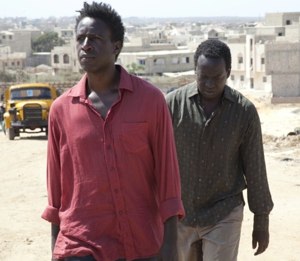
The Berlinale is the baked potato of European film festivals, and I don’t mean that as an insult, or even a backhanded compliment. A few months back, I was asked by David Hudson, of the superb movie-resource website Mubi , to offer a few observations about the Berlinale, which I’ve been attending since 2008. That year and every year since, the Berlinale has paid my way to participate in the Talent Press arm of the Talent Campus: Along with three other mentors, I coach young critics from all over the world (there are eight participants every year) as they cover the festival through assignments they’re given each day. While I’m here, I also see as many movies as I can and write about them. Hudson was putting together a sampling of opinions from festival attendees from all over the world, in preparation for a daylong symposium that was held by the German Film Critics Association in October. One of the issues the symposium hoped to address was the festival’s diminishing reputation: In recent years, the German and international press hasn’t exactly showered the festival with kindness. (Shane Danielsen’s Indiewire report from last year was particularly damning, if highly entertaining, though I disagree with him about the smell of the venues.) The Berlin Film Festival, now in its 62nd year, isn’t nearly as massive and glossy as Cannes, nor is it as quietly refined as Venice. I’ll concede that the programming choices, at least among the films in competition, often lean heavily in the direction of peasants and other types of oppressed peoples. Maybe that’s what made me think of the potato metaphor: If this isn’t always the most exciting festival on the planet, there’s still something solid and serviceable about it, and there are plenty of times when it exceeds expectations. Sometimes it’s just what you didn’t know you wanted. (That’s in addition to the fact that it’s one of only a few festivals with an extensive educational component.) Last year, the Berlinale brought us Asghar Farhadi’s A Separation , a picture that has since, with good reason, become a critics’ darling and is now a contender for an Academy Award. Fewer people Stateside have seen Bela Tarr’s The Turin Horse — though it opens in New York this weekend, at the Film Society of Lincoln Center — but the Berlinale also helped this picture achieve a small but significant groundswell of attention. Does every programming choice, particularly among the films in competition, measure up in significance to those two examples? Hardly. But every year at the Berlinale I discover at least a film or two or three that I’m grateful for, and that wouldn’t have crossed my path otherwise. This year, the programming choices are perhaps particularly un-glitzy, and they’re certainly low in Hollywood star power — not necessarily a bad thing. The festival opener this year was Benoit Jacquot’s historical drama Farewell My Queen (which I arrived too late to see), starring Diane Kruger, Léa Seydoux and Virginie Ledoyen, lovely actresses, all of them, though hardly household names. The festival is also featuring, out of competition, Stephen Daldry’s Extremely Loud and Incredibly Close , which has already fallen with a thud Stateside. (I felt sorry for my English friends as they traipsed off to see it. Once was more than enough for me.) Possibly the most high-profile of the films in competition, at least by Hollywood standards, is Billy Bob Thornton’s Jayne Mansfield’s Car, which screens later this week. (It stars Thornton, Robert Duvall, John Hurt and Kevin Bacon.) Thornton’s ex, Angelina Jolie, is also here with her directorial debut In the Land of Blood and Honey , being shown here as a special presentation. But there’s still plenty to look forward to: I can’t wait to see Tsui Hark’s 3-D Wuxia The Flying Swords of Dragon Gate, screening out of competition later this week. And though I’m not sure I can swing it, schedule-wise, I have a hankering to check out Timo Vuorensola’s Finnish-Australian-German (and crowd-funded) Third Reich/sci-fi thingie Iron Sky — because who can resist a pitch like this one: “In 1945 the Nazis went to the moon. In 2018 they are coming back.” Space-traveling Nazis will have to wait, I’m afraid. So far, the two Berlinale films I’ve seen have been more… potato-like. The less impressive of these two — and yet not dismissible by a long shot — is Alain Gomis’s Aujourd’hui , in which American musician-actor Saul Williams plays a Senegalese man, Satché, who, it appears, has been doomed to death: The film follows his last day on earth, which begins when he awakens and is greeted by his family and close friends, some of whom lament his impending demise and others of whom take him to task for his shortcomings. Satché might have escaped this terrible fate: He left Senegal to be educated in the United States, and then decided to come back, which, as the movie spells out in metaphorical terms, seals his fate as a human sacrifice. Aujourd’hui is a languorous film, or, rather, a film that makes you use a word like “languorous” when what you really might mean is “boring.” But Williams is a charismatic presence: His performance is largely wordless, which means we’re able to absorb the details of his world through his half-curious, half-cautious eyes. He’s an actor I’d like to see more of, leading to yet another reason a festival like the Berlinale is invaluable: Even flawed movies sometimes bring us the pleasure of discovering a new actor. Between the last installment of Cannes and this year’s Berlinale, a microtrend in European cinema appears to be taking shape: In the past 10 months I and some of my fellow critics have seen two movies about creepy adults who abduct children and hold them prisoner in a basement for months if not years. The first of those movies was the Austrian film Michael, by director Markus Schleinzer, which screened at Cannes (and which is opening in New York on Feb. 24). Michael follows the day-to-day life of a pedophile who keeps a 10-year-old boy locked in his basement; it’s an austere, chilly little picture — Schleinzer has worked as a casting director for Michael Haneke, which tells you something — though glimpses of grim optimism do occasionally break through its storm clouds. Frédéric Videau’s A Moi Seule (or Coming Home ), screening in competition here, tells a similar story: An opaque but clearly unhinged French construction worker, Vincent (Reda Kateb), abducts a girl, Gaëlle, at the age of 10, though he doesn’t violate her sexually. Some eight years later, she’s still a captive in his basement, only she torments him to the point where you wonder why he doesn’t just turn her out of the house already. (She sasses him, teenager-style, with sardonic observations heralded by phrases like “Earth to Vincent!”) The teenaged Gaëlle (she’s played by Agathe Bonitzer, a lanky actress with a sullen but penetrating gaze) escapes early in the picture — we get a sense of the texture of her relationship with Vincent via flashbacks. Unlike Michael, this isn’t a picture built on an ultra-manipulative sense of dread. And A Moi Seule raises some interesting questions about the nature of victimization: Gaëlle’s self-possession is a scary kind of life force, suggesting that even people who truly are victims can talk themselves out of that state by sheer force of will. This an unusual, thought-provoking picture, perhaps less daring than it thinks it is — but then, its sense of measured calm is part of what keeps it ticking. If there’s room in your life for only one movie about kids triumphing over loser sickos who turn their basements into prisons, make it this one. Follow Stephanie Zacharek on Twitter . Follow Movieline on Twitter .
With the Valentine’s Day weekend upon us many folks will be looking for a flick to cuddle up with. But what are the choices? The sad fact is that seeing two Black people in love (or even lust) on the big screen is becoming more and more rare. Remember when it felt like we had another movie filled with beautiful brown skinned people coming out several times a year? A lot of you fifteen-year-olds owe your existence to a date night where Love Jones was shown. Trust. But we want to hear from you. We’ve collected a sweet 16 of Black romance movies for you to vote on and tell us which is #1. Is it Boomerang ? Why Did I Get Married ? Love & Basketball? Well.. . CLICK HERE TO VOTE and tell us! Each week the tournament will face off the survivors until YOU pick a winner in the finals. May the best movie win! If you need a refresher, here are some of our favorite clips from the competing movies: Boomerang Love Jones Love & Basketball Poetic Justice Brown Sugar CLICK HERE TO VOTE
Calm down, she only gave birth to 2 of those children. LOL! The remaining 48 are children that Monyetta Shaw (Ne-Yo’s Girlfriend and Baby Mama) agreed to “adopt.” Now, the “adopted” kids won’t be living with the couple, but Monyetta has agreed to pay for their living costs for a year, totaling $20,000! Access Atlanta Reports Shaw, the girlfriend of Atlanta-based R&B star Ne-Yo, won’t actually bring the children home to live with her, but she will pay their living costs for a year — estimated at $20,000, TMZ says. Shaw, who has had roles in such films as “Major Movie Star” and “Soul Men,” and Ne-Yo (Shaffer Chimere Smith Jr.) have two children together.
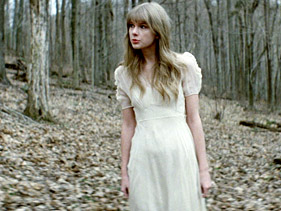
Get a sneak peek at the ‘Hunger Games’ soundtrack video before it premieres Monday at 7:54 p.m. ET on MTV. By Jocelyn Vena Taylor Swift in her “Safe & Sound” video Photo: Big Machine On Monday, Taylor Swift will debut the video for “Safe & Sound,” her Civil Wars-assisted single from the “Hunger Games” soundtrack, during “MTV First: Taylor Swift” at 7:54 p.m. ET on MTV, followed by an exclusive chat with Swift herself on MTV.com. But you don’t have to wait until Monday to catch a sneak peek of the emotional video. In a mini-tease, Swift is wearing a long, white dress. Her hair and makeup are not done — it’s a far cry from the red-carpet-ready Taylor fans are used to seeing. She sings the moody track while she walks through the woods — an obvious connection to the “Hunger Games” film and book that inspired the track. After Monday’s video premiere — which will also air live on MTV’s channels in Canada, Europe, Latin America, Australia, Asia and Africa — the Grammy-nominated singer will sit down with MTV News’ Sway Calloway for a 30-minute interview on MTV.com. Fans of the superstar can get in on the action by submitting questions via Twitter @MTVNews with the hashtags #AskTaylor or #MTVFirst. CMT will air “Safe & Sound” at 8 p.m. ET, the same time the music video will debut exclusively online at MTV.com, CMT.com, VH1.com and MTV’s international sites. On Tuesday morning, VH1’s “Big Morning Buzz Live” will feature the video at 10 a.m. ET/PT. The “Hunger Games” soundtrack , which also features Arcade Fire and the Decemberists, drops March 20; the movie hits theaters days later, on March 23. And for those non-Swifties wondering why Taylor chose Monday to drop the video, it’s the 13th and that happens to be the star’s lucky number . Don’t miss the premiere of Taylor Swift’s “Safe & Sound” video during “MTV First: Taylor Swift” on Monday at 7:54 p.m. ET on MTV, followed by an exclusive chat with Swift about her “Hunger Games” clip on MTV.com. Related Artists Taylor Swift