
Tag Archives: north

Brian Williams Treats Obama as Oracle of Wisdom, Wonders: ‘How Are You Thinking About Your Job These Days?’

Interviewing President Barack Obama in New Orleans on Sunday afternoon, Brian Williams treated Obama with a level of deference he didn’t afford to President George W. Bush as he treated Obama as a great oracle of wisdom to pluck. “Katrina was about so many things. It was about class and race and government and the environment,” Williams told Obama in the except aired on the NBC Nightly News, yearning for guidance: “Whatever happened to that national conversation we were supposed to have about it?” Williams raised how “it’s getting baked in a little bit in the media that BP was President Obama’s Katrina. And it’s also getting baked in that the administration was slow off the mark,” but only to cue up Obama: “Is that unfair?” As the economy continues in dire straights and Obama’s economic policy of “stimulus” spending has obviously failed, all Williams could ask was: “Do you have anything new on the economy?” Williams fretted that though “you’re an American-born Christian…significant numbers of Americans in polls, upwards of a fifth of respondents are claiming you are neither.” The “question” from Williams: “This has to be troubling to you. This is, of course, all-new territory for an American President.” In the full 22-minute session posted on MSNBC.com , instead of asking Obama whether his low approval ratings and the widespread rejection of his direction, as illustrated by the big turnout for Glenn Beck’s rally, suggests he needs to change course, Williams prompted Obama to denounce Beck’s use of MLK and “re-injection of God” into politics: What does it say to you that Glenn Beck was able to draw a crowd of, perhaps north of 300,000 people, on the anniversary of Doctor King’s speech, on the site of Doctor King’s speech? The message appeared to be, at times, anti-government, anti-spread of government, anti-Obama administration and in favor of, I guess, re-injecting God into both politics and the American discourse. Williams ended on a particularly sycophantic note: And finally, I’m hoping to find you in a reflective mood on a cloudy day . We’re the first to speak to you coming off your summer vacation. How does it re-charge you, what do you think about, what do you see, what do you read about, how are you thinking about your job these days? Compare all of that to how Williams approached Bush on Tuesday, August 29, 2006 , Katrina’s one-year anniversary: > You have apologized for the damage, but what about the damage to your presidency? And, Mr. President, here’s what I mean. Most of the analysts call it your low point. A lot of Americans are always going to believe that that weekend, that week, you were watching something on television other than what they were seeing, and Professor Dyson from the University of Pennsylvania said on our broadcast last night it was because of your patrician upbringing, that it’s a class issue. > When you take a tour of the world, a lot of Americans e-mail me with their fears that, you know, some days they wake up and it just feels to them like the end of the world is near, and you go from North Korea to Iran to Iraq to Afghanistan, and you look at how things have changed, how Americans are viewed overseas, if that is important to you, do you have any moments of doubt that we fought the wrong war, that there’s something wrong with the perception of America overseas? >   The folks who say you should have asked for some sort of sacrifice from all of us after 9/11, do they have a case, looking back on it? >   Is there a palpable tension when you get together with the former President who happens to be your father? A lot of the guys who worked for him are not happy with the direction. The questions from Williams to Obama aired on the Sunday, August 29 NBC Nightly News: > Just a block from here, you may not have known it, you drove by houses with holes still in the roof where there’d been live rescues, there’s still FEMA markings in spray paint. And yet, New Orleans is like this, this is a symbol of recovery. Katrina was about so many things. It was about class and race and government and the environment. Whatever happened to that national conversation we were supposed to have about it? > This was of course New Orleans’ Katrina and Mississippi’s Katrina and you’re familiar now that it’s getting baked in a little bit in the media that BP was President Obama’s Katrina. And it’s also getting baked in that the administration was slow off the mark. Is that unfair? > Let’s talk about another topic that’s part of the firmament here and everywhere. And that’s the economy. The New York Times said this weekend, “President Obama has another new plan on the economy, now would be a good time to find out about it.” Do you have anything new on the economy? While you’ve been away, we’ve had a horrible GDP number last week. > Mr. President, you’re an American-born Christian. And yet, increasing and now significant numbers of Americans in polls, upwards of a fifth of respondents are claiming you are neither. A fifth of the people, just about, believe you’re a Muslim. [OBAMA: Keep in mind, those two things, American-born and Muslim are not the same. But I understand your point.] Either or the latter. And the most recent number is the latter. This has to be troubling to you. This is, of course, all-new territory for an American President. > Even a number as sizeable as this. What does it say to you, does it say anything about your communications or the effectiveness of your opponents to-

Read this article:
Brian Williams Treats Obama as Oracle of Wisdom, Wonders: ‘How Are You Thinking About Your Job These Days?’
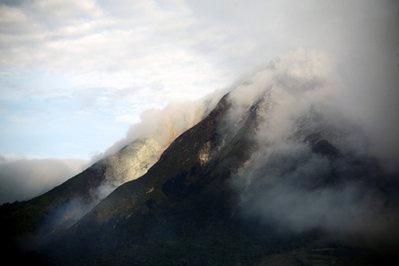
Mount Sinabung in Indonesia

Mount Sinabung spews volcanic smoke in Karo, North Sumatra, Indonesia, Sunday, Aug. 29, 2010. The volcano spewed hot lava and sand high into the sky early Sunday in its first eruption in 400 years causing thousands of people living around its slope to evacuate their homes. Mount Sinabung in regency of Karo in Indonesia#39;s North Sumatra province continued gushing grey smoke on Saturday, blanketing area surrounding its crater, local media reported. A local resident, Abadinta Barus, told Antara

Read the original:
Mount Sinabung in Indonesia

Record Year for Sea Turtles Follows Off-Road Vehicle Restrictions

Image credit: Audubon NC Whether or not BP was burning sea turtles alive , the Gulf oil spill did kill a lot of these endangered creatures . But the news hasn’t been quite so grim elsewhere. In fact on Cape Hatteras, North Carolina—where there has been an ongoing feud between off-road enthusiasts … Read the full story on TreeHugger

Continued here:
Record Year for Sea Turtles Follows Off-Road Vehicle Restrictions

A decade of injustice and a family who must be reunited.

A decade of injustice and a family seperated by 12000 miles. Racism,Abuse,corporate intimidation,blackmail. Can current TV bring this family together and achieve what You Tube and facebook and the internet could not. This link above has been read by thousands around the world.The video on the link is on you tube and has been viewed by thousands it was made by my wife from cambodia confirming all this story and is a plea for help .I have spoken on US radio on two occassions.A US politician has a petition in place with 500 000 people.The sun newspaper in the UK in investigating…And the company responsible,remain silent trying to ride this incredible story out…I am English ,my wife and son are the other side of the world..The majority of people trying to end our nightmare are American although the petition has people from 65 countries.A protest is been planned in North carolina to take place outside the site of the company responsible… mark.heslehurst@tesco.net added by: Mark_Heslehurst

Mass Rape: Armed Groups Gang-Raped Between 150 and 200 Women, and Some Children, in Four Days | Videos

Armed Groups Raped More Than 150 Women Added On August 25, 2010 Journalist Josh Kron reports from Goma, DRC, about the mass rape of women over four days in North Kiva last month. added by: EthicalVegan

Spying on Free Speech Nearly At Cold War Level

The American Civil Liberties Union (ACLU) released numerous reports of increased government spying on American citizens. Once upon an unhappy time, U.S. law enforcement agencies, from the FBI to local police, had a history of political spying during the Cold War. The ACLU said that the old political spying tendencies are running high again. Individuals and groups are being monitored and harassed for “little more than peacefully exercising their First Amendment rights.” In Georgia, among seven spying reports the ACLU uncovered, a vegetarian activist was arrested for writing down the license plate of a Department of Homeland Security agent who had been photographing her and others during a peaceful protest outside a Honey Baked Ham store. An intelligence bulletin, from a DHS-supported North Central Texas Fusion System, was distributed to over 100 different agencies. It described a “purported conspiracy between Muslim civil rights organizations, lobbying groups, the anti-war movement, a former U.S. Congresswoman, the U.S. Treasury Department, and hip hop bands to spread tolerance in the U.S.” Once you unfortunately land on some kind of watchlist, it's unlikely you will ever have your name removed. One example was a Kentucky minister who had never been arrested, had never been charged with a crime, and had never participated in a protest. During a sightseeing trip, he was detained by Canadian border officials. The ministered learned he was under federal scrutiny because, immediately after September 11, he ordered books over the Internet about the Islamic religion, like the Koran, to help his congregation better understand that faith. Does this make you sick or does it make you mad? Does this even slightly sound like America, the land of the free? ********* Follow the link to see a more examples. added by: toyotabedzrock

If a Country Sinks Beneath the Sea, Is It Still a Country?

If a country disappears, is it still a country? Does it keep its seat at the United Nations? Who controls its offshore mineral rights? Its shipping lanes? Its fish? And if entire populations are forced to relocate — as could be the case with citizens of the Maldives, Tuvalu, Kiribati and other small island states facing extinction — what citizenship, if any, can those displaced people claim? Until recently, such questions of sovereignty and human rights have been the domain of a scattered group of lawyers and academics. But now the Republic of the Marshall Islands — a Micronesian nation of 29 low-lying coral atolls in the North Pacific — is campaigning to stockpile a body of knowledge it hopes will turn international attention to vulnerable countries' plights. “At the current negotiating sessions and climate change meetings, nobody is truly addressing the legal and human rights effects of climate change,” said Phillip Muller, the Marshall Islands' ambassador to the United Nations. “If the Marshall Islands ceases to exist, are we still going to own the sea resources? Are we still going to be asked for permission to fish? What are the rights that we will have? And we are also mindful that we may need to relocate. We're hoping it will never happen, but we have to be ready. There are a lot of issues we need to know the answer to and be able to tell our citizens what is happening,” he said. Frustrated by the dearth of answers to the questions he was posing, Muller said, Marshall Islands leaders contacted Columbia Law School. Michael Gerrard, who leads the law school's Center for Climate Change Law, picked up the challenge and issued a call for papers. Theoretical questions become real Gerrard, who is arranging a conference sponsored by Columbia University's Earth Institute next year, said that when he began reaching out to scholars, he realized most were working in isolation from one another. And, he said, some of the most ticklish legal questions facing small island nations have been understudied — because until recently, the notion of a country's extinction has been largely theoretical. “The prospect of a nation drowning is so horrific that it's hard to imagine,” Gerrard said. Moreover, he added, until just a few years ago, it was difficult to have a conversation in the international community about how countries might adapt to climate change. “There was a concern that it would divert focus from mitigation. But now people recognize that even with the most aggressive imaginable mitigation measures, the climate situation will get worse before it gets better, and we have to begin making serious preparation,” he said. The plight of refugees is the most emotional of the looming questions. Deciding where to relocate citizens is just the beginning for a disappearing nation. Still unanswered: What will the political status of those displaced people be? Will they assimilate into the culture and economy of their new host country, or will they retain a separate identity? The International Organization for Migration (IOM) estimates that rising sea levels, saltwater intrusion and accelerated coastal erosion could lead to as many as 200 million environmentally induced migrants worldwide by 2050. The Carteret Islanders of Papua New Guinea could be some of the world's first climate “refugees.” The land is expected to be under water by 2015, and Papua New Guinea's mission to the United Nations has already announced it would evacuate the approximately 2,000 islanders to Bougainville Island — about a four-hour boat ride away. Maldives wants a fund of last resort Meanwhile, in the Maldives, President Mohamed Nasheed declared upon entering office that he would create a sovereign fund — something of a last-resort insurance policy — in the event that the country's 305,000 citizens would require relocation. The fund fell victim to budget shortfalls, but Maldivian officials have said it had the desired effect of raising awareness in the international community. cont. added by: JanforGore

Vincent Gallo’s Insane Taliban Film Heading to TIFF

Good news, finally ! The sure-to-be-WTF-inducing Essential Killing , featuring Vincent Gallo as an escaped Taliban soldier in Europe (?) who “must use his wits to evade his pursuers whilst battling bitter winter cold and lack of food,” is set to have its North American premiere at the Toronto International Film Festival — which means it’s all that much closer to reaching screens in the States. Maybe. Probably even closer: The Whistleblower , the Rachel Weisz drama about a Nebraska cop on the trail of a sex-slave ring in Bosnia. As predicted , that’ll be a world premiere up north; more to come here about this and many others… [ TIFF ]

More here:
Vincent Gallo’s Insane Taliban Film Heading to TIFF

New Study Shakes Up Scientists’ View of California’s San Andreas Earthquake Risk

Study shakes up scientists' view of San Andreas earthquake risk Researchers find major quakes on the southern section, on average, every 88 years — three times as often as previously thought. It's the strongest evidence yet that we're overdue for a massive quake. San Andreas fault study Photo: Sarah Robinson, 23, a graduate student at Arizona State University, runs along a trench at the Bidart Fan sector of the San Andreas fault in June 2009. She is on a team of geologists trying to construct a history of earthquakes on the San Andreas fault by reading lines of sediment in the earth. (Ricardo DeAratanha / Los Angeles Times / June 1, 2009) ___ By Rong-Gong Lin II, Los Angeles Times August 21, 2010 Southern California is long overdue for a major earthquake along the San Andreas fault, according to a landmark study of historic seismic activity released Friday. The study, produced after several years of field studies in the Carrizo Plain area about 100 miles northwest of Los Angeles, found that earthquakes along the San Andreas fault have occurred far more often than previously believed. For years, scientists have said major earthquakes occurred every 250 to 450 years along this part of the San Andreas. The new study found big temblors on the fault every 88 years, on average. The last massive earthquake on that part of the fault was in 1857, leading scientists to warn that another such temblor is likely in Southern California. “The next earthquake could be sooner than later,” said Lisa Grant Ludwig, a UC Irvine earthquake expert and co-author of the study, which was published online in the journal Geology. “It was thought that we weren't at risk of having another large one any time soon. Well, now, it might be ready to rupture.” Other seismic experts described the revelation as a major change in the way they think about earthquake risks along the southern San Andreas fault. Thomas Jordan, director of the Southern California Earthquake Center, said the fault is “locked and loaded. It's been a long time since an earthquake has occurred on that fault — over 150 years.” To reach the new conclusion, scientists dug trenches deep into the Carrizo Plain. They used carbon dating and sophisticated imaging technology known as lidar to find signs of earth movements. They were able to detect earthquakes dating back to the 15th century, creating a far more complete record than had previously been known. The research found that earlier examinations of the San Andreas had badly undercounted the number of major earthquakes. Those were based on observations made in the 1970s when scientists used measuring tape to look for evidence of past earthquakes. “Now we have better techniques,” Grant Ludwig said. “We can see there's actually more earthquakes.” Scientists now estimate that earthquakes occurred on that section of the fault in 1417, 1462, 1565, 1614 and 1713. The finding adds weight to the view of many seismologists that the San Andreas has been in a quiet period and that a major rupture is possible. A 2009 study, which Grant Ludwig also participated in, suggested that the San Andreas was overdue for a rupture. But Friday's report offers a much more grim estimate of how frequently quakes have occurred on that segment of the fault. The San Andreas fault is considered one of the most dangerous in Southern California, partly because it is so long that its southern section is capable of producing a temblor as large as magnitude 8.1. By contrast, earthquake experts consider 1994's destructive 6.7-magnitude Northridge quake, which occurred on a different fault, to be a medium-sized quake. The San Andreas is a sleeping giant. It's hard to imagine the power of a huge quake on the southern section because the last one occurred more than a century ago when the area was sparsely populated. Just 4,000 people lived in Los Angeles at the time. The 1857 temblor, with an estimated magnitude of 7.9, is known as the Fort Tejon quake, but that's a bit of a misnomer because it is thought to have started farther north, way up in Parkfield in Monterey County. The quake then barreled south on the San Andreas for about 200 miles, through Fort Tejon near the northern edge of what is now Los Angeles County, then east toward the Cajon Pass in San Bernardino County, near what is now the 15 Freeway. The quake was so powerful that the soil liquefied, causing trees as far away as Stockton to sink. Trees were also uprooted west of Fort Tejon. The shaking lasted 1 to 3 minutes. The study was conducted by scientists at UC Irvine and Arizona State University. As preliminary data went out for peer review, other earthquake scientists immediately took note. The U.S. Geological Survey was so concerned that it dispatched its own team of investigators to the Carrizo Plain to look over the initial findings and review the evidence in the trenches. “These investigators really were challenged by their scientific peers,” said Ken Hudnut, a geophysicist at the U.S. Geological Survey. “And they made it through. They ran the gantlet and came through with a really solid paper.” Hudnut said the “Big One” wouldn't compare to most quakes Californians have endured. Such a large quake on the San Andreas, generally above a magnitude 7, would send enormous V-shape energy waves spreading out from the fault. If the earthquake energy hit the Los Angeles Basin, the soft sediment underneath it could actually amplify the waves, making the shaking worse. Hudnut said the study offers both “bad news and good news,” noting that it also concluded future earthquakes along that section of the San Andreas could be smaller than the 1857 quake. “It's not the kind of news that ought to make people crawl into the fetal position. Rather, it's the kind of information that ought to once remind people about basic earthquake preparedness,” Hudnut said. Grant Ludwig said her research should motivate people to prepare. “If you're waiting for someone to tell you when we're close to the next San Andreas earthquake, just look at the data,” she said. “If we look at the only data we have, it's not very comforting. I'm preparing for that possibility.” added by: EthicalVegan

Randi Rhodes: Senate Dem Hopeful Alvin Greene Facing Obscenity Charges ‘Still Better than Jim DeMint’

While lefties are foaming at the mouth over what Republican Senate candidates like Sharon Angle and Rand Paul have to say, they’re not quite willing to publicly embrace or defend the antics of their own duly elected nominee, South Carolina U.S. Senate Democratic nominee Alvin Greene. That is, they weren’t until now.  On the Aug. 17 broadcast of her radio show , Randi Rhodes went to bat for Greene. According to Rhodes, the indiscretions that brought Greene indictments, in which he allegedly showed obscene photos to a University of South Carolina student and then talked about going to her dorm room, weren’t really that bad. Although it’s not clear if Rhodes was being serious, and it’s difficult to tell, she claimed he was “sharing a wonderful moment of pornography” with this student and bewildered why such an approach warranted criminal charges. “Let me tell you – you know my candidate for Senate in South Carolina is Alvin Greene,” Rhodes said. “I left off where he was supposedly indicted for you know sharing a wonderful moment of pornography with a girl who was over 18 in a college library – in a college library where he had attended college by the way, so he still has his ID card to get on the campus, so. I don’t know what law he broke, but apparently they say he did and they indicted him. And so the local TV went over to his house to see what his comments were about the indictment.” Rhodes then played that infamous clip of Greene howling at a reporter from North Carolina station WCNC. And her conclusion – even with this abnormal behavior from an individual that represents the Democratic Party for the South Carolina, he’s still better than the incumbent, Sen. Jim DeMint, R-S.C. and lamented the idea he has been unable to raise any money. “He’s still better than Jim DeMint,” Rhodes said. “I don’t give a rat’s – that’s why he’s my candidate. He’s still better than Jim DeMint, OK? A guy that’s howling in his house, ‘Nooooooo, goooooooo,’ is still better than Jim DeMint. And that’s why Alvin Greene will always be my candidate for senator from South Carolina. I love this guy. I think – he’s fabulous. I mean, if they can have the nut bags they have, why can’t I have Alvin Greene? And why aren’t we supporting him? I think the guy has raised $1,000 since this whole thing started.” But Rhodes used those peculiar circumstances surrounding Greene, which have likely hindered this hopeful from raising money to level attacks against Koch Industries and NewsCorp for giving money to the Republican Governors Association, chaired by Mississippi Gov. Haley Barbour. “That’s wrong. You know you got the Koch Industries people give a million dollars Haley Barbour in Mississippi,” Rhodes protested. “[Y]ou know oil and chemicals – the Koch family, Americans For Prosperity, the Koch family, the fake grassroots Tea Party, the Koch family – giving a million dollars to Haley Barbour. Fox News gave a million dollars, News Corp. to Haley Barbour!”

Read this article:
Randi Rhodes: Senate Dem Hopeful Alvin Greene Facing Obscenity Charges ‘Still Better than Jim DeMint’






