Known for her crazy antics on all subjects ranging from cooking to basic dating advice, Glozell has now taken on the unconquerable cinnamon challenge! When the cinnamon challenge is taken, most people attempt it with about a tablespoon worth….not Glozell. She attempts the impossible with a soup ladle! Keep in mind that the whole point of the challenge is to see if the person attempting it can simply hold a mouthful of cinnamon in for at least 10 seconds. Lets see how far Glozell gets!
Let’s see, what day is it? Jan. 31? Oh , then it must be time for everyone to fulminate over the Vanity Fair Hollywood Issue , specifically its lack of diversity among the featured cover stars. It’s a seasonal ritual almost as inviolable as Groundhog Day, with equally severe implications of who made the cover (and where). To wit, a lot of white chicks. Cue six more weeks of winter! At least in the grocery checkout aisle, anyway. It’s hard for me to get exercised about this tradition anymore — especially in 2012, after so many years of black, Asian, Latino and other young talent of color being routinely nudged aside for the likes of… Lily Collins. Of course, let’s be fair: Pariah star Adepero Oduye is in the center of the spread’s second page, and Paula Patton is there on the third page. And if we think of breakthrough actresses of color whom VF missed and should have included, it’s kind of a short list, isn’t it? As in: I can’t think of any off the top of my head. Which likely says more about Hollywood and/or me than about VF . Kind of. Placement is placement. Anyway, suggestions welcome! And: I’m fully expecting Viola Davis on next month’s cover to coincide with her imminent Best Actress Oscar win.
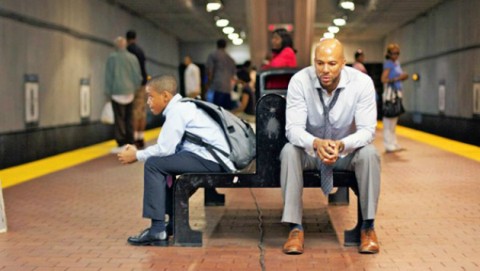
He’s certainly no stranger to the world of entertainment, but Grammy-winning musician Common only recently began channeling his energies into acting. (His first film: Joe Carnahan ’s Smokin’ Aces ). And yet, relative newbie status be damned! The hip-hop veteran, currently seen on AMC’s Hell on Wheels , sat down last week with Movieline to discuss his Sundance pic LUV , a Baltimore-set family/gangster tale from director Sheldon Candis, and his goals for future greatness: “God willing, I’ll become one of the great actors of our day.” It was the first visit to Park City with a film for the self-professed “Sundance virgin,” marking a maturity in his developing acting career: Not only does Common lead the cast of LUV as Vincent, an ex-con shepherding his young nephew (standout newcomer Michael Rainey, Jr.) on a tour along the underbelly of Baltimore, he also earned his first producing credit on the indie production. Movieline queried Common on his filmmaking interests, how his acting career might affect his music, why the media fuss over Maya Angelou and his new record The Dreamer, The Believer was “disappointing,” and how he came to beef with rap upstart (and fellow Sundancer) Drake. How did you become involved with LUV in the first place? It came to me through my agent at the time, and he said it was a cool script, story was great, and he thought this character would be great for me. I read it and was like, I like the story and I know I could really do some things with this character – he’s a human being who’s just trying to do something in life, be somebody in life. I feel like that was a good thing for me to chase after as an actor, because so many people no matter what nationality or age group you are wants to be somebody and to achieve something in life. A friend of mine told me he thought it was like a street version of Pursuit of Happyness . [Laughs] I said ‘Ok, I’ll take that! I like that.’ Why was it important to also come onboard as producer? Once I was asked on as an actor I felt that I could bring some things as a producer, helping to bring cast members and give my creative input and just be in support of Sheldon, the director. It was one of those things where I could network to help bring in more cast members. That can be key to helping many small scale movies get made. Yes – get made, get seen, get attention… and to get a great cast, to make it quality. Who were some of the cast members you helped bring onboard? For me, Michael K. Williams… And he brings an interesting Baltimore connection to the film! Yeah, exactly! We thought it was so great to get him to play a cop instead of a street guy. And a sensitive cop at that – he has a great moment with [eleven-year-old] Michael Rainey Jr. in the film. Yeah! Michael Rainey Jr. is great. This guy is special. We were seeking him out. He’s a special human being, and we searched in a lot of places. It was one of those things where a friend suggested somebody and Sheldon drove up to New York, was waiting in the lobby and met this kid and was like, ‘Man, we got the guy.’ I was really keen on having a little boy who could do everything. You two make quite the dapper pair together. Thanks! You know, even when we weren’t filming we were bonding. He’s a natural. This little guy can sing old rap songs, like Wu-Tang! Everything is probably so new and overwhelming, and he’s just grateful. Some scenes were shot under the gun, with really limited time to capture the best take. What was the experience like for you as an actor under those circumstances and having to find the magic in a moment like that? As much as I always want to do a take over, knowing you only have one or two takes – I like that pressure, too. The last scene, Michael and I were literally in the van at five in the morning and he was asleep, but you’re put in that position and you have to deliver. This is why, if you want greatness and want to be a great actor, you have to deliver when called upon. In those situations you’ve just got to get to the art of things, you’re there as an actor to bring these people to life so you can’t really worry about things. The sun is coming up and we’ve only got two takes and we won’t be able to do this again – you just go for it. It was fun, in a way, the adrenaline, and you have to use your creative minds and ideas. It’s similar to doing an art project, where you’re working with creative people and it’s not somebody who’s not a creative person trying to tell you what to do. So even if you make your mistakes, it’s okay – that’s a part of what art is. There’s something to be said of creativity borne of constraints. There is – literally our crew was doing things that, I mean, there would be scenes where we didn’t have the right amount of extras and one person from the neighborhood would just step in and be in the scene. So there were a lot of natural elements there that I think serve for making good movies. Sheldon wanted you to feel the world of Baltimore; you get real people from Baltimore and you don’t have to try to get them to have a Baltimore accent, they have the Baltimore energy. It’s just there. To me it’s like when you see The Departed or The Fighter , you’re in the world no matter what. Looking at your career overall, you have so many interests and pursuits these days. How do you feel your perspective on your music may be changing the more you immerse yourself in Hollywood and acting? I think my perspective on music becomes a lot more confident and free because the more I grow as an actor the more confident I become in my career. I believe in my career as an actor and it allows me to free up the pressure of doing an album that’s going to be the biggest selling album, or doing an album that has to fit into the format of what’s going on in music. And though I always would go into my own world to create albums, there’s even more of a liberty to create music because acting has shown me more freedom as an artist. Acting has helped me learn more about myself and to be not as inward, to have fun and not be so self-conscious. There’s also the dichotomy of the personal nature of your music vs. acting, in which you become somebody else… Yeah, you do. And when I first began acting I was like, ‘I love getting to be this other person because I get to express things that Rashid – Common – can’t express.’ That was one of the greatest joys about being able to become this other person, but again the way I do things is sometimes within the acting process you’re dealing with your own things. So that’s what I mean in saying you learn more about yourself, even just from acting classes. Acting classes for me were the incubation, the beginning, the seed that made me say ‘I want to act.’ I want to go to acting classes – I mean, obviously I’d rather do films or plays – but I enjoy acting classes, too. Many actors say that the validation is all in the act of doing the work. Yes, and for me obviously you learn certain things in classes and different techniques and you get better, but when you get on a movie set there are new things to learn, too. Like even just learning, ‘Okay, you’re waiting around for 8 hours and they call you do a scene – you’d better be ready.’ ‘Okay, the light broke right when you were in the middle and fired up – you’ve got to chill and get back to the scene.’ I’m looking forward to doing plays and television, too; I mean, I’m doing television with Hell on Wheels ! That’s a role that I’m really enthused about because that character gives me a lot to do. I can develop and evolve with it and I like the responsibility that I possess with that character, because to play an African American in that time is a responsibility. So many times we’ve seen black people from that time as being depicted as downtrodden and oppressed and beat down, and the character I play is strong, a leader, intelligent. In a random Sundance coincidence, both you and Drake are in town during this year’s festival. Can you explain your well-publicized beef with him? I mean, to be honest I feel I said everything I needed to say on the song. I looked at this whole thing as a part of hip-hop [culture], MCs battle sometimes. One person says this, another person says that. That’s what it’s been for me. So it was more of a fun thing for you? It was fun for me, and I’m not personally invested in it. It’s not like I feel anything toward him as a human being. It’s more like, ‘You said something about me? I’m in the boxing ring too, so I’m gonna let you know…’ He felt offended by a song I did, so then he did it. On that record that I did a verse about him, he said some things about me that were more subliminal but I knew they were about me. [Laughs] I just decided to be outward with it and to be direct, and to say, hey – if you’re going to throw some blows at me, I’m about to throw them back. I mean, it’s hip-hop. It’s interesting to see you, at this moment in your career of going forward in a relatively new direction into acting and at the same time reach back to your roots and to hip-hop battle culture. Yeah, it is a dichotomy but it’s also who I feel like I am as a human being. I’m also a warrior, too – I’m a peaceful person, but I’m an MC. I love MCing. God willing, I’ll become one of the great actors of our day. I want to grow to be that type of actor, but I still think I’ll be writing songs even if it’s for a jazz club crowd. You say that one day you hope to be one of the greatest actors, which tells me you’re constantly seeking improvement. How do you see yourself at this point in your acting evolution? Oh yes, definitely. I recognize that I’m a baby in terms of acting. It’s only been a few years; 2007 is when Smokin’ Aces came out. I know that I have a long way to go, but I want to go that way. I’m learning at each time I get a chance I get to do it, and I’m going to keep working to improve and keep working to grow. Do you feel that LUV was an important film in your growth as a performer? I feel like I learned a lot, and we had to shoot in such a short amount of time and in difficult situations. Every day getting new lines, coming up with stuff there. It’s hard to see it just one time to see if it was my best performance, but it may be because it was the performance where I had to do the most, and it had the most emotional depth to it. I played the lead in a romantic comedy, Just Wright , but I didn’t have as much to do. This time I had a lot to do, and I’m a lead. I actually think my character in Smokin’ Aces was a great character, I really loved that character and he had depth too, but he wasn’t a lead so you didn’t see him as much. What films are coming up next for you? I did this film called Pawn , an independent starring Michael Chiklis, Forest Whitaker, and Ray Liotta. It’s a cool suspense thriller about these people who hijack a diner, and I play a negotiator. I’m about to film this movie called Now You See Me , which stars Jesse Eisenberg and Isla Fisher and Michael Caine and Mark Ruffalo – I’d say it’s an action movie, about these magicians. It’s dope. I’m going down to film that soon. And I’m looking to do more great, quality films – independent, studio, action, drama, comedy, animated… and I’m promoting The Dreamer, The Believer , which is my new album. What was your reaction to the fuss made over Maya Angelou’s comments about that album? That was that journalist really twisting things, because basically she doesn’t condone the use of the n-word. She is aware that I use that word; she told me, ‘I would like for you not to use it,’ but she understands. She knows I’m going through a process, people go through a process. She participated in my album with her heart and soul, and the writer wrote something to try to cause dissension but [Angelou] came out publicly and said look, Common is like my son. I love him and I don’t condone the use of the word but you can’t separate or divide us. She was acknowledging that she was happy to be on the album. I really was disappointed, especially because in hip-hop that’s a really profound thing to have Maya Angelou performing on a hip-hop song. So it was kind of like, yo – let us have this. This is something that is great. This is someone who is living history on a hip-hop album. Let’s just enjoy the fact that we have an elder that wanted to participate in hip-hop, reaching out for us. Follow Jen Yamato on Twitter . Follow Movieline on Twitter . Get more of Movieline’s Sundance coverage here .
If you think his screenplay is implausible , check out Pablo Fenjves’s earlier work: “Fenjves, who lived in Brentwood in the early ’90s, was the person who heard a dog wailing at the time of the murders of Nicole Simpson and Ron Goldman. Even odder, Fenjves found himself years later ghost-writing Simpson’s If I Did It pseudo-memoir.” [ THR ]
You’re between the ages of 18-24, life feels like its moving 100 miles a minute and you may feel like you have no place in the political system. But you do. As a matter of fact, the people you elect to public offices can have a HUGE impact on your life. Here are some things every young American should consider when voting Does the person I’m voting for have a plan? Most members of Congress and candidates talk a lot about the need to reduce our deficit and control the national debt, but few have a realistic plan. Before you head to the voting booth find out which candidates have a plan and see if it makes since. Are they telling you that we can balance the budget by just cutting spending or raising taxes? If so they probably don’t have a realistic plan or a clear understanding of the problem. Does my candidate have a plan to create jobs for the future? We all know that jobs are the number one issue with voters this year, but as young Americans you need to think of more than just jobs in the near term. The world we will face is much different than that of our parents. It will be one of increased competition and decreasing resources. Does your candidate have a plan not only to create jobs but the high skilled ones we will need to be competitive with the rest of the world? What are they going to do about education? Read More HERE
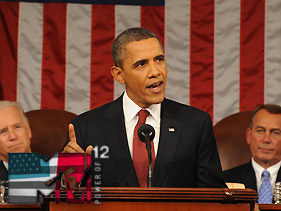
President wants to require every student stay in school until graduation or they turn 18. By Gil Kaufman Vice President Joe Biden, President Barack Obama and House Speaker John Boehner Photo: CBS The president’s State of the Union address is meant to give the nation an update on what has been accomplished and what is still left to be done. But in a re-election year , the televised appearance before Congress cannot avoid being seen as a sales pitch to the nation for four more years, and on Tuesday night (January 24), during his third such speech, President Obama laid out his vision for the future should he get the job again in November. Touching on everything from education reform to a call for reviving American manufacturing, clean energy, immigration reform and a return to civility in Washington, Obama discussed his successes while challenging his Republican cohorts to pave the way for more opportunity for a middle class that has been hit hard by lingering economic uncertainty and unemployment. Obama opened by reminding voters that he recently welcomed home the last troops from Iraq and oversaw the killing of terror mastermind Osama bin Laden and many of al Qaeda’s top lieutenants. “Imagine what we could accomplish if we were to follow their example,” he said, praising America’s warriors for working together and not being divided by their personal ambitions. In a week when the Megaupload site was taken down , the president promised to stop the piracy of American movies, music and software overseas. With tens of millions out of work, Obama also said he wants to train 2 million workers with skills that will “lead directly to a job” through partnerships between community colleges and local businesses. In another step away from the Bush administration’s “No Child Left Behind” program, Obama praised the value of good teachers, saying, “Stop teaching to the test [and] replace teachers who just aren’t helping kids learn.” He also called on every state to require students to stay in high school until they graduate or turn 18. To further their education, Obama urged Congress to stop interest rates on student loans from doubling as scheduled in July, extending the tuition tax credit and double the number of work-study jobs in the next five years. In a firm challenge to colleges and universities constantly raising tuition rates, the president warned that if they can’t harness technology and redesign courses to help students finish more quickly, they will face less taxpayer funding. Speaking to the thousands of students brought here as children who aren’t American citizens, the president said they should not live under the threat of deportation because Congress can’t agree on a comprehensive immigration plan. “If election-year politics keeps Congress from acting on a comprehensive plan, let’s at least agree to stop expelling responsible young people who want to staff our labs, start new businesses and defend this country,” he said. “Send me a law that gives them the chance to earn their citizenship. I will sign it right away.” Like so many presidents before him, Obama also called for a comprehensive energy strategy that’s “cleaner, cheaper and full of new jobs,” touting a supply of natural gas that could last the nation nearly 100 years and which could create 600,000 jobs by the end of the decade. “I will not walk away from the promise of clean energy,” he said. “I will not cede the wind or solar or battery industry to China or Germany because we refuse to make the same commitment here.” Earlier in the day, Republican presidential hopeful Mitt Romney, standing in front of a giant sign reading “Obama Isn’t Working,” offered a “pre-buttal” of the president’s address. Before hearing the speech, the former Massachusetts governor predicted it would be “more divisive rhetoric from a desperate campaigner in chief … it’s shameful for a president to use the State of the Union to divide our nation.” But, in closing, Obama returned to his theme of public service. “Those of us who’ve been sent here to serve can learn from the service of our troops. When you put on that uniform, it doesn’t matter if you’re black or white; Asian or Latino; conservative or liberal; rich or poor; gay or straight,” said the commander in chief who ended the “don’t ask, don’t tell” policy . “When you’re marching into battle, you look out for the person next to you, or the mission fails,” he continued. “When you’re in the thick of the fight, you rise or fall as one unit, serving one nation, leaving no one behind. So it is with America. Each time I look at that flag, I’m reminded that our destiny is stitched together like those 50 stars and those 13 stripes. No one built this country on their own. This nation is great because we built it together. This Nation is great because we worked as a team. This nation is great because we get each other’s backs. And if we hold fast to that truth, in this moment of trial, there is no challenge too great; no mission too hard.” What did you think of the president’s State of the Union address? Let us know in comments below! Check back for up-to-the-minute coverage on the primary races and stick with PowerOf12.org throughout the 2012 presidential election season.
Steven Tyler rocked out his version of the National Anthem today. I thought he was just fine– delightfully screech-y in fact, if a little off-key. The audience cheered — it was good entertainment. I don’t think the person who posted this video on You Tube should have used the words “messed up” because he sang “a bomb bursting in air” instead of “bombs bursting in air.” Big deal. Tyler is no stranger… Broadcasting platform : YouTube Source : TalkLeft Discovery Date : 22/01/2012 21:17 Number of articles : 2
‘Red Lights’ actress also updates MTV News on ‘Avatar’ sequel status. By Josh Wigler, with reporting by Josh Horowitz Sigourney Weaver at Sundance 2012 Photo: Getty Images PARK CITY, Utah — Even at the Sundance Film Festival , genre icon Sigourney Weaver just can’t stay away from the supernatural. The actress has a lead role in director Rodrigo Cort
He hasn’t paid child-support in six and a half years. Is it true? Watch as a wife and mother finds that she has the perfect husband and father of her children, if only her mind wouldn’t tell her otherwise. Her story is our story. Her many thoughts around the “unsettled” debt have made it impossible for her to see the person in front of her. Her turnarounds are deeply challenging and, for her, a powerful opening of the heart. To bring one turnaround home to each of us, Katie finds examples in her own life. http://www.youtube.com/v/B1KpCZGWbL8?version=3&f=videos&app=youtube_gdata Originally posted here: He Owes Me – The Work of Byron Katie
Remaining professional when placed in a room of breathtaking, talented and just plain charismatic black men who also happen to all star in George Lucas’ latest feature film Red Tails is a challenge to say the absolute least. Cuba Gooding Jr., David Oyelowo, Nate Parker, Terrence Howard , Tristan Wilds, Elijah Kelley, Ne-Yo and a few more of Hollywood’s hottest black actors all teamed up to bring the heroic story of the Tuskegee Airmen to life. Director Anthony Hemingway and producer Rick McCallum managed to exhibit the inspirational and aspirational story behind the fly boys of Tuskegee with Red Tails . I’ll be the first to tell you that I am no action movie fan, but from the very beginning of this movie, I was hooked, then I was invested in the story and by the end, balled like a baby. Red Tails not only focuses on the heroism of the Tuskegee Airmen, but it also touches on themes of racism, power and visually enthralls the viewer in stunning air combat. They say sex sells, so Red Tails should have no issue bringing in big bucks, considering the sexy stars cast to be the meat – literally and figuratively – in the retelling of this historic plight. After thanking my lucky stars, I got a chance to sit down with stars David Oyelowo, Nate Parker, Cuba Gooding Jr., Tristan Wilds, Elijah Kelley, Ne-Yo, director Anthony Hemingway, producer Rick McCallum, and real life Tuskegee Airman Dr. Roscoe Brown as they discussed the characters in the film, what they loved about it and working on an action-packed film with Civil Rights undertones. Everything about this movie stole my attention and kept it under lock and key, so please, do yourself a favor and go see Red Tails this Friday, January 20th! Describe the characters you played… David Oyelowo: I played Lightning and he embodies the audacity of youth. He’s a bad boy in a sense. He embodies that feeling of immortality. You kind of need that to get in a tin can that flies, go out to save the world and feel you’re going to come back every time. You needed that to do the missions. One of the things that Nate [Parker] and I talked about so much is that we were two sides of the same coin. There’s a phenomenal amount of talent in Lightning that needs directing and there’s a phenomenal amount of pressure in being a leader of a group that falls on Easy (Parker’s character). Nate Parker: It was so exciting when we got this opportunity. This [grabs David’s shoulder] has become one of my closest friends on Earth. We sat down to figure out how we’d approach this because these characters aren’t very different. Easy’s given the responsibility of dealing with the burden of leadership and he’s 21 and it’s life or death. This character is always in the position of continual unrest and the only way he can slow his mind down is to find his coping mechanism which was alcohol, which [he thought] helped him be more human in his environment. There’s many things people use to deal with the anxiety inside of them. Through the journey, it took a series of events to let him know that sooner or later, he was going to have to face that anxiety and become a man in it. It was a rite of passage for him and without the series of events, he would have never changed. He ended up appreciating all the things that led up to him saying, “No more.” Cuba Gooding Jr.: I play Major Emmanuel Stance. My character gives these gentleman guidance, proper training and encouragement and send them off to their war machines in the skies above. Ne-Yo: I play Andrew “Smokey” Salem. He’s kind of the comedy relief in the film and the light-hearted part of the seriousness that is going on. Elijah Kelley: My character’s name is Samuel “Joker” George. Ne-Yo and my character have a bond. We bring the levity to a very serious situation. I’m also a go-getter, gunner type of fighter. I want everybody to have an incredible time. Tristan Wilds: My character is Raymond Gannon. They call me Junior. I’m the youngest pilot on the flight, the small man on the totem pole trying to get respect from my older peers. Ne-Yo, how did you get cast in this film? Ne-Yo: You know what? I went through the process like everyone else. I auditioned and they dug my audition. I told my people I don’t want roles because I’m Ne-Yo. It was my third time cold reading in life and it was enough to impress Anthony and there I was. What do you love most about this film? David Oyelowo: That was one of the things I loved about the film—I’ve been involved in films like this before. In the black community, you feel like you have to be all things to all men. You feel you have to please everyone. You feel if you have one that drinks, a bad boy and people feel like you’re airing dirty laundry. [laughs] I love that we’re doing a film that has a very firm eye on the audience. Everyone has weaknesses, especially young people. It was about how are these young men going to make the transition from boys to men. One of the scenes I enjoyed most in the movie was the scene with Terrence. He told Lightning that he had potential, but he was wasting it. Every young person has those moments where they need to buck up or lose out. I love that we didn’t pander to the fear of making him perfect. Any movie like this, you need that art so people can identify because they have those weaknesses. Anthony Hemingway: We’ve seen ourselves as slaves, maids and X, Y and Z. This is a chance to see warriors, heroes, bravery and confidence—strong men, period. It’s a freshness. We’re focusing on educating the new generation that doesn’t know who the Tuskegee Airmen are. It’s to engage them to enjoy the ride. You’re on a roller-coaster ride, then you’re socked with some history, education and inspiration. Nate Parker: You’re literally seeing stereotypes being dispelled as you watch it. Because there’s such an authenticity in it, it feels like you’re being transformed in the way that you think. What I really love about the film is that it celebrates masculinity in the black man. We don’t see that as often as we should. To be a part of the Hollywood machine, we look for it and our young people look for it. When they only see it in athletes and drug dealers, then that’s what they aspire to. To give them a different point of reference and say you can be excellent, strong, a rock star, sexy and still be responsible, college educated—it says something. As a black man, it’s inspiring. David Oyewolo: I haven’t seen young, black men in amazing planes, doing what we got to do in this movie. We’ve seen films with great CGI or whatever, but not with this particular group getting to do this. It’s rare to go and feel like you’re watching something new. You can feel that. You guys had to use a lot of CGI and green screen. What’s the difference in acting with this versus a regular movie? Elijah Kelley: I used to laugh at people that did those type of movies—like Terminator and Transformers . It’s the hardest thing! We had someone reading lines next to us. We’re in the plane like, “boooom booom!” and the person next to you is like, [no inflection]”you’re getting shot. They’re coming after you. Look harder. Move faster.” And you’re like, “I’m getting shot at! I need for you to give me something!” All the Sam Worthington’s Shia LeBouf’s and Arnold Schwartenegger’s that have stood in front of that screen and made something from nothing—kudos! Do you feel it was more important to show the adventure of the film versus the Civil Rights aspect of it? Dr. Roscoe Brown: It does show the Civil Rights, in a sense because it talks about what we can’t do and what we must do. The struggle goes back to the 1940’s and the NAACP and the black press. It’s certainly difficult to highlight that in a dramatic film. You probably know about the Double V documentary George has produced, which has interviews and back stories. The movie focuses on the combat activity to get the attention of the public. David Oyelowo : Also, with a film of this size, there’s a desire for it to crossover and be a global film, you marginalize with the film and the audience by concentrating on that. The great thing about the Tuskegee Airmen, the untold thing about them is the heroism and sheer swagger they had. These guys were the movies stars of their day in the black community and without. They gained respect from white pilots because that’s the way they crashed through the color barrier by what they did as opposed to who they were. That’s what we wanted to depict in this. It’s for kids and grown-ups all over. It’s not just for one community or group. Follow me on Twitter @Rhapsodani ! Ne-Yo Wants To Be The Next Tom Hanks “Joyful Noise” Stars Queen Latifah & Dolly Parton Talk Faith, Film & Collabos [EXCLUSIVE]