Tag Archives: president

Sykes Has No Remorse for 2009 Limbaugh Attack: ‘He’s Just a Big Bully’

It was a performance that even liberal bomb-thrower Keith Olbermann said was over the top immediately after the fact – the May 2009 White House Correspondents’ Dinner, which Wanda Sykes took some harsh digs at conservative talk show host Rush Limbaugh.   However over a year later, the comedienne shows no remorse for her remarks about Limbaugh. She appeared on the Aug. 25 broadcast of CNN’s “Larry King Live” and revisited the occasion, which she said she hoped Limbaugh’s “kidneys failed” since he wanted President Barack Obama to fail, even though that part of her attack on Limbaugh was conspicuously missing from the CNN highlight reel.  Nonetheless, King asked her if she went too far, and Sykes said no. KING: You think you went a little too far there? SYKES: Not at all. Not at all. KING: There’s no connect here, right, between here and you, right? SYKES: Probably not. It might be a little speed bump, you know, just a little one. Sykes went on to explain she did get a little pushback from Limbaugh supporters. But, she also made some judgments about Limbaugh – claiming that his brand of conservatism had little to with what was best for society. Instead she said it was all a self-serving measure, taking advantage of “poor people” to hold on to his own wealth. “I did get a nasty note,” Sykes said. “But, you know, who cares, you know? Who cares? You know, here’s the problem: Rush Limbaugh is a filthy rich guy. And he’s playing on the emotions of poor people. He’s telling poor people that, hey, you know, Obama’s going to take this, take that away from you. And really he’s just worried about his own pockets. That’s it. He’s just a big bully. I don’t think I went too far at all.” Sykes’ brief run at late-night talk ended recently. Back in May, FOX canceled her Saturday night show , “The Wanda Sykes Show,” after it struggled in the ratings. However, she has been nominated for two Emmys for her HBO stand up “I’ma Be Me.”

Read the rest here:
Sykes Has No Remorse for 2009 Limbaugh Attack: ‘He’s Just a Big Bully’

Sean Penn Hits Back At Wyclef Jean

‘I would caution Mr. Jean against research, or prospective policy, by sound bite,’ he writes in a Huffington Post essay. By Gil Kaufman Wyclef Jean announces his run for President of Haiti Photo: Frederic Dupoux/ Getty Images Wyclef Jean’s brief but colorful attempt to get on the presidential ballot for the upcoming post-earthquake election in Haiti is over, but the controversy continues. While Jean, 40, was garnering international headlines for his fight to get on the ballot in his native country — he has lived in New York since age 9 — behind the scenes, a more intense battle was apparently brewing with a man you definitely don’t want to mess with: actor and activist Sean Penn . The notoriously short-fused Oscar winner aired his grievances with Jean in an essay for the Huffington Post on Wednesday (August 25), in which he took the former Fugees leader to task for turning their disagreement into a fake “sensationalized celebrity feud,” contesting the country’s electoral laws in the wake of his rejected bid (when he didn’t seem to have any opinion on them before) and for not spending his more time on the ground in Haiti helping those in need in the wake of January’s quake. Penn, who has lived in a small tent outside the crumbled capital of Port-au-Prince for much of the past six months, wrote, “I have never met Wyclef Jean, and all I really know of him on any personal level has come through the fond comments of a few mutual friends. Hence, nothing I might say, was in ANY way personal, or intended to be lambasting to anyone,” he wrote, referring to comments he made on CNN earlier this month reacting to Jean’s announcement of his presidential bid. “My comments were critical observations of a political candidate and a leader of an organization in Haiti.” Penn — who joins ‘Clef’s former Fugees partner Pras in questioning the logic behind the presidential run — also takes issue with the publicist hired by Jean, who he said has worked to “make the case that Wyclef Jean gave indispensable world attention” to Haiti’s incredible misfortune. “I was there for those six months after the earthquake and so many of us on the ground wondered where he was when that kind of attention was so necessary and absent, and why he was NOT helping to keep this desperate situation in the news,” Penn wrote. “None among us felt or expressed anger toward it, but rather a universal sadness for his silence, as he is America’s most admired cultural link to Haiti. As the six-month anniversary approached, it triggered the return of the world media, and of Wyclef Jean to Haiti. He’d referred to himself as ‘His Excellency Wyclef Jean’ and ‘The most famous man in Haiti’ on a self-generated flier in the lead-up to his troubling announcement.” The actor explained that on a recent appearance on the “Larry King Show,” he was expressing his concerns about the American media’s support of Jean’s run despite a lack of critical questions about it “simply because they were familiar with him.” He also said that though current laws put limitations on the contribution of “Haitians returning to their own country following an education abroad,” it would have been more valuable had Wyclef drawn attention to that fact at another time “or in a less divisive ambition. However, the only attention that Haiti seems to be getting today is on a presidential campaign of personality that threatens to create a new swell of social unrest in a plagued country. I would caution Mr. Jean against research, or prospective policy, by sound bite.” Penn noted that he’s been running a non-governmental organization while living in a 55,000-person camp in Haiti and that his organization has distributed “thousands of water filters, food, medicine, medical supplies and volunteers” throughout Port-au-Prince over the past six months. Jean said on “Larry King” that his Yele Haiti organization has raised $9 million to date for Haitian relief. Jean’s publicist, Marian Salzman, sent MTV News an e-mail response to Penn’s comments on Wednesday afternoon: “I am flattered he knows my name and more flattered that Wyclef called to sing [sic] me,” she wrote. “I’m sorry since we’re surprised by the anger over a disagreement between people who all care deeply about Haiti. Not sure why we need to argue versus hunker down and demand human rights and a positive Haitian future?” The actor was also clearly miffed by a comment Jean made on the “Gayle King Show” on August 9, in which he said he wanted to tell Penn, “I do not react on emotions when it comes to the Haitian people. I do not have to sacrifice my life and live inside of a tent to prove that I am for the Haitian people.” That drew this sharp response: “No, he doesn’t have to live in a tent. But it would be nice if he visited once and awhile.” He ends by pointing again to the “Larry King” interview and asking readers to ponder Jean’s response to questions about his residency in Haiti (he says he lives in the United States) and his fluency in French and Creole (he suggests the nation’s people should also learn English), the island’s native languages. “Yes, I still support those Haitians who believe in him. But, I recommend that Mr. Jean and his advisers keep their future musings on more important topics than discrediting someone involved with a really good NGO,” Penn said. “The real and devastating human issues in Haiti must be handled and led by a qualified president’s deft hand. These elections are crucial, and I have no part in them. Neither should Mr. Jean.” What do you think about Penn and Jean’s back-and-forth? Let us know in the comments. Related Artists Wyclef Jean

See the article here:
Sean Penn Hits Back At Wyclef Jean

CNN’s Velshi Gushes Over Obama Administration’s Green Energy Push

CNN’s Ali Velshi enthusiastically touted the Obama administration’s promotion of “alternative energy” on Tuesday’s Newsroom, and advanced the idea that the field would become a major economic force: ” This may be the driver of the economy for the next 15 years….And I will give this administration credit. It is such a dramatic increase over the last administration’s commitment to alternative energy .” Velshi brought on correspondent Josh Levs to discuss the current administration’s latest push concerning the “stimulus,” focusing on the percentage of the $862 billion spent on “green” energy: “Vice President Biden [is] talking about what’s been done for energy, and they released this report, saying $100 billion out of the $862 billion stimulus is going to innovation- things like electric cars, things like solar power.” After Levs cited some of Biden’s figures, the CNN anchor reacted with his “15 years” prediction and added, ” I mean, nobody can come up with a more obvious driver. It’s not going to be the credit system. It’s not going to be banks. It’s not going to be other things. It may be this. ” He concluded with his endorsement of the Obama administration “commitment to alternative energy.” Earlier in 2010, on February 17, Velshi celebrated the one-year anniversary of the “dear stimulus,” as he called it, with a birthday cake. The anchor has also previously endorsed the mandatory regulation of carbon dioxide emissions, and even described such emissions as “sins” as he touted carbon credits . The transcript of the relevant portion of the segment on Tuesday’s Newsroom, starting at the 46 minutes into the 2 pm Eastern hour mark: VELSHI: I’m here with Josh. Josh and I have spent a lot of time studying the Recovery Act- the stimulus bill, and lately, there’s been a lot of discussion as to how much good this bill has done for the economy. So, President- Vice President Biden was out there today, touting one particular part of it- LEVS: Yeah- VELSHI: Worth $100 billion and saying what it’s done. LEVS: Right, and the background is, of course, President Obama is facing a lot of criticism, even these days. The poll numbers are showing a lot of people really dissatisfied with his handling of the economy. So, you got the White House doing more and more events, saying- hey, look at the great stuff we’ve gotten done. So, now Vice President Biden talking about what’s been done for energy, and they released this report, saying $100 billion out of the $862 billion stimulus is going to innovation- things like electric cars, things like solar power. I think we have some video. I’m going you tell you some of the numbers that they’re putting out today about what’s been happening with some of this stimulus money. They’re saying that the U.S. is on track to cut the cost of solar power by 50 percent in five- oh, look at that. (Velshi laughs) That’s me driving an electric car last summer, a little Anvil one. They’re saying the cost of electric vehicle batteries is going to drop seven percent by 2015. They’re saying total U.S. capacity to generate renewable energy will double by 2012. So, what they’re doing is they’re pushing these kinds of things- VELSHI: Yeah- LEVS: And they’re saying- hey, America is saying we need cleaner energy. America is saying we need innovation to compete with other nations- VELSHI: And this may be the driver of the economy for the next 15 years. I mean, nobody can come up with a more obvious driver. It’s not going to be the credit system- LEVS: Right- VELSHI: It’s not going to be banks. It’s not going to be other things. It may be this. And I will give this administration credit. It is such a dramatic increase over the last administration’s commitment to alternative energy. Fine- let’s put that as a check mark in their column.

Read more from the original source:
CNN’s Velshi Gushes Over Obama Administration’s Green Energy Push

NBC’s Todd: Liberal Victory Means ‘Hope’ But Conservative Wins Will Demonstrate ‘Fear’

NBC’s Chuck Todd couched it in terms of how “both parties” are peddling “fear” in this year’s election season — but his formulation Tuesday night of how 2008 was “the hope election” while this one will be “the fear election” – offered a likely preview of how the MSM will try to discredit voter repudiation of liberal Democratic Obama allies when they hardly cast in a negative light the 2008 voter rejection of a third Republican term. Todd concluded a short NBC Nightly News story: I had one observer tell me, if 2008 was the “hope election,” 2010 may be known as the “fear election,” as both Republicans and Democrats are playing on the fears of voters about the future of the economy to try to win votes in November. NBC’s chief White House correspondent, and former political director, presented a brief look at “finger-pointing” from House Republican Leader John Boehner who urged President Obama to force his economic team to resign, followed by Vice President Joe Biden’s retort about how Republicans had turned a surplus into a deficit. Flashback . When Republicans won back the House and Senate in 1994, the late Peter Jennings reflected the media’s denigration of it as a “temper tantrum” by “angry voters.” ABC World News Tonight anchor Jennings in his daily ABC Radio commentary from November 14, 1994: Some thoughts on those angry voters. Ask parents of any two-year-old and they can tell you about those temper tantrums: the stomping feet, the rolling eyes, the screaming. It’s clear that the anger controls the child and not the other way around. It’s the job of the parent to teach the child to control the anger and channel it in a positive way. Imagine a nation full of uncontrolled two-year-old rage. The voters had a temper tantrum last week…. Parenting and governing don’t have to be dirty words: the nation can’t be run by an angry two-year-old. From the Tuesday, August 24 NBC Nightly News, transcript provided by the MRC’s Brad Wilmouth: BRIAN WILLIAMS: Pessimism about the economy boiled over in public in the political arena today, with top Republicans and Democrats trading accusations over whose fault it is. Our chief White House correspondent Chuck Todd with us from our Washington newsroom. Chuck, I’ll say it with sarcasm: This is what people love about Washington, isn’t it? CHUCK TODD: Yeah, that’s right. It is finger-pointing time. Look, John Boehner – he’s the House Republican Leader – and he gave a big speech on what he would do if he were Speaker of the House, should Republicans get control of the House in November. And here’s what he had to say about the President’s economic team. JOHN BOEHNER, HOUSE MINORITY LEADER: President Obama should ask for and accept the resignations of the remaining members of his economic team starting with Secretary Geithner and Larry Summers, the head of the National Economic Council. TODD: Well, Vice President Biden served as the surrogate for the Obama administration, and here’s what he said in response to Boehner’s call. VICE PRESIDENT JOE BIDEN: They took a $237 billion operating surplus inherited from the Clinton administration, and left us with a $1.3 trillion deficit. And in the process, quadrupled the national debt, all before we literally turned on the lights in the West Wing. TODD: Now, it doesn’t take a polling expert to tell you the economy is the number one issue for pretty much every American out there. I had one observer tell me, if 2008 was the “hope election,” 2010 may be known as the “fear election,” as both Republicans and Democrats are playing on the fears of voters about the future of the economy to try to win votes in November, Brian.

See the rest here:
NBC’s Todd: Liberal Victory Means ‘Hope’ But Conservative Wins Will Demonstrate ‘Fear’

Amidst Obama’s Falling Poll Numbers, MSNBC Tries to Suggest He Could Rebound Like Reagan

During the 3 p.m. MSNBC news hour Monday, anchor Chris Jansing asked the question and hosted an expert who supplied the seemingly desired answer. The question: Could President Obama make a mid-term comeback similar to President Reagan in 1982? The answer: Absolutely. The two discussed the similarities of the situations faced by the presidents, and seemed to conclude that if the economy turns around, President Obama would almost certainly be re-elected. It is a big if, but the short segment seemed quite focused on what would happen after the economy turns around. The two didn’t bother to discuss what would happen if the economy continues to be stagnant, or takes a turn for the worse. “Well you have a President facing a deep recession, high unemployment, dropping poll numbers, and a potentially game-changing midterm election. That was Ronald Reagan’s first two years in office. Then, two years later, he won re-election in a landslide,” stated MSNBC anchor Chris Jansing. “Could President Obama make the same comeback?” Guest Allan Lichtman, presidential historian at American University, answered in the affirmative.  “Absolutely,” he responded. “They are kind of mirror images of each other.” After Lichtman explained how the two Presidents’ situations are quite similar, Jansing asked her follow-up question. “If the economy starts to turn around in the next year to 18 months…is it likely to follow that Barack Obama will have a much easier time with re-election?” “It will follow like night to day,” Lichtman predictably answered. “And of course this all presumes the Democrats don’t commit internal suicide by challenging [Obama] in the primaries.” A full transcript of the segment, which aired on August 23 at 3:40 p.m. EDT, is as follows: KRIS JANSING: Well you have a President facing a deep recession, high unemployment, dropping poll numbers, and a potentially game-changing midterm election. That was Ronald Reagan’s first two years in office. Then, two years later, he won re-election in a landslide. Could President Obama make the same comeback? And with 30 years between them, is it realistic to compare the fate of these two very different presidents? Allan Lichtman is a political analyst and Presidential historian at American University. And we didn’t just come up with this. There are plenty of people who have made this comparison, and especially in recent months, when the poll numbers for President Obama have been dropping so precipitously. Are there fair comparisons to be made with Ronald Reagan? ALLAN LICHTMAN: Absolutely. They are kind of mirror images of each other. Each president won a pretty handy victory coming in against the grain of his times. Ronald Reagan was a conservative elected at the end of a liberal-to-moderate era. Barack Obama was a liberal, elected at the end of a conservative-to-moderate era. Both presidents passed major initiatives. Ronald Reagan with his big tax cuts. Barack Obama with his stimulus plan and his health care plan. Neither one got very much credit for that during their first two years. They both faced biting recessions, they both saw their poll numbers plummet into the low forties, remarkably identical poll numbers. And in both cases, the ideological wings of their parties were very unhappy. Conservatives were really unhappy with Ronald Reagan because he wasn’t cutting the budget, and he wasn’t pushing social issues like abortion, and we know the liberals are very unhappy with Barack Obama because of his escalation of the war in Afghanistan, and his failure to adopt a more liberal type of health care, and to push harder on global warming. So let me count the ways they are similar, as the poet would say. JANSING: If the economy starts to turn around in the next year to 18 months, if people start to get jobs again, if people start to feel more confident in their jobs, start buying houses and spending money again, is it likely to follow that Barack Obama will have a much easier time with re-election? LICHTMAN: It will follow almost like night to day that Barack Obama will win re-election if the economy picks up. Ronald Reagan faced a tough midterm, he lost a couple of dozen house seats, but the economy began to pick up in 1983, boomed in 1984, and he won one of the biggest landslide re-elections in the history of the United States. The same thing could happen to Barack Obama, although it’s unlikely the economy will boom the same way it did for Ronald Reagan. So he may not be looking towards a landslide, but if the economy significantly improves, especially as we head into the election year, then I think Barack Obama’s re-election is almost certain, particularly given the confusion within the opposition, and the lack of a clear, strong, Republican opponent. And of course this all presumes the Democrats don’t commit internal suicide by challenging him in the primaries. JANSING: Ah, well there’s always that. LICHTMAN: Always that. The Democrats can always snatch defeat from victory.

Originally posted here:
Amidst Obama’s Falling Poll Numbers, MSNBC Tries to Suggest He Could Rebound Like Reagan

The Perfect HuffPo Entry: Liberal Condescension and Anti-Reagan Revisionism

Believe it or not, the Huffington Post has actually performed a public service. In publishing author Mark Juddery’s “ The 8 Most Overrated People In History: You’ll Never Believe Who Made The List,” the official blog of liberal Hollywood reminds us in one brief web slideshow how the left is both condescending and intellectually dishonest. Condescending because in repeating some (by now) well known corrections to famous stories Juddery seems to think he’s bringing the iconoclastic truth to the blinkered public. Intellectually dishonest because in running down President Ronald Reagan with a list of failings that might have been culled from any 1988 edition of The New York Times, he reminds us where many liberals really stood during the latter part of the Cold War, and how they stoutly refused to accept (Soviet) defeat. Juddery’s list of overrated people comes from his book, “The 50 Most Overrated Things in History.” It must be a real page-turner if it these shocking revelations are typical: there was no real King Arthur; in landing on Hispaniola, Columbus thought he’d reached India; there’s no record that Lady Godiva ever rode naked through Coventry. Anyone with a decent education and a minimal amount of common sense can only shrug and wonder who paid Juddery to write this. And anyone who has a nodding relationship with the History Channel probably knows that Thomas Edison was a sharp businessman (“classic Dickensian employer,” in Juddery’s words) who employed hundreds of researchers and scientists working in his name. Saving the best for last, Juddery dismisses the legacy of Ronald Reagan with nasty disdain. To call Reagan great, Juddery contends, is to “ignore the Iran-Contra scandal, the huge budget deficits, his environment ignorance, his do-nothing reaction to the looming AIDS epidemic, his courting of Saddam Hussein, and numerous other blunders.” As for ending the Cold War, Juddery rehashes the leftist caricatures of Reagan the dangerous war-monger. “[O]thers have suggested that Reagan’s arms build-up was a cunning ploy to bankrupt the USSR, which is a relief, because I always thought it was a cunning ploy to risk everyone’s life.” Reagan used embarrassing rhetoric like “evil empire” and “was very uncooperative in peace talks” with “the reformer Mikhail Gorbachev,” until “facing scandal and low approval ratings, he was willing to do anything – even something crazy like helping to save the world.” Luckily, Juddery’s Reagan shares more than hype with King Arthur, since neither of them were real.

Continue reading here:
The Perfect HuffPo Entry: Liberal Condescension and Anti-Reagan Revisionism

Phillipines hostage Manila bus hijack

Relatives of hostages and some Hong Kong officials huddle in the hospital lobby to visit relatives who were wounded during Monday#39;s hostage drama Tuesday, Aug. 24, 2010 in Manila, Philippines. An angry ex-policeman hijacked a bus full of Hong Kong tourists, holding them for 12 hours in a televised stand off before a police raid that ended with eight hostages and the gunman dead. Eight Hong Kong tourists were killed during a dramatic hostage siege in the Philippine capital, President Benigno

See original here:
Phillipines hostage Manila bus hijack

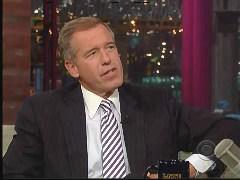
On Letterman, Brian Williams Cheers ‘Fruits’ of ‘Clinton Economy’ and Ridicules Tea Party

Appearing on the Late Show on Monday night to plug his Friday night Dateline on the 5th anniversary of Katrina, NBC Nightly News anchor Brian Williams bizarrely asserted “we’re still enjoying the fruits really of the Clinton economy,” claimed Tea Party activists who say “we want our country back” want it back “from the Trilateral Commission” and ridiculed their presumed hypocrisy as he insisted “you see a lot of signs, ‘Federal Government Out of My Social Security,’ ‘Federal Government Out of My Medicare and Medicaid.’ But for the federal government, of course, those programs would not exist.” Plus, he passed along how “I’m hearing a few people say” that President Barack Obama won’t run for re-election because he “wants to somehow transcend the presidency,” citing a British columnist who contends he was “never supposed to be an ordinary President.” Williams considered the possibility Obama could be as consequential as Jimmy Carter or Bill Clinton: “Jimmy Carter converted the post-presidency, redesigned the idea of an ex-President. Solving diseases and bad elections around the world. Bill Clinton with the Clinton Global Initiative trying to do the same thing.” When David Letterman raised the disparity between gluttonous Americans and kids starving around the world, Williams rued self-centered Americans as he incongruously touted: “We’ve had a good run here. We’re still enjoying the fruits really of the Clinton economy.” Huh? The current economy is doing well? And I thought the line was that Bush drove the economy into the ditch and we’re all being saved by Obama? (Or was he saying the Clinton years made us selfish?) Letterman soon wondered: “When they say ‘we want our country back,’ who, what, what are they talking about?” That prompted an answer from Williams which sounded more like derision than impartial reporting: “If you ask them, they would say from, ‘from the Trilateral Commission, from the big bankers, from the Council on Foreign Relations.’” Williams sounded like he’s still living in the 1980s. The condescending duo soon latched on to supposed Tea Party hypocrisy, which really just proved their hostile naivete as Williams showed quite an imagine as to the signs held up at Tea Party events and dismissed it all as simply anger caused by people upset by the bad economy: DAVID LETTERMAN: And again the popular inconsistency that is cited is “we don’t want the nationalized health care. But by god we still want our Medicare and our Medicaid.” How do they reconcile that? BRIAN WILLIAMS: Well, you see a lot of signs, “Federal Government Out of My Social Security,” “Federal Government Out of My Medicare and Medicaid.” But for the federal government, of course, those programs would not exist. A lot of it is just raw anger being translated onto signs and in slogans because people are on the downside of a bad economy. So much for “still enjoying the fruits of the Clinton economy.” From the Monday night, August 23 Late Show with David Letterman on CBS: DAVID LETTERMAN: There are two food channels, two food networks. One’s motto is “Stay hungry.” “Stay hungry.” There are cupcake shows, there are cupcake wars, there are cake shows, there are let’s build a cake. “Who can build a cake that looks more like a reclining chair?” And then there’s one show where a guy goes out and eats as much as can. “Bring me all the food in your house. I’ll eat it.” Three million people in this country do not get enough to eat and every six seconds, an infant in this world dies of starvation. How, how do you explain the disparity? BRIAN WILLIAMS: Ask your friends at the World Food Program and they’ll tell you the same thing. We’re a highly generous nation. And we like to think of ourselves as a very generous people. But we’ve had a good run here. We’re still enjoying the fruits really of the Clinton economy. And an ethos — I still come back to this that says you’re the star. It’s about you. Listen to the commercials on all those channels and the message is all in the first person in ways we never ever used or would dream of in the time of say Mad Men, for a modern television reference. So I think it’s that. I think out of sight, out of mind, however, is what sends children around the world to bed hungry and kills them ultimately. …. LETTERMAN: Now when the Tea Party formed, or when I think it formed, or when I read about the formation of it, I thought this is great. This is great. People have gotten together and said “holy god, we’ve lost all our money, our pension funds are gone. Nobody seems to know where the money goes. The government raises all this money to bail out huge corporations, our money is still gone. Our retirement funds, everything is gone. We don’t like this. We think we can do a better job. We’re going to form another political party.” That’s great. That’s all part of the luxury of being born in this country. You can do that. You should do that. We thrive on that sort of thing. Now I hear them saying things like “we want our country back.” And I’m having trouble deciding who took it, where did it go. You know, when they say “we want our country back,” who, what, what are they talking about? WILLIAMS: …You’ve latched on Dave, in what is Topic 5 for those playing our home game, you’ve latched on to sloganeering, which is as fine as an American tradition as any Tom Jefferson was involved in. And it makes people feel better to say “take our country back.” If you ask them, they would say from, “from the Trilateral Commission, from the big bankers, from the Council on Foreign Relations.” …. LETTERMAN: A friend of mine, I said there’s going to be a Tea Party convention up the road. I said go there and let me hear what they’re saying. Do they have a platform? Do they have solutions? And she said “well, no, not so much. It was more about we want our country back and are you with us and this and that and attracting support.” Which I understand is part of a growing movement. But to get any kind of traction, don’t you want to hear, oh here’s what we’re going to do different. I mean let’s face it, you could get elected, Harry Truman could get elected, and because of the politics of the day and the bureaucracy, it’s going to be a pretty tough slog for anybody. WILLIAMS: …People’s anger goes to their money. They do kind of generically want control back. They see a government so big and yet a government that says, “wait a minute, stop an oil leak a mile down under the water. Oh, we have nothing for that, that’s BP’s technology. We’re going to put an admiral here in charge and watch BP for you, but I swear we’ve got this covered.” LETTERMAN: And again the popular inconsistency that is cited is “we don’t want the nationalized health care. But by god we still want our Medicare and our Medicaid.” How do they reconcile that? WILLIAMS: Well, you see a lot of signs, “Federal Government Out of My Social Security,” “Federal Government Out of My Medicare and Medicaid,” but for the federal government, of course, those programs would not exist. A lot of it is just raw anger being translated onto signs and in slogans because people are on the downside of a bad economy. …. WILLIAMS: I think you’re going to see anger, in some form or fashion, translated at the ballot box. LETTERMAN: And projecting from that, are we looking at a one-term President? WILLIAMS: You know what, and I think the British Telegraph last night online there was a column saying he wants to be. And I’m hearing a few people say this, that he wants to somehow transcend the presidency. He was never supposed to be, or so this columnist’s theory goes, never supposed to be an ordinary President. And so this would be extraordinary to not do the expected thing and run for a second term. To kind of be a different kind of figure. Jimmy Carter converted the post-presidency, redesigned the idea of an ex-President. Solving diseases and bad elections around the world. Bill Clinton with the Clinton Global Initiative trying to do the same thing. So I’m not putting any credence in this column. I think we have to assume, because he’s a politician and he’s an incumbent President, he is running for re-election.
See the original post:
On Letterman, Brian Williams Cheers ‘Fruits’ of ‘Clinton Economy’ and Ridicules Tea Party

The Marijuana Lawyer of Orange County, California

Chris Glew in the best marijuana lawyer in the OC. added by: RubyVideo

Venezuela, more deadly than Iraq

CARACAS, Venezuela — Some here joke that they might be safer if they lived in Baghdad. The numbers bear them out. In Iraq, a country with about the same population as Venezuela, there were 4,644 civilian deaths from violence in 2009, according to Iraq Body Count; in Venezuela that year, the number of murders climbed above 16,000. Even Mexico’s infamous drug war has claimed fewer lives. Venezuelans have absorbed such grim statistics for years. Those with means have hidden their homes behind walls and hired foreign security experts to advise them on how to avoid kidnappings and killings. And rich and poor alike have resigned themselves to living with a murder rate that the opposition says remains low on the list of the government’s priorities. Then a front-page photograph in a leading independent newspaper — and the government’s reaction — shocked the nation, and rekindled public debate over violent crime. The photo in the paper, El Nacional, is unquestionably gory. It shows a dozen homicide victims strewn about the city’s largest morgue, just a sample of an unusually anarchic two-day stretch in this already perilous place. While many Venezuelans saw the picture as a sober reminder of their vulnerability and a chance to effect change, the government took a different stand. A court ordered the paper to stop publishing images of violence, as if that would quiet growing questions about why the government — despite proclaiming a revolution that heralds socialist values — has been unable to close the dangerous gap between rich and poor and make the country’s streets safer. “Forget the hundreds of children who die from stray bullets, or the kids who go through the horror of seeing their parents or older siblings killed before their eyes,” said Teodoro Petkoff, the editor of another newspaper here, mocking the court’s decision in a front-page editorial. “Their problem is the photograph.” Venezuela is struggling with a decade-long surge in homicides, with about 118,541 since President Hugo Ch