Black folks sho’ like they social media! Black People Use Instagram And Twitter More Than White People Via BetaBeat reports: The Pew Internet & American Life Project released a new survey on the demographics of social media users yesterday. The nonprofit, nonpartisan “fact tank” says its findings are the “first reportable” survey that it’s put out comparing whites, African-Americans and Latinos on Pinterest, Instagram and Tumblr. But if you’ve been paying attention to shifting demographics, the results shouldn’t surprise you. Pew surveyed 1,802 Internet users, between November 14 and December 9, 2012. (There weren’t enough Asian American respondents to draw statistically reliable conclusions.) Twenty-six percent of black Internet users reported using Twitter, higher than Hispanics (19 percent) and whites (14 percent). The results are similar to Pew’s report from 2011, expect the number of white users has grown. But Pew also reported a similar breakdown for Instagram: among the Internet users surveyed, 23 percent of blacks, 18 percent of Hispanics,and 11 percent of whites reported succumbing to the new narcissism. There was less of a racial discrepancy with Tumblr: 8 percent of Hispanic, 6 percent of white, and 5 percent of black Internet users reported microblogging. In terms of Pinterest: 18 percent of white respondents, 10 percent of Hispanic and 8 percent of black respondents use the service, although the most notable breakdown continues to be female Internet users (25 percent) versus males (5 percent). A subtle hint to “new Internet” startups like the Svtle, Medium, and App.net’s of the world: if this is how social networks adoption evolves over time, you might want to diversify your “alpha geeks.” So long story short, whether you’re black or white, if you’re tech savvy or into celebrities, yo’ azz is on Twitter! Do you agree with these findings? Discuss…
The biggest upset of this year’s Oscars took place weeks before the actual ceremony, when Zero Dark Thirty helmer Kathryn Bigelow was snubbed for a Best Director nod. Conventional wisdom holds that debates about torture and political bias in the Osama Bin Laden thanato-pic, which began weeks before the film’s release, derailed Bigelow’s chances at a second statuette. But the bigger story – one that’s hardly been told – is that Bigelow’s partnership with the Central Intelligence Agency during the production of ZDT inadvertently shined an unwelcome spotlight on the military-entertainment complex: the surprisingly close and definitely reciprocal relationship between Hollywood and the Pentagon. If, as some have alleged, the CIA did share confidential information with Bigelow and ZDT screenwriter Mark Boal – or lied to them – about the role of torture in the manhunt for Bin Laden, that’s certainly cause for debate, censure, and possibly even stronger measures.(Right.) But it’s not just the isolated cases of Bigelow, Boal and their sources that merit closer political scrutiny: It’s time we took a good, hard look at how the military-entertainment complex operates. Cooperation between Hollywood and the military brass goes back to the 1920s, when the Pentagon helped produce Wings , the first Best Picture Oscar-winner. The relationship between the studios and the armed forces has waxed and waned in the decades since, but tends to get cozier in times of conflict. During World War II, for instance, the Department of Defense enlisted Hollywood as its virtual press agent: one Pentagon memo called wartime Disney shorts aimed at children – tomorrow’s recruits – “an excellent opportunity to introduce a whole new generation to the [newly] nuclear Navy.” According to The Hollywood Reporter , it wasn’t until the 1980s, after memories of Vietnam had begun to fade, that “a steady growth [occurred] in the demand for access to military facilities and in the number of films, TV shows and home videos made about the military.” Sure, the decade saw the release of a number of searing films about Vietnam, such as Platoon and Full Metal Jacket , but most of the military-themed films fed to the public were hyper-macho, bazooka-toting fantasy fare like Top Gun , Red Dawn , Rambo II , and Predator . That increasing synergy between Hollywood and the Pentagon led to the current military-entertainment complex in which studios get to use taxpayer-subsidized military locations, equipment, personnel, and expertise in exchange for giving the military script approval. In this disproportionate exchange of power, the studios get significantly reduced production budgets, while the Pentagon gets to harness the power of cinema (and television) to advance a pro-war, pro-military agenda where multiplexes, flat screens and PCs become virtual recruitment offices. A prime example of this dynamic at work was last year’s Navy SEAL porn flick, Act of Valor , which hit theaters just a few months after SEAL Team Six assassinated Bin Laden. As a film drafted within the Pentagon and pitched to studios — a reversal of standard operating procedure — Act of Valor hails back to the days of World War II, when the military enlisted Hollywood in the production of naked propaganda. (In an inspired but ultimately unsuccessful move, active-duty NAVY Seals also made up the cast.) The film was received as the propaganda that it was; the San Francisco Chronicle wrote in its review that ” Act of Valor is intended to wow audiences with high-test action while planting a giant wet kiss on the smacker of the U.S. military – and it scores at both tasks.” The Military-Entertainment Complex doesn’t just produce overt propaganda, by the way. It has also had a hand in mindless, seemingly apolitical popcorn movies. Take Battleship , director Peter Berg’s board game-based stinker from last summer. (The picture is noteworthy for practically ending the big-screen dreams of Taylor Kitsch and Rihanna .) Along with Act of Valor and the upcoming Captain Philips and Lone Survivor , Battleship was one of four films that the U.S. Navy had a hand in producing last year. U.S. Navy documents, acquired through a Freedom of Information Act request via Muckrock (where you can view them in their entirety), show that the Department of Defense’s decision to work with Berg and Universal hinged on one main question: “Do we believe that [the movie] could have a positive impact on recruiting?” The Navy concluded yes, confidently declaring, “ Battleship will certainly continue to be a conversation starter that carries our ‘brand’ to many Americans who aren’t familiar with their Navy.” Apparently unconcerned that Battleship is about naval forces battling an alien invasion, Navy officials got Universal to agree “to consult with the DoD Project Officer [the technical advisor] in all phases of pre-production, production, and post-production that involve and/or depict the U.S. military” in order to ensure that the script “positively represents our service and our Sailors” and “accurately portray[s] the Navy.” Specifically, that meant the Department of Defense had veto power over every word of the script, with any military-related changes having to go through another approval process. The DoD also mandated contractually obligated screenings of the rough cut, when changes to the film could still be made, as well as a screening of the final cut in Washington, D.C., before the film’s theatrical release. The Department of Defense also insured that its public affairs personnel were able to take pictures and videos of the film’s cast, crew, and sets and were granted full permission to use those images, as well as any of the film’s marketing materials. The Department of Defense Production Assistance Agreement states that the Navy would employ those pictures and videos solely for internal use, but doesn’t guarantee that they won’t be visible to the public. “Some of the imagery may be viewed by the general public if posted on an open DoD web site or on ‘The Pentagon Channel,’ or other publicly-accessible media source,” states the agreement, opening the door to use those backlot shots as a recruitment aid. As if life as a Navy sailor had anything to do with a mission to destroy an alien mothership hovering over Hawaii. In the case of Battleship , the Navy reportedly agreed to participate because “whether or not we supported Battleship , the film was going to be made – it was going to carry our brand and represent who we are to the American people.” That would have been an unfavorable scenario for the Navy, but also an extremely unlikely one, since Battleship ’s production budget – already $209 million with the help of the Navy’s resources, including props, backgrounds, extras, and technical expertise – would have probably been too prohibitive had Universal been forced to bear all those costs. The Navy also considered the question “Can we support a film without impacting our operations?” It answered for itself: “Because filming took place on top of already scheduled training events, it did not impair the exercise and there was no cost to the Navy or American taxpayers.” But the lack of any immediate or upfront costs in this one case doesn’t address the questions of why citizens should subsidize Hollywood films – since all the military expertise and materiel appearing in these films are paid for with taxes – or how Americans would benefit from publicly funded propaganda for state-supported violence. In an interview with the Los Angeles Times , an Army spokesman indirectly responded to those concerns, stating, “We [the military] get asked all the time, ‘Why do you market?’ We’re a nation at war going on 11 years, which is … the longest period of consistent conflict that the U.S. Army’s ever been involved in”. Given the recent news that military suicides surpassed combat deaths and surged to a record high in 2012 and that sexual assault remains a disturbingly frequent and unpunished behavior within the armed forces, you can expect Pentagon brass will be looking for more positive depictions of the lives of U.S. soldiers and sailors in the coming months. And as studio budgets continue to rise and military enlistment continues to decline, neither Hollywood nor the Pentagon has any reason to disengage from the military-entertainment complex. And if studios are going to continue to get into bed with the military then taxpaying moviegoers have a right to know when they are being bombarded with propaganda that they’ve essentially financed. A modest step toward greater transparency – one that’s easy and cost-efficient to boot – would be adding a disclosure tag at the beginning of movies that have involved the participation of the armed forces. The Department of Defense already mandates that all movies the military helps to produce must thank the relevant branch of service, but that acknowledgement typically occurs at the very end of the closing credits. Such a disclosure tag wouldn’t just provide a franker context for the film to come. Given the Pentagon’s less-than-stellar track record with film production, it would also serve as a warning to audiences that they should lower their expectations. Now that’s patriotism. Inkoo Kang is a film critic and investigative journalist in Boston. She has been published in Indiewire, Boxoffice Magazine, Yahoo! Movies, Pop Matters, Screen Junkies, and MuckRock. Her great dream in life is to direct a remake of All About Eve with an all-dog cast. FOIA battleship Follow Inkoo Kang on Twitter. Follow Movieline on Twitter.
The Death Star, undoubtedly a worthwhile undertaking but not on the Obama administration’s radar, is now on Kickstarter if you want to help build one. A recent White House Death Star petition was denied, citing Obama’s “we don’t blow up planets” political stance and the potential fiscal nightmare. Now, a new Kickstarter project wants to pick up those plans, using an open source design effort and trying to raise funding to help make it happen. A LOT of funding. The project has a $30,000,000 funding goal, which would be used to create “more detailed plans” than the initial design the team currently has . Yes … 30 million just to design the thing. No one said it would be easy, or that the potential defense system is without flaws. As we know, a single X-Wing fighter can basically defeat the thing. If the Kickstarter project reaches its long-term goal – $850,000,000,000,000,000 – plans will actually be put to use building a full-scale, working Death Star. They hope to have the project up and running by December 2015. No word on whether it would be used to protect the whole world or just the U.S. Something for sexy beast Kim Jong Un to ponder before his next failed missile test or scary / cheaply produced anti-American North Korea video .
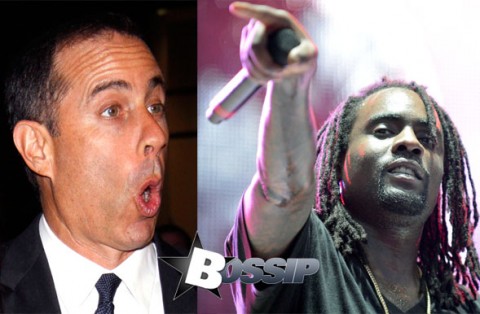
Move over Drizzy, there’s a new Jewish rapper in town. Via Page Six reports : Jerry Seinfeld wants to be master of a new domain: rapping. The comedian is currently working on an album with hip hop star Wale. Wale already released a Seinfeld-themed concept album, “The Mixtape About Nothing,” back in 2008, but now he’s finally connected with the funnyman himself. “Wale called me, he came to my show, we hung out a little bit,” Seinfeld said in a video posted by DJ Omega on Youtube. “He wanted me to do something with him. I didn’t understand it, but he did.” Seinfeld’s wife Jessica, a Wale fan, also encouraged the project. “We’re living together, she’s into him, he’s into me, and I didn’t know about the whole thing,” he said. The duo have since spent time in a Philadelphia recording studio, but there’s still no word on when fans can expect the tracks to drop. Sounds like Seinfeld isn’t too enthused about this. Guess Jessica wears the pants in that family! For some reason this whole project reminds us of our homies at BibleRaps.com and this video they did about how hip-hop created common ground for Blacks and Jews. Check it out below: Thoughts?
This guy McAfee was ballin’ out of control and these are the baddest 7 hoes he could find? SMH. Via RadarOnline reports : Billionaire anti-virus software pioneer John McAfee had a harem of seven women whom he admitted to hiring, living with him full-time in Belize as part of a “social engineering project,” and RadarOnline.com has photos and details straight from the source himself. John, 67, published a post on his blog Sunday titled “The Girls” in which he showcased his “core seven” – who were found through a local bar owner – and claimed the group was accessing private government information. McAfee, known for his bizarre and outrageous behavior, shows he hasn’t changed in describing his harem. “Paz owns Lover’s Bar in Orange Walk and is known throughout Belize as a master at locating human resources,” John wrote. “I would tell Paz the specifications: level of intelligence, education, cultural refinement, family connection, age, looks, experience, etc., and Paz would locate for me. I would then feel the person out, and if comfortable, explain the project and hire them.” The photos John posted on his blog show an assortment of ladies, sometimes hugging or kissing him, but mostly hanging out in bikinis with each other and lounging around the house. As RadarOnline.com previously reported, after running from authorities for a month, John was arrested in Guatemala in December and is now living back in Portland, Oregon. “With the assistance of these girls, it would have taken two years to prime the socially engineered system that I put into place in Belize,” he wrote on the blog. “I encouraged all of the girls to hang out together and become friends, where possible. It was easier to keep tabs on someone’s actions if others were watching, or if a shared camaraderie encouraged the sharing of intimate secrets. All the girls told me the other girls’ secrets.” John’s bizarre behavior doesn’t fail to fascinate and so much so, that Hollywood movie producers have been scrambling to snap up the rights to his life story. This guy grosses us out. And even more so when you read his blog about the girls. Hit the flip for more pictures of the ladies along with descriptions from McAfee.
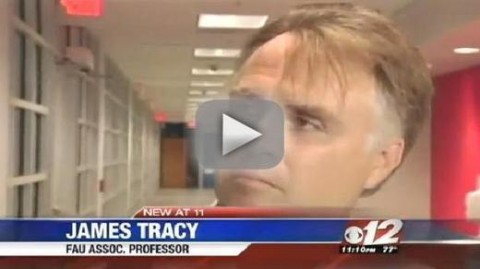
A media professor at Florida Atlantic University won’t apologize for questioning the Sandy Hook school massacre, but denies he is fostering a conspiracy theory. James Tracy wrote on his personal blog that believes the events that unfolded in the Newtown, Conn., elementary school did not happen as we think – if at all. James Tracy Newtown Conspiracy Theory “While it sounds outrageous, one is left to inquire whether the Sandy Hook shooting ever took place,” he writes, suggesting Newtown didn’t happen as reported. He suggests there were multiple shooters and that the number of dead is incorrect, and that the government may have brought in actors to add drama. Tracy opines that “media coverage of the massacre of 26 children and adults was intended primarily for public consumption to further larger political ends.” The academic, also known for questioning authority and media regarding 9/11, the Oklahoma City bombing and the Aurora massacre, is not backing off either. When questioned about his theories by a local news reporter, Tracy responded: “The whole country mourned about Sandy Hook, but yet again the investigation that journalistic institutions should have carried out never took place, in my opinion.” The 47-year-old added that, “As a society we need to look at things more carefully. Perhaps we as a society have been conditioned to be duped.” Speaking on behalf of Tracy, Peter Phillips, president of the Media Freedom Foundation and Project Censored, said in a statement to Yahoo News: “James Tracy isn’t promoting a ‘conspiracy’ theory regarding Sandy Hook, but rather saying the media distorts the news, and doesn’t follow up on important questions.” “There were reports of more than one shooter in the Sandy Hook case.” “Tracy is not denying that it happened, but he is saying that when such events do happen it is the responsibility of the media to fully investigate all aspects of the story.” The media sensationalizing tragedies is certainly a worthwhile topic, but if that’s all he meant to imply … why not just write what that statement laid out?
Steven Soderbergh has pushed against the limits of Hollywood’s sexual mores his entire career. His debut, sex, lies, and videotape , was a study in voyeurism and sexual dysfunction. He blurred the line dividing the feature film and porn video worlds with The Girlfriend Experience , which starred adult actress Sasha Grey. His last film, Magic Mike , subverted the male gaze by turning all eyes, male and female, on the rock-hard and very hairless abs of dude-strippers. Yet even Soderbergh has had trouble financing his next and rumored-to-be-last project, Behind the Candelabra , a biopic of Liberace starring Michael Douglas as the flamboyant pianist and Matt Damon as his significantly younger live-in lover. The veteran director only wanted $5 million to make his long-delayed film, but, as he told The Wrap , “They said it was too gay. Everybody. This was after Brokeback Mountain , by the way. Which is not as funny as this movie. I was stunned. It made no sense to any of us.” Luckily for Soderbergh, HBO believed enough in the project to greenlight it. But that still leaves the question: What does “too gay” mean in the Hollywood of 2013? Sadly, it doesn’t seem too different from what it meant fifty years ago in the Hollywood of 1963: Few gay protagonists can be normal, relatable people living in a world we recognize. In the real world, gay men and women are our friends, family, neighbors, and co-workers. But in the movies, that might be “too gay.” So screenwriters have come up with a multitude of ways to make homosexuality less immediate and less “threatening.” When they are the protagonists, gay characters vanish from everyday life: by dying, by disappearing into history, by rarely having sex, by committing evil, by being more flamboyant than pink rhinestones on a drag queen’s tiara. They may be admirable, certainly sympathizable, but they still too frequently lack ordinary humanity. The supposed breakthrough film Brokeback Mountain , for instance, marginalized homosexuality by situating its characters in a faraway setting and in a culture that was on the cusp of disappearance. And it fatally asserted its heterosexuality by having straight actors play gay, so that audiences never forget that a man kissing another man is all just play-acting. Little seems to have changed since Brokeback . The majority of studio movies with a gay male protagonist since has either taken place in Mad Men days ( Milk , Howl , A Single Man ) or featured same-sex sociopaths ( I Love You Philip Morris , Bruno ). It’s no better for lesbians, who watched one of their filmic counterparts in The Kids Are All Right have sex with a man, because of course that’s exactly what the female gay experience is all about. Equally alien to the lives of average gay women is the romance Jack and Diane , which finds one of its two budding lovers turning into a werewolf. And, it bears repeating, all of the main characters in these movies are played by straight actors. Luckily for gay viewers, the indie world is brimming with movies that are “too gay” and proud of it. The last two years alone have seen critical darlings like the sweet romance Weekend , the addiction drama Keep the Lights On , and the gay adoption saga Any Day Now . Also welcome and necessary are the coming-of-age tale Pariah and the Sex and the City -style Noah’s Arc , which feature all-too-rare gay characters of color. It’s almost surprising that Soderbergh’s biopic got the “too gay” chuck, since the subject matter – a mincing narcissist with a love of glittered capes and a barely legal pool-boy dying tragically from AIDS – is brimming with the usual defenses Hollywood is always eager to employ against normal gay existence. So one has to wonder if it isn’t the flamboyance that studios found “too gay,” but Soderbergh’s refusal to turn Liberace and his partner Scott Thorson into caricatures, to “take the relationship seriously.” After all, that might be too revolutionary for Hollywood. Maybe in 2063? Inkoo Kang is a film critic and investigative journalist in Boston. She has been published in Indiewire, Boxoffice Magazine, Yahoo! Movies, Pop Matters, Screen Junkies, and MuckRock. Her great dream in life is to direct a remake of All About Eve with an all-dog cast. Follow Movieline on Twitter .
Despite the fact that Princess Leia is every bit as iconic as Luke Skywalker and Han Solo , the fact remains that the entire Star Wars series has a total of five women with speaking roles, and only three of them — Padme/Amidala, Leia, and Anakin’s mother — count as major characters. It’s no wonder then, that Anakin had to be conceived by the Force itself, since apparently, there aren’t enough women in the Star Wars galaxy to populate a trailer park, much less a multi-planet republic, by normal means. But could the force finally be with the double-X chromosome squad for a change? If a cryptic tweet from Slashfilm ‘s Peter Sciretta hasn’t been misunderstood, the answer is a solid “possibly”! ‘Star Wars Episode 7’ Plot Possibilities Now obviously, we’re still very much in early speculation mode for Star Wars Episode VII . Will it be burping- and Jar Jar-free? Will it be based in-part on the Expanded Universe? Will we see aging stoner Harrison Ford playing an elderly Han Solo, like The Dude ? Who knows?! But speculation is the fuel on which the Internet runs, so far be it for me to say anything other than ‘yes, all those things will be true.’ The biggest mystery is, of course, just who the new films are going to be about. Everything, from the children of our original heroes, to the further adventures of Geriatric Luke, has been baselessly suggested, but Disney is keeping mum for now. Of course, even if Disney is bringing the full power of their enormous secrets-keeping machine to bear (seriously, how did they keep the Star Wars deal a secret for so long?), now that Episode VII is almost certainly in the full flower of pre-production, tidbits are bound to come out. Enter Sciretta, who tweeted this circumspect comment Thursday afternoon: Who said the lead character in Star Wars Episode VII is going to be a male star? :)— Peter Sciretta (@slashfilm) January 03, 2013 According to a Slashfilm Star Wars round-up post by Germain Lussier on Friday morning, Sciretta asked that this tweet be added to the article, but that “he couldn’t say anymore,” which strongly suggests he knows something specific, or at least wants us to think he does. The comment could be taken in any number of ways, of course. He might simply mean they’ll be casting a relatively unknown male actor in the lead. But the fact that he felt the need to specify male, rather than leave the question of gender blank, suggests the tantalizing possibility of a female lead. And yes, the sound you hear is millions of voices, crying out, “About damned time.” As for who this character could possibly be, don’t look to the established Star Wars Expanded Universe for answers. The official canon is incredibly convoluted at best. (See for yourself here .) It’s a tiered system in which the movies, and George Lucas himself, overrides everything else. Sure, we might see fan favorite Mara Jade, or even Leia and Han’s daughter Jaina, but given that public statements suggest the new films will plot their own course, I expect a completely new character. Assuming for a moment that Episode VII will mine the Expanded Universe, who would you like to see take the postulated female lead? Let us know, and feel free to argue about continuity, in comments. Ross Lincoln is a LA-based freelance writer from Oklahoma with an unhealthy obsession with comics, movies, video games, ancient history, Gore Vidal, and wine. [ SlashFilm ] Follow Ross Lincoln on Twitter. Follow Movieline on Twitter.
We all remember Good Will Hunting as the touching drama about a troubled genius who works as a janitor (and something about apples, right?) The combination of an Oscar-winning script by Ben Affleck and Matt Damon , and Gus Van Sant , a director who, up to that point, had a career consisting of expert societal button-pushing, made magic. But as touching as the movie turned out, it’s important to note how different it could have been. Violently different. It’s well known that the original screenplay for Good Will Hunting was a thriller in which the genius main character was recruited by the FBI. Thank the gods that changed, but perhaps it was that genesis which led to Mel Gibson being first at bat to direct the film. Yep, it’s true. The news comes courtesy of Boston Magazine (via Movies.com ), which has published an extensive conversation with the cast and crew of the film in honor of its 15 th anniversary. Initially, Affleck and Damon, desperate to get the thing made, asked Kevin Smith if he’d direct it. Smith turned it down, but he passed the script to Harvey Weinstein , who positively flipped for it. From there, Gibson was brought into the project. “We met with Mel Gibson,” Affleck, who’s been doing a spot-on Weinstein impersonation since he made Good Will Hunting , said, “and Braveheart had just come out, and was as hot as could be. But we hadn’t seen Braveheart and Harvey was like, ‘YOU HAVEN’T SEEN BRAVEHEART? F*CKING LIE TO HIM AND TELL HIM YOU LOVE BRAVEHEART .’ So the first thing we said was, ‘We just want to tell you how much we loved Braveheart !’” Knowing what we now know about Mel’s mood swings, they probably made the right choice. Alas, a Gibsonized version of Good Will Hunting wasn’t in the cards. Mel dragged his feet developing the script for several months and Damon eventually had to ask the volatile filmmaker to let them take it elsewhere. “Matt at one point said directly to Gibson, “Look, man. We’re getting too old. If this keeps going by, Ben and I can’t play these parts. Is there any chance you’d just let it go?” And to Mel’s credit, he said, “I totally understand what you’re saying.” That was a real stand-up thing to do.” Well yeah, but Mel knows a thing or two about the dangers of getting too old for this shit. Obviously, this turned out to be for the best, at least if the film’s two Oscars are any measure. But I can’t help but feel that the world was denied something kind of magical on the day Gibson let them take their script to another director. Let’s have a moment of silence then, for the hyper-patriotic revenge obsessed version of Good Will Hunting that never happened. Ross Lincoln is a LA-based freelance writer from Oklahoma with an unhealthy obsession with comics, movies, video games, ancient history, Gore Vidal, and wine. [ Boston Magazine , Movies.com ] Follow Ross Lincoln on Twitter. Follow Movieline on Twitter.