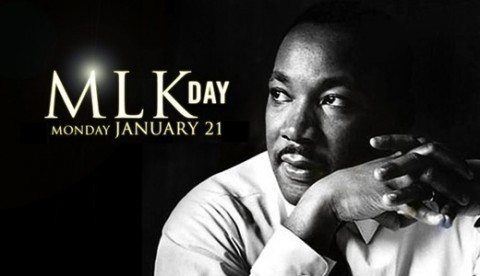
Although his actual birthday was January 15, American icon Martin Luther King, Jr., celebrates it today like few others – with a national holiday in his name. A clergyman, activist, and leader in the quest for racial equality in the U.S., he was best known for civil rights advocacy using nonviolent civil disobedience. He would have been 84 this month. MLK Jr. was killed by an assassin in 1969 at the age of just 39, but his legacy has endured, even grown in death. President Lyndon Johnson would not have signed the Civil Rights Acts of 1964 and 1968 – some of the most significant policy changes in history – were it not for MLK. King won the Nobel Peace Prize in 1964. He was posthumously given the Presidential Medal of Freedom in 1977 and Congressional Gold Medal in 2004. Martin Luther King, Jr. Day was established as a U.S. federal holiday in 1986; hundreds of streets in the U.S. have been renamed in his honor. Today, MLK Day happens to fall on the same day as the second inauguration of the first African-American President of the United States, Barack Obama. Somewhere, you’d have to think King is smiling at the progress he helped bring about over half a century, even if an enormous amount remains to be done. This year also marks the 50th anniversary of King’s most famous address, the “I Have a Dream” during the March on Washington, August 28, 1963. Watch that moving, historical moment below: Martin Luther King Jr. “I Have a Dream” Speech
The Spring Breakers trailer has FINALLY arrived, and it’s even more packed with girls and guns and bikinis and James Franco ‘s grimy braided hot mess than I’d ever dreamed. Also, the words “Spring Break” are spoken so many times in these two minutes of mayhem (I count 11 feverish utterances) that it’s seeping into my subconscious. Watch and whet your whistle for the March 22 opener after the jump and start working on your Franco-as-Alien Halloween costumes now. Franco may be the bizarro Riff Raff-ian centerpiece of Harmony Korine ‘s pic (shout out to Gucci Mane in the trailer!) but our restless antiheroines are played by Selena Gomez , Vanessa Hudgens , Ashley Benson , and Rachel Korine, who attempt to finance the best Spring Break ever by robbing a fast-food joint before Franco comes into the picture and makes their Vice Magazine -esque fantasies come true. [via MTV ] Follow Jen Yamato on Twitter . Follow Movieline on Twitter .
The Academy Award nominations brought good news and bad news to one of my favorite movies of the year. Les Misérables eight nominations including Best Picture, Actor, for Hugh Jackman , and Supporting Actress, for Anne Hathaway . That ain’t chopped liver, but the highly publicized snubbing of its director Tom Hooper along with its absence in all-important bellwether categories like screenplay and editing means what was once considered a front runner is now a real long shot to actually win Oscar’s top prize. You have to go all the way back to 1931’s Grand Hotel to find a Best Picture winner that didn’t have at least one of those three nominations. In the face of those daunting stats, Les Misérables would be a shocking Best Picture winner, but if any movie deserves the upset , it’s this one. A certified box office hit domestically, it just opened to huge numbers over the weekend in England and looks to be a continuing international smash. “Do You Hear The People Sing? is not only the stirring anthem from Hooper’s adaptation, it’s an apt metaphor for the impact of a revolutionary film about revolutionary spirit. Hooper took great risks in the telling of Les Misérables — and he succeeds. Twenty-seven years in development, the film looked like it might never be made when The King’s Speech director came up with the novel idea of shooting the cast’s musical performances live instead of taking the usual movie-musical tack of pre-recording the songs and dubbing them in later. Without that artificial technique hampering the actors, Hooper and the creative team from the original musical — Alain Boublil, Claude-Michel Schoenberg and Herbert Kretzmer — along with the adaptation’s screenwriter, William Nicholson, found a way to meld the dramatic impact of Victor Hugo’s classic, gritty novel with the theatricality of the beloved stage production for a movie musical experience that hasn’t been seen on the big screen in years. Emotion is at the core of this remarkably entertaining and powerful film. Jackman , with his considerable musical chops, was the obvious choice to play petty-criminal-made-good Jean Valjean, and he delivers even in the difficult two-and-a-half-octave range the role requires. Although Russell Crowe can’t match his co-star in the singing department, he still scores as a potent Javert. Hathaway breaks hearts as the doomed Fantine, as does Samantha Barks in the role of Eponine. And though Amanda Seyfried’s portrayal of Cosette is not so dramatically challenging, she still manages to shine in the role. That said, it’s Eddie Redmayne , as Marius, who threatens to steal the whole show with an impassioned performance that heralds the arrival of a major new movie star. Hooper’s aesthetic choice to shoot the emotional moments in unrelenting close up is a good one, and this is a musical that even those who hate musicals should find satisfying in its dramatic pull and remarkable ability to move us. Oscar, are you listening? RELATED: Review: Les Misérables’ Hits High Notes, But Also Skitters Follow Pete Hammond on Twitter. Follow Movieline on Twitter.
Jennifer Lawrence appeared on The Late Show with David Letterman last night and discussed a variety of topics, most notably a photo that’s been making the rounds. Is it her ass or someone else’s? The Hunger Games and Silver Linings Playbook beauty says she has no problem admitting she’s un-photogenic, but come ON. Watch the 22-year-old star hilariously discuss her love for celebrity gossip magazines and a very, very unflattering photo of her backside she found in one: Jennifer Lawrence on The Late Show – Not My Butt! Dave and Jen also discussed her “I Beat Meryl” Golden Globe speech , their mutual disdain for all things Twitter, and how she got so good at acting. Follow the link for three more classic clips: Jennifer Lawrence on The Late Show – LIES! Jennifer Lawrence on The Late Show – Twitter Bashing Jennifer Lawrence on The Late Show – Golden Globe Speech
Now that Les Misérables is expected to surpass its opening-day box-office expectations by $5 million-10 million, director Tom Hooper could pretend that adapting the beloved musical for the big screen was a walk in the park, but he’d be lying. On Thursday, Hooper spoke to Movieline from his Sydney, Australia hotel room and likened the challenge of directing the film to the massive tanker he was watching navigate Sydney Harbor. “It was an extraordinary dance between musical structure and filmic structure,” Hooper explained in a revealing interview about the making of Les Miz . The Oscar-winning filmmaker, who’s expected to snare his second Best Director nomination on Jan. 10, talked at length about his reasons for making the movie and the challenges of pacing and editing a film that is essentially sung through from beginning to end. He also addressed criticism that he relied too heavily on close-ups in the film, divulged Eddie Redmayne’s technique for attaining such exquisite sadness in his performance of “Empty Chairs at Empty Tables” and answered the burning question of the day: whether Anne Hathaway or Hugh Jackman is a bigger musical geek. Movieline: When I saw Les Misérables in New York, I was surprised by the audience’s passionate reaction to the movie. After certain scenes and songs, they were applauding and cheering as if they were actually seeing a live performance. Tom Hooper: It’s quite extraordinary. I’ve never sat in any cinema or any premiere, or any screening of one of my films and seen a response like this. It’s like you’re at some kind of happening, some kind of out-of-body experience rather than a movie. I was at the Tokyo premiere with the Crown Prince of Japan on Monday. It was quite a formal screening and the audience went kind of crazy. The Japanese broke into a standing ovation at the end, and I was told that for people to stand in the presence of the Crown Prince without him having gotten to his feet first was a total break of protocol. Since you had the foresight to make this movie, what do you think is causing audiences to react so effusively? Actually, I want to ask you: What about the movie connected with you? I’m very interested. Oddly enough, I’m not a big fan of movie musicals, but I liked that Les Misérables wasn’t afraid to wear its heart on its sleeve, especially in a year when Lincoln and Zero Dark Thirty, which I also admire, are these relatively cool procedurals. I also thought that your decision to have the actors sing on camera paid off. There are some honest, raw performances in Les Miz and, as a result, the movie ends up being quite a cathartic experience. Yes, I think that’s the word. I always get asked, “Why did you do this film?” The very first time I saw the musical, the ending was what made me want to do the movie. There’s that moment where the hero of the story, Jean Valjean ( Jackman ), has just passed away and you hear the distant sound of “Do you hear the people singing?” — like an angelic chorus. I had a bodily physical reaction and was crying. I remember thinking what, why am I reacting this way? I was crying about my dad. My dad is alive and well and — but I couldn’t help thinking about the fact that this moment is going to come with my father. A few years ago, he went through cancer. He recovered, but when he was facing it, he told me, “Tom, I want to master the art of dying well.” And I said, “Dad, what on earth do you mean by that?” He said, “When I pass away, I want to do it in a way that’s as compassionate to my family as possible and that limits the pain they suffer. These words came to me when I was thinking about the end of this film. I thought, what’s extraordinary about Les Misérables is that it looks death square in the eye and says that if you navigate that moment with love, it’s possible to achieve a kind of peace. Valjean finds peace through his love of Cosette. He has loved this girl furiously since he met her and been a parent to her. Not only that, he’s rescued the man who’s going to marry her. He’s passed the duty of loving her on to someone else so he can leave this world knowing that she’s cared for and protected. And in the moment of his death, he’s able to tell his story. He’s able to say that this is the story of a man who turned from hating to love through Cosette. It’s like the line from “Finale”: “To love another person is to see the face of God.” It basically says that the only way to navigate our mortality, which we all face, is through love. And I think there’s something incredibly true about that message. But I think the thing that makes Les Misérables special is that it offers so many different ways in emotionally for people. It holds up a mirror to either your own suffering or the suffering of someone close to you, and it manages to process that suffering, leaving you feeling better about it by the end of the film. I’ll agree with you there. Over the past year and a half, I’ve lost a couple of friends and some people who played crucial roles in my life. So, “Empty Chairs at Empty Tables” was pretty devastating to me, but I didn’t come out of the theater feeling depressed. I felt like I’d let something go. So much of filmmaking today is avoidance basically. It’s distraction, avoidance, irresponsible fantasy. Les Misérables is somehow not that. It manages to go to the tough places. It’s escapism with a moral compass, and I’m not quite sure people are aware how difficult it was to actually get the film to do what it does. There are some scenes in Les Misérables that aren’t in the stage musical. Can you tell me about what went into your decision to make these changes? There are actually a lot of changes to the screenplay that have gone largely unnoticed. I was working with Claude-Michel Schönberg, Alain Boublil, and Herbert Kretzmer, who were the original creative team on the musical and when the changes are done in a voice that’s so identical to the way it was originally written, they’re hard to detect unless you know Les Misérables really well. Basically, we disassembled and reassembled the musical in order to improve the storytelling. One small example takes place in the factory when the fight breaks out with Fantine (Hathaway). In the musical, there is no reason why Valjean is distracted from dealing with the disruption. He simply says to the foreman, “You sort it out.” The first time I saw the musical, I had the idea: what if the thing that distracted Valjean from focusing on Fantine was the arrival of Javert as the town’s new police inspector? In that moment, he sees this specter from his past and the world falls away. He sees nothing else but that. That led to the scene in the movie where Valjean sees Javert in the factor window. By adding this moment, it better establishes the guilt that Valjean has over the death of Fantine. You upped the emotional impact of Valjean’s relationship to Fantine. Yes, and it sets up this theme about how the ghosts of the past keep coming back to haunt you. You can never be free of them. And it sets up the whole dilemma where Valjean says, “Shall I finally free myself from this past by just admitting who I really am and facing the music?” But that modification required a new piece of music to be composed that went in the middle of the factory scene that, famously, never had had anything in the middle of it. So then, we had the challenge of creating a new melody that marked the drama of that encounter between Valjean and Javert and, yet, didn’t completely fuck up the unity of the factory music. How do you accomplish that? You’ve got to pre-decide on the length of the melody that you need to express this thought, and melodic construction is not that flexible. So Claude-Michel says we can use this bit of melody and Alain works its out and gives you, say, 16 lines. But then you realize that 16 lines is too long and that we’re being repetitive. So, you go back to Claude-Michel and say, “Can you make the melody a bit shorter?” He says it either has to be 16 lines or, say, four lines to work melodically in that context. I don’t have the freedom to make it, say, 10 lines. So, we would say okay, Claude-Michel would play the piano onto his iPhone and email the recording to us so that we had a guide. And then Alain and Herbie would say what we needed to say in four lines. It was unlike anything I’ve ever done or will do because there’s this constant dance between how quickly melody exhausts itself and the amount of words you need to make the point. And I imagine that’s just the beginning of the process. That’s before you get to the edit process. Again, I’ve never done anything like it. The film is now under two-and-a-half hours, but in September it was running around two hours and 42 minutes. So, you spend a few days in the cutting room and let’s say you take five minutes out of the running time. You can’t just press play and watch your film because it doesn’t play. And the reason it doesn’t play is, wherever you changed the length, the music and the orchestration don’t work anymore. So, in order to see how you feel about the edits you’ve made, the composers have got to recompose all the bits where the lengths changed, and then the orchestrators have got to orchestrate it. We had programmers who basically programmed the music using sample sounds so that we didn’t have to spend money on orchestras. They rebuilt the programmed orchestra and then the music editors fit it to the picture. And then maybe about a week later, I could watch it and see the impact of my changes. It was an extraordinary dance between musical structure and filmic structure. Imagine what it does to pacing. With The King’s Speech , I could vary the pace of almost any scene by taking a second out here or a few frames there. In a musical, once the songs start, you can’t change the pace at all. So it was fascinating to learn how to control pace when you don’t have control of the timeline. You learn that there are points where you can actually take a little chunk out of the music, but in order to do that, I literally had to get to the point where I could read music again and read the score in order to work out what secret cuts I could take. So, you’re leaving me with the impression that making Les Misérables was like solving a Rubik’s Cube because the music and the story were so interwoven that you couldn’t just change one aspect of the movie without affecting a large swath of it. Exactly. You’re navigating whole blocks in the movie where the pace is what the music is. And, therefore, you have to use shot selection and editing to create any variations in that pace. The work involved in getting the movie to run under two-and-a-half hours was incredibly complicated. Not only does the stage musical run longer, we added material. So this movie was like an oil tanker. You’ve come in for some criticism in terms of the number of close-ups you use in the movie. What’s your response to that? I find that discussion interesting. I always give myself options. I didn’t assume that the tight close-up was the best way to do a song. So in “I Dreamed A Dream”, there was a close-up of Anne that we used but there were two other cameras shooting from other perspectives. The tight close-ups won out in the cutting room because, over and over again, the emotional intimacy was far more intense than when you go loose. In fact, in the case of “I Dreamed A Dream,” for a long time we were using a mid-shot of her at the beginning of the scene followed by a very slow track and maybe in the last quarter of the scene it was a medium close-up. And then Eddie Redmayne , who’s been a friend of mine since I worked with him on Elizabeth I , said to me: “Why aren’t you using that close-up that you’re using in that teaser trailer?” He was talking about the way you see all the muscles in Anne’s neck work as she sings and the raw power of that, and I thought, God, that’s interesting . So, it was actually Eddie’s suggestion to re-examine that scene, and the moment we put that close-up in, the film played in a completely different way. The level of emotion went up about a hundred percent. So the process of moving toward these close-ups was a process of discovery. Given the challenges that you faced, is there a scene that you’re particularly proud of? If I’m honest, it’s the final scene in the movie, because, on paper, the idea of the barricade covered in the ghosts of the fallen could be really corny and awful beyond relief. Instead, it creates this incredible emotion in people who see it. It’s something that I’m definitely proud of because, like The King’s Speech , I always knew that it was all about the end. And with Les Miz , I always knew it was about the way we go from the grief of Valjean’s death to the hope of the fallen. But it could have felt ridiculous, and the fact that we avoid the many pitfalls that existed in that scene is definitely one thing I’m at peace about. I’m also incredibly proud of what Eddie does with “Empty Chairs at Empty Tables.’ Anne is evidently miraculous during “I Dreamed A Dream,” but I do think that there’s a balance in the movie that’s corrected by how brilliant Eddie is at that point. It’s a powerful performance. Do you know how he connected to his grief in that scene? It’s palpable. He wouldn’t tell me. It’s funny with actors sometimes. One feels that it’s wrong to pry. But he did have a rather unusual idea: Because the song deals with the devastation of the loss of his friends, he suggested that he sing it three times in a row without the camera cutting. That way, the devastation he’d reached at the end of the first singing would become the beginning of the second and so on. He kept pushing himself further and further into the pit of despair. Okay, so you’ve done the Oscar jockeying, and you won. As we get into the thick of awards season, are you approaching your second time any differently? As I sit here right now with the film – it’s opening in Japan today, it’s previewing in Korea and Australia, it’s opening in America on Christmas day — I’m incredibly occupied. It’s about getting through the next few days. But ask me again when I get through this bit. Given what you went through for Les Miz , would you do another movie musical and if so, what would it be? God, I would be open to it. It’s just that this is a very special case. This is arguably the world’s most popular musical and that musical version had never been made into a film until now. There aren’t that many really great musicals that haven’t been made into films. Have you decided what’s next for you? I literally have no idea. I did such crazy hours on this film for the last year and a half. I literally worked every hour I could stay awake and, therefore, I haven’t been able to read any material or any scripts. So, it’s a completely open thing at the moment. Okay, last question: who’s the bigger musical geek, Anne Hathaway or Hugh Jackman? Well, without a doubt, Anne is the bigger Les Misérables geek. It wasn’t just that her mother was in the American tour of Les Miz , she was the understudy for Fantine. So these high points of drama marked Anne’s early life. I remember her saying that, for instance, there would be a phone call telling her that her mother was going to go on as Fantine in Washington and could Anne get there from New York in time to see her mother play the role? So there was this idea that Fantine wasn’t her Mom’s right. It was this scarce gift that occasionally she was given to play, and, for Anne the role defined a certain electricity and audacity. Hugh is different because he’s actually starred in musicals on Broadway and on London’s West End. He’s a bona-fide musical star in his own right, where a lot of Anne’s singing has been in the privacy of her own home or at the Oscars, but not something like [ Les Misérables ]. It’s not something I can say, but Hugh feels that in a way he’s been a force in revolutionizing the way you do a movie musical. And that’s something I know he finds very exciting because I think he’s a real student of the genre and has seen it from so many different sides. [ Deadline ] Follow Frank DiGiacomo on Twitter. Follow Movieline on Twitter. Read More on Les Miz: Early Reaction: Oscar Race Heats Up As NYC Screening Of ‘ Les … INTERVIEW: Samantha Barks On ‘ Les Miserables ,’ Eponine….
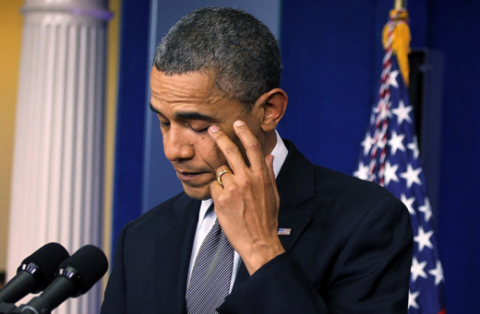
The horrific shooting at the Newtown, Conn., elementary school that left 28 dead, including 20 children, has re-ignited a polarizing debate over gun control. If nothing else, it’s time to get very, very serious about discussing the issue. Public figures immediately jumped in to offer condolences in the wake of the mass murder committed by Adam Lanza , while some called for new restrictions. Plenty of others, while clearly sympathetic to the victims of the Sandy Hook Elementary School massacre, defended gun rights and the 2nd Amendment. President Barack Obama, who cried during a press conference regarding the shooting Friday, did not touch upon the controversial issue of gun control by name. He did, though, sound a call to prevent further tragedies, regardless of politics. New York Gov. Andrew Cuomo said he was “shocked and saddened” by the tragic shooting. He said society should “unify” to “crack down on the guns.” N.Y. City Mayor Michael Bloomberg said “immediate action” was needed. Mark Kelly, husband of former Arizona Congresswoman Gabrielle Giffords, who was gravely injured by a gunman in Tucson in 2011, wrote on Facebook: “The children of Sandy Hook Elementary School and all victims of gun violence deserve leaders who have the courage to participate in a meaningful discussion about gun laws.” “How can they be reformed and enforced to prevent violence and death in America?” Many believe the CT school shooting tragedy is just the latest, preventable case of a bullied, disgrunted and/or mentally ill person taking lives that could’ve been saved. Directly or indirectly, are guns too readily available to the perpetrators? Fewer guns, tougher laws, fewer tragedies, right? Take away the availability and fewer weapons will fall into the wrong hands at the wrong times. Right? Lots of people would agree with that theory, but not necessarily a majority. The debate has been fast and furious in the past 24 hours, and not one-sided. Trending topics on Twitter included “2nd Amendment,” “NRA” and “Columbine.” For every argument about the 2nd Amendment being antiquated is a counter-argument about its necessity, and its place in the foundation of American liberty. Some gun rights advocates believe this tragedy epitomizes the need for gun rights , not gun control, as a means of protection against those who may act violently. One Twitter user wrote, “The only gun reform we need is to allow people the ability to defend themselves, not provide nut jobs with easy targets #NRA.” Another posted, “Guns don’t kill people people do! Practice the 2nd Amendment – keep your gun loaded with you at all times – the younger you are the better.” Philosophically, gun rights activists feel that gun control takes away another piece of our liberty, starting a slippery slope toward socialism and totalitarianism. From a practical standpoint, they argue that criminals will always find a way to obtain guns, and that only law-abiding citizens would abide by regulations anyway. Furthermore, they feel crimes are just as often prevented by the deterrent of gun possession, and a dangerous black market would develop in the event of tougher laws. In light of recent events, and the arguments above, what do you think? Comment and vote below: Is it time to pass major gun control laws? YES. Fewer guns, fewer tragedies! NO. It’s unconstitutional and won’t stop anything! View Poll »
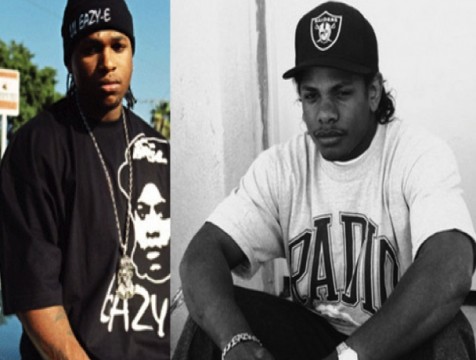
“Seeds Of Hip-Hop” Reality Show In The Works It looks like the silver-spoon spawns of hip-hop and hopping on the reality tv bandwagon. via TMZ It’s an homage to N.W.A and Run-DMC’s sperm — a brand new reality show starring the sons of rappers from the famous hip hop groups … and it’s currently being shopped to major networks … TMZ has learned. We’re told the show was created by music producer D’Extra Wiley (who was also a founding member of the 90′s R&B group II D Extreme) and will be about the boys trying to make it on their own — while trying to escape the shadows of their famous dads. It’s currently being shopped to VH1, TV-ONE, FUSE TV and BET. Pending the show does actually get picked up, we’re thinking there’s more than a few hip-hop seeds missing from this cast. Check out the roster on the flip and see what you think…
Cathie Adams, former Texas GOP chair, gave a pre-election address earlier this year, claiming that a “Marxist” President Barack Obama had “fried his brain on drugs.” Cathie Adams Accuses President Obama Of Using Drugs Via HuffPo : In a speech at a Grassroots America We The People “Call To Action” event, first reported on by Right Wing Watch, Adams embarked on a longwinded conspiracy theory about Obama enacting an oppressive “green agenda, which is Marxism.” Her claims eventually led her to talk about a ballot initiative in Colorado to legalize and tax marijuana. “And folks we’ve got to be very careful about saying ‘well, that’s not for me but you can do whatever you want.’ Folks, we have a rule of law, we have a Constitution, and those things must be upheld,” Adams said about Amendment 64, which ultimately passed. “And if we legalize it, will we empty out our jails and will we be safe for ever more? No. I’m telling you, Barack Hussein Obama has got to have a teleprompter because he fried his brain on drugs.” It’s unclear where the last claim about Obama’s drug use fits in Adams’ broader allegations of a “Marxist” or “green” agenda. Though the president has admitted to using drugs in his younger years — particularly marijuana, though also cocaine at some point — his administration has been aggressive in continuing to enforce federal laws which classify those substances as illegal. Obama hasn’t supported state efforts to legalize marijuana, and advocates of those measures remain concerned that the Department of Justice won’t back down in the face of new state laws. During her speech, Adams also criticized a “narcissistic” Obama, saying the look he gave to then-GOP presidential nominee Mitt Romney during one of the debates had made her so mad that she “wanted to go up and just smack his face.” Let’s see: Ivy League educated; senator; two-term president of the United States; smart, hot wife; two adorable, healthy kids; great speaker; fine writer; smartest guy in the room… any room; not an ounce of fat around his middle; full head of hair; tall, graceful, athletic, and generally in excellent health. Please, somebody, pass us the drugs this guy is on!
Terrence Howard joins a slew of stars in a cop caper. Also in Friday’s round-up of news, the weekend is not shaping up to be a kind one for Playing for Keeps at the box office; James Marsden is strolling toward a Walk of Shame with Elizabeth Banks ; Hyde Park On Hudson , In Our Nature and California Solo are among the weekend’s Specialty Release newcomers; and Rubberneck & Redflag head to theaters via Tribeca Film. Terrence Howard Joins Chain Gang in Prisoners Also starring Hugh Jackman, Jake Gyllenhaal, Melissa Leo, Viola Davis, Maria Bello and Paul Dano, the film follows a small-town carpenter (Jackman) whose daughter and her best friend are abducted. The cops cannot find them and he takes the law into his own hands. In the process, he comes into contact with a detective (Gyllenhaal) who oozes confidence, Deadline reports . Weekend Box Office Preview: Playing for Keeps Likely a Flop Gerard Butler’s soccer romantic comedy Playing for Keeps with Jessica Biel, Uma Thurman, Catherine Zeta-Jones and Dennis Quaid may only open in the $6 million range, THR reports . James Marsden Strolling a Walk of Shame Marsden will join Steven Brill’s Walk of Shame with Elizabeth Banks. Banks plays a news anchor who has a wild night out and is locked out on the street without money, phone, ID etc and has a series of misadventures while winding a path to the most important job interview of her life, TOH reports . Specialty Release Preview: Hyde Park on Hudson , In Our Nature , California Solo & More Oscar hopeful Hyde Park on Hudson with Bill Murray as Franklin Delano Roosevelt is this weekend’s highest profile debut in the specialty market. There’s also In Our Nature with Jena Malone and John Slattery, and Robert Carlyle headlines California Solo in a role written with him in mind. The late Ernest Borgnine stars in The Man Who Shook The Hand Of Vicente Fernandez in a role that turns the idea of celebrity upside-down, Deadline reports . Rubberneck and Red Flag Head to Theaters via Tribeca Rubberneck revolves around a workplace obsession gone wrong. Boston scientist Paul lusts after a co-worker and though at first it’s polite flirtation at first, things go south when the co-worker begins to date someone else on the job. Red Flag centers on a solipsistic filmmaker takes his independent film on tour. Hoping to escape the pain of his recent breakup. Tribeca Film picked up both films directed by Alex Karpovsky and will be released theatrically in February.
Hugh Jackman is known for his love of a good musical as much as he’s known for his portrayal of the adamantium-reinforced wise-ass Wolverine . So, it’s no surprise that he used a bit of the latter character’s blunt persuasiveness to land the part of Jean Valjean in Les Misérables . At a press conference for the hotly anticipated musical at Claridge’s on Wednesday, Jackman recalled that upon hearing from his agent that a film adaptation of the vaunted musical was in the works, he began to lobby for the part. Director Tom Hooper had barely had the chance to unpack his best director Oscar from The King’s Speech , let alone formally announce his next project, when Jackman called to arrange a meeting. Upon meeting Hooper, Jackman didn’t mince words. The straight-talking Aussie told the British filmmaker: “Mate, I’m going to audition for you,” and persisted with both Hooper and Les Misérables ’ legendary theater producer, Sir Cameron MacKintosh until the deal was sealed. “I’ve dreamt of being in a movie musical for a long time. For some reason I never even thought Les Mis would be possible,” Jackman said. “It was so iconic, the role wasn’t even on my radar.” Once cast, Jackman said that Hooper issued a clear directive to him about his coming portrayal of Valjean: “I want you unrecognizable. If you’re recognizable, I want your friends to think you’re sick,” the director told him. Upon which Jackman lost around 15 kilos (33lb) — more weight than Anne Hathaway shed for her role of Fantine, as the actress pointed out following a New York screening in November — to shoot the movie’s opening scenes as an emaciated prisoner. Jackman later gorged to regain the weight for following scenes, gleefully stating, “That bit was fun by the way!” Jackman insisted that Les Misérables has been the most physically demanding role he has ever tackled. It seems giving Eddie Redmayne a fireman’s lift while wading through the movie equivalent of chin-high sewage (in reality, watery peat), remains a prominent struggle in the then rehabilitated-man-mountain’s mind, “It was very, very cold, and Eddie, a very trim guy, is not a light as he looks, let me tell you! I constantly wanted to call for a double.” Alas, Jackman said, Hooper wasn’t up for that. As a regular performer on the musical scene, the physical requirements of the role were no surprise to Jackman, “It’s weird coming from me, who’s played Wolverine, or has been in other action movies, you’d probably think, ‘at least a musical is going to be easy.’ But anyone who’s done a musical knows; whether you’re dancing or not, physically it’s the most difficult thing you can do. “Singing is incredibly physical. All of those things combined, as well as emotionally and vocally, it’s the most challenging thing, and usually all at once. It’s the kind of thing you want as an actor. You want to feel challenged. It’s good to feel uncomfortable. “I’m really grateful, that’s the overwhelming feeling.” A head-strong actor with a passion for both musical and action genres — does anyone see a hybrid movie on the horizon, The Sound of Mutants perhaps? Les Misérables opens in U.S. theaters on December 25. MORE ON LES MIS: Variety Review: Hathaway’s A Dream But ‘Les Misérables’ Doesn’t Sing Jackman, Hathaway & Co-Stars Are Masters Of The House At ‘Les Misérables’ Premiere Early Reaction: Oscar Race Heats Up As NYC Screening Of ‘Les Miserables’ Prompts Cheers & Tears Follow Movieline on Twitter.