Tag Archives: tv guide

Oscar Index: Giddyup, War Horse!

Well, this should go pretty fast: The holiday week has offered a dearth of new narratives to trace and pulses to take, with only one film demonstrating any significant mobility in the studies coming out Movieline’s Institute for the Advanced Study of Kudos Forensics. Let’s get to it! The Leading 10: 1. The Artist 2. War Horse 3. The Descendants 4. The Help 5. Hugo 6. Midnight in Paris 7. Moneyball 8. The Tree of Life 9. Extremely Loud and Incredibly Close 10. Bridesmaids Outsiders: The Girl With the Dragon Tattoo ; Tinker, Tailor, Soldier, Spy ; The Ides of March ; Drive First things first: The Academy sent out its 2012 nomination ballots this week, a few thousand bits of live ammunition to keep voters alert as they catch up on any an all screenings over the holiday hiatus. And while pretty much every last hint of buzz halted on the late-coming Extremely Loud & Incredibly Close — except, I suppose, this writer’s survey that singled out EL&IC as the “‘Awards Season Screener’ of choice from family members visiting over the holiday weekend” — we witnessed a fairly serious resurgence for War Horse . It all started when DreamWorks and Disney opened up virtually every public screening of the film to card-carrying AMPAS and guild members — an unconventional mid-season move that nevertheless opened up 2,700 screens to voters mere days before they received their nomination ballots. They have weeks to send them back, of course, but the studios’ faith in the film was reflected in its terrific two-day holiday haul; only Mission: Impossible – Ghost Protocol performed better commercially. And with many key critics (including our own Stephanie Zacharek ) offering their praises as well, there’s not really any choice but to move the Horse back among the front-runners. Let me just defer to Sasha Stone, who wrote most persuasively on the matter earlier this week: War Horse has everything your Best Picture winner needs: waterworks, prestigious director (that he mimics John Ford here is a win/win), war (bad Germans even) and men. Lots and lots and lots of men. There is a young girl who tends to Joey for a time, and because he’s a religious figure he works his magic on her inability to do much of anything, what with a disease ravaging her body and all — but the miracle horse! Oh, the miracle horse! And a mother who tends to the boy who tends to Joey — “Someday we’ll be together,” the boy says at the beginning. Looks like there aren’t too many women folk around for the poor kid to fall in love with — but he has the miracle horse, by god. But for the most part War Horse tells the story of young men going into battle and the horses who sacrificed themselves for war. It’s about the inherent goodness of people and thus the Oscar race will underline that and bold it. Yup. And that’s just a socio-historical perspective related to the Academy. Factor in the timing and the early box-office windfall of it all — not to mention the slumping likes of The Descendants and Hugo in particular — and there’s your War Horse second wind. But is it too early? We shall see — especially awaiting the DGA and PGA award nominations in the weeks ahead. In any case, also worth noting in light of the EL&IC stillbirth and the putative Bridesmaids insurgency is Steve Pond’s intriguing analysis from the Critics Choice Awards front, where he and the accountant overseeing the Broadcast Film Critics Association nominations — often cited as one of the more reliable Oscar precursors — yielded this bit of insight: A large majority of the Broadcast Film Critics’ more than 250 critics cast ballots, which asked them to rank their favorite movies, one through five. On those ballots, 33 different films received first-place votes. Under the Oscar system, the race is immediately narrowed to those 33 films; every other movie is out of the running, no matter how many second- or third-place votes it received. According to [accountant Debby] Britton, 10 of the 33 films fell below the 1 percent threshold. Those 10 then had their ballots redistributed, with the vote going to the film ranked second on the ballot, assuming that film was among the 22 movies still in the running. (If it wasn’t, she would move down the ballot until she found a movie that was.) When those ballots were redistributed, CMM then looked at what was left. At this point, under the Oscar system, any movie with more than 5 percent of the vote would became a nominee; any movie with less than that would not. And when Britton did the final math, she came up with eight nominees. On the other hand, EL&IC actually made the list of Critics Choice Awards Best Picture nominees, so… Yeah. In short, eight nominations sounds about right, but it could swing plus or minus one nominee either way. Developing, etc. The Leading 5: 1. Michel Hazanavicius, The Artist 2. Steven Spielberg, War Horse 3. Alexander Payne, The Descendants 4. Martin Scorsese, Hugo 5. Woody Allen, Midnight in Paris Outsiders : Bennett Miller, Moneyball ; Stephen Daldry, Extremely Loud and Incredibly Close ; David Fincher, The Girl With the Dragon Tattoo ; Tate Taylor, The Help ; Nicolas Winding Refn, Drive More of the same as above. Really nothing to add. The Leading 5: 1. Meryl Streep, The Iron Lady 2. Viola Davis, The Help 3. Michelle Williams, My Week With Marilyn 4. Tilda Swinton, We Need to Talk About Kevin 5. Glenn Close, Albert Nobbs Outsiders : Rooney Mara, The Girl With the Dragon Tattoo ; Charlize Theron, Young Adult ; Elizabeth Olsen, Martha Marcy May Marlene ; Felicity Jones, Like Crazy ; Kirsten Dunst, Melancholia There’s a little movement around the also-rans — Swinton receiving the boost of a slightly more aggressive campaign on behalf of Kevin , Mara reaping the most of Dragon Tattoo ‘s solid holiday showing — but no one came close to matching the full-court press for Streep. Did anyone not show up for her at the Kennedy Center Honors ? I mean, thank you for your Williams love, Oklahoma Film Critics Circle , but my God. The Leading 5: 1. Jean Dujardin, The Artist 2. Brad Pitt, Moneyball 3. George Clooney, The Descendants 4. Michael Fassbender, Shame 5. Leonardo DiCaprio, J. Edgar Outsiders : Gary Oldman, Tinker, Tailor, Soldier, Spy ; Demi

A Tribute To the People Who Write Excruciatingly Detailed Wikipedia Plot Summaries For Movies That Suck

There is a group of individuals whom Movieline would like to salute: The passionate, faceless people who lovingly record, in surprising detail and with confounding care, the full plot summaries for horrible movies on Wikipedia. Wikipedia movie plot historians, your day has come. I first recognized this phenomenon last month. While researching several pivotal roles in Kirsten Dunst’s career for the actresses’s 9 Milestones in the Evolution of… feature, I noticed (and greatly appreciated) that an Internet user had heroically outlined the entire plot of her long-forgotten and laughable 1998 television movie Fifteen and Pregnant . The plot summary is delivered in four straightforward paragraphs which remarkably do not acknowledge the ridiculousness of this poorly-scripted and self-righteous project. Here is just a taste… “The film opens with fourteen year old Tina having sex with Ray. A few days later Tina is sitting in the car with her mother and Tina’s mother asks her if she knows anyone who is sexually active at her age, or if she has ever been sexually active, and Tina nods her head yes, although her mother doesn’t know what she is admitting.” Granted, the person who was so moved by the melodramatic play-by-play of Fifteen and Pregnant that he/she rushed to his/her computer and tapped out a painfully accurate recap, is by no means a scholar. But skill or grasp of the English language is not the point here: The dedication is. For example, do you know how much you’d have to pay me to watch Troll 2 again and compose an entire 11 paragraph summary without a single critical inflection? (The most derogatory statement about the film in its Wikipedia entry is that it is “widely considered to be of poor quality.”) Do you know how severely you would need to threaten me before I typed out 1,000 words on the detestable Rob Reiner film North ? Do you know how many Target gift cards you would have to hire Woody Harrelson to strew onto a hotel bed Indecent Proposal -style before I agreed to not only view New Year’s Eve but to pen an earnest six-paragraph summary of this particular Garry Marshall’s holiday disaster-piece ? (The answers to these three questions are “a ton,” “very severely,” and “like, $10,000 worth.”) The heroic Wikipedia users who composed the above plot summaries may not have saved any lives. But they did save brain cells — brain cells that could have met a similar fate as the millions of those left to be swept up along with the neglected candy and self-respect on the floor of every Jack and Jill -screening multiplex auditorium in America last month. Because hopefully, some smart moviegoers elected to just read the Wikipedia plot summary of the film so that they could appropriately rag on it at the water cooler without paying for a partial Adam Sandler-performed lobotomy. Or maybe a few intelligent viewers decided against seeing the film after its detailed Wiki page informed them that the “comedy” would feature “cameos” from Bruce Jenner, Regis Philbin and Drew Carey. Or maybe that is all just wishful thinking and Wikipedia plot summary movie-going prevention is just a hope for the future. Either way, I am thankful for the bold Wiki user who dared to recount every minor plot twist in Showgirls so that I never have to re-watch the film to rediscover how much Cristal and Zach paid Nomi for a lap dance at the Cheetah ($500). So please, in honor of these Wikipedia movie plot historians, take a moment and scan through a few detailed recaps of your least favorite movies of all time. Recognize the effort, thank the faceless writers in whichever way you deem fit and maybe consider tapping out a few future plot summaries of your own. For without these loving recaps, human beings might actually have to sit through a screening of Gigli to fully recognize the film’s atrociousness. Follow Julie Miller on Twitter . Follow Movieline on Twitter .

Read more:
A Tribute To the People Who Write Excruciatingly Detailed Wikipedia Plot Summaries For Movies That Suck

What Was the Most Pirated Movie of 2011?

This past October, we looked long and hard briefly at the most pirated films of all time — a fairly predictable list that included blockbuster titles like Avatar , The Dark Knight and Transformers . Today, TorrentFreak has released a more current snapshot of the movie-stealing industry: A list of the top ten pirated films this year. Surprisingly, there are a few films on this list that you probably paid to see. Courtesy of TorrentFreak, the top five stolen titles of the year are… Fast Five (9,260,000 downloads) The Hangover II (8,840,000 downloads) Thor (8,330,000 downloads) Source Code (7,910,000 downloads) I Am Number Four (7,670,000 downloads) The first five films grossed over $100 million worldwide each and nearly $2 billion worldwide together. Head on over to TorrentFreak to see the complete list, which surprisingly includes one Oscar winner and one Oscar nominee. [via TorrentFreak ]

Read more:
What Was the Most Pirated Movie of 2011?

W.E.’s Andrea Riseborough on Madonna, Understanding Wallis Simpson, and the Mania of Venice

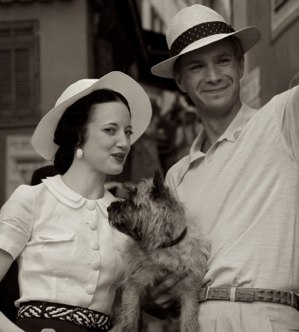
W.E. wasn’t just an undertaking for Madonna, who directed her Wallis Simpson/Edward VIII biopic with all the lavish heft of a gigantic watercolor landscape. It was also a labor of love for Andrea Riseborough, the 30-year-old actress playing Simpson, the American socialite whose romance with Edward led to his abdication of the throne in 1936. The film’s most enjoyable asset, Riseborough was saddled with making the polarizing Simpson a wholly charismatic figure — an Evita without the benefit of torch songs. She succeeds, and with her thoroughly photogenic Edward (James D’Arcy) in tow, she softens W.E. ‘s melodrama with fantastic ease. We caught up with Riseborough to discuss her fascinating director , her feelings about the subject matter, and the zaniness of the Venice Film Festival . You’ve been promoting this movie nonstop for months! Are you sick of corsets and gorgeous costuming at this point? Are the constraints of the couture caving in on you, so to speak? That’s very funny! No, I’m very much enamored with every different period. It’s so funny because people often say — or people talk about period pieces — and I never really faction different periods or divide them from one another. I just think that really everything is of a specific period whether it be 2016 or 1810. It was extraordinary, the architectural feats that some of the couture gowns entailed on W.E. entailed. You have no idea. It was extraordinary. But is it daunting to think of committing so much to the look and feel of a period piece again? It’s something I’m very familiar with. Because whether it is 2016 or 1810, it’s very arduous. Specificity in any project, even if it exists in the abstract [Laughs] or it exists in an alternate reality, there’s always a vision that everybody adheres to. Everybody very much passionately leans toward expressing that vision and the way we share it with the world. It’s something that’s very familiar to me, actually, I suppose is the answer to that. It’s something I enjoy very much. It’s transporting. You are stunning in this movie. You really have the face of a beautiful silent screen star, or a young Bette Davis. Have you seen Dark Victory ? Oh I have, yes! Very much a part of my lexicon as a child. Did you think your throwback looks would aid you in getting cast? Because you would definitely fit in with the stars of Wallis Simpson’s time. Not really, because when I’d been sent the script, I thought it was very unique. I wanted to explore a little more and was interested certainly in the character that was Wallis Simpson, when I went to meet with the director — but when I met her, I actually had what could only be described as sandy blonde hair and a false tan. I was playing a modern character elsewhere. I’d never seen myself in one particular period. I know that my face is pretty plain and can look reasonably attractive but can also look horribly unattractive, and it’s been something that’s been a real benefit to me — being a blank canvas. Muscularly, I can mold it anyway that I want to, if need be. Or I can completely relax it! So, no, I didn’t think that — no. What I saw ahead was like with any role, the journey of a transformation that was something so utterly far away from myself. It was something and is something I’m very fulfilled by. For the record, James D’Arcy also looks just like Anthony Perkins. You can tell him I said so. [Laughs.] Nobody’s ever told him, but I can e-mail him if you like! [Laughs again.] E-mailing him now. Madonna is known for being able to choose forthcoming trends, own them, and bring them to the pop culture fore. Before you met her, did you have any idea what would impress her, based solely on your knowledge of her before W.E.? Did you use that insight to get cast in the film? My desire was not to impress; I wanted to see what fueled her passion for the story. I wanted to know what her vision was for it, and whether she would respond to what I could her offer her as a potential duchess. I think it would’ve been — I would’ve been somebody else, actually. It’s not who I am, I suppose. I was interested to see what our complicit working relationship would be. That was exciting to me. The story of the duchess was something I thought would be potentially interesting to excavate. I wanted to see within what framework that might possibly happen. She, very fortunately, responded to what I had to bring to her. Really, we were artistically complicit from that point on, from the outset really. She’d seen me play Margaret Thatcher and this other character before, so she had a good grasp on the reality that I could inhabit somebody who existed and somebody who was young and innocent — this other character was young and innocent. One interesting thing about W.E. is the sheer continental difference in knowledge about Wallis Simpson. In the U.K., everyone knows. In the U.S., plenty of people know nothing about that era of British history. Oh, don’t do yourself down! I’m trying not to! But there’s definitely a gap in awareness about who Wallis Simpson was. How do you feel addressing that with different markets for the film? I think, really, the story transcends any historical context you might feel you need to put it in. Interestingly, of course, it was a reality. But what we have portrayed is our perception or version of the truth, Madonna’s version and vision of a woman who really existed. The heart of the piece is the thing that’ll tap on the door of the common man, if you will. Because, I hope, that was the thing that originally tapped on the door of the common man — every one of the working class areas that Edward visited, the working men so very much appreciated him, took him into their homes in a way that a prince had not been taken in before. It’s that same honesty and love and truth, I think, that people will feel and respond to. Wallis, she’d seen the writing on the wall. She ended up being as trapped as she imagined she would be, if he should abdicate, which he did as you know. It’s impossible for any one person — I mean, let’s not even reduce it to gender — it’s impossible for any one person to live up to the responsibility of the kingdom. How does one man fulfill a partner who has given up such an awful, awful lot for their relationship? Do you find yourself sorting out the fair criticism of W.E. from what might be considered a biased response to your director? Has the criticism been fair? I really believe that people have their own relationship with it. And I say “with it,” I mean everything that the film is. We were all part of making it. They can choose to absorb it and gain what is valuable from it any which way. I really have no opinion on it, to be truly honest, Louis. I know I’m incredibly honest to be part of something I found beautiful. That’s really all I know. Talk about the Venice Film Festival, where the world got its first taste of W.E. and the first swarm of responses to the film hit. Seemed pretty manic at the time. How do you remember it? It felt incredibly special. It was almost like our first offering at something we’d been so lovingly baking. The explosion that then ensued was quite breathtaking. It was almost funny being so surrounded by love. I’m just speaking as honestly as I felt it! Lastly, I heard you say that you and Madonna connected deeply in researching the “geeky” minutia of Wallis Simpson’s life. How deeply did that fixation go? Oh my gosh, that is such a long answer, Louis. Her fastidious research has no bounds! And that’s where the answer lies. When you approach something that you’re ignited by and are passionate about in such a way, really, until it seems to you’re getting to the point where no stone is unturned, only then can you stop. When you imagine chronicling an entire woman’s life from age 29 to 70, everything that went before 29 — since it must be taken into account — and everything that went after, you can imagine that’s no small feat. I ferociously lapped that up. I enjoyed it so much. But none of that is worth anything if you can’t just trust that it’s been inside of you so you can be present when you’re living out what might’ve been their life. Follow Louis Virtel on Twitter . Follow Movieline on Twitter . [Top Photo: WireImage]

More:
W.E.’s Andrea Riseborough on Madonna, Understanding Wallis Simpson, and the Mania of Venice

Help Caption This Photo of Channing Tatum, Alex Pettyfer and Matthew McConaughey Stripping in ‘Magic Mike’

One of the most anticipated titles among circles who enjoy male strippers and movies is the upcoming Steven Soderbergh drama Magic Mike — a movie about male strippers that allegedly lured the filmmaker away from early retirement . At long last, a first image from the project has surfaced featuring Alex Pettyfer, Matthew McConaughey and Channing Tatum striking a pose onstage for what promises to be a very patriotic (and erotic) dance number. You know what this means, fellow Movieliners — grab the nearest captioning pen and stack of singles. Where to even begin? McConaughey appears in classic McConaughey fashion ( shirtless ). Tatum appears in classic G.I. Joe franchise-star fashion (in camouflage). For further captioning reference, the official premise of Magic Mike is as follows: “Veteran male stripper Magic Mike (Tatum) teaches a new male stripper (Pettyfer) about the occupation. They work at the club Xquisite, which is owned by the former male stripper Dallas (McConaughey).” The project is inspired by Tatum’s experiences as a teenage stripper in Florida. Joe Manganiello (also pictured above) co-stars as Big Dick Richie. Magic Mike is scheduled for a June 29, 2012, release. Let the captioning begin! Follow Julie Miller on Twitter . Follow Movieline on Twitter .

Continued here:
Help Caption This Photo of Channing Tatum, Alex Pettyfer and Matthew McConaughey Stripping in ‘Magic Mike’

Pariah Writer/Director Dee Rees on Coming Out, Awards Season, and Pitching ‘Dallas Meets The Wire’

Writer/director Dee Rees has spent six years with Pariah , a film she wrote as a full-length script in 2005, then recalibrated as a short subject in ’07, and finally re-adapted as a feature film that premiered at this year’s Sundance Film Festival. Pariah concerns a teenager named Alike (Independent Spirit Award nominee Adepero Oduye), an expressive girl who only encounters more identity issues as she tries establishing herself as an out lesbian. Though Rees came out as a lesbian in her 20s, she feels a deep connection to Alike — especially in her resistance to “butch” and “femme” labels. Movieline caught up with Rees to discuss Pariah ‘s wonderful story, the visibility of the LGBT coming out experience in 2011, and Rees’s unexpected connection to Dallas . Since Pariah ’s genesis as a short film years ago, there’s been a lot more visibility about the coming-out experience. Did you find it necessary to tailor the movie to the burgeoning sense of awareness about the topic? When I first wrote the script in ’05, I had a sense of who Alike was and where she was going, so there was no pressure to change it because I wanted to stay true to her and what her experience was. I didn’t want to make Alike’s experience vary from anyone else’s experience or make it topical. I just let it be what it was and just trustd that if we’re honest about the character and honest about the world, that it would be relevant no matter when it came out. It’s funny because some people along the way have said, “Is this an issue anymore? Is being gay cool now?” And it’s like, no. It’s not OK now, and it’s not “cool.” Although people’s experiences of coming out are changing and it’s becoming much more visible, that’s not necessarily everyone’s experience. It was about remaining true to the character and what this story was. I’m glad to see that coming out is relevant and people are aware of it, but I definitely didn’t feel compelled to make it fit anything. You’ve said that you came out in your 20s, but you wrote about the coming-out experience of a teenage girl. How did you find the inspiration for her character? It was just my own coming-out experience sort of transposed onto a 17-year-old. I chose to make her 17 because it’s such a higher-stakes age; figuring stuff out that young, it’s going to be higher because you’re still dependent on your parents and so much is still uncertain about you. You don’t know what you’re going to be. For her to make that discovery at that age, it makes her more interesting. For me, it’s also inspired by being in New York and being among out teenagers, which is something I’d never seen in Nashville, Tennessee. I barely saw out adults. To see out teenagers who were not only out, but out in the streets was inspiring for me. It made me wonder, “Even if I had known at 17, would I have that courage to be the person in the film?” – this woman who was trying to live in two worlds. Do you have particular favorite teenager characters from movies? No, not really! I just like Alike because she’s imperfect. Initially she isn’t courageous. In teen movies, we see characters who get to say exactly what’s on their mind and say what they want and thumb their nose in the face of adult authority. For Alike, I wanted someone who didn’t feel quite comfortable – someone who’s not so self-possessed, not so self-assured, and is figuring things out. Pariah ’s lead actress Adepero Oduye just earned an Independent Spirit Award nomination. Can you describe watching her on set? What did she bring to the character? Watching her on set was an experience of watching her inner life. Adepero is so expressive and yet so subtle. It was great to watch changes going on in her eyes and going on in her body language and behavior – those unspoken things. I felt like I was watching her internalize the characters’ feelings. She was really in that moment. She was really feeling what Alike was feeling. The feeling like she wanted to cry, feeling like she wanted to laugh – the changes were literally visceral. They were changing her, moving through her body. Getting to watch somebody unfold on camera is like watching a flower open. Amazing. In recent years, we’ve seen more in the media about gay men’s coming out experiences than lesbians’. Do you think Pariah highlights the specificity of a woman’s coming-out? I think Pariah highlights that there’s this gray area within the gay or lesbian community. Sometimes there’s a pressure to check a box, to either be hard and be butch or be feminine and wear heels. Alike’s neither of those things, so there’s a gray area. And her coming-out experience is different because she’s coming into a different space. Alike’s not figuring out if she’s gay – she knows she loves women, that’s not her question. It’s more “How [do I] be in the world?” The first half hour isn’t “Am I gay?” It’s, “Laura’s telling me I should be butch. Mom’s telling me I should be femme.” Versus other coming out experiences, like… when she’s wearing the club clothes, that’s not really her. When she changes into this different thing for Mom, she’s not that either. We don’t see her changing from her true self into another self – she’s neither of things she’s taking on or off. We don’t know who she is. She doesn’t really want to be this butch lesbian. She just wants to be Alike. You’ve been talking about this project everywhere for years and years. You’re the Carmen Sandiego of the indie film circuit. Which was the best kids’ game show ever! Indeed! What have you gained from spending so much time introducing the film to festival audiences? Specifically from being on tour with the film, I’ve gained a huge connection with audiences – an affirmation that we told the story truthfully. To your point, we weren’t writing it based on what people were saying or what was going on in the world. We stayed in a cocoon and wrote this thing. When we finished, we didn’t know how people would respond. But people felt we told a story and were honest with the experience, so we gained a feeling of affirmation. And personally, having gone from a point where when I was coming out and I was not quite sure the world that the world would accept me for who I have, or not quite sure that I could be loved or find love, and going to this press tour and seeing audiences embrace the film and saying, “We love you,” Pariah basically gave me the courage to be who I am. I came out behind the shield of this film. This tour has been this amazing wash of affirmation and love. It makes me feel good about audiences. They’re smart and progressive and open. They’re willing to see stories beyond themselves, images that don’t exactly look like them. It restored my faith in cinemagoers. They are hungering for good stories and are willing to step outside their experience to get them. Lastly, what do you have coming up? I imagine your new projects differ from Pariah because this movie is so emotional. One project coming up is called Large Print , a spec script I did, which is about a 50-something insurance adjuster who is recently divorced and lately incontinent, and has to redefine happiness for herself. Though she’s 56, it’s still a coming-of-age story. It’s going to be an emotional film because she’s played life by the rules and nothing’s turned out the way she’s expected. The other film I’m writing is called Bolo , a thriller set in the south. It’s also about, “What is home?” What if where you grew up changes? How do you accept that? Though it has more of a genre element, it goes back to these human things. I’m working on a TV series with HBO and Viola Davis about corruption in education, which will be cool. I’m working on another TV series called Reveal set in Nashville. It’s Dallas meets The Wire , about a city going through an identity crisis. I continue to be drawn to characters, and characters that are flawed especially. I love exploring flawed people trying to make their way. Did you just say “ Dallas meets The Wire ?” Yeah! Do you know how exciting that is? Ha! We’ll see! Dallas was the soap growing up. All my aunts gathered around the TV. We should not have been the target audience for Dallas . Pariah debuts in limited U.S. release December 28. Follow Louis Virtel on Twitter . Follow Movieline on Twitter .

More here:
Pariah Writer/Director Dee Rees on Coming Out, Awards Season, and Pitching ‘Dallas Meets The Wire’

Holiday Weekend Receipts: Impossible Rules, War Horse Strong

‘Twas the weekend of Christmas, and all through the house, many studio executives had good reason to grouse… Ugh, sorry about that — it’s the egg nog. In fairness, the holiday frame actually signaled a nice rebound from previous weekends (which, when considering the utter horror show this month’s been, isn’t saying so much, but still). Who got what they wanted for Christmas, and who did Santa all but skip? Your Weekend Receipts are here. [All figures are four-day weekend estimates, with the exception of War Horse and The Darkest Hour , which opened Sunday.] 1. Mission: Impossible – Ghost Protocol Gross: $46,210,000 ($78,645,000) Screens: 3,448 (PSA $13,402) Weeks: 2 (Change: +261.4%) Oh, so this is how Scientologists celebrate Christmas : With a franchise windfall that ran away with the box-office crown. Xenu? Er, I mean, who knew? 2. Sherlock Holmes: A Game of Shadows Gross: $31,810,000 ($90,564,000) Screens: 3,703 (PSA $8,590) Weeks: 2 (Change: -19.7%) Enh. I’m more interested to see how this performs internationally, which will likely dictate how, when or even if your third Sherlock Holmes sausage is made. Just roll it in with Iron Man 3 and let Robert Downey Jr. move on with his life, already. 3. Alvin and the Chipmunks: Chipwrecked Gross: $20,000,000 ($56,940,000) Screens: 3,734 Weeks: 2 (Change: -14%) Raise your hand if you thought that the second weekend of Chipwrecked would outgross the first weekend of the PG-rated We Bought a Zoo by a nearly two-to-one margin. On Christmas, even! Maybe Fox should have bumped that awesome Marley and Me sequel to theaters instead. 4. The Girl With the Dragon Tattoo Gross: $19,400,000 ($27,776,000) Screens: 2,914 (PSA $6,658) Weeks: 1 Clearly the parents who suffered through Chipwrecked needed this bracing Fincherian pick-me-up. Nice timing, Sony! 5. The Adventures of Tintin Gross: $16,100,000 ($24,107,000) Screens: 3,087 (PSA: $5,215) Weeks: 1 In the battle of the movie terriers, Tintin ‘s Snowy was no match for The Artist ‘s Uggie — at least when it came to per screen average, $8,400 to $5,200. Honestly I have no other insights or observations to bring to this. 6. We Bought a Zoo Gross: $15,600,000 Screens: 3,117 (PSA: $5,005) Weeks: 1 Speaking of animal performers, what happened to Crystal the Monkey? First The Hangover Part II made more than half a billion dollars; then Zookeeper slid in with less than a third of that. Now she’s doing holiday tricks for America’s pocket change. Someone mount an intervention, pronto. 7. War Horse Gross: $15,025,000 Screens: 2,376 (PSA: $6,324) Weeks: 1 A miraculous horse! OK, not quite — but still: That’s not a bad two-day showing at all for a two-and-a-half-hour non-sequel with no stars and stiff competition (and not-so-stiff competition; The Darkest Hour was dead on arrival with $5,500,000) up and down the multiplex corridor. I’m very curious to see how this holds in the weeks ahead, if only so we might have the much-needed War Goose spinoff a few Christmases from now. Fingers crossed… [Figures via Box Office Mojo ] Follow S.T. VanAirsdale on Twitter . Follow Movieline on Twitter .

Go here to see the original:
Holiday Weekend Receipts: Impossible Rules, War Horse Strong

Emily Watson on War Horse, War Goose and Other Recommended Viewing

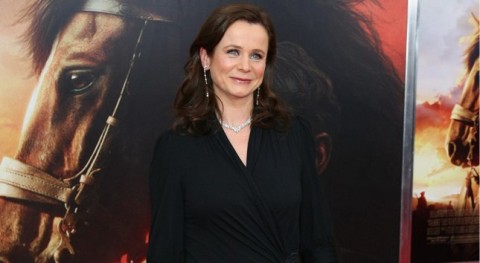
Never one to let inhibitions stand in the way of a great creative opportunity, Emily Watson put aside her equinophobia for a while to join up with Steven Spielberg’s new War Horse . Along the way, she also got to know the film’s irrepressible goose, its neophyte leading man and its legendary filmmaker’s one-of-a-kind facility with epic storytelling. Watson explained more recently in a chat with Movieline. I don’t know about you, but I am War Horse -d out, Can we talk about something else? What else is going on? What else is going on? I was interested in a comment you made in the press conference about how everyone on a set should have a T-shirt that says, “It’s not about you.” Can you elaborate on that? I just mean that as a storyteller, when you get out of the way, that’s when the magic starts. If you’re paranoid about your performance or your status or how you look, or if there’s something stopping you from giving yourself over to a story? Actors, directors, cameramen — if everybody’s just there to tell the story, then you can get some great work. And so it’s not about Spielberg on the set? No, it’s not. He is one of those rare creatures who is compelled to tell stories. He’d be like a fish with no water — he’d be deprived of air if he wasn’t telling stories. Robert Altman was the same. Paul Thomas Anderson was the same. It’s like a muscle that has to be exercised. Everything he’s saying and everything he’s about is, “How can we best deliver this moment in time?” Now, everybody has a different way of doing that, but it’s all from the utter urgency of being a storyteller. What about a guy like Lars von Trier, who’s perceived as almost inseparable from his films? [Long pause] Yeah, I’d say. I think the stories that he’s compelled to tell are quite… You know, in a way, all storytellers are philosophers. They’re searching for meaning in everything. He’s quite close to the edge and extreme, but in the same way, he’s really searching for meaning somehow. Are you really afraid of horses? Mm-hmm. [Laughs] But I didn’t let on. Yes, I am. I’m not good around animals, generally. Oh — at all? I don’t mind dogs and cats and all that, but… What is it about horses? They might kick me! They’re big, powerful creatures? I think it’s my own ignorance. I don’t know what to do, and I don’t know how to read the signs of a horse. But if I’d been on it… I love the sound of the boys’ training camp. To be able to learn to do something like that? It sounds amazing. And I love the whole cavalry charge. It’s stupendous! I love it. Have you ever had to learn a skill for a role? I had to learn the cello for Hilary and Jackie , which was a big deal. It was a difficult thing to learn. How long did it take? Well, I say I learned the cello. I was miming to playback in the film. But I did learn pretty accurate fingering and the right bowing and the sense of expression. If you actually heard what I was playing, it would be excruciating. How long did it take? Two months? Two or three months? I think I had about 20 different pieces of music that I had to play, and I sat down and meticulously learned the tune for each one. And then I learned the fingering for each piece, and then I learned the bowing. Then I put them together. It was very scientific! Back to the animals: Was the goose in this movie as bad-ass as it looked? [Laughs] Yeah, it was. You were totally afraid of the goose, right? No, not really. I did sort of a photo op with the geese at one point, and they were really sweet. I just kind of held them. They had brilliant handlers as well, the geese. They could run and hit marks. It was mindblowing what these animals could do. But the goose is from the play. Have you seen the play? I haven’t. There’s a fabulous goose puppet. It’s great. I mean, War Horse is great and everything, but I’m really holding out for War Goose . “A miraculous goose.” Right! Anyway, this is Jeremy Irvine’s first screen role . What kind of relationship did you have behind the scenes? I felt very protective towards him. Just being a proper grown-up; he’s say, “I’m fine, I’m fine,” but you could see how terrified he was — how much he was having to absorb and learn every second. But he had a great attitude. He had a great sense of humility and a great sense of wanting to learn and be as good as he could be, which is lovely to watch. Do you remember the first Spielberg film you saw? I think it was E.T. I loved it. I wept. What your relationship with Spielberg films as a viewer? Are they must-see theater viewing? Not always, but yeah — it’s an event, isn’t it? What else is out that you like? I liked Warrior very much. Have you seen that? I thought the fight sequences were absolutely brilliant — so committed, so real. You always tend to go, “Yeah, yeah — they’re faking it.” And that didn’t look like faking it. I love Tom Hardy. I think he’s wonderful. I loved Beginners . I loved it. I found it very affecting and real. When you know somebody like I know Ewan [McGregor], whom I’ve known for a while, it’s quite difficult to forget and be transported by them. And I really was. I thought he was wonderful. What else have I seen? I liked Tinker, Tailor, Soldier, Spy . It’s classy. It’s classy . Oldman’s amazing in that. Have you worked with him before? No. It’s interesting you say that about McGregor versus someone like Oldman. Does that always tend take you out of the experience? Absolutely. You know their ways of doing things; you know them as a person. Like Phil[ip Seymour] Hoffman: I’ve worked with him several times, and he’s in so many things and I just… [Pauses] Now, having said that, he’s brilliant. He’s absolutely brilliant. But it does make it harder to suspend your disbelief when you know somebody. What are you up to next? I just wrapped on a film called Little Boy , which is directed by Alejandro Monteverde; it’s about a little boy in California during the second World War who thinks he can bring his dad home from a Japanese prisoner-of-war camp using his magic powers. And I play his mom. It’s kind of a grown-up fairy tale. And I’m doing a few days on Joe Wright’s Anna Karenina . I’m playing Countess Lydia — a nasty piece of work. Ohhhh. Are you looking forward to it? I am. I’ve already done one day. Oh, yeah. You sound like a fan of the book. I am. I’ve read it a few times in my life. It’s a very interesting book, because you see it very differently when you’re young. As your age changes, you read it very differently. I was shocked when I read it the last time. What was different? Well, when I was young, I think I really identified with Anna and wanting to be that in love and the terrible tragedy of it all. I don’t know if I wanted to kill myself at the end of it. Then you read it now, and you realize the decisions she makes about her children– to leave her children — for the sake of this affair is… [Winces] I have children of my own, so… Anyway, it changes. Follow S.T. VanAirsdale on Twitter . Follow Movieline on Twitter .

Read the original:
Emily Watson on War Horse, War Goose and Other Recommended Viewing

5 Scenes Worth Remembering From Otherwise Forgettable 2011 Films

With all this laudatory talk of the best of the year and Nelson Muntz-style “HA hah”-ing at the worst, isn’t it time to spare a thought for all the films in between, the ones that are neither remarkably good nor jaw-dropping awful? 2011 saw hundreds of films hit theaters, some only on offer for a week or two before being shunted off to other platforms, others providing an adequate or mildly disappointing few hours of entertainment at the multiplex. But just because a movie is middling doesn’t mean it can’t have some memorable, even exceptional scenes. Here are five from flicks that likely won’t be on many year-end lists, but that still deserve a second look. Paranormal Activity 3 : The babysitter in the kitchen The third installment of this lo-fi horror series took its suburban surveillance shocks back to the ’80s, but otherwise kept to the familiar formula of grainy footage, door slams, strange noises and vague demon mythology. The one exception? A camcorder mounted to the base of a rotating fan, slowly turning between the kitchen and the open living room of the haunted family’s California tract home, allowing for spooky scenarios to develop between the two places as we are kept to the automatically toggle of the unmanned camera. In the best sequence, a babysitter does her homework at the kitchen table, unaware that in the other room a figure wearing the sheet she had used to tell her charges a ghost story has appeared, the camera swings slowly away, and when it turns back the would-be specter is directly behind her. It’s an amazing example of how timing and a sense of space can make something simple into something improbably frightening.

Technical Advisory: Comments Restored, Other Work in Progress

A bit of maintenance around Movieline HQ has resulted in some behind-the-scenes improvements — and a few design/technical quirks on the published site. Please know we’re on it! In the meantime, our commenting apparatus has been restored (though we’re still working on that as well), so feel free to resume your pithy, brilliant feedback as usual. More updates as events warrant… Thanks for your patience!

Visit link:
Technical Advisory: Comments Restored, Other Work in Progress