Photos: Jewels of Jupiter By Joe Rao updated 8/25/2010 1:52:00 PM ET For many weeks, the planet that has dominated our evening sky has been brilliant Venus, visible low in the west-southwest sky for about 90 minutes after sunset. But after Venus sets, it is Jupiter that takes over for the rest of the night, outshining everything in the night sky but the moon. This week, Jupiter — the solar system's largest planet — rises around 8:45 p.m. local daylight time. On Thursday evening, if youre facing east soon after 9 p.m., you'll see the nearly full moon standing about 6 degrees above Jupiter. Your clenched fist held at arm's length measures about 10 degrees in width, so just over half of a fist will separate Jupiter from the moon. The two objects will remain visible through the rest of the night, peaking toward the south at around 3 a.m., at an altitude that measures more than halfway from the horizon to the point directly overhead (the zenith). Jupiter rules In the coming weeks we will see Jupiter loom as large and as bright as it ever can get from our earthly vantage point, because it's nearing perihelion — that point in its 12-year orbit that places it nearest to the sun. Jupiter now appears 11 percent larger and more than one and a half times brighter than it did back in 2005, when it was near aphelion (that point in its orbit farthest from the sun). Even steadily held 7-power binoculars will show Jupiter as a tiny disk. A small telescope will do much better, while in larger instruments, Jupiter resolves into a series of red, yellow, tan and brown shadings, as well as a wealth of other telescopic detail. Amateur astronomers have been imaging this big planet all summer long as it has been approaching the Earth. In less than a month, on Sept. 21, the planet will be in opposition. That's when Jupiter is nearest to Earth and shining in the sky all night long, from sunset to sunrise. And don't forget Jupiter's four major moons, discovered 400 years ago by Galileo. They can be seen in any telescope and even binoculars. They orbit Jupiter so quickly (with orbital periods ranging from 1.68 days for Io to 16.7 days for Callisto) that they change their appearance from night to night. Size (and distance) matters When you look at the moon and Jupiter on Thursday night, you might ponder the difference in both their sizes and distances. The moon, of course, far outshines Jupiter — by more than 9 magnitudes, or a brightness ratio of 4,370 to 1. But the moon is also much smaller than Jupiter. The moon's diameter is 2,158 miles (3,473 kilometers), while Jupiter's is 88,846 miles (142,984 km). What makes the moon loom so much larger and brighter is its distance. On Thursday night, the moon will be 251,200 miles (404,270 kilometers) from Earth. But Jupiter will be 1,496 times more distant: 375.9 million miles (605 million kilometers) away. Gyrating Jupiter? I recently received an e-mail from Linda Francese of Brookfield, Conn., involving an interesting observation made by her son, which likely involved a sighting of Jupiter. She wrote: “My son, Johnny woke me up at 2 a.m. to look at a 'star' that was moving. His friend had called him and told him about it. Johnny walked over to his house (he lives a house away) and they called another friend to come over. The three of them were watching this 'star' go back and forth. Do you know anything about this?” I'm pretty certain that the “star” that Johnny and his friends saw was Jupiter. So why did it appear to move? Likely they experienced what is called the “autokinetic effect.” This is a phenomenon of human visual perception in which a stationary, small point of light in an otherwise dark or featureless environment appears to move. Many sightings of UFOs have also been attributed to the autokinetic effect's action on stars or planets. Psychologists attribute the perception of movement where there is none to “small, involuntary movements of the eyeball.” The autokinetic effect can also be enhanced by the power of suggestion: If one person reports that a light is moving, others will be more likely to report the same thing. Currently, Jupiter is shining in the constellation Pisces, a star pattern that consists chiefly of faint stars. Under a clear, dark sky with no moon nearby, Jupiter will appear to shine with little or no competition from other nearby stars. If a person stares at Jupiter over a span of perhaps 15 to 30 seconds, it's quite possible for the autokinetic effect to kick in and cause Jupiter to gyrate or perhaps move in a small circle. Next week, when the moon has moved out of Jupiter's vicinity and the surrounding sky is dark, try staring at Jupiter and see if it'll move for you like it did for Johnny and his friends. Joe Rao serves as an instructor and guest lecturer at New York's Hayden Planetarium. He writes about astronomy for The New York Times and other publications, and he is also an on-camera meteorologist for News 12 Westchester, New York. added by: EthicalVegan
-

-

Raw Police Video
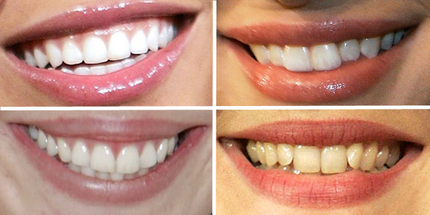
Name That Celebrity Smile!
 Breaking Sports Video
Hot Celebrities

Britney Spears
Kim Kardashian
Lauren Conrad
Heidi Montag
Zac Efron
Vanessa Hudgens
Miley Cyrus
Spencer Pratt
Robert Pattinson
Adam Lambert
Taylor Lautner
Taylor Swift
Roxy Olin
Khloe Kardashian
Brooke Hundley
Levi Johnston-