Holy Nakatomi Plaza! July 15 marks the 25th anniversary of the release of the original Die Hard , a movie that occupies a revered place in my pantheon of smart-ass films. And with the latest sequel, A Good Day to Die Hard , hitting theaters on Feb. 14, Fox has released the Die Hard: 25th Anniversary Collection on Blu-Ray. In addition to the first four Die Hard movies, the set includes a Decoding Die Hard bonus disc of featurettes. Included is Bad to the Bone , posted below, which celebrates the various villains that Bruce Willis’ character, John McClane, has gone up against over the course of his totally implausible but highly entertaining life of coincidental run-ins with evil terrorists and master criminals. You really don’t need to watch the clip to understand this about the franchise: Alan Rickman , who played deliciously contemptuous Hans Gruber n the first film, remains, far and away, the best Die Hard baddie of the franchise. His simpering imitation of an American hostage when McClane first encounters him is a thing of enduring beauty. Why Rickman hasn’t been made a Bond villain by now is beyond me. Follow Frank DiGiacomo on Twitter. Follow Movieline on Twitter.
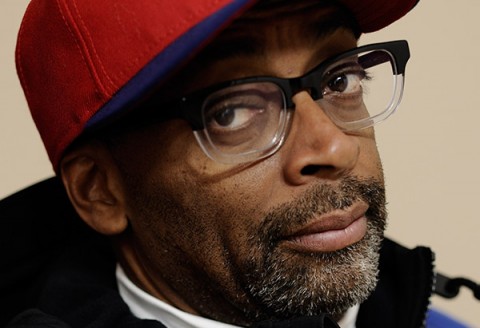
So, right before 2012 ended, Training Day director Antoine Fuqua piped up from Capri, Italy to assert that Spike Lee should not have publicly criticized Quentin Tarantino’s Django Unchained for the movie’s spaghetti-western-style depiction of slavery. And to that I can only say, “Huh?” If ever there’s a movie made to be publicly, loudly — and heatedly — debated, it’s QT’s anti-slavery epic. If you were offline for the holidays, here’s a recap of the situation: As Movieline’s Brian Brooks reported on Dec. 27, Lee declared that he has no intention of seeing Django Unchained . “I can’t disrespect my ancestors,” the Red Hook Summer director told Vibe magazine. He further elaborated via Twitter that “American Slavery Was Not A Sergio Leone Spaghetti Western. It Was A Holocaust.” Enter Fuqua, who took issue with the noisy way that Lee’s expressed his criticism. While at the Capri, Hollywood Film Festival in Italy, Fuqua told The Hollywood Reporter told the publication: “That’s just not the way you do things….If you disagree with the way a colleague did something, call him up, invite him out for a coffee, talk about it. But don’t do it publicly.” (Fuqua further defended Tarantino, albeit without actually having seen Django. ) For starters, I have to say that the idea of Spike Lee quietly and politely expressing his opinion — about anything — is pretty funny. Lee is a New Yorker, and a filmmaker who has succeeded precisely because he has no reservations about giving voice to controversial ideas, whether verbally, in written form, or through his preferred medium of film, that the average person and a lot of establishment filmmakers would be afraid to tackle. But whether Lee is talking about his beloved New York Knicks or Tarantino’s portrayal of slavery in Django Unchained , he’s going to speak his mind and he’s going to do it in a way that will insure a lot of people hear him. Back in 2008, Lee tangled with Clint Eastwood when he criticized the veteran filmmaker for not including any black soldiers in two movies about World War II, Flags of Our Fathers and Letters From Iwo Jima . “Many veterans, African-Americans, who survived that war are upset at Clint Eastwood . In his vision of Iwo Jima, Negro soldiers did not exist. Simple as that. I have a different version,” Lee said at the Cannes Film Festival that year. Eastwood eventually responded that Lee should “shut his face,” and the Do The Right Thing director fired back: “We’re not on a plantation.” In 2012, Lee also sounded sour on the subject of Star Wars creator George Lucas’ movie about the Tuskegee Airmen, Red Tails . In response to comments that Lucas had made in the media about the studios inability to market black action films, Lee told The Daily Beast: “Here’s a question—this is very important—did George Lucas not understand that the marketing departments of all these Hollywood studios are all white? He only discovered that for Red Tails ?! I’ve been saying this stuff for years. It’s not new!” It’s Lee’s nature to be argumentative and controversial, and Tarantino should welcome his fellow filmmaker’s barbs. For one, thing, Tarantino likes to stir the pot, too, albeit it in a more politically correct way. Before Christmas, he appeared on a Canadian talk show to contend that slavery still exists in the United States via the war on drugs and America’s penal system — on that issue, I suspect he and Lee would see eye to eye — and he has also suggested that a true debate on slavery and its ramifications has been avoided. (“People are a little too sensitive to talk about stuff,” Tarantino said during his on-camera time in Canada.) Samuel L. Jackson made a similar point when I interviewed him about Django . “We’ve been avoiding really talking about it,” he told me, and he’s right. So, with all due respect to Fuqua, I applaud Lee’s decision to speak his mind, and I’d love to see Tarantino answer him. What would really be great is to get Tarantino, Django Unchained producer and filmmaker Reginald Hudlin , Fuqua, Jackson and Lee to debate this issue loudly, publicly — and heatedly. It’s time. Read More On Django Unchained: Quentin Tarantino Says Slavery Still Exists Via ‘Mass Incarcerations’ & The ‘War On Drugs’ Quentin Tarantino’s ‘Django’ Klansmen Inspired By John Ford: ‘To Say The Least, I Hate Him’ [ The Hollywood Reporter , Huffington Post , The Daily Beast ] Follow Frank DiGiacomo on Twitter. Follow Movieline on Twitter.
We all know producers can be a bunch of real, ah, prickly people. They kind of have to be, since their job, so long as it’s their actual job and not just a title given to them because they invested a couple of mil into the production, is to make sure everything goes smoothly, the film stays within budget, and the money isn’t wasted on limos when it could be wasted instead on expensive CG effects that look completely dated within 3 years*. As a result, these guys tend to be blunt as hell and not afraid to hurt some mothaf*ckin’ feelings when they rolling deep through the movie hood , as it were. Take Joel Silver , the famously take-no-prisoners producer of the Lethal Weapon and Die Hard films.** Screenwriter Doug Richardson, the guy who Wrote Die Hard 2: Die Harder , and Bad Boys , has shared a story from the making of Die Hard over on his official site , and it’s a most triumphant example of producer due diligence at the expense of expensive furniture you’ll ever hear. Remember the scene in Die Hard when the roof of Nakatomi Plaza explodes, and the penthouse lobby and fountain area is completely trashed? You might have noticed there’s an expensive looking couch in that scene; You might have also noticed that it appears to survive the initial explosion, only to show up seconds later completely aflame. There’s a reason for that — the couch wasn’t just expensive looking , it actually cost $5,000 back in 1988 which in today’s money is about 5 trillion dollars.*** Apparently, the scene drew cheers and high fives from everyone on the crew after they pulled it off during the shoot; except for Silver that is, whose eagle-eyed penny-pinching powers detected something odd, or as Richardson puts it, “possible sabotage.” To set the scene for what happens next, you might want to find a copy of Who Framed Roger Rabbit and check out Silver’s blustery cameo as the director of the Baby Herman cartoon. Joel called for the entire crew to assemble on the nearly-demolished set, gathering the mob around a gorgeous, leather Roche-Bobois sofa. Estimated value, five thousand dollars. The couch, despite the conflagration that they’d all just witnessed, was in showroom condition. Untouched by destructive fire, explosives, or water. “I wanna know,” Joel shouted, “Who just ruined my shot!” You see, Joel had been around more than a few movie sets. He knew how things worked. He understood how the occasional underhanded crew member operated. In this case, he suspected that one crew member had paid off another crew member on the special effects crew to make certain that the five-thousand-dollar sofa survived the wreckage. “Somebody on this crew,” announced Joel, “Decided to furnish their home at the expense of the movie.” Can you blame them though? I mean, this was the ’80s, and we didn’t have Ikea to make giant couches affordable yet. With that, Joel produced a bottle of lighter fluid, doused the expensive sofa in accelerant, and tossed a match to it. The lesson ended as the couch erupted in flame. The set was cleared again. And camera operators were ordered to “roll film.” Five grand must seem a trivial sum for a movie with a $28-million budget, but damned if you can’t respect someone for making sure every dollar spent on the movie ended up onscreen. I just wonder if he hummed “Ode To Joy” while torching some lowly grip’s living-room dreams. No word from Richardson if similar hijinks happened during the making of Die Hard 2. Probably not, I mean, how many times can the same thing happen to the same guy? * I kid, I kid! ** And a jillion others of course. He helped Walter Hill get The Warriors and Streets of Fire made! *** I’m guessing this is the case based on the way people are freaking out about raising the minimum wage. [ Source: Movies.com ] Ross Lincoln is a LA-based freelance writer from Oklahoma with an unhealthy obsession with comics, movies, video games, ancient history, Gore Vidal, and wine. Follow Ross Lincoln Twitter. Follow Movieline on Twitter .