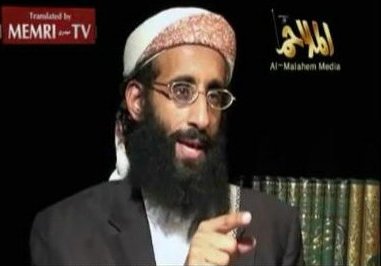
The Obama administration’s reluctance to acknowledge and confront the religious motivation behind Islamist terrorism is not helping the counter-terror effort, leading experts warn in a new report. The administration’s recently released National Security Strategy (NSS) defines the enemy as “al-Qaeda and its terrorist affiliates,” but Washington Institute for Near East Policy report argues that it is a bigger one – “the extremist ideology that fuels and supports Islamist violence.” Authors J. Scott Carpenter, Matthew Levitt, Steven Simon and Juan Zarate contend that just because ideology is not the only driving force behind violent Islamic terrorism does not mean it can be ignored. Instead, the administration should recognize Islamism as “the key ideological driver” behind the threat posed by al-Qaeda and other radical Islamist groups, and prioritize an effort to combat the ideology, they say. “To be sure, officials need to make very clear that they do not consider Islam itself a danger, only the distorted version of Islam perpetrated by radical extremists. But they – and, in particular, the president – must also come to terms with the fact that individuals implicated in each of the recently exposed plots in the United States were imbued with a common radical ethos.” In keeping with President Obama’s agenda of reaching out to the Islamic world administration officials have moved away from terminology that could cause offense when discussing violent terrorism or extremism. Radical Yemen-based cleric Anwar al-Awlaki, pictured above, has called both the Fort Hood shooting suspect and the Nigerian who tried to bomb a Detroit-bound passenger plane on Christmas Day 2009 his “students.” The NSS unveiled in May used variations of the phrase “al-Qaeda and its affiliates” repeatedly in identifying the enemy. The word “Islam” appeared twice – the U.S. was not fighting a war against Islam, it said, and “neither Islam nor any other religion condones the slaughter of innocents.” When he previewed the document in a speech several days before the launch, Obama’s counter terrorism advisor, John Brennan, said, “Our enemy is not terrorism because terrorism is but a tactic.” “Nor do we describe our enemy as jihadists or Islamists because jihad is holy struggle, a legitimate tenet of Islam meaning to purify oneself or one’s community.” (The NSS released by the Bush administration in 2006 stated that “the struggle against militant Islamic radicalism is the great ideological conflict of the early years of the 21st century.” It also called Islam “a proud religion” that “has been twisted and made to serve an evil end.”) Nidal Malik Hasan, the U.S. Army major accused of killing 13 people at Fort Hood, Texas last November; Umar Farouk Abdulmutallab, the Nigerian arrested after trying to bomb a Detroit-bound aircraft on Christmas Day 2009; and Faisal Shahzad, the Pakistani-American who tried to detonate a car bomb at Times Square on May 1, were all evidently inspired by Islamist propaganda. The Washington Institute for Near East Policy report released this week says that U.S. national security is being undermined by a deepening “ideological competition within Islam.” “The competition is between a modern, predominantly pluralistic view of the world and an exclusionary, harsh, and equally modern ideology that appeals to a glorious past, places aspects of religious identity above all others, and relies on a distorted interpretation of Islam,” it says. Radical Islamists like Adam Gadahn, pictured here praising Fort Hood shooting suspect Nidal Hasan in a March 2010 al-Qaeda propaganda video, use the Koran and other Islamic texts to justify their jihad against the West. (Image: LauraMansfield.com) “The conflict between these two visions constitutes a struggle for the hearts and minds of the majority of Muslims, who abhor violence, but who – out of sympathy, apathy, or fear – will not or cannot confront the extremists in their communities. Any strategy, therefore, that does not skillfully contest the claims and actions of radical extremism cannot succeed.” The authors recommend that the administration broaden cooperation with foreign governments, NGOs and others “to empower credible Muslim voices to marginalize” Islamist radicals. At home and abroad, the government should more effectively identify and support Muslim opinion-leaders who can provide alternative influences to “radicalizers” in their communities. Other recommendations include prioritizing the importance of human rights and democracy in Arab countries – with Egypt’s looming political changes “a key test for the administration’s approach.” And in engaging with the Muslim community at home, the authors suggest that the government reach out not only to the most vocal organizations, but also to the most representative. “Some prominent Muslim American groups have questionable links to banned groups that should disqualify them as trusted government partners in the effort to combat extremism,” the report says. “Others, perhaps less vocal and often active at a more local level, warrant greater institutional recognition and support.” The report did not elaborate, but two U.S. Muslim groups that receive considerable media exposure, the Council on American-Islamic Relations (CAIR) and Islamic Society of North America (ISNA), were both named by the Justice Department in 2007 as “unindicted co-conspirators” in its case against the Holy Land Foundation in Texas, which was subsequently found guilty of raising money for Hamas. Islamist terror groups like Hamas’ Izzidin al-Qassam, whose logo features a Koran and other Islamic imagery, describe their missions in religious terms. Experts say the Obama administration’s counter-terror effort cannot ignore the religious motivation driving extremists. (Image: Izzidin al-Qassam Web site) Debates over how governments should tackle the ideology driving terrorism are also underway in Britain, where “homegrown” Muslim terrorists have carried out several deadly attacks in recent years. Five years ago last week, four terrorists – three of them British-born – killed 52 people and themselves on London’s subway and a bus. At an event marking the anniversary hosted at the Chatham House think tank, counter terrorism experts and officials were critical of elements of a government program that aims to stop people from becoming terrorists or supporting violent extremism. The strategy, known as “Prevent,” provides government funding to local organizations deemed to be best placed to counter the ideology of violent extremism. “Participants argued that there was a fine dividing line between supporting communities in trying to stop people turning to terrorism and stigmatizing communities as a threat to the rest of society,” according to a report by BBC Radio, a co-sponsor of the invitation-only Chatham House event. The Prevent strategy came under close scrutiny earlier this year after a cross-party parliamentary committee carried out an in-depth inquiry into the program. The inquiry found that the strategy was causing mistrust and suspicion in the Muslim community. It said organizations and projects receiving Prevent funding were seen as tainted, and many Muslims felt the government was trying to create a “moderate” Islam, by funding and promoting some organizations over others. “We do not think it is the job of Government to intervene in theological matters,” the committee said in its report. It also argued that the program was placing too much emphasis on religion as a factor driving people to violent extremism. “There has been a pre-occupation with the theological basis of radicalization, when the evidence seems to indicate that politics, policy and socio-economics may be more important factors in the process,” it said. The relative importance of socio-economic factors in driving British Muslims to Islamist terrorism has been widely disputed. In a newly-released directory of Islamist attacks and convictions in the U.K. over the past decade, the Center for Social Cohesion, a British think tank focusing on extremism, reported that at least 31 percent of the individuals involved “had at some point attended university or a higher education institute.” And at the time of the attack or criminal proceeding, 42 percent of the individuals were either employed or in full-time higher education. The Center for Social Cohesion said its analysis “does not support the assertion made by some that there is a correlation between terrorist activity and low educational achievement and employment status.” Abdulmutallab, the would-be Christmas Day bomber, was a mechanical engineering graduate of one of Britain’s most prestigious institutions, University College London, where he also headed the Islamic Society in 2006-2007. Crossposted at NB sister site CNS News
Go here to see the original:
Experts to Obama: You Can’t Ignore Islamic Ideology Behind Terrorism




 Breaking Sports Video







