This is why I love Twitter. MMA ring girls Arianny Celeste , Brittney Palmer and Kenda Perez were doing some photoshoot recently, and they posted the outtakes for it to their Twitter accounts. A few years ago, we’d have to wait months to see pictures like this, or never get them at all. Now, every hottie with an iPhone and a mirror can constantly keep us updated on their ongoing hotness. Isn’t technology wonderful? We’re living in a Golden Age of Instagrammed Boobs. Related Posts: Arianny Celeste’s Ultimate Fighter Cleavage Arianny Celeste Picture Moment Arianny Celeste Brings Her Curves Out To Play Arianny Celeste Gets My Attention
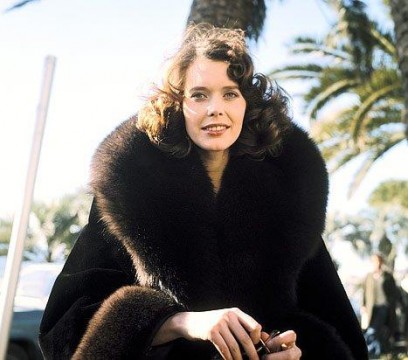
Dutch actress Sylvia Kristel as Lady Chatterly in the film “Lady Chatterley#39;s Lover”, in Paris, France. Sylvia Kristel, the star of the hit 1970s erotic movie “Emmanuelle,” has died of cancer at age 60. Her agent, Features Creative Management, said in a statement Thursday, Oct. 18, 2012, that Kristel died in her sleep Wednesday night. Kristel, a model who turned to acting in the 1970s, had been fighting cancer for several years. Sylvia Kristel, arguably the world#39;s first true po rn star,
Calling Ben Affleck ‘s Argo a “terrific thriller,” one of the six Americans who managed to escape the U.S. embassy just as student radicals took over the compound by fleeing into Tehran’s streets has set a bit of the record straight. Mark Lijek, who’s portrayed by Christopher Denham in Affleck’s awards contender, spoke out after attending the film’s L.A. premiere, giving his detailed version of events. And while there are strong parallels with the film, which began its release last week and has garnered Oscar buzz, the timeline of real-life events had some significant departures from the film, which Affleck starred in and directed. Still, Lijek did learn one thing from the film, which surprised him all these years later. ( Caution, spoilers if you have not seen the movie ). The backbone of the story – namely, the idea of posing the six Americans as movie-makers in order to dupe Iranian officials and sneak them of the country – is in fact true. The movie version of events suggest the six “house guests,” who were holed up in hiding in the Canadian Ambassador’s residence, needed convincing to go the route of posing as Hollywood insiders. But the plan’s CIA mastermind, Tony Mendez (played by Affleck) had in fact presented three ideas, which the group accepted as the best option straight away. “We liked the idea enough, in fact, that we chose it over two other scenarios that Tony also brought to us,” said Lijek in a first-person account of their ordeal in Slate magazine. “In one of them, we would pose as businesspeople, in something petroleum-related, if I remember correctly. In the other, I think we were meant to be teachers looking for employment at an international school. But those two seemed like throwaways, and Tony did not try too hard to sell us on them.” After considering the three options, Lijek noted, the group accepted the plan whereas in Argo it seemed to split the group, with dissenters reluctantly agreeing to go along. “It was clear the organization and energy was focused on the Hollywood option. And they were right to be: While the movie presents myriad dramatic complications and last-minute twists and turns, the plan actually went off without a hitch. Lijek’s account focuses on the drama the group had going from place to place in the lead-up to Mendez’s arrival. The six managed to evade capture, going from one temporary safe space to the next before ending up in the safe hands of the Canadian compound and in the care of Canadian John Sheardown, who was critical in safeguarding them. “When Tony Mendez arrived on Jan. 26, 1980, we were ready to leave,” writes Lijek. “The hostage crisis was no closer to resolution. We had asked [Ambassador] Taylor in early January to tell Washington we wanted out. Each day we stayed in Iran added to the risk of capture.” Continuing, he gives credit to Sheardown, who didn’t make the script in the movie version of events. “It never came to that — and John Sheardown may well be the indispensable reason why. Without his enthusiastic welcome we might have tried to survive on our own a few more days. We would have failed. And so it was hard, sitting at the swanky Los Angeles premiere the other day, not to see John in the movie. I understand, though, why he couldn’t be there. Argo already had more characters than a typical thriller, and adding the Sheardowns would not have enhanced the drama.” But Lijek received a surprise at the film’s screening as the credits rolled when a voice came in talking about the crisis 32 years later. “The film’s biggest shock? The voiceover from Jimmy Carter at the end. In comments about the incident that I had never heard before, Carter says our chance of success was 50 percent. 50?! I thought it was much higher. Another gut check. Would we have gone with Tony at 50 percent? I’ll never know.” [Source: Slate ]
Calling Ben Affleck ‘s Argo a “terrific thriller,” one of the six Americans who managed to escape the U.S. embassy just as student radicals took over the compound by fleeing into Tehran’s streets has set a bit of the record straight. Mark Lijek, who’s portrayed by Christopher Denham in Affleck’s awards contender, spoke out after attending the film’s L.A. premiere, giving his detailed version of events. And while there are strong parallels with the film, which began its release last week and has garnered Oscar buzz, the timeline of real-life events had some significant departures from the film, which Affleck starred in and directed. Still, Lijek did learn one thing from the film, which surprised him all these years later. ( Caution, spoilers if you have not seen the movie ). The backbone of the story – namely, the idea of posing the six Americans as movie-makers in order to dupe Iranian officials and sneak them of the country – is in fact true. The movie version of events suggest the six “house guests,” who were holed up in hiding in the Canadian Ambassador’s residence, needed convincing to go the route of posing as Hollywood insiders. But the plan’s CIA mastermind, Tony Mendez (played by Affleck) had in fact presented three ideas, which the group accepted as the best option straight away. “We liked the idea enough, in fact, that we chose it over two other scenarios that Tony also brought to us,” said Lijek in a first-person account of their ordeal in Slate magazine. “In one of them, we would pose as businesspeople, in something petroleum-related, if I remember correctly. In the other, I think we were meant to be teachers looking for employment at an international school. But those two seemed like throwaways, and Tony did not try too hard to sell us on them.” After considering the three options, Lijek noted, the group accepted the plan whereas in Argo it seemed to split the group, with dissenters reluctantly agreeing to go along. “It was clear the organization and energy was focused on the Hollywood option. And they were right to be: While the movie presents myriad dramatic complications and last-minute twists and turns, the plan actually went off without a hitch. Lijek’s account focuses on the drama the group had going from place to place in the lead-up to Mendez’s arrival. The six managed to evade capture, going from one temporary safe space to the next before ending up in the safe hands of the Canadian compound and in the care of Canadian John Sheardown, who was critical in safeguarding them. “When Tony Mendez arrived on Jan. 26, 1980, we were ready to leave,” writes Lijek. “The hostage crisis was no closer to resolution. We had asked [Ambassador] Taylor in early January to tell Washington we wanted out. Each day we stayed in Iran added to the risk of capture.” Continuing, he gives credit to Sheardown, who didn’t make the script in the movie version of events. “It never came to that — and John Sheardown may well be the indispensable reason why. Without his enthusiastic welcome we might have tried to survive on our own a few more days. We would have failed. And so it was hard, sitting at the swanky Los Angeles premiere the other day, not to see John in the movie. I understand, though, why he couldn’t be there. Argo already had more characters than a typical thriller, and adding the Sheardowns would not have enhanced the drama.” But Lijek received a surprise at the film’s screening as the credits rolled when a voice came in talking about the crisis 32 years later. “The film’s biggest shock? The voiceover from Jimmy Carter at the end. In comments about the incident that I had never heard before, Carter says our chance of success was 50 percent. 50?! I thought it was much higher. Another gut check. Would we have gone with Tony at 50 percent? I’ll never know.” [Source: Slate ]
It’s a curious truth about Tyler Perry that, when not in drag and playing the outsized role of Madea , he’s a recessive screen presence, appearing a little uncomfortable in his own body, awkward and not particularly emotive. When he gives himself a role like the one in Good Deeds, it fits as part of the character, but anchoring a potential action franchise like Alex Cross , he looks like he’d rather be somewhere else. As the title homicide detective, the protagonist of a series of books by James Patterson and one who’s been played in earlier screen incarnations by Morgan Freeman (in Kiss the Girls and Along Came a Spider ), Perry can’t summon the charisma necessary to make a role that’s essentially a melange of police and criminal profiling clichés into something that works either in a serious or schlocky mode. His ungainliness in the action sequences even provoked the odd unintentional laugh at the screening I attended, though he’s hardly the only one involved in this film who’s on the hook for that. Alex Cross is filled with accidental comedy, and while it’s a mess in any traditional movie sense, it’s has its moments of preposterous fun that come in the form of a nonsensical plot and a fabulously competent, scenery-gnawing villain. That villain, who earns the nickname “Picasso” for his habit of leaving charcoal sketches at the scenes of the murders he’s committed, is played by Matthew Fox with a near-Tourette’s style twitchiness. The guy’s a hired gun, we know from the outset, but he’s also completely cray-cray, which Fox indicates by keeping his eyes open wide enough for us to always be able to see the full circle of his sclera. With an array of tattoos and seemingly no body fat, Picasso looks to be somewhere between a meth addict and a Marine. Whatever his background, he’s not getting paid enough for the convoluted acrobatics he goes through to take down his targets. Buying his way into underground fight rings, scuba-diving through pipes, train takeovers — the dude is not one to just run up to someone on the street and shoot them in the head. In addition to his art fetish, he also has a thing for torturing people and compulsively doing pull-ups. He is, in other words, hilarious, and Fox’s over-the-top portrayal provides a curiously fitting counterbalance to Perry’s underplaying, as the two engage in a cat-and-mouse pursuit through Detroit. Picasso is targeting members of an international corporation led by Leon Mercier (Jean Reno) that plans to revitalize the city by making it a center of nanotechnology. The only detail that’s important there is that the high-ranking members of the company are all different varieties of asshole foreigners, from the slinky sadist Fan Yau (Stephanie Jacobsen) to germaphobe German Erich Nunemacher (Werner Daehn) to the smug Frenchman Mercier, with his fancy cognac and dismissive attitude. Keep your hands off our troubled city, damn international investors! Cross lives with his wife, Maria ( Carmen Ejogo , who stole Sparkle away from Jordin Sparks but is in a thankless part here), two kids and sassy mother (Cicely Tyson), and works with his best friend since childhood Tommy (Edward Burns, in a role probably described in its entirety as “Irish-American cop”). His only distinguishing characteristic is his Sherlock Holmes-worthy psychological profiling abilities, which he shows off by listing every detail of his wife’s day based on her appearance. He doesn’t put these skills to impressive use on the case, however, misreading Picasso as someone who’d be uninterested in chasing down the cops pursuing him — a judgment call that causes him a world of grief. Alex Cross was directed by Fast and the Furious and Stealth director Rob Cohen, who approaches the film with a bewildering haphazardness. Whenever Fox’s character gets angry, the picture splinters like he’s the can’t-look-directly-at-him baddie from Danny Boyle’s Sunshine. A climactic fight scene gets so chopped up that it’s impossible to place the characters participating in it, while seemingly mundane sequences of a character researching something on a computer are livened up by the camera being shaken as if we’d get bored if something weren’t moving. And boring is something that Alex Cross , for all of its problems, is not. Despite the rebuilding-of-Detroit angle, there’s little specific to the city depicted in Cross and his team’s investigation. And there’s certainly no attempt to tie in how sorely understaffed the actual Detroit Police Department is. The film does finds a few spectacular repurposed locations that it puts to good use — a church-turned-MMA-ring and an old theater that’s been converted into a parking lot both serve as striking backdrops for mostly silly combat sequences. Alex Cross is a misfire, but it’s sometimes an entertaining one — enough to make you curious about who else Perry could go up against in another installment, and just how much overacting would take place. Follow Alison Willmore on Twitter. Follow Movieline on Twitter.
It’s a curious truth about Tyler Perry that, when not in drag and playing the outsized role of Madea , he’s a recessive screen presence, appearing a little uncomfortable in his own body, awkward and not particularly emotive. When he gives himself a role like the one in Good Deeds, it fits as part of the character, but anchoring a potential action franchise like Alex Cross , he looks like he’d rather be somewhere else. As the title homicide detective, the protagonist of a series of books by James Patterson and one who’s been played in earlier screen incarnations by Morgan Freeman (in Kiss the Girls and Along Came a Spider ), Perry can’t summon the charisma necessary to make a role that’s essentially a melange of police and criminal profiling clichés into something that works either in a serious or schlocky mode. His ungainliness in the action sequences even provoked the odd unintentional laugh at the screening I attended, though he’s hardly the only one involved in this film who’s on the hook for that. Alex Cross is filled with accidental comedy, and while it’s a mess in any traditional movie sense, it’s has its moments of preposterous fun that come in the form of a nonsensical plot and a fabulously competent, scenery-gnawing villain. That villain, who earns the nickname “Picasso” for his habit of leaving charcoal sketches at the scenes of the murders he’s committed, is played by Matthew Fox with a near-Tourette’s style twitchiness. The guy’s a hired gun, we know from the outset, but he’s also completely cray-cray, which Fox indicates by keeping his eyes open wide enough for us to always be able to see the full circle of his sclera. With an array of tattoos and seemingly no body fat, Picasso looks to be somewhere between a meth addict and a Marine. Whatever his background, he’s not getting paid enough for the convoluted acrobatics he goes through to take down his targets. Buying his way into underground fight rings, scuba-diving through pipes, train takeovers — the dude is not one to just run up to someone on the street and shoot them in the head. In addition to his art fetish, he also has a thing for torturing people and compulsively doing pull-ups. He is, in other words, hilarious, and Fox’s over-the-top portrayal provides a curiously fitting counterbalance to Perry’s underplaying, as the two engage in a cat-and-mouse pursuit through Detroit. Picasso is targeting members of an international corporation led by Leon Mercier (Jean Reno) that plans to revitalize the city by making it a center of nanotechnology. The only detail that’s important there is that the high-ranking members of the company are all different varieties of asshole foreigners, from the slinky sadist Fan Yau (Stephanie Jacobsen) to germaphobe German Erich Nunemacher (Werner Daehn) to the smug Frenchman Mercier, with his fancy cognac and dismissive attitude. Keep your hands off our troubled city, damn international investors! Cross lives with his wife, Maria ( Carmen Ejogo , who stole Sparkle away from Jordin Sparks but is in a thankless part here), two kids and sassy mother (Cicely Tyson), and works with his best friend since childhood Tommy (Edward Burns, in a role probably described in its entirety as “Irish-American cop”). His only distinguishing characteristic is his Sherlock Holmes-worthy psychological profiling abilities, which he shows off by listing every detail of his wife’s day based on her appearance. He doesn’t put these skills to impressive use on the case, however, misreading Picasso as someone who’d be uninterested in chasing down the cops pursuing him — a judgment call that causes him a world of grief. Alex Cross was directed by Fast and the Furious and Stealth director Rob Cohen, who approaches the film with a bewildering haphazardness. Whenever Fox’s character gets angry, the picture splinters like he’s the can’t-look-directly-at-him baddie from Danny Boyle’s Sunshine. A climactic fight scene gets so chopped up that it’s impossible to place the characters participating in it, while seemingly mundane sequences of a character researching something on a computer are livened up by the camera being shaken as if we’d get bored if something weren’t moving. And boring is something that Alex Cross , for all of its problems, is not. Despite the rebuilding-of-Detroit angle, there’s little specific to the city depicted in Cross and his team’s investigation. And there’s certainly no attempt to tie in how sorely understaffed the actual Detroit Police Department is. The film does finds a few spectacular repurposed locations that it puts to good use — a church-turned-MMA-ring and an old theater that’s been converted into a parking lot both serve as striking backdrops for mostly silly combat sequences. Alex Cross is a misfire, but it’s sometimes an entertaining one — enough to make you curious about who else Perry could go up against in another installment, and just how much overacting would take place. Follow Alison Willmore on Twitter. Follow Movieline on Twitter.
After spending six years playing hero on ABC’s LOST , Matthew Fox crossed over to the dark side for role in the James Patterson adaptation Alex Cross , in which he plays a master assassin named Picasso whose perverse precision and meticulous skill make him a deadly foil to Detroit cop/psychological profiler ( Tyler Perry ). [ Read Movieline’s review of Alex Cross ] In addition to training for months to develop the sinewy, lethal physique of his ruthless character (who sports the actor’s own semi-recent array of body tattoos, which make quite an impression in the film’s opening MMA fight scene), Fox underwent an unusually severe emotional preparation for the isolating role, partly by design and partly due to overlapping schedules with World War Z which required him to fly back and forth for a period of time filming two movies at once. As a result, Fox and co-star Tyler Perry barely interacted with one another on the Alex Cross set, save for when they came face to face for the film’s fight scenes. (Director Rob Cohen would deliver Fox’s and Perry’s lines to the other during the majority of their characters’ telephone conversations.) Subsequently, Fox told Movieline, he only felt like he really got to know Perry the day they reunited with Cohen and their cast mates in Los Angeles to speak with press: “I felt like I was really looking at Tyler with my eyes, and he was looking at me with his eyes, and we were friends who’d been through this kind of crazy experience together.” Fox spoke further with Movieline about the emotionally taxing job of playing Picasso, one of the darkest and most unhinged villains of the year, how much of the cold-blooded killer’s severe nature lives inside of him (and how he shook him off), and what compelled him to stay so busy following the end of the long-running LOST . You filmed World War Z and Alex Cross at the same time, then started Peter Webber’s Emperor just three months later. Why pack it in so much? When you find the things you want to be a part of, you want to be a part of them. You get to the point, for me anyway, where once you click over to a certain point you’re like, I have to do this, and I felt that way about both World War Z and Alex Cross . I was bummed that there was so much overlap just because of how crazy it was going to be to travel. But it didn’t end up being too bad, it was doable. Picasso is such a clearly strenuous character to play. There’s so much energy coming out of you off the screen in every scene. That must have taken such effort to even prepare mentally for, but how exhaustive was it to add the travel back and forth and switching out of Alex Cross into your World War Z character? It was, and I had moments where I was a little like, oh my god. But I don’t know – I kind of enjoy that kind of intense load. I think I get excited by it and inspired by it. I’m not going to lie to you, I was very excited when I was done with both of those projects and got to go home and be with my family again and not get on an airplane again for a while. But both of the experiences were amazing. The World War Z experience with Marc Forster and the whole crew over there, that whole cast, and the kids in that movie, and Brad [Pitt] and Mireille [Enos], everybody – it was just great. And then the Alex Cross experience, my experience with Rob [Cohen], was one of the best I’ve ever had. Our collaboration on this guy and how much I felt like he was in it with me – how much he had my back in the whole thing. It was a very lonely role to play. It seems fairly emotionally isolating, to live in the mind of this guy. Yeah, it was. I mean, the character of Picasso creates that for himself. He’s the most supremely arrogant person and holds himself above everyone, so he creates that emotional isolation. So to walk in that and try to figure that out… but I always felt like Rob was right there with me. Rob explained that while filming, you and Tyler actually didn’t interact very much on set, including the telephone conversations your characters share, mostly due to scheduling. At what point do you feel you actually got to know Tyler? Right downstairs after the press conference when we hugged each other and we both were a year away from the characters we were playing, and the circumstances, and those two guys and how they were trying to kill each other. That was the very first time I felt like we’ve both hung out in a moment when were getting to know each other. I felt like I was really looking at Tyler with my eyes, and he was looking at me with his eyes, and we were friends who’d been through this kind of crazy experience together. That seems quite unusual, no? I’ve never been part of a story where my entire interaction with another actor was onscreen, moments where we’re trying to kill each other. I’ve never had that experience. It kind of makes sense to me that it turned out that way, but if I ever went and did another film where it was a villain vs. hero, I would wonder if there was a way to do it and still have moments in between when we just hang out and talk about our families. But I kind of think on some level sometimes it’s necessary to do it like we did it. Many folks have drawn the conclusion that you following your years playing Jack Shephard on LOST with a villainous role like Picasso might have been out of a desire for extreme change, but is that how you feel about that decision now? I’ll put it to you this way: I never, ever think about the things that I get involved with on a macro means-to-an-ends scale. Never. So am I happy that it worked out that way? Yeah, I think it’s pretty cool. But it was purely motivated by an inside-out thing. I love Rob, I met Rob, and I felt like we “got” each other. Him offering me this opportunity that I knew was going to require an enormous amount and be really challenging and require me to figure out so many things – I’m scared shitless, I’m not sure I can pull it off – that’s a good reason to want to do this. Now looking at it objectively I can see that coming off of a six-year television show, and I haven’t been in anything since then, and this being the first film coming out after that, it’s cool that it’s such a change. When you look at the characters you’ve played throughout your career, do you see yourself in every one of them – and if so, what does that say about Picasso? Is there a hidden darkness inside of you that this enabled you to tap into? [Laughs] I think that there’s a hidden darkness in all of us! I’m a big fan of the book The Heart of Darkness , and the notion that we are much more in the areas of gray than we are either a good person or a bad person. We all have the capacity for potentially very dark things, and we all have the capacity for incredible hope and compassion and goodness to each other. I think that’s the more challenging way to look at us as a species, because it requires you to actually make those choices. So yes – to answer your question directly, I think there’s a lot of me in everything I play. I hope. That’s important; I think all actors, to a certain degree, bring parts of themselves to every role that they’re playing, and my own taste is when they bring a lot, and they’re not hiding behind the thing that they’re playing but actually are revealing the thing that they’re playing. So, yes – are there parts of me that are Picasso? Am I capable of doing those things? I mean, no. I’m not that person. I am a parent of two children that I love more than anything in the universe along with my partner in crime, my wife, and I’m really a very gentle and warm person. But I do believe that we all have a capacity for those things, and that’s what you have to do as an actor – find those things and exaggerate them and use them to try to create this illusion. While you were living in the skin of Picasso, during the shoot, would you find you took him home with you at night? Are you an easy person to live with during times like these? I would say I’m not a tremendously easy person to live with. I think I’m very aware of that, though, so I do my very best. I’m just one of those people, that – and I’ve worked with people in both camps, people who can emotionally just shine in front of a camera and the minute they say “Cut” they’re like, “Let’s grab a Coke!” And then there are people that I’ve worked with who, to bring that emotional intensity to the screen it bleeds over for a while. I’m definitely of the latter camp, but I’m also very aware of that. And so is [wife] Margherita. So it’s just one of those things; it takes me a little while for the emotional stuff to bleed out, and then I’m good. If you’re conscious of it and are aware of it, I think it’s fine. Read more on Alex Cross here. Follow Jen Yamato on Twitter . Follow Movieline on Twitter .
After spending six years playing hero on ABC’s LOST , Matthew Fox crossed over to the dark side for role in the James Patterson adaptation Alex Cross , in which he plays a master assassin named Picasso whose perverse precision and meticulous skill make him a deadly foil to Detroit cop/psychological profiler ( Tyler Perry ). [ Read Movieline’s review of Alex Cross ] In addition to training for months to develop the sinewy, lethal physique of his ruthless character (who sports the actor’s own semi-recent array of body tattoos, which make quite an impression in the film’s opening MMA fight scene), Fox underwent an unusually severe emotional preparation for the isolating role, partly by design and partly due to overlapping schedules with World War Z which required him to fly back and forth for a period of time filming two movies at once. As a result, Fox and co-star Tyler Perry barely interacted with one another on the Alex Cross set, save for when they came face to face for the film’s fight scenes. (Director Rob Cohen would deliver Fox’s and Perry’s lines to the other during the majority of their characters’ telephone conversations.) Subsequently, Fox told Movieline, he only felt like he really got to know Perry the day they reunited with Cohen and their cast mates in Los Angeles to speak with press: “I felt like I was really looking at Tyler with my eyes, and he was looking at me with his eyes, and we were friends who’d been through this kind of crazy experience together.” Fox spoke further with Movieline about the emotionally taxing job of playing Picasso, one of the darkest and most unhinged villains of the year, how much of the cold-blooded killer’s severe nature lives inside of him (and how he shook him off), and what compelled him to stay so busy following the end of the long-running LOST . You filmed World War Z and Alex Cross at the same time, then started Peter Webber’s Emperor just three months later. Why pack it in so much? When you find the things you want to be a part of, you want to be a part of them. You get to the point, for me anyway, where once you click over to a certain point you’re like, I have to do this, and I felt that way about both World War Z and Alex Cross . I was bummed that there was so much overlap just because of how crazy it was going to be to travel. But it didn’t end up being too bad, it was doable. Picasso is such a clearly strenuous character to play. There’s so much energy coming out of you off the screen in every scene. That must have taken such effort to even prepare mentally for, but how exhaustive was it to add the travel back and forth and switching out of Alex Cross into your World War Z character? It was, and I had moments where I was a little like, oh my god. But I don’t know – I kind of enjoy that kind of intense load. I think I get excited by it and inspired by it. I’m not going to lie to you, I was very excited when I was done with both of those projects and got to go home and be with my family again and not get on an airplane again for a while. But both of the experiences were amazing. The World War Z experience with Marc Forster and the whole crew over there, that whole cast, and the kids in that movie, and Brad [Pitt] and Mireille [Enos], everybody – it was just great. And then the Alex Cross experience, my experience with Rob [Cohen], was one of the best I’ve ever had. Our collaboration on this guy and how much I felt like he was in it with me – how much he had my back in the whole thing. It was a very lonely role to play. It seems fairly emotionally isolating, to live in the mind of this guy. Yeah, it was. I mean, the character of Picasso creates that for himself. He’s the most supremely arrogant person and holds himself above everyone, so he creates that emotional isolation. So to walk in that and try to figure that out… but I always felt like Rob was right there with me. Rob explained that while filming, you and Tyler actually didn’t interact very much on set, including the telephone conversations your characters share, mostly due to scheduling. At what point do you feel you actually got to know Tyler? Right downstairs after the press conference when we hugged each other and we both were a year away from the characters we were playing, and the circumstances, and those two guys and how they were trying to kill each other. That was the very first time I felt like we’ve both hung out in a moment when were getting to know each other. I felt like I was really looking at Tyler with my eyes, and he was looking at me with his eyes, and we were friends who’d been through this kind of crazy experience together. That seems quite unusual, no? I’ve never been part of a story where my entire interaction with another actor was onscreen, moments where we’re trying to kill each other. I’ve never had that experience. It kind of makes sense to me that it turned out that way, but if I ever went and did another film where it was a villain vs. hero, I would wonder if there was a way to do it and still have moments in between when we just hang out and talk about our families. But I kind of think on some level sometimes it’s necessary to do it like we did it. Many folks have drawn the conclusion that you following your years playing Jack Shephard on LOST with a villainous role like Picasso might have been out of a desire for extreme change, but is that how you feel about that decision now? I’ll put it to you this way: I never, ever think about the things that I get involved with on a macro means-to-an-ends scale. Never. So am I happy that it worked out that way? Yeah, I think it’s pretty cool. But it was purely motivated by an inside-out thing. I love Rob, I met Rob, and I felt like we “got” each other. Him offering me this opportunity that I knew was going to require an enormous amount and be really challenging and require me to figure out so many things – I’m scared shitless, I’m not sure I can pull it off – that’s a good reason to want to do this. Now looking at it objectively I can see that coming off of a six-year television show, and I haven’t been in anything since then, and this being the first film coming out after that, it’s cool that it’s such a change. When you look at the characters you’ve played throughout your career, do you see yourself in every one of them – and if so, what does that say about Picasso? Is there a hidden darkness inside of you that this enabled you to tap into? [Laughs] I think that there’s a hidden darkness in all of us! I’m a big fan of the book The Heart of Darkness , and the notion that we are much more in the areas of gray than we are either a good person or a bad person. We all have the capacity for potentially very dark things, and we all have the capacity for incredible hope and compassion and goodness to each other. I think that’s the more challenging way to look at us as a species, because it requires you to actually make those choices. So yes – to answer your question directly, I think there’s a lot of me in everything I play. I hope. That’s important; I think all actors, to a certain degree, bring parts of themselves to every role that they’re playing, and my own taste is when they bring a lot, and they’re not hiding behind the thing that they’re playing but actually are revealing the thing that they’re playing. So, yes – are there parts of me that are Picasso? Am I capable of doing those things? I mean, no. I’m not that person. I am a parent of two children that I love more than anything in the universe along with my partner in crime, my wife, and I’m really a very gentle and warm person. But I do believe that we all have a capacity for those things, and that’s what you have to do as an actor – find those things and exaggerate them and use them to try to create this illusion. While you were living in the skin of Picasso, during the shoot, would you find you took him home with you at night? Are you an easy person to live with during times like these? I would say I’m not a tremendously easy person to live with. I think I’m very aware of that, though, so I do my very best. I’m just one of those people, that – and I’ve worked with people in both camps, people who can emotionally just shine in front of a camera and the minute they say “Cut” they’re like, “Let’s grab a Coke!” And then there are people that I’ve worked with who, to bring that emotional intensity to the screen it bleeds over for a while. I’m definitely of the latter camp, but I’m also very aware of that. And so is [wife] Margherita. So it’s just one of those things; it takes me a little while for the emotional stuff to bleed out, and then I’m good. If you’re conscious of it and are aware of it, I think it’s fine. Read more on Alex Cross here. Follow Jen Yamato on Twitter . Follow Movieline on Twitter .
It’s a sad day for Skinema lovers all over the world as we bid farewell to sexploitation legend Sylvia Kristel . A beauty queen in her native Holland, Sylvia first became famous for her fantastically nude role as the original Emmanuelle (1974). One of the first erotic films to be shown in mainstream theaters, Emmanuelle was a massive success that went on to play in one Parisian cinema for a staggering 11 years. She returned for the sequels Emmanuelle 2 (1975), Good-bye, Emmanuelle (1977), and Emmanuelle IV (1984). As the slinky, supple embodiment of ’80s Euro eroticism, Sylvia went on to star as the legendary seductress Mata Hari (1985) and as a sexually adventurous housewife in Lady Chatterley’s Lover (1981). She then brought her heaving hills to Hollywood for parts in the skin classics Private Lessons (1981) and Private School (1983), although personal problems eventually brought her career to a standstill. Sylvia was diagnosed with cancer this past July, and her agent Marieke Verharen tells the AFP news agency that “” she died during the night during her sleep. ” Good-bye, Emmanuelle. You will be missed. Celebrate the life and career of Mr. Skin Hall-of-Famer Sylvia Kristel right here at MrSkin.com