Both Tina Fey and Sofia Vergara came up short last night in the Best Actress in a Comedy category, losing to Betty White (see our full list of 2012 SAG Awards winners ). Consider this their chance at redemption. The 30 Rock star is best known for being one of the funniest people on earth, but she’s no style slouch, either. Sofia Vergara? She wows us with her dresses almost as much as she causes us to double over with her Modern Family quotes . Vote for your favorite style star in THG’s Fashion Face-Off below!
Is Twitter about to start widely censoring and withholding Tweets for content? That’s the implication of a new blog post – by the social network giant itself. Twitter claims it will “reactively withhold content from users in a specific country – while keeping it available in the rest of the world. We have also built in a way to communicate transparently to users when content is withheld, and why.” With those words earlier today, in a blog posting titled “Tweets still must flow” the management of Twitter may be heading down a slippery slope indeed. Twitter’s management believes that there is value in being able to filter in this way, but the problems with this course of action are too numerous to list. Will filtering software be able to detect irony and sarcasm, for instance? How will they decide when it should be employed and when to let it slide? Doesn’t it cause legal issues? By essentially taking on a newfound editorial responsibility and therefore become a lightning rod for lawsuits? Twitter is cool because it serves all of humanity equally in real time. By allowing politics to triumph over freedom of speech, it loses relevance. In response to negative news coverage, Twitter said in a statement to Forbes : “What’s new today is that we now have the ability, when we have to withhold a Tweet in a specific country, to keep that Tweet visible for the rest of the world. We hold freedom of expression in high esteem and work hard not to remove Tweets.” The key is that this is reactive only. It’s on a case-by-case basis, in response to a valid request from an authorized entity. This is not a change in philosophy. Twitter does not mediate content, and we do not proactively monitor Tweets.”
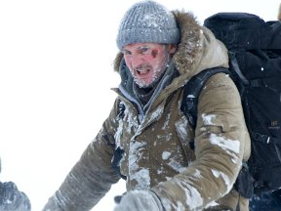
Liam Neeson is not stuck in the wilderness with the wolves. The poor wolves in the wilderness are stuck with Liam Neeson . The actor’s latest vehicle, The Grey , finished in first place at the box office this weekend, banking a strong $20 million in its first week of release nationwide. Last week’s #1, Underworld Awakening , slipped to second, although the return of Kate Beckinsale as Selene added $12.5 million to a nice total of $45.1 million. The second of three new arrivals at the movies this past weekend, One for the Money , settled for third place. The Katherine Heigl-led film made $11.8 million. The Grey Trailer Rounding out the top five were Red Tails ($10.4M) and Man on a Ledge , which disappointed somewhat in its first week of release, earning only $8.3 million. Meanwhile, a couple of potential Oscar favorites rallied a bit in the second half of our weekend top 10, which you can see in its entirety below: The Grey , $20 million Underworld: Awakening , $12.5 million One for the Money, $11.8 million Red Tails, $10.4 million Man on a Ledge, $8.3 million Extremely Loud & Incredibly Close, $7.1 million The Descendants, $6.6 million Contraband, $6.5 million Beauty and the Beast, $5.3 million Haywire, $4 million
“I’m trying to work in studio movies, but they won’t hire me. I get feedback from my agent saying, ‘She’s too much of an indie queen.’ And then on the other side, my name doesn’t get the financing to do a movie over $1 million. And I’m called ‘the indie queen.’ So it’s really a challenging path because I know so much about the indie side of the business. Because I grew up in it. It’s like I’m back in junior high here at Sundance . There’s John Cooper and Trevor Groth and we all grew up together, you know? But it’s different times. And this stuff gets projected onto me. People are like, ‘You’re here every year, you do so many indie movies.’ And I’m like, ‘No, I did Broken English five years ago.'” [ indieWIRE ]
Critics give mostly positive reviews to the Liam Neeson’s wolf-punching thriller. By Kevin P. Sullivan Liam Neeson in “The Grey” Photo: Open Road Films For the third January in a row, Liam Neeson returns to kick ass more than any other 59-year-old we know. This time he isn’t taking down sex traffickers like in “Taken” or whatever he was fighting in “Unknown.” No, this time, it’s wolves. For a movie that was sold on the notion of wolf punching, “The Grey” has received primarily positive reviews for its deeper-than-you’d-think story and characters. Check out what the critics are saying about “The Grey.” The Story “We meet Neeson’s character, a heartbroken loner named John Ottway, on the verge of suicide and thinking back, obsessively, to the woman who got away. His demons temporarily quelled, Ottway boards a small plane with his fellow refinery workers and in one of the most nerve-racking flights ever put on film, the aircraft runs afoul of bad weather and crashes. (For a turbulence wimp like me, this scene was not easy.)” — Michael Phillips, Chicago Tribune The Star “Having paid his quality biopic dues as Oskar Schindler, Michael Collins and Alfred Kinsey, Mr. Neeson has, at least for now, turned to the rougher and perhaps more lucrative work of action heroism. It takes nothing away from his earlier achievements to note that he’s really good at it. He conveys a ferocious and absolute seriousness even when the going gets silly, and he finds the soul in each new angry-everyman cipher he is asked to play.” — A.O. Scott, New York Times The Wolves ” ‘The Grey’ is an unrelenting demonstration that wolves have no opinion. When they attack, it’s not personal. They’ve spent untold millennia learning how to survive, naked and without weapons, in fearsome places like the Arctic Circle in the dead of winter. They aren’t precisely unarmed; they have their teeth and claws, but how far would that get us, even if we had rifles?” — Roger Ebert, Chicago Sun-Times The Director “We’ve come, in vain, to see [Neeson] danse-macabre with wolves, and the film’s director, Joe Carnahan, provides the occasional horror-film sneak attack. He also manages to create one of the movies’ more nightmarish plane crashes and conclude with just the sort of ludicrous finale that paying customers who’ve seen the ads might assume they would be getting a whole film of.” — Wesley Morris, Boston Globe The Final Word “For all its macho standoffs and action set pieces and menacing off-screen howling, ‘The Grey’ is at heart a simple moral fable about how true heroism consists in helping other human beings to live as long and die as well as they can, which is, after all, the task all of us face each day, even when we’re not fending off wolves with broken glass duct-taped to our knuckles.” — Dana Stevens, Slate
Movieline caught up with Will Forte this week in Park City, where he was at Sundance to support Tim Heidecker and Eric Wareheim’s absurdist midnight offering Tim & Eric’s Billion Dollar Movie . In the film, Forte plays the uptight, moustachioed owner of a sword store in a mall that bumbling filmmakers Tim and Eric have taken over following the epic failure of their brush with Hollywood. Forte compared the more restricted sensibilities of his gig on Saturday Night Live to working within the madcap, surrealist stylings of the cult duo. Forte, like Billion Dollar Movie co-stars Will Ferrell and John C. Reilly, also appeared on Heidecker and Wareheim’s Adult Swim sketch show Tim and Eric Awesome Show, Great Job! He recalled his first time on the series, filming a bit called the Lazy Horse Mattress Ad. “I just did exactly what Tim and Eric asked me to do — that was the first time I ever worked with these guys, and it was the best experience,” Forte remembered. “It was so fun, because it’s this advertisement for a mattress store and in between there’s this crazy dream, and for the crazy dream part they just turned the camera on and said ‘Go nuts for a while!’” “They’d turn the camera off for four or five minutes, say ‘Try this, do this here…’ They were so good about giving you direction but also giving you a ton of freedom. It was one of the best times I’ve ever had – it was so therapeutic to just be able to go nuts for a while. You don’t get to do that very often.” His more famous gig on Saturday Night Live , on the other hand, is understandably a much different process. “I love SNL , but it’s different. It’s got to be structured because it’s a live show, so the director needs to know what you’re going to do so he can capture it best; you can go nuts on that show, but it’s a different type of nuts.” As for Billion Dollar Movie , Forte is just one of a number of zany characters populating the first Tim and Eric feature, and while his part is plenty absurd, it’s nowhere near the most bizarre or random bit in the film. (Just wait ‘til you find out what shrim is, folks.) “I’ve always been a fan of the nuttier stuff,” Forte enthused, “and you don’t get much nuttier than Tim and Eric – I mean that as a major compliment.” Sundance audiences didn’t quite know what to make of Billion Dollar Movie ; even crew members admitted to Movieline that you’re either a Tim & Eric fan, or you may not get their brand of random, hyper-ridiculous comedy. Still, if the film is a success, Heidecker told me, they’d possibly explore a prequel – Tim and Eric’s Million Dollar Movie , perhaps? [Photo: Getty Images] Follow Jen Yamato on Twitter . Follow Movieline on Twitter .
Parts of Valérie Donzelli’s Declaration of War , which details a young couple’s struggle to keep their lives together in the face of their child’s illness, are bracingly intimate and believable. Yet there’s so much filmmaking packed around them that they flicker and fade before you know it: Between the Truffautish voice-overs and Jacques Demy-style musical interludes, it’s a wonder anyone in this sort-of drama, sort-of comedy ever gets any rest. Declaration of War is the classic example of the small-scale movie with lofty intentions that simply tries too hard. That’s a shame, because the story’s emotional nuts and bolts are fairly sturdy, and the picture represents the kind of collaborative effort — a semi-autobiographical one, in fact — that generally suggests everyone involved is on the same page. The script was written by Donzelli and Jérémie Elkaïm, who have a child together in real life; they drew from their own experience of dealing with their son’s serious illness. They also star in the film, playing a couple named, adorably, Romeo and Juliette. Romeo and Juliette meet cute in a nightclub, spying one another across the noisy, sweaty terrain. Romeo sends a peanut flying across the room; Juliette, with lightning-quick reflexes and the luck of true love on her side, catches the tiny missile in her mouth. After a sunny montage in which the two run through the streets, cuddle, kiss and eat cotton candy together, they’re suddenly blessed with an infant who cries all the time and simply exhausts them. That’s a normal problem, but the one Romeo and Juliette go on to face is far more daunting: When their son, Adam (played at this stage by César Desseix; in a later scene, he’s played by Elkaïm and Donzelli’s real-life son, Gabriel Elkaïm), is still a toddler, the couple discovers he has a brain tumor. Surgery removes some but not all of this malignant intruder, and child and parents are left to wage a long, uphill cancer battle. Declaration of War is not your average cancer movie. In fact, it’s more about the parents than about the cancer, or for that matter, the child — that’s what’s refreshing about it. The idea, as the title suggests, is that Romeo and Juliette are galvanized by their shared mission rather than torn apart by it. Even though their child is essentially a prisoner of the hospital, they still do plenty of fun things together, like go to parties and amusement parks. Maybe that’s a French balance-of-life thing — parents may be more willing to take time away from the horrors of excessive worry and child care — but if it doesn’t seem exactly believable, the idea of it, at least, is intriguing. The American culture of childrearing suggests that parents ought to erase themselves as human beings for the good of the child: The shared goal of keeping a child safe, happy and healthy must, by necessity, subsume everything else. Gone are the days of ’50s, ’60s and even ’70s childhoods, when benign neglect was a popular parenting tool and children were expected to learn to live in the world of adults, instead of enjoying the luxury of having adults tailor the world to their comfort and safety. Whatever its stylistic flaws may be, Declaration of War doesn’t cave to the idea that children are king; Romeo and Juliette are brought closer by the fear that they’ll lose Adam — he’s a part of their shared life, not a special star that shines well outside of its orbit. Then again, Donzelli may be a little too focused on Romeo and Juliette’s coupledom: Their adorableness gets too many jolts from the saccharine dispenser, and when we’re in doubt about how to feel about them, we have that handy voice-over to give us the play-by-play that covers how they’re surviving as a couple. At one point, that voice-over does a fast-forward recap of their future, and while the outcome of their ordeal seems believable in some ways, the movie Romeo and Juliette are living in – the movie we’re watching – doesn’t adequately point the way toward that future. What’s more, as actors, Donzelli and ElkaÏm seem a little too taken with their own charms; they seem to be always aware of how they’re playing for the camera. Donzelli, who has directed a previous feature — the 2009 The Queen of Hearts — is clearly intent on making a film that feels alive and spontaneous. The picture was shot almost entirely, except for a sequence at the end, with a Canon still camera, using natural light, and it survives the experiment admirably: It has a clean, naturalistic look. But Donzelli just doesn’t know when to stop: There’s so much of everything in Declaration of War — so many unruly emotions (there’s much melodramatic collapsing and crying among the extended family when they first learn of Adam’s cancer), so many stylistic doodads and curlicues (the way, for instance, the sound fades out during moments of deep dramatic intensity) — that at any given moment, you almost don’t know where to look. And the movie’s starkest, most affecting details — like the sight of a sick child being wheeled off for a CAT-scan in a hospital crib that looks altogether too much like a cage — sometimes get lost in the swirl. There’s a great deal of raw feeling in Declaration of War , crying to get out. But the movie is a prisoner of its own stylish waywardness. In comparison, the emotional maze Romeo and Juliette are forced to navigate is nothing. Follow Stephanie Zacharek on Twitter . Follow Movieline on Twitter .
It says something about how far Ice-T has come since his gangsta rap days that his directorial debut, the hip-hop documentary Something from Nothing: The Art of Rap , premiered at Sundance to a house packed with hip-hop heads and white older moviegoers who likely know Ice better from Law & Order: SVU than “New Jack Hustler.” And it says something about the film itself, which explores the historical landscape of hip-hop in intimate detail with over 40 of Ice-T’s fellow rappers, that even the L&O -watching grandmas in the audience were bopping their heads the whole way through. Taking a fresh approach to the music documentary, The Art of Rap sees Ice-T as a tour guide of sorts, navigating the viewer through home and studio visits with fellow MCs on both coasts as he has wide-ranging discussions about the roots of rap, what hip-hop means, and the skills and talent required of a truly great MC. (Among the hip-hop titans appearing in the film: Chuck D, Grandmaster Caz, Afrika Bambaataa, KRS-One, Melle Mel, B-Real, Mos Def, Ice Cube, Snoop Dogg, Dr. Dre, MC Lyte, Q-Tip, Redman, Immortal Technique, Nas, Common, and Kanye West.) As he travels from New York City to Los Angeles — with a detour to Detroit to see Eminem, described as one of the greatest rappers of all time — Ice asks his subjects to spit “something no one’s ever heard before,” resulting in a tapestry of astounding, off the dome freestyles and rare rhymes from some of the best rappers alive. With the intention of keeping the film feeling fresh and present, Ice-T forgoes include archival or concert footage as he revisits hip-hop’s colorful past, a choice that turns The Art of Rap into something of a communal, if dense, oral history of the genre. The doc could be a bit brisker with further edits and more complete in its comprehensiveness (he began with a three hour film before shaving off an hour for Sundance, but has dozens of hours of footage left; an Art of Rap series has been suggested, though Ice-T declined to discuss the possibilities), but with legends like these on hand speaking comfortably to one of their own – spilling their vulnerabilities as artists, exposed beyond the typically hard façade of the genre – it’s all utterly fascinating. Following the film’s premiere Movieline caught up with Ice-T as he and wife/reality TV co-star Coco breakfasted in Park City, where the rapper-turned-actor-turned-filmmaker explained what motivated him to grab his Rolodex and a tiny crew in the first place, why rap needed an Ice-T film more than another album, why the genre doesn’t get the respect it deserves, and how the film’s success or failure will determine his future directorial aspirations. How do you think things went at your premiere? I wasn’t breathing the whole night before, I was so nervous. I put a lot of time and work into it, but you never know. Sundance was our goal when we made the movie — I only wanted to make it to Sundance. This was it for me. And if I could make it here, I was in the right company of good movies. Why Sundance? It was interesting to see it play well here for a crowd of predominantly white, older viewers, and last year Beats, Rhymes, and Life also did quite well. Well, I didn’t know what films would be here when we submitted the film and got accepted. When you think about it, I’m an indie artist; I started out making hardcore records, so I wanted to make something that was raw. I said, I know Sundance is artsy but if I can get accepted there, then I’m on the right track. White people, black people, it really doesn’t matter. It’s just a matter of is it good? So when the movie came on and people started cheering and laughing and bobbing their heads, it was like oh my god – we got it! It’s kind of like not a normal documentary, it’s like a performance experience, an intimate concerts with a lot of the artists that people love. I was just happy. You’ve said that once you decided a documentary on rap should be made it was easy to just call your friends to be in the film, but in terms of the actual filmmaking what was your approach? Did you study documentary form to develop the style you eventually used? Not really. I mean, I’ve been watching movies and I’ve been in the film business for 20 years so I know what’s good. I wanted to shoot it, but I wanted to blur the lines of the filmmaking and behind the scenes. If the mic was exposed, that was good. A lot of the stuff, you see me talking to people; I wanted you to get the idea of what it was like to make it, not just watch it. People are into reality right now so this was like real reality; you’re with me, you’re on the set, I’m going to walk up to this guy and ask him a few questions. So as I edited, I just wanted the camera to feel like it might be anywhere at any moment. There are times people are talking and you’re showing the wall, or his hands, or his shoes. And then we shot with a Super 8 to kind of break up the cleanness of high definition. And we shot the big cinematic shots because I felt that if you just shoot the talking heads the movie becomes claustrophobic, so it’s just like, listen, listen, listen, breathe. Listen, listen, listen, breathe. Those sweeping overhead cinematic shots, of the cityscapes over New York City and Los Angeles and the places you visit in between, also do well to connect visually to a sense of place and geography… even though that also makes it conspicuous when you don’t visit, say, the Bay Area or the South. That’s what Mos Def said in the movie — the music is dictated by the geography, and that’s why New York sounds different than Detroit, different than L.A. And you know, I couldn’t go to the South; the biggest problem I ran into with the movie was once we started, just the lack of time and the amount of film we shot. When I got the nod for Sundance I had a three-hour film and they said the longest they’d run them here is two. We had interviewed 54 [musicians]; even to make a three-hour cut we had 47, and I had 25 people waiting to be filmed when we had to wrap shooting! So like Chuck D said [at asked why this person wasn’t in it and why that person wasn’t, and you know what? The movie’s not about that, it’s not about ‘Come see your favorite rapper.’ I feel every form of rap, every style, was represented. Are you currently considering extending this two-hour film somehow into something else, perhaps a series? I won’t speak on that, only because we don’t want to lower the integrity of this as a film. We want it to be a film, and once it does its dance as a film, whether it’s a theatrical release which looks like it’s about to happen… I’ll put it like this: We’ve got two hours on each artist. Wow. That’s pretty incredible considering that many of the rappers we only see for a minute or two at most. [Laughs] I have two hours! So you look at KRS-One; KRS-One talked about so much stuff, but my job is, let’s show the part where KRS talks about being vulnerable, like the moment where he got dissed. I want you to see the different dynamics of these artists. See, when you take young artists, right, young artists have their guards up. They never want to show any weakness, they’re scared. They’re worried about their persona. When you talk to people once they’ve been down the lane, they’ll tell you the story. They’ll say, ‘Wow, man — I’m Public Enemy and Mel was dissing us!’ Now they’re comfortable with themselves. Even the stories, WC was talking about how I would use kids as teleprompters. Early in my career I wouldn’t have said that, but now I’m like, let’s laugh about it! I think that’s part of this film’s charm, too. There’s a segment where you’re talking with Ice Cube and 50 Cent is referenced; Cube jokes that you don’t want to get rich and die trying. Was that a jab at Fiddy, or just an offhand remark? No, that’s not a diss -– it’s more like saying, this is my play on what you said. I don’t want to get rich and die trying. 50 Cent said ‘Get rich or die trying,’ but you can get rich and die trying. So once you made it now, let’s not fuck it off. That would be part two of Fifty. The next one is Get Rich AND Die Tryin … I just think that the way that rappers speak about each other in the movie is very endearing, how they speak about how they were inspired by this one, and also I think really showing Grandmaster Caz as one of the unsung heroes. Grandmaster Caz wrote “Rapper’s Delight!” It’s important shit. That’s a nice quality to the movie; it engenders appreciation not only between the artists that you interview, but having MCs spit live, directly into the camera without music really highlights rap as a performance and an art form. And you’ve got to remember this: Nobody knew they were going to rap. That’s part of being a rapper. Nobody knew they were going to rap. It’s like at the [Sundance premiere Q&A] the guy said, ‘Ice, can you quote a rhyme?’ Yeah, I’m a rapper – I’d better know how to fucking quote a rhyme! I pulled Rakim outta my ass, and that’s it. But during the interviews I said, ‘You want to spit something – you got anything in the head, want to say something no one’s ever heard?’ And bam! They just, bam! I didn’t tell anyone, ‘You’re going to rap.’ I didn’t tell Kanye he was coming over to rap. But you knew they could, because that’s what they do . Exactly! That’s what they do. You can’t interview a basketball player on a basketball court, with a basketball within his reach, and he won’t take a shot. It’s just what they do. He’s going to want to dribble the ball – he’s at home! So when you get a rapper in a comfortable situation with one of their friends and say, ‘Spit something,’ they might go, ‘Aww, come on Ice!’ Then they might go, ‘Hold on…’ bam! And another thing I did in the movie, if you really watch — some of the rappers in their rhymes kind of fuck up. They kind of slur words, because they’re connecting two rhymes together. That’s the art. You know, what you hear on records is something different. But when you hear it live, that’s all good. I mean, hopefully none of the rappers are so vain that they’re like, ‘Ice, you saw me fucking up.’ But that’s just what they did. That’s real shit. Which of your interviews was the most challenging to pull off, or to break through to? None. None of them. Every interview was just as easy to do, the only hard part was getting Ice-T, them, and a camera crew from London in the same place at the same time. How did you find your crew? When I came up with the idea, my manager said ‘I’ve got somebody who might be interested in doing it.’ We hooked up with a guy named Paul Toogood, he does a TV show called Songbook where they interview singers and they break down a song. It’s right up his alley. He said, not only do I want to do it, I’ll get the money to do it. I had to find somebody who was as passionate about it as me, and thank god – these guys are incredible cinematographers… the thing about this film is there were only five people that made it. There’s Paul, the cinematographer, myself, my guys that helped me wrangle the artists, Coco, Little Ice, and the sound crew. It’s apparent how small your crew is in the film when you have trouble fending off onlookers and fans while interviewing Q-Tip in New York… We just grabbed Q-Tip on the corner and we started shooting, I’ve got one of the homies out there blocking, I’ve got a camera guy and a boom, and we just go. So it’s very guerrilla, but I think that’s part of what makes the movie good. That comfortable distance of time and age that you mentioned that allows you to be more open with your experiences – do you feel like the impetus for making this film came from a desire to revisit where you’ve been in your career, to reconnect with your roots after transitioning into acting and television and beyond? I think it’s trying to do something for hip-hop, but do something that I am the only one who’s really capable of doing it. It’s kind of like, Ice-T could make another record, but we all know that. Now Ice is in another lane, he’s moved up, he’s got different credentials. So now it’s my job; I’ve got to make a movie. I’ve got to give hip-hop something they didn’t even know they wanted. Right now you make records and people don’t listen to them. You write a book and some people read. But people go to movies! And I wanted to direct; I have a lot of films that are in my sights, but I always learned in business that if you’re going to start a new business, go for the lowest hanging fruit. Start with something you know the best, first. And this is what I know the best. So I said, let me do something that’s important, that’s my way of giving back to hip-hop, and if it’s successful I’ll move on with my filmmaking career. If it’s not, I’ll re-assess my mistakes, maybe try again, or I’ll stop. But what is your barometer for success with this film? When will you be happy or satisfied with the results? It’s really just the response of the people. I never go by the critics, because critics’ jobs are to criticize. So a critic will look at you and how well you’re dressed but they’re looking for something they don’t like. Film journalists, I respect. But anyone who uses the word ‘critic’ in their description, I don’t fuck with them. But I can tell from the fans. Now, the internet and all the ways people can get back at you… you’ll know if you did something good or not. My first barometer is the hip-hop community. If they love it, and they’re like, ‘Man, you did something great. Thank you, Ice…’ That’s the first thing. Secondly will be the people and how they respond to it. So far, I went home last night and went through 30 reviews and didn’t get one bad, not one. I’m speechless! In the movie, we ask the question ‘Why don’t you think hip-hop is respected?’ Well, to have this film respected kind of says it is respected. It’s maybe not vocal, but it is, because people loved the movie. So it is respected. Follow Jen Yamato on Twitter . Follow Movieline on Twitter . Get more of Movieline’s Sundance 2012 coverage here .
Brand-new clip finds the band trapped within a nightmare of its own invention. By James Montgomery Evanescence’s Amy Lee on the set of their “My Heart Is Broken” video Photo: Matt Elias/MTV News After nearly a month spent touting its various ethereal qualities , on Tuesday (January 24), Evanescence premiered their video for “My Heart Is Broken,” a dark, dreamlike thing that pushes Amy Lee’s claustrophobic musings to the next level. And somewhere beyond that too. As Lee told MTV News back in December, the look and feel of the “Broken” clip was very much influenced by the British fantasy/horror flick “Paperhouse,” about a young girl who creates vivid dream worlds to escape the harsh reality of everyday life, only to eventually realize she’s stuck in those dreams — inspiration that certainly resonates with the song’s lyrics, which are very much about being trapped in a dark, desolate place and trying to free one’s self despite mounting evidence to the contrary. Working with director Dean Karr, and aided very much by fiber-optic technology, Evanescence have created a video that is both haunting and haunted. It opens with Lee suspended in an inky void, a single light projecting from her finger. While her bandmates bash away in the blackness, she slowly begins to fill her emptiness by creating a dream world — a fallow field, a sea of stars, a crumbling room — until she eventually realizes that, in spite of her attempts, she is just as trapped as she was before. At clip’s end, the viewer is left to wonder whether she has the power to escape (though a cracked mirror seems to indicate she can), which, in a way, only further connects the video to the song itself: Like Lee sings, each of us have within ourselves the ability to free ourselves from any situation; whether we do or not is largely our decision. The first step seems to be realizing that the walls we surround ourselves with are largely of our own creation. The rest is up to us. What do you think of the “My Heart Is Broken” video? Share your reviews in the comments! Related Artists Evanescence
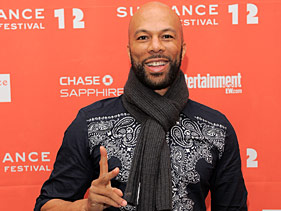
Sundance represents an opportunity to ‘[push] forward with Common as an actor and as a producer,’ the rapper tells MTV News. By Josh Wigler, with reporting by Josh Horowitz Common at the 2012 Sundance Film Festival Photo: Jemal Countess/Getty Images PARK CITY, Utah — When you’re making your debut as a producer and lead actor in a feature film, it doesn’t hurt to surround yourself with stellar actors like Danny Glover, Charles S. Dutton, Dennis Haysbert and Michael K. Williams. With talent like that on your side, it’s nearly impossible not to produce good work. That’s Common ‘s hope, at least. The rapper/actor makes his first turn as a leading man in a feature film in “LUV,” the Sundance Film Festival drama about an ex-con who leaves prison and strives to mentor his troubled nephew upon release. The film represents a lot of firsts for Common: It’s his first starring role and it’s the first movie he’s ever acted in and produced to appear at Sundance. “This is something that is me,” Common told MTV News at the fest. “And it’s a part of what I want to do pushing forward with Common as an actor and as a producer.” The Chicago MC is no stranger to appearing onscreen, of course. He’s had memorable roles in movies like “Wanted” and “Terminator Salvation,” and he stars on the AMC western “Hell on Wheels.” But this is Common’s first time in an independent movie, and the differences between the indie world and the studio system became abundantly clear to him very early on. “Things are just different. But what’s still cool about it is you’re really using your artistic creativity to come together and make the best thing, because you don’t have that many resources,” he said. “You don’t have the bigger budgets, you don’t have the things that [studio films have]. You need to use total creativity to make things rise. “So this is a first for me — and it’s a great first,” he added. The 2012 Sundance Film Festival is officially under way, and the MTV Movies team is on the ground reporting on the hottest stars and the movies everyone will be talking about in the year to come. Keep it locked with MTV Movies for everything there is to know about Sundance. Related Videos Sundance 2012: Interviews From Park City Related Photos Celebrities Hit The Ground At Sundance 2012 Film Fest Related Artists Common