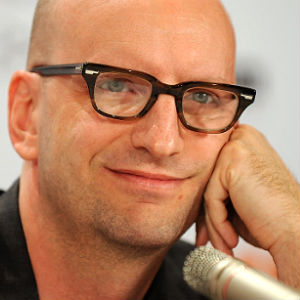
Anyone who’s seen Contagion (or, let’s be honest, even just the trailer for Contagion ) knows that Steven Soderbergh is not precious about keeping his biggest stars breathing for the duration of his films. And when you think about it, that is kind of an awesome against-the-tide trend that few directors — okay, few studios — have the wherewithal to attempt. Chatting with the UK’s Independent about Contagion and Haywire , Soderbergh dropped some science on the art of manipulating the very essence of stardom in movies to great effect. “It’s always good to kill movie stars,” he told the Independent. “I think that the two most important things that have happened to that aspect of movies in the last 50 years are Hitchcock killing off Janet Leigh in a way that nobody had ever dreamed of doing – taking his heroine and killing her off after 40 minutes – and… Mike Nichols casting Dustin Hoffman in The Graduate . That changed everything.” “Now it’s back to the way it was before that single decision totally turned the world upside down in terms of what was people’s idea of a movie star. That one stroke ushered in the great actors who followed, De Niro, Pacino and Nicholson.” So how does one shake up audience expectation again in movies chock-full of A-listers? [ Spoilers ] Have them pummeled to a pulp by unknown MMA fighter-ladies! Cut their brains open in the first act! Blame it all on chickens! [ End spoilers ] All hail Soderbergh! Kill your idols! (Figuratively speaking.) [ The Independent via Movie City News ]
Tran Anh Hung’s Norwegian Wood is meticulously faithful to the book it’s based on, Haruki Murakami’s 1987 novel of the same name: It takes no significant liberties with the plot, and it captures the novel’s delicate, half-hopeful, half-mournful tone. So why, unlike its source material, does it feel only half-alive? It’s so easy, too easy, to get lost in the book-vs.-movie debate. But a movie like Norwegian Wood is a peculiar case – its intentions are sterling, and it’s hard to pinpoint any technical flaws. The problem, maybe, is that it’s trying too hard; Tran has such firm control over the storytelling that the resulting picture has no room to breathe. Watanabe (Kenichi Matsuyama) is an aimless young university student in late-1960s Tokyo. His closest friend, Kizuki, committed suicide at age 17, leaving behind his childhood love, the fragile Naoko (Rinko Kikuchi, the Japanese actress who made a splash in the 2006 Babel ). Watanabe “inherits” the friendship of Naoko, and it seems that the two might fall in love. But Naoko disappears – the intensity of the blossoming relationship is too much for her, sexually and emotionally, and she enters a retreat-like sanitorium in the country. Though Watanabe continues, sweetly, to pine for her, he also starts tagging along with his more sexually adventurous roommate, Nagasawa (Tetsuji Tamayama). He also embarks on a fledgling friendship with another student, Midori (Kiko Mizuhara) ,who, unlike Naoko, seems boldly certain about what she wants out of life. She is, perhaps, a little too bold for Watanabe: She outlines her idea of the ideal lover (essentially, a man who will be at her beck and call, so she can then turn him away). And she informs him that she already has a boyfriend, anyway. Watanabe continues to visit Naoko in her forest retreat, though his time with her is nearly always supervised by Noako’s half-protective, half-possessive roommate, Reiko (Reika Kirishima). The rest of Norwegian Wood outlines the rather delicate dance between the things Watanabe might think he wants and the things he may actually be able to have. Tran adapted the screenplay himself, with obvious care and precision (though the resulting movie doesn’t do much to address, as Murakami’s novel did, the social unrest among young people in late-‘60s Tokyo). His actors have plenty of moments of grace and subtlety, particularly Kikuchi – somehow, she makes us see a deeply troubled soul in Naoko, not just a wan, self-absorbed victim of circumstance. And there isn’t a single frame in Norwegian Wood that isn’t gorgeous to look at: The cinematographer is Mark Lee Ping Bin, who also shot In the Mood for Love (sharing credit with Kwan Pung-Leung and Christopher Doyle), and every inch of the movie’s surface fairly glows. Or, rather, every millimeter glows — the picture creeps along at a very leisurely pace, which shouldn’t by itself be a problem. Norwegian Wood is Tran’s fifth feature. (The director, who was born in Vietnam and who lives in Paris, is perhaps best known for the 1993 The Scent of Green Papaya .) I kept watching Norwegian Wood waiting for that pleasant, wide-awake state of hypnosis to kick in, the slipstream effect that a well-constructed, slow-moving picture sets into gear. But for reasons that are hard to pinpoint, Norwegian Wood seems to be hampered by its own integrity; it’s like a ghost wearing a trailing nightie that’s just too long. Would the movie be more effective if every lingering shot were cut by just a second or two, or if the dialogue between characters had just a little more energy and crackle? Maybe. But whatever it is that’s wrong with Norwegian Wood couldn’t possibly be remedied by any quick fix. That’s both its tragedy and its virtue. Follow Stephanie Zacharek on Twitter . Follow Movieline on Twitter .
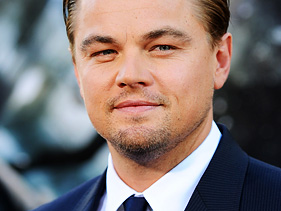
Lukas Haas, Tom Hardy and Ken Watanabe share the highs and lows of making the mind-bending flick. By Kara Warner Leonardo DiCaprio at the “Inception” premiere on Tuesday Photo: Robyn Beck/ Getty Images HOLLYWOOD — The anticipation for “Inception” hit a fever pitch Tuesday night , when the film’s stars descended upon the U.S. premiere at Grauman’s Chinese Theater. Tourists and fans alike crammed together, trying to catch a glimpse of the star-studded black-and-red carpet, backed by a continuous loop of Hans Zimmer’s intense, ominous score. The stars of Christopher Nolan’s latest mind-bender were less-than-ominous, however, when they shared the highlights of their experience working on the movie, which opens on Friday. For Lukas Haas, the most fun aspect of shooting “Inception” was the stunt work … and getting to slap his longtime friend Leonardo DiCaprio in the face. “I had to slap Leo a few times,” Haas told MTV News. “I was a little hesitant [to do it]. He’s been a friend of mine for a while. I pushed him in a big tub of water; it was fun. I loved the stunts.” The stunts were also a highlight for Tom Hardy, but for different reasons. “I got the pipe and slippers job,” he admitted happily of playing Eames, an expert at assuming others’ identities within dreams. “[Joseph Gordon-Levitt] took most of the weight of that. I got to sip tea and wear slippers.” When asked if he was harassed by fellow castmates for lounging around while they did all the work, Hardy said they hadn’t, but he was happy to relax a bit, having just finished the upcoming cage-fighting flick “Warrior.” And though veteran actor Ken Watanabe did his share of stunts for the film, he was more frightened by the risks the movie posed to his mental state. “I’m not a big dreamer, but after seeing the screening I had a nightmare,” Watanabe told MTV News. “I woke up and felt like I had [been the victim of] inception from Chris Nolan.” Check out everything we’ve got on “Inception.” For breaking news, celebrity columns, humor and more — updated around the clock — visit MTVMoviesBlog.com . Related Videos ‘Inception’ Clips MTV Rough Cut: ‘Inception’ Related Photos Leonardo DiCaprio, Ellen Page, More Premiere ‘Inception’ In L.A.