Tag Archives: furniture

Book Excerpt: Guillermo Del Toro Dishes in FilmCraft: Directing

Oscar-nominated director Guillermo del Toro has been in the craft of filmmaking since he was 16, filling roles as diverse as P.A., assistant director and makeup effects. He made his first film Cronos at 28 and received his Academy Award-nomination in 2007 for Pan’s Labyrinth , making him one of the most prominent filmmakers to emerge from his native Mexico. In a candid interview, he explains how he learned filmmaking in author Mike Goodridge’s new book, FilmCraft: Directing . Goodridge, who until recently served as editor of Screen International and is now CEO of the international sales and financing company Protagonist Pictures wrote the book which features in-depth interviews with 16 of the world’s celebrated and respected film directors including Del Toro, Clint Eastwood ( Million Dollar Baby ) Paul Greengrass ( The Bourne Supremacy ), Peter Weir ( The Truman Show ), Terry Gilliam ( Brazil ) and Park Chan-wook ( Oldboy ). These and other filmmakers share their insights and experiences on development, storytelling/writing, working with actors and cinematographers, as well as other areas necessary to completing a successful film. In this excerpt from the book, which will be available via Amazon beginning June 15th, Guillermo del Toro gives his take on the mistakes and triumphs of his first movie as well as the first movie of other filmmaking greats, a life lesson courtesy of John Lennon, Tom Cruise’s take on filmmaking, what made him cry during his first movie, making ‘everything’ theatrical and why having “enough money” will get you, err… screwed. Director Guillermo Del Toro excerpt from FilmCraft: Directing : I came from the provinces, from Guadalajara, which is the second largest city in Mexico and nobody makes movies there. When I was a teenager, I started building relationships in Mexico City and I started as a blue-collar member of the crew. I was either a boom guy or a PA or an assistant director. I was makeup effects. I did my floor time in both TV and movies. My first professional work on a movie was at the age of 16 and I made Cronos when I was 28, so I had twelve solid years of doing just about everything in between. If somebody needed something, I would do it. I even did illegal stunt driving. But what happened is that I learned a little bit of everything and, once you put your time into exploring everything, you get to know what every piece of grip equipment is called and how many you need, and how to do post — I edited my own movies and did the post sound effects on all of them. So to some extent, directing came naturally to me from my first movie. My first movie Cronos is not in any way a perfect movie, but it’s a movie full of conviction. When you make your first movie, whatever mistakes you make are very glaring, but if you have conviction, and I would even say cinematic faith, this also shines through. I recently watched Cronos again and I thought, “I like this kid,” he has possibilities. After your first movie, with a little bit of craft, diligence, and more importantly, experience, you learn to make virtues out of some of your defects. What I mean is that any first movie has good moments, even if it is not entirely perfect. It can be a filmmaker as famous as you like, such as Stanley Kubrick, whose first film F ear and Desire (1953) is about 70 minutes long and stars Paul Mazursky. It is very stilted, very awkwardly paced, full of stuff that doesn’t work, the actors speak in a patois, and it has a very non-naturalistic rhythm. But what is incredibly fascinating is that the very stilted quality, that artificial rhythm, eventually became his trademark in later films. He bypasses it in more naturalistic films like The Killing (1956) and Paths of Glory (1957), but comes back to that type of hyperrealism or strange filtered reality in his later movies, and he is in complete control of it there. Kubrick used the tools he acquired in making other films to transform what you thought was a defect in Fear and Desire into a virtue. In my case, when I make movies in Spanish, starting with Cronos , I purposefully avoid characterizing certain things in the conventional Hollywood sense, and that comes out as a blatant defect. Specifically, I had shot a much longer film, including a whole section between the husband and wife where she noticed that he is getting younger and they start falling in love again. At night, he would come and sleep underneath her bed. But I couldn’t make it work. The way I staged it was simply too stilted and strange, and I didn’t feel comfortable leaving it as part of the movie. Even to this day, I think there is a mix of different tones in that movie. I change from the dramatic to the comedic too often. I try to do it generically, mixing horror with melodrama, and there are moments in Cronos that are really jarring for me. I sometimes allowed Ron Perlman to be too broad and it simply didn’t work. I think I did it better in my later movies. I don’t know whether that mix of genres is my trademark. One of the things that was very influential for me when I was kid was the book by Tolkien in which he discussed fairy stories in literature. I remember him saying in that book that you should make the story recognizable enough to be rooted in reality, but outlandish enough to be a flight of fancy. So I try to mix an almost prosaic approach, or at least a rigid historical context, with fantastic elements. I treat the fantasy characters very naturalistically or else I root the story in a precise context like The Devil’s Backbone or Pan’s Labyrinth , or in Cronos , post-NAFTA Mexico. As Tolkien says, when you give the audience a taste of what they can recognize, they immediately accept the rest of the concoction; it’s almost like wrapping a pill in bacon for a dog to swallow it. You need, for example, the bacon of domesticity in Cronos . I wanted to shoot that family as a very middle-class family in Mexico. I wanted a kitchen that looked like a kitchen you’d recognize, a really ordinary bedroom and very mild, neat clothing design. Out of that middle-class reality, I wanted a single anomaly — the mechanical clockwork scarab device. If the audience believes that this abnormality is as real as it can be, they will respond to the story. Many directors think that the more you keep the creature in the shadows and don’t show it, the better it is, but I don’t believe that. I don’t have monsters in my movies, I have characters, so I shoot the monsters as characters. For example, in Hellboy , I shot Abe Sapien, the fish-man, like any other actor. I didn’t fuss about it, I shot the monster with the same conviction that I would shoot Cary Grant or Brad Pitt; in other words, if I shot it in a different way than I would the regular actors, I would be making a mistake. What I do in every movie very consciously is to ensure that this anomaly is shot two notches above actual reality, so it’s weird enough to accommodate the monster, but not too stylistic that it’s unrecognizable. For example, everything you see in Pan’s Labyrinth — the house, the furniture — is fabricated to be slightly more theatrical than it needed to be. The uniforms for the captain and his guards are exactly what were worn at the time, but we tweaked the cut and the collar to make them more theatrical. Everything around the creatures, therefore, exists like a terrarium for them to live in so that when it comes to shoot them, I can shoot them in a normal way. I was very nervous on Cronos , but the adrenaline carried me through. Directing is almost like keeping four balls in the air on a monocycle with a train approaching behind you. There were days, for example, like the scene with the husband sleeping under the bed, where I knew I’d fucked up. The makeup was wrong and we didn’t have time to go back and change it, we didn’t even have time to test it. The light was wrong. Everything was wrong, and I arrived home to my wife that night and cried. I said that I had destroyed the scene I had dreamt of for years. I didn’t have the luxury of reshoots. Of course, you can only break down in front of your wife, or your partner, or your parents. In front of the staff on the film, you need to keep total control. You don’t want anyone thinking the general is afraid—you have to be leading the charge. There are two very lonely positions on a movie set: the actor and the director. The cinematographer has a close liaison with the director, the gaffer, the grip, etc. The director is alone on one end of the lens and the actor is alone on the other. That’s why the great, most satisfying partnerships on set are when a director and actor come to love and support each other. Being from Mexico is an enormous part of who I am as a filmmaker. The panache, the sense of melodrama, and the madness I have in my movies that allows me to mix historical events with fictional creatures, all comes from an almost surreal Mexican sensibility. I’m really prone to melodrama. This comes from watching Mexican melodrama obsessively, to the point where I was watching The Devil’s Backbone with a Spanish architect and the architect said to me that it was more Mexico than Spain; the characters were acting like Latin characters. If my father hadn’t been kidnapped in 1998 then frankly I would be making Mexican movies interspersed with the European and American. Since 1998, I cannot go back to Mexico because I would be too visible a target, especially when there is a printed schedule of where I am going to be every day for the entire run of a shoot. I think of the audience every second during writing; I think of them as me. I question how I would understand something, or what would make me feel a certain way. When I’m shooting a scene that moves the characters, I weep, I feel the emotion on set, so when I am writing it, if it doesn’t work, I don’t print it out until I have that feeling. Creating tension is a different skill to creating fear. For fear, you try to create atmosphere. You ensure the scene is alive visually before anything is added, then you craft the silence very carefully because silence often equals fear. Rarely can you elicit fear with music unless the music is used very discreetly, underlining the scene in a way that is almost invisible. When the Pale Man appears in Pan’s Labyrinth there is music, but Javier [Navarrete, the film’s composer] is almost just underlining his movements. It becomes like a sound effect. Silence is one of the things that you learn to craft the most because there is never real silence in a movie; you always have distant wind, cars, dogs barking, or crickets in the distance. I think really well-crafted silence creates tension, and by the same token an empty frame, an empty corridor for example — if it’s empty in the right, creepy way — is a tool. You know if a scene’s not working on set, and as you get older and craftier, you can learn to re-direct it in post. You can patch it up in your coverage and recover it—you can even end up with a great scene because beauty rarely comes out of perfection. For something to work, I think it has to come out of emotional turmoil. You can’t encapsulate the perfect melody; a huge component of it is instinctive. Then, of course, there are the actors. Many times you storyboard and rehearse with the actor, and then you come to the scene and it’s not working. But then you try something different and something suddenly happens that makes it work. It’s very raw. It’s funny, we enthrone this idea of the perfect filmmaker, this myth of the all controlling, all-seeing, all-encompassing person, but even for Kubrick or von Stroheim there is a part of the process that is entirely instinctive. I once asked Tom Cruise about it and he confirmed that Kubrick often found things in a panic on Eyes Wide Shut (1999). I love imperfection. I have been friends with James Cameron since 1992 and because he is so incredibly precise, people sometimes don’t think he is human, but the beauty of being a close friend is that I’ve seen him burn the midnight oil and toil and sweat. These imperfections in the façade are what make the work more admirable. Art depends on that human touch that doesn’t make perfection; in fact the filmmakers and films I am most attracted to require a level of human imperfection. On the big effects films, you try to prepare thoroughly but there are always surprises. John Lennon said, “Life is what happens when you are making other plans” and I think film is what happens when you are making other plans. You come onto the set and either the actor or the material doesn’t come out as you expect and the film comes out better for it. If you have either experience or inspiration, one of the two will get you through. One you accumulate through the years, the other you cherish. As a young filmmaker you’re full of inspiration and if you are unlucky you are only trading it in for experience. You need to remain on dangerous ground to continue to be inspired. I am always tackling things I shouldn’t tackle and meddling with stuff I shouldn’t meddle with. You never have enough money. If you ever feel one day you have enough money, that’s the day you’re fucked. FilmCraft: Directing is available via Amazon beginning June 15th. Follow Movieline on Twitter .

Read the original post:
Book Excerpt: Guillermo Del Toro Dishes in FilmCraft: Directing

‘Girls’: The Reviews Are In!

Critics praise HBO show while questioning whether it will connect beyond urban audiences. By John Mitchell Lena Dunham in “Girls” Photo: HBO HBO’s new comedy “Girls” is easily the most buzzed-about series debut so far this year. From the almost uncomfortably realistic sex scenes and sharp dialogue to series creator/producer/writer/star Lena Dunham’s Louis C.K.-style multitasking — not to mention the show’s similarities to and differences from that other landmark show about four single females in New York — people cannot stop talking about “Girls.” Luckily for everyone involved, most of the things being said range from good to rave. “Girls,” which premieres Sunday at 9 p.m. on HBO, has critics using words like “groundbreaking” and “revolutionary” to describe the series, about four friends (Dunham and co-stars Allison Williams, Jemima Kirke and Zosia Mamet) in their early 20s trying to get their lives off the ground in NYC. Here in the MTV Newsroom , we’re as enraptured with the show as everyone else seems to be, but in her otherwise rave review in Salon , Willa Paskin makes an observation about “Girls” that has come up often during chatter about the new series: that its specificity, minus the fantasy element that made middle America fall in love with “Sex and the City,” may make the show unrelatable to those outside East Coast urban centers. “My concern was that ‘Girls’ speaks so specifically and accurately to the experience of me and my census buddies — and to be clear, that’s urban white girls with safety nets; have at us in the comments — that people would either write it off as navel-gazing, snark at the innate privilege undergirding the whole thing, or find it unrelatable,” Paskin writes. That concern doesn’t diminish the show’s quality, though, and the site goes on to call the show “smart, bracing, funny, accurately absurd, confessional yet self-aware.” “Few series come out of the box as brilliant as ‘Girls’ does,” Tim Goodman rhapsodizes in The Hollywood Reporter. “The new HBO series from Lena Dunham (‘Tiny Furniture’) is one of the most original, spot-on, no-missed-steps series in recent memory. For her part, Dunham, who writes, directs, stars in, created and executive produces the series, is a talent as unique and refreshing to the medium as Louis C.K. — high praise indeed, as FX’s ‘Louie’ is one of the most critically acclaimed series on television.” Sex factors heavily in “Girls,” but unlike the glamorized romps we saw on its HBO foremother “SATC,” the sex acts depicted here are graphic, button-pushing and realistic but not gratuitous. According to Verne Gay in Newsday, the sex serves as a visual manifestation of the characters’ internal issues. In a four-star review, Gay writes, “Hannah [Dunham’s character] and the show are all about internal conflict and so is the humor, while sex — and fair warning, it’s pretty graphic here, which may be the handiwork of Apatow — is the metaphor for all that conflict. It’s grotesque, malignant, unpleasurable and a particularly devious torture chamber, at least for the women, who still submit to it.” The Los Angeles Times isn’t as unconditional in its praise, calling the show “nothing short of revolutionary” but “hard to love.” “There is a cool cleverness to the show that is both attractive and off-putting,” Mary McNamara writes. “The characters are flawed and hyper-aware of their flaws, the stories so bent on covering every angle of self-examination that there is no real role for the viewer to play. Which makes watching it an intellectual rather than emotional experience.” The show positions itself as being a far more realistic version of the girls in the big city trope that “SATC” glamorized, which the Atlantic Wire ‘s Richard Lawson sees as a reflection of the times the two shows premiered in. ” ‘SATC’ was fantasy and fable, with a few bits of relatable relationship stuff thrown to the commoners like chum. ‘Girls’ is something else; it’s a very particular, very of the moment dissection of mundanely funny minutiae, of boredom and anxiety in these brownly grim times,” Lawson writes. “Though I guess it’s possible the difference really is merely generational — the rich late ’90s gave us Sex, while the wobbly ’10s give us Girls, a witty and occasionally touching glimpse into our immediate neighbors’ lives. They’ve got something here, it just remains to be seen how big a thing it is.” That “Girls” could be the next big things seems like the consensus opinion of critics, but will this story of a group of friends struggling to discover themselves and succeed in the big city connect with audiences in Peoria, Illinois? Lawson seems to think it may. “Who knows, it could be that soon enough young women the nation over will be saying they’re ‘such a Hannah’ or ‘totally a Marnie,’ ” he writes. “Maybe fabulous is officially out. Maybe the new aspiration in these punishing times is, simply, to aspire.” Are you excited for the series premiere of “Girls” Sunday on HBO? Let us know if you’ll be watching in the comments below!

Originally posted here:
‘Girls’: The Reviews Are In!

Elisabeth Moss in “Me In My Place” for Esquire of the Day

Wow….This is a horrible fucking casting for a feature in a magazine that is supposed to involve a girl of interest, like a model or actor, even at a low level, to prance around her house in her underwear….It’s supposed to give you a glimpse into a world you will never have accesss to with a pussy you will never have access to…not something you don’t want access to…but in the defense of the photographer, who I have had a few emails back and forth with over the years…..at least he kept her pretty fucking covered up so I can focus on other things like where she got her furniture…yes these pics turned me into a gay interior designer…..that’s how hot this bitch is.

See the original post:
Elisabeth Moss in “Me In My Place” for Esquire of the Day

Guy On Maury Show Says The Baby Daddy Is The Owner Of Myspace “Tom” [Video]

Continued here:
Guy On Maury Show Says The Baby Daddy Is The Owner Of Myspace “Tom” [Video]

Celebrity Cribs: Mo’ Money For Mama Tina… Beyonce’s Mom Sells Her Manhattan Apartment For $5.6 Milli

It sure pays to be BeyBey’s mommy! Mama Tina just sold the apartment she’s owned at One Beacon Court building in Midtown Manhattan since May 2005. Before we show you the lay of the land you’ve got to read the description of the place that was posted at The Real Estalker clowning Mama Tina’s taste in home decor. Let’s just say, they’re not running out to purchase House of Dereon’s home collection anytime soon: It’s currently in contract to be sold with the last asking price set at $5,600,000. Property records show she paid $2,927,468 for the 42nd floor condo crib in the deluxe mixed-use tower that includes monthly maintenance of $2,522 plus another $1,436 in real estate taxes. Listing information reveals the apartment is 1,729 square feet and contains two split bedrooms–on on either side of the apartment for maximum privacy, each with private facility, plus a half bath for guests. An entire wall of floor-to-ceiling glass in the 27-foot long living room frames the exact sort of city and park view folks with the means to do so will happily pay many millions. The floors are a rich chocolate brown, the ceilings pleasantly high, the walls a sandy beige and the furniture, besides the glass water fall coffee table and the fab 1940s era chairs covered in tur-qwahze (p)leather near the window are beyond atrocious. The two-toned faux suede sofa? OMG. No. We want to like the orange chair because orange is Your Mama’s favorite color but we just can’t get past the Mickey Mouse ears shape of the thing. The dark wood floors extend into both of the bedrooms that each have panoramic city and park views and marble bathrooms. The master has not just one but two good-sized walk in closets and a gawd-awful suite of silver-leafed furniture that we’d say has an Art Nouveau/Gaudi-esque quality iffin it weren’t so, well, gaudy. The over-sized tufted leather –headboard in the guest room is a zillion times better but the swagged drapery–and that there is what we call drapery, hunties, and not curtains–invokes painful spasms of decorative disharmony and discord. The (not surprisingly) high monthly maintenance fees at One Beacon Court provide its affluent residents and guests white glove service with 24-7 doorman and concierge, valet parking, fitness facility, party room and a play room for children where we’d bet our long-bodied b*tches y’all would be far more likely to find a Nigerian nanny or French au pair than an actual parent. Pure comedy! Keep clicking for the pics…

Continued here:
Celebrity Cribs: Mo’ Money For Mama Tina… Beyonce’s Mom Sells Her Manhattan Apartment For $5.6 Milli

Austin Leather Furniture Store Expands to Houston

http://www.youtube.com/v/O0jUvVfbQzU

Continued here:

HOUSTON, Texas (SEND2PRESS NEWSWIRE) — Town and Country Leather announces the opening of their second retail leather furniture store in Houston Texas, located in the heart of the Galleria district at 1749 Post Oak Blvd., at the corner of San Felipe in the Post Oak Plaza shopping center, next to other prominent furniture stores. Broadcasting platform : YouTube Source : Send2Press Newswire Discovery Date : 12/08/2011 19:52 Number of articles : 2

Austin Leather Furniture Store Expands to Houston

What The Hell??? Principal At High School For Immigrant Children Uses Students As Her Own Personal Day-Laborers

Seriously, who chooses these people they want us to entrust our children to??? The principal of a Brooklyn high school for new immigrants had five students do hard labor moving furniture for her instead of doing schoolwork — a daylong field trip from hell that included kids being tossed around in the back of a U-Haul truck, The Post has learned. It’s at least the second time that Altagracia Liciaga, principal of Multicultural HS in Cypress Hills, has been investigated for allegedly outrageous behavior toward her students. Liciaga had sent the students on the dangerous excursion to a Midtown warehouse to pick up school furniture, with three of the teens sitting in the box truck’s dark cargo hold for both legs of the round trip, which each lasted 1½ hours. While two students sat up front in the cab of the truck with a student aide driving, the other three were forced to ride in back — including one teen who tied himself down with a scarf to keep from bouncing around like a pinball. “I thought the trip was very dangerous,” said one of the teens, who like most kids at Multicultural HS is a recently arrived Spanish speaker. “In the back, there [were no seat belts] for us. If I had known that ahead of time, I wouldn’t have gone.” No permission slips were filled out by parents for the unscheduled trip, teachers said. The student, who did not want to be identified for fear of retribution, said he stepped up when Liciaga was seeking volunteers because he likes to help out and because he assumed the errand wouldn’t take long. Instead, he and the four other students left the school before 10 a.m. on Dec. 14, hauled more than a dozen heavy cabinets into the truck and returned to the school after 3 p.m. After they had unloaded all the cargo on the third floor of the school, Liciaga thanked them by giving them tacos. Wait. Tacos, though? SMDH. A city Department of Education spokeswoman told The Post that Liciaga had been reprimanded. “The allegation regarding the furniture was substantiated, and the principal received a letter of reprimand,” the rep said. Wow. And you know the kids’ parents don’t know they can demand better for their children. Source

Read more here:
What The Hell??? Principal At High School For Immigrant Children Uses Students As Her Own Personal Day-Laborers

What The Hell??? Principal At High School For Immigrant Children Uses Students As Her Own Personal Day-Laborers

Seriously, who chooses these people they want us to entrust our children to??? The principal of a Brooklyn high school for new immigrants had five students do hard labor moving furniture for her instead of doing schoolwork — a daylong field trip from hell that included kids being tossed around in the back of a U-Haul truck, The Post has learned. It’s at least the second time that Altagracia Liciaga, principal of Multicultural HS in Cypress Hills, has been investigated for allegedly outrageous behavior toward her students. Liciaga had sent the students on the dangerous excursion to a Midtown warehouse to pick up school furniture, with three of the teens sitting in the box truck’s dark cargo hold for both legs of the round trip, which each lasted 1½ hours. While two students sat up front in the cab of the truck with a student aide driving, the other three were forced to ride in back — including one teen who tied himself down with a scarf to keep from bouncing around like a pinball. “I thought the trip was very dangerous,” said one of the teens, who like most kids at Multicultural HS is a recently arrived Spanish speaker. “In the back, there [were no seat belts] for us. If I had known that ahead of time, I wouldn’t have gone.” No permission slips were filled out by parents for the unscheduled trip, teachers said. The student, who did not want to be identified for fear of retribution, said he stepped up when Liciaga was seeking volunteers because he likes to help out and because he assumed the errand wouldn’t take long. Instead, he and the four other students left the school before 10 a.m. on Dec. 14, hauled more than a dozen heavy cabinets into the truck and returned to the school after 3 p.m. After they had unloaded all the cargo on the third floor of the school, Liciaga thanked them by giving them tacos. Wait. Tacos, though? SMDH. A city Department of Education spokeswoman told The Post that Liciaga had been reprimanded. “The allegation regarding the furniture was substantiated, and the principal received a letter of reprimand,” the rep said. Wow. And you know the kids’ parents don’t know they can demand better for their children. Source

See the original post:
What The Hell??? Principal At High School For Immigrant Children Uses Students As Her Own Personal Day-Laborers

Haley Reinhart Goes Rolling in the Deep

http://www.youtube.com/v/swWFTILefnw

Read the original here:

Matching efforts by James Durbin , Casey Abrams or even Lauren Alaina was a tall order for Haley Reinhart, who chose to sing Adele’s “Rolling the Deep.” While choosing such a current hit is always a risk (especially a hit sung by, you know, Adele), Haley did her best to do it justice, vocally and emotionally. Jennifer said there were moments where she did it better than Adele. We’re not going that… Broadcasting platform : YouTube Source : The Hollywood Gossip Discovery Date : 21/04/2011 12:41 Number of articles : 2

Haley Reinhart Goes Rolling in the Deep

Got a Tiny Home? Decorate With Fold-Out Furniture (Video)

http://vimeo.com/moogaloop.swf?clip_id=22435765

See the article here:

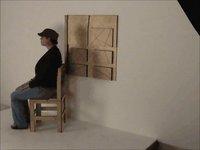
Crane Chair from christy oates on Vimeo . Christy Oates will never be IKEA , but hopefully IKEA, which seems to concentrate much more these days on selling us stuff that we don’t need rather than designing what we really do, will take some insipiration from her fold-out, flat-pack, laser-cut wood veneer furniture. What Oates knows that IKEA doesn’t seem to is the secret of truly surprising design…. Broadcasting platform : Vimeo Source : Treehugger Discovery Date : 21/04/2011 13:32 Number of articles : 2

Got a Tiny Home? Decorate With Fold-Out Furniture (Video)