Source: Leon Prevost / Radio One Digital Oh damn, this is one of those interviews! Trouble represents Edgewood, Atlanta to the fullest from his walk to his movements and more. But, Trouble also may have claim to the wildest pool party of 2019. Cucumbers, twerkers, and a #SheAWinner Challenge. Hell, even Boosie had to make a face like, “Damn, this is wild!” So, as fate would have it, Trouble pulls up and we chop it up and he breaks down all of it and how wild the party got, why social media backlash isn’t going to affect him or slow up his movement, why he gave BeatKing his props with the cucumber movement and why he wants NONE of his younger family members jumping out there on social media dealing with cucumbers. At least the produce section is having a hot summer! Watch the full interview below. RELATED: Kirko Bangz On His New Label: “The Bag Is Getting Bigger” [EXCLUSIVE] RELATED: Kountry Wayne Reveals How He Set Up His Comedy Like A Business [EXCLUSIVE INTERVIEW] RELATED: Vince Young Rates The State Of Current NFL QBs: “Some Of Them Are Garbage, Bro” [EXCLUSIVE]
Bohemian Rhapsody is more than a Freddie Mercury biopic it’s an exploration and celebration of one of the most popular rock bands of a generation, Queen. The movie is in theaters now and one this episode of Extra Butter with Xilla Valentine , we break down the film with Rami Malek as Mercury, Gwilym Lee as Brian May , Ben Hardy as Roger Tayler and Joseph Mazzello as John Deacon . Also joining us on this episode is Lucy Boynton who plays Mary Austin , the muse and lifelong friend of Freddie Mercury. Rhapsody delivers grade a acting from everyone involved with Rami Malek being the bright spot. His performance as the legendary rock icon was spot on, from the movements to the lip syncing and the performances. I asked the guys about recreating Queen’s iconic Live Aid performance , Rami revealed that doing one song and stopping was a lot harder than the guys doing the entire Queen set. He told us, “Sometimes it would be more exhausting just to do one of the songs then take a break and do the entire concert because you’re running on so much adrenaline that is carrying you from song to song.” The film nailed the energy of the show. I watched Queen’s performance at the benefit concert and it was almost identical. It’s scary how they were able to pull it off. Rami explained he felt the similarities too, “I remember working on the entire piece when we shot it and seeing how it was similar to their performance you could feel when the adrenaline was kicking in for them as well.” One of the other highlights of the film was watching Rami and Lucy Boynton work together on screen to craft Freddie and Mary’s relationship turned friendship. To me, I felt as if, at least for the movie, Freddie felt like he owned Mary because she was his girl. Lucy explained a pivotal scene when Mary starts living for herself. Lucy really perked up when she heard my opinion of the film saying, “It’s interesting that you say, you see that in the film, I guess that is that thing of the kind of expectation you have of people. Of what they give you and do for you, so I think Freddie really relied on Mary as a staple and center point of his life. You think that such a beautiful and romantic thing until you reverse that and think about how that must of have felt on the receiving end to be seen as someone’s center point as they go off and around.” Overall Bohemian Rhapsody is a good film that celebrates Queen and delivers an award-winning performance from Rami Malek that’s worth going to the movies to see, but if you want a deep dive into the life of Freddie Mercury, as I felt like the movie could have went deeper into the life of Freddie Mercury. Bohemian Rhapsody is in theaters now.
Over the summer, we heard allegations that R. Kelly keeps teen girls captive in a “sex cult” in which he controls every aspect of their lives, from how they eat to how they serve him. While these aren’t the first stomach-churning accusations about R. Kelly that we’d heard, this really shed new light on the sort of monster that he allegedly is. It’s important to recognize that adults can be victims as well. One woman, Kitti Jones, has come forward with accusations of how R. Kelly lured her into a relationship, convinced her to quit her job, and subjected her to a two-year horror show of control and abuse. In 1994, R. Kelly was 27 years old. In 1994, he married Aaliyah, who was only 15 years old at the time. That’s horrifying enough, but when you listen to people talk about their accounts of their experiences with R. Kelly, you start to see a grotesque pattern of not only sexual predation upon minors but of alleged abuse. In the ’90s, R. Kelly settled at least three suits with women who alleged that he’d preyed upon them when they were minors, and at least one of those women alleged that he’d encouraged her to participate in group sex with him and other minor girls. Until this summer,t he most notorious thing about R. Kelly was the video tape that surfaced in 2002 and showed a young girl calling R. Kelly “daddy” before he urinated into her mouth. Though dozens of witnesses identified the girl as having been 14 at the time, jurors somehow acquitted R. Kelly of multiple counts of child pornography … because they “couldn’t” verify her age. So, you know, another great example of the justice system and how it works … well, how it operates . All of that is enough reason for you to want to hide your kids. As it turns out, where R. Kelly is concerned, you might want to hide your wife, too. Because we heard allegations this summer that indicate that R. Kelly is also a danger to adult women. (Honestly, a college classmate of mine shared several years ago that a man hit on her in a bar and she assumed that he was just fishing for free drinks — and later learned that it was R. Kelly. I can’t help thinking that she really dodged a bullet) Back in July, we heard allegations that R. Kelly keeps a number of young women, teenagers included, in a cult-like environment that revolves around them servicing him, sexually. Beyond that, he is said to keep them isolated from their families and the outside world. He allegedly controls what they eat and when they eat it and even when they go to the bathroom. According to these accusations, R. Kelly does all of this slowly, grooming them, and effectively brainwashes them into defending him when anyone expresses concern. Most seriously of all, there were allegations of verbal and physical abuse. R. Kelly denied these accusations , to no one’s surprise. He was similarly dismissive of the infamous underage pee-tape. Even back in July, a sex partner of R. Kelly’s confirmed the allegations contained within the damning expose. And then in August, another alleged sex abuse victim of R. Kelly’s came forward. Well, a Rolling Stone article titled ” Surviving R. Kelly ” details the experiences of one survivor named Kitti Jones. She says that she was a huge fan of R. Kelly growing up — like, a superfan who would get up close to the stage at his concerts. He was her “Brad Pitt,” she says. On the night that she first met him, they exchanged numbers and he told her to call him “daddy,” not “Rob.” This was back in 2011, and the happy beginning to Kitti’s nightmare. They texted back and forth and she would send him risque photos. When they saw each other again, Kitti describes R. Kelly as walking into the hotel room, sitting down, and whipping out his penis. “I was attracted to him and was just like, ‘Well, OK. Fine.’ Maybe he just has weird ways of getting off.” Well … we guess she’s not wrong . The two had oral sex that weekend, Kitti says, with R. Kelly saying things like “I gotta teach you how to be with me” and “I gotta train you.” So … yikes. “He was like a drill sergeant even when he was pleasuring me,” Kitti describes. “He was telling me how to bend my back or move my leg here.” “I’m like, ‘Why is he directing it like this?’ It was very uncomfortable.” But his celebrity status, her attraction to him, his months of having groomed her over the phone, and the way that he made her feel special added up to her not worrying about it too much. At first, she says, she believed their relationship to be monogamous, despite some … warning signs. “He said, ‘I have friends and I have girls I’ve raised.’ I didn’t know what he meant by ‘raised’ at the time. He said, ‘I eventually want you to meet them, but I want to make sure you’re mentally ready for that.'” FYI, folks, everything that Kitti just described R. Kelly as having said is a huge, huge red flag. And then it gets worse. R. Kelly would insist that she not interact with men, even male drivers. Also, he convinced her to quit her job, promising ot pay her double her salary as a DJ. Even before he got her to quit, though, Kitti says that he already had her feeling emotionally tethered to him, and very defensive against any criticism. “Rob kinda makes you feel like you have to defend him. It’s like you and him against the world. If someone brought him up [in conversation], immediately a wall went up.” Once she quit her job and moved to be with him, Kitti says that she surrendered even more control to R. Kelly. He dictated how she could dress when she went out in public and required constant check-ins, even texts like “Daddy, I need to go to the restroom.” The first instance of alleged abuse took place less than a month after Kitti moved in with him, as a result of Kitti challenging him about the pee tape. His response was fury, and she describes him spending a car ride berating her while striking her in the face and kicking her while she apologized. The next day, she says, he took her shopping and neither of them addressed what had happened. She says that she considered leaving him, but that she’d have felt silly after having quit her job to be with him. Unfortunately, as any abuse survivor could tell you, the first incident was not the last. Kitti says that there were 10 instances of R. Kelly inflicting physical abuse upon her during their first year together, and that the abuse happened more frequently the following year. When R. Kelly went on his “Single Ladies” tour, however, he treated her “like a princess,” which dashed many of Kitti’s misgivings. (Remember, it’s classic abuser behavior for them to play games with their victims, rewarding them and even making them second-guess how bad things had really gotten) After the tour, R. Kelly housed Kitti alongside two of his other girlfriends, monitoring their movements with cameras and punishing them by taking away their phones — at one point, taking Kitti’s for two months. Losing your phone sucks, but in their case, this meant that they couldn’t request food. In fact, Kitti says that R. Kelly would also use starvation to punish his “girlfriends.” At one point, she went without food for two and a half days. And though they were living in neighboring rooms, the three women didn’t even know each other’s real names at first, Kitti says. They were also supposed to report on each other if one of them was breaking the rules. “If you disclose your relationship with him [to another woman] — how long you’ve known him or whatever — you can get beat. He doesn’t want in any way for one girl to feel more like, ‘Oh, we’re closer than you guys.’ Even though we knew deep down we’re all living there, we didn’t address it.” In March of 2013, Kitti says, R. Kelly once again escalated their relationship by bringing in another young woman, naked, and having her and Kitti have sex with each other. “He told me, ‘I raised her. I’ve trained this bitch. This is my pet.'” Calling someone your “pet” in roleplay is fine, but this is more severe. And Kitti says that it was the beginning of R. Kelly forcing her into group sex. “You can’t say no because you’re going to get punished. You just become numb to what’s happening. It’s so traumatic the things that he makes you do to other people and to him.” And she says that yes, he still enjoys urinating on women in sexual situations. “He videotapes everything that he does, and sometimes he’ll just make you watch what he’s done to other girls or girls that he had be together.” “He would masturbate to that and then have you give him oral sex while he’s watching what he did with somebody else on his iPad.” After six months of “hell” in which Kitti says that she was being punished every week — either being struck in the face or being starved or having her phone taken — Kitti was able to break free. View Slideshow: 21 Celebrities You Probably Want to Keep Away From Your Children Fabricating a desire to take her son shopping, she went to Dallas with only a pair of suitcases. That was her escape. In November of that year, R. Kelly showed up, ostensibly to return her possessions that she’d had to abandon. Instead, she says, he lured her onto his tour bus and inflicted more physical abuse upon her to punish her for leaving. The two have never seen each other since. Well, that’s all horrifying.
Her sister is a little busy these days. In case you somehow weren’t aware, Kim Kardashian is covering the latest issue of Paper Magazine. And she’s doing so without any clothes on . But it’s okay! The family can rest easy because Khloe Kardashian is here to act like an atrocious role model for young women in Kim’s place! The reality star shared the above two photos on Instagram this week, continuing the TOTALLY RIDICULOUS concept of ” waist training ” that Kim started to shill for a few weeks ago. “So in love with my @premadonna87 waist trainer! I love working out with it for that extra push,” Khloe captioned these images. “Trying to snatch my waist up #premadonna87 #waistgangsociety @pre_shop I may need a smaller size soon!!! Wooohoooooooo.” Khloe, of course, was paid a pretty penny to mention these products and company. She and Kim are spokespeople for a product called What a Waist, which is a corset one is supposed to wear in order to obtain an hour glass figure. Except… well… “Once you take the garment off, your body will return to its usual shape,” says Mary Jane Minkin, the clinical professor of obstetrics and gynecology at Yale School of Medicine. “It’s also uncomfortable, restricts your movements, and if you wear it really tight, it can even make it difficult to breathe and theoretically could cause rib damage.” But, hey, the Kardashians are getting money for writing these messages. So who cares if the product could actually be harmful?!? Khloe Kardashian Instagram Photos 1. Khloe Kardashian Cleavage Pic Hello, Khloe Kardashian cleavage! The reality star posted this photo to Instagram. Looking for more antics from Khloe Kardashian? Do you love to hate her? You can always watch Kourtney & Khloe Take the Hamptons online via TV Fanatic right now!
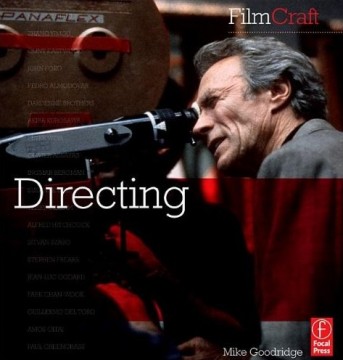
Oscar-nominated director Guillermo del Toro has been in the craft of filmmaking since he was 16, filling roles as diverse as P.A., assistant director and makeup effects. He made his first film Cronos at 28 and received his Academy Award-nomination in 2007 for Pan’s Labyrinth , making him one of the most prominent filmmakers to emerge from his native Mexico. In a candid interview, he explains how he learned filmmaking in author Mike Goodridge’s new book, FilmCraft: Directing . Goodridge, who until recently served as editor of Screen International and is now CEO of the international sales and financing company Protagonist Pictures wrote the book which features in-depth interviews with 16 of the world’s celebrated and respected film directors including Del Toro, Clint Eastwood ( Million Dollar Baby ) Paul Greengrass ( The Bourne Supremacy ), Peter Weir ( The Truman Show ), Terry Gilliam ( Brazil ) and Park Chan-wook ( Oldboy ). These and other filmmakers share their insights and experiences on development, storytelling/writing, working with actors and cinematographers, as well as other areas necessary to completing a successful film. In this excerpt from the book, which will be available via Amazon beginning June 15th, Guillermo del Toro gives his take on the mistakes and triumphs of his first movie as well as the first movie of other filmmaking greats, a life lesson courtesy of John Lennon, Tom Cruise’s take on filmmaking, what made him cry during his first movie, making ‘everything’ theatrical and why having “enough money” will get you, err… screwed. Director Guillermo Del Toro excerpt from FilmCraft: Directing : I came from the provinces, from Guadalajara, which is the second largest city in Mexico and nobody makes movies there. When I was a teenager, I started building relationships in Mexico City and I started as a blue-collar member of the crew. I was either a boom guy or a PA or an assistant director. I was makeup effects. I did my floor time in both TV and movies. My first professional work on a movie was at the age of 16 and I made Cronos when I was 28, so I had twelve solid years of doing just about everything in between. If somebody needed something, I would do it. I even did illegal stunt driving. But what happened is that I learned a little bit of everything and, once you put your time into exploring everything, you get to know what every piece of grip equipment is called and how many you need, and how to do post — I edited my own movies and did the post sound effects on all of them. So to some extent, directing came naturally to me from my first movie. My first movie Cronos is not in any way a perfect movie, but it’s a movie full of conviction. When you make your first movie, whatever mistakes you make are very glaring, but if you have conviction, and I would even say cinematic faith, this also shines through. I recently watched Cronos again and I thought, “I like this kid,” he has possibilities. After your first movie, with a little bit of craft, diligence, and more importantly, experience, you learn to make virtues out of some of your defects. What I mean is that any first movie has good moments, even if it is not entirely perfect. It can be a filmmaker as famous as you like, such as Stanley Kubrick, whose first film F ear and Desire (1953) is about 70 minutes long and stars Paul Mazursky. It is very stilted, very awkwardly paced, full of stuff that doesn’t work, the actors speak in a patois, and it has a very non-naturalistic rhythm. But what is incredibly fascinating is that the very stilted quality, that artificial rhythm, eventually became his trademark in later films. He bypasses it in more naturalistic films like The Killing (1956) and Paths of Glory (1957), but comes back to that type of hyperrealism or strange filtered reality in his later movies, and he is in complete control of it there. Kubrick used the tools he acquired in making other films to transform what you thought was a defect in Fear and Desire into a virtue. In my case, when I make movies in Spanish, starting with Cronos , I purposefully avoid characterizing certain things in the conventional Hollywood sense, and that comes out as a blatant defect. Specifically, I had shot a much longer film, including a whole section between the husband and wife where she noticed that he is getting younger and they start falling in love again. At night, he would come and sleep underneath her bed. But I couldn’t make it work. The way I staged it was simply too stilted and strange, and I didn’t feel comfortable leaving it as part of the movie. Even to this day, I think there is a mix of different tones in that movie. I change from the dramatic to the comedic too often. I try to do it generically, mixing horror with melodrama, and there are moments in Cronos that are really jarring for me. I sometimes allowed Ron Perlman to be too broad and it simply didn’t work. I think I did it better in my later movies. I don’t know whether that mix of genres is my trademark. One of the things that was very influential for me when I was kid was the book by Tolkien in which he discussed fairy stories in literature. I remember him saying in that book that you should make the story recognizable enough to be rooted in reality, but outlandish enough to be a flight of fancy. So I try to mix an almost prosaic approach, or at least a rigid historical context, with fantastic elements. I treat the fantasy characters very naturalistically or else I root the story in a precise context like The Devil’s Backbone or Pan’s Labyrinth , or in Cronos , post-NAFTA Mexico. As Tolkien says, when you give the audience a taste of what they can recognize, they immediately accept the rest of the concoction; it’s almost like wrapping a pill in bacon for a dog to swallow it. You need, for example, the bacon of domesticity in Cronos . I wanted to shoot that family as a very middle-class family in Mexico. I wanted a kitchen that looked like a kitchen you’d recognize, a really ordinary bedroom and very mild, neat clothing design. Out of that middle-class reality, I wanted a single anomaly — the mechanical clockwork scarab device. If the audience believes that this abnormality is as real as it can be, they will respond to the story. Many directors think that the more you keep the creature in the shadows and don’t show it, the better it is, but I don’t believe that. I don’t have monsters in my movies, I have characters, so I shoot the monsters as characters. For example, in Hellboy , I shot Abe Sapien, the fish-man, like any other actor. I didn’t fuss about it, I shot the monster with the same conviction that I would shoot Cary Grant or Brad Pitt; in other words, if I shot it in a different way than I would the regular actors, I would be making a mistake. What I do in every movie very consciously is to ensure that this anomaly is shot two notches above actual reality, so it’s weird enough to accommodate the monster, but not too stylistic that it’s unrecognizable. For example, everything you see in Pan’s Labyrinth — the house, the furniture — is fabricated to be slightly more theatrical than it needed to be. The uniforms for the captain and his guards are exactly what were worn at the time, but we tweaked the cut and the collar to make them more theatrical. Everything around the creatures, therefore, exists like a terrarium for them to live in so that when it comes to shoot them, I can shoot them in a normal way. I was very nervous on Cronos , but the adrenaline carried me through. Directing is almost like keeping four balls in the air on a monocycle with a train approaching behind you. There were days, for example, like the scene with the husband sleeping under the bed, where I knew I’d fucked up. The makeup was wrong and we didn’t have time to go back and change it, we didn’t even have time to test it. The light was wrong. Everything was wrong, and I arrived home to my wife that night and cried. I said that I had destroyed the scene I had dreamt of for years. I didn’t have the luxury of reshoots. Of course, you can only break down in front of your wife, or your partner, or your parents. In front of the staff on the film, you need to keep total control. You don’t want anyone thinking the general is afraid—you have to be leading the charge. There are two very lonely positions on a movie set: the actor and the director. The cinematographer has a close liaison with the director, the gaffer, the grip, etc. The director is alone on one end of the lens and the actor is alone on the other. That’s why the great, most satisfying partnerships on set are when a director and actor come to love and support each other. Being from Mexico is an enormous part of who I am as a filmmaker. The panache, the sense of melodrama, and the madness I have in my movies that allows me to mix historical events with fictional creatures, all comes from an almost surreal Mexican sensibility. I’m really prone to melodrama. This comes from watching Mexican melodrama obsessively, to the point where I was watching The Devil’s Backbone with a Spanish architect and the architect said to me that it was more Mexico than Spain; the characters were acting like Latin characters. If my father hadn’t been kidnapped in 1998 then frankly I would be making Mexican movies interspersed with the European and American. Since 1998, I cannot go back to Mexico because I would be too visible a target, especially when there is a printed schedule of where I am going to be every day for the entire run of a shoot. I think of the audience every second during writing; I think of them as me. I question how I would understand something, or what would make me feel a certain way. When I’m shooting a scene that moves the characters, I weep, I feel the emotion on set, so when I am writing it, if it doesn’t work, I don’t print it out until I have that feeling. Creating tension is a different skill to creating fear. For fear, you try to create atmosphere. You ensure the scene is alive visually before anything is added, then you craft the silence very carefully because silence often equals fear. Rarely can you elicit fear with music unless the music is used very discreetly, underlining the scene in a way that is almost invisible. When the Pale Man appears in Pan’s Labyrinth there is music, but Javier [Navarrete, the film’s composer] is almost just underlining his movements. It becomes like a sound effect. Silence is one of the things that you learn to craft the most because there is never real silence in a movie; you always have distant wind, cars, dogs barking, or crickets in the distance. I think really well-crafted silence creates tension, and by the same token an empty frame, an empty corridor for example — if it’s empty in the right, creepy way — is a tool. You know if a scene’s not working on set, and as you get older and craftier, you can learn to re-direct it in post. You can patch it up in your coverage and recover it—you can even end up with a great scene because beauty rarely comes out of perfection. For something to work, I think it has to come out of emotional turmoil. You can’t encapsulate the perfect melody; a huge component of it is instinctive. Then, of course, there are the actors. Many times you storyboard and rehearse with the actor, and then you come to the scene and it’s not working. But then you try something different and something suddenly happens that makes it work. It’s very raw. It’s funny, we enthrone this idea of the perfect filmmaker, this myth of the all controlling, all-seeing, all-encompassing person, but even for Kubrick or von Stroheim there is a part of the process that is entirely instinctive. I once asked Tom Cruise about it and he confirmed that Kubrick often found things in a panic on Eyes Wide Shut (1999). I love imperfection. I have been friends with James Cameron since 1992 and because he is so incredibly precise, people sometimes don’t think he is human, but the beauty of being a close friend is that I’ve seen him burn the midnight oil and toil and sweat. These imperfections in the façade are what make the work more admirable. Art depends on that human touch that doesn’t make perfection; in fact the filmmakers and films I am most attracted to require a level of human imperfection. On the big effects films, you try to prepare thoroughly but there are always surprises. John Lennon said, “Life is what happens when you are making other plans” and I think film is what happens when you are making other plans. You come onto the set and either the actor or the material doesn’t come out as you expect and the film comes out better for it. If you have either experience or inspiration, one of the two will get you through. One you accumulate through the years, the other you cherish. As a young filmmaker you’re full of inspiration and if you are unlucky you are only trading it in for experience. You need to remain on dangerous ground to continue to be inspired. I am always tackling things I shouldn’t tackle and meddling with stuff I shouldn’t meddle with. You never have enough money. If you ever feel one day you have enough money, that’s the day you’re fucked. FilmCraft: Directing is available via Amazon beginning June 15th. Follow Movieline on Twitter .
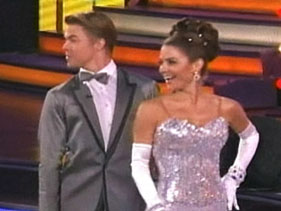
Gladys Knight earned the lowest scores on Motown night, while Jaleel White and Jenkins each earned a pair of 10s. By Kelley L. Carter Derek Hough and Maria Menounos Photo: ABC Monday night’s telecast of “Dancing With the Stars” opened with R&B legend Smokey Robinson crooning his Motown hit “Tears of a Clown.” Then Martha Reeves came in singing her hit with the Vandellas “Dancing in the Streets.” Then came the (current lineup of the) Temptations singing their classic hit “Get Ready.” And Motown founder Berry Gordy was in the audience, to boot. It was the perfect way to intro Motown night — this week’s theme — for the popular ABC dance reality competition. This week’s scores included bonus points for a group cha-cha dance marathon. At the top of the pack this week were Katherine Jenkins and Mark Ballas. The opera singer once again impressed judges with her moves. She and Ballas danced to the Temptations’ “I Can’t Get Next to You,” and the judges thought she continued to deliver. Her prize? She earned a pair of 10s in her initial score for an almost perfect score. “Tonight, girlfriend, you let it loose. That was amazing!” judge Carrie Ann Inaba said. 29/30 + 10 = 39. Here’s how the others fared: Jaleel White and Kym Johnson The former child actor jumped right back near the top of the leaderboard. He danced the cha-cha to “Ain’t Too Proud to Beg,” and the judges found his movements to be sharp and filled with attitude “You’re back!” head judge Len Goodman told him. He also was rewarded with a pair of 10s from the judges. 29/30 + 8 = 37 William Levy and Cheryl Burke The Latin soap opera star danced the rumba, and judges loved the steam that came from the pair. Their ending was over-the-top sexual (they were laid out on top of one another on the dance floor), and the judges — and the live audience, gauging from the screams and hooting and hollering — enjoyed it thoroughly. “William! Absolute and utter filth. And I loved every minute of it!” judge Bruno Tonioli said. “On behalf of all of the women out there, I thank you,” Inaba said. Goodman thought it was a bit on the raunchy side. 27/30 + 9 = 36 Donald Driver and Peta Murgatroyd The football star danced the foxtrot to a Temptations track, and the judges were impressed by his showmanship. “Donald, you are a showman! Confidence! Power! Your performances get better and better. You should be in the theater,” Tonioli said. 27/30 + 7 = 34 Melissa Gilbert and Maks Chmerkovskiy The actress danced the Viennese waltz to Robinson’s lush hit “Ooo Baby, Baby,” and judges thought her lines were beautiful. “I see poetry starting to happen in your movements. I see the artistry there,” Inaba told her. 24/30 + 6= 30. Maria Menounos and Derek Hough The TV journalist danced the foxtrot to a Reeves’ hit, and even though she made a few missteps, judges thought she pulled it off quite nicely. “You lost your footing, but you caught up quite brilliantly,” Tonioli told her. 26/30 + 4 = 30. Roshon Fegan and Chelsie Hightower The Disney star danced to a Robinson hit, and the judges thought his moves were more suitable for a hip-hop dance — his specialty — than the ballroom. Goodman said that the execution of his routine was “clipped and jerky.” “In general, I thought your moments were a bit over-exaggerated tonight and it made it hard for me to watch,” Inaba said. 23/50 + 5= 28. Gladys Knight and Tristan McManus The soul legend took the stage first — kind of fitting, considering she recorded with the Detroit label — and she performed the rumba. Judges thought her routine was passionate and said her star quality was undeniable. They thought her rumba should have been a bit steamier and noted how she lost it a bit at the end. “You’re not the best dancer, but I’ll tell you what you are … Gladys, you are the most charismatic dancer, I’m telling you. It is so appealing,” head judge Len Goodman said. “It’s just easy like Sunday morning!” 21/30 + 3 = 24.
Last year, Richard Vezina created a popular video tribute to Stanley Kubrick (A Stanley Kubrick Odyssey). Now he returns with David Lynch in Four Movements. Accompanied by musical pieces from Angelo Badalamenti & David Lynch, each movement revolves around a distinctive theme or visual trend in Lynch’s works. Here’s how the 20 minute video unfolds: First Movement: Melancholy and Sadness David… Broadcasting platform : Vimeo Source : Open Culture Discovery Date : 27/12/2011 21:21 Number of articles : 2
Big sister Kim looks on as Rob tops the leaderboard, with J.R. Martinez and Ricki Lake falling short of the reality star. By Kelley L. Carter Rob Kardashian on “Dancing With the Stars” Photo: ABC The talk-show host. The reality star. The war hero. Only one will be crowned the winner on Tuesday’s (November 22) “Dancing With the Stars” season finale, but you better believe Ricki Lake, Rob Kardashian and J.R. Martinez are hoping their dance moves win over America’s heart. On Monday night, they performed two dances each — the second was a freestyle dance — and the judges loved what Kardashian brought to the table. After weeks of seeing everyone else nab the highest scores, it was the reality star who brought home the top spot on the leaderboard. Here’s how everyone fared: Ricki Lake and Derek Hough Lake, the sole remaining woman in the competition, went first, dancing the cha-cha to Chris Brown’s “Yeah 3x,” and the judges loved it, telling her she was living the dance and exuding confidence. “Action-packed performance. Good timing. Good rhythm. Hips were working good. It’s a dance deserving of this final. Well done,” hard-to-please judge Len Goodman told her. 27/30 When Lake came back for her freestyle, she burst through a screen (of her larger self from earlier in the season; since being on the show she’s shed quite a bit of weight), and they shimmied and flipped and twisted and turned all about the stage. The judges said their dance was demanding and difficult. “It was fun, it was entertaining. Overall, what a great number,” Goodman said. 27/30 Lake’s overall score: 54/60 Rob Kardashian and Cheryl Burke The reality star —whose big sister Kim watched from the audience for the first time since her divorce — danced the waltz, and the judges found his movements to be a little heavy and said he lost his posture at times. Carrie Ann Inaba said he was the male version of Cinderella. Overall, they thought it was simple and beautiful. “Tonight, you were flowing and you were glowing. So full of expression. I love the continuity of lines,” judge Bruno Tonioli said. 27/30 For their second dance of the night, Kardashian and Burke danced on a set that mirrored Harlem, New York’s Cotton Club, and Cheryl said she wanted to play to Rob’s strengths. That meant their dance started off slow and then kicked up a notch and finished fast. The judges said their dance blew them all away. “Brilliant contact! Brilliant execution! Brilliant performance!” Tonioli yelled. 30/30 Kardashian’s overall score: 57/60 J.R. Martinez and Karina Smirnoff For much of the season, he’s topped the leaderboard — or at least been close — until last week. His ankle was injured, but he danced in spite of it, and his scores suffered. For his cha-cha on Monday, his ankle was in much better shape, but the judges said Martinez was off-time and there were many mistakes. Tonioli was the lone judge who gave him praise. Carrie Ann Inaba offered: “I think when people watch you dance, they just fall in love with your spirit. Tonight, your musicality was a bit off. We’re in the finals, so watch your arms. I know you’ve got it in you.” 24/30 Martinez performed the final freestyle of the night, and they went with a Latin-inspired routine to pay homage to his Latin heritage. The judges said this time around, he redeemed himself. They said his dance was hypnotic and found it to be an incredible comeback from his first-round routine. “That’s the way to come back! Those lifts were the sickest lifts I’ve ever seen — congratulations!” Inaba cheered. 30/30 Martinez’s overall score: 54/60 Who had your favorite dance of the finals? Let us know in the comments!
War hero J.R. Martinez is the first to a perfect 30 score — twice! By Kelley L. Carter Karina Smirnoff and J.R. Martinez Photo: ABC On Monday night’s “Dancing With the Stars,” the remaining celebrities were challenged to dance two routines. To make it even tougher, the stars had to perform an instant dance to a song they’d heard only moments ago. At the top of the pack was war hero and actor J.R. Martinez, who nabbed the first pair of perfect scores of the season with both his routines. Here’s how the others fared: Rob Kardashian and Cheryl Burke Reality star Rob Kardashian wanted to make good on his #2 position from last week with his routines on Monday night. His first dance was the quickstep to A-ha’s “Take on Me,” and the judges found him to be on point. Last week, they criticized him for his backside (saying it got in the way) but thought this first dance was an incredible improvement. “When you started, I thought, ‘This isn’t going to work.’ That opening section was terrible. But once you got in hold, the whole thing changed. Your posture was good. I had a good look at your buttocks. Your buttocks were tucked in. Your best dance so far,” head judge Len Goodman said. 27/30 For their instant dance, the twosome danced the jive, and the judges said he needed to sharpen up his feet a bit. “It was no glaring mistakes. To get through this is tough,” Goodman said. 24/30 Total: 51/60 Hope Solo and Maksim Chmerkovskiy The athlete danced the quickstep for her first routine, and after weeks of harsh judging, the pair finally hit their stride. The judges found them to be in sync with one another and said they had a blend of speed and control. “What’s going on tonight? It’s the night of miracles. Rebooted. Re-energized. You never moved so well. What’s going on? Your best dance yet!” Bruno Tonioli gushed. 27/30 For their instant dance, they had the jive, and this was to be their redemption dance (they’d danced the jive earlier in the season, and Solo got off her count and messed up the dance weeks earlier). The judges thought they’d made a definite improvement since the last time they did the jive, and Goodman, who had been a big critic of the couple before, said it was everything a jive should be. “The fast and the furious! You were like a wild child!” Tonioli said. 25/30 Total: 52/60 Ricki Lake and Derek Hough The talk-show host and her partner danced the waltz, and just like weeks before, the judges thought the dance was beautifully executed the entire way through. “You had a little stumble at the end there, but your movements are exquisite. What I love and what makes you so special is that when you dance, you lose yourself completely in the dance,” judge Carrie Ann Inaba said. 28/30 Lake was confident going into the instant dance, because when she last performed the jive, she’d earned one of the highest scores that night. Her goal, she said, was to stay calm and not panic. “There were a few little stops and starts. You were on it, your energy was great, but there were a few moments where I thought you got lost. You got right back into it though,” Inaba said. 24/30 Total: 52/60 Nancy Grace and Tristan MacManus The HLN anchor took on the tango for her first dance of the night, and the judges said she broke through her plateau. They thought the pair had command of the stage, and their dance was frisky and clean. “You’ve been on a plateau. But now, after all these weeks, up you’ve gone,” Goodman said. 24/30 The talk-show host took on the jive for her instant dance, and the judges thought she got lost in the choreography. “I enjoy the way you trusted Tristan. The chemistry that you two have saved you,” Inaba said. 20/30 Total: 44/60 J.R. Martinez and Karina Smirnoff After dropping down the leaderboard last week, the war hero wanted to move back up. For their first dance, they took on the waltz, and Martinez said he wanted to push himself to get the first 30 of season 13. The judges thought his performance illustrated incredible grace and found the routine to be magical. “It was like a musical Valentine card. You danced with your heart on your sleeve. Totally involved. Totally dedicated. You made beautiful music with Karina,” Tonioli said. 30/30 The night’s top scorer, Martinez, danced the instant jive, and the judges said he was in a class all his own. Inaba said no one came close to the couple that night. “You were off like a rocket! Your timing was impeccable! You’ve got it man, you’ve got it!” Tonioli yelled out. 30/30 Total: 60/60 Who had your favorite dance of the night? Let us know in the comments below!
This broad must be the White celebrity female version of Keyser Söze : “protected by the Devil on high” when it comes to her criminal activity. Her house arrest for constantly violating probabtion and being a thieving drunk/powderhead is officially over. And if you’re trying to remember how much time it’s been since she was sentenced: 35 days. That’s shorter than the amount of summer school a kid gets for failing high school math! A source confirms to E! News that Lohan has had her ankle bracelet removed and is now free to leave her Venice, Calif. residence. Separately, Lindsay’s rep tells E!: “I spoke with her yesterday and she told me she is eager to return to fulfilling her community service obligation which she has been unable to perform during house arrest.” For Lohan, who hasn’t been seen on the big screen since her blink-and-you-missed-it cameo in 2010′s action film Machete, that “obligation” includes mopping floors at the L.A. County Morgue. Lohan was originally sentenced to 120 days in prison for violating her probation after she was charged with felony grand theft for allegedly swiping a $2,500 necklace. Those charges were later reduced to a misdemeanor for which she pleaded no contest. However due to the fact that Lohan’s a non-violent offender, she was eligible to complete her term by spending 35 days in home confinement to reduce jail overcrowding, her movements tracked by an ankle monitor. There was speculation last week that she might end up back in the clink however after she flunked a random alcohol test on June 13. But after being ordered back to court last week, the judge said the incident did not constitute a probation violation. WHAT. The hell??? At least she’s not all the way off the hook. While her time in home detention has come to an end, the actress still has to complete 480 hours of community service that includes 360 hours working at the Downtown Women’s Center in L.A. and another 120 hours performing janitorial duties at the L.A. County Morgue. The community service must be completed within a year and Lohan is due back in court for a progress report on July 21. We don’t even understand why they still waste time and taxpayer money to bring this broad to court when she never ever ever gets punished for real. Souce