Tag Archives: major newspapers

Establishment Press Ignores Counterpunch Accusations That Sherrods Mistreated Workers at New Communities

What follows was eminently predictable, but noting it is nonetheless necessary. Shirley Sherrod, and to a lesser extent her husband Charles, were media celebrities for a while in late July. Readers might have noticed their near absence from establishment media news reports during the past seven days. It would be easy to think that this has occurred because the story played itself out, with nothing newsworthy to add. That stopped being true on Monday, August 2, when a column by Ron Wilkins (“The Other Side of Shirley Sherrod”) appeared in the leftist alternative publication Counterpunch . Wilkins is currently a professor in the Department of Africana Studies (not misspelled) at Cal State University. He claims in the final sentence of his column that he is knowledgeable concerning what he is writing because “I was one of those workers at NCI.” “NCI” is New Communities, Inc., described at a RuralDevelopment.org link as “the land trust that Shirley and Charles Sherrod established, with other black farm families in the 1960’s.” Here’s part of what Wilkins alleges (excerpted items are not in the same order as they originally appeared; out of order verbiage is identified): Imagine farm workers doing back breaking labor in the sweltering sun, sprayed with pesticides and paid less than minimum wage. Imagine the United Farm Workers called in to defend these laborers against such exploitation by management. Now imagine that the farm workers are black children and adults and that the managers are Shirley Sherrod, her husband Rev. Charles Sherrod, and a host of others. But it’s no illusion; this is fact. Shirley Sherrod was New Communities Inc. store manager during the 1970s. As such, Mrs. Sherrod was a key member of the NCI administrative team, which exploited and abused the workforce in the field. The 6,000 acre New Communities Inc. in Lee County promoted itself during the latter part of the 1960s and throughout the 70s as a land trust committed to improving the lives of the rural black poor. Underneath this facade, the young and old worked long hours with few breaks, the pay averaged sixty-seven cents an hour, fieldwork behind equipment spraying pesticides was commonplace and workers expressing dissatisfaction were fired without recourse. Worker protest at New Communities eventually garnered some assistance from the United Farm Workers Union in nearby Florida in the person of one of its most formidable organizers, black State Director, the late Mack Lyons. … Fearful of both UFW efforts to unionize NCI’s labor force and scrutiny by the Georgia State Wage and Hour Division, the Sherrods and NCI management hastily issued checks in varying amounts to strikers to makeup ostensibly for minimum wage differentials. It is bitter irony that the Sherrods have succeeded in being awarded $300,000 following a discrimination lawsuit, while … impoverished NCI black laborers whom NCI exploited were never adequately compensated for their “pain and suffering.” (the following sentences appeared earlier in the column) … Justice and integrity require at least as much accountability from Mrs. Sherrod to the poor black farm workers of NCI as to the white farmers she came to befriend. This lack of full disclosure of the whole truth is a “sin of omission” that trivializes the suffering of poor black farm workers and exacerbates the offenses of NCI. This is hardly a right-wing hit piece. Wilkins’s bio at the end of his column describes him as “a former organizer in the Student Nonviolent Coordinating Committee,” and further claims the following: In 1974, under an assumed name, he hired-on at New Communities Inc. The Emergency Land Fund, an Atlanta-based black land retention organization, which shared oversight responsibility for NCI’s progress, wanted to know the basis for NCI’s continued poor performance. … For his role in organizing NCI’s workers, management eventually fired him from his $40 per week position, evicted him from the rent-free shack on NCI property and orchestrated his arrest, on bogus charges, by FBI agents and Lee County, Georgia Sheriff’s deputies in the midst of an NCI labor protest. The charges were later dropped. In his column, Wilkins refers to a report in  El Macriado , which was then a monthly publication of the United Farm Workers. That report contains these two final paragraphs describing Charles Sherrod’s attitude toward labor-management relations: Though (the original reads “through” — Ed.) several of the cooperative’s funding organization’s are pressuring Charles Sherrod, the farm’s manager, to reach a settlement with the strikers, he remains unwilling to negotiate. With so few scabs left in New Community’s (sic) fields, the UFW first strike in the southeast area (outside of Florida) may bring the first of many UFW contracts to these fields that were once harvested by slave labor. You read that right: “Scabs.” Despite the contemporaneous evidence that his allegations of serious labor mistreatment are credible, Wilkins’s column has been ignored by the establishment press: On August 4, two days after the Counterpunch item appeared, the Associated Press published two pieces apparently intended to be the last word on the main players in the Sherrod controversy — one by Julie Pace (“AP Exclusive: USDA racial flap reconstructed”) containing what AP claims is the backstory of the lead-up to Sherrod’s firing, and another by Michael R. Blood (“Breitbart: Enemy of the left with a laptop”) which portrays Andrew Breitbart, whose posting of a brief speech excerpt at his BigGovernment.com web site first brought Shirley Sherrod to the nation’s attention (the USAcationnew.com web site actually posted the video first , as this July 15 tweet demonstrates). Neither AP article alludes to the Sherrods’ alleged troubled labor history. An advanced search on “Shirley Sherrod” (not in quotes) at the New York Times indicates that the latest related story was on August 1, the day before the Counterpunch item appeared. Searches at the Times’s Media Decoder , The Caucus , and The Lede blogs on the “Shirley Sherrod” tag also have nothing. A Washington Post search on “Shirley Sherrod” (in quotes) returns several items dated August 2 or later. But two of them are the AP items already noted, and the others don’t refer to the Sherrods’ alleged inhumane labor practices during the 1960s and early 1970s. An August 4 Tribune Media item originating from Albany, Georgia by Kathleen Hennessey (Hard feelings about handling of Shirley Sherrod have deep roots in Georgia) and carried at the Los Angeles Times contains several direct quotes from residents. Even though she was almost literally in the neighborhood, there is no evidence that Hennessey attempted to follow up on the allegations contained in the Counterpunch item that had been out for two days. It is not reasonable to believe that the establishment press is not aware of the story by this time. A Google Web search on [“Ron Wilkins” “Shirley Sherrod”] (typed as indicated between brackets) for the past seven days returns about 180 items (it says almost 600 , but it’s really “only” about 180 ). No cocoon of ignorance is that tight. It’s more reasonable to believe that the establishment press is not interested in letting Wilkins’s charges get out to the majority of the population that isn’t paying close attention, lest it damage the current “Shirley good, Breitbart bad” meme. Cross-posted at BizzyBlog.com .

Read the original here:
Establishment Press Ignores Counterpunch Accusations That Sherrods Mistreated Workers at New Communities


NYT: WH Defending Health Ins. Penalties As ‘Taxes’ In Court Despite Obama’s Vehement 2009 Denial

The truth comes out. Okay, it was always out there. It’s just that the Barack Obama and the folks in his administration were denying it. The issue in question is whether the individual mandate and penalties for not purchasing health insurance in the statist health care legislation commonly known as ObamaCare should rightly be considered taxes, or if they are something else. In a report dated Friday that appeared in the paper’s print edition at Page A14 on Sunday , Robert Pear at the New York Times noted that in legal proceedings, in response to litigation brought by state attorneys general, the administration is now characterizing the mandate and penalties as taxes. Note the subtle water-down that occurred between the web page’s title bar and the published article’s headline: When Congress required most Americans to obtain health insurance or pay a penalty, Democrats denied that they were creating a new tax. But in court, the Obama administration and its allies now defend the requirement as an exercise of the government’s “power to lay and collect taxes.” And that power, they say, is even more sweeping than the federal power to regulate interstate commerce. Administration officials say the tax argument is a linchpin of their legal case in defense of the health care overhaul and its individual mandate, now being challenged in court by more than 20 states and several private organizations. Under the legislation signed by President Obama in March, most Americans will have to maintain “minimum essential coverage” starting in 2014. Many people will be eligible for federal subsidies to help them pay premiums. In a brief defending the law, the Justice Department says the requirement for people to carry insurance or pay the penalty is “a valid exercise” of Congress’s power to impose taxes. Congress can use its taxing power “even for purposes that would exceed its powers under other provisions” of the Constitution, the department said. For more than a century, it added, the Supreme Court has held that Congress can tax activities that it could not reach by using its power to regulate commerce. While Congress was working on the health care legislation, Mr. Obama refused to accept the argument that a mandate to buy insurance, enforced by financial penalties, was equivalent to a tax. “For us to say that you’ve got to take a responsibility to get health insurance is absolutely not a tax increase,” the president said last September, in a spirited exchange with George Stephanopoulos on the ABC News program “This Week.” When Mr. Stephanopoulos said the penalty appeared to fit the dictionary definition of a tax, Mr. Obama replied, “I absolutely reject that notion.” Now that the legislation has passed, Team Obama has clearly changed its tune. What a surprise (not). As a refresher, what follows is the excerpt from the Obama-Stephanopoulos “spirited exchange” to which Pear referred that I posted last year (at NewsBusters ; at BizzyBlog ). In his annual exercise in legitimate journalism (the one that preceded it was when he moderated an April 2008 Democratic presidential debate and gave then-candidate Obama grief about his relationship with Jeremiah Wright), Stephanopoulos maneuvers an arrogant President into a de facto assertion that Barack Obama’s take on a word’s meaning is more important than the one found in the dictionary: STEPHANOPOULOS: …during the campaign. Under this mandate, the government is forcing people to spend money, fining you if you don’t. How is that not a tax? …. OBAMA: No. That’s not true, George. The — for us to say that you’ve got to take a responsibility to get health insurance is absolutely not a tax increase. What it’s saying is, is that we’re not going to have other people carrying your burdens for you anymore than the fact that right now everybody in America, just about, has to get auto insurance. Nobody considers that a tax increase. People say to themselves, that is a fair way to make sure that if you hit my car, that I’m not covering all the costs. STEPHANOPOULOS: But it may be fair, it may be good public policy… OBAMA: No, but — but, George, you — you can’t just make up that language and decide that that’s called a tax increase. Any… …. STEPHANOPOULOS: I — I don’t think I’m making it up. Merriam Webster’s Dictionary: Tax — “a charge, usually of money, imposed by authority on persons or property for public purposes.” OBAMA: George, the fact that you looked up Merriam’s Dictionary, the definition of tax increase, indicates to me that you’re stretching a little bit right now. Otherwise, you wouldn’t have gone to the dictionary to check on the definition. I mean what… …. STEPHANOPOULOS: I wanted to check for myself. But your critics say it is a tax increase. OBAMA: My critics say everything is a tax increase. My critics say that I’m taking over every sector of the economy. You know that. Look, we can have a legitimate debate about whether or not we’re going to have an individual mandate or not, but… STEPHANOPOULOS: But you reject that it’s a tax increase? OBAMA: I absolutely reject that notion. At time, I reacted by writing: “If you don’t think we have a problem of Orwellian proportions with Barack Obama, I’d suggest you re-read the excerpt. He thinks he’s above the dictionary, that words mean only what he says they mean.” It turns out that I understated the extent of the Orwellian problem. Not only does Team Obama want words only to mean what they say they mean, they want to be able to change the meaning of words at will to suit their purposes. Cross-posted at BizzyBlog.com .

See the original post here:
NYT: WH Defending Health Ins. Penalties As ‘Taxes’ In Court Despite Obama’s Vehement 2009 Denial

Establishment Press Misses Rhode Island Parallel to Ariz. Immigration Law for Nearly Three Months

Preconceived notions are dangerous things in journalism. They cause one to assume facts that aren’t in evidence, leading to false or incomplete results. A classic example has played out in the nearly three months since Arizona passed its “1070 law.” Among other things, it mandates that law enforcement officials verify citizenship status in situations involving police contact if they have a reasonable suspicion that someone is not in the country legally. It seems that virtually everyone covering the story has been assuming that Arizona’s law is the first of its kind. Well, maybe as a “law” it is. But in Rhode Island, of all places, Boston Globe reporter Maria Sacchetti finally noticed on July 6 (HT Hot Air ) that police have been doing what Arizona will start doing on July 29 since 2008 as a result of a gubernatorial executive order: R.I. troopers embrace firm immigration role In contrast to Mass., they report all who are present illegally From Woonsocket to Westerly, the troopers patrolling the nation’s smallest state are reporting all illegal immigrants they encounter, even on routine stops such as speeding, to US Immigration and Customs Enforcement, known as ICE. “There are police chiefs throughout New England who hide from the issue . . . and I’m not hiding from it,’’ said Colonel Brendan P. Doherty, the towering commander of the Rhode Island State Police. “I would feel that I’m derelict in my duties to look the other way.’’ Rhode Island’s collaboration with federal immigration authorities is controversial; critics say the practice increases racial profiling and makes immigrants afraid to help police solve crimes. But it is a practice that Governor Deval Patrick’s opponents in the governor’s race are urging Massachusetts to revive. The Patrick administration has staunchly opposed having state troopers enforce immigration laws, and shortly after he took office in 2007, the governor rescinded a pact by his predecessor, Mitt Romney, to assign 30 troopers to the so-called federal 287(g) program, which trains local police to enforce federal immigration law. … In 2008, Governor Donald L. Carcieri, a Republican, issued an executive order mandating immigration checks on all new state workers and ordering State Police to assist federal immigration officials. Sitting in his office in an old farmhouse off a country highway, Doherty said the State Police had collaborated with federal immigration officials before, but the relationship has become more formal in recent years. In 2007, he said, he trained all state troopers in how to deal with noncitizens because of widespread confusion and because Congress did not resolve the issue of illegal immigration. Troopers learned to notify consulates when noncitizens are arrested, how to recognize different forms of identification, and how to deal with different cultures. One can’t help but wonder how well Ms. Sacchetti or whoever came up with the idea of looking into Rhode Island’s posture is being treated in the Globe’s newsroom these days. Her bosses and the rest of the establishment press should be really be asking themselves why they didn’t bother to look into what other states are doing when the Arizona law passed. Or, worse if true, they should be justifying why parallels they did find (how could they have missed California, as noted by the NewsBusters staff on Friday ?) were somehow not worthy of coverage. Did they decide to not look at Rhode Island because “everybody knows” that such a liberal state couldn’t possibly be strictly enforcing immigration laws — when in fact it is? Cross-posted at BizzyBlog.com .

Read more:
Establishment Press Misses Rhode Island Parallel to Ariz. Immigration Law for Nearly Three Months

Breaking: Federal Judge Blocks Obama Admin Moratorium (Brave NAE Experts Score a Win)

Via the Associated Press (link may be dynamic and subject to change):  A federal judge in New Orleans has blocked a six-month moratorium on new deepwater drilling projects that was imposed in response to the massive Gulf oil spill. The White House says President Barack Obama’s administration will appeal. Several companies that ferry people and supplies and provide other services to offshore drilling rigs had asked U.S. District Judge Martin Feldman in New Orleans to overturn the moratorium. This later paragraph from the breaking news report explains why I believe Ken Salazar’s dissenting experts may have influenced the judge’s outlook on the case: Feldman says in his ruling that the Interior Department failed to provide adequate reasoning for the moratorium. He says it seems to assume that because one rig failed, all companies and rigs doing deepwater drilling pose an imminent danger. Feldman’s take seems to mirror the language of the dissenters. Investors Business Daily editorialized on Salazar’s moratorium imposition travesty on June 10 : Experts brought together by the Obama administration to review offshore drilling safety were asked to review recommendations in the wake of the Deepwater Horizon disaster. They did not give their blessing to the six-month drilling moratorium announced by Interior Secretary Ken Salazar and have accused him of deliberately appending their report to make it seem like they did. According to the New Orleans Times Picayune, Salazar’s May 27 report to the president said the seven experts “peer reviewed” his recommendations, including a six-month ban on drilling in waters deeper than 500 feet. The experts say the report they reviewed suggested stopping only new drilling in waters deeper than 1,000 feet. The reviewers for Salazar’s report were provided by the National Academy of Engineering. Their joint letter says that while they agreed with the report’s various safety recommendations, “we do not agree with the six-month blanket moratorium on floating drilling. A moratorium was added after the final review and was never agreed to by the contributors.” One panelist, Bob Bea of the University of California, Berkeley, said in an e-mail: “Moratorium was not a part of the … report we consulted-advised-reviewed.” The academy’s Ken Arnold was less subtle, saying: “The secretary should be free to recommend whatever he thinks is correct, but he should not be free to use our names to justify his political decisions.” The panelists simply oppose the announced moratorium. “A blanket moratorium is not the answer,” the letter says. “It will not measurably reduce risk further, and it will have a lasting impact on the nation’s economy, which may be greater than that of the oil spill. We do not believe punishing the innocent is the right thing to do.” Neither do we, and frankly we’re tired of the deliberate manipulation of facts and truth in the name of protecting the environment … Even the Associated Press finally broke down and covered the dissenters’ outcries yesterday, while still somewhat concealing the full scope of their objections: The scientists, who had consulted with Salazar on a May 27 report on drilling safety, said the Interior Department falsely implied that they had agreed to a “blanket moratorium” that they actually opposed. The scientists said the drilling moratorium went too far and warned that it may have a lasting impact on the nation’s economy. A spokeswoman for Salazar said the May 27 report was not intended to imply that all experts from the National Academy of Engineering had agreed to the moratorium. “By listing the members of the NAE that peer-reviewed the 22 safety recommendations contained in the report, we didn’t mean to imply that they also agreed with the moratorium on deep-water drilling,” said spokeswoman Kendra Barkoff. Sure, Kendra. Though it’s only one step, it may very well be that thanks to the stink raised by the NAE experts and outlets like the Wall Street Journal, IBD, and many center-right blogs, the nation might start getting the energy sector of its economy back in gear. Cross-posted at BizzyBlog.com.

See the original post:
Breaking: Federal Judge Blocks Obama Admin Moratorium (Brave NAE Experts Score a Win)

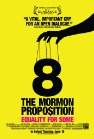
Media Praises ‘8: The Mormon Proposition,’ But Admit Film is One-Sided

“ 8: The Mormon Proposition ,” is a documentary detailing the large role the Mormon Church played in passing California’s Proposition 8 in 2008.That ballot initiative added an amendment to the state constitution defining marriage as exclusively between a man and a woman. While the media has naturally been praising the documentary, the movie is so biased that even some reviewers couldn’t avoid pointing out how one-sided it is. Directed by Reed Cowan, the film first premiered at the Sundance Film Festival. “8: The Mormon Proposition” is narrated by Lance Dustin, who was the screenwriter for “ Milk ,” the movie about California’s first openly gay elected official. The trailer features protestors, people upset about the passage of Proposition 8, and paints the Mormon Church negatively for influencing the outcome of Proposition 8. Cowan has not attempted to hide his bias in the documentary. He stated, “The separation of church and state in the USA is a sacred value. It’s what keeps us from being a theocracy. We are a democracy and should forever stay that way. ‘8: The Mormon Proposition’ is a crucial piece of documentary film making because it puts on record what I believe to be the greatest encroachment into matters of state by a church in American history.” Mormon Church spokesperson Kim Farah told the Washington Post in January that although she has not seen the film, “judging from the trailer and background material online, it appears that accuracy and truth are rare commodities in this film. Although we have given many interviews on this topic, we had no desire to participate in something so obviously biased.” Farah is not the only one who has noticed the film’s obvious bias. In a June 18 article, The Boston Globe’s Mark Feeney labeled the film as “numbingly partisan.” He explained that while over 30 people were interviewed in the documentary, only two are against same-sex marriage and he called one of them “a bombs-away bozo.” But Feeney made sure readers knew he was no apostate from the gay agenda, explaining, “It’s so one-sided you hardly care after a while that the side it’s on is so clearly the right one.” The Chicago Tribune also noticed how one-sided the documentary was. Author Michael Phillips stated the film, “emanates empathy for gay and lesbians who are also Mormons, or were, or are related to them, and whose relationship has been thwarted by the preachments and political influence of the Latter-Day Saints.” Some reviewers didn’t feel the need to mention the film’s propagandist bent. In a June 18 New York Times’ review, author Stephen Holden praised the documentary as being “highly emotional.” He detailed how the, “movie shows the depth of religion-based loathing of homosexuality, like that of abortion, to be primal. In the meantime the struggle to repeal Proposition 8 is under way.” Strange, but Holden wasn’t so receptive to another film’s depiction of “religion-based loathing” when he panned “The Stoning of Soraya M.” But then, that movie was critical of Islam, not a dangerous creed like Mormonism. The Los Angeles Times’ review labeled the documentary as being a “straightforward presentation” and “outstanding.” The movie review continued to state how, “The words of the church’s leaders and its activists could scarcely be more homophobic.”

Visit link:
Media Praises ‘8: The Mormon Proposition,’ But Admit Film is One-Sided

WaPo Devotes 60-Paragraph Front Page Story to Workaholic Kagan, Pays Little Attention to Her Philosophy

Borrowing a line from one of her Harvard colleagues, the Washington Post entitled its June 10 front-page profile of Supreme Court nominee Elena Kagan, “Her work is her life is her work.”* But the 60-paragraph story by staff writers Ann Gerhart and Philip Rucker shed barely any light on the judicial philosophy that Kagan’s life work demonstrates. Instead, Gerhart and Rucker presented a gauzy profile that rehashed the usual trivia — Kagan loves poker and the opera — while painting Kagan as a workaholic who still has time to lend an ear or a shoulder to cry on to friends in distress: She has arrived at the age of 50 in a blaze of accomplishment. But her achievements can obscure how relatively narrow her world has been.  She made her life the law and became consumed by it — and happily so, by all accounts. Her parents are no longer living, and she sees her brothers, Marc and Irving, Yale University graduates who teach public school in New York City, usually at holidays. Most of the people in Kagan’s life are important people, bound to her in tightly drawn concentric circles. Her friends are elite lawyers of a certain set or Democratic operatives with staying power. She cultivates their company, holds their confidences, gives them the best presents and solicits their ideas, said several friends among the four dozen people interviewed for this article. Many high-energy super-achievers strive for a sanctuary of home or hobby or nature away from the relentless pressures of the workplace, even as they bang away on their BlackBerry and brag how little sleep they require. Kagan seems to be the rare person who has moved fluidly up and through the corridors of power with no apparent need for this separate sphere. “Her work is her life is her work,” says Charles Fried, a Harvard Law professor. He credits her with grafting a sense of community onto the school’s prickly and insular culture in her six years as dean.  “To call her a bloodless organization person running her organization would be a terrible mistake,” Fried says of Kagan’s ceaseless entertaining, dinner-going and speech-giving while dean. “She did those things with real affection, not just for the institution but for the people.” Yet the friendship her intimates describe seems curiously one-sided; it is one in which Kagan gives freely of her support but seeks none in return. “I went through a very contentious divorce,” says Laurence Tribe, another Harvard Law professor who has known Kagan for more than 20 years, “and she was one of the very few people I could talk to about it. It’s because you could trust her. She made me feel that I would get through it. “She’s a great listener, and I think that will endear her to her fellow justices,” says Tribe, who is on leave from Harvard while working at the Justice Department. “She’s likely to make them feel that she cares what they think.” That’s great, but Kagan is not up for a marriage counselor gig, she’s nominated to the highest court of law in the land. It’s not wholly illegitimate for the media to devote some resources to exploring the personal and social dimensions of a Supreme Court nominee’s life, but ultimately these details are of little or no consequence to the job itself. Yet today, Post editors gave their front-page readers what essentially amounts to a Style section profile in lieu of a meatier profile that might examine the liberal leanings discernible in Kagan’s work product. *the headline for the online version reads, “Kagan has many achievements, but her world has been relatively narrow.”

Originally posted here:
WaPo Devotes 60-Paragraph Front Page Story to Workaholic Kagan, Pays Little Attention to Her Philosophy