Singer teases ‘Red’ on ‘Good Morning America’ before releasing the full track at midnight on Tuesday. By Jocelyn Vena Taylor Swift Photo: Jon Kopaloff/FilmMagic

Read the original here:
Taylor Swift Previews Red Title Track

Singer teases ‘Red’ on ‘Good Morning America’ before releasing the full track at midnight on Tuesday. By Jocelyn Vena Taylor Swift Photo: Jon Kopaloff/FilmMagic
Read the original here:
Taylor Swift Previews Red Title Track
Posted in Celebrities, Gossip, Hollywood, Music
Tagged appid, bennyhollywood, Hollywood, jocelyn-vena, kopaloff, mma, morning-america, Music, News, show, singer, taylor, Taylor Swift
Russell Crowe and Darren Aronofsky are busy with Noah. Will Smith is apparently tackling the Biblical brother rivals Cain in Abel in his directorial debut. Paul Verhoeven is taking on the big man himself in Jesus of Nazareth and now his earthly mother will be getting a big screen focus. Mary Mother of Christ will show Jesus’ life up until about adolescence and the recently retired Peter O’ Toole is apparently coming out of retirement to join the project, which is being billed as a prequel to The Passion of the Christ . The project is still casting, based on a script by Benedict Fitzgerald, who co-wrote Mel Gibson’s bloody crucifixion pic and Barbara Nicolosi. 15 year-old Odeya Rush ( The Odd Life of Timothy Green ) will play the role of Mary. Peter O’ Toole is apparently heading out of retirement to play Simeon, who blessed the infant Jesus, and Julia Ormond will play the mother of John the Baptist, Elizabeth, according to The Guardian. Ben Kingsley, meanwhile is apparently eyeing to play the era’s evil monarch, King Herod and producers are apparently hoping Judi Dench will take the role of Anna the Prophetess, a widow between 84 and 105 years old. They are also going after Hugh Bonneville to play Satan. Texas-based televangelist/author Joel Osteen is executive producing the project, and Aussie filmmaker Alister Grierson, who directed James Cameron’s deep sea dive film Sanctum , will direct Mary Mother of Christ. Mel Gibson’s The Passion of the Christ made over $611 million worldwide and over $370 million domestically. [ The Guardian ]

Original post:
Peter O’Toole May Ditch Retirement For Mary Mother Of Christ
Posted in Celebrities, Gossip, Hollywood, Hot Stuff, News
Tagged baptist, celeb news, christ, festival, Hollywood, House, invalid, judi dench, mel gibson, mma, newswire, peter otoole, timothy-green, tv guide
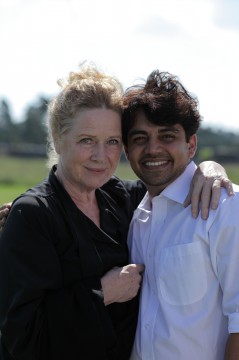
It’s too bad they don’t give Oscars out for individual performances in documentaries because Liv Ullmann’s work in Dheeraj Akolkar’s Liv & Ingmar would be worthy of consideration. The Norwegian actress and filmmaker discusses her 42-year relationship with the late Swedish filmmaking legend Ingmar Bergman with such emotional candor and poetic economy that the movie becomes something much more than just a re-telling of one of the most famous work-love relationships in cinema. Although Ullmann and Bergman — who was 22 years her senior when they fell for each other on the set of Persona in 1965 — lived together for only five tempestuous years, the friendship that they built in the aftermath is very much a love story. And Ullmann’s remembrances of their time together and apart until Bergman’s death in 2007, combined with Akolkar’s sumptuous and artful telling of the story, make Liv & Ingmar a story that can be enjoyed without an immersion course in their work together. Liv & Ingmar is at its essence a story of two people who love each other but cannot live with each other. (Think of it as a real-life Celeste & Jesse Forever .) Ullmann, 73 will attend the U.S. premiere of the film at the New York Film Festival on Monday night, and the Oscar-nominated actress spoke to Movieline about her initial reluctance to participate in Akolkar’s film, her happiness with the result, her rollercoaster relationship with Bergman, and Johnny Carson’s flirting during a Tonight show appearance. Note: The door to which she refers in the interview is located at the house on the Swedish island of Fårö where she and Bergman lived together. On the door’s surface, the couple kept a kind of hand-doodled calendar of their good — and bad days together, and Akolkar repeatedly depicts the drawings as a document of their union. Liv Ullmann and Dheeraj Akolkar Movieline: Liv & Ingmar was clearly an emotional experience for you. Your decision to talk so candidly about your relationship with Ingmar seems pretty brave to me. Was it a difficult one to make? Liv Ullman: Well, I did say no at first, but then I met with the director and the producer here in Norway. They really convinced me I would like to be part of this, but only on a very limited basis: two days to be interviewed and to produce my readings from my book. That was it. I did not have anything to do with how the movie was made. It wasn’t a brave decision because I’ve done so many interviews in my life about Ingmar or Ingmar and me. It was only when I saw the finished movie and saw what it was about that I thought, Oh, if I had know this before, I would maybe would have been more scared because it is so much deeper than I thought based on the interviews I did. The director is a tremendously creative person, and I believe that if Ingmar were alive, he would have liked this version. It’s not how I would have described this relationship, or how he would. But nonetheless, it’s terrifically true. You’re saying that if you had directed this movie, your interpretation of your relationship with Ingmar would have been different? Mine would be different, yes, but I’m not saying that mine would be truer or closer to the truth. It would be my kind of truth. I would have talked more about the memories and the longing, but this is true in a way that I never thought about our relationship. To me, this film is interesting because the person telling the story never met us before. [Dheeraj] only knew me through reading my book Changing and through our brief work together. He never met Ingmar. And yet, Liv & Ingmar may be closer to the truth in some ways because he’s looking in at us and he sees us in a different way than somebody who was completely involved with the experience. That’s interesting. The film left me with the impression that you had worked very closely with Akolkar. No! This movie is his creative work. Except for the interviews I gave, I had absolutely nothing to do with it. We had no discussions beforehand about it. We did not talk while he was editing it or finishing it. We did not talk about music. It was his film. How did Akolkar contact you? He wrote me [to ask if I would participate], and I said, “No.” And I was so glad that the Norwegian people who have money in the film called me and convinced me to meet with him. Sometimes you need to see a person and listen to a person to make your decision. When we met, I saw this young man who was very different from me — a different country and a different religion as far as I know. But I could tell that he was hearing me. We met for one hour, and that’s it. And then we shot two days in Fårö. That’s how much we knew each other. And then when I saw the movie, I just knew this man knows me in so many ways. One of aspects of the movie that I found fascinating was that when your on-camera comments are interspersed with scenes with the Bergman movies you did, the films seem remarkably autobiographical. Was that apparent to you when you were making them? No, I’ve never known this. But that is Ingmar’s genius. The movies may be autobiographical for a lot of people. It’s easy to say, “Oh God, this movie is about us..” But maybe some other woman can say, “Oh, it’s about me, too.” I know a lot of people who’ve said they recognize themselves in these movies. That’s another thing that I really liked about this film: You don’t need to have seen your work with Bergman to feel the emotional impact of this film. It’s a story about a very intense love affair that works on a universal level. Other people have said that to me — that you don’t have to know Ingmar, or me, or our movies to enjoy this movie. That surprises me because the first time I watched it, I thought, maybe this will only appeal to people who have seen the Bergman movies. Liv & Ingmar leaves the distinct impression that you couldn’t live with each other but you also couldn’t live without each other. Exactly. But one thing is true: if we had continued to live with each other, we probably could never have been together as friends afterwards. For some strange reason, it happened at the right time for us. It was so painful — so painful. I hope I’ll never have that pain again. But it led to a deep friendship and often those friendships don’t happen either. When you’re on camera, you really communicate the emotional complexity of your relationship with Ingmar. The scene where you learn that he kept one of your notes tucked away in a favorite teddy bear is pretty devastating. I’m so happy you’re saying that, but the credit goes to the director. The moment with the teddy bear that you talk about – no one knew about it until the housekeeper in Ingmar’s house [in Fårö] said, “Do you know what’s in that teddy bear?” It was kind of a friendship letter that I wrote Ingmar around the time that I did Faithless [in 2000.] And he took the letter and put it in his teddy bear that was always at the house. When I learned about the letter, it was like Ingmar saying again: “I love you –but, of course, not like when you were in Persona . I love you in a different way, and your throwaway letter is so important to me that I’m putting it in my teddy bear.” If I hadn’t done this movie, I would never have learned that. The housekeeper would never have told anyone. The same goes for the door at the house with our drawings. Since I left Fårö, I was so scared that Ingmar would take away the door, or his wife would take away the door. And when Ingmar died, I was sure I’d lose the door. But if you see the film, you see that every year, he did things to keep the sun from bleaching our drawings. Now that there’s no one there anymore to do that, in a couple of years you won’t be able to see what we did very clearly, but now I’ll never lose the door. It’s in the film. That door symbolizes so much. There’s a hand-drawn image of two side-by-side hearts with faces, but they’re both wearing frowns. Was that the essence of your relationship –that you had this great love and yet struggled to make each other happy? You always hope that the other one will make you happy before you think of all the ways that you can make the other one happy. It’s so strange—those doors came just before it was all over [between Ingmar and me]. Why we made the hearts, I don’t know. The other thing I noticed when we made the film is that Ingmar put airmail stamps over some of the dates. I don’t know what’s under them. It’s probably sad. But again, it’s another sign of him saying he cared. Do you still feel his presence? Yes, I do. In this movie, people might say, ‘Ah, he’s not here. He probably would not have made this movie. That happens not to be true. I am so sure that Ingmar would smile and care about this film. I even made a contract with the producer: if I don’t like the movie, I’m going to badmouth it and just say that I spent two days on it and what a shame. I made a contract: no payment but I am free. So, why do you think I’m talking about it? I think this is a great movie about a relationship. It’s a great movie about love. In the movie, you talk about struggling with living in Bergman’s shadow. Do you feel free of that now? I’m will always be proud of having worked with Ingmar. But at the same time, I’m directing Uncle Vanya in Oslo now and an English film version of Strindberg’s Miss Juliet . I will also probably direct Ibsen’s A Doll’s House on Broadway. So, I feel my life has always been apart from Ingmar’s but always connected to him. If I didn’t have him, I wouldn’t have the deep satisfaction of having worked so often with one of the great people of cinema. He has given me so much knowledge and trust and I use so much of what he taught me. When I was in Hollywood and maybe doing things that weren’t the best of the best, I could smile because my luggage were some of Ingmar’s great movies. So nobody could say, ‘Ah, she shouldn’t be filming.” What are your favorite performances in non-Bergman movies? My favorite films are Jan Troell’s The Emigrants (1971) and The New Land , (1972) about Swedish immigrants to the United States. I was nominated for an Oscar for the first one. I just love those two movies. It’s been 40 years since they were made, but they still reflect the attitudes and the realness of why the Swedish came to the United States. I think they would be very important to show now that you are having a new election. I have to ask: I loved the clip in the movie of you being interviewed by Johnny Carson on the Tonight show. He seems genuinely smitten with you. Did he continue to flirt with you when you were off-camera? My husband thought the same thing. He watched it. No, [Carson] didn’t flirt with me after the show didn’t, but he did have me on his program a number of times. And the strange thing is that he didn’t want me at first. He said, “Oh God no, she’s serious. I don’t want someone like that.” He was talked into having me on because I was so open. And then I was there a lot. And no, he did not start, though I wouldn’t have even minded. My husband was very jealous. Follow Frank DiGiacomo on Twitter. Follow Movieline on Twitter.
More:
NY FILM FESTIVAL INTERVIEW: Liv Ullmann Talks About The ‘Pain’ Of Loving Bergman In Liv & Ingmar
Posted in Celebrities, Gossip, Hollywood, Hot Stuff, News
Tagged Actors, after-the-film, awards, festival, Hollywood, ingmar bergman, invalid, mma, movie, Music, wife, will-the-over
In the cinematic world of Rian Johnson , where friends are collaborators and cast and crew a part of a close-knit filmmaking “family,” actor Noah Segan is a constant. But after appearing in Johnson’s debut film Brick and his follow-up, The Brothers Bloom , Segan received what he calls a “gift” from Johnson — one of the smartest rising writer-directors of his generation — in the form of what’s sure to be his breakout role: The finely-tuned, gun-obsessed futuristic cowboy Kid Blue in Looper , a “gat man” eagerly hunting down rival Joe ( Joseph Gordon-Levitt ) who’s so fraught with seriocomic human frailty he only grows more sympathetic as he becomes increasingly unhinged. To Segan’s credit, he shines in the role Johnson tailored for him, inspired by Segan’s own offscreen cinephilia and the actor’s favorite movie — the obscure Dennis Hopper-Warren Oates Western Kid Blue , his signature on Twitter , Tumblr and the film community for years. As Gordon-Levitt’s steely Joe attempts to change his fate by confronting his future self (Bruce Willis), Segan’s eager-to-please Kid Blue illustrates a pained parallel course of desperate self-determination gone wrong. For the actor, who considers Brick the start of his bona fide career and also appeared in Deadgirl , What We Do Is Secret , and Cabin Fever 2 , Looper could and should be the catalyst for Hollywood to take note. As he and the Looper crew took Fantastic Fest by storm, Segan spoke with Movieline about his uniquely personal relationship with Looper and director Johnson, the compelling complexities of Kid Blue, that one time he was on Dawson’s Creek , and why no industry honor could match the feeling of being welcomed as family at the best movie theater in Los Angeles. You and Rian Johnson go back all the way to the Brick days. How did he first describe Looper to you? I had read his short story called Looper before we made Brick , and it was two pages long and it was really the hook — like getting the chorus to a song in your head if you were writing a tune. It was the chase between the older version and the younger version of the same guy. He tucked it away into the archives and went about his business, made Brick , and [ Brothers ] Bloom , and then he mentioned he was revisiting it a few years ago. Sent me a draft about three years ago, and that was that. And he wrote Kid Blue specifically with you in mind? He did. Kid Blue is my nickname; it’s been my nickname for about ten years, since I was a teenager. It’s a reference to a pretty obscure 1970s comedic Western starring Dennis Hopper and Warren Oates, and a buddy of mine who’s a screenwriter back in New York turned me onto some great movies, the movies that I now love, counterculture ‘60s, ‘70s American New Wave — the Dennis Hoppers and the Sam Peckinpahs and the Monte Hellmans, the guys who now I consider my favorite filmmakers. One day he said, “There’s this movie, and you’re gonna dig it — it’s going to be your story. It’s called Kid Blue , and good luck trying to find it.” I go down to this place we had in the Village called Kim’s, which is this famous archive of cinema, bootlegs, and at the time, VHS tapes, of stuff you could never find anywhere else, and you didn’t know how it got there, and maybe it’s not supposed to be there, but if it existed it might as well be at Kim’s. I found Kid Blue there, a pan-and-scan VHS of a dub of a dub from Spanish television with subtitles, and I watched it — it’s the story of a Kid, like Billy the Kid, played by Dennis Hopper, trying to go straight. He realizes he’s getting a little long in the tooth for his lifestyle so he tries to go straight in this town at the beginning of the Industrial Revolution; hilarity ensues. There was something about it that just clicked with me so I stuck with it, and it became my nickname. It’s a pretty good nickname, I must say — long before I had even heard about Looper it was your Twitter handle, so I knew there must have been a history there. It surprised me as much as anybody, because, listen — you happen to be lucky enough to be friends with one of your favorite filmmakers, that’s kind of enough. You don’t expect anybody to write you a part. And then he writes me a part, and he writes me my part. He wrote a part that I think, not dissimilarly from Brick , has a lot of the sort of vulnerability and pathos and yet diligence that I guess Rian sees in me. It’s a great honor to be saddled with these big emotions and still be able to have fun with it. That must be an interesting experience in itself, to have a friend write a character for you knowing what you’re capable of and shades of what he sees in you — and it turn out to be a character like this. Kid Blue is not the hero but he and Joe come from very similar backgrounds. It’s very Oliver Twist. Yes! Joe is Oliver and I’m the Artful Dodger and Abe [Jeff Daniels] is Fagin, you know? The three of us, Joe [Gordon-Levitt], Rian, and I, are very good friends — we spend a lot of time together along with the other members of the family, whether it’s Ram [Bergman] his producer, Steve [Yedlin] his cameraman, or Nathan [Johnson] his composer. We all live in the same neighborhood, pretty much, and have keys to each others’ houses and BBQ all the time. I think first impressions make a big impact whether we’re aware of them or not, and the first impression of our relationship was obviously Brick . Dode in that movie is a foil for Brendan, for Joe’s character, and I think a lot of the dynamic that the three of us have is that we are foils for one another. So I imagine, whether consciously or not, Rian read into that. He read into the dynamic between me and Joe probably by watching us, just like I watch him and Joe. There are a lot of parallels between the Kid and Dode from Brick as well — the idea that here’s a guy who will stop at nothing to do what he thinks is the right thing, even if it’s absolutely not the right thing. You’ve floated the idea that Kid Blue could be Dode’s grandson if the Brick and Looper universes overlapped… I’m rolling with that so hard! I kind of rolled that one out and now I’m going to kick it into gear. What I would love is somebody to do some fanfic that’s like Dode had an illegitimate son and that’s his great-grandson. I think they start early in that family. [Laughs] They’re very similar guys, guys who have a duty and a purpose. I think that’s where the vulnerability and the pathos comes from — someone trying to do a dignified act in a very undignified way. Therein you get sympathy too, right, because we’ve all tried to do the right thing and realized we have absolutely no idea how to do the right thing. The great thing about Kid Blue is that we can still understand where he’s coming from, even as he’s not the best equipped to handle the situation, and perhaps isn’t completely all there. You still feel for him. I hope so. I think everyone’s in the gray here. No one in this movie is absolutely doing the right thing. So you cut the Kid more slack. It also helps that he’s goofy, he’s funny, and in a movie that doesn’t have a lot of comic relief a little bit goes a long way. Kid Blue is the most colorful character in a movie that’s populated with very straightfaced people. Yes, and I think that’s something that Rian gave to me — this Western character, this cowboy, in this post-manufacturing era dystopian society, here’s a cowboy who’s earned his stripes to be as silly as he wants to be. He is the character who brings that Western element to the film, in many ways — he’s basically a gunslinger, he has his signature gat, and he even rides the futuristic equivalent of a horse in the form of the slat bike. I get to ride that, I get to spin my gun, I get to talk with a drawl… I got to really play the points of a Western, which again is a great gift from Rian because he knows how much I love that stuff. The guns in Looper provide a lot of interesting analytical dissection, but from your perspective how much is Kid Blue’s obsession with his gat perhaps a phallic psychological extension? [Laughs] Not mine, right? The Kid’s… that’s a bigger conversation to have, no pun intended. I do not have the biggest gun in the movie, as you know — I think Emily [Blunt] actually has the biggest gun in the movie, and she’s also kind of the most bad ass, so maybe that explains the answer to your question right there. I hadn’t thought about that but it’s such an obvious question: What do these guns represent? Rian explains it in the movie as the idea behind the gat is it’s this precision instrument, a perfect device that has withstood the test of time. It’s a side-loading revolver, a single action gun — the same thing that cowboys used to use, so it’s proven itself as a worthy tool. The blunderbuss, the thing that the loopers use and that Joe uses, is this modern distillation of a shotgun, this new school version of a very brutal weapon that just needs to be vaguely pointed in a direction and it’ll get rid of everything in front of it. I think that explains where the characters are coming from; the Kid really wants to be viewed as skilled, as worthy, and I think Joe doesn’t care — Joe’s just thinking, “How am I going to get out of here?” Has The Kid watched a few too many Westerns himself? Absolutely. There’s a line that Abe says where he says, “You’re just emulating these movies.” These movie-movies. I almost see that as a response as much to the Kid as it is to Joe, in that poor Abe is saddled with this guy who, unlike Joe who he also raised and reared, the Kid is a company man. He’s hanging around and he’s pretty good at his job even though he’s kind of a goofball and a screw-up, they keep him around. He’s diligent and a good kid, but poor Abe’s thinking, he’s got the skills so I’ll let him wear his blue jeans and his cowboy boots and let him use his special Western revolver, but how annoying is it that he can’t be contemporary here in the future? You mentioned the filmmaking “family” built around Rian’s films, but what was it like to have folks like Jeff Daniels and Bruce Willis come into that from the outside? We thought about that a lot, specifically with Bruce. What was it going to be like, every step of the way, to have this guy who represents the modern movie star hanging around with us? Everyone was really excited when he became part of the family, but you’re in awe of this guy who is an icon coming in saying, “Let me join in on the fun.” My guess is he vibed that, that this was an opportunity to join the family, and as a great actor and collaborator who has done so much I imagine his reaction was the same as ours, which was that this was fantastic, this was a beautiful thing. With Jeff, the best analogy I could use was it was like having a family reunion and meeting an uncle you never knew you had. They were onboard the minute they saw what we were up to. You and Jeff Daniels share some heavy moments; The Kid aims to please Abe, but he never quite seems to get it right. What were your impressions from working together? Jeff’s a very stoic guy and about as pro as you’ll ever find; he runs a theater company and he comes correct. He’d sit back with his guitar between takes and do his regal thing, but when we got into our really emotional stuff and he saw that I was not really holding back, because I had prepared for so long to do it and didn’t know any other way, and frankly I’m not trained like he and a lot of people are — I just figured, be ready to just wallow for a while and have a tough day then have dinner with your friends and take a deep breath. He was very kind to me and saw that on that day and said, “When the camera’s on me you don’t have to go whole hog, you don’t have to drive yourself nuts.” And I said, “I’m ready for this and I’m doing it, and there’s only one way I know how to do it.” We did the scene and stayed with it and that night he was leaving the set with his fedora and scarf on, looking extremely gentlemanly, and he turned back and saw me smoking a cigarette outside my trailer trying to shake off the day, and he said, “You did a good job, Kid — we’re in a good one.” He knows how to deliver that line on set and off, you know what I mean? And it wasn’t dissimilar from Bloom — I had a tiny part in Bloom and flew out to Serbia to visit my buddies making this movie and do one scene of schtick and it was the same thing. There were these great actors, Mark Ruffalo and Adrien Brody, and it was like my dad had a secret family and they were the half-brothers I never knew about. It’s just something that Rian and his crew really engender, an inexplicable comfort. Looking at your career to date — I have a career? I sort of feel like my career’s about to start, I hope. You’ve been a working actor for so long, and have done a number of indie films but you seem to have done things you really were passionate about. What has your approach been in terms of balancing indie and mainstream and where you’d like to go? My experience working in the movie business — I was a camera assistant before I was an actor — began when I was a little kid, acting in New York. It was something that I did because I was not into doing team sports. I was a little kid who could read and look in the same place for more than two seconds at a time, so I think my folks figured, “He might as well do something with his time, why not have him do commercials?” It was the exact opposite of what you hear when you hear of stage parents, I either did it or I didn’t depending on if I wanted to, and it was an after school hobby sort of thing. But I think it was the seed of loving movies and loving sets. As I came of age I thought I wanted to be a cameraman, a cinematographer — that was sort of the family business, my grandfather was a photographer and my mother is a photographer, among other things, and I have a very close family friend who was a cameraman so I started working for him. I did that for a couple of years very seriously and thought I was going to do that until I met an actor who said, “You should think about acting.” It being show business, you introduce somebody and introduce somebody and introduce somebody and the fifth guy you’re introduced to sends you out on an audition and it’s for Brick . So my first experience working in a movie was working with the people who are now my best friends in the world, who I love dearly, and I think for better or for worse that’s what I want every time now. I got spoiled really, really early. That’s sort of what I’m looking for, people who have that kind of mentality and that collaborative vibe, with an evangelical, pure vision of a script — which is usually people who’ve written their own scripts, so I tend to like to work on stuff that’s being directed by the guy or girl who wrote it. I’ve always thought that it’s such a weird thing to not have to shovel shit in order to pay my rent, which is really the only thing that I’m qualified to do — I have a 9th grade education. I am not capable. I have no skills! What happened in high school? It wasn’t for me. I wasn’t a school guy. I had a big chip on my shoulder, listened to a lot of punk rock music and watched a lot of grownup movies. I remember being in school, right before I left, and they had us read Catcher in the Rye which is basically a guide on how to drop out of school. You’re supposed to read this in high school or junior high and appreciate it as a great work of American 21st century fiction but in reality it’s that, and it’s telling you, fuck ‘em . It’s sort of like, this guy did it — I guess I will too. There are so many would be teenage Holden Caulfields who would love to follow suit, to grasp that sort of freedom for themselves. I grasped it! Much to the chagrin of my folks and all the other adults around me, but at the end of the day I’m now sort of stuck acting in movies as my job. Well, that did lead you to one of your greatest early acting credits, by which I mean that one very special episode of Dawson’s Creek where Joey and Pacey get locked in a store overnight. I was! I think that was the second thing I did after Brick . Why was it very special? Because I’m Team Pacey, of course. [Laughs] I remember I had gotten that job and there was some talk that it would be a recurring character. I actually don’t know much about the show so you can tell me if I’m wrong, but it was late in the show and there was some talk of finding someone to spice it up, like Cousin Oliver on The Brady Bunch . I showed up and I only knew this one weird way to do my job and I had created this really weird guy who has like five lines, but is super weird and stoned, and I think it really went against what they envisioned for their show. I just re-watched it and I think you were quite striking. Besides, you’re now part of television history. I am? Well, those two were always meant to end up together. I’m glad it worked out for them. Joey is Katie Holmes, right? And Pacey is the tall guy? Are you telling me you’re not up on your Dawson’s Creek lore? That’s fine. So — indie movies, mainstream movies — how do you view the two worlds and your place in them? I’m really excited about potentially working on more mainstream movies. I look at a lot of the movies and big filmmakers we now take for granted; if you went back in time and went to Sundance and saw sex, lies, and videotape and then said, “That guy’s going to make three of the most charming, entertaining popcorn movies with the biggest movie stars in the world in it and they’re going to be good and everyone’s going to see and enjoy them,” nobody would believe you. If you went back in time and went to a four-walled midnight screening of Evil Dead and said, “That guy’s going to make Spider-Man movies and they’re really going to get people interested and excited,” nobody would believe you. Did anybody watch Memento and think, that guy’s going to make Batman movies? That’s a really cool thing to me, the potential to up the game. For me it’s even more luxurious because I can be a good actor in any movie; that’s my challenge. I’d better be whatever I need to be – sad, or funny, or believable, or not believable. I can do that in any kind of movie. I can do that for $5 on an iPhone or for $5 million on a big movie, or $500 million on the biggest movie. So it’s not really an argument for me. The argument is really for the filmmaker, and the producers. It’s nice, I’m a worker bee. I get to follow direction, literally. You seem to just really love being a part of it all. I’m really happy to be a part of something. That’s the thing, you have all these people, all these iconoclast and idiosyncratic people, and when it works all of a sudden these disparate things come together into a team sport. Everyone’s fighting to get on the team and to sort of get called off the bench a little bit here is really nice. I just want to do a good job. Speaking of being a part of something, you refer to the New Beverly Cinema in Los Angeles, my favorite theater, as “church.” When I first came to Los Angeles and wanted to do something in the movie business I started going to the New Beverly, because that’s where you go. Sherman Torgan, who originally ran it before he passed away, and his son Michael who took it over, have always been very kind to me, and within a couple years of being in L.A. I decided that I’m not really interested in how I’m going to feel if I make a bunch of money or win an award — that’s really fun stuff, that’s awesome, but I’m not really looking forward to that stuff as being watershed events. But if they ever know my name at the New Beverly, if they ever open the door and usher me in and say, “Noah, enjoy the show,” I’ll know that I’ve achieved some success. A couple of years ago Michael and Julia [Marchese] started doing that, and now I feel like a successful person. Now I feel like I belong. Looper is in theaters this weekend. What are you waiting for, go see it! While you’re at it, follow Noah Segan on Twitter and Tumblr . Follow Jen Yamato on Twitter . Follow Movieline on Twitter .

Read the original here:
ARRIVALS: A Breakout Role — And A Bright Future — For Noah Segan, Looper’s Kid Blue
Posted in Celebrities, Gossip, Hollywood, Hot Stuff, News
Tagged Actors, celeb news, family-reunion, film, guitar, Hollywood, mma, Music
Teresa Giudice may be the most hated woman on reality television. But we all know what that means, right? SPIN OFF! With pretty much every cast member on The Real Housewives of New Jersey hating on Teresa at the moment – did you see what Jacqueline Laurita said about her costar?!? – Bravo is reportedly considering a separate show for Giudice and her family members. Because, hey, controversy equals ratings. “All the drama and crazy things that Teresa and Joe have done is what makes them perfect candidates for their own breakout show,” a source tells Radar Online, adding: “They’re in talks right now and the show would include the whole Giudice side of the family, which would explain why we saw more of Joe’s brother Pete and his wife Sheila in last Housewives season.” Of course, there is one possible obstacle: Joe could face years in prison on fraud charges . Still, the network is “pushing forward” with the concept, this insider claims, and will simply adjust if Giudice heads to prison. Would you watch a Teresa Giudice spinoff? Yes, I love her! God help us, no! Who?!? View Poll »

Original post:
Teresa Giudice and Family to Be Spun Off by Bravo?
Posted in Celebrities, Gossip
Tagged fraud-charges, Hollywood, hollywood-news, House, insider, invalid, mma, news update, pushing-forward, stars, the-franchise
Andrew Garfield will be swinging into action again in 2014. The star, along with director Marc Webb, confirmed today that they will return for an Amazing Spider-Man sequel, a project that already has a release date: 5/2/14. In a statement Doug Belgrad, president of Columbia Pictures, praised the returning tandem: “We could not be more confident in the direction we are taking this new Spider-Man storyline and we are tremendously excited to be ramping up production again with Marc at the helm and Andrew continuing on as Peter Parker.” As for Emma Stone , who portrayed Parker’s love interest Gwen Stacy and who is now dating Garfield in real life? She remains in talks and “is expected” to return to the franchise, according to studio sources.

Original post:
Andrew Garfield Confirmed For Spider-Man Sequel
Posted in Celebrities, Gossip
Tagged celeb news, Franchise, hollywood update, hollywood-news, mma, Photos, Pictures, publication, the-direction, the-franchise, TMZ, topless-pics
Webb joins Andrew Garfield and Emma Stone as returning players for the ‘Amazing’ follow-up, swinging into theaters in May 2014. By Josh Wigler Andrew Garfield as “The Amazing Spider-Man” Photo: SONY PICTURES ENTERTAINMENT INC.

Posted in Celebrities, Gossip, Hollywood, Music
Tagged actor, appid, celeb news, detected, invalid, missing, mma, music-news, News, news article, Pictures, stars, stone, Warner
The filmmaker-critic relationship has always been complex — as demonstrated last weekend with hearty debate and even more heartfelt punches in the epic Joe Swanberg – Devin Faraci throwdown, henceforth known as the Mumble in the Jungle — but Sunday night, Looper director Rian Johnson and journalist Aaron Hillis united in sweet synergy to drop a rousing rendition of Weird Al’s Kinks-meets- Star Wars classic “Yoda.” I wish I had a futuristic time machine to take us all back to relive the moment with our younger selves, but this YouTube video capturing the entire number should suffice. There’s a long history of karaoke at film festivals, but rarely does festival karaoke reach the heights of the legendary magical musical moments at Fantastic Fest. This year celebrity karaoke began with Mexican recording artist and actress Laura Caro ( who won Fantastic Fest’s award for Best Actress for Here Comes the Devil ), who blew the roof off the Alamo Drafthouse’s Highball singing her signature cover of “I Will Always Love You” — the song that got her on Mexico’s American Idol -like La Academia . Sunday night the entire visiting Looper crew got in on the action as Noah Segan (AKA Looper ‘s Kid Blue) dueted with film journalista Karina Longworth and Tracie Thoms , who sang on freaking Broadway , crooned The Fugees’ “Killing Me Softly.” And of course, yours truly got up there one or two times to sing a little something. When in Austin… Reward Johnson’s tremendous karaoke effort by checking out Looper , in theaters this Friday. [Video via Todd Gilchrist ; Photo credit Jack Plunkett] Read more from Fantastic Fest! Follow Jen Yamato on Twitter . Follow Movieline on Twitter .

Posted in Celebrities, Gossip, Hollywood, Hot Stuff, News
Tagged aaron-hillis, Actors, austin-reward, bbc, entire, entire-visiting, fantastic fest, film, independently, mexico, mma, Obama, TMZ, tracie-thoms
Also in Monday afternoon’s round-up of news briefs, Len Wiseman is being tapped to direct a classic thriller reboot. Innocence of Muslims actress is heading to federal court. And Benicio Del Toro eyes his latest project. Lee Daniels’ The Butler Heads to The Weinstein Company TWC picked up U.S. rights to the film by Oscar-nominated director Lee Daniels. Forest Whitaker stars in the true-life inspired story about an African-American man who served as a butler in the White House under eight U.S. Presidents. The film also stars Oprah Winfrey, Mariah Carey, John Cusack, Jane Fonda, Cuba Gooding, Jr., Terrence Howard, Minka Kelly, Lenny Kravitz, Melissa Leo, James Marsden and Vanessa Redgrave. The film traces the dramatic changes that swept American society, from the civil rights movement to Vietnam and beyond, and how those changes affected this man’s life and family. “Lee tells stories in a way no one else does,” said TWC head Harvey Weinstein. “What struck me most about this story is the perspective it comes from, which in this case is the butler- a man who was a fly on the wall for decades in the world’s most powerful home.” The Butler is currently in production in New Orleans. Around the ‘net… Jake Gyllenhaal Eyes Prisoners Gyllenhaal is in talks to star opposite Hugh Jackman the the gritty thriller, being directed by Incendies director Denis Velleneuve. The story centers around a small town carpenter (Jackman) whose young daughter and best friend are kidnapped. He in turn kidnaps the man he believes is responsible for the crime, THR reports . Len Wiseman to Direct The Mummy Universal Pictures has tapped Wiseman to direct the reboot of the franchise that took in $1.25 billion over three films. Jon Spaihts is writing the script for the studio which is looking at a possible Summer 2014 release, Deadline reports . Innocence of Muslims Actress to Sue in Federal Court Cindy Lee Garcia named YouTube, Google and the film’s supposed producer Nakoula Basseley Nakoula in a law suit alleging fraud and emotional distress. Claiming a copyright issue, her lawyer Cris Armenta said on the Today show that they will dismiss the state court lawsuit and head to federal court, Deadline reports . Benicio Del Toro Set for How the Light Gets In Del Toro and producer Laura Bickford who partnered on Traffic and Che are partnering on How the Light Gets In , described as a “contemporary love story set in New York, London, Paris and Berlin.” In the film, Del Toro will play a Chilean novelist living in Paris who falls in love. Variety reports .

Read the original:
Forest Whitaker, Oprah Winfrey’s The Butler Heads To The Weinsteins; Jake Gyllenhaal Eyes Prisoners: Biz Break
Posted in Celebrities, Gossip, Hollywood, Hot Stuff, News
Tagged biz break, companies, film, House, light-gets, London, mariah carey, mma, movie, oprah-winfrey, paris, the-player, white, writers
It’s hard to say who really won, or if nobody won, or if everyone won last night when filmmaker Joe Swanberg ( LOL , Hannah Takes The Stairs ) and Badass Digest critic Devin Faraci took their creative differences to the boxing ring at the Fantastic Debates, an annual Fantastic Fest highlight that combines traditional debate with actual fisticuffs. Technically, their topic of debate was “Mumblecore is catshit and is giving a bad name to independent films,” though given Swanberg’s position as the micro-indie movement’s poster child, the fight got personal as soon as it began. Faraci had the audience going early with opening remarks (full transcript below) laced with pointed barbs that had the capacity crowd cheering. “[Mumblecore] is a bunch of middle class white kids whining about their ennui, about their middle class white lives in front of a camera, without a script, without good actors,” he proclaimed. “Here’s what you need to make a mumblecore movie: A sense of entitlement, white skin, and Greta Gerwig.” It’s safe to say Faraci’s anti-mumblecore attack/not-so-friendly roast had the support of the audience, but to his credit, Swanberg (who had no films in the fest and flew in for the debate) deftly countered. “True to form I haven’t prepared notes like Devin,” he began, turning the focus back on Faraci. “Maybe us mumblecore filmmakers are making movies from the heart that are connecting with you in a way that makes you a little bit uncomfortable.” Faraci nailed exactly what so many film-watchers dislike about mumblecore films — the unscripted, self-obsessed feeling of privileged white hipsterism that dominates them — but while he had the audience’s minds, Swanberg captured their hearts with the best counter-argument he could have used. “When you use your voice to try and squash people who are young, who are just coming up, who are figuring out the kind of filmmaker they want to be and the kinds of films they want to make,” said Swanberg, “all you’re doing is discouraging creative people from becoming who they are.” It was a passionate, personal, highly entertaining exchange of ideas and philosophies about film and filmmaking filled with complexities of the critic-artist relationship as old as time. And then they entered the ring. Although Faraci and Swanberg were preceded by dueling twin sister filmmakers Jen and Sylvia Soska ( American Mary ) who kicked each other while dressed as Mortal Kombat characters, and were followed by the night’s title card between Fantastic Fest founder Tim League and actual Tae Kwan Do Grandmaster/motivational speaker/ Miami Connection star Y.K. Kim, the critic-filmmaker bout was the best, and most alarming, of the night. Punches landed hard. Contact lenses were lost. In an event traditionally more tongue-in-cheek sideshow than serious fight, Faraci hit the mat but kept going for two rounds with Swanberg, who had director Ti West as his cornerman and wore a shirt that read “The Silver Bullet,” a nod to one of his own films and a symbolic weapon for taking down certain hirsute mythological creatures. What started out as a wildly entertaining exchange of barbs turned harrowing as the physical match wore on. But neither contender pulled any punches, at the podium or in the ring, Fantastic Fest got its best Debate in memory, and this morning Faraci and Swanberg’s intellectual bout is as much the talk of the fest as their knock-down rumble. In any case, the two bruisers made up after hours, somewhat , in true Fantastic Fest fashion. I guess that’s a win-win for everyone? Read the full transcript below. Devin Faraci: Joe, I really want to thank you for coming down to Austin, Texas to talk. I understand that last night you and your wife wanted to have some Chinese food, and Magnolia is now releasing that into 100 theaters next weekend. I’m here not because I hate Joe Swanberg – that’s just a plus – but because I love independent cinema. I love indie movies! They’re the beating heart of film. This is the best, the brightest, our greatest directors from Oscar Micheaux to Roger Corman to Dennis Hopper to Katherine Bigelow, Richard Linklater, Paul Thomas Anderson’s independent cinema. These are people without big means, these are people with big dreams, big visions – and usually, take note, a script. Even Cassavetes who didn’t have the scripts had these amazing actors, incredibly trained naturalistic actors whose qualifications were much more than just being willing to simulate sex onscreen with the director. You are the opposite of everything that’s great about indie film. It’s the laziest form of filmmaking. It’s a bunch of middle class white kids whining about their ennui, about their middle class white lives in front of a camera, without a script, without good actors. Here’s what you need to make a mumblecore movie: A sense of entitlement, white skin, and Greta Gerwig. To me, the word “core” at the end of mumblecore sounds like it should be something punk rock, something amazing, something edgy, instead of the blandest, most self-indulgent bullshit and only at the narcissists who make it. Your audience, pretty much, is you. Joe Swanberg: Well, true to form I haven’t prepared notes like Devin. I heard you use the word “lazy” just now yet also it seems to be the case that I’ve made more movies than almost any American filmmaker so that seems to be a contradiction. Additionally, if my audience is just me why do I make a living as a filmmaker and why do you seem to have seen so many of my films? Maybe you recognize yourself in those movies, Devin. Maybe us mumblecore filmmakers are making movies from the heart that are connecting with you in a way that makes you a little bit uncomfortable, possibly in your underpants area. Maybe they’re a little too familiar. Maybe the awkward fumblings of the sexual scenes hit a little too close to home, so rather than embrace these films you put up a wall of defense. I also heard you mention Roger Corman, another filmmaker who in his time was accused of being lazy, amateurish, sloppy, all these things – now he’s a hero of yours. Maybe you’ve got to give these mumblecore movies another 25 years before you see the true impact they make. Mostly, I’m out there doing it, Devin. I’m making movies. I’m getting my friends together with no money, we’re going out there and doing it, we’re putting ourselves on the line for shitheads like you to take cheap shots from behind your computer! There wouldn’t be a you without a me, Devin. Faraci: You’re right, you have made more films than most American filmmakers. Hitler killed more Jews than most other people. True, your early films were full of your heart, and your soul, and your dick, and then you moved past short subjects into longer movies. It is important that people keep making movies. I do agree that having no money should never be a roadblock for any filmmaker out there. Having no talent, that’s a whole other matter entirely. Swanberg: I’m going to ignore the cheap shots. You know, we both came of age in a really amazing time when the technology has allowed me to have a voice and the technology has allowed you to have a voice. And I think that, unfortunately, when you use your voice to try and squash people who are young, who are just coming up, who are figuring out the kind of filmmaker they want to be and the kinds of films they want to make, all you’re doing is discouraging creative people from becoming who they are. I think the next time you see a movie that you really hate, you might want to reflect on it for more than 25 minutes before you write a review. You write reviews faster than I make movies. Faraci: I do agree, I think that young filmmakers out there who are working hard should be supported, they should have places like Fantastic Fest to come and show the work they’re doing. It doesn’t mean that every single thought that they ever had has to become a 65-minute motion picture. At the end of the day I think making movies isn’t just about getting your friends together and turning a camera on. It’s about creating something that speaks to people, something that has a soul, something that has narrative. I think you need to have one of these things: amazing craft, amazing script, amazing actors. At this point, when Kevin Smith is beating you in all three of those, I don’t know what to say. But I do want to say, Joe, I do respect that you came down here. This is not easy, this is not your crowd. I think this was very big of you. And I look forward to punching you right in the face in a couple minutes. Swanberg: I don’t have much to say Devin, except that I’m going to be making a lot more films for the rest of my life, most of them you’ll be watching. I’ll never read another word you write. I think you’ve demonstrated an incredibly close-minded view of what cinema can be, by referencing just script, or just narrative, or just those things. I think you have a lot to learn. I’m excited for you to learn it. Mostly I’m excited to put the gloves on and beat the shit out of you. Follow Jen Yamato on Twitter . Follow Movieline on Twitter .

Read the original:
Mumble In The Jungle: Who Really Won The Swanberg-Faraci Fantastic Fest Debate?
Posted in Celebrities, Gossip, Hollywood, Hot Stuff, News
Tagged boxing, chinese, critic, devin-faraci, fantastic, fantastic fest, heart, Hollywood, joe swanberg, mma, night, Sex, silver, technology, wife



 Breaking Sports Video




Pac-12 NCAA Sports
Justin Bieber Fan Site Breaking News