Star football player Terrell Owens has been crying broke for some time now. Through his reality show got to know him on a more personal level but we didn’t know things were this bad! In a recent interview with GQ Magazine , Terrell revealed his feelings for Kita and Mo since their dispute and how he lost $80 million! The Top 5 Travel Activities Black People Stereotypically Avoid, But Actually Enjoy How he lost $80 million: “I hate myself for letting this happen. I believed that they had my back when they said, ‘You take care of the football, and we’ll do the rest.’ And in the end, they just basically stole from me.” On being lonely: “I don’t have no friends. I don’t want no friends. That’s how I feel.” On baby momma regrets: He says, “If there’s anything I’m sorry about, it’s getting involved with all that.” He added that he never dated any of the four women he impregnated…mostly they were “repeat offenders.” He resents them for suing him for more child support money as he’s going broke. On suicide attempts: He chalks them both up to “misunderstandings.” On his big fallout with Mo and Kita: He says he missed Monique and Kita whom he stopped speaking to after he discovered they were trying to sell their own lives as a reality program. “They said they were planning to make me an executive producer, but if we were business partners, don’t you think I would have known about it?” Spotted @ TheYBF.com Meagan Good, Stacey Dash, Terrell Owens Are “Dysfunctional Friends” [VIDEO] Terrell Owens: “I Can’t Afford My Child Support Payments”
As you may have heard or read, the 2012 Academy Award nominations have stirred strong reactions in certain pockets of the Oscar snubculture. And you just know that Extremely Loud & Incredibly Close filmmaker Stephen Daldry — a first-time non -nominee for Best Director — is seething somewhere out there: “But at least two of those guys won’t even show up! ” Fair enough! Or is it? While everyone expects Michel Hazanavicius, Alexander Payne and Martin Scorsese to attend the 84th Oscars ceremony on Feb. 26, the odds do not especially favor appearances by Woody Allen and Terrence Malick. Allen, who used to have his longstanding jazz dates at the Cafe Carlyle to excuse him from from the old Monday night Oscars (he has never formally accepted any of his three Academy Awards — two in 1978 for Annie Hall , one for Hannah and Her Sisters in 1987), has only deigned to drop by the Sunday night Oscars once: In 2002, mere months after the Sept. 11 attacks, he drew a standing ovation before introducing a montage of classic films set in New York. By all indications, Allen’s opinion of the event and its organizers hasn’t changed much from 34 years ago, when he lobbed one of history’s most enduring Oscar dismissals : “I have no regard for that kind of ceremony. I just don’t think they know what they’re doing. When you see who wins those things — or who doesn’t win them — you can see how meaningless this Oscar thing is.” That said, Allen would do well to represent the biggest professional success of his career — particularly on a night that’s already shaping up as a showcase for Hollywood’s complicated relationships with both nostalgia and the future. Moreover, this year’s class of Director nominees contains three world-renowned masters (including Allen) at whom it would be pretty unreasonable to cast aspersions, plus a man who made a silent film about the futility of pride. Industry back-patting aside, this year — of all years — would be the one to express a little artistic solidarity with peers like Scorsese and Malick. Oh, right: Malick. Terry, Terry, Terry. The legendarily publicity-shy filmmaker attended the Cannes premiere of Tree of Life last May but delegated producer Bill Pohlad to accept the Palme d’Or on his behalf. But according to Pohlad , Malick was “genuinely happy” to hear about Tree ‘s nominations and may be responsive to persuasion when it comes to attending. “I’m hesitant to push Terry to do something he doesn’t like doing, but I also want him to enjoy it,” Pohlad told the LAT , adding: “Sometimes, its frustrating how removed from it he tries to keep it, but it comes from a real place. He’s tried to do something original and adventurous and he wants the focus to be on that.” Hmm. Well, trust me, Mr. Malick: We all pinky-swear to focus on The Tree of Life and all of its originality and adventurousness and the rest if you just drop in for a little while. Ryan Seacrest promises not to accost you on the red carpet; Christopher Plummer promises not to bring up any more hard feelings about The New World . The Academy even promises not to vote for you if not having to take the stage would guarantee your attendance. We’ll do anything! Just say the word. Follow S.T. VanAirsdale on Twitter . Follow Movieline on Twitter .
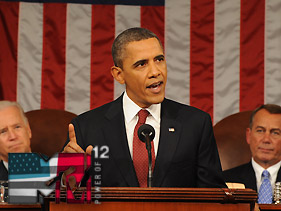
President wants to require every student stay in school until graduation or they turn 18. By Gil Kaufman Vice President Joe Biden, President Barack Obama and House Speaker John Boehner Photo: CBS The president’s State of the Union address is meant to give the nation an update on what has been accomplished and what is still left to be done. But in a re-election year , the televised appearance before Congress cannot avoid being seen as a sales pitch to the nation for four more years, and on Tuesday night (January 24), during his third such speech, President Obama laid out his vision for the future should he get the job again in November. Touching on everything from education reform to a call for reviving American manufacturing, clean energy, immigration reform and a return to civility in Washington, Obama discussed his successes while challenging his Republican cohorts to pave the way for more opportunity for a middle class that has been hit hard by lingering economic uncertainty and unemployment. Obama opened by reminding voters that he recently welcomed home the last troops from Iraq and oversaw the killing of terror mastermind Osama bin Laden and many of al Qaeda’s top lieutenants. “Imagine what we could accomplish if we were to follow their example,” he said, praising America’s warriors for working together and not being divided by their personal ambitions. In a week when the Megaupload site was taken down , the president promised to stop the piracy of American movies, music and software overseas. With tens of millions out of work, Obama also said he wants to train 2 million workers with skills that will “lead directly to a job” through partnerships between community colleges and local businesses. In another step away from the Bush administration’s “No Child Left Behind” program, Obama praised the value of good teachers, saying, “Stop teaching to the test [and] replace teachers who just aren’t helping kids learn.” He also called on every state to require students to stay in high school until they graduate or turn 18. To further their education, Obama urged Congress to stop interest rates on student loans from doubling as scheduled in July, extending the tuition tax credit and double the number of work-study jobs in the next five years. In a firm challenge to colleges and universities constantly raising tuition rates, the president warned that if they can’t harness technology and redesign courses to help students finish more quickly, they will face less taxpayer funding. Speaking to the thousands of students brought here as children who aren’t American citizens, the president said they should not live under the threat of deportation because Congress can’t agree on a comprehensive immigration plan. “If election-year politics keeps Congress from acting on a comprehensive plan, let’s at least agree to stop expelling responsible young people who want to staff our labs, start new businesses and defend this country,” he said. “Send me a law that gives them the chance to earn their citizenship. I will sign it right away.” Like so many presidents before him, Obama also called for a comprehensive energy strategy that’s “cleaner, cheaper and full of new jobs,” touting a supply of natural gas that could last the nation nearly 100 years and which could create 600,000 jobs by the end of the decade. “I will not walk away from the promise of clean energy,” he said. “I will not cede the wind or solar or battery industry to China or Germany because we refuse to make the same commitment here.” Earlier in the day, Republican presidential hopeful Mitt Romney, standing in front of a giant sign reading “Obama Isn’t Working,” offered a “pre-buttal” of the president’s address. Before hearing the speech, the former Massachusetts governor predicted it would be “more divisive rhetoric from a desperate campaigner in chief … it’s shameful for a president to use the State of the Union to divide our nation.” But, in closing, Obama returned to his theme of public service. “Those of us who’ve been sent here to serve can learn from the service of our troops. When you put on that uniform, it doesn’t matter if you’re black or white; Asian or Latino; conservative or liberal; rich or poor; gay or straight,” said the commander in chief who ended the “don’t ask, don’t tell” policy . “When you’re marching into battle, you look out for the person next to you, or the mission fails,” he continued. “When you’re in the thick of the fight, you rise or fall as one unit, serving one nation, leaving no one behind. So it is with America. Each time I look at that flag, I’m reminded that our destiny is stitched together like those 50 stars and those 13 stripes. No one built this country on their own. This nation is great because we built it together. This Nation is great because we worked as a team. This nation is great because we get each other’s backs. And if we hold fast to that truth, in this moment of trial, there is no challenge too great; no mission too hard.” What did you think of the president’s State of the Union address? Let us know in comments below! Check back for up-to-the-minute coverage on the primary races and stick with PowerOf12.org throughout the 2012 presidential election season.
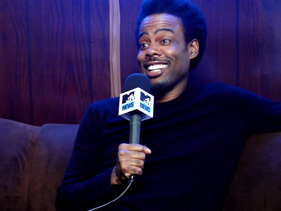
‘I just asked a normal question,’ Rock tells MTV News about what prompted the director’s passionate criticism against Hollywood. By Josh Wigler, with reporting by Eric Ditzian Chris Rock Photo: MTV News PARK CITY, Utah — The old refrain of “more money, more problems” seems to apply to Spike Lee’s “Red Hook Summer,” the director’s new drama he unveiled at the Sundance Film Festival on Sunday. During a Q&A session following the screening of the filmmaker’s religion-focused feature, actor and comedian Chris Rock (at Sundance for his new film “2 Days in New York” from Julie Delpy) asked Lee if he would have done anything differently had he “actually gotten… studio money” for the film. Lee’s response was a fiery one, fueled with comments that condemned the Hollywood studio system for knowing “nothing about black people.” “We never went to the studios with this film. I bought a camera and said we’re gonna do this mother[bleeping] film ourselves. I didn’t need a mother[bleeping] studio telling me something about Red Hook! They know nothing about black people,” Lee said in response to Rock’s question, according to the New York Post . “And they’re gonna give me notes about what a 13-year-old black boy and girl do in Red Hook? [Bleep] no!” Lee’s response was nothing short of perplexing to Rock, who told MTV News that he “just asked a normal question.” “I just asked him how it would have been different if he’d had it financed by a studio. If he had more money,” he continued. “That was it. That’s all I said. Everything else, I don’t know. You gotta ask Spike.” In “Red Hook Summer,” Lee tells the story of a young boy sent by his mother from Atlanta to spend the summer in Red Hook, Brooklyn, with his grandfather, a strict preacher he’s never met. The film stars Clarke Peters, Jules Brown and Thomas Jefferson Byrd. Do you think Spike Lee’s criticism at Sundance out of line? Sound off in the comments section! The 2012 Sundance Film Festival is officially under way, and the MTV Movies team is on the ground reporting on the hottest stars and the movies everyone will be talking about in the year to come. Keep it locked with MTV Movies for everything there is to know about Sundance. Related Videos Sundance 2012: Interviews From Park City Related Photos Sundance 2012: Behind The Scenes Photos Celebrities Hit The Ground At Sundance 2012 Film Fest
‘I just asked a normal question,’ Rock tells MTV News about what prompted the director’s passionate criticism against Hollywood. By Josh Wigler, with reporting by Eric Ditzian Chris Rock Photo: MTV News PARK CITY, Utah — The old refrain of “more money, more problems” seems to apply to Spike Lee’s “Red Hook Summer,” the director’s new drama he unveiled at the Sundance Film Festival on Sunday. During a Q&A session following the screening of the filmmaker’s religion-focused feature, actor and comedian Chris Rock (at Sundance for his new film “2 Days in New York” from Julie Delpy) asked Lee if he would have done anything differently had he “actually gotten… studio money” for the film. Lee’s response was a fiery one, fueled with comments that condemned the Hollywood studio system for knowing “nothing about black people.” “We never went to the studios with this film. I bought a camera and said we’re gonna do this mother[bleeping] film ourselves. I didn’t need a mother[bleeping] studio telling me something about Red Hook! They know nothing about black people,” Lee said in response to Rock’s question, according to the New York Post . “And they’re gonna give me notes about what a 13-year-old black boy and girl do in Red Hook? [Bleep] no!” Lee’s response was nothing short of perplexing to Rock, who told MTV News that he “just asked a normal question.” “I just asked him how it would have been different if he’d had it financed by a studio. If he had more money,” he continued. “That was it. That’s all I said. Everything else, I don’t know. You gotta ask Spike.” In “Red Hook Summer,” Lee tells the story of a young boy sent by his mother from Atlanta to spend the summer in Red Hook, Brooklyn, with his grandfather, a strict preacher he’s never met. The film stars Clarke Peters, Jules Brown and Thomas Jefferson Byrd. Do you think Spike Lee’s criticism at Sundance out of line? Sound off in the comments section! The 2012 Sundance Film Festival is officially under way, and the MTV Movies team is on the ground reporting on the hottest stars and the movies everyone will be talking about in the year to come. Keep it locked with MTV Movies for everything there is to know about Sundance. Related Videos Sundance 2012: Interviews From Park City Related Photos Sundance 2012: Behind The Scenes Photos Celebrities Hit The Ground At Sundance 2012 Film Fest
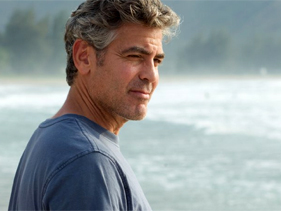
We leave the Oscar odds up to the professionals, in Bigger Than the Sound. By James Montgomery George Clooney in “The Descendents” Photo: 20th Century Fox My buddy Corey (
We leave the Oscar odds up to the professionals, in Bigger Than the Sound. By James Montgomery George Clooney in “The Descendents” Photo: 20th Century Fox My buddy Corey (
The co-director of Tracy Morgan’s new film Predisposed told Entertainment Weekly that the comedian is doing much better after collapsing at the Sundance Film Festival in Park City, Utah. Filmmaker Ron Nyswaner told EW that the “30 Rock” star passed out due to altitude sickness combined with his diabetes. Morgan is expected to check out of a Utah hospital shortly. He’s already tweeting that he’s okay: @RealTracyMorgan Gotta thank the AMAZING medical staff and all my supporters! Love you. 1 hour ago via TweetDeck @RealTracyMorgan Thank U 2 the hospital staff. Back at work 2morrow shooting 30 Rock. Holla at me! 3 hours ago via TweetDeck @RealTracyMorgan Superman ran into a little kryptonite. The high altitude in Utah shook up this kid from Brooklyn. 3 hours ago via TweetDeck RELATED: Tracy Morgan Hospitalized After Fainting At Sundance Film Festival Tracy Morgan Gets Serious In “The Son Of No One” [VIDEO] Ol’ Dirty Bastard Movie In The Works, Tracy Morgan Or Eddie Griffin To Star
This is just terrible, terrible news: Former United Artists boss, October Films cofounder and recent appointee as S.F. Film Society executive director Bingham Ray has passed away following a series of strokes suffered while attending the Sundance Film Festival — an event from which his name and influence have been inseparable for more than two decades. He was 57. “It is with great sadness that the Sundance Institute acknowledges the passing of Bingham Ray, cherished independent film executive and most recently Executive Director of the San Francisco Film Society,” read a release just received at Movieline HQ. “On behalf of the independent film community here in Park City for the 2012 Sundance Film Festival and elsewhere, we offer our support and condolences to his family. Bingham’s many contributions to this community and business are indelible, and his legacy will not be soon forgotten.” No kidding. Ray commenced his film career in 1981 as a manager and programmer at New York’s defunct Bleecker Street Cinema, co-founding October Films a decade later with Jeff Lipsky. Initially set up shop for the purpose of distributing Mike Leigh’s Life is Sweet , October eventually distributed such renowned ’90s indies as Secrets and Lies , Breaking the Waves , Lost Highway , The Apostle and Ruby in Paradise , the 1993 Sundance Grand Jury Winner that further reinforced the festival as one of the industry’s foremost movie markets. The company’s DNA survives today Focus Features, which evolved from a series of mergers between Universal, Vivendi, and other distributors in the late ’90s/early ’00s. Ray had since occupied top spots at United Artists (where he’d helped shepherd Bowling to Columbine No Man’s Land to Oscar wins) and Sidney Kimmel Entertainment before veering into consulting and teaching, ultimately taking over the SFFS last year after its executive director Graham Leggat succumbed to cancer. He had also worked recently as an advisor to digital distributor SnagFilms, the Film Society at Lincoln Center (which recently opened its first-run Elinor Bunin Munroe Film Center) and as a professor at New York University. Late last week in Park City, word of Ray’s condition spread quickly. He was first hospitalized Thursday in Provo, Utah; on Friday, one of his daughters told TheWrap and Ray had suffered a second, “more serious” stroke. The festival announced his passing just after noon local time. Bingham Ray is survived by his wife, Nancy, son Nick, daughters Annabel and Becca, and sisters Susan Clair and Deb Pope. He was one of the true good guys — supportive, insightful, broad-minded, funny and utterly devoted to films and the artists who made them. He will be mourned, missed, cherished and remembered for a long time to come. R.I.P., Bing. [Photo: Getty Images]
If you’ve grown tired of the gimmickry and diminishing quality of “found footage” horror, Sundance’s Midnight program just delivered the cure: V/H/S , an anthology film comprised of shorts by six up-and-coming horror/indie filmmakers, each working within the parameter that their story be told via found media. The Devil Inside this ain’t; V/H/S is fresh and pulse-quickening to the end, one of the best discoveries of this year’s fest. Conceived by producer Brad Miska, V/H/S culls some of the most promising genre talent around for writing and directing duties: Ti West ( House of the Devil, Innkeepers ), Adam Wingard ( A Horrible Way to Die ), Joe Swanberg ( LOL ), David Bruckner ( The Signal ), Glenn McQuaid ( I Sell the Dead ), and filmmaking collective Radio Silence. Their six disparate segments are tied together thusly (though you won’t want to go in knowing much more about it than this): Four prankster punks are promised a big payday to break into a house and steal a VHS tape, but once they get there they find an empty house, a body, and a stack of bizarre tapes to sift through. As they pop in each cassette in search of The Tape, described in vague “you’ll know it when you see it” terms, we see what they see — a collection of found recordings documenting strange, grisly happenings. The segments unfold as follows (SPOILER ALERT: If you want to know nothing going in, close your eyes and skip to the next paragraph): Wingard’s Tape 56 , Bruckner’s Amateur Night , West’s Second Honeymoon , McQuaid’s Tuesday the 17th , Swanberg’s The Sick Thing That Happened to Emily When She Was Younger , and Radio Silence’s 10/31/98 . While I won’t spoil the details (or even the premises) of these shorts, suffice to say V/H/S serves as a stellar showcase for its stable of writers and directors, some of whom also worked on each others’ selections. (Swanberg and Wingard, for example, each direct a short and act in another.) What’s interesting to note is that, as the directors explained late Sunday night following their raucous midnight premiere, none had any idea what the others were planning when they were all making their films. So when certain trends pop up — say, sex-hungry twenty-something young men undone by their own pervy impulses, a popular theme — it’s by coincidence. The film itself is an experiment in found-footage filmmaking, a trend much more profitable than it is respected, and yet these are the guys who aren’t cashing in on their neophyte horror cache by signing on to studio-backed horror sequels and remakes and trend-catchers. So while it’s a method commonly associated with the Paranormal Activity phenomenon, each director here manages to do something different with the form that defies convention while winking at the horror faithful. Some segments evoke classic slasher horror, others the supernatural thriller, and even the indie relationship drama, but they all exploit the medium as a storytelling aide, tweaking horror cliches with unexpected, and effective results. “On a large derivative scale, [found footage] is not appealing,” said West during the film’s Q&A, explaining what appealed to him about experimenting with an otherwise tired methodology like this. Thankfully — impressively, miraculously! — these folks have figured out a way to make the gimmick fresh again, and in wildly different but inventive ways. In a time when the found footage train shows no immediate sign of stopping, at least there’s proof that it can be done in new ways, and well. Follow Jen Yamato on Twitter . Follow Movieline on Twitter .