Tag Archives: karenina

REVIEW: ‘Anna Karenina’ Is So Wright It’s Wrong − Beautiful To Behold But Empty Inside

There’s a five-minute tracking shot in the middle of Joe Wright’s 2007 film  Atonement  that is impossible to forget once you’ve seen it. A wounded Robbie ( James McAvoy ) is on the beach at Dunkirk, waiting to be evacuated, and in a nightmarish, beautiful single Steadicam take he wanders past crowds of soldiers, burning cars, horses being shot, a beached ship, a choir singing, the ferris wheel still spinning in the ruined background. It’s a mind-boggling piece of work, requiring immaculate timing and choreography, and it takes you right out of the movie because it’s there to show off.   As impressive as it is from a production standpoint, the shot takes your focus away from the story and puts it on the mechanics of what’s happening on screen. Wright’s new adaptation of Tolstoy’s  Anna Karenina   lives in the hollow clockwork world of that shot. From a filmmaking perspective, it’s a gorgeous shadowbox of a production, filmed largely in a single location: a set resembling a run-down theater that was built on a Shepperton Studios sound stage. It starts with the sounds of an unseen audience settling down — there are no visible viewers of this story other than ourselves — and closes in on a proscenium arch as a curtain goes up. The scrim behind it reads “Imperial Russia, 1874.” Oblonsky (Matthew Macfadyen) is on stage, receiving a shave. When a door opens off the side, it is to a snowy street exterior in Moscow. He pays a visit to the family governess he’s having a fling with, and when he heads home, through a backstage area, he opens a door to see his wife Dolly (Kelly Macdonald) weeping over evidence of his infidelity. The scene sets the story into motion as his sister Anna ( Keira Knightley ) comes to visit in an attempt to save their marriage. Anna Karenina  isn’t a filmed stage production in any way — it lives within this theoretical theater while not being confined to it. Characters stride up wooden stairs into bustling rafters that stand in for a city street, or walk through a bureaucratic office that, as the camera rotates, is pulled away and restaged as an upscale restaurant. Musicians wander through the space providing a soundtrack to the transition as it happens in front of our eyes. It’s an incredible thing to behold, at least at the start. Wright is clearly a fan of Aleksandr Sokurov ‘s  Russian Ark , and the intense cleverness of his direction and the way Anna Karenina revels in artifice set the film apart visually from typically glossy film adaptations of classics that gleam with assured self-importance. But the gorgeous look and stage work and the way the movie connects impossible spaces — backdrops lift to reveal the Russian countryside, a grassy field running down the stage into the orchestra — is only a temporary salve. The unfortunate truth is that beneath the initial brilliance of its stylized setting, the film is just as dramatically inert as a more stuffy, traditional take on the material might have been. Scripted by playwright  Tom Stoppard , the film labors to fit Tolstoy’s sprawling story into its two hour and ten minute runtime by drawing its characters with minimal lines. The film may be experimental, but the adaptation is actually fairly traditional, if briskly efficient. Anna, a Saint Petersburg aristocrat married to the stiff but good and moral Alexei Karenin (Jude Law), meets the handsome cavalry officer Count Vronsky (Aaron Taylor-Johnson) when departing the train for Moscow. Everyone expects Vronsky to propose to Dolly’s sister Kitty (Alicia Vikander), but he falls for Anna, following her home to Saint Petersberg and around to the parties, operas and other frilly gatherings until he wins her. As Anna struggles with wanting to leave Karenin for Vronsky, a scandal that would result in her being shunned by society, Kitty comes back around to Levin (Domhnall Gleeson), the earnest, shy childhood friend of Oblonsky whose proposal she at first turned down. The performances in  Anna Karenina are strong, albeit built around a story told in shorthand, and the actors sometimes feel like they’re staging recreations of famous paintings rather than embodying characters. Knightley, lit sumptuously and dressed in luxurious gowns, stands out among the performers-as-props, but she can’t portray the complicated journey of a character who gives up everything for love, only to doubt and regret it. In this condensed version of the story, she seems more like someone who dithers for a few hours before throwing herself in front of a train. Wright has said that his inspiration for this adaptation was that the aristocrats at the time of Tolstoy’s novel were constantly on display and observed in society, living their lives as if they were always on stage. But this Anna Karenina feels like a diminishment of the story, not the essence of it. Rather than a tale of an affair that would have been fine had it not turned into a more serious love that broke societal rules, Anna Karenina feels like a group of people play-acting at passion. They hit all the famous elements in the story — the train station, the ball, the races, the running off together, the suicide — without a sense of them as a coherent whole or as anything other than opportunities for innovatively staged sequences. It’s a beautiful creation, but a remote and empty one. Follow Alison Willmore on Twitter. Follow Movieline on Twitter.

Read this article:
REVIEW: ‘Anna Karenina’ Is So Wright It’s Wrong − Beautiful To Behold But Empty Inside

Jude Law: Age Helped Me Tackle ‘Anna Karenina’

Oscar-nominated actor Jude Law plays a pious aristocrat in director Joe Wright’s sumptuous big screen adaptation of Anna Karenina . Almost unrecognizable behind a steely exterior, Law’s Karenin is Anna’s spurned husband in the film, which begins its roll out Friday and is a possible awards season heavyweight. Law seamlessly pulls off playing the high-ranking nobleman whose position at the heights of Imperial Russian society is rocked when his wife embarks on an affair with a dashing young soldier. Speaking about his role, Law, who turns 40 next month, said that he doesn’t think he could have played the character when he was younger — but he certainly would have given it a go. “When I was 25 I would probably say I could have played Karenin,” said Law. “When I was 29 and I put together a production of Doctor Faustus in London, it was successful but it took me the length of the production to realize that I was too young to play it. And I think the same would apply to this situation. I would have given it a good shot, but I think it would not have been as successful.” [ Related: Oscars and Obsession: Keira Knightley Talks About ‘Jumping Off A Cliff’ For Joe Wright In Anna Karenina ] Law said that youth would have been a handicap portraying the staid Karenin, who exudes stability and rationality to a fault. He is the archetypal patriarch that is a complete contrast from the youthful soldier who seduces his wife. “I think you need to have a certain amount of experience to play certain roles,” noted Law. “You want the audience to see a certain amount of wounds and battle scars that are obviously flickering in the mind and the soul.” Set in the lavish upper crust societies of St. Petersburg and Moscow in 1874, Anna Karenina follows the vibrant and beautiful Anna (Keira Knightley) who is the envy of nearly everyone in her gilded circle. She is the beautiful, stylish and rich wife of Karenin who holds a high position in the government and is blindly devoted to his spouse. Their enviable partnership is dealt a blow when she travels to Moscow to help save the marriage of her philandering brother Oblonsky (Matthew Macfadyen) after a plea for help from his wife, Dolly (Kelly Macdonald). En route, she meets the dashing cavalry officer Vronsky (Aaron Taylor-Johnson), which ignites passion; she returns to St. Petersburg, but she is followed by Vronsky and becomes consumed by him, and they go full-throttle into a ravenous love affair that stuns the establishment. Law said he believes some Anna Karenina readers have misunderstood his character. Though he is sullen compared to the dynamic Vronsky, there is complexity in his personality that many readers of the novel have failed to appreciate. “A lot of people I spoke to before I embarked on it said he was dull and cold, but I disagreed with them,” said Law. “I hadn’t read the novel before, but after reading it I was glad Joe [Wright] agreed with me, because I think it sort of belittles Tolstoy’s study of human complexity. People are complex and there’s a misunderstanding. But you do feel for him because he’s dragged into this arena of gossip and scandal. But ultimately for him, he has to question his belief in God because he believes his marriage is sanctioned by God.” Karenin’s position at the pinnacle of a narrow class of people who delighted in rarified privilege contrasted with the bleak existence that huge swaths of Russians were forced to live in during czarist times. Though Law said he was disturbed to see how extraordinarily the aristocracy lived while most people were barely living a life one notch above serfdom in Russia, he did see some parallels to today. “It’s shocking that they were that indulged and were able to follow their whims and fancies to such extraordinary lengths — and we look at that with jealousy and at times and with fascination. What intrigues me is that the heart of the piece is about love. But there are other aspects in the book that have also been highlighted in the film and that is the role of gossip and judgement. Today there is much of the same thing and we see that online and in papers all the time. We still do that — we call out people for ‘breaking the rules.'” Read more on Anna Karenina . Follow Brian Brooks on Twitter . Follow Movieline on Twitter .

See the original post:
Jude Law: Age Helped Me Tackle ‘Anna Karenina’

‘Lincoln’ First Lady Sally Field On The Power And Passion Of Mary Todd Lincoln

The tumultuous America of Steven Spielberg ‘s Lincoln was undoubtedly a man’s world, but behind the legendary 16th President of the United States — one of the greatest figures in American history — stood a fascinatingly complex, shrewd, and passionate woman: Mary Todd Lincoln. “Without a Mary Todd,” asserts Oscar-winner Sally Field , who portrays the paradoxical First Lady opposite Daniel Day-Lewis , “there would not have been an Abraham Lincoln.” Spielberg’s Lincoln , adapted by Pulitzer Prize-winner Tony Kushner from Doris Kearns’ biography Team of Rivals: The Political Genius of Abraham Lincoln , brings the iconic Lincoln to life at the close of the Civil War, just prior to his 1865 assassination. Reenacting Lincoln’s precarious inter-party political dealings and dogged commitment to passing the Thirteenth Amendment, Lincoln depicts a pivotal, history-making period in the President’s career, taking care to highlight the impact made by his most under-acknowledged political partner — wife Mary Todd. And what indelible contributions did the emotionally volatile, smart, and savvy Mary Todd make to her husband’s legacy? Field sat down with Movieline to discuss the fantastically complicated First Lady of Lincoln — wife, mother, society figure, and trusted advisor — and why, as an actress “of age,” roles like these come along far too rarely. They say behind every great man is a great woman, perhaps especially so in Lincoln’s case, but the world in their time wasn’t quite up to speed with that thinking. Did you feel a certain responsibility to represent strong womanhood knowing that you were one of very few female characters in this cast? No. It wasn’t my task to do that. I could not feel that. That would have been absolutely in my way. I was given this great opportunity to portray the amazingly complicated, misjudged, misunderstood, maligned, and underexamined by history and certainly on the screen, Mary Todd Lincoln. Without a Mary Todd, there would not have been an Abraham Lincoln. Not what we saw. She was instrumental in his life, in helping him become who he ultimately became. From your perspective, knowing her this well, where do you feel her sense of moral justness came from and how did that affect Lincoln and his legacy? What she gave him was not in contributing to his moral justness; he got that on his own. That’s what she recognized in him, and he got that probably from his own upbringing and his survival, which was amazing. She saw his genius early on, when he was a bumpkin – he was gawky and everyone thought she was crazy because she was very popular. She was a society girl! She was pretty and popular and in her early 20s, and had her choice of suitors. Many of them later ran for President and lost, against him! The story about Mary Todd being courted by Douglas prior to marrying Lincoln, for example. Yes! She picked him, and she recognized his genius, his qualities. Some of them were what we later see in his great humanity, he’s able to connect with humanity. His speaking ability. She elevated him; she groomed him. She criticized his posture and what he wore and that he told too many jokes. He needed to elevate his language and speak out. She understood politics; she came from a powerful political family in Lexington, Kentucky; at that time Lexington was a very cutting-edge city. Her family, the Todds, really founded the city — she sat at the table with Henry Clay as a child and listened. Henry Clay was called The Great Compromiser; she was the one who brought young Lincoln to meet with Clay, and Clay became one of Mr. Lincoln’s heroes. He learned this world of politicking, and she got it — she got it more than he did, as you see in the film. She always was his coach, his confidante, and it was very difficult for her when he got to the White House, because she was pushed out of the center where she had been before. She was essentially his secretary of state — she ran his campaigns, she was his advisor. And when the cabinet was put into place she was kicked out. They didn’t want her there. They didn’t even want her to come downstairs at the White House! Well, by damned, she wasn’t going to stand for that — so she took it as her task to fix up the White House. It was a pig sty — literally, there were pigs and chickens in it, on the floor of the White House. It was treated with great disrespect and she felt it needed to be elevated because people needed to think of it as this place of power and great importance. She went about to do it and they tried to arrest her and cart her away. Thaddeus Stevens [played by Tommy Lee Jones in the film] tried to indict her several times — so she doesn’t like Thaddeus Stevens, needless to say. No, and that leads to one of the great scenes of Lincoln , in which you take Tommy Lee Jones’s Thaddeus Stevens to task. And that seems like a rare feat, generally speaking, because Tommy Lee Jones is so… Imposing? [Laughs] Yes! Take us into that scene, and what’s at stake for Mary Todd as we see her very publicly dressing down on behalf of her husband? Well, it was an absolutely eloquent and exquisitely-written monologue, and extremely hard to say and wrap your mouth around. We never rehearsed the scene; I think we kind of ran through it once, but Steven [Spielberg] would say, “Let’s just shoot it and see what happens.” That’s basically how Mary and Mr. Lincoln worked together — let’s just shoot it! So Tommy [Lee Jones] and I didn’t work on anything. He’s a wonderful actor as you know and see in the film, he knew his character, he knew their relationship and history, and so we just did it. Tell me more about this no-rehearsal process. Why opt for that, and is that a preference of yours? It was sort of decided, I think by both Steven and Daniel — it just was what it was, and we didn’t have weeks of rehearsal time prior. It just was what it was, and it brought about a different kind of energy. It was very interesting. Am I the only one talking about it? Certainly Daniel won’t, because he doesn’t talk about that kind of stuff. I’m the only blabbermouth!

Here is the original post:
‘Lincoln’ First Lady Sally Field On The Power And Passion Of Mary Todd Lincoln

WATCH: Keira Knightley Sees Shades Of Modern Bullying In ‘Anna Karenina’

Young women bullied by their peers into committing suicide has become a staple of today’s news cycle, but as  Anna Karenina   demonstrates, it’s hardly a new phenomenon. Whether you’re talking about 19th-century Russian aristocrats or Midwestern teens in the age of Facebook,  as Keira Knightley tells me, “The rules of society change, but the way that society works does not.”  I sat down with Knightley and director Joe Wright to talk about their bold adaptation of Leo Tolstoy’s novel and its continued relevance in our contemporary digital world.  Their passion for the material is as palpable as the film’s lush production design. Check out the videos below to get the behind-the-scenes scoop on the most daring movie this Oscar season: Anna Karenina is now playing in limited release. Follow Movieline on  Twitter .  Follow Grace Randolph on  Twitter .

Read more here:
WATCH: Keira Knightley Sees Shades Of Modern Bullying In ‘Anna Karenina’

WATCH: ‘Twilight”s Last Gleaming? Stars at ‘Breaking Dawn 2’ NY Premiere Say Maybe Not

The Twilight film franchise may have worked its way through Stephenie Meyer’s books, but that doesn’t necessarily mean it’s over. Just watch my red-carpet interview with Elizabeth Reaser at Thursday night’s New York premiere of Breaking Dawn — Part 2 . The actress, who plays Esme Cullen, suggests that there may be more life in store for this undead saga.  Other stars of the blockbuster franchise get misty over the final film and how awesome their fans are.  They also share their thoughts on the movie’s surprise ending, which is different from Meyer’s book. Watch my red carpet interviews below to find out! The premiere, which was hosted by The Cinema Society and Samsung Galaxy, drew cast members Ashley Greene, Kellan Lutz, Dakota Fanning, Peter Facinelli, Maggie Grace and Mackenzie Foy as well as Howard  Stern and his wife Beth, Jennifer Esposito and Tony Danza and Diane Neal.  After the screening at the Landmark Sunshine Cinema on Manhattan’s Lower East Side, guests partied at a new appropriately named night spot on the Bowery, Finale. Follow Movieline on  Twitter .  Follow Grace Randolph on  Twitter .

Continue reading here:
WATCH: ‘Twilight”s Last Gleaming? Stars at ‘Breaking Dawn 2’ NY Premiere Say Maybe Not

Helen Hunt To Receive Palm Springs Fest Fete; Robert Downey Jr’s ‘Pinocchio’ Moves Forward: Biz Break

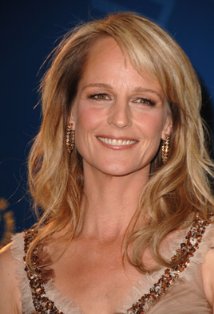
Also in Friday’s news round-up, the studio suits are jubilant on Skyfall ‘s box office prospects; Ted passes a b.o. milestone and a quick look at the weekend’s new Specialty Releases including Silver Linings Playbook and Anna Karenina . Helen Hunt to Receive Palm Springs Film Festival Fete The possible Oscar contender will receive the Spotlight Award at the 24th Palm Springs International Film Festival on January 5th. In The Sessions , Hunt plays a therapist who helps a 38-year-old man, who has lived most of his life in an iron lung, lose his virginity for the first time, THR reports . Jane Goldman to Write Pinocchio for Robert Downey Jr. Tim Burton will direct the pic which has been in the works for months. Goldman’s hire will likely bring the “courtship” to a close. The story revolves around the children’s classic. Downey will play Geppetto, the woodcarver who creates the puppet who wants to become a real boy, THR reports . Skyfall to Exceed $800M Worldwide MGM expects the latest James Bond to be the highest grossing film in the franchise of all time. Additionally, the Blu-ray package, Bond 50: The Complete 22 Films Collection was a “tremendous success at retail,” Deadline reports . Ted Crosses $500 Million Mark The R-rated comedy is Universal’s highest rated film of 2012, crossing the $500 million mark worldwide, beating Todd Phillips’ The Hangover which took in $467.4 million, THR reports . Specialty Preview: Anna Karenina , Silver Linings Playbook , Price Check , Mea Culpa Maxima More Oscar contenders are lined up at the specialty gate this weekend, most notably The Weinstein Company’s Silver Linings Playbook ,, whose strategy has evolved in the run-up to Friday’s launch. The title will start with a handful of bookings before expanding gradually into wide release. Focus Features’ hopeful Anna Karenina will also hit the same number of cinemas in its initial outing, targeting women and the art-house crowd, Deadline reports .

Excerpt from:
Helen Hunt To Receive Palm Springs Fest Fete; Robert Downey Jr’s ‘Pinocchio’ Moves Forward: Biz Break

Sandy Washes Out Late-Night Tapings, Journey Show

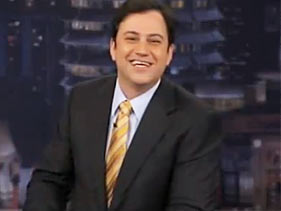
Massive storm forces Jimmy Kimmel to cancel his first episode in Brooklyn; NYC premiere of ‘Anna Karenina’ also shut down. By Kara Warner Jimmy Kimmel Photo: NBC

Read the original:
Sandy Washes Out Late-Night Tapings, Journey Show