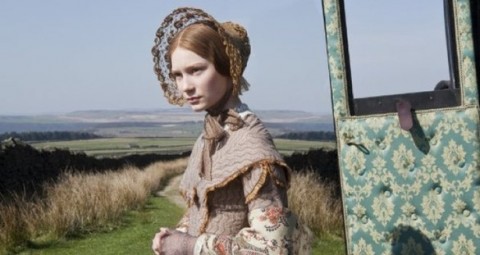
Stars bring Cary Fukunaga’s adaptation of timeless tale to the big screen. By Josh Wigler Mia Wasikowska Photo: MTV News There is no Bella without Edward, no Sookie without Bill, and there is certainly no Jane without Rochester. In “Jane Eyre,” the classic literary tale penned by English novelist and poet Charlotte Bront
‘I got some nice fresh blood in me and feeling better,’ finalist tweets. By Gil Kaufman “American Idol” Finalist Casey Abrams Photo: Kevin Winter/ Getty Images There was a conspicuous absence on Thursday night’s “American Idol” elimination show, long before Ashthon Jones got booted out of the top 13. That didn’t happen until the end of the show. It was judges’ darling and bushy-bearded budding sex symbol Casey Abrams . After another impressive performance on Wednesday night, when he took on Joe Cocker’s version of the Beatles’ “With a Little Help From My Friends,” the 19-year-old film-camp counselor was nowhere to be seen on the stage. Host Ryan Seacrest announced at the top of the show that Abrams was hospitalized for the second time this season and would not be joining his pals for the results broadcast. “You’ll notice that Casey is missing from the group. He is unfortunately sick and in the hospital right now,” Seacrest announced. “Wave to him. … We know you’re watching buddy, feel better — shout-out to the nurses. Get back here soon, OK?” While a spokesperson for “Idol” told MTV News that no further details were available on Abrams’ illness on Thursday night, the bass-playing singer tweeted about the situation after the show, writing “Hey guys, thanks for the well wishes, I got some nice fresh blood in me and feeling better. People at Idol & Cedars are treatin me real good.” An unnamed “Idol” insider reportedly told the Hollywood Reporter that Abrams received two blood transfusions while in the hospital to treat a condition called ulcerative colitis, an inflammatory condition that affects the lining of the large intestine. Earlier this season, on February 23, Abrams was rushed to the ER after complaining about stomach pains and almost missed the subsequent taping of the top-12 men’s performances, which potentially would have eliminated him from the competition before the finals. Abrams was in no danger of going home on Thursday night’s show, but if his condition continues and he is unable to perform next week, he could be sent home. Last season, eventual runner-up Crystal Bowersox nearly missed out on her chance to stay on the show when she was rushed to the hospital, necessitating a rare lineup shuffle that forced the men to perform a night earlier than scheduled. Had Bowersox not recovered in time, producers said that she was in danger of being eliminated from the show. Don’t miss “Idol Party Live” every Thursday on MTV.com, following the “American Idol” results show, for analysis, celebrity guests and even some karaoke — get in the conversation by tweeting with the hashtag #idolparty ! In the meantime, get your “Idol” fix on MTV News’ “American Idol” page , where you’ll find all the latest news, interviews and opinions. Related Videos ‘Idol Party Live’ With Jim Cantiello And Sammi ‘Sweetheart’ Related Photos ‘American Idol’ Season 10 Performances
Calling a book a classic is a peculiar damnation, a way of simultaneously placing it on a pedestal and shutting it into a musty old box. As much as we all groan when we hear that yet another great book is set to be “ruined” by some assuredly hapless filmmaker, movies are often the only thing that can save books from themselves — or, rather, from our calcified ideas of what certain books have to be.
But Mr. La Flare, Webbie and Rocko find things to love about the ladies in new clip, which premiered on ‘RapFix Live.’ By Alvin Blanco Gucci Mane in his “I Don’t Love Her” video It’s Gucci time. Atlanta’s Gucci Mane debuted his new video for “I Don’t Love Her,” featuring Webbie and Rocko, on Thursday’s (March 10) edition of “RapFix Live.” The video features Gucci, Webbie and Rocko lyrically asserting what they love about their women, without necessarily admitting they ever fall in love with them. Directed by Mr. Boomtown, the majority of the video’s scenes take place in a dark club, where the song’s players are surrounded by numerous, gyrating video vixens. “I love things about her (but don’t love her)/ I love the way she treat me (but don’t love her),” Rocko says on the most-PG portion of the song’s hook. “I Don’t Love Her” is produced by Zaytoven and will appear on Gucci’s upcoming street album, The Return Of Mr. Zone 6, due in stores on March 22. Earlier this week, Gucci released another song from the project, “Brinks,” with rhymes from veteran rapper and music mogul Master P. Other features on the album include Wale, Birdman, OJ Da Juiceman and Waka Flocka Flame, among others. Lately, Gucci has been getting more attention for his legal dilemmas and questionable taste in body art than his music. In January, Gucci made headlines when photos of his new tattoo — an ice cream cone with three scoops and the word “Brrr” beneath it on the right side of his face — hit the Internet. That same month, Gucci La Flare was arrested for a parole violation and it was revealed that he had filed a “special plea of mental incompetency.” What do you think of Gucci Mane’s new video? Tell us in the comments! Related Videos ‘RapFix Live’ With Yelawolf Related Artists Gucci Mane
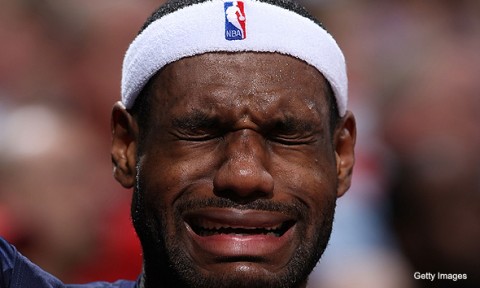
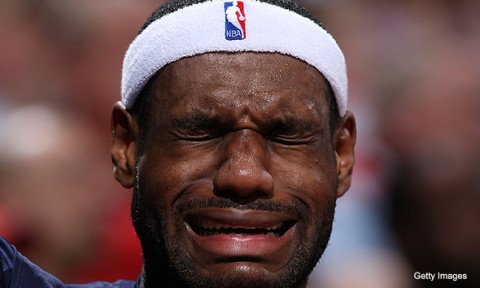
Face it, kids: Lil Bron and The Eastside Boyz suck this year. Everybody thought they were going to win eitghtyleven games and win the championship without breaking a sweat. Well, now that they’ve lost five in a row and look to be getting bounced early in the playoffs, Magic Bron Juan and his teammates are allegedly crying in the locker room. Though that story is bizarre, it’s not the first WTF moment in LeBron’s wild career.
Face it, kids: Lil Bron and The Eastside Boyz suck this year. Everybody thought they were going to win eitghtyleven games and win the championship without breaking a sweat. Well, now that they’ve lost five in a row and look to be getting bounced early in the playoffs, Magic Bron Juan and his teammates are allegedly crying in the locker room. Though that story is bizarre, it’s not the first WTF moment in LeBron’s wild career.
“Are you taping or writing this down? Because I talk really fast,” director Ava DuVernay politely informs via speakerphone. Ava has been fielding phone interviews since 6 a. m., but six hours later she’s none the worse for wear, eager to chat about her directorial debut with the independent feature I Will Follow . Winner of the Narrative Audience Award at the 2010 Urbanworld Film Festival , I Will Follow is a moving semi-autobiographical drama that stars Salli Richardson-Whitfield as Maye Fisher, a successful make-up artist with a sexy boyfriend (Blair Underwood), whose world is turned upside down by the death of her beloved Amanda (Beverly Todd). WBW: 30 MORE Black Women You Should Know About Audiences are already familiar with Ava’s work as a documentary filmmaker with the critically acclaimed My Mic Sounds Nice which aired on BET, and TV One Night Only: Essence Music Festival 2010. With I Will Follow, Ava has now turned the camera onto herself to explore personal themes of grief, love, forgiveness and renewal. With only her life savings and a rolodex full of professional and personal contacts she’d acquired from running her own P.R. company (The DuVernay Agency), Ava completed her film in just 15 days at the film’s only location, a house in Topanga Canyon, California. Committed to preserving the beauty and legacy of black cinema, Ava has also partnered with various black film organizations to create the African-American Film Festival Releasing Movement (AFFRM). The ultimate goal of AFFRM is to empower and foster new black indie talent and provide more truthful and contemporary images of the African-American community. “We all have a story to share,” Ava says. “Just pick up the camera and tell it.” Ava tells The Urban Daily how she transitioned from documentaries to feature film, why we shouldn’t look to the major studios to green light quality black film projects, and her views on Idris Elba’s and Anthony Mackie’s recent comments about Black Hollywood. TUD: Tell us about I Will Follow and the inspiration for the movie. Ava DuVernay: It’s about a woman who’s successful, has a hot boyfriend, career, and then things kind of fall apart. Something happens in her family and she has to pick up the pieces and maintain her balance and kind of save herself. I think that’s something we all experience. This film is based on personal experience—I brought my personal story dealing with loss and loyalty. The actors involved tapped into their own personal experiences. It deals with trying to keep your self in control when things get out of control. It’s something a lot of people will be able to associate with, to identify with. People on the festival circuit around the country come up to me and said “I saw myself in this character.” I Will Follow is based on your relationship with your aunt, Denise. Can you tell us a little bit about her? She was an amazing woman. She was one of the people in my life that meant the most to me. She was an incredible person. Hopefully this movie will be a tribute to her memory. How did you assemble the cast for this film? It was a combination of professional and personal contacts. I first contacted Aisha Coley. She was the casting director of Secret Life of Bees . Omari Hardwick I had seen on Dark Blue and I thought to myself ‘Wow, he’s good.’ So I asked Aisha to reach out to him. Salli Richardson-Whitfield was on a list of actresses I really wanted to work with. I always thought she was underrated–great actress, drop dead gorgeous. Blair Underwood is someone that I knew from working in P.R. and we became friends. I always had him in mind when writing his character. What was the transition from doing documentaries ( This is The Life , My Mic Sounds Nice ) to doing a scripted feature? With a documentary you walk in with your camera and a set of questions. You’re inquisitive and you’re curious. You get in there and just have a conversation with people. With my documentaries I have an idea of where I want to lead them, I’m trying to converse with them and get to the essence of what I’m trying to learn from them and form that into the documentary. You work closely with your editor and try to come out with something interesting. With film, you’ve got wardrobe, actors, production design, and the whole world opens up. Instead of investigating someone else’s world, you’re creating a world from scratch. With documentaries and film you’re using two different muscles, and I’ve been fortunate enough to use both. And I hope to go back and forth between the two. When you decided to do I Will Follow , you looked at your bank account and said “This is my budget” and basically green lit yourself to make this movie. Was it always your intention to have your film as an independent project or did you consider going with a major studio? I always believed in self-distribution and not waiting for people’s permission, particularly with big corporations, to share my story. I’m very much a control freak (laughs). I would like to collaborate with like-minded companies who want to work on distribution ideas. Major studios are looking for different types of stories, and that’s fine. If they want to do Transformers 13 , cool. I want to do something else. So I’m not going to beg or force my vision on corporations, if that’s not their bottom line. As indie filmmakers, the ‘Woe is me, the studios don’t want my stuff’—your job is to do your own projects and to take care of yourself. These people have their agenda and we have our own agenda too. I’m really into self-empowerment and to create and distribute our own stories. I want to be in a position where I’m not asking permission to share my vision. I want to get filmmakers into that cycle. People tend to forget that most A-list directors started off as indie. Right. Martin Scorcese did Boxcar Bertha through Roger Corman that only cost a couple of thousand dollars. You didn’t go to film school like most directors. You actually started in publicity doing campaigns for directors like Steven Spielberg and Clint Eastwood, and when you’d meet them for lunch you’d pick their brains about filmmaking. What did you learn from them that you were able to apply to your own directing process? I learned that it could be done. The main thing I learned from them, aside from the technical process and dealing with actors is that these directors were just people, like me. They’re just human beings that want to tell a story and they found a way to do it. Why could I not do the same? That’s the best lesson I got from my ‘bootleg’ film school. As a little black girl, who loved movies, I never thought I could make one. Everybody’s got a story; go make that film. There’s someone out there thinking ‘I want to make movies, but I can’t afford film school.’ What would you tell them? Do you think it’s necessary to go to film school to be a good director? Film school is wonderful. It’s creative and allows you to play, to learn theory. I wish I had four years to chill and just learn about film. Film school is a great place to hone your skills. Is it necessary? No. If you’re a 16-year-old girl and want to make films, if you have an iPhone, do it. I just saw an incredible 12 minute short shot on an iPhone. Two of the biggest stories to hit the media are statements from Idris Elba and Anthony Mackie. During a lecture for the Project Lens/Artist Spotlight series at Rutgers University , Elba stated that the Oscars aren’t designed for us and that we should focus on making more films. In an interview with Grio.com , Mackie also said we should make more films and find our own distribution deals. Do you agree or disagree with them? I agree. I think both brothers made a call to action to filmmakers. It’s getting a lot of attention from the press and I think that’s positive. I don’t think it’s a bad thing to not have major studios involved in our projects. I don’t think it’s a doomsday thing. The only movie featuring a black woman so far this year is Big Momma 3. There’s more to come with Madea’s Big Happy Family and Skank Robbers . What are your feelings on that? The studios are looking at big budget pictures, they’re looking at gags, and comedy, and that’s ok. For folks that enjoy that, fine. I don’t hold anyone outside of our community responsible. There are certain (white) filmmakers who think that’s funny. They have a star that thinks that’s funny, who went on record saying, “If you saw the check, you wouldn’t blame me.” Ok. Do you. I don’t blame anyone for what they’re doing. I can only take care of me and the filmmakers and the black moviegoers that think like me. People who tell me Love Jones and Love and Basketball are their favorite films. What that says is ‘I want to see adult dramas, contemporary images of myself.’ The studios are not interested. I Will Follow opens this Friday March 11 th . TO FIND THE AMC THEATER NEAR YOU EXCLUSIVELY SHOWING “I WILL FOLLOW” AND TO BUY TICKETS CLICK HERE You can find Ava ( @AVADVA ) , I Will Follow ( @iwillfollowfilm ) and AFFRM ( @AFFRM ) on Twitter. RELATED POSTS: Salli Richardson-Whitfield Sought New Challenge With “I Will Follow” DuVernay’s “I Will Follow” Called Best Film Of 2010 Yo-Yo Says Album “Can’t Compete With Swallowing Coke Bottles”
Lil’ Kim recalls the Notorious B.I.G. and takes us behind the 1996 clip, which spoofed late rapper’s love-life dramas. By Alvin Blanco, with reporting by Ade Mangum Notorious B.I.G. in the “Get Money” video Photo: Bad Boy In 1996, Lil’ Kim was the standout member of the Notorious B.I.G.’s Junior M.A.F.I.A. crew. The Big Momma had stolen the show on their lead single “Player’s Anthem,” from the collective’s album Conspiracy, and was again the main draw on their third single, “Get Money.” Rapping alongside B.I.G. himself, the Queen Bee held her own and previewed the extravagant lifestyle that would play out in the video. The Notorious B.I.G. died an untimely death on March 9, 1997, the year after the video’s release, but it remains a part of his and the Junior M.A.F.I.A.’s musical legacy. When last week, she spoke to MTV News about the memorable clip, walking us through it frame by frame. Directed by Lance “Un” Rivera, the clip echoed some of the real-life legal drama Big was wrestling with at the time. In the opening scene, set in a courtroom, Big sits at the defense table, seemingly oblivious to what the lawyers and judge are discussing. “I remember when we really had to go to court for him, for a situation that Biggie had, and we really had to sit in court with him,” Kim told us. “I remember him falling asleep in front of the judge. And he was literally snoring in front of the judge. And the judge looked at his lawyer and was like, ‘Excuse me, can you wake your client up?!’ ” In ’96, Big was in and out of court on drug and gun possession charges. The East Coast vs. West Coast hip-hop feud was in full swing by this time as well, though Big did his best not to stoke the flames. In the “Get Money” video, he pokes fun at his personal turmoil instead. The woman in the blonde wig in the clip looks suspiciously like Biggie’s then-wife, R&B singer Faith Evans (fans know that Faith and Kim have never been on the best of terms). The actress portraying the faux Faith was the (still-married) rapper’s girlfriend at the time, Charli Baltimore. The video was shot at a New York City club in a large home that Kim revealed was once owned by actor Wesley Snipes. Cameos in the video include DJ Clark Kent, Salt-N-Pepa, Mary J. Blige and even adult-film star Vanessa del Rio, who is seen thoroughly enjoying a massage and being fed fruit by buff men. “A lot of people don’t know who she was [but] she’s a famous porn star from back in the days and she was mad cool,” Kim said. Kim threw in one last factoid about the late, great Brooklyn rapper that fans might not have known. At the end of the “Get Money” clip, she’s seen driving off in a shiny red car that’s decorated with a bow. “People don’t know, at the end of this video Big was supposed to have brought me that car, that was my gift,” Kim laughed. “So, ya know, I came off at the end.” What’s your favorite Notorious B.I.G. video? Share with us in the comments! Related Videos Remembering Notorious B.I.G. Related Artists Notorious B.I.G. Lil’ Kim
Singer Layne Staley died of a drug overdose in 2002. By Gil Kaufman Photo: 2011 Getty Images The death on Tuesday of former Alice in Chains bassist Mike Starr continued the tragic legacy of one of the most beloved bands to emerge out of the early 1990s grunge scene in Seattle. Largely because of late singer Layne Staley’s debilitating drug addiction , in their heyday, AIC were known almost as much for their long periods of inactivity as they were for their gloom-laden, brooding music. Melding hard-rock guitars and the sludgy grunge aesthetic of the time, AIC stood out from the pack thanks to their adoption of a more classic heavy-metal sound and intense, almost unrelentingly bleak lyrics that touched on everything from drug addiction and isolation to the plight of Vietnam veterans. The seeds of the group were formed in 1986, when a then-teenage Staley quit his first group, Sleeze, and formed a new band, Alice N Chains, which followed the lead of a number of other Seattle bands at the time in mixing up the gender-bending look and sound of glam metal with the more hard-hitting sound of speed-metal acts such as Slayer. The rail-thin, enigmatic Staley met future AIC guitarist Jerry Cantrell when both were working at the Music Bank rehearsal studios, and they soon became roommates. When Alice N Chains fizzled out, Staley joined forces with Cantrell, who brought along his bandmates from the glam act Diamond Lie, drummer Sean Kinney and bassist Starr. They considered a number of names for their new group, including Mothra, but decided to go with Alice in Chains because Staley thought it suggested the image of a cross-dressing speed-metal band. After working on their patented mix of brutish, crunching guitars and grim psychedelic blues, the group quickly stood apart from future Seattle peers by honing a menacing sound that owed more to the work of metal icons Black Sabbath and Deep Purple than the punk-derived sound of such grunge contemporaries as Nirvana and Soundgarden. A demo called The Treehouse Tapes in 1988 won them a major-label deal with Columbia Records the next year. A three-song promotional EP, We Die Young, was released in July 1990, spawning the hard-rock radio hit in the title track, followed by their first full-length effort, Facelift, in August of that year. The album was a landmark in contemporary hard rock, mixing the over-the-top guitar heroics of the previous decade with grinding tempos. Staley’s rumbling vocals were hypnotic, ominously singing lines such as “Love, sex, pain, confusion, suffering/ You’re there crying/ I feel not a thing/ Drilling my way deeper in your head/ Sinking, draining, drowning, bleeding, dead” on the track “Confusion.” The album produced a bona fide hit with a song that bore the band’s soon-to-be hallmark music signature, “Man in the Box.” It was inspired by a story Staley reportedly overheard about how veal were raised in tiny spaces, and it combines his haunted vocals with Cantrell’s fuzzed-out, choppy guitar. Other songs, such as “Sea of Sorrow” and “Bleed the Freak,” set out the template for Staley’s emerging creative voice: a morbidly disaffected social outcast fighting to survive in mainstream society. AIC hit the road for their first U.S. tour that year, followed by a summer swing with Anthrax, Slayer and Megadeth the next summer under the title Clash of the Titans. They were back in March 1992 with a largely acoustic four-song EP called Sap, which featured the vocals of Ann Wilson of Heart and Soundgarden singer Chris Cornell. Thanks to the smash success of Nirvana’s Nevermind and the inclusion of the AIC song “Would?” on the soundtrack of the grunge movie “Singles” in the summer of 1992, Columbia began marketing AIC to both metal and alternative fans, which greatly increased the group’s fanbase. Work on their second full-length, Dirt, began in Los Angeles on the same day riots erupted in that city, postponing the sessions for two weeks. The resulting music was another bleak manifesto from the now commercially successful, Grammy-nominated group. While Staley sang about the ravages of drug addiction and self-destruction (“Junkhead,” “God Smack,” “Sickman,” “Angry Chair”), Cantrell attempted to make peace with his father through the dramatic Vietnam-themed epic “Rooster.” The album was influential in a number of ways. Singer/songwriter Ryan Adams and the hard-rock band Fuel have covered “Down in a Hole,” and rockers Godsmack chose their name from a song with that title. After the album’s release, Starr, then struggling with drug problems, was replaced by former Ozzy Osbourne bassist Mike Inez. Though rumors of Staley’s drug issues were rampant at the time, the band successfully hit the road as part of the third Lollapalooza tour in 1993, and Dirt went on to sell more than 3 million copies. Another EP of mostly acoustic tunes, Jar of Flies, was released in January 1994. It features two of the group’s most iconic songs: the power ballads “I Stay Away” and “No Excuses.” Staley broke off for a tour and album by his side project, Mad Season, in 1995, and AIC came back later that year with a self-titled album that debuted at #1 on the Billboard chart. But, as with Jar of Flies, there was no tour to support the album, and a long period of inactivity followed its release. They got together for their first live show in three years for MTV’s “Unplugged” in April 1996, an intense performance that was released on CD in July 1996. With the exception of a few opening gigs for Kiss that summer, the “Unplugged” show would be the final time the group performed live. Cantrell released his solo debut, Boggy Depot, in 1998, with contributions from Inez and Kinney, but Staley was replaced by Screaming Trees singer Mark Lanegan on Mad Season’s second album. A four-disc box set featuring rare and previously released AIC material entitled Music Bank was released in 1999 and a live album followed a year later. Staley became a recluse, rarely seen or heard from until news of his death emerged in early April 2002, when he was found dead of an overdose of cocaine and heroin at the age of 34, almost eight years to the day after Nirvana singer Kurt Cobain’s suicide. Cantrell continued to work solo, while Inez joined Slash’s Snakepit, Black Label Society and the short-lived grunge supergroup Spys 4 Darwin. Kinney joined his former bandmates in 2005 for a benefit concert for tsunami relief, and the three original members regrouped under the AIC banner in 2006 with Comes With the Fall’s William DuVall on vocals. The re-formed band released Black Gives Way to Blue in September 2009. The original AIC had a short-but-crucial period of creativity that helped reshape the face of heavy metal in the 1990s after the excess and pop trash of the late 1980s L.A. glam-rock scene. Their nihilistic, brooding tone and dark edge helped inspire a new generation of bands, from Creed and Godsmack to Theory of a Deadman, the Deftones and Staind, and their songs remain a staple of hard-rock radio to this day. Share your memories of Mike Starr and Alice in Chains in the comments. Related Photos In Memoriam: Alice In Chains’ Mike Starr Related Artists Alice in Chains
Biography for Emma B Height: 176cm/5#39;9″ Size: 36 EU 8 UK Shoes: 37-38 Hair: Brown Eyes: Blue Emma B (born 28 April 1979), is an English model and TV presenter. Since her entry into the entertainment industry in 1995, she has appeared on numerous magazine covers and TV programs. Her stage name is occasionally confused with that of radio presenter Emma Boughton, who is also known as “Emma B”. In 2004, after taking a break from the limelight to spend time with her mother and sister in Ha









 Breaking Sports Video