Kristen Wiig may have shed a few tears when she left Saturday Night Live , but the comedian is smiling up a storm these days. And that has a lot to do with Strokes drummer Fabrizio Moretti. The actress is featured on the cover of August’s Marie Claire and remains mostly mum on her fairly new relationship, but does allow that the musician is making her one content woman at the moment. “I will say that I’m happier than I’ve ever been and I feel very lucky right now,” says Wiig, responding to the question of why with a pair of answers: “Where I am now. Who he is. Those are the two big ones.” The Oscar-nominated Bridesmaids star is doing quite well professionally, too. She has three projects in the works: The Secret Life of Walter Mitty (opposite Ben Stiller). Imogene (opposite Darren Criss). The Comedian (opposite Robert De Niro). Still, she clearly has perspective on what matters in life, telling the magazine: “When you’re on your deathbed, you probably aren’t counting the movies you’ve made. You’re looking at the people who are around you and thinking about the people in your life, and you can’t lose how important that is because that’s ultimately where happiness comes from.”
What was Rob Reiner’s last noteworthy film? Was it Ghosts of Mississippi in 1996? The American President , the year before? 1992’s A Few Good Men ? Reiner has continued to work steadily since a phenomenal mainstream movie run in the ’80s into the early ’90s that included, among others, This Is Spinal Tap, The Princess Bride and When Harry Met Sally… , though you wouldn’t be faulted for not having paid his recent output much mind. As a director, his tendencies toward sentimentality have thickened and clotted over the years, and films like The Bucket List and Flipped haven’t had enough else to them to balance out what comes across as cloying and clumsy at best and shamelessly pandering at worst. The Magic of Belle Isle , which Reiner directed from a screenplay he co-wrote with Guy Thomas and Andrew Scheinman, is as sticky-sweet and textureless as a bowl of pudding, though an amused central performance from star Morgan Freeman continually finds nuance and the unexpected where there ultimately isn’t any. The film is set in the present day despite the fact that it opens with the tinkle of the Beach Boys’ “Don’t Worry Baby” and offers up a vision of small town life so glowing and nostalgic it’s practically golden-hued, the kind in which a young girl’s befriending and spending a lot of alone time with the older man who’s new to the area is regarded fondly instead of with any alarm or suspicion. Freeman plays that older man, a widowed, wheelchair-bound former writer of successful westerns named Monte Wildhorn who’s set aside his typewriter in favor of a whiskey bottle. For a grumpy, misanthropic alcoholic, he’s still awfully adorable, something that’s partially due to Freeman’s inherent savvy charisma but which is mostly the fault of the script, which wants to sum up Monte’s frustration by having him yell in an empty room. “What’s he yelling at?” asks Finnegan O’Neil (Emma Fuhrmann), who lives next door. “Life,” replies his nephew (Kenan Thompson) sagely. That nephew’s found Monte a house to stay in for the summer in exchange for some pet-sitting, and soon the man is befriending (or being befriended by, despite his objections) the family next door — the recently divorced Mrs. O’Neil (Virginia Madsen) and her three daughters, among them the teenage Willow (Madeline Carroll), middle child Finnegan and little Flora (Nicolette Pierini). Will he find romance, bond with the girl who’s an aspiring writer, discover a new lease on life and start writing again? To quote the wisdom of the Magic 8 Ball, “You may rely on it.” Over the course of The Magic of Belle Isle , Freeman gets to play off of a dog, several cute children, a party clown, a developmentally disabled young man named Karl who likes to bunny-hop around, an eccentric local (Fred Willard) and, of course, Madsen’s winsome, piano-playing divorcée. With all respect to Freeman’s other co-stars, it’s the dog with whom he’s best, delivering wry, eloquent monologues about proper names and behavior for canines and trying, unsuccessfully, to coax the animal into chasing a ball. (“I see the concept of fetch eludes you,” he observes.) Monte’s tentative courting of Madsen’s character, whom he too-cutely insists on calling “Mrs. O’Neil” just as she keeps to calling him “Mr. Wildhorn,” progresses, chastely, only because the two seem to realizes it’s expected rather than because of any convincing touch of romance between them. Freeman and Madsen are, however, good together when not under the burden of conjuring up sparks. Similarly, Finnegan’s hiring of Monte to “teach her about imagination” is structured in ways that are almost intolerably corny — he instructs her, for example, to “look out there and tell me what’s not there” in order to encourage her to make up stories. The only hint of stakes in The Magic of Belle Isle are glanced over briefly in the film’s beginning, when a surly Monte threatens suicide when he’s shuttled off to his temporary home. But aside from that moment, Monte never seems so glum as to be serious about ending things — he’s living in a beautiful house in an idyllic town and has a clear enjoyment for people, which makes the movie easier while making its ideas about depression seem flimsy. The film moves along by the numbers, making no sudden or unexpected movements, and Reiner doesn’t offer any stylistic choices worth mentioning; everything gets creakier toward the end, with the expected mild disagreements and disappointments to be resolved. The only question mark this unexceptional feature leaves open is why Monte initially turns down the Hollywood star who comes in person to ask to buy the rights to his gunslinger character. “Most of the time real life doesn’t measure up to what’s in your head,” he explains to the actor, saying that for once in his life that’s not the case. But there’s no reason why selling his book would necessitate making any lifestyle changes — he does it only to enable the eventual happy ending. In a movie in which nothing happens that you can’t see coming from miles away, it’s proof that you can still manage moments that feel startlingly artificial. Follow Alison Willmore on Twitter . Follow Movieline on Twitter .
The unofficial and slightly bizarre-sounding Raging Bull II sequel may be currently filming , but that will be moot if original Raging Bull studio MGM gets its way in a lawsuit filed this week. Claiming breach of contract over a 1976 agreement signed by boxer Jake LaMotta, MGM claims they had first offer-rights to any sequels to the Martin Scorsese classic — and since the makers of Raging Bull II are billing the pic as a sequel (the numeric title is hard to argue around), the studio is crying foul. If MGM has its way, not only will the film never see release, its makers could face compensatory damages of an amount intended to deter future imitators. Could this be the end of Raging Bull II and similar faux-sequels? Developing… [ Deadline ]
Also in Thursday’s round-up of news briefs, the Toronto International Film Festival unveils plans for an Asian film summit with some high-profile guests. Senator Patrick Leahy boards Batman pic; Netflix touts record viewership and British comedian Eric Sykes passes at 89. Locarno to Fete Charlotte Rampling The Locarno Film Festival will present English actress Charlotte Rampling with its Excellence Award. The event will take place August 1st. To mark the occasion, the festival, which takes place August 1 – 11, will screen her latest film, I, Anna (2012) as well as two other film, The Night Porter (1974) and Under the Sand (2000). Toronto International Film Festival Unveils Asian Film Summit Organizers behind the annual Toronto International Film Festival said it will host the “Shangri-La Hotel Toronto Asian Film Summit,” which will coincide with the annual film festival at the city’s new Shangri-La Hotel. The event is being styled as a meeting place for Asian and Western film industries, bringing in film production, finance, distribution and exhibition. Jackie Chan and MPAA chief Senator Chris Dodd will attend the event. More details will be revealed later. Around the ‘net… Senator Patrick Leahy to Get Dark Knight Cameo The Vermont Senator will appear in The Dark Knight Rises in a scene with Christian Bale (Batman) and Morgan Freeman (Lucius Fox). He also appeared in The Dark Knight in 2008, Deadline reports . Princess Diana Documentary Shelved Unlawful Killing , funded by Mohamed Al Fayed, father of Dodi Fayed who died in the car crash along with the Princess of Wales in 1997 is being shelved after insurers refused to indemnify the makers against potential libel lawsuits. The film questioned the circumstances of their deaths, The Guardian reports . Netflix Viewing Tops 1 Billion Hours in June The company’s CEO also said that when House of Cards and Arrested Development debut the will “blow away these record,” THR reports . Eric Sykes Dead at 89 British comedian/actor Eric Sykes passed away following a short illness. He worked in television in the U.K. and had supporting roles in films including Heaven Above (1963), Those Magnificent Men in Their Flying Machines (1965) and more recently in The Others (2001) with Nicole Kidman and Harry Potter and The Goblet of Fire (2005), Deadline reports .
It’s hard to say how much can be blamed on the timing of the release of The Do-Deca-Pentathlon and how much on the movie’s self-amused mediocrity, but the latest from brothers Mark and Jay Duplass (who co-wrote and directed) seems to expose the limits of a certain kind of realism by stretching them one man-child too far. Do-Deca comes on the heels of Jeff, Who Lives at Home , the latter a light, surprisingly affecting story of two brothers at various odds finding common ground. Jeff is the better movie, by a significant margin. Do-Deca is also the lesser movie in a very specific way: If the runoff of several more successful Duplass-driven or otherwise Duplass-oriented projects (including Jeff , Cyrus , and Humpday ) had swirled into a single stream and then pooled in an Austin ditch at summer’s height, Do-Deca might be the movie some avid scavenger fished out. It feels this way despite the fact that Do-Deca was shot back in 2008, before the brothers went Hollywood. Time on the shelf hasn’t improved this story of two middle-aged brothers, Mark (Steve Zissis) and Jeremy (Mark Kelly), and their re-staging of a two-man, 25-event competition they first participated in as teenagers. Schlubby Mark has a pretty wife named Stephanie (Jennifer Lafleur) and a longhaired son (Reid Williams) who’s too cool for most rooms, but especially the ones containing his dad. We meet this trio at the house of Mark’s mother (Julie Vorus), where they are about to celebrate Mark’s birthday. Deadbeat brother Jeremy shows up despite being distinctly uninvited (in the opening scene Mark recalls Jeremy’s delight in traumatizing him with repulsive gags), crashing the family’s 5-K charity run. From there the brothers reignite their obsessive competition, to Stephanie’s mean-mommy dismay. Initially Mark expresses a burning contempt for his brother, asking his wife if she’s ever really looked at Jeremy, fully considered his ugliness, or realized how closely he resembles “a troll who guards a bridge in England.” There’s something darkly amusing in that description, the way one person’s earnest repulsion can strike another as funny. Jeremy feels Mark’s family isn’t seeing him clearly either, and is often mentioning how differently he behaves now, alluding to the “real” Mark. Even Mark’s son accuses him of fakery, of performing an even-tempered dad schtick. On the whole, character development is made a function of the plot, as it were, which has the brothers agreeing to a rematch and staging it behind Stephanie’s back. The “joke” of these competitions feels worn out when Mark and Jeremy gnash and flail to cross the finish line of the 5-K first. With 25 events to go and little at stake either dramatically or humorously, Do-Deca feels more like a Mumblecore obstacle course. Cameras are jerked, long glances are exchanged, characters look like us but behave like people in a certain kind of movie, scenes fall limp, and an attenuated conceit fails to hold it all together. It’s also a good example of the way a movie with an anti-formula, pro-realism mandate develops its own ruts, ditches and worn-down grooves. Not all improvised dialogue or scenarios taken from real life (as this one apparently was) translate to something “real” onscreen. At its worst this kind of filmmaking can take on a kind of forced realism, an aesthetic that’s grating because it revels in an authenticity it hasn’t actually achieved. Zissis works hard to give us one of the uglier mid-life crises portrayed onscreen, but very little about his supposed envy of his brother, his dissatisfaction with his life, or the conflict that erupts with his wife rings true. Only Reid Williams, ever casting one bored gimlet eye out from behind a shank of hair, feels as if he might exist, if not in the meticulously fake-real world of this film, then in the one where actual humans live.
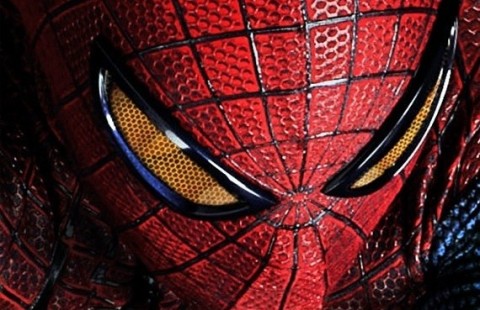
The feature starring Andrew Garfield as Spider-Man pounced the box office, earning $35 million in its first day of release in the U.S. including $7.5 million in midnight screenings. The figure is the biggest Tuesday ever, outpacing Transformers , which took in $27.8 million on a Tuesday back in July of 2007. That film went on to gross over $155 million in its first six days. IMAX netted $4 million of Tuesday’s $35 million record gross, now easily the biggest Tuesday debut of all time.. Of the $7.5 million taken in at midnight screenings, IMAX grossed an impressive $1.2 million from 300 screens for a $4,000 screen average. The 3-D The Amazing Spider-Man opened at 4,318 theaters in the U.S. Overseas, it has grossed $50.2 million for a worldwide total of about $85.2 million, according to the latest figures. [Source: Hollywood.com and Box Office Mojo ]
“Katy tells us that it’s okay to stand out,” one of pneumatic pop star Katy Perry’s disciples intones at the beginning of Katy Perry: Part of Me 3D , a shiny, brightly colored piece of fan candy that follows the performer as she embarks on her 2011 world tour. Also the Word of Katy: “How could you ever be too cartoon-y?” The latter, exclaimed as Perry’s being fitted into one of her Jetsons concession girl costumes, is a baldly rhetorical question. Somewhere in between those two lines of pop scripture lies the explanation for the only female artist to eke five number-one hits from a single album, her 2010 record Teenage Dream . Do we still talk in terms of albums? The record-keepers do, anyway, still bound by the standards of the past. And Perry, the daughter of born-again evangelists (her father’s aging rock god outfit makes more sense upon learning that he used to cook up LSD; no trace of her mother’s romantic history with Jimi Hendrix remains), likes to play with a retro look. But she is an unmistakably modern creation, as the brand-conscious Part of Me confirms, beginning with the webcam testimonials from fans about the realness and relatability of their heroine that segue to an 18-year-old Katy earnestly confiding into her own laptop. Except the teenage Katy, as though guided by shivering foreknowledge of this exact moment, expresses her desire to be a leader, and her doubts about taking on “all those responsibilities.” Madonna was 25 when Dick Clark got her to blurt out her plan “to rule the world.” Perry has cited pop music’s great survivor as an influence, but I couldn’t watch Part of Me without thinking of how thinly it compares to Madonna: Truth or Dare , a backstage concert film that documents the singer at the peak of world domination. Madonna the road-mother, Madonna the hardass, Madonna the cut-up, Madonna the boyfriend emasculator, Madonna the “even when I feel like shit they love me” fan mocker, Madonna the incandescent performer who terrifies her followers as often as she transfixes them. I became a Madonna fan as a little girl; I could still dance the entire Blonde Ambition tour if I had to, like, save the world. Not that I’ve envisioned such a scenario. But then as now I would have chewed through my own wrist to avoid an encounter with the star, and the idea of relating to Madonna in some sisterly or otherwise pals-y way feels universe-invertingly wrong. Part of Me works hard to establish that Katy Perry is just like you and me. At the same time, her coterie (including an assistant as well as costume and make-up teams) assure us that Perry deserves her fame. She’s a good person from Santa Barbara who charmed even the Cobra Snake (a louche nightlife photographer) when she lit out for Los Angeles with a few bikinis, zero bibles, and a dream. Small doubts are seeded through the introductory interviews – can she handle a tour this big? – and even her manager expresses surprise at her success. There’s a glaze to the talking head segments familiar from any number of MTV or VH-1 artist infomercials. The concert footage (from shows staged around the world) is meant to showcase the 3-D presentation; there are dancers bouncing around and some fleet camerawork, but the laser light effects make the best use of it. Reality TV figureheads and first-time directors Dan Cutforth and Jane Lipsitz produced last year’s wildly successful Justin Bieber: Never Say Never . The same formula of gifting a fan-made star back to the people is followed, but Cutforth and Lipsitz never ascend to a moment of kitsch ecstasy on par with Bieber’s slow-mo signature lid shimmy. Perry is no dancer and not much of a mover; she’s a more mannequin-ish presence, but an energizer mannequin, expressive and ever connecting. Her cabaret rendition of “I Kissed a Girl” has unprocessed flair, and a witty quick-change number sparks an absolute shitfit in the stands. Her solid and unsurprising voice sounds solid and unsurprising, but with any production as slick as this one – where personality is prized over performance – it’s hard to know what you’re getting. Unlike Bieber, Perry had several close encounters with the big time. We learn of her various blighted record deals and studio makeovers (Perry tried everything from gospel to country to angry-girl rock) and get a small sense of her musicianship. Then, in a preposterous sequence, the story of her professional bottom (involving a botched partnership with pop gurus The Matrix) is crosscut with a bondage number in which Katy wails about being held hostage. After that, we are told, Perry decided to just be herself, and the rest is chart and bullet-bra-busting history. And who is that? What can you say about someone whose real self resembles a marzipan anime character? Well, she’s a goofball and a charmer, to start. She’s sweet with fans and an everygirl champ with her crew. She’s in every way devoted to the job of being Katy Perry, and the state of her marriage to comedian Russell Brand soon replaces the “can she hack it?” storyline. Or maybe it’s another stem of the same storyline. “A baby can’t have a baby,” she pronounces after Brand texts her possible names for their kids. “And I’m still a baby.” Background drama builds to a meltdown in Brazil, the show goes dramatically on, and the split is reframed as a feminist conundrum: The baby wants to work. Despite this careful (and successful) depiction of a warm and decent person, Perry the pop star remains stubbornly two-dimensional. She’s a sexless sex symbol, too girlish to be a girl, and her crack about being a cartoon feels critical to her anodyne appeal. Perry might sing about seeing your peacock and cover the front rows in whipped cream shot out of a two-foot canister, but it couldn’t be more congenial or less erotic. Only an extreme fetishist could actually get off on her shtick; for the rest of us, especially her adoring tween army of fans, she’s a human Pez dispenser barking out candy-covered platitudes. Even her much-feted boobs seem friendly. Beckoning from behind them is the strangely modern conception of pop stardom, one that derives its powerful hold on (largely young, female) fans from the promise that if you can’t live the cupcake dream, Katy Perry will gladly live it for you. Follow Michelle Orange on Twitter . Follow Movieline on Twitter .
Jena Malone, seen kicking all sorts of ass last year in Sucker Punch , has nabbed the role of Johanna Mason in the Hunger Games sequel Catching Fire , THR reports. Malone is in negotiations to play the crafty and ruthless past Games winner from District 7, who forms an uneasy friendship with Katniss Everdeen as they, along with Peeta and fellow previous victors, are forced back into the arena to fight to the death. Approve, Mockingjays? Sound off below. [ THR ]
Oh, what a coincidence! Here comes the trailer for Tom Cruise ‘s Jack Reacher (formerly One Shot ), the action film based on a novel by Lee Child that stars the soon-to-be-divorcé as an ex-army cop who apparently drives around town in muscle cars getting into fights. The kind of angry, controlled rage-machine who gets into brawls, specializes in strategically breaking bones, asks questions later, etc. The badass clothing doesn’t quite fit on Cruise, but you know. He’s Tom Cruise . Plot is incidental to this first tease of a trailer, which sets up the eponymous loner-hero in mythic terms. “There’s this guy,” bandaged beaten up hospital guy says. “He doesn’t care about proof. He doesn’t care about the law. He only cares about what’s right.” Then comes that reedy Cruise voice to ruin it all: “You think I’m a hero? I am not a hero. And if you’re smart, that scares you.” Well, I guess I’m not smart. Because, yeah. Yawn . I’m not one of those folks hung up on how wrong Cruise is for the role, physically speaking, though Reacher’s dimensions (posted helpfully at Child’s website ) do make you wonder which actors out there might have fit the bill a little better: Measurements: 6’5″, 220-250 lbs., 50″ chest Hair: Dirty-blond Eyes: Ice blue Clothing: 3XLT coat, 95 cm. pants’ inseam It’s not even that Cruise isn’t the physical ideal for Reacher. The wandering ex-military bruiser with no regard for the law doesn’t really sit well on him. But we shall see; with writer-director Christopher McQuarrie ( The Usual Suspects , The Way of the Gun ) behind the camera, Josh Olson ( A History of Violence ) on scripting duties, and Werner Herzog playing baddie , there’s enough promise left in this thing. Still, while a lot of folks are getting a Drive vibe from this, I get more of a Gone in 60 Seconds feel — the middle-aged action hero wearing leather jackets, racing around in classic cars, lounging around with hot ladies in their underwear. It already feels like the mid-life crisis wish-fulfillment movie of the year for older dudes. Verdict: Unless the next batch of trailers really wow me, I’m only hanging in for the Herzog. [via Yahoo! ]
Like many other feminist moviegoers, I was more than a little disappointed that Pixar’s long-awaited first female protagonist, Brave ’s Merida, is a princess. But what’s striking, even astonishing, about Brave ‘s treatment of princessdom is its historical honesty; even though Merida convinces her parents to abolish the tradition of arranged marriage, the film’s resolution essentially has our heroine accepting that she has to get married and that her nuptials will be used as a bond between rival clans. (Score one for the patriarchy.) Brave can boast some narrative complexity, if not much feminist bona fides, for having Merida occupy the role that real-life princesses have held for most of history — as insurance against war. This gloomy take on the purpose of royal females aligns Brave more closely with HBO’s medieval misery-fest Game of Thrones than with any other Disney princess movie that’s come before. The anti-princess backlash is nothing new. For decades, cultural critics have been decrying princess movies for overvaluing qualities like beauty, passivity, and femininity, not to mention wealth and social privilege. The studios have made some grudging concessions in recent years: heroines still wear crowns, but they also have more guts. The Guardian’s Jaclyn Friedman recently named this new trend of royal female ferociousness the rise of the “Action Princesses,” specifically citing Snow White and the Huntsman and Brave , though Tangled ’s Rapunzel would also qualify. These films, in which princesses are bold, beautiful, and betrothed, serve as a kind of “you can have it all” message for the 14-and-under set. Unlike Tangled , though, which merely offers a pluckier-than-usual heroine, Brave and Snow White and the Huntsman represent a more radical response to the anti-princess backlash. They feature princess protagonists, but offer serious critiques of the institution of princessdom — highlighting in particular its dangers. Nowhere has that been argument been more emphatically made than in Game of Thrones , which could virtually qualify as anti-princessdom propaganda. Virtually all of Daenerys Targaryen’s (Emilia Clarke) troubles, for example, are a result of her royal lineage. Sold to a stranger by her brother as a teenager, the “mother of dragons” gained autonomy in her initially dehumanizing marriage, but remains exiled from her homeland after two seasons for her royal blood. Even more devastating is the plight of Sansa (Sophie Turner), a wannabe princess, who quickly discovers that life as a royal daughter-in-law would be an endless parade of humiliations and empty rituals — even if her would-be hubby weren’t the most evil character ever. Likewise, take Snow White and the Huntsman , in which the fairy-tale princess (Kristen Stewart) is doomed to imprisonment for her claim to the throne. For all these characters, being a princess confers uniqueness, but no privilege; it’s a liability, if not a customized bull’s-eye target. Interestingly, it’s no longer just cultural critics decrying the uniform blah-ness of princess narratives, but the cultural products themselves. By learning how to throw a punch and ride horses into combat, princesses win battles, but lose the war for narrative sophistication. After all, princesses may be less passive these days, but they continue to be morally unassailable. So while Snow White fights her usurping stepmother Ravenna (Charlize Theron) for the throne, the queen successfully launches a campaign to seize the hearts and minds, or at least the attention, of audiences. Ravenna doesn’t steal the movie because the actress playing her chews up the scenery more conspicuously than her younger co-star (though that doesn’t hurt), but because she’s a much more interesting and developed character than the “pure,” virginal Snow White. Not insignificantly, Ravenna gets as much screen time as Snow White, and the tragic nature of her back story rivals her stepdaughter’s; her thirst for power is born from a justified hatred of men in power, and her capture of the crown at the beginning of the film is actually easy to root for. The psychologically damaged and perpetually obsessed nature of Ravenna’s character makes her the female counterpart to the ethically perplexed antiheroes that are the de rigueur protagonists of cable dramas, like Mad Men ’s Don Draper or Breaking Bad ’s Walter White. Snow White and the Huntsman is far from the only example of princess movies receiving the Wicked treatment. Mirror Mirror , for example, tells the same tale from the POV of Queen Julia Roberts, who commandeers the film’s voiceover narration. And the anti-princess take will continue in 2014’s Maleficent , which will star a horned Angelina Jolie as the villainess of Sleeping Beauty . The appeal of these fairy-tale rewrites is, of course, the reorientation of sympathies. For example, the ability to understand, if not necessarily root for, the queen makes clear the audience’s fallacious identification with the princess. After a while, it seems eminently more reasonable to identify with Ravenna than Snow White, since she’s the one who more traditionally follows the hero’s path: a commoner with talent (in this case, beauty) who ventures into a strange land (the bizarro-universe of the aristocracy) and overcomes a weaker antagonist (the lovestruck king) to claim victory. Princess movies will be with us for a time yet, but it’s wonderful to see that even if princesses aren’t growing up, the movies about them certainly are. Now, if only we could convince studios that girls’ lives and experiences matter even if they don’t live in castles… Inkoo Kang is a Boston-based film journalist and regular contributor to BoxOffice Magazine whose work has appeared in Pop Matters and Screen Junkies . She reviews stuff she hates, likes, and hate-likes on her blog THINK-O-VISION .