Also in Monday morning’s round up of film news, more winners from the Edinburgh International Film Festival as well as fest news from Karlovy Vary and Shanghai.And Spider-Man opens overseas to some impressive numbers China’s Here, Then Takes Best Pic at Edinburgh Fest The feature by director Mao Mao won Best Film in the International Feature Competition, while One Mile Away by director Penny Woolcock won Best British Feature. Andrea Riseborough and Brid Brennan jointly won Best Performance in James Marsh’s Shadow Dancer . More awards from the Edinburgh International Film Festival can be found here . Around the ‘net… Beasts of the Southern Wild Ferocious; To Rome With Love Strong: Specialty Box Office After a slew of festival accolades including prizes at Sundance and Cannes, Beasts Of The Southern Wild swarmed the box office. With no stars and a first-time feature filmmaker, the pic nevertheless resonated with specialty audiences in-the-know. In New York and Los Angeles, the Louisiana Bayou-set film averaged an impressive $42,309 in four theaters, Deadline reports . Spider-Man Opens Overseas with $52.2M The pic opened in 13 overseas markets in Asia and Europe, out-performing even The Avengers in some countries including India, Deadline reports . Pulled Film Reinstated at Karlovy Vary Film Festival The world premiere of director Sara Csehalmi’s Dear Betrayed Friends had been taken out of the Czech Republic’s Karlovy Vary Film Festival’s East of the West competition when post production funds ran out. The cancellation sparked a debate in Hungary where film productions have suffered recently, THR reports . Shanghai Fest Reflects Growing Biz Local businesses are concerned about growing competition from Hollywood. The Shanghai Film Festival had one of its biggest editions in 15 years. 300 domestic and foreign-produced films screened in 33 cinemas, Variety reports .
In the immortal words of Blue Oyster Cult’s Buck Dharma, “history shows again and again how nature points out the folly of man.” He was singing about Godzilla and we’re speaking about him, too, as Hollywood has decided to lay another bet on the city-stompin’ monster from the Far East. Yes, Godzilla, pop culture’s most famous advocate for nuclear non-proliferation is emerging from the seas once more. There’s been no secret that Legendary Pictures and Warner Bros. have been planning a remake of Godzilla (or Gojira if you’re nasty) with British make-a-movie-on-your-iMac whiz Gareth Edwards at the helm. However, Latino Review broke the scoop that the Japanese lizard will be making a surprise appearance at San Diego Comic-Con. LR has a great track record of being right on this sort of thing — indeed, their announcement that Marvel’s gap on their upcoming slate will be filled with a Guardians of the Galaxy film has been all-but-confirmed . (Although just a few weeks back they swore it would be Black Panther .) The important thing to consider is this: the San Diego Convention Center’s Hall H is massive (over 6000 seats! so many T-shirts!) and the sound system is so state of the art it makes clips from Jonah Hex seem really impressive. I doubt there will be any finer geek moment of triumph when the lights dim and Godzilla’s trademarked screech erupts. By the way, when I say trademarked, I mean trademarked. When you have an iconic sound like that – the MGM Lion, R2-D2’s blips or, I dunno, Fran Drescher’s laugh – you protect it. The Godzilla roar, if you’d like a bit of trivia, was actually created by rubbing a leather glove covered in resin across the loosened strings of a standup bass and then slowed down. We need to wait til we get to San Diego to find out what take Gareth Edwards (whose only previous feature was a Sci-Fi In Name Only indie Monsters ) has, but I can’t imagine the scream isn’t part of it. Frankly, just thinking about it kinda gets me jazzed up enough to forget the Roland Emmerich version from 1998. *If you aren’t old enough to remember hanging out in 1970’s heavy metal vans, Blue Oyster Cult’s “Godzilla” is still the finest American adaptation of the character. We’ve included this video to jog your memory. [ Latino Review ]
They say it is good to get a child a pet because its mortality will acclimate the youngster to the concept of death. Clearly Tim Burton never saw it that way. Frankenweenie , the much beloved cult short that, ostensibly, got him fired from Disney in the 1980s, is back with a feature length 3D IMAX release from Disney this autumn. Yeah, there had to’ve been a li’l victory dance at Chez Burton on that one. The studio’s marketing is revving up in earnest, announcing a Comic-Con panel and its world premiere at Austin’s genre-friendly Fantastic Fest’s opening night on September 20th. The trailer offers two-and-a-half minutes of the expected Edward Gorey-by-way-of Brooklyn Renegade Craft Fair that, as I’m sure you are well aware, has no small share of its fans. One of the more interesting things about the upcoming film will be doing a compare and contrast on the voice talent versus the short. Shelly Duvall is now Catherine O’Hara? But I love them both! Daniel Stern switched for Martin Short? Don’t make me choose! The great Paul Bartel was a voice in the original, but, alas, his death in 2000 makes it impossible for him to join this time. Unless… is there a way, you think, to resurrect idiosyncratic character actors? The film, of course, looks terrific, though I’m curious to see if the Burton schtick is enough to get kids – normal kids – to overcome their natural disinclination for black & white. With the financial windfall Burton handed Disney with Alice in Wonderland (as Warner Bros. scratches its head over Dark Shadows ) and the licensing juggernaut that is The Nightmare Before Christmas , I’m sure they were more than happy to throw the director a bone (zing!) on what was, I’m surmising, a not terribly expensive production. Either way, Frankenweenie looks like the only movie on the horizon that will be appropriate to watch while both in your jammies and drinking absinthe.
Tom Cruise and Katie Holmes They courted and were married amidst a media spectacle, but after five years of marriage, one of Hollywood’s most celebrated couples, Tom Cruise and Katie Holmes , are calling it quits. [ PHOTOS: 5+ Years of TomKat in Pictures ] The two wed in an Italian castle back in November 2006 and who can forget those images of Cruise giving Holmes a lift on the back of his motorcycle, as well as the jump on the couch seen around the world on the Oprah Winfrey show? But sadly, the romance has faltered, according to People magazine. The news will undoubtedly unleash a barrage of the ever-present five year contract riffs, though the marriage did actually sustain a bit more time – about 5.7 years, in fact. “This is a personal and private matter for Katie and her family,” Holmes’s attorney Jonathan Wolfe said. “Katie’s primary concern remains, as it always has been, her daughter’s best interest.” Their daughter, Suri, is now six. This was Cruise’s third marriage. [Source: People ]
Even Neil Young couldn’t resist. “This is a town in north Ontario,” he says at the beginning of Neil Young Journeys , Jonathan Demme’s uneven, engrossing combination of road-trip documentary and concert film. Journeys opens with Young in his hometown of Omemee, which alert Ontarians might note is not actually all that far north. It’s less than two hours from Toronto by car, which is how Young and Demme travel there, in a stately 1956 Ford Crown Victoria, for a gig at the city’s famed Massey Hall. He’s one of those legends Americans tend to assume emerged from one of their forbidding landscapes, or pockets in time. In the decades since he went from busking for change on Toronto’s streets to playing folk rock with Buffalo Springfield in the 1960s, Neil Young has become something of a Rosetta Stone across several worlds, including the Canadian-American axis. A number of genres and eras of music can be traced through his career, and many of his songs — most famously, perhaps, “Ohio” — document and respond to the times with vigor and alarm. He sang about Elvis and Johnny Rotten in “Hey Hey, My My (Into the Black),” the song Kurt Cobain quoted 15 years later in his suicide note. Around that time some friends and I made a two-hour drive of our own, to the enormous outdoor venue where Soundgarden and Pearl Jam were opening for Young. For us the latter third of the bill was a puzzle; why were our favorites ceding to this aging folky? Then Young shuffled out and rocked our worlds. Massey Hall is more intimate — under 3,000 seats — and at 65, as Demme emphasizes with his clamp-like focus on the performer, Young can still smash it up. Most of the film alternates between brief vignettes of a congenial Young at home and on the road and Young on stage, the impenetrable ax-man with that warbly, mournful, loon call of a voice. After ninety minutes of being so up-close and personal that for long stretches we’re looking directly up Young’s nose (a camera was attached to his mic stand, to dubious effect), the shell of his enigma shows barely a scratch. In Omemee he points out the school named after his father (writer Scott Young) and the home of the boy who persuaded him to eat tar (it’s like chocolate!). The family’s land in Pickering is derelict these days, but Young and his brother (who leads the caravan) remember how and where things used to be. The solo concert looks back as well, alternating between old glories and Young’s ever prolific present — his latest album, Americana , which reunites him with longtime collaborators Crazy Horse, was released earlier this month. The Journeys show, which took place last May, is a blend of songs from his 2010 album, Le Noise , and 1970s gems. At times the combination of the newer stuff and Demme’s static presentation sets the mind a-wanderin’; the mic-cam, for instance, seems like part of a struggle to hold our attention. Even less successful is the intrusion, during “Ohio,” of news footage and big red lettering announcing the events of that day at Kent State University and the names of the victims. It feels unnecessary to crowd that information into a song whose power is increasingly derived from the cumulative reminder, made across decades now, of what was lost; he’s never stopped singing that refrain. The audience is never seen and only faintly heard. This puts a lot of visual pressure on a very inward performer. Young is a beast onstage, to be sure — he seems to re-grow an appendix for each song, so that it can be removed, without anesthetic, before our eyes — but it’s a centrifugal charisma. The more intimate the song (in “Love and War” he confesses to betraying a partner and hitting “a bad chord,” presumably with Living with War , his controversial post-9/11 album; in “Hitchhiker” a laundry list of drugs taken and paranoias suffered is recited), the further away he seems — and the more we long for another minute with that other Young, the one who’ll admit to shoving firecrackers up a turtle’s back end when he was a boy. There’s no way to resolve a mystique like Young’s, as Demme seems to be discovering. Journeys is his third Young documentary in the last six years. Partly that has to do with the preservation of his talent: If all the new songs aren’t killers, all the old one weren’t either, and he remains a remarkably strong and dedicated musician. I think the other part has to do with the more abstract idea that while he’s often treated as an elder statesman — we’ve tried to make him one, “godfather of grunge” being one label — his legacy is more that of an elusive fellow traveler, one who has been telling our stories all along. Demme saved “Helpless” for the credits, where it played over images of small-town Ontario. I cried like a baby. Follow Michelle Orange on Twitter . Follow Movieline on Twitter .
Take This Waltz is an unusually kind film about infidelity — not because it sidesteps or shortchanges heartbreak, but because it doesn’t let any one of its characters bear the full burden of blame. That such a thing needs to or should even be assigned in this scenario is beside the point, as the film defers to the vagueries of the human heart and the way we can, despite our better judgment, form a connection with someone that can’t easily be set aside. It’s tempting to glibly connect this clear-eyed empathy with the fact that Take This Waltz is Canadian and somehow inherently prone to niceness — it’s set in a rosy version of Toronto in which the characters all live in charmingly shabby chic houses and sporadically work in quirky jobs. But what it actually comes from, I think, is that the film is the sophomore feature of actress-turned-director Sarah Polley, who constructs her central love triangle with a determinedly feminine perspective and places all of the choice on her female protagonist Margot, played with typical grace by Michelle Williams. Margot wants anything but to have to make a difficult call, especially one that will result in someone getting hurt. One of the film’s first scenes finds her visiting the living history museum of the Fortress of Louisbourg for work and getting pulled in front of a crowd by costumed, in-character staffers to help with a flogging. “Put your back into it!” yells a man from the crowd when she ineffectually flails at the prisoner, clearly mortified. Later, she ends up sitting next to the heckler on the plane. His name is Daniel (Luke Kirby), and he’s just watched her board in a wheelchair despite not having needed one before, leading her to confess that she pretends at airports because of her terror of missed connections, something born not out of a need not to miss a flight but because, as she puts it, “I’m afraid of wondering if I’ll miss it. I don’t like being in between things.” Margot will, however, spend the movie in between things — between Daniel, who turns out to live across the street (“Shit!” she mutters when she finds out), and Lou (Seth Rogen), the husband of five years with whom she shares a loving if childlike and seemingly no longer passionate relationship. Margot loves Lou — the two tussle like kids and talk adoring about the terrible violence they’re going to do one another (“I’m going to put your spleen through a meat grinder,” Lou sighs) — but she may not be in love with him any longer, and she has an undeniable heated spark with Daniel, an artist who pulls a rickshaw and who watches her with guarded longing. Take This Waltz , which was also written by Polley, has moments of overdetermined dialogue — the line about airport connections is one, and another finds Margot describing Lou, who’s a cookbook writer, as “a really good cook, if you like chicken.” It’s stronger in its moments of wordless sensuality, from its opening scene in which Margot makes muffins, the camera drifting to her bare feet and then her face as she leans it against the over glass. Daniel offers to take Margot and Lou downtown in his rickshaw when they’re headed out to celebrate their anniversary, and we track her gaze across the muscles of his arms and back, catching his eye in the side-view mirror. The draw of the flesh is not inconsiderable, and Take This Waltz doesn’t make it so easy as being a kind of passing temptation, an indulgence to be resisted. Margot and Lou have a stable and relatively happy life together — we see them at home and in the company of their friends and family, including Lou’s sister Geraldine (a memorable Sarah Silverman), a recovering alcoholic. It’s a lot to trade for attraction, no matter how significant, but the film feasibly puts the two on a level, leaving Margot to navigate the decision with growing distress as she tries to avoid Daniel, only to go out of her way to run into him, and then flees back to Lou professing her love and fear. Kirby makes his improbable swain just dangerous enough, the embodiment of the promise of the new, while Rogen shows off his dramatic chops as a man who’s obviously never given thought during his time with Margot of what things would be like without her. But the weight of the film rests on Williams, and she finds a poignant and quiet agony in her character as she realizes she’s the only one who can make this decision and must deal with the consequences either way, after time and again trying to push it off or onto other people. It’s a world of bittersweet sophistication from Polley, and one that accepts that, as a stranger reminds Margot at a swim class, “new things get old,” but that doesn’t make them any less appealing.
Take This Waltz is an unusually kind film about infidelity — not because it sidesteps or shortchanges heartbreak, but because it doesn’t let any one of its characters bear the full burden of blame. That such a thing needs to or should even be assigned in this scenario is beside the point, as the film defers to the vagueries of the human heart and the way we can, despite our better judgment, form a connection with someone that can’t easily be set aside. It’s tempting to glibly connect this clear-eyed empathy with the fact that Take This Waltz is Canadian and somehow inherently prone to niceness — it’s set in a rosy version of Toronto in which the characters all live in charmingly shabby chic houses and sporadically work in quirky jobs. But what it actually comes from, I think, is that the film is the sophomore feature of actress-turned-director Sarah Polley, who constructs her central love triangle with a determinedly feminine perspective and places all of the choice on her female protagonist Margot, played with typical grace by Michelle Williams. Margot wants anything but to have to make a difficult call, especially one that will result in someone getting hurt. One of the film’s first scenes finds her visiting the living history museum of the Fortress of Louisbourg for work and getting pulled in front of a crowd by costumed, in-character staffers to help with a flogging. “Put your back into it!” yells a man from the crowd when she ineffectually flails at the prisoner, clearly mortified. Later, she ends up sitting next to the heckler on the plane. His name is Daniel (Luke Kirby), and he’s just watched her board in a wheelchair despite not having needed one before, leading her to confess that she pretends at airports because of her terror of missed connections, something born not out of a need not to miss a flight but because, as she puts it, “I’m afraid of wondering if I’ll miss it. I don’t like being in between things.” Margot will, however, spend the movie in between things — between Daniel, who turns out to live across the street (“Shit!” she mutters when she finds out), and Lou (Seth Rogen), the husband of five years with whom she shares a loving if childlike and seemingly no longer passionate relationship. Margot loves Lou — the two tussle like kids and talk adoring about the terrible violence they’re going to do one another (“I’m going to put your spleen through a meat grinder,” Lou sighs) — but she may not be in love with him any longer, and she has an undeniable heated spark with Daniel, an artist who pulls a rickshaw and who watches her with guarded longing. Take This Waltz , which was also written by Polley, has moments of overdetermined dialogue — the line about airport connections is one, and another finds Margot describing Lou, who’s a cookbook writer, as “a really good cook, if you like chicken.” It’s stronger in its moments of wordless sensuality, from its opening scene in which Margot makes muffins, the camera drifting to her bare feet and then her face as she leans it against the over glass. Daniel offers to take Margot and Lou downtown in his rickshaw when they’re headed out to celebrate their anniversary, and we track her gaze across the muscles of his arms and back, catching his eye in the side-view mirror. The draw of the flesh is not inconsiderable, and Take This Waltz doesn’t make it so easy as being a kind of passing temptation, an indulgence to be resisted. Margot and Lou have a stable and relatively happy life together — we see them at home and in the company of their friends and family, including Lou’s sister Geraldine (a memorable Sarah Silverman), a recovering alcoholic. It’s a lot to trade for attraction, no matter how significant, but the film feasibly puts the two on a level, leaving Margot to navigate the decision with growing distress as she tries to avoid Daniel, only to go out of her way to run into him, and then flees back to Lou professing her love and fear. Kirby makes his improbable swain just dangerous enough, the embodiment of the promise of the new, while Rogen shows off his dramatic chops as a man who’s obviously never given thought during his time with Margot of what things would be like without her. But the weight of the film rests on Williams, and she finds a poignant and quiet agony in her character as she realizes she’s the only one who can make this decision and must deal with the consequences either way, after time and again trying to push it off or onto other people. It’s a world of bittersweet sophistication from Polley, and one that accepts that, as a stranger reminds Margot at a swim class, “new things get old,” but that doesn’t make them any less appealing.
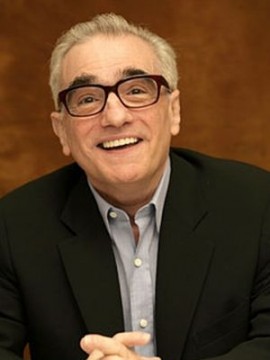
Healthcare is grabbing the headlines and the Chattersphere today, but one thing appears to be certain: It’s curtains for film. OK, maybe a stretch of a segue, but here’s the thing. Sure, there are some high profile holdouts and even digital-converts will attest to the quality and feel of film. But when Martin Scorsese is ready to make the perma-switch, then the slow inevitable demise may have just been given an extra boost. Scorsese will go digital for his next film and appears resigned to the format going forward. Speaking with Empire at the Edinburgh International Film Festival, the director’s longtime editor Thelma Schoonmaker said, “It would appear that we’ve lost the battle,” confirming his next film, The Wolf of Wall Street would be shot digitally. “I think Marty just feels it’s unfortunately over, and there’s been no bigger champion of film than him.” Of course Scorsese’s last film Hugo won an Oscar for Best Cinematography. It is also a de facto call for film preservation, something near and dear to the filmmaker’s heart. “It’s a very bittersweet thing to be watching films with him now that are on film,” said Schoonmaker. “We’re cherishing every moment of it. The number of prints that are now being made for release has just gone down, and it would appear that the theaters have converted so quickly to digital.” Scorsese and Schoonmaker get to work on The Wolf of Wall Street starring Leonardo DiCaprio, Jonah Hill and Jean Dujardin the second week of August. And what do you think about the switch to digital? [Source: Empire ]
Healthcare is grabbing the headlines and the Chattersphere today, but one thing appears to be certain: It’s curtains for film. OK, maybe a stretch of a segue, but here’s the thing. Sure, there are some high profile holdouts and even digital-converts will attest to the quality and feel of film. But when Martin Scorsese is ready to make the perma-switch, then the slow inevitable demise may have just been given an extra boost. Scorsese will go digital for his next film and appears resigned to the format going forward. Speaking with Empire at the Edinburgh International Film Festival, the director’s longtime editor Thelma Schoonmaker said, “It would appear that we’ve lost the battle,” confirming his next film, The Wolf of Wall Street would be shot digitally. “I think Marty just feels it’s unfortunately over, and there’s been no bigger champion of film than him.” Of course Scorsese’s last film Hugo won an Oscar for Best Cinematography. It is also a de facto call for film preservation, something near and dear to the filmmaker’s heart. “It’s a very bittersweet thing to be watching films with him now that are on film,” said Schoonmaker. “We’re cherishing every moment of it. The number of prints that are now being made for release has just gone down, and it would appear that the theaters have converted so quickly to digital.” Scorsese and Schoonmaker get to work on The Wolf of Wall Street starring Leonardo DiCaprio, Jonah Hill and Jean Dujardin the second week of August. And what do you think about the switch to digital? [Source: Empire ]
Today I learned two things. 1) You can never predict SCOTUS and 2) I’m gonna punch the next guy in the eye who calls the Supreme Court of the United States ‘SCOTUS.’ You don’t need to have been swallowed up in the abyss of indifferent bureaucracy to know that our medical system is FUBAR. (Oh, God, enough with the acronyms!) All you need to do is go to the movies. Here are some of cinema’s highlights that have made me want to try chewing cardamom seeds and holding a crystal rather than make that $15 copay. The Hospital (1971), Arthur Hiller, director Writer Paddy Chayefsky was raging against failing institutions before his masterpiece Network . The Hospital stars George C. Scott as a hospital administrator whose personal life and his place of work are in a race to see which more quickly turn to shambles. It’s a movie that will anger up the blood, but worth checking out if for no other reason that to hear the term “zapping” as a euphemism for the sex act. — Critical Care (1997), Sidney Lumet, director Chayefsky’s future collaborator on Network got to take his turn tsk-tsking the medical system with Critical Care . The film is primarily a romantic comedy, but it has more than its share of startlingly frank scenes of how emergency care is weighed against ownership of insurance. For those who thought Drive was the first time Albert Brooks played a murderer, check out the below clip. — The Rainmaker (1997), Francis Ford Coppola ’97 was not a good year to be in the health insurance business. In The Rainmaker , the evil HMO “Great Benefit” don’t just deny Mary Kay Place’s son a necessary bone marrow transplant, they’re big fat jerks about it in a letter. Memo to self: don’t call a grieving mother “stupid, stupid, stupid” when she’s got an idealistic young attorney like Matt Damon on their side. — Saw VI (2009), Some Gross Guy, director We can all send letters of gratitude to John Roberts for not spiking Obamacare. Nobody deserves the fate the insurance company employees got in Saw VI , which explained why Jigsaw started torture-punishing his victims in the first place. (They were tools of the bureaucracy that denied ailing folks’ necessary care.) And the last thing we need is a Saw reboot. — The Death of Mr. Lazarescu (2005), Cristi Puilu, director Of course, it could be worse. You could live in Romania. This film (presented as a dark comedy in the trailer, but I didn’t do much laughing) is a near 3-hour exercise in frustration. Watch in horror as a dying man is shuffled between selfish neighbors, CYA-pencil pushers and disinterested physicians. It’s a difficult flick, and, unfortunately, a reminder than no amount of government legislation can force people not to be idiots. — Contagion (2011), Steven Soderbergh, director Woah, woah, let’s close this out with a little positivity! Contagion taught us a few things. Number one was STOP TOUCHING YOUR FACE, and number two was that there are some people who are (shock!) employed by the government who will put themselves in harm’s way for the betterment of society. Jennifer Ehle’s CDC character saves the day, while Kate Winslet’s is a martyr. I dunno about you, but every real life doctor I’ve ever spoken to wishes the nightmare of insurance, malpractice, referrals and general mishigoss would just disappear so they can do what they first set out to do: help people. Jordan Hoffman is a regular critic at ScreenCrush , columnist at StarTrek.com and contributor to a great number of your favorite websites. He has produced two independent films and was named IFC’s Ultimate Film Fanatic of the NorthEast. Follow on Twitter at JHoffman6 .