Tag Archives: Christmas

Daily Kos Creates Petition To Abolish Filibuster

A petition is beginning to show up in e-mail inboxes across the country thanks to the left-wing website Daily Kos. The goal? Ending the practice of filibuster completely and letting Senators pass news laws with a 50 plus 1 vote. For those who paid attention to Senator Scott Brown (R-Mass.) becoming the infamous “number 41,” the implications are all too clear. The Senate passed Obamacare on Christmas Eve in 2009 only because there were exactly 60 votes to stop a Republican filibuster. Brown’s election weeks later dropped Democratic control to 59 and virtually stopped them cold. Democrats are now expecting to lose the House in November and keep the Senate only with a slim majority. The folks who run Daily Kos, apparently thinking 49 Republican votes should not matter, are trying to change the rules to make it easier for Democratic agendas to sail through. Behold the thought process of today’s Machiavellian liberals who will do absolutely anything to get their way (h/t NBer choselife3x): Today we’re launching a campaign to end the filibuster. Join this campaign by clicking the link below and signing the petition that appears: We’ll deliver the petition to every Democratic nominee for Senate and every returning Democratic Senator. When we do, we’ll get them on record about whether they agree that the rules of the Senate can, and should, be changed with a simple majority vote on the first day of Congress next year. Once 51 returning and potential Senators have come out in support, we’ll have proven that changing Senate rules is possible with a simple majority vote. Sign the petition, prove change is possible! There’s no bigger decision Senate Democrats will make next year. The Senate is where good legislation goes to die. Democrats can either change a system that allows a tiny unaccountable minority to thwart the will of the country, or they can continue being part of the problem. So even though Republican Senators ostensibly represent 41 percent of America now, and are predicted to represent even more states in 2011, the Daily Kos calls them “a tiny unaccountable minority.” And even though the majority of Americans repeatedly tell pollsters they reject Democratic agendas, it’s Republicans who “thwart the will of the country.” On each of those issues, the Daily Kos came down on the side against the will of most Americans. And now the plan is to make it even easier to ram things down Americans’ throats. Democrats will presumably be able to squeak into the Senate with a bare 51 votes and then pass whatever they want even when the public loudly protests. The filibuster has been an important part of Congress since the very beginning of this country. Film director Frank Capra used the procedure in the iconic 1939 movie “Mr. Smith Goes to Washington,” proudly displaying the means by which a minority can protect itself from a bullying, overconfident majority. Ending the filibuster would be a drastic departure from our nation’s founding and a radical change in the meaning of representation. As of this writing, Daily Kos is not displaying the petition on its front page. Yet one Kos member by the name of garscosi posted this rather embarrassing diary pleading with the website’s owners to reconsider, followed by a slew of comments in agreement. For a website that habitually trumps up popularity for unpopular ideas, it’s just so fitting.

Read the original post:
Daily Kos Creates Petition To Abolish Filibuster

After Bashing Bush on Unemployment, NYT Now Touting ‘Benefits’ of High Unemployment

In late 2009, when high rates of unemployment began looking like a sad fact of life for the foreseeable future, the media started looking for ways to put a positive spin on the situation. Sure, many had predicted the next great depression when unemployment stood at around 6 percent in 2008, but with Democrats in control of the White House and Congress, a number of reporters suddenly found the recession’s many silver linings. “All I Want for Christmas Is a Layoff” read the headline of one ABCNews.com column following employees who would rather get a nice severance package than continue in their dull vocations. Newsweek cheerily noted that since men had been hit harder by the recession than women, they would now be able to help out around the house. The Los Angeles Times coined possibly the most absurd term of the recession to date in ” funemployment ,” and discussed jobless Americans who prefer “hitting the beach” to “punching the clock.” Now the New York Times is celebrating the fact that the 90.5 percent of those who are employed are seeing a pleasant rise in their wages. See, the recession’s not that bad. After the obligatory introduction – a few paragraphs lamenting those Americans who have lost their jobs – the Times started searching for the upside: But since this recent recession began in December 2007, real average hourly pay has risen nearly 5 percent. Some employers, especially state and local governments, have cut wages. But many more employers have continued to increase pay. Something similar happened during the Great Depression, notes Bruce Judson of the Yale School of Management. Falling prices meant that workers who held their jobs received a surprisingly strong effective pay raise. This time around, nominal wages – the numbers people see in their paychecks – have risen throughout the slump, as companies have passed along some of the impressive productivity to their (remaining) workers. Meanwhile, inflation has been almost non-existent, except for parts of last year, when real wages did briefly fall. Obviously, real wages could begin falling again if inflation picks up or more employers cut pay. And many workers are already struggling with big debts and diminished 401(k) accounts. Still, the contrast is pretty stark. The typical jobless person has been out of work six months. The typical worker has received a raise. Yes, the typical worker has received a raise. In fact, fewer than ten percent do not have a job. Say, why isn’t anyone giving Obama credit for the 90.5 percent employment rate? After all, the typical person is still employed. During the Bush years, the Times was of course more concerned about actual employment during a recession. Throughout 2002, the paper bemoaned the “jobless recovery” – despite the fact that the unemployment rate was never more than two percent below pre-recession levels. The Times shunned good news outright, favoring to report the more glum details of the nation’s economic outlook. “Employers Balk at New Hirings, Despite Growth,” was a headline typical of the Times’s attitude. Paul Krugman consistently opined on the ” jobless recovery ,” and some Times reporters speculated that government accounting tricks had shielded the public from seeing just how bad the economy was. The recession beginning in late 2001, though less severe than the one in which the country finds itself now, lasted a good deal longer than this one has lasted so far, as you can see in this graph, courtesy of Calculated Risk .   That is not to say that the 2001 recession more serious. As you can see, our current economic downturn is much deeper, and if it continues on its current trajectory may last even longer than the early-2000s recession. It does mean, however, that the New York Times had ample opportunity to ponder all the benefits of recession economics in an economic environment that was far less severe than the current one. I wonder why we were never informed of all the upsides.

Read the original here:
After Bashing Bush on Unemployment, NYT Now Touting ‘Benefits’ of High Unemployment

Hollywood Ink: Shia LaBeouf Gets a Proposition to Work with John Hillcoat

Also in this morning’s Hollywood Ink: Kenny Ortega won’t direct the Justin Bieber movie… Warner Bros. decides it needs another franchise… Universal almost sank Battleship … and more ahead.

Original post:
Hollywood Ink: Shia LaBeouf Gets a Proposition to Work with John Hillcoat

The Real Housewives of New Jersey Head to Italy, Remain Ridiculous

MAKE IT STOP!

Mad Men: The Ghosts of Christmas Past [Recaps]

This season was supposed to be about a fresh start, about reinvention, but just two episodes in and we’re already plagued with nearly-forgotten faces from long ago. The past always comes back to haunt you, especially if you’re Don Draper. More

You Just Lived Through the Hottest June in Global Recorded History | CNN/NOAA

You just lived through hottest June in recorded history Report: Warmest June on record globally By Angela Fritz, CNN Meteorologist July 18, 2010 5:10 p.m. EDT Photo: New Yorkers in the Bronx seek refuge from the heat June 10. . STORY HIGHLIGHTS * Report says warmer-than-average conditions were present globally in June * Australia continues to suffer from below-average rainfall * Arctic sea ice reached a record low for the month of June (CNN) — Last month was the warmest June on record worldwide, according to a report from the National Oceanic and Atmospheric Administration. Warmer-than-average conditions were present across nearly all continents, including much of the United States, according to the organization's State of the Climate report, released Friday. Although global sea surface temperatures ranked the fourth-warmest on record, the combination of land and sea anomalies pushed June 2010 past June 2005, previously the warmest June on record, the report said. June was also the fourth consecutive month in a row of record warmth worldwide. Meanwhile, wetter-than-average conditions were present in southern India, southern China, southern Europe and the U.S. Midwest, the report said. In contrast, southwest Australia is experiencing record-setting rainfall deficiencies, with the lowest rainfall on record for the first half of the year, according to the Australian Bureau of Meteorology. The Bureau reported that all states and territories in Australia experienced drier-than-average conditions in June. June also marked a record low in Arctic sea ice — the 19th June in a row the sea ice has been below average. “This is important, because sea ice reflects incoming solar radiation back to space,” said CNN Meteorologist Taylor Ward. “Without the normal extent of sea ice in the Arctic, we can expect more radiation to be absorbed into the ocean, leading to more melting. It's what we call a 'positive feedback.'” The amount of sea ice in the Arctic has been steadily declining since 1990. Warmer-than-average temperatures in the equatorial Pacific, also known as El Nino, have been contributing to the warmth. La Nina conditions — cooler-than-average temperatures in the same region — are beginning to set in, which could prevent more monthly records from being set. However, La Nina combined with record-setting warm Atlantic sea surface temperatures is expected to fuel an active Atlantic hurricane season. The announcement of June's record-setting warmth comes during a period of extreme heat in the United States and Europe. Excessive heat warnings have been topping weather headlines in the United States for more than two weeks now, and Europe has been shattering temperature records as well, with a heat wave through the first half of July. Eastern Europe has seen the most significant temperatures, although much of the continent has experienced above-average heat. added by: EthicalVegan

Top-Secret America Spiraling Out of Control‎

A hidden world, growing beyond control The top-secret world the government created in response to the terrorist attacks of Sept. 11, 2001, has become so large, so unwieldy and so secretive that no one knows how much money it costs, how many people it employs, how many programs exist within it or exactly how many agencies do the same work. These are some of the findings of a two-year investigation by The Washington Post that discovered what amounts to an alternative geography of the United States, a Top Secret America hidden from public view and lacking in thorough oversight. After nine years of unprecedented spending and growth, the result is that the system put in place to keep the United States safe is so massive that its effectiveness is impossible to determine. The investigation's other findings include: * Some 1,271 government organizations and 1,931 private companies work on programs related to counterterrorism, homeland security and intelligence in about 10,000 locations across the United States. * An estimated 854,000 people, nearly 1.5 times as many people as live in Washington, D.C., hold top-secret security clearances. * In Washington and the surrounding area, 33 building complexes for top-secret intelligence work are under construction or have been built since September 2001. Together they occupy the equivalent of almost three Pentagons or 22 U.S. Capitol buildings – about 17 million square feet of space. * Many security and intelligence agencies do the same work, creating redundancy and waste. For example, 51 federal organizations and military commands, operating in 15 U.S. cities, track the flow of money to and from terrorist networks. * Analysts who make sense of documents and conversations obtained by foreign and domestic spying share their judgment by publishing 50,000 intelligence reports each year – a volume so large that many are routinely ignored. These are not academic issues; lack of focus, not lack of resources, was at the heart of the Fort Hood shooting that left 13 dead, as well as the Christmas Day bomb attempt thwarted not by the thousands of analysts employed to find lone terrorists but by an alert airline passenger who saw smoke coming from his seatmate. They are also issues that greatly concern some of the people in charge of the nation's security. “There has been so much growth since 9/11 that getting your arms around that – not just for the DNI [Director of National Intelligence], but for any individual, for the director of the CIA, for the secretary of defense – is a challenge,” Defense Secretary Robert M. Gates said in an interview with The Post last week. In the Department of Defense, where more than two-thirds of the intelligence programs reside, only a handful of senior officials – called Super Users – have the ability to even know about all the department's activities. But as two of the Super Users indicated in interviews, there is simply no way they can keep up with the nation's most sensitive work. “I'm not going to live long enough to be briefed on everything” was how one Super User put it. The other recounted that for his initial briefing, he was escorted into a tiny, dark room, seated at a small table and told he couldn't take notes. Program after program began flashing on a screen, he said, until he yelled ''Stop!” in frustration. “I wasn't remembering any of it,” he said. Underscoring the seriousness of these issues are the conclusions of retired Army Lt. Gen. John R. Vines, who was asked last year to review the method for tracking the Defense Department's most sensitive programs. Vines, who once commanded 145,000 troops in Iraq and is familiar with complex problems, was stunned by what he discovered. picture: http://warisboring.com/wp-content/uploads/2009/05/top-secret.jpg READ MORE AT LINK: http://projects.washingtonpost.com/top-secret-america/articles/a-hidden-world-gr… added by: pinkpanther

ABC’s George Stephanopoulos Spins for Obama: ‘Set Aside’ Last Two Terror Attacks

Good Morning America’s George Stephanopoulos on Monday lobbied that if one were to “set aside” the Fort Hood terror attack and the botched Christmas bombing, there haven’t been successful attacks on America in the last few years. Stephanopoulos was talking to William Arkin, the co-author of a new Washington Post  investigation into the top secret agencies created in the wake of 9/11. The GMA host began by asserting, “I spoke with an administration official early this morning.” Putting a positive spin on Obama’s first 18 months, he trumpeted, ” And that if you set aside the Fort Hood bombing in Texas and the failed Christmas bomber, there has not been a major attack that’s been anything close to successful on American soil. ” Arkin dryly responded that it’s “always good to set aside the things that are most significant” in order to focus on good news. After the Washington Post journalist mentioned the problems that led up to the Fort Hood slaughter, Stephanopoulos again defended Obama: “That’s been conceded by the administration. But, the President came out, ordered a review and they’ve now have addressed those problems, haven’t they?” The ABC anchor did challenge Arkin on whether or not it’s right for the Post to reveal such secret information. However, Stephanopoulos seemed more interested in defending the Obama administration’s handling of terrorist incidents. As for the reference to his “administration official,” NewsBusters readers will remember the 2009 revelation that the journalist has daily chats with White House Chief of Staff Rahm Emanuel. A transcript of the July 19 segment, which aired at 7:12am EDT, follows: GEORGE STEPHANOPOULOS: We’re going to turn now to a revealing new national security investigation into the government’s efforts to prevent another major terror attack o American soil. The Washington Post begins a three-part investigation today into the national security system set up in response to the 9/11 attacks. And what they discovered it startling. The series is called Top Secret America and its co-author William Arkin joins us now. And, Bill, thanks for joining us this morning. What I was most struck by in reading your piece in the Washington Post is how vast this apparatus has become, more than 850,000 people working across 1200 government agencies. 1,900 private companies in 10,000 locations. You know, that’s a lot for people at home to absorb. So, for everyone trying to get a handling on this, what the single most important thing they need to know about this top secret America? WILLIAM ARKIN (Washington Post): Well, George, thank you for having me on. I think that the reality for Americans is we’ve done exactly what America does best. But, now, ten years after 9/11, we ask to ask ourselves whether or not this gigantic system that we’ve created for counter-terrorism provides us both value in terms of money and also makes us safer. And one of the things we’ve learned in the two-year investigation is that the evidence shows that no one is really in a position of confidence to say that we are safer today than we were ten years ago. STEPHANOPOULOS: Well, you say that. Yet, I spoke with an administration official early this morning who pointed out that, number one, at least half of al Qaeda’s top 20 have been taken out since 9/11. And that if you set aside the Fort Hood bombing in Texas and the failed Christmas bomber there has not been a major attack that’s been anything close to successful on American soil. ARKIN: Well, I think it’s always good to set aside the things that are most significant in terms of countering what is that the government would like to put out as the good news. The evidence shows that, in fact, in the case of Major Hasan in Fort Hood last year, that the vast apparatus of counterintelligence and force protection on the part of the military completely and you utterly failed to detect someone who was right inside the ranks of the U.S. Army. And I think that’s a massive failure. So I’m not comforted at all by that. STEPHANOPOULOS: That’s been conceded by the administration. But, the President came out, ordered a review and they’ve now have addressed those problems, haven’t they? ARKIN: Well, I’m not sure I could say they’ve addressed those problems. One of the things that we’ve learned in this investigation, George, in getting on the record interviews with Secretary Gates, the Secretary of Defense, with Panetta, the head of the CIA, with the top two intelligence officials of the U.S. government. On the record they’ve all basically conceded this is a system which has grown so fast that no one really has a full handle on it, no one really is fully charge of it. And they basically agreed with our conclusions that they themselves, even within their agencies are not able to determine all of the redundant work that’s being done and whether or not it can be done in better ways. STEPHANOPOULOS: Although Dennis Blair, who’s head of intelligence, was head of intelligence, said that this is not redundancy, it’s actually tailored intelligence. But, I want to get to a separate point. You also reveal the existence of several secret sites in places like shopping malls. And one other problem the administration has with your report is that they say the very existence of this database that you’ve created is troubling, that it’s a road map, could be a road map, to our adversaries that could be very easily altered as well. ARKIN: Well, George, we’ve been working on this project for two years. We’ve been through months now of negotiations with the government. I don’t think that there’s anything in here that would do harm to U.S. national security. And, frankly, I’m an American as well. And I don’t want to do any harm to American national security. The reality is, that for people to really have an understanding of the system that’s been created since 9/11, they need to have the facts. And one of the things that we were able to do in this investigation is both write stories that explain to people this incredibly complex system. But, also, at the same time, show them so they can somehow be vested in the decision about either going to war or continuing the war or what their government is doing.

Read the rest here:
ABC’s George Stephanopoulos Spins for Obama: ‘Set Aside’ Last Two Terror Attacks

Experts to Obama: You Can’t Ignore Islamic Ideology Behind Terrorism

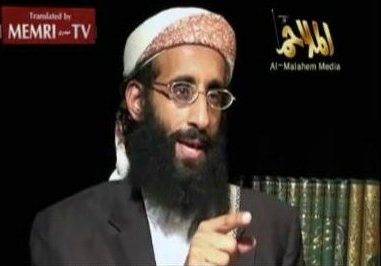
The Obama administration’s reluctance to acknowledge and confront the religious motivation behind Islamist terrorism is not helping the counter-terror effort, leading experts warn in a new report.   The administration’s recently released National Security Strategy (NSS) defines the enemy as “al-Qaeda and its terrorist affiliates,” but Washington Institute for Near East Policy report argues that it is a bigger one – “the extremist ideology that fuels and supports Islamist violence.”   Authors J. Scott Carpenter, Matthew Levitt, Steven Simon and Juan Zarate contend that just because ideology is not the only driving force behind violent Islamic terrorism does not mean it can be ignored.   Instead, the administration should recognize Islamism as “the key ideological driver” behind the threat posed by al-Qaeda and other radical Islamist groups, and prioritize an effort to combat the ideology, they say.   “To be sure, officials need to make very clear that they do not consider Islam itself a danger, only the distorted version of Islam perpetrated by radical extremists. But they – and, in particular, the president – must also come to terms with the fact that individuals implicated in each of the recently exposed plots in the United States were imbued with a common radical ethos.”   In keeping with President Obama’s agenda of reaching out to the Islamic world administration officials have moved away from terminology that could cause offense when discussing violent terrorism or extremism. Radical Yemen-based cleric Anwar al-Awlaki, pictured above, has called both the Fort Hood shooting suspect and the Nigerian who tried to bomb a Detroit-bound passenger plane on Christmas Day 2009 his “students.”   The NSS unveiled in May used variations of the phrase “al-Qaeda and its affiliates” repeatedly in identifying the enemy.  The word “Islam” appeared twice – the U.S. was not fighting a war against Islam, it said, and “neither Islam nor any other religion condones the slaughter of innocents.”   When he previewed the document in a speech several days before the launch, Obama’s counter terrorism advisor, John Brennan, said, “Our enemy is not terrorism because terrorism is but a tactic.”   “Nor do we describe our enemy as jihadists or Islamists because jihad is holy struggle, a legitimate tenet of Islam meaning to purify oneself or one’s community.”   (The NSS released by the Bush administration in 2006 stated that “the struggle against militant Islamic radicalism is the great ideological conflict of the early years of the 21st century.” It also called Islam “a proud religion” that “has been twisted and made to serve an evil end.”)   Nidal Malik Hasan, the U.S. Army major accused of killing 13 people at Fort Hood, Texas last November; Umar Farouk Abdulmutallab, the Nigerian arrested after trying to bomb a Detroit-bound aircraft on Christmas Day 2009; and Faisal Shahzad, the Pakistani-American who tried to detonate a car bomb at Times Square on May 1, were all evidently inspired by Islamist propaganda.   The Washington Institute for Near East Policy report released this week says that U.S. national security is being undermined by a deepening “ideological competition within Islam.”   “The competition is between a modern, predominantly pluralistic view of the world and an exclusionary, harsh, and equally modern ideology that appeals to a glorious past, places aspects of religious identity above all others, and relies on a distorted interpretation of Islam,” it says. Radical Islamists like Adam Gadahn, pictured here praising Fort Hood shooting suspect Nidal Hasan in a March 2010 al-Qaeda propaganda video, use the Koran and other Islamic texts to justify their jihad against the West. (Image: LauraMansfield.com) “The conflict between these two visions constitutes a struggle for the hearts and minds of the majority of Muslims, who abhor violence, but who – out of sympathy, apathy, or fear – will not or cannot confront the extremists in their communities. Any strategy, therefore, that does not skillfully contest the claims and actions of radical extremism cannot succeed.”   The authors recommend that the administration broaden cooperation with foreign governments, NGOs and others “to empower credible Muslim voices to marginalize” Islamist radicals.   At home and abroad, the government should more effectively identify and support Muslim opinion-leaders who can provide alternative influences to “radicalizers” in their communities.   Other recommendations include prioritizing the importance of human rights and democracy in Arab countries – with Egypt’s looming political changes “a key test for the administration’s approach.”   And in engaging with the Muslim community at home, the authors suggest that the government reach out not only to the most vocal organizations, but also to the most representative.   “Some prominent Muslim American groups have questionable links to banned groups that should disqualify them as trusted government partners in the effort to combat extremism,” the report says. “Others, perhaps less vocal and often active at a more local level, warrant greater institutional recognition and support.”   The report did not elaborate, but two U.S. Muslim groups that receive considerable media exposure, the Council on American-Islamic Relations (CAIR) and Islamic Society of North America (ISNA), were both named by the Justice Department in 2007 as “unindicted co-conspirators” in its case against the Holy Land Foundation in Texas, which was subsequently found guilty of raising money for Hamas. Islamist terror groups like Hamas’ Izzidin al-Qassam, whose logo features a Koran and other Islamic imagery, describe their missions in religious terms. Experts say the Obama administration’s counter-terror effort cannot ignore the religious motivation driving extremists. (Image: Izzidin al-Qassam Web site)   Debates over how governments should tackle the ideology driving terrorism are also underway in Britain, where “homegrown” Muslim terrorists have carried out several deadly attacks in recent years.   Five years ago last week, four terrorists – three of them British-born – killed 52 people and themselves on London’s subway and a bus.   At an event marking the anniversary hosted at the Chatham House think tank, counter terrorism experts and officials were critical of elements of a government program that aims to stop people from becoming terrorists or supporting violent extremism.   The strategy, known as “Prevent,” provides government funding to local organizations deemed to be best placed to counter the ideology of violent extremism.   “Participants argued that there was a fine dividing line between supporting communities in trying to stop people turning to terrorism and stigmatizing communities as a threat to the rest of society,” according to a report by BBC Radio, a co-sponsor of the invitation-only Chatham House event.   The Prevent strategy came under close scrutiny earlier this year after a cross-party parliamentary committee carried out an in-depth inquiry into the program.   The inquiry found that the strategy was causing mistrust and suspicion in the Muslim community. It said organizations and projects receiving Prevent funding were seen as tainted, and many Muslims felt the government was trying to create a “moderate” Islam, by funding and promoting some organizations over others.   “We do not think it is the job of Government to intervene in theological matters,” the committee said in its report.   It also argued that the program was placing too much emphasis on religion as a factor driving people to violent extremism.   “There has been a pre-occupation with the theological basis of radicalization, when the evidence seems to indicate that politics, policy and socio-economics may be more important factors in the process,” it said.   The relative importance of socio-economic factors in driving British Muslims to Islamist terrorism has been widely disputed.   In a newly-released directory of Islamist attacks and convictions in the U.K. over the past decade, the Center for Social Cohesion, a British think tank focusing on extremism, reported that at least 31 percent of the individuals involved “had at some point attended university or a higher education institute.”   And at the time of the attack or criminal proceeding, 42 percent of the individuals were either employed or in full-time higher education.   The Center for Social Cohesion said its analysis “does not support the assertion made by some that there is a correlation between terrorist activity and low educational achievement and employment status.”   Abdulmutallab, the would-be Christmas Day bomber, was a mechanical engineering graduate of one of Britain’s most prestigious institutions, University College London, where he also headed the Islamic Society in 2006-2007.   Crossposted at NB sister site CNS News
Go here to see the original:
Experts to Obama: You Can’t Ignore Islamic Ideology Behind Terrorism

The Verge: Sharni Vinson

Face it: after this summer of crappy post-production 3D, you need a palate cleanser, and you shouldn’t have to wait until Christmas for Tron Legacy to do the job. Why not let next month’s agreeable Step Up 3D fill the void? Not only was it conceived for and shot by 3D cameras, but it also has a leading lady of just as many dimensions: the free-spirited Australian actress Sharni Vinson. Like Heath Ledger, Naomi Watts, and Isla Fisher before her, Vinson got her start on the Aussie soap Home and Away , but none of them ever had to dance their butts off amidst 3D raindrops, so points for Sharni. How does it feel to be part of Hollywood’s recent Australian invasion? Vinson told Movieline about how she managed it, whether she auditions with her natural accent, and what cruel joke she had played on her by Step Up 3D’s director, Jon M. Chu.

Follow this link:
The Verge: Sharni Vinson