Tag Archives: time

Iran Preparing Mass Graves for US Soldiers ahead of ‘extensive war’

Iran has dug mass graves in which to bury U.S. troops in case of any American attack on the country, a former commander of the elite Revolutionary Guard said. The digging of the graves appears to be a show of bravado after the chairman of the U.S. Joint Chiefs of Staff, Adm. Mike Mullen, said last week that the U.S. military has a contingency plan to attack Iran, although he thinks a military strike is probably a bad idea. The U.S. and some of its allies accuse Iran of using its civilian nuclear program as a cover to build nuclear weapons. Iran has denied the charges, saying its nuclear program is geared merely toward generating electricity, not bomb. Gen. Hossein Kan'ani Moghadam, who was the Guard's deputy commander during the 1980s, said graves have been dug in Iran's southwestern Khuzestan province, where Iran buried Iraqi soldiers killed during the ruinous 1980-88 war between the Islamic republic and Iraqi leader Saddam Hussein's regime. “The mass graves that used to be for burying Saddam's soldiers have now been prepared again for U.S. soldiers, and this is the reason for digging this big number of graves,” Moghadam told The Associated Press Television News late Monday. He did not say how many were prepared. http://www.huffingtonpost.com/2010/08/10/iran-digging-mass-graves_n_676612.html added by: jeffissleeping

Mark Wahlberg Would Only Rap Again If Justin Bieber Asked Him

‘I’d do that for my daughter,’ Wahlberg said of a possible collaboration with the teen idol. By Jocelyn Vena Mark Wahlberg Photo: Kevin Winter/ Getty Images It’s been nearly two decades since Mark Wahlberg last released any music under the name Marky Mark. He hangs with a different kind of funky bunch now that he’s a certifiable Hollywood star, and he’s pretty much given up on going back behind the mic — although that could change if Justin Bieber, who is already pals with the likes of Diddy, Drake and Usher , came calling. “No. Not a chance,” the star of “The Other Guys” initially responded to a Time.com reader who asked if he’d ever return to the rap world. But then he softened a bit: “Actually, I’ll take that back. If Justin Bieber asked me, I’d do that for my daughter. She loves me to death, but she doesn’t think I’m very cool, so that might turn it around.” Wahlberg’s reluctance to going back to the hip-hop world is rooted a bit in his focus on acting. “Before Will Smith, most musicians who made movies were awful,” he explained. “When I decided to go into acting, I definitely wanted to make people forget about my music career.” While he’s not keen to jump back on the mic anytime soon, Wahlberg’s biggest regret has nothing to do with his rap career. “The one thing I will say [that I regret] is that stupid book I did [the 1992 memoir ‘Marky Mark’] that I dedicated to my penis,” he said. “I was trying to be funny and sarcastic. Of course, it’s something I get asked about all the time now.” Although he’s feeling shy about that particular life choice, it doesn’t seem to bother Bieber, who tweeted , “The Other Guys….haha…thanks Will for the one liners and Mark let’s make that rap song soon.” Would you like to see Mark Wahlberg and Justin Bieber on a track together? Tell us in the comments! Related Artists Justin Bieber

Read more:
Mark Wahlberg Would Only Rap Again If Justin Bieber Asked Him

The Real Housewives of New Jersey Head to Italy, Remain Ridiculous

MAKE IT STOP!

Tony Blankley Destroys Ed Schultz in Debate About Clinton and Gingrich

MSNBC’s Ed Schultz on Monday absolutely got his head handed to him in a debate with syndicated columnist Tony Blankley. Clearly underestimating his opponent, Schultz rudely introduced the subject of a Republican proposal to not have the Congress come back for a lame duck session after November’s elections by saying, “No one knows better about shutting down Congress than someone who was right there working for Newt Gingrich when it happened before.” Not letting this stand, Blankley gave the “Ed Show” host a much-needed history lesson (video follows with transcript and commentary):   ED SCHULTZ, HOST: The GOP wants to work three weeks in four months. Got that? While railing about wasteful government spending with a straight face. I don’t know how they do it. It’s absolutely stunning. No one knows better about shutting down Congress than someone who was right there working for Newt Gingrich when it happened before. Tony Blankley was press secretary to the Speaker and he’s now a syndicated columnist. Tony, do you think, good to have you with us tonight. TONY BLANKLEY: Good to be here. SCHULTZ: You bet. Do you think it plays to the sensibilities of Americans to suggest a plan that, gosh, the Congress would only be in session to do something for the American people several weeks out of the next four months? BLANKLEY: Well, first of all, I’ve got to correct the record as I expected I would. Newt did not close down the government in ’95. The Republican Congress passed two bills and the President Clinton decided to veto them because he didn’t like what was in the bill, which was funding plus requiring to balance the budget in seven years. And by the way, if you dispute it, I do have in my hot little hands the transcript from Nightline of the night the government closed down with Cokie Roberts and President Clinton agreeing that he vetoed the bill. So, putting that aside, we didn’t want to close down the government. We wanted to balance the budget. For the record, here is that ABC “Nightline” transcript from November 13, 1995: COKIE ROBERTS, HOST: [voice-over] A political impasse over the budget- Pres. BILL CLINTON: I would be wrong to permit these kind of pressure tactics. Rep. NEWT GINGRICH: It’s very sad to see the President choose this political game. COKIE ROBERTS: [voice-over] -and federal services hang in the balance. Tonight, as the clock strikes 12:00, the government shuts down. ANNOUNCER: This is ABC News Nightline. Substituting for Ted Koppel and reporting from Washington, Cokie Roberts. COKIE ROBERTS: It’s after midnight in Washington, so the government must be closed, right? Well, technically right, but this is Washington, after all, and nothing is quite that simple. After casting his threatened vetoes, President Clinton and congressional leaders met tonight, trying to fix the mess they had made, but the meeting broke up not long ago, with only the promise to meet again tomorrow. Each side is trying to score political points in this budget drama without getting blamed for chaos. ‘Protector of Medicare’ is President Clinton’s chosen role, and he refused to sign the bill to keep the government going because it required Medicare recipients to pay more for some premiums than they currently expect to. Republicans playing ‘protectors of the purse,’ but both sides are worried that voters will see them as game-playing politicians, and an ABC News/Washington Post poll released tonight shows that’s exactly what voters do think. Nine times in the past 14 years, the government’s officially run out of money. Four times it’s actually shut down. This is becoming a well-worn script. But the poll also shows that Republicans get more of the blame for a possible shutdown; 46 percent say they’re at fault, 27 percent blame the President. Those numbers serve as a backdrop to the events of this very long day. Nightline correspondent Michel McQueen has our report. RADIO ANNOUNCER: Federal shutdown, will it happen? Stay tuned for instant updates. MICHEL McQUEEN, ABC News: [voice-over] As the sun rose, so did the volume in a divided Washington. Vice Pres. AL GORE: [NBC] They have not done their job. Now they’re trying to make an end run around the Constitution, around the normal procedures. Rep. ROBERT LIVINGSTON, (R), Chairman, Appropriations Committee: We’ve done a lot to work our way toward the President. He has not done thing toward coming toward us. MICHEL McQUEEN: [voice-over] Eight-thirty A.M., President Clinton vetoed the first of two bills at issue in the budget crisis, one that would raise the federal debt limit and require a balanced budget in seven years. Pres. BILL CLINTON: It would allow the United States to pay its debts for another month, but only at a price too high for the American people to pay. MICHEL McQUEEN: [voice-over] And as federal workers headed to the office, the confrontation over the other bill – providing money to keep the government operating temporarily – cast a shadow over the workday. 1st FEDERAL WORKER: I think it’s nonsense. I’m involved in personnel, so I’m the one who’s going to be going to my office to type up furlough letters, including to myself. 2nd FEDERAL WORKER: Reality is that the Congress and the President have to get together and come to terms on exactly, you know, what needs to be done to ensure that there isn’t a shutdown. Pres. BILL CLINTON: Thank you. MICHEL McQUEEN: [voice-over] Mid-morning. In a duel to seize the moral high ground, the President and House Speaker Newt Gingrich delivered speeches to friendly audiences. Pres. BILL CLINTON: As long as they insist on plunging ahead with a budget that violates our values, in a process that is characterized more by pressure than constitutional practice, I will fight it. I am fighting it today, I will fight it tomorrow, I will fight it next week, and next month. Rep. NEWT GINGRICH: We can balance the budget, we can save the Medicare trust fund, we can reform the welfare system if we can have an honest dialogue among ourselves as a people. MICHEL McQUEEN: [voice-over] At the Senate, the first sign of movement. Republican budget leader Pete Domenici offered a compromise to freeze Medicare premiums at their current level. Sen. PETE DOMENICI: Now, of late, and I don’t know whether this is acceptable across the board, but I’ve at least discussed, after talking with my staff, I’ve discussed with the Republican leader here and with others that perhaps the solution is to freeze that at $46.10. MICHEL McQUEEN: But at noon, despite the glimmer of progress, all signs still point to a government shutdown, with no clue about how long it will last, or what the long-term impact might be. And although Washington has seen these shutdowns before, nearly everyone agrees that this one is different. NORMAN ORNSTEIN, American Enterprise Institute: It has the potential of a serious disruption, and an historic change. You have a Republican Congress, especially a Republican House, bound and determined not to compromise and to push its vision of the budget and of the role of the federal government down the throat of the President of the United States, and you have a president saying, ‘I draw the line in the dust, and I won’t let this happen.’ HELEN THOMAS, United Press International: You always had the sense that it was very- it would be resolved very soon. There seems to be a different mood this time around, a real- there’s a real division of philosophy, I think, of government. It’s- it’s, I think, a real crisis. MICHEL McQUEEN: [voice-over] The real crisis for federal workers, like these in a Social Security office in Kansas City, was the fear of losing a paycheck. 3rd FEDERAL WORKER: When we go on furlough, then that means immediately we have no income, and even if it was just us, it would be one thing, but we have a child to take care of. MICHEL McQUEEN: [voice-over] And at this national park in Ventura County, California, rangers were preparing for limited operation. NATIONAL PARK RANGER: The areas will be closed off to the public, but we will maintain patrols of the area and maintain a patrol staff for emergency medical services, protection of the resource, and search and rescue operations. MICHEL McQUEEN: [voice-over] Back in Washington, twice as many people as usual showed up at the passport office, fearing the office would soon close. Two-thirty P.M. Presidential spokesman Mike McCurry threw cold water on a proposed compromise on Medicare and on the Congress’s overall approach to funding. MIKE McCURRY: The President is very concerned about 60 percent funding level. He has made that clear repeatedly in the statements he’s made the last two days, and that just is an unacceptable [crosstalk]. REPORTER: So that’s a veto. That means a veto, correct? MIKE McCURRY: It’s unacceptable. MICHEL McQUEEN: [voice-over] And with the White House unwilling to compromise, senators said they also were not interested, and that they would send the President their original funding bill. They pointedly noted they would remain on the job. Sen. BOB DOLE: We’re prepared to act up until midnight, or after, if necessary, to prevent a shutdown of the federal government. MICHEL McQUEEN: [voice-over] And the blame game continued. Rep. NEWT GINGRICH: We want the country to understand that the only way the government will close tomorrow is, it is President Clinton is determined to close it. MICHEL McQUEEN: [voice-over] And shortly before 9:00 P.M., congressional leaders reached out. Rep. NEWT GINGRICH: We want to go down and talk with the President about how to keep the government open, and to try to have a discussion about how we will get to a balanced budget and keep the government open, and the- he said no preconditions, and we said no preconditions. MICHEL McQUEEN: [voice-over] It was the Republicans who asked the President for the meeting, and while the phone call got them an invitation to the White House, it could not save their funding bill. Within the hour, the President issued a veto, his second of the day, guaranteeing a government shutdown at midnight.  Got that? Just as Blankley said, the shutdown was indeed caused by Clinton’s vetoes. Not surprisingly, the facts weren’t getting in the way of Schultz’s point: SCHULTZ: Well, let me, so you don’t have history revisionism going on here, Tony, the fact is is that it was Newt Gingrich who made the decision based on the action of President Clinton that okay, that’s it, we’re just going to shut her down. The President was not advocating shutting down the Congress. Is that correct? BLANKLEY: That is not, that is not true. Newt passed, we passed, we passed the bill with the money and the debt limit raise which is what was required. By the way, I have a Congressional Research Service study that says the same thing. Republicans passed the bill. The President vetoed it. For the record, here’s what that CRS study said: The most recent shutdowns occurred in FY1996. There were two during the early part of the fiscal year. The first, November 14-19, 1995, resulted in the furlough of an estimated 800,000 federal employees. It was caused by the expiration of a continuing funding resolution (P.L. 104-31) agreed to on September 30, 1995, and by President Clinton’s veto of a second continuing resolution and a debt limit extension bill. Schultz still wasn’t giving up: SCHULTZ: Was, was… BLANKLEY: That’s the record! SCHULTZ: I don’t want to spend too much time on history… BLANKLEY: I know! SCHULTZ: …but the fact is President Clinton was not advocating shutting down the Congress… BLANKLEY: And neither, and neither were the Republicans. SCHULTZ: …nor does he have the power to do that. BLANKLEY: He did by, by vetoing the bill. SCHULTZ: Oh, okay, Because he didn’t play ball the way you guys wanted to… BLANKLEY: Exactly. SCHULTZ: …that’s how you interpret it. BLANKLEY: There was a real argument to be had and you could haggle over it. We wanted cuts in medicare spending, he didn’t. But the fact is we, we passed the legislation that would keep the government open. He vetoed it because he didn’t like the other provisions that were in it. Indeed, and no matter how much folks like Schultz want to blame that government shutdown on Gingrich and the Republican Congress, it was in fact Clinton that forced it with his vetoes. Not accepting defeat graciously, Schultz foolishly came back for more, and once again got destroyed by the astonishingly more knowledgable Blankley: SCHULTZ: Okay, so the next point is this. How did the next election go for the Republicans after that? BLANKLEY: We held onto the House for another ten years. SCHULTZ: And how many seats did you lose? BLANKLEY: ’95 to 2006 before we lost it. Talk about walking into a gunfight with a knife. For the record, despite Clinton’s re-election in 1996, he had absolutely no coat-tail that year as the Republicans did surprisingly well in the Congressional balloting losing only six seats in the House while gaining two in the Senate. As such, on this subject, Schultz was once again all wet. Of course, there’s a much larger issue here. The media are realizing that this November is going to be very bad for the Democrats they support, and they’re pulling out all the stops to lessen the damage. This of includes revising history much as Schultz attempted here to blame everything that has gone wrong in this country – even a government shutdown fifteen years ago – on the GOP. Beyond this, as Gingrich is rumored to be a presidential candidate in 2012, there’s a new movement by so-called journalists to tarnish his record irrespective of the facts. In this instance, the paltry number of people watching fortunately had Blankley there to correct the record. Sadly, on this shill network, that is rarely the case. Bravo, Tony! Bravo!

More:
Tony Blankley Destroys Ed Schultz in Debate About Clinton and Gingrich

Lloyd Banks Recruits Tony Yayo, Lloyd For ‘Any Girl’ Video

The G-Unit MC says his latest video is inspired by the ’90s flick ‘How to Be a Player.’ By Mawuse Ziegbe, with reporting by Shaheem Reid Lloyd and Lloyd Banks Photo: G-Unit Lloyd Banks is taking it back to the jiggy era for his latest video. The G-Unit MC told MTV News that his newest clip, “Any Girl,” is inspired by the ’90s comedy “How to Be a Player.” In the movie, a slick womanizer — played by former MTV VJ Bill Bellamy — juggles his many conquests. “Any Girl” shows Banks trying not to get caught in his web of women. “I’m running through my day-to-day going to see a few of my girls. I got a white girl, I got [a] Spanish girl, a black girl and I’m going to basically lie to them and tell them how much I love them and how much I want to see them,” Banks explained. However, after spending time maneuvering through his ladies, the MC has to eventually face the music. “The girl who’s playing my sister, she’s actually setting me up and she has these same girls coming to see me at the party.” Fellow G-Unit rapper Tony Yayo makes a cameo in the video. He said that even though the visuals are inspired by a film, Banks has plenty of personal experience to pull from. “Banks is … a player for real,” said Yayo. “It’s really his real life story.” Banks isn’t the only ladies man in the video; singer Lloyd also pops up in the clip. The MC broke down how the collaboration came together and said Lloyd wasted no time putting his soulful touch on the track. “He … flew into New York [and] knocked out the record in like 15, 20 minutes,” Banks revealed. The G-Unit rapper said the pair shared a similar hunger to make a memorable collabo. “His work ethic is incredible. He was actually independent at the time so … it was no restraints. It was like, ‘Let’s go!’ ” Lloyd’s studio grind may have impressed musical peers such as Banks, but the crooner maintained that he puts in the work for the fans. “It’s about making the best music for people to listen to,” the singer said. “It’s about entertaining the consumers and ultimately, for me, it’s about connecting.” What are you expecting from the new Lloyd Banks video? Let us know in the comments below! Related Artists Lloyd Banks Lloyd

See more here:
Lloyd Banks Recruits Tony Yayo, Lloyd For ‘Any Girl’ Video

Kourtney and Khloe Take Miami, Scott Takes on Therapy

Due to writers putting it in the script his drinking and anger problem, Scott Disick is in therapy . This supposed treatment was a major focus of last night’s Kourtney and Khloe Take Miami , which THG forced an intern to watch and review below. Enjoy… Kourtney’s true other half is back in Miami this week, as Khloe Kardashiam Odom (did her ring actually get bigger?) returns to finish out the season of her show.

Michaele Salahi Gets Served

As the official Real Housewives of D.C. premiere party last week, cast members slammed Michaele Salahi . Catherine Ommanney even said she wouldn’t appear on a second season if Salahi was involved. Meanwhile, Michaele and awful husband Tareq were hosting their own gathering at the time – and getting served with court papers that accuse them of reneging on a deal with a public relations firm. According to The Washington Post , the couple is being sued by Brotman-Winter-Fried Communications. The company accuses the Salahis of owing more than $15,000 in unpaid fees from a 2008 polo event. “It was an affidavit for debtors interrogatory,” Steve Winter, president of BWF, said of the documents handed to Michaele and Tareq on Thursday night. “It means they’ll have to appear in court to discuss their financial means – how they are capable of paying off the debt.” Truth be told, perhaps Tareq and Michaele Salahi should countersue. For a PR firm, Brotman-Winter-Fried Communications has clearly done a shoddy job. These reality stars are already more hated than almost anyone else on TV. Then again, it’s unlikely any company could help them change their image. They’re truly awful human beings.

Read more:
Michaele Salahi Gets Served

Patricia Neal, Oscar-Winning Actress, Dies At 84

Star of ‘Hud’ and ‘The Fountainhead’ famously recovered from a semi-paralyzing stroke in 1965. By Eric Ditzian Patricia Neal in 1952 Photo: Gene Kornman/ Getty Images Oscar-winning Patricia Neal died on Sunday at the age of 84, The New York Times reports. In 1964, Neal won a Best Actress Oscar for her turn as the resilient housekeeper Alma opposite Paul Newman in “Hud.” A year after her Academy Awards triumph, though, the actress suffered three strokes that left her in a three-week coma. Afterwards she was semi-paralyzed and without the ability to speak, though she eventually learned to walk and talk again. Despite an impaired memory, the actress returned to the big screen for 1968’s “The Subject Was Roses,” playing a vindictive mother. She again secured an Oscar nomination, but this time lost out to dual winners Katharine Hepburn and Barbra Streisand. Neal got her start at the age of 21 opposite Ronald Reagan in the 1949 comedy “John Loves Mary.” She went on to star in films like “A Face in the Crowd” (1950), “The Day the Earth Stood Still” (1951) and “Breakfast at Tiffany’s” (1961). One of her most prominent roles came in 1949, when she nabbed the coveted lead role in “The Fountainhead,” an adaptation of the Ayn Rand novel. The role also lead to a love affair between Neal and co-star Gary Cooper, a relationship that lasted for three years but ended when Cooper declined to leave his wife and family. Neal became pregnant during the affair and had an abortion, as she revealed in a 1988 memoir. “If I had only one thing to do over in my life,” she wrote, according to the Times, “I would have that baby.” Neal was married for 30 years to “Charlie and the Chocolate Factory” author Roald Dahl, with whom she had five children. They divorced in 1983. Though the Times does not give a cause of death, People reports that Neal had lung cancer. She died at her home in Edgartown, Massachusetts.

More here:
Patricia Neal, Oscar-Winning Actress, Dies At 84

Artists Recycle Lottery Tickets into Stuff They’d Buy

An H3 Hummer built with $39,000 worth of discarded lottery tickets. All photos via Ghost of a Dream . Each year, millions of lottery tickets are sold to people who dream of winning big — but the vast majority of the time, those tickets end up being just pricey bits of trash. One recycling artistic team, however, has begun transforming all those losing tickets into something with real value — the stuff a gambler may have purch… Read the full story on TreeHugger

See the original post here:
Artists Recycle Lottery Tickets into Stuff They’d Buy

‘Face the Nation’: Supreme Court Upholding Same-sex Marriage ‘Enormous Stretch’

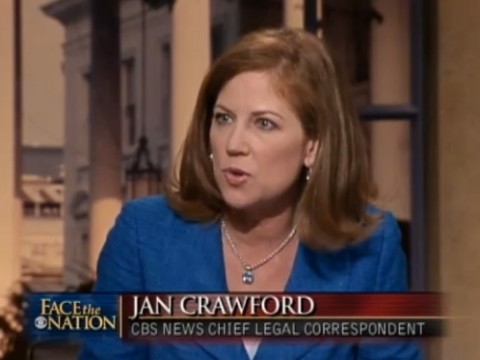
Analysts that spend their time critiquing the media normally don’t have very good things to say about what they observe these days, but the final segment of Sunday’s “Face the Nation” on CBS was a marvelous exception. Substitute host John Dickerson invited on the network’s chief legal correspondent Jan Crawford and the Washington Post’s Dan Balz for a refreshingly open and honest discussion of two pivotal legal issues facing our nation: a judge’s decision to overturn California’s controversial Proposition 8 which banned same-sex marriages, and; whether or not the 14th Amendment should be revised to address illegal immigration. What ensued was a tremendously informative seven minute report about these two issues without any cheer-leading or accusatory finger-pointing: Crawford gave the facts about both legal matters as she saw them; Balz addressed the political ramifications for both parties as well as the White House, and; Dickerson asked great questions to keep the conversation moving. With that as pretext, sit back and watch – or read if you’re so inclined – the way these kinds of issues should be discussed on a television news program (video follows with transcript and commentary):  JOHN DICKERSON, HOST: We’re back with more on same-sex marriage with Dan Balz of the Washington Post, and our chief legal correspondent Jan Crawford. Jan, I want to start with you. And the question I asked David Boies. This is a big leap for the Supreme Court when it finally gets there, isn’t it? JAN CRAWFORD (CBS News Chief Legal Correspondent): Well, David Boies said it was not. But clearly it is. I mean they are asking the Supreme Court to set aside, essentially, the laws of forty-four states. So that is an enormous stretch. Now, of course, the Supreme Court has taken up issues of gay rights in the past. Justice Kennedy, the key swing vote in 2003, said that states could not criminalize homosexual sex in the privacy of your bedroom. So– but that is an entirely different matter than saying there’s a federal constitutional right to– to same-sex marriage. JOHN DICKERSON: In this case, Judge Walker, quoted Anthony Kennedy fifteen times or so. It was a letter to him. Wasn’t it? And is that going to work writing directly to Kennedy, basically, trying to use his own words to say hey, you’ve go to vote with me. JAN CRAWFORD: No. I mean clearly this decision was written with an eye on appeal. And it’s going to be appealed all the way up to the Supreme Court. The court is so narrowly divided right now in these key social issues, you know, you’ve got your four liberals, your four conservatives and then that man in the middle, Anthony Kennedy, who is kind of like this, you know, human jump ball. And what they are asking Justice Kennedy to do, in this case, is not only, I mean, he’s got to grab the ball, take it down the court, slam it in the basket, and shatter the backboard. I mean this is something that Anthony Kennedy doesn’t do. He’s a very cautious justice. He doesn’t like to get ahead. Like I said, the same-sex ruling that he wrote in 2003, that struck down laws that criminalized homosexual sex. No one was enforcing these laws. This would change the law of the nation. They would be so far ahead of public opinion and that is why this case was controversial from the beginning. Remember, the traditional gay rights groups did not want David Boies and his conservative counterpart, Ted Olsen, to file this case because they think the Supreme Court is not ready. They wanted to see more states pass laws allowing same-sex marriage and then take it to the court and not put that onus and that pressure on the Supreme Court. And I would not be so confident if I were David Boies. JOHN DICKERSON: Dan, let’s talk about the politics of this. It does seem like from the Republican side, you know, George Bush when a Massachusetts Supreme Court ruled on– in favor of same-sex marriage, immediately he came out with a constitutional amendment to ban it. This time pretty quiet from Republicans. DAN BALZ (Washington Post): Yes. And I think that– there’s a good reason for that. In 2004, the Republicans needed to do everything they could to motivate their base. Their base this year is highly motivated. They don’t need to do more to crank up the anger, the energy that’s there on the right. The second, I think, and more important reason, is they have very good issues to deal with in this midterm–the economy, the size and scope of government, debt and deficit. Those are issues that unify their entire coalition and also reach out to independents to introduce in a significant and loud way same-sex marriage would threaten to pull away from that– pull that coalition apart. JOHN DICKERSON: Distract. Okay. If it’s going to keep the Republicans quiet on this issue, what about the Democrats? How do they handle this? DAN BALZ: Well, the Democrats are equally conflicted or– or quiet on this. Because while much of the Democratic base favors same-sex marriage, the truth is most elected officials including President Obama are opposed to it. And so, there is conflict within their base. They don’t want to really get into this at this point and stir things up. The President has stayed away from this issue for the most part, as have most other Democrats. So I don’t think you’re– going to see Democrats trying to leap to make this into an issue in the fall. Even in– even in some districts. I think where this will play is in some conservative districts in some red states. Individual Republicans will use it, particularly, through micro-targeting. They will reach to voters not with broad messaging but by direct mail or phone calls things like that. JOHN DICKERSON (overlapping): That’s it. Go on. JAN CRAWFORD: And– keep in mind, though, too. I mean, this is the first ruling by one federal judge and it’s going to be appealed. This case is going to get to the Supreme Court pretty close to 2012. So, you know whether or not it’s an issue in this year’s midterm or not it’s going to be an issue in the presidential election. DAN BALZ (overlapping): I think that’s right. And I think– JAN CRAWFORD: And President Obama is going to have to s– I mean, what does he do? DAN BALZ: And– and I think, as you said, the question is public opinion is changing on this, and fairly dramatically over the last four or five years. But it’s not at the point where there’s majority opinion in a majority of the states in favor of same-sex marriage. The court may end up ruling on this long before public opinion reaches to the conclusion a majority favors same-sex marriage. JOHN DICKERSON: Jan, I want to ask you about another legal issue. The same-sex case is about the 14th Amendment. There’s also been some Republicans talking about the 14th Amendment in another context, in terms of this automatic birthright citizenship in the United States. What’s happening on that front? JAN CRAWFORD: Well, I had about an hour-long talk about this actually on Friday with Senator Lindsey Graham. And this is really kind of one component of what he sees and is pushing is some broader immigration reform. And it– he believes that it is a real problem that people are coming to this country illegally, having babies, and then they’re automatically U.S. citizens. And then they kind of piggy-back, the parents can piggy-back on those kids to stay here in this country illegally. He has all these figures. There’s been a fifty-three-percent increase in births to foreign people, who’ve come here to have their babies in the last four years alone. So, this is a way he wants to look at the 14th Amendment and say maybe it’s time for us to rethink that. Remember the 14th Amendment which is sacrosanct I think to– to so many people was passed to give citizenship rights to the freed slaves. Because obviously the Southern States weren’t going to be doing that unless the federal government stepped in. So he’s saying it’s time to rethink this. When we’re really looking at immigration reform as part of a broader package, securing the borders, giving a path to citizenship for the twelve million people who are here legally now, having some kind of worker ID card, and then also stopping this practice where people can come here illegally or not, have children here, and those children be U.S. citizens. JOHN DICKERSON: Dan, this is an issue, Republicans want to talk about as opposed to the same-sex marriage. DAN BALZ: Absolutely. I mean I think what you’re seeing is that almost all of the elements of the immigration debate that are being discussed now, public opinion tends to be on the side of where the Republicans stand. The Arizona Immigration Law–there are a lot of Democrats particularly, in the west, who are very unhappy that Justice Department and the President decided to step in on that case, feeling that this was a moment that they didn’t want to get into an issue like that that the administration needed to stay focused on the economy. The 14th Amendment issue is another one. I mean we are a long way away from any serious legislating on immigration reform. It died this year. It will– it may come back next year, but we’re a long way away from that. Nonetheless, this discussion is lively right now. And it is helping the Republicans. JOHN DICKERSON: Okay. Dan Balz, thanks so much. We’re going to have to go, Jan. thanks. Bravo, folks. This really was one of the most interesting and informative segments concerning these two issues I saw all week. If television news outlets reported like this more often, I wouldn’t have much to write about. 

See the article here:
‘Face the Nation’: Supreme Court Upholding Same-sex Marriage ‘Enormous Stretch’